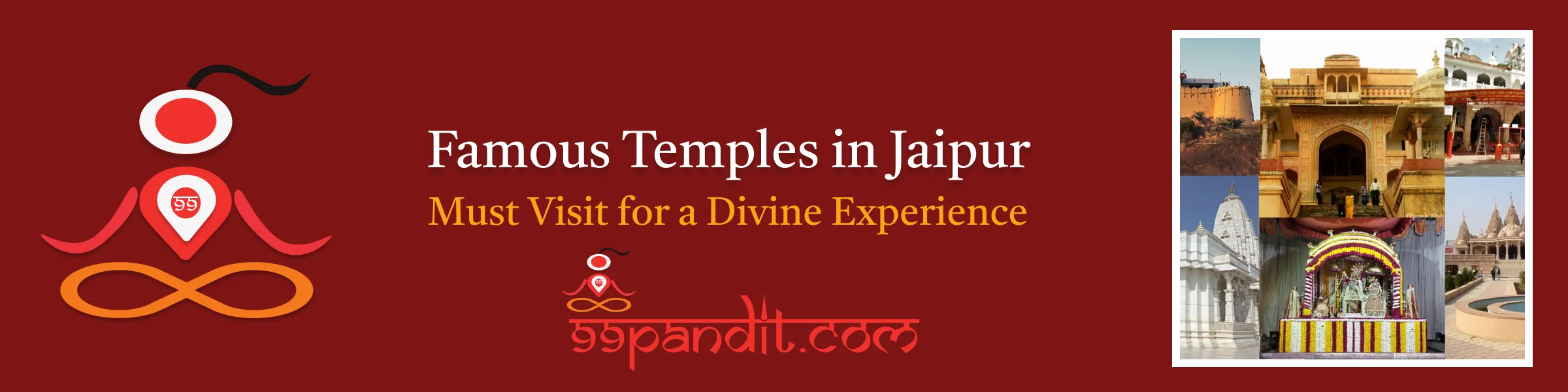
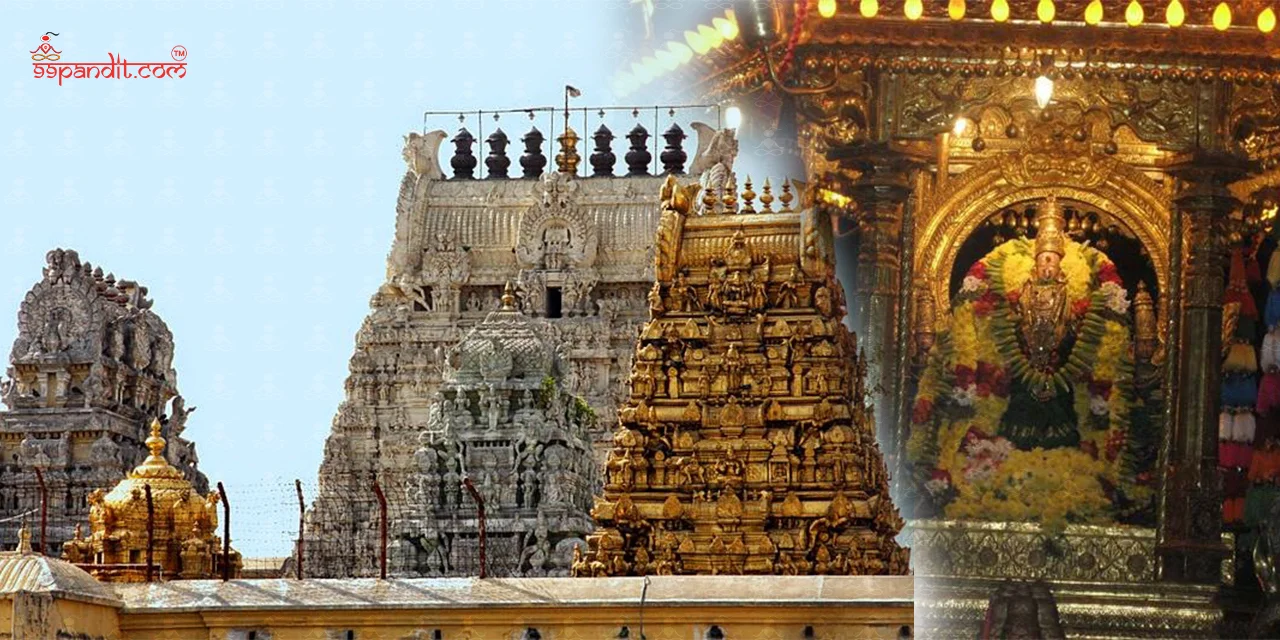
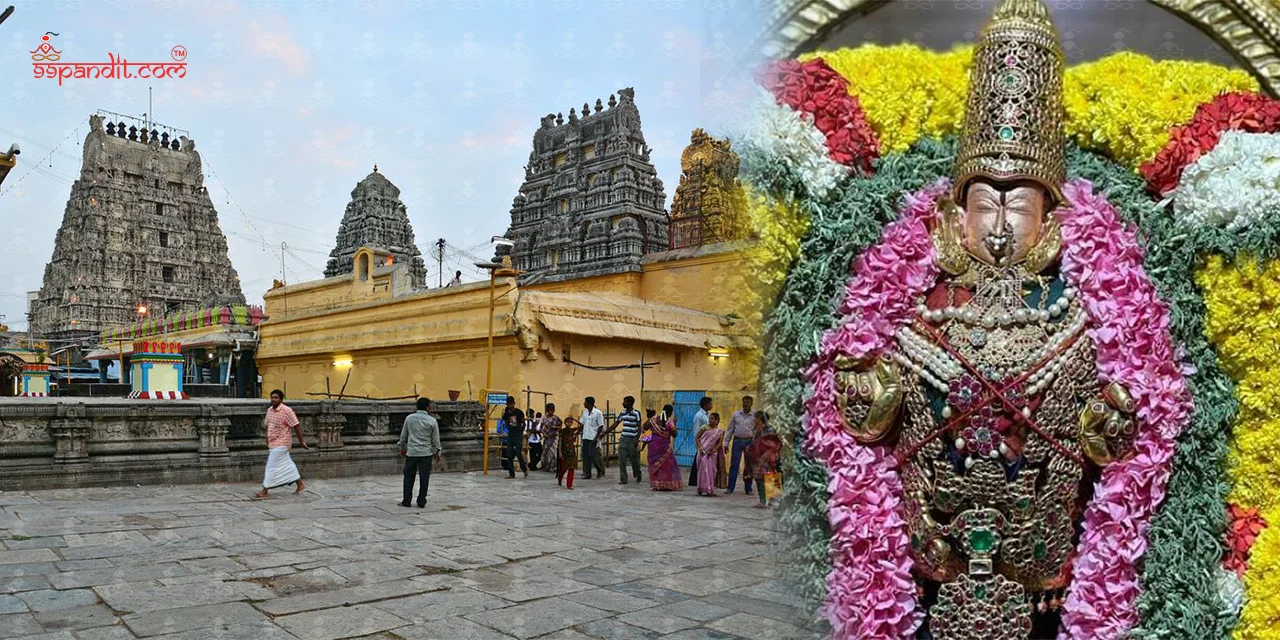
10 Famous Temples in Jaipur: Must Visit for a Divine Experience

Famous Temples in Jaipur: Jaipur, also referred to as the Pink City of India, is a stunning blend of royal heritage, lively culture, and timeless traditions.

While its magnificent palaces and historical sites rule the place, some famous temples in Jaipur also hold a unique position in the city’s heart. These temples make you feel connected to spirituality and experience divine power.

From beautifully carved marble temples to old shrines hidden in the Aravalli hills, each temple tells its own story. They offer you a feeling of peace from the hustle and bustle of city life.
Famous Temples in Jaipur

Whether you want to discover spirituality, the beauty of architecture, or just peace of mind, these temples have something for everyone.

Temples that take you near the sacred power and experience that you will never forget. Most of the well-known temples in Jaipur are centuries old and are deeply ingrained in the city’s culture and history.

Visiting them is like entering a world of peace where everything just comes to a standstill.

In this article, we will take you on a spiritual journey through the 10 most famous temples in Jaipur that you must visit.

Come along with 99Pandit and explore some of the sacred temples with ease and utmost devotion.

Top 10 Famous Temples in Jaipur You Must Visit

Now that you are aware of why Jaipur is such a special place for spiritual and art lovers, let’s explore the top 10 famous temples in Jaipur that you can’t miss.

Each one of them has its aura, history, and charm that make it a worthwhile place to visit. Here are some of them:

1. Birla Mandir – The White Iconic Temple of Jaipur

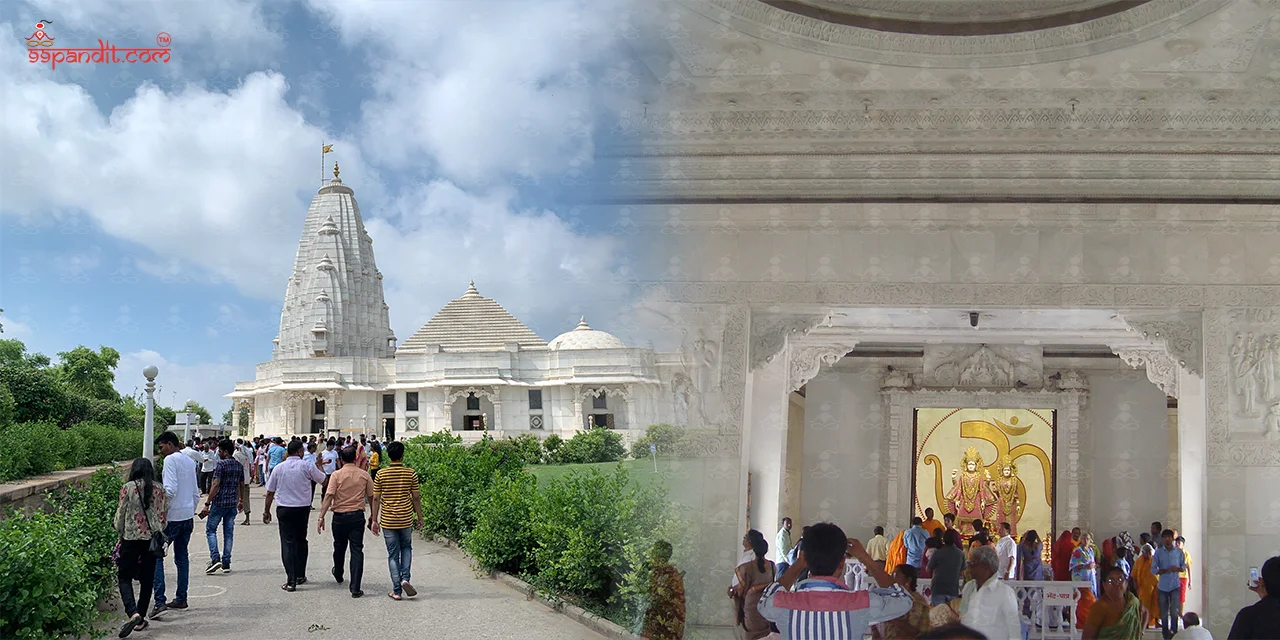
Birla Mandir is perhaps one of the most graceful and well-kept temples in Jaipur. It is also known as Laxmi Narayan Temple.

What attracts visitors most to this sacred palace is that it is made entirely of pure white marble with beautifully carved Hindu gods, verses from the Bhagwat Gita, and mythological stories. The temple was built in 1988 by the Birla family at the base of Moti Dungri hill.
Famous Temples in Jaipur

The temple is dedicated to Lord Vishnu and Goddess Lakshmi. It shines with its beauty in the evening when lit up, providing a calm and divine environment.

Birla Mandir is an ideal spot for anyone who wants to get away from the city chaos and experience some peace.

  • Location: Near Moti Dungri Hill, Jawahar Lal Nehru Marg
  • Deity: Lord Vishnu and Goddess Lakshmi
  • Timings: 6:00 AM to 12:00 PM, 3:00 PM to 9:00 PM
  • Best Place Nearby: Moti Dungri Temple, Albert Hall Museum

2. Govind Dev Ji Temple – The Heart of Krishna Devotion

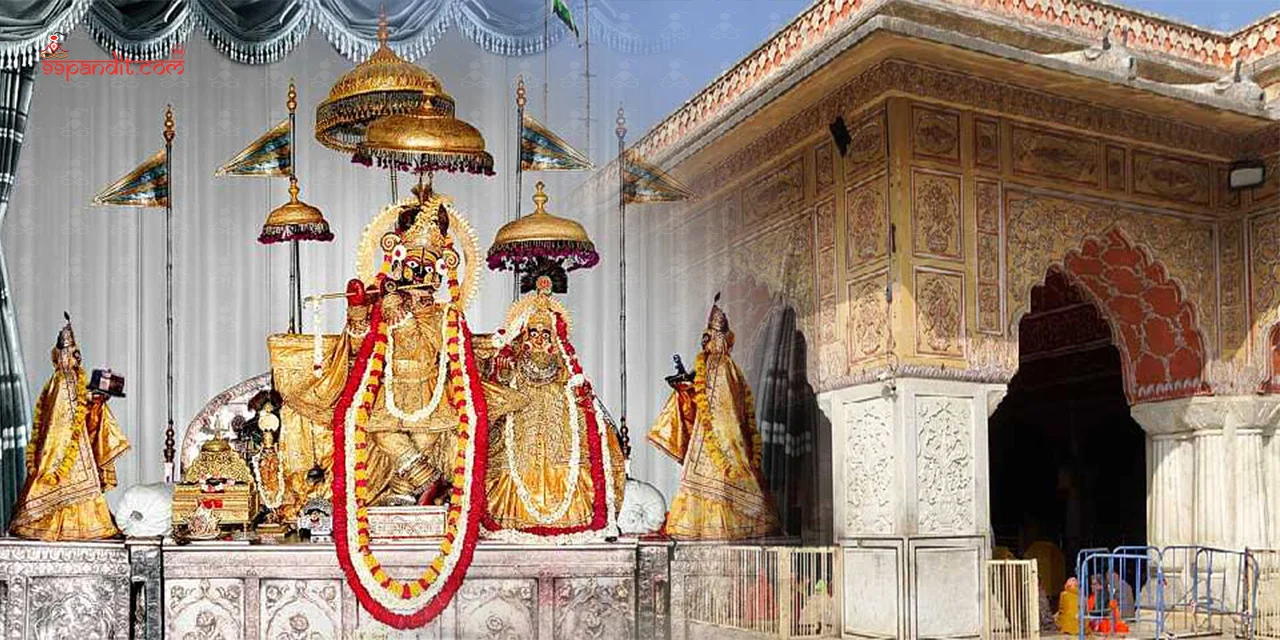
Govind Dev Ji Temple holds a very special place in the hearts of Krishna’s devotees. The temple is located within the majestic City Palace complex.

It is said that the idol of Lord Krishna (Govind Dev Ji) was brought from Vrindavan by the Maharaja Sawai Jai Singh II in the 18th century.

A large number of devotees gather each day to witness the aartis and religious hymns.
Famous Temples in Jaipur

The energy created in this temple during Aarti is strong and warm. During Janmashtami, the entire temple is decorated with a bunch of flowers, lights, and lamps.

Even if you are not a big religious believer, the positive energy and devotion of people are something worth experiencing.

3. Galtaji Temple – The Holy Valley of Monkeys

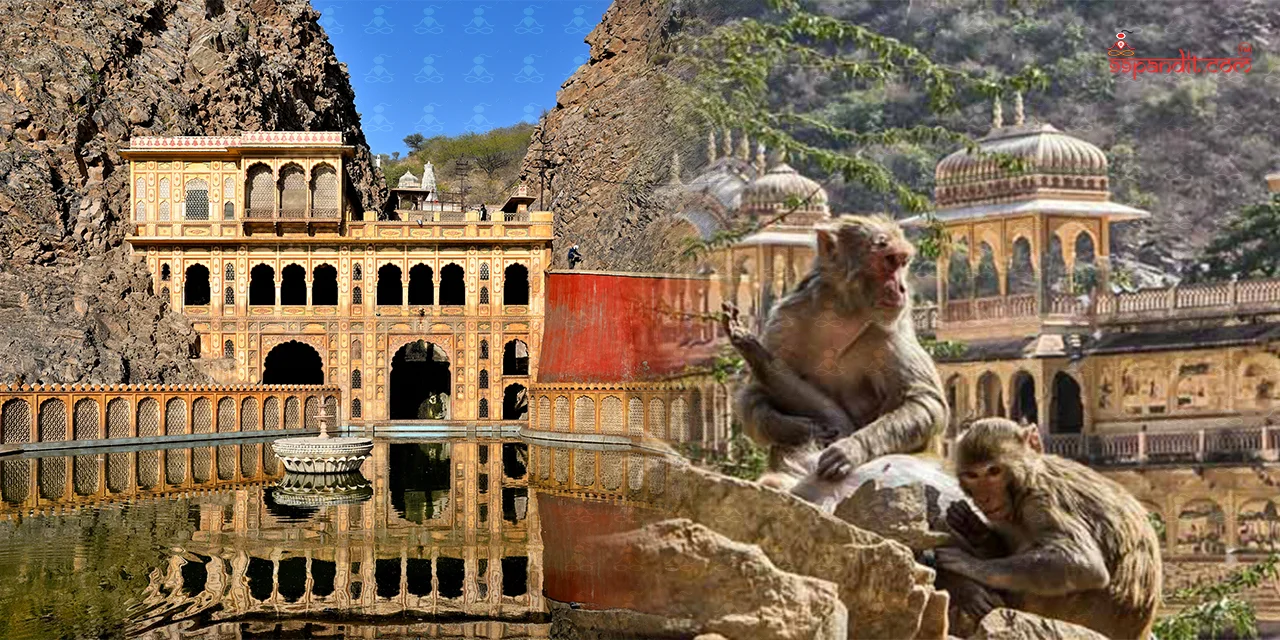
Galtaji Temple is a very old Hindu temple within a narrow valley surrounded by the Aravalli Hills. The temple, also known as Monkey Temple, was built in the 17th and 18th centuries.

One of the things that makes this temple unique is its natural water spring, which is divided into seven sacred Kunds (water tanks). Many devotees visit these places to take a bath in this holy water.
Famous Temples in Jaipur

One of the most famous tanks is Galta Kund, which is said to never get dry. As per the stories, Saint Galav performed penance in this place, and Lord Krishna is believed to have blessed this temple.

What makes it even more fascinating is the huge population of monkeys residing here, which is why it’s also referred to as the Monkey Temple. It’s a place of spiritual retreat where nature and spirituality go hand in hand.

  • Location: Khania Balaji, Jaipur
  • Deity: Saint Galav, Lord Krishna, Lord Hanuman, Lord Ram
  • Timings: 5:00 AM to 9:00 PM
  • Best Place Nearby: Sun Temple, Sisodia Rani Garden

4. Moti Dungri Ganesh Temple – The Beloved Ganesha of Jaipur

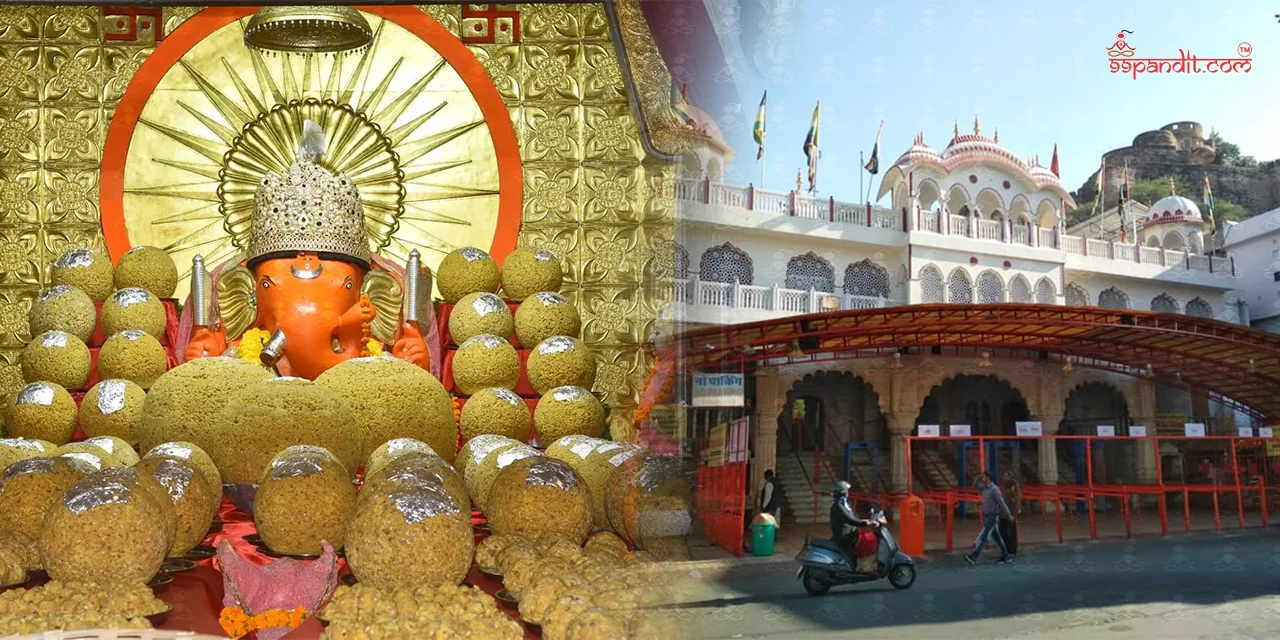
It is one of the most popular and famous temples in Jaipur. The temple was built in the 18th century and is located near Birla Mandir. It is dedicated to Lord Ganesha, the remover of all obstacles.

According to legends, it is believed that Maharaj Madho Singh brought the idol from Udaipur, and since then, it has remained the centre of devotion for devotees.

Many individuals come here to seek the blessings of Lord Ganesha before beginning any new thing in their lives.
Famous Temples in Jaipur

Be it a business, marriage, or even the purchase of a new vehicle. The temple has Rajasthani architecture, displaying detailed carvings and a grand entrance.

You will generally see a large crowd on Wednesday, as it is considered Lord Ganesha’s day.

The atmosphere of the temple is always vibrant, with pilgrims offering prayers, modaks, and flowers.

  • Location: Near Birla Mandir, Moti Dungri Road
  • Deity: Lord Ganesha
  • Timings: 5:00 AM to 1:30 PM and 4:30 PM to 9:00 PM
  • Best Place Nearby: Birla Mandir, Central Park

5. Khole Ke Hanuman Ji Temple – The Cliffside Temple of Strength

Located at the summit of a hill with a beautiful view of Jaipur, Khole Ke Hanuman Ji Temple is a serene location for the worshippers of Lord Hanuman. The temple is famous for its huge idol and imposing background.

Pandit Radhe Lal Choubey started it, and he built an organization called Narwar Ashram Seva Samiti in 1961 to build this temple.
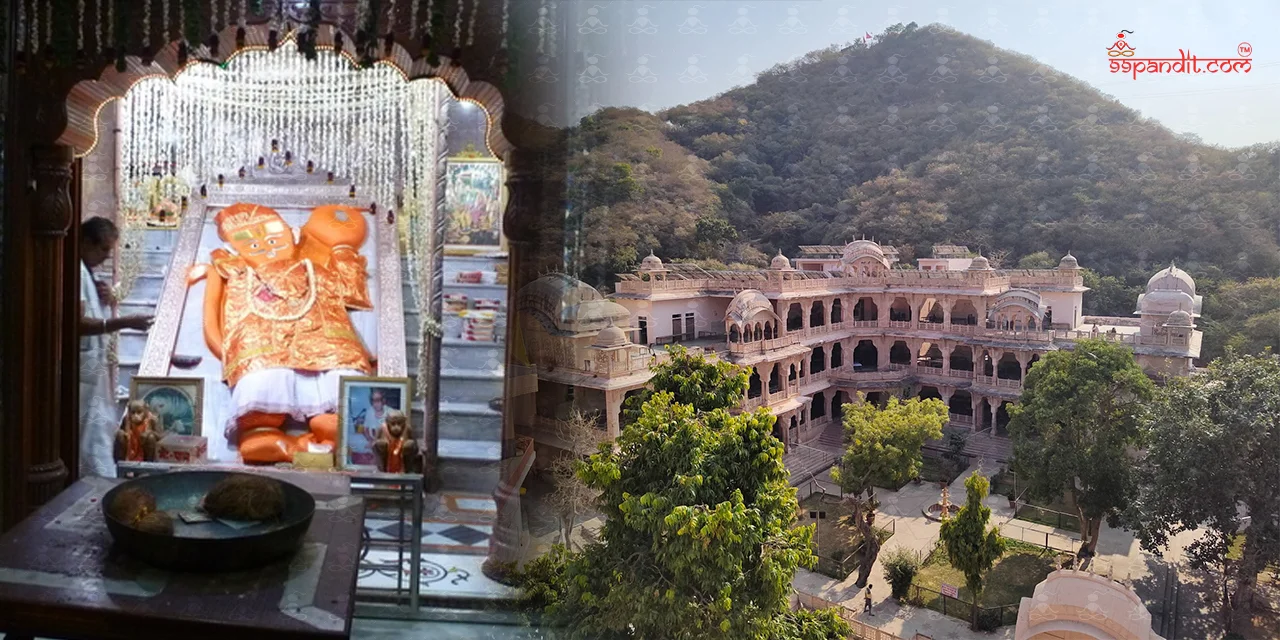
Famous Temples in Jaipur

People are frequently seen walking or driving to the temple early in the morning to offer their prayers and enjoy the soft breeze.

It is especially crowded on Tuesdays and Saturdays, which are sacred days for the Hanuman bhakts.

The serenity and religious environment of this location ensure that it is a hidden gem of the city.

  • Location: Laxman Dungri, Delhi Bypass Road
  • Deity: Lord Hanuman
  • Timings: 6:00 AM – 8:30 PM
  • Best Place Nearby: Nahargarh Fort, Jal Mahal

6. Akshardham Temple – The New Wonder of Devotion

Jaipur’s Akshardham Temple is a perfect combination of modern architecture and everlasting religion.

The temple is dedicated to Lord Swaminarayan and is a serene refuge for tourists as well as pilgrims.

It is well-known for its calm aura, lush lawns, and neat pathways. The temple is a vital spiritual oasis of the city.
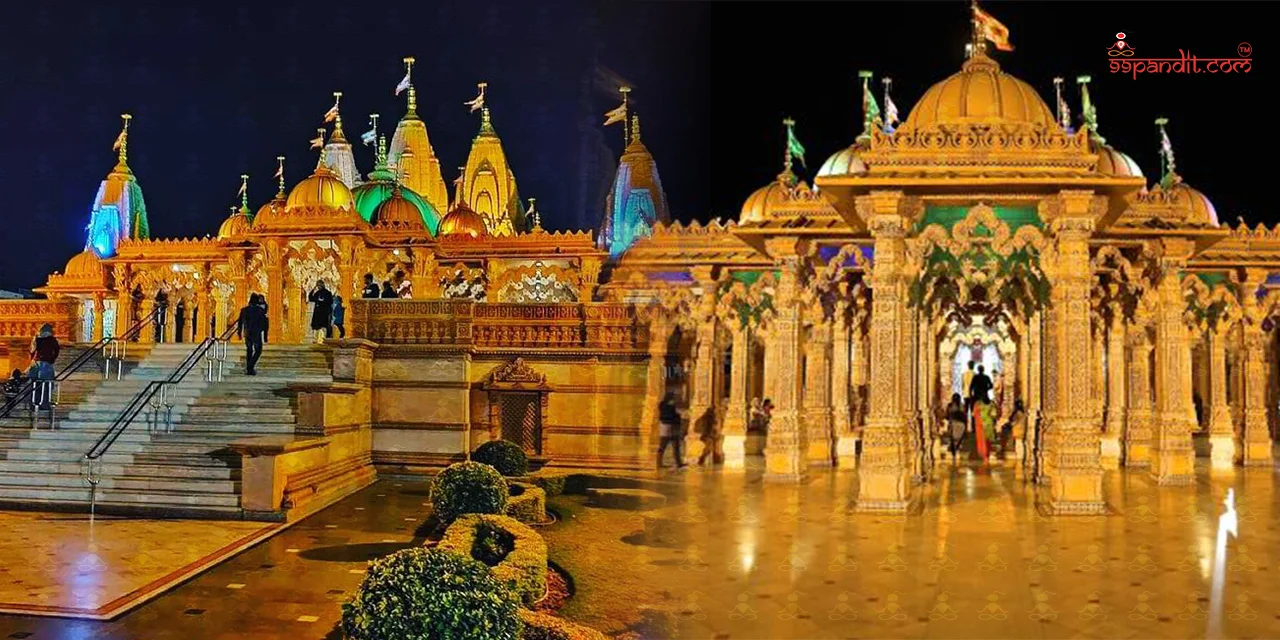
Famous Temples in Jaipur

The temple has beautiful carvings, peaceful water fountains, and a peaceful, manicured environment that welcomes the religious as well as the spiritually inclined.

Whether you want peace or even appreciate its architecture, Akshardham is a great place to spend an evening with friends or family.

  • Location: Vaishali Nagar, Chitrakoot
  • Deity: Lord Narayan (Vishnu)
  • Timings: 7:00 AM to 12:00 PM, 4:00 PM to 8:00 PM
  • Best Place Nearby: Vaishali Nagar Market, Inox Cinema

7. Shila Devi Temple – The Warrior Goddess of Amer Fort

Shila Devi Temple is another famous temple in Jaipur, situated inside the beautiful Amber Fort.

It is dedicated to Goddess Durga, and the idol was supposed to have been brought from Jessore (present-day Bangladesh) in the 16th century.

The idol was found allegedly in slab form (shila), and hence, the temple gets its name from the same term as Shila Devi temple.
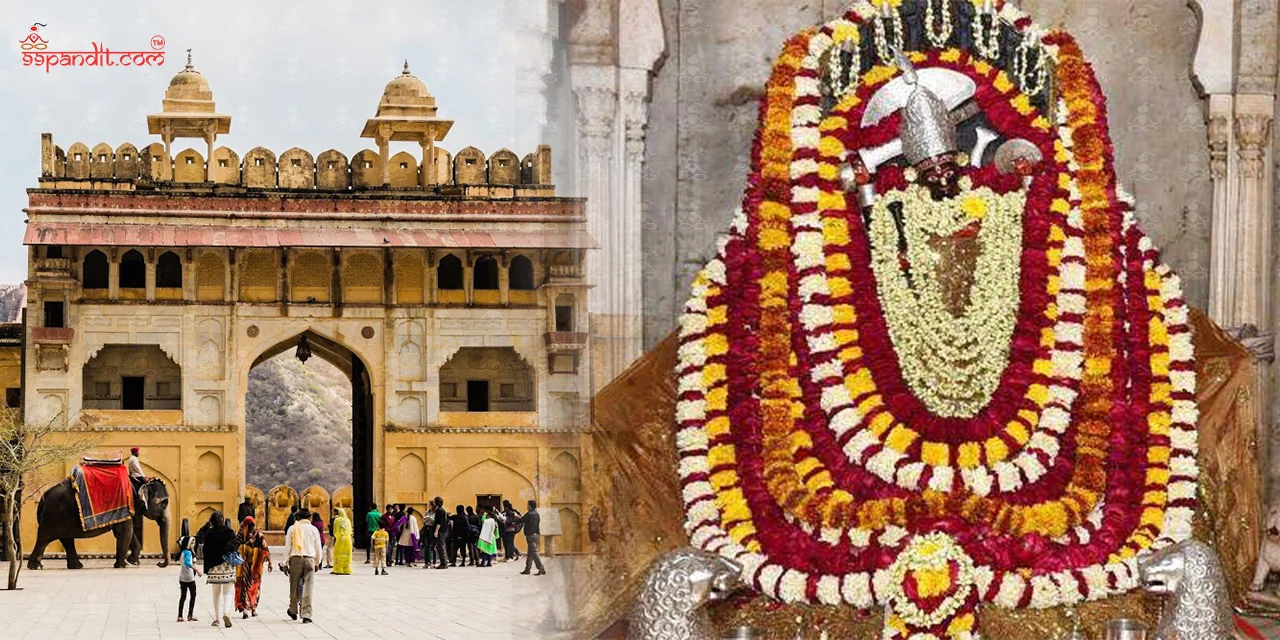
Famous Temples in Jaipur

It is renowned for its divine atmosphere and spiritual energy. The temple is a place one must travel to see during Navaratri, when thousands of devotees throng to be a part of rituals, prayers, and festivities.

The temple’s history and spiritual energies offer individuals a divine experience journey.

The view from the temple over the fort and the hills is just one of the many reasons to make it a part of your trip.

  • Location: Within Amer Fort, Jaipur
  • Deity: Goddess Durga (Shila Devi)
  • Timings: 6:00 AM to 2:00 PM, 4:00 PM to 8:00 PM
  • Best Place Nearby: Amer Fort, Jaigarh Fort

8. Tarkeshwar Mahadev Temple – The Eternal Residence of Lord Shiva

Tarkeshwar Mahadev Temple is one of the oldest and most sacred Shiva temples in Jaipur. Far from the hustle and bustle of the old city, this temple is a peaceful oasis with its soothing and spiritual ambience.

The temple is dedicated to Lord Shiva and is said to have existed even before Jaipur city came into existence.

The word “Tarkeshwar” derives from a demon called Tarkasur, who was slain by Lord Shiva, marking the triumph of good over bad.
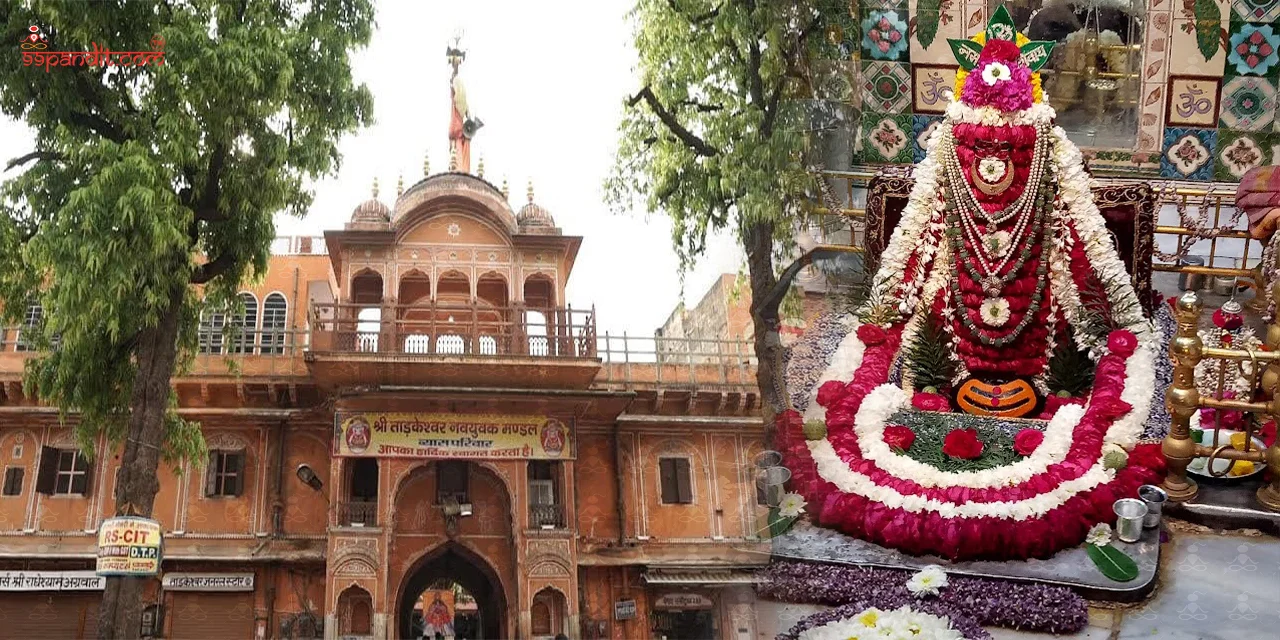
Famous Temples in Jaipur

Individuals are often spotted walking or driving to the temple early in the morning to make their prayers and bask in the gentle breeze.

It is particularly busy on Tuesdays and Saturdays, which are holy days for the Hanuman bhakts.

The peacefulness and spiritual atmosphere of this place guarantee that it is a secret gem of the city.

  • Location: Laxman Dungri, Delhi Bypass Road
  • God: Lord Hanuman
  • Timings: 6:00 AM – 8:30 PM
  • Best Place Around: Nahargarh Fort, Jal Mahal

9. Kale Hanuman Ji Temple – The Black Idol of Divine Protection

Kale Hanuman Ji Temple is among Jaipur’s most unique and spiritually charged temples. It is famous for containing a black idol of Lord Hanuman, which is extremely rare.

Unlike the common red or orange Hanuman statues, this beautiful black idol makes the temple stand out and attracts pilgrims from near and far. This type of Hanuman is said to represent strength, protection, and fierce loyalty.
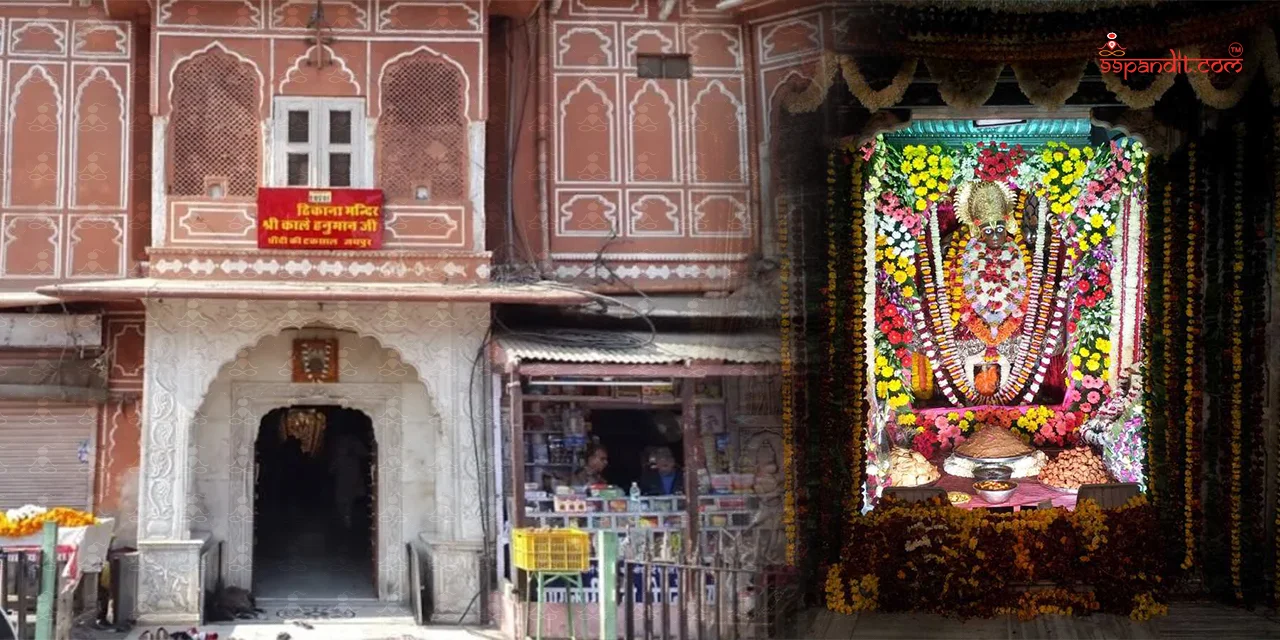
Famous Temples in Jaipur

Situated close to the crowded City Palace and Hawa Mahal, the temple is small in size but rich in spiritual energy.

Pilgrims, particularly those who want to free themselves of fear, hurdles, or ill energy, visit here to pray and recite Hanuman Chalisa.

Tuesdays and Saturdays are special days, with serpentine queues of devotees and a pious, devotional environment that charges the air with hope and faith.

  • Location: Chandpole, near Hawa Mahal, Jaipur
  • Deity: Lord Hanuman (in black form)
  • Timings: 6:00 AM to 9:00 PM
  • Best Place Nearby: Hawa Mahal, Tripolia Bazaar

10. Jagat Shiromani Temple – The Spiritual Gem of Amer

Jagat Shiromani Temple is a hidden gem in the old town of Amer. The temple was built in the early 1600s by Queen Kanakavati, wife of Raja Mansingh.

It makes it more emotional that she has built this temple in memory of her son Jagat Singh, who died at the age of 35 years.

The temple is a fine example of Rajput and Mughal architecture. Dedicated to Lord Krishna, Meera Bai, and Lord Vishnu, it is one of the few temples that offer deep devotion to Meera Bai and Lord Krishna.
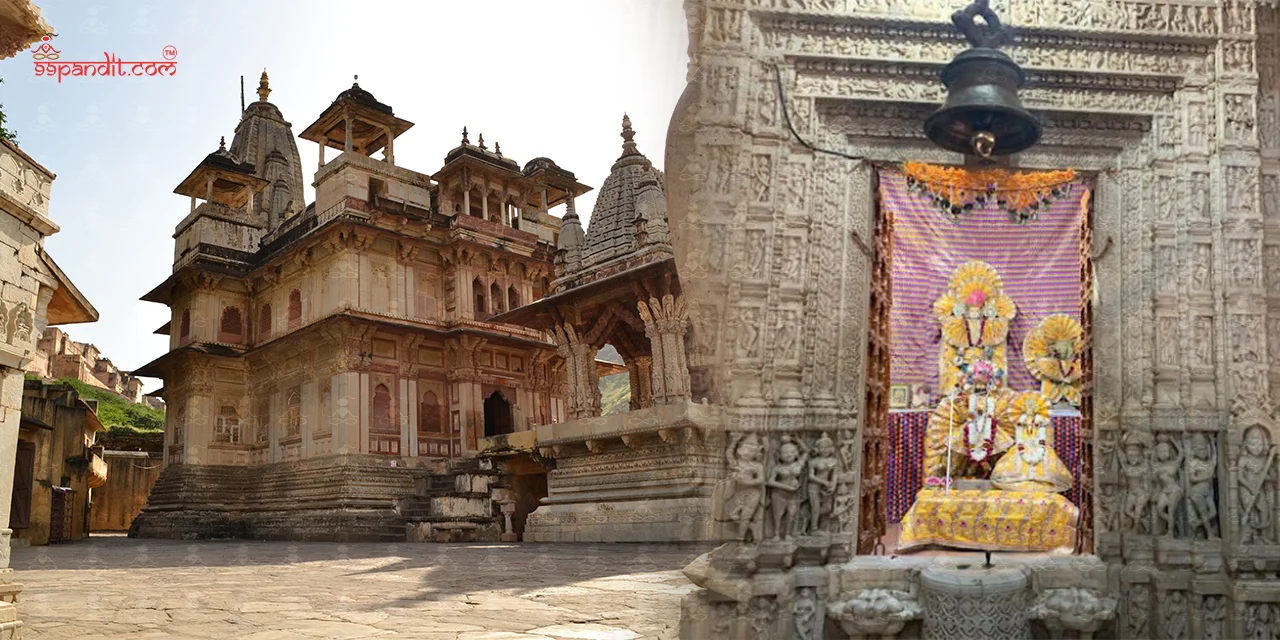
Famous Temples in Jaipur

The temple’s detailed marble, sandstone carvings, ornamental pillars, and elevated platform give it a real charm.

It is also said that Meera Bai herself worshipped the idol of Lord Krishna, adding an emotional and spiritual depth to the experience.

Set against the backdrop of the Aravalli Hills and old-world alleys of Amer, Jagat Shiromani Temple offers visitors a peaceful spiritual escape that blends faith with history.

  • Location: Amer Town, near Amer Fort, Jaipur
  • Deity: Lord Krishna, Meera Bai, Lord Vishnu
  • Timings: 6:00 AM to 8:00 PM
  • Best Place Nearby: Amer Fort, Panna Meena Ka Kund

Tips and Travel Tricks for Visiting Famous Temples in Jaipur

Exploring the famous temple in Jaipur is a divine experience in itself, but some useful tips and tricks can make your spiritual journey more convenient and enjoyable. Here are some of them:

1. Plan Your Travel during Mornings or Evenings

Almost all temples open early in the morning and close around noon, then reopen in the evening.

It is an ideal time to visit as it offers cooler temperatures, a peaceful environment, and the benefit of seeing early morning and evening aartis.

2. Dress Modestly

There is no dress code in these temples, but it will be respectful to wear a modest and traditional outfit when you visit the temples.

It is recommended to avoid sleeveless T-shirts and short pants and wear light cotton trousers or Kurtis, as it is best for the Jaipur weather.

3. Carry Essentials

It is important to pack up all the essential stuff like water, sunhats, scarf, and sunblock to protect yourself from the sun, especially when you are visiting during April, May, or June.

It is also helpful at the time of hiking or climbing up temples like Galatji and Khole Ke Hanuman Ji.

4. Combine Sightseeing

A number of temples are close to historic forts and monuments. For instance, you can see Shila Devi Temple while visiting Amer Fort or pair Govind Dev Ji Temple with a visit to City Palace. Organize your day accordingly!

5. Ask Before Taking Photos

There are only a few temples in Jaipur that permit photography, while others do not, especially within the shrine.

It is good to verify or request before taking photos, and never use flash during the prayers.

6. Use Local Transport

Temples in Jaipur are dispersed, and some are on hills. That is why travelling by local transport, like auto-rickshaws or taking a cab on hire, is time and energy-efficient, especially when visiting more than one temple.

Conclusion

The famous temples in Jaipur are not only sacred sites that offer prayers but also emblems of Jaipur’s rich cultural past and deep spirituality.

From the panoramic setup of Birla Mandir to the serene atmosphere of Galtaji, all these temples provide a tranquil and heavenly experience that will never be forgotten by all those who visit them.

The city temples are not just visited by pilgrims but also by people who enjoy seeing wonderful architecture, old customs, and serene environments.

Visiting the temples provides you with an added and more authentic side of Jaipur aside from the palaces and the forts.

Therefore, while you are walking through the Pink City, don’t miss this chance to visit these top 10 popular temples.

If you are visiting or are willing to perform any rituals within these temples, 99Pandit will help you book professional and verified pandits for a hassle-free and personalized puja experience.
Sri Arulmigu Ramanathaswamy Temple: Timings, History & Rituals

Sri Arulmigu Ramanathaswamy temple, located in Tamil Nadu, is one of the most auspicious temples of India.

The revered temple devoted to lord shiva is not just a significant place for Hindus but also a masterpiece of Dravidian structure.

When you walk through the infinite corridors and marvel at amazing ancient architecture, you will be surprised to find spiritual peace.

Sri Arulmigu Ramanathaswamy Temple

Linked to the epic Ramayana, the temple has a rich history associated with it. According to the legend, Lord Ram prayed here himself. Because of its calm vibe and legend, it has become a famous temple.

The blog will go through the fascinating 22 wells inside the Sri Arulmigu Ramanathaswamy temple.

Each well has its unique spiritual and mythological importance. Lord Ram’s quiver provides blessings varying from wealth and good health to the elimination of sins.

We will underline the architectural marvel, rituals, and practical details to guide with visit planning to the revered temple.

Timings & Entry Fee At Sri Arulmigu Ramanathaswamy Temple

Temple Timings

The timing of Ramanathaswamy temple for devotees opens from 5:00 AM to 1:00 PM and from 3:00 PM to 9:00 PM every day.

It’s preferred to visit the temple early in the morning or late in the evening to avoid the crowd and have a convenient darshan.

Time Activity
5:00 AM Temple Opens
1:00 PM Temple closes for the afternoon
3:00 PM Temple reopens
9:00 PM Temple closes for the night


Entry Fee

The Ramanathaswamy Temple does not charge admission. However, special darshan, rituals, and pujas come with minor fees.

For the most recent details on costs and hours, it is advised to visit the temple’s official website or get in touch with the administration.

Overview Of Sri Arulmigu Ramanathaswamy Temple

The Sri Arulmigu Ramanathaswamy temple is known as one of the 12 Jyotirlinga temples. The sacred shrine is dedicated to Lord Shiva.

As per the hindu mythology, the temple was created by Lord Rama, along with his consort Goddess Sita and brother Lakshman.

They worshipped together with lord shiva to remove their sin of killing Ravan, the brahman demon king.

The temple is constructed with its majestic corridors, huge sculptured pillars, and intricate crafting, making it an architectural marvel.

99pandit

BOOK TO GET 100% FREE CALL FROM PANDIT TO DECIDE DATE (MUHURAT)

99pandit

The Ramanathaswamy Temple is established on Rameswaram Island in Tamil Nadu. The temple is dedicated to lord shiva.

The Sri Arulmigu Ramanathaswamy Temple is known among the 275 Paadal Petra Sthalams. These are praised in the hymns of Saivite saints such as Appar, Sundarar, and Tirugnana Sambandar.

The legend says, the Lingam at Ramanathaswamy temple was situated by lord Rama himself before going to Sri Lanka.

This is one of the Char Dham pilgrimage sites. The temple was originally constructed by the Pandya dynasty during the 12th century.

This temple has India’s longest temple corridor, then later added by King Muthuramalinga Sethupathy.

The temple has been renovated and grown over the years, it attracts people from Shaivite, Vaishnavite, and Smartha customs due to its sacred significance.

Best Time to Visit Ramanathaswamy Temple?

The right time to plan your visit to Ramanathaswamy temple is in the winter season (November to February). This time is considered the peak tourist season for the Ramanathaswamy temple.

The weather during this time is pleasant and comfortable, making it the right time for temple visits and outdoor activities.

The temperature varies from 20°C to 30°C, which makes for a comfortable atmosphere for pilgrims.

  • Summer (April- June): The temperature during these months increases up to 40°C until July. Hence, it is not advised for outdoor sightseeing.
  • Monsoon (July- September): The monsoon season gets moderate rainfall, which impacts travel but yields stunning views of the village.
  • Winters (October- March): Winter is the right time to visit as it brings pleasant air and holy powers to the city.

People who are likely to witness temple rituals must plan their visit to overlap with Maha Shivaratri (February/March) or the annual Thirukalyanam occasion (July/August).

Legend Of Sri Arulmigu Ramanathaswamy Temple

The legend of Sri Arulmigu Ramanathaswamy temple is Lord Rama, who had honoured lord shiva here.

Lord Ram was the incarnation of lord Vishnu. While coming back from Sri Lanka and killing the brahmin king Ravan, he offered a prayer to lord shiva.

Ravan abducted Goddess Sita, and he was a brahmin king. When lord ram killed him to end his sins and relieve Goddess Sita, he had agreed to seek penance by honouring lord shiva.

To offer prayers, Lord Ram asked Lord Hanuman to get a Shiva linga from the Himalayas.

Sri Arulmigu Ramanathaswamy Temple

Though Hanuman was unable to return with the lingam on time, Goddess Sita created a lingam herself to offer.

Then lord Ram together performs prayers at the pre-decided time. This made lord shiva pleased, and blessed Lord Ram by manifesting himself in the lingam.

It’s considered that the same lingam is now known as the main sanctum of the temple. According to the legend, the lingam brought by lord hanuman has been kept in the temple.

That is called Vishwalingam or Hanumalingam. According to the instructions of lord ram, prayers are offered to Hanumalingam first before presenting prayers to lord Ramanathaswamy.

History Of Sri Arulmigu Ramanathaswamy Temple

The history of Sri Arulmigu Ramanathaswamy temple is mainly dedicated to the offering to lord shiva by Lord Ram.

This is considered one of the twelve jyotirlingas where Shiva is pleased as the ‘pillar of light’.

The hindu mythology states that the temple marks the place where lord Ram worshipped Shiva to relieve them from the sin of killing Ravan. The temple is a site of immense religious significance.

Lord Rama is said to have worshipped Lord Shiva here because he felt bad about murdering the Brahmin Ravana.

But as the island lacked temples, he dispatched Lord Hanuman to retrieve the Shivlinga from Mount Kailash.

If Hanuman did not bring the Shivling, Goddess Sita made it out of sand. Shiva Linga was a place of worship for Lord Rama.

99pandit

BOOK TO GET 100% FREE CALL FROM PANDIT TO DECIDE DATE (MUHURAT)

99pandit

The first to be honoured is the Shivalinga, Vishwalingam, who was born to Hanuman.

The temple was later built in the 15th century by King Udaiyan Sethupati and the Vaishya inhabitants of Nagoor.

Tirumalaya Sethupathi split the second section of the temple’s southern section in the sixteenth century. At the entrance are the statues of Tirumalaya and his son, established at the temple door.

The Ramanathaswamy Temple’s current design is thought to have been developed during the 17th century. The expert, King Kizhavan Sethupathi, led the temple’s development.

The participation of Jaffina Raja of the Sethupathi kingdom has been important in building the temple.

Sri Arulmigu Ramanathaswamy Temple Architecture

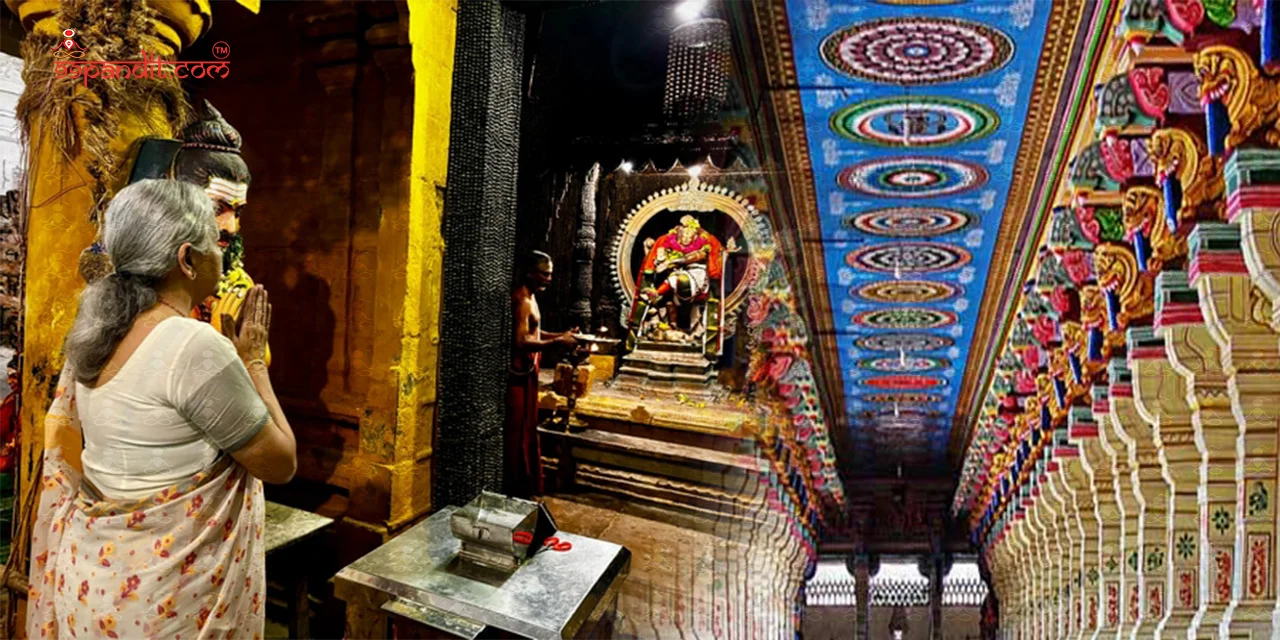
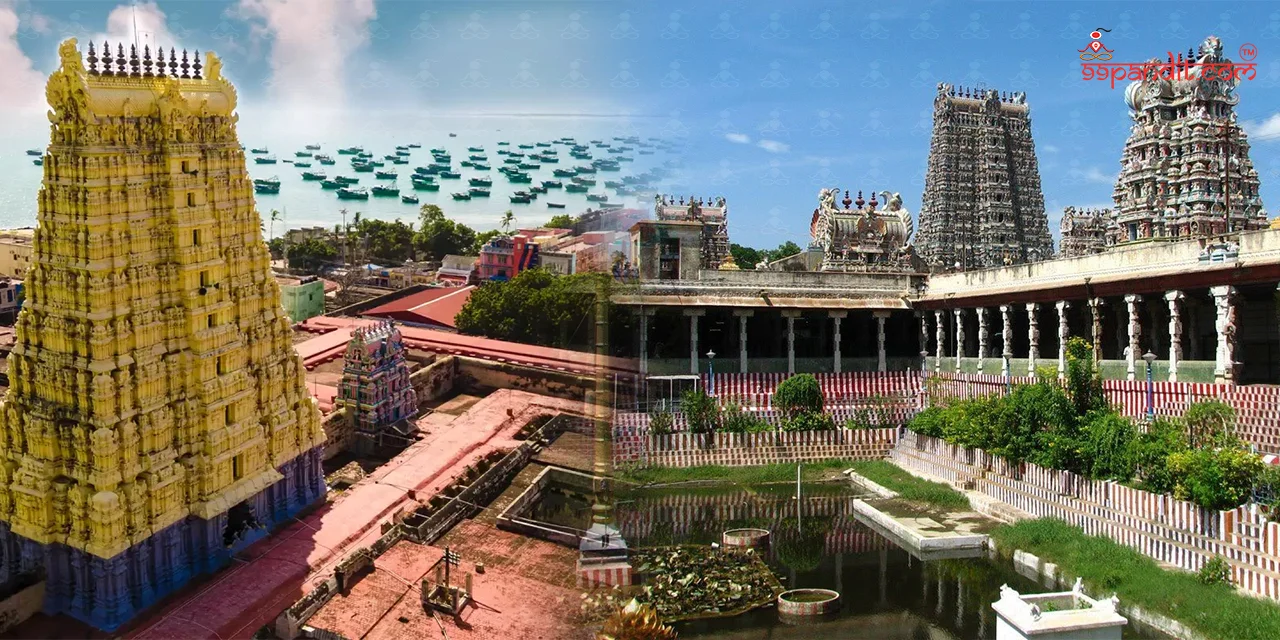
The architecture of the Ramanathaswamy temple is completely awe-inspiring. The complex has spread over 15 acres and is decorated with huge gopurams and long corridors.

The temple consists of the longest corridor between the hindu temples in India, extending across 1220 meters in length.

Gopurams

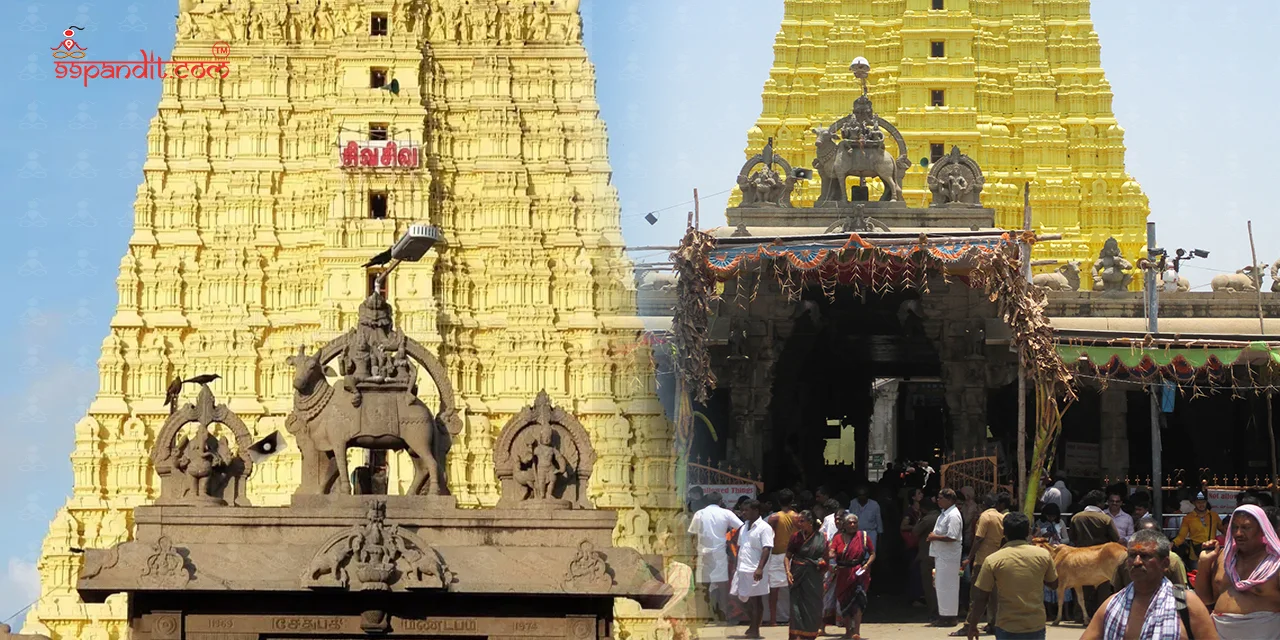
The Ramanathaswamy temple premise has 2 gopurams: the eastern gopuram and the western gopuram. The eastern gopuram is the main entry, with a height of 126 feet.

These gopurams are stunningly decorated with sculptures and carvings presenting multiple deities and mythological scenes.

Corridors

The Ramanathaswamy temple corridors are called the ‘Hall of Thousand Pillars’, which is a striking feature. These are supported by 1212 pillars carved with exquisite details.

The sheer scale and balance of these pillars are a testament to the structural carving of the Dravidian pattern.

Sanctum Sanctorum

The sanctum has the main deity of Lord Ramanathaswamy, in the form of a lingam. There are two other lingams as well in the temple: the Ramalingam, which is considered to be set up by lord Ram, and the Vishwalingam that is brought by lord Hanuman from Kailash. Followers first honour the Vishwalingam before worshipping Ramalingam.

Rituals & Pujas At Sri Ramanathaswamy Temple

The Sri Ramanathaswamy temple adheres to a strict schedule of rituals and pujas. The day begins with the Palliyarai Deepa Arathana (morning prayer) and concludes with Palliyarai pooja (night prayer). A few of the main rituals consist of:

Spadika Lingam Darshan

The ritual of Spadika lingam darshan is one of the most important rituals performed at the temple. The Spadika lingam, built of crystal, where followers offered special prayers in the early morning. People believe that the ritual removes their sins and blesses them spiritually.

Abhishekam

Another ritual is abhishekam, which is a ritualistic bathing of the idol with multiple sacred substances, including milk, curd, honey, gangajal, and sandalwood paste. The custom is scheduled at various times in the day and thought to be auspicious.

Pradosham

A special puja is performed twice a month, pradosham, during the twilight period. This is believed to be the most sacred time to honour lord shiva. In this ritual, Nandi is also honoured along with lord shiva.

Apart from this, the Ramanathaswamy Temple is popular for its vibrant and grand rituals. A few of them are below:

  • Maha Shivaratri: A significant ritual dedicated to lord Shiva is organized with great devotion. Followers around the world come and visit the temple to seek the lord’s blessings.
  • Rama Navami: The day is celebrated as the birth anniversary of Lord Rama with great spirit, including parades and special prayers.
  • Thai Amavasai: The festival is known as highly auspicious to take a dip in the Agni Theertham. People from the corners of the world participate in the ritual.
  • Sethu Karai Snanam: This practice consists of taking a holy dip at the site supposed to be the starting point of the legendary bridge connected to Lanka.

Important Things About Sri Ramanathaswamy Temple

The legend of Sri Arulmigu Ramanathaswamy temple is known for its architectural splendour and beautiful craftsmanship.

The temple premise spans more than 15 acres and present a fusion of Dravidian and Vijayanagara structural styles.

The main thing of the temple is its stunning corridors, called ‘Prakarams’, which are thought to be the longest in any hindu temple in the world.

Sri Arulmigu Ramanathaswamy Temple

Outer corridor extends over 6 km, with charmingly carved pillars and ornate sculptures that show mythological tales and characters from hindu scriptures.

The temple consists of multiple sacred tanks or ‘teerthams’. Taking a holy bath in these sacred tanks is considered an important ritual for visitors visiting the temple.

The most auspicious tank is the Agni teertham, located on the seashore, where followers thought that lord ram removes their sins. The temple even has Gandhamadhana Parvatham, a small hillock where lord Hanuman is thought to have hopped to Lanka.

Agni theertham snanam is an important ritual at Ramanathaswamy temple, which includes Agni theertham divine waters before moving into the primary part of the temple.

How To Reach Sri Ramanathaswamy Temple?

The availability to reach the Sri Arulmigu Ramanathaswamy temple is very convenient and easy. The route is connected by all modes of transportation, like air, rail, and road.

1. By Air

The pilgrims can reach the temple from Madurai airport, which is 174 km away. The airport at Madurai has frequent flight services between Ramanathaswamy temple and all metro cities like Chennai, Bengaluru and Delhi.

The airport offers transport services via taxi and buses that take the passengers to Rameshwaram.

Time: It takes between 3.5 to 4 hours to drive.

2. By Train

Rameshwaram railway station is the nearest to Ramanathaswamy temple, which is linked to Coimbatore and Madurai, and Chennai.

Various pilgrims use the station as an important stopover while travelling around India.

People might find the journey from Madurai to Rameshwaram via the Pamban bridge the most sightseeing.

Major Train Routes: Chennai, Madurai, Coimbatore

3. By Road

The major cities of Rameshwaram are Chennai (560 km), Madurai (174 km), and Trichy (220 km), which extend to Rameshwaram as these are well-kept highways.

The town offers an easy way to travel via road or through buses run by the government and the private sector, and taxi services.

Dress Code & Guidelines for entry into Arulmigu Ramanathaswamy Temple

While visiting the Arulmigu Ramanathaswamy temple, it’s essential to wear a decent dress. Here are the dress codes you need to follow:

For Men

  • Traditional attire
  • Kurta-pyjamas
  • Shirts and pants

For Women

  • Saree and blouse
  • Salwar kameez or Punjabi dress with a dupatta
  • Churidar with a dupatta
  • A half saree is also appropriate

General Guidelines

  • Pilgrims who come from different places of the world must offer respect to Indian culture and have to remove their shoes before entering the temple.
  • Arulmigu temple has an entry fee, unlike other temples. The authority asks to pay an entry fee to enter the temple.
  • Devotees are not allowed to capture photos inside the temple.
  • Prevent tight or body-revealing outfits.
  • You’re not allowed to enter the temple with wet clothes after the ritual baths.

Things To Explore Near Sri Ramanathaswamy Temple

Agnitheertham

A sacred sea, Agnitheertham, was established around the Ramanathaswamy temple. It’s thought that taking a dip in the holy water of this sea relieves one from past sins and cleanses their soul. Followers often perform the customs and prayers here before stepping into the temple.

Dhanushkodi

The next place is to explore the ‘tip of the bow’; this is a ghost town situated at the southern tip of Pamban Island.

99pandit

BOOK TO GET 100% FREE CALL FROM PANDIT TO DECIDE DATE (MUHURAT)

99pandit

The place is most known for its beaches, and the old town was destroyed by a cyclone in 1964. This is believed to be the place where lord ram created the Ram Setu to get to Lanka.

Gandhamadhana Parvatham

About 3 kilometres from the Ramanathaswamy temple, Gandhamadhana Parvatham is located.

It has a two-storeyed mandapam with the sign of lord rama’s feet on a chakra. The hill gives panoramic views of Rameshwaram and the iconic sea view.

Unknown Facts of Sri Arulmigu Ramanathaswamy Temple

Stairs to Moksha

There are 22 stairs at the Arulmigu temple. “Moksha Stairs” is the name of these stairs. It is thought that by going down these stairs and having a bath, one can find salvation. Here are some details on 22 stairs:

  • After slaying Ravana, Lord Rama erected the Shivalinga in Rameshwaram, according to the Ramayana. Those who ascend these stairs and worship Lord Shiva and Lord Rama at the temple are said to be saved.
  • The 127 stages of life are represented by the 127 steps. Every staircase stands for difficulties and roadblocks in a person’s life. The journey to self-realization is symbolized by climbing these stairs. Devotees recite the name of God and concentrate as they ascend these stairs. They become closer to God and purify their souls as a result of this process.

Wells in the Rameshwaram Temple

Within the complex of the Sri Ramanathaswamy temple, 22 wells have been constructed. Other wells found outside the temple have salty water.

But the water from the temple’s well is sweet. This is said that wells are created by the arrows of lord ram.

He pleased the waters from multiple pilgrimage sites to pour water into the wells. Hence, the wells are known as pilgrimages.

Conclusion

One important Hindu site of devotion in Rameshwaram, Tamil Nadu, is the Sri Arulmigu Ramanathaswamy Temple.

It contains the Shivalinga, also known as Lord Shiva’s lingam, which was worshipped by Lord Rama.

The temple is renowned for its lengthy hallways and construction in the Dravidian style. There are twelve Jyotirlingas, including the Ramanathaswamy Temple.

The Pandya kingdom extended the pilgrimage site in the 12th century. The shrines were renovated by Jayaveera and Gunaveera Cinkaiariyan.

Shri Radha Rani Mandir, Barsana: Timings, History & Significance

Shri Radha Rani Mandir, Barsana, is the most revered hindu temple. Radha Rani is considered the Goddess of Brajwasis. She is revered as the secret power of Lord Krishna.

She is the ultimate source of motivation for people residing in Barsana, apart from being a consort of Lord Krishna. Only in the region of Braj is Radha Rani honoured.

The Radha Rani Mandir, Barsana, is thought to be the place where Krishna is always omnipresent and is considered to bless everyone visiting the temple with great faith.

Shri Radha Rani Mandir Barsana

Brijwale allows you to cherish the spirituality of this powerful temple with its joyous environment.

Read the complete article to know the history, timing, and significance of the Radha Rani temple in Barsana.

Timing of Shri Radha Rani Temple, Barsana

Location of the temple – Radha Bagh Road, Barsana, Uttar Pradesh
Summer Timings – 05:00 AM to 02:00 PM & 05:00 PM to 09:00 PM,
Winter Timings – 05:30 AM to 02:00 PM & 05:00 PM to 08:30 PM

History of Shri Radha Rani Mandir, Barsana

The history of Shri Radha Rani Mandir, Barsana, includes the development of the temple around 5000 years ago by King Vajranabh.

He was the grandson of Lord Shri Krishna, but then it’s said that the temple was entirely destroyed. The idols were later founded by Narayan Bhat.

After that, the temple was constructed by Raja Veer Singh Deo in 1675. During the reign of Akbar, Narayan Bhat, for Raja Todarmal, created the architecture of the temple.

The temple has been built with red or yellow stone. Currently, the temple is located on a hill 250 feet high.

99pandit

BOOK TO GET 100% FREE CALL FROM PANDIT TO DECIDE DATE (MUHURAT)

99pandit

The hill, called Bhanugarh Brahamanchal, is named for Vrishbhanu, the father of Shri Radha Rani.

Near the Nanda Baba, he resided in Barsana, which was well-known in the Rawal area.

You will be struck by the tranquility and grandeur of the Radharani Temple’s architecture as soon as you arrive at Barsana.

The temple’s façade, which is adorned with beautiful flower designs and elaborate sculptures, is breathtaking.

It is the perfect location for devotion and spiritual reflection because of its calm ambiance. In Hindu mythology, the Radharani Temple is very important.

The personification of pure love, Sri Radha Rani, grew up in Barsana. Her love for Lord Krishna is represented by this shrine.

Significance of Shri Radha Rani Mandir, Barsana

For the Hindus, worship of god in temples has special importance. A number of temples are located in the country where devotees worship and come from far.

In the city of Barsana, this is the only temple of Shri Radha Rani Mandir. The temple is an auspicious place for the hindu religion.

In the state of UP, Mathura city, Shri Radha Rani Temple is dedicated to Goddess Radha.

The place is important for the followers of Krishna. It’s located on a hill, whose height is around 250 meters.

The history of the temple is very impressive, and multiple religious tales are connected with it. Hence, the hill is known as Barsane ka Matha.

Radha Rani Temple is popularly known as ‘Barsane ki ladli ka mandir’ and ‘Radha Rani ka mahal’.

Architecture Of Shri Radha Rani Temple

The architecture of Shri Radha Rani Temple is a combination of Rajasthani and Mughal forms, with beautiful carving of lattice work, domed ceilings, and exquisite marble crafting.

There are various small shrines in the temple premises devoted to numerous deities, but the main sanctum is devoted to Radharani.

The idol of Radha Rani is decorated with stunning jewellery and a colourful dress, which leaves followers fascinated.

Shri Radha Rani Mandir Barsana

The inner shrine of the temple is a place of sincere prayers and religious introspection.

With the divine experience of love between Radha and Krishna, Radha Rani Temple is a profound experience that engages you with the deities.

The serene environment and cultural significance of the temple make it a must-visit place for those seeking a deep engagement with a rich heritage of Hinduism.

With its arches, pillars, and red sandstone, the Shree Radha Rani Temple looks like a Mughal-era structure.

The temple is built with red sandstone and adorned with beautiful hand-carvings, arches, and domes with exquisite paintings on its interior walls.

This is believed to indicate the eternal love of Radha and Krishna by the red and white stones.

There are more than 200 steps in the temple, starting from the ground and going to the main gate.

The palace of Vrishbhanu Maharaj, where idols of Vrishbhanu Maharaj, Kirtida (Radha’s mother), and her siblings, Sridama, can be seen at the foot of the stairs.

Lord Brahma’s temple is established near the palace. Also, a temple of Ashtasakhi is located nearby, where Radha and her main sakhis are honoured. The temple is located on a hill, so the whole of Barsana town can be seen from it.

How Many Stairs in Shri Radha Rani Mandir?

If you are visiting Shri Radha Rani mandir, Barsana, then you must know how many stairs you have to climb to reach Radha Rani. One has to climb almost 200 stairs to seek blessings from Ladli ji.

Presently, a lift is accessible to seek darshan. People who are unable to climb the stairs can use the lift to reach the sanctum.

99pandit

BOOK TO GET 100% FREE CALL FROM PANDIT TO DECIDE DATE (MUHURAT)

99pandit

Along with this, if you are going by your personal transportation or car, then you can directly go to the top of the temple.

You will not have to climb the stairs and will directly reach the palace, i’e, the main sanctum, where you can visit Radha Rani temple, Barsana.

Main Celebrations Of Radha Rani Temple

In the Radha Rani temple, Radhashtami and Krishna Janmashtami (the birthday of Radha and Krishna) are the important festivals celebrated.

On both days, the temple is adorned with flowers and lights. The idols are dressed in new clothes and jewellery. After the arti, 56 kinds of dishes are prepared, which is called ‘Chappan bhog’.

The Holi festival in Barsana inside Radha Rani temple, apart from Radhashtami and Janmashtami, Lathmar Holi is also an important festival.

Shri Radha Rani Mandir Barsana

Pilgrims and followers come from different corners of the world to visit the temple and celebrate it.

Holi in Barsana starts a week before the actual day of the festival and continues until Rang Panchami.

Lathmar Holi

Lathmar Holi in Barsana is a fun and unique celebration of the Radha Rani temple. The story of this celebration is that when lord krishna used to visit Barsana to play Holi with Radha.

Lord Krishna is greeted by Radha Rani and her friends with sticks and drives them out of Barsana. Presently, the ritual is followed every year during Holi.

The men of Nandgaon, who are greeted like sons-in-law of Barsana, visit the town and are welcomed by women using colours and sticks.

Thousands of pilgrims come to Barsana and Nandgaon to celebrate the occasion, which often lasts for more than a day.

Radhashtami

The festival of Radha Rani’s birthday is celebrated with huge dedication and faith. It continues for 15 days after Janmashtami.

The idols of Radha and Krishna are adorned with flowers. This is the only day of the year when people can see the feet of Radha Rani because they are covered on other days.

Multiple people visit the temple to invoke the blessings of Radha Rani and take part in special celebrations.

How To Reach Shri Radha Rani Mandir, Barsana?

To reach Shri Radha Rani Mandir, Barsana, there are three easy ways to follow by road, train, and plane.

By Air

The closest airport to Barsana is Agra and Delhi International Airport for air travel. From any country and abroad, you can directly reach the temple by reaching Delhi and Agra airports.

The temple is located at a distance of around 130 km from Delhi and 100 km from Agra.

By Train

Mathura Junction is the nearest railway station to reach Barsana. From any corner of the country, you can reach the temple by train. Reaching Mathura junction, the Radha Rani temple is not far away.

By Road

Following National Highway 19 from Delhi, travelling by road, you can reach Barsana from Agra or Delhi.

The distance by road between Mathura city and Barsana is around 42 km, and from Delhi it is 120 km.

According to the traffic conditions, it often takes around 1 to 2 hours to cover the path by car.

Unknown Facts Of Shri Radha Rani Temple

Situated on the Bhanugarh hill, the Shri Radha Rani temple is thought to be 5000 years old. The name of the hill is derived from Shri Radha Rani’s father’s name, Vrishbhanu.

The town of Barsana is popular globally as it’s devoted to Radha and Krishna. Followers are coming from around the world to seek Radha Rani’s blessings.

The legend says, Barsana is the birthplace of Shri Ladli Ji, and she was brought up among her friends. Lord Krishna used to come to Barsana to see her beloved Radha Rani.

Legend has it that the fathers of Shri Radha and Shri Krishna, Nand Maharaj Ji and Vrishbhanu Maharaj, were close friends and once resided in Rawal and Gokul, respectively.

99pandit

BOOK TO GET 100% FREE CALL FROM PANDIT TO DECIDE DATE (MUHURAT)

99pandit

Both Nand Maharaj and Vrishbhanu moved to Nandgaon as a result of the horrors committed by Kansa.

Since Vrishbhanu lived on Bhanugarh Hill, Radha Rani moved there, and that is where the temple is now located.

There are countless tales of Krishna and Radha’s leisure activities, some of which Barsana saw.

According to legend, Krishna would visit Barsana to play Holi with Shri Radha Rani. The natives here still perform this practice on a religious basis.

The women of Barsana continue to play Holi with the men of Nandgaon. Visitors from around the globe gather to observe the festival and celebrate Holi here.

The temple echoes with soulful religious energies the entire year, which obtain momentum during occasions like Radhashtami and Holi.

Radha Rani Temple Travel Tips

If you’re considering visiting the Radha Rani temple in Barsana, follow the practical tips:

Dress modestly: It is necessary to appreciate the sanctity of the temple by dressing properly and covering your shoulders and knees.

Festivals: If feasible, schedule your trip during the festive season to experience the vibrant festivals in Barsana.

Respect local customs: Barsana is a traditional town, hence suggested to be mindful of local rituals and traditions.

Conclusion

This is all the necessary information you need to know about Shri Radha Rani Mandir, Barsana. I hope you like the article and share it with your Krishna devotee friends.

You should visit the temple at least once to experience the joy of the place and get drenched in the devotion of Shri Radha Rani. May lord krishna and Radha Rani fulfil all your wishes. Radhe radhe!

Sri Ranganatha Swamy Temple: Timings, History & Festivals

Sri Ranganatha Swamy Temple in Srirangam is a breathtaking wonder of South Indian temples and generations of spirituality. The temple is called Srirangam and is located in Tamil Nadu.

This is dedicated to lord Ranganatha, who is the incarnation of lord vishnu. This is one of the largest operating hindu temples in the world.

The history of this temple dates back over a thousand years, but its earliest construction to the ruler of the Chola dynasty in the 10th century AD.

Sri Ranganatha Swamy Temple

Through the ages, the temple has also been important to some modifications in terms of structure and extension.

Dynasties that ruled the place like the Chola, Pandya, Hoysala, and Vijayanagara empires, drive in the grandeur of their development and architecture.

Lord Ranganatha is the main deity of this temple, who is considered to be Swayambhu.

The temple contains multiple smaller shrines of other gods and goddesses outside the inner main sanctum.

The blog will consist of the details of the Srirangam Temple, its timings, history, and festivals celebrated. Read the complete article to know the history.

Timing Of Sri Ranganatha Swamy Temple

Timings of Sri Ranganatha Swamy Temple start from 7:30 AM to 1:00 PM. It opens again for devotees in the evening from 4:00 PM to 8:00 PM.

While visiting the Sri Ranganatha Swamy temple from Mysore, pilgrims can even go to see other places around Srirangapatna.

Places like Tipu fort, Nimishamba temple, Gosai ghat, and Jumma masjid are some places to view the beautiful scene.

Sri Ranganathaswamy Temple Darshan Timings
Morning Darshan 6:00 AM to 12:00 PM
Viswaroopa Seva 6:00 AM to 7:15 AM
Pooja 12:00 PM to 1:15 PM
Darshan 1:15 PM to 6:00 PM
Pooja 6:00 PM to 6:45 PM
Darshan 6:45 PM to 9:00 PM


Entry Fees

  • Quick Darshan: Rs . 200/- per head
  • Viswaroopa seva: Rs.100/- per head
  • General Entrance: Free

Significance of Sri Ranganatha Swamy Temple

The temple dedicated to lord Vishnu, Ranganatha Swamy Temple, is the most beautiful place in Srirangapatna.

This is a culturally popular town near Mysore city. The town has a name from the temple.

Lord Ranganatha is worshipped by the devotees as the supreme deity of the temple. The idol of him is in a relaxing position on a bed of serpent Aadi Sesha. Aadi Sesha is seen with seven heads, and is usually shown with lord vishnu.

There is a saying that the idol of the lord in the temple is one of the biggest idols in its resting position. Goddess Lakshmi’s idol by the side of the lord’s feet can always be seen.

99pandit

BOOK TO GET 100% FREE CALL FROM PANDIT TO DECIDE DATE (MUHURAT)

99pandit

Here, Goddess Ranganayaki is regarded as the main deity. Srinivasa, Ranganayaki, Rama, Narasimha, Sudarshana, Panchamukha Anjaneya, and Gopalakrishna are among the other shrines within the temple complex.

Every devotee is enthralled by the Lord’s idol’s beauty and the temple’s superb architecture. Its captivating carvings and enticing structure are captivating.

Despite being initially constructed in 894 AD, this temple saw numerous extensions and modifications during the Hoysalas, Hyder Ali, Vijayanagara, and Wodeyars Dynasties, among others.

Architecture Of Sri Ranganatha Swamy Temple

In the hindu shrine, one of the most prominent Sri Ranganatha Swamy temples shows a stunning example of architectural grandeur.

The crafting of temples could be seen back to Vijayanagar along with the Hoyasala style.

The entry of the temple has four majestic pillars that have been beautifully carved with the 24 Forms of Lord Vishnu.

Sri Ranganatha Swamy Temple

This is the best example of the Hoyasala architectural style that gives significance to the artistic side of any creation.

According to history, the Hoyasala praised art and created it, along with supporting artisans in their development.

The stunning works on the temple show a similar architectural style. Another example of a temple that has been painted with a huge array of mythological tales.

At the same time, Vijayanagara architectural influences are also discernible. The gopuram of the temple, with elaborate sculptures, depicts the Vijayanagar style.

The beautiful walls of Srirangam Temple resemble those of forts. The temple’s sanctum sanctorum is surrounded by a navaranga mandapam.

History of Sri Ranganatha Swamy Temple

The Sri Ranganatha Swamy Temple in Tamil Nadu was developed in 894 AD. Although it was redeveloped multiple times during varied rulers belonging to the Vijayanagar dynasty, Hoyasalas, Mysore Wodeyars kings, and Hyder Ali.

These empires were largely involved to a large extent in the expansion of the temple. The current architecture with its fascinating architecture is also a part of the changes during these reigns.

The temple was constructed by the kingdom of Vijayanagara, while after Hyder Ali and Hoysala rulers did some changes to it. Also, the kingdom of Mysore did a lot for the kingdom’s expansion.

According to the beliefs, the Cauvery river, while on her way, formed three islands called Shivanasamudra, Srirangapatna, and Srirangam. Followers who visit these temples on the same day are ensured to achieve moksha.

99pandit

BOOK TO GET 100% FREE CALL FROM PANDIT TO DECIDE DATE (MUHURAT)

99pandit

The story associated with the temple history is that the Lord Ranganatha Swamy temple is a self-manifested form of lord vishnu. He lives in Sri Vaikuntam according to the staunch faith of the Sri Vaishnavites.

Lord Brahma was pleased with him for a long time and hired the sun god to resume in his absence. From then on, the Lord Sun clan has been honouring the lord.

Lord Sri Ram, who belonged to the sun clan, pleased the idol, and after the battle with Ravan, to save his wife Sita, for recognition of loyalty and services, lord ram shows the idol of Ranganatha to Vibishana.

During his return to Sri Lanka, he kept the idol down to rest, and when he tried to pull it up again, the idol did not move.

The deity expresses his wish to stay near the Cauvery river and that he will be facing south, the direction to which Lanka is situated.

How To Reach Sri Ranganatha Swamy Temple?

In the western end of Srirangapatna, the temple is located, which boasts of wide historical and spiritual importance.

The temple is around 14 km from Mysore. And this is around 125 km from Bangalore.

The Kottarothsava festival is the ideal time of year to visit Srirangam Temple. Celebrated with great vigour and grandeur, this event is devoted to Lord Ranganatha.

Sri Ranganatha Swamy Temple

Due to its location on the Bangalore-Mysore State Highway, this town is accessible by road from both Mysore and Bangalore.

Numerous buses frequently go between these locations. To get to the temple from Mysore, one can also rent a taxi.

Travellers can take trains or even flights to Bangalore to get to Mysore and Bangalore. The closest train station to Srirangapatna is Mysore.

To reach the temple, follow the route below by road, rail, and air.

By Road

Srirangam is linked with other cities as well. There are often bus services available across South India. You can book a taxi, or cab, or a bus service to reach the temple.

By Rail

Srirangam railway station is close to the temple. This route has multiple connectivity routes. This is around 1.2 km from the Sri Ranganathaswamy temple.

By Air

If going via Air, Tiruchirapalli International Airport is the closest one. This is around 10 km from the Sri Ranganathaswamy temple. You can book a cab or an auto to reach the temple.

Dress Code

Following the temple traditions and witnessing followers coming around the country and worldwide throughout the year, it’s advised to wear a decent dress code without harming the temple’s customs.

Festivals of Sri Ranganatha Swamy Temple

The temple organises events and performs the celebration during Vaikunta Ekathasi that comes in November-December. A massive scale of devotees participate in the festival from across the country.

Lord Vishnu comes out of the doors of heaven in a beautifully decorated form, which is very awesome to see.

99pandit

BOOK TO GET 100% FREE CALL FROM PANDIT TO DECIDE DATE (MUHURAT)

99pandit

Srirangam is a holy destination where you can see and cherish festivals throughout the year.

Conclusion

Thus, apart from being cherished, the other holy landscape, Sri Ranganatha Swamy Temple, is an active testimony of India’s immersive spirituality and tradition.

Its immortal existence still evolves in millions of followers in search of peace and divine introspection, and connectivity.

Multiple modifications and alterations were performed on the Srirangam temple; hence, its spiritual importance and aesthetic beauty will also be upgraded. The temple plan consists of seven concentric prakaras or walls.

The devotees mark their path to spiritual enlightenment by circumambulating each of these prakaras as part of their devotional practice.

As a religious and cultural hub, the temple has drawn followers and peace-seekers from all over the world.

It has been decorated by kings and their obedient subjects at various points in time, guaranteeing the site’s ongoing upkeep and preservation given its great religious significance.

Chamundeshwari Temple: Timings, Entry Fee, & Travel Tips

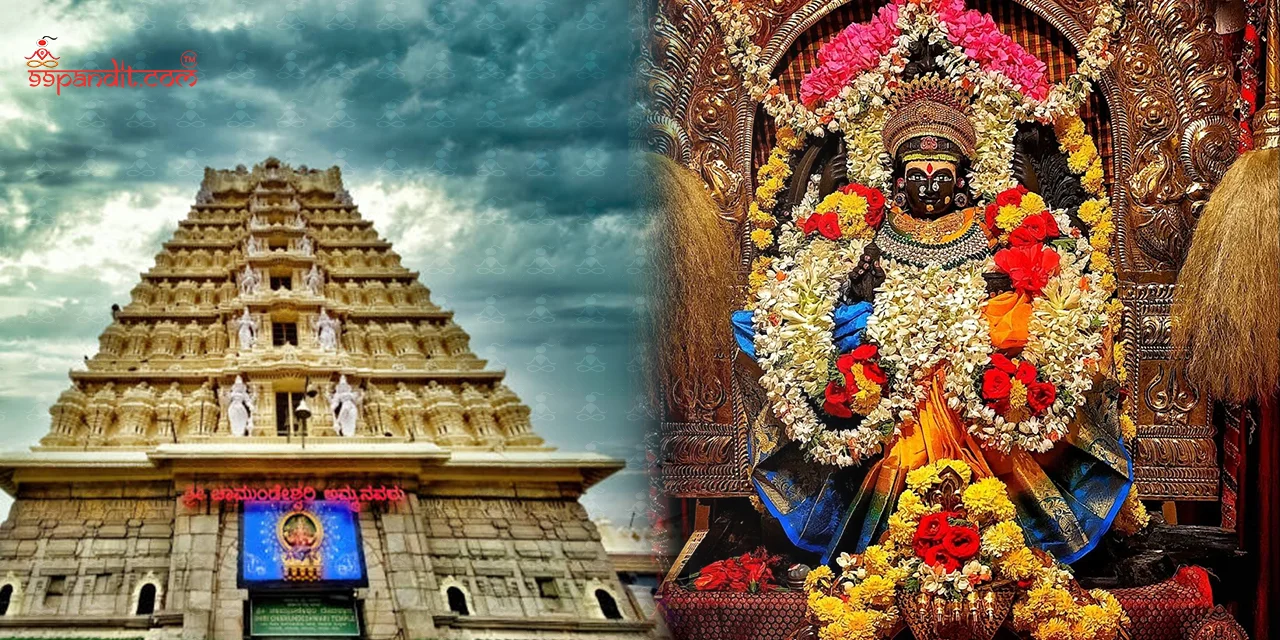
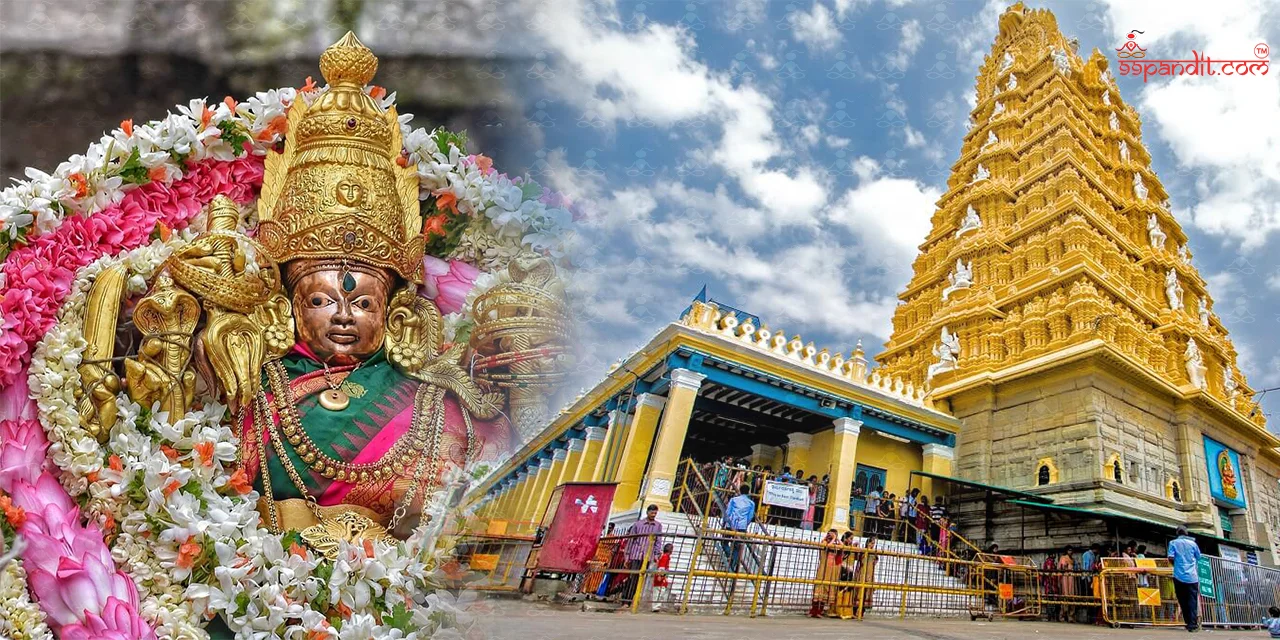
Chamundeshwari Temple: Have you been to Mysore in Karnataka? If not, then you are missing something exceptional in an architectural marvel.

When you reach the royal city of Mysore, the place that attracts you the most, along with the Mysore Palace, is the temple of Maa Chamundeshwari.

This Chamundeshwari temple is situated on the Chamunda hill, 1000 meters above sea level.

The temple is 13 kilometres away from Mysore city and is about 1065 meters above sea level and the construction of a temple at such a height is a wonder in itself.

Chamundeshwari Temple

Apart from the magnificent architecture, the Maa Chamundeshwari Temple in Mysore also has great mythological significance.

This temple is dedicated to Maa Chamunda, a form of Maa Durga. It is one of the 51 Shaktipeeths and 18 Mahashaktipeeths.

It is believed that Maa Shakti’s hair had fallen here, and like other Shaktipeeths, Bhairav always protects it.

With 99Pandit, let us discover the significance of the Maa Chamundeshwari temple in Mysore.

Along with this, we will also learn the Darshan timings of the temple, its entry fee, and how you can get there easily. So, without further ado, let’s get started.

Timing of Chamundeshwari Temple

The Chamundeshwari Temple in Mysore also has fixed visiting hours for devotees and tourists. The following are the Devi Chamundeshwari Temple Darshan timings:

Darshana and Pooja: 7:30 AM to 2:00 PM, 3:30 PM to 6:00 PM, and 7:30 PM to 9:00 PM.
Abhisheka: 6:00 AM to 7:30 AM and 6:00 PM to 7:30 PM.
Abhisheka on Fridays: 5:00 AM to 6:30 AM.

In addition to that, the temple offers free meals, Dasoha, to the devotees daily between 12:30 PM and 2:30 PM.

Here is an elaborate table of Chamundeshwari Temple timings in Mysore:

Activity Regular Timings Friday Timings
Darshana and Pooja 7:30 AM – 2:00 PM No change
3:30 PM – 6:00 PM No change
7:30 PM – 9:00 PM No change
Abhisheka 6:00 AM – 7:30 AM 5:00 AM – 6:30 AM
6:00 PM – 7:30 PM No change
Dasoha (Free Meals) 12:30 PM – 2:30 PM No change

These Chamundeshwari Temple Mysore timings have been crafted so that the devotees can schedule their visit effectively.

The Chamundeshwari Temple timings in Mysore have been planned to support different rituals and make all devotees experience something pleasant.

Overview of Chamundeshwari Temple

The famous Chamundeshwari Temple in Mysore is situated on the Chamundi Hills and can be seen from every corner of the city.

It is a major religious place for Hindus. This temple is dedicated to Maa Chamuda, a form of Maa Durga.

The fierce form of ‘Shakti‘ is ‘Chamundi‘ or ‘Durga‘. She is the slayer of the demons ‘Chanda‘ and ‘Munda‘ as well as ‘Mahishasur‘.

99pandit

BOOK TO GET 100% FREE CALL FROM PANDIT TO DECIDE DATE (MUHURAT)

99pandit

Chamundeshwari is known to the people of Karnataka as Nada Devi, which means “State Goddess.”

The temple is considered to be a symbol of the killing of the demon Mahishasura by Maa Chamunda. There is a tall statue of Mahishasura Chamundi Hill, and after that, there is a temple.

This temple (Chamundeshwari Temple) was built in the 12th century. It is also considered a Shakti Peeth because the hair of Maa Sati fell here. In South India, it is also known as Krocha Peetham.

History of Chamundeshwari Temple in Mysore

The temple has been standing tall for centuries and was built in the Dravidian style of architecture.

The original part of the present temple was built in the 12th century by the rulers of the Hoysala dynasty.

The present temple was built in the 16th century by the Vijayanagara rulers and renovated in the 19th century by the King of Mysore.

Chamundeshwari Temple

The total height of this 7-storey temple is about 40 meters, which is an excellent example of Dravidian architecture.

The 1000 steps to the temple were constructed by Dadda Devraja Wodeyar in the year 1659.

The place where this temple was built was known as “Kraunchapuri” in ancient times, and even today, this Shaktipeeth is known as “Kraunchapeeth” in South India.

This temple is more than 1000 years old and was once the Kulmandir of the dynasty of Mysore, where the Kuldevi was worshipped every year by the King of Mysore.

First, the temple was governed by the rulers of Mysore, and it received its current shape owing to the extensions provided by the Maharajas of Mysore.

Architectural Significance of Chamundeshwari Temple

This temple was built in the Dravidian style of architecture and is in the shape of a quadrangle.

The sanctum sanctorum of the Chamundeshwari Temple houses the soul of the temple, the embodiment of the divine deity.

Adorned with intricate artwork and devotion, it connects the mortal with the ethereal.

Above it, the ‘Vimana,’ a graceful little tower, is a testimony to human creativity and devotion.

On the way to this temple, you see a huge statue of Nandi made of black graphite, which represents the bull mount of Lord Shiva.

99pandit

BOOK TO GET 100% FREE CALL FROM PANDIT TO DECIDE DATE (MUHURAT)

99pandit

As you travel inside the Chamundeshwari Temple, a huge statue of Krishnaraja Wodeyar III comes into view.

His image overlooks the sanctum sanctorum, surrounded by the statues of his three wives – Ramavilasa, Lakshmivilasa, and Krishnavilasa- a testimony to his devotion and legacy.

Within the sanctum sanctorum of the Chamundeshwari Temple, Goddess Chamundeshwari is carved in stone.

With eight arms and a seated posture, she radiates power and grace, attracting all to avail her grace.

The majestic Nandi statue is more than 15 ft. high and has a 24-ft. long neck, which is encircled by beautiful bells.

A ‘Mahishasura’ idol tells the story of valour and victory. Nearby, the ‘Chamundi Village’ beckons with its wonders – Mahabaladri, Narayanaswamy temples and idols of Mahishasura and Nandi.

Besides the grand figures of the Gods, you will be able to see 7 “kalashas at the top of the tower. The grand seven-tier tower is called the ‘gopura’ or ‘gopuram.’

The beautiful entrance of the temple draws much attention from the visitors as it consists of silver gates, which give a glimpse of the royal past.

Mythological Story Related to the Chanmundeshwari Temple

According to the legend, Mata Sati, daughter of King Daksha, married Lord Shiva over her father’s objections.

When King Daksha later arranged a Yajna, everyone was invited except Lord Shiva and Maa Sati.

Adamant to go for her father’s Yajna, she went solo despite objections by Lord Shiva. She was taken aback by being disrespected and insulted by her father.

Chamundeshwari Temple

Having listened to insults hurled at her husband, Lord Shiva, her father, she felt angry.

Blaming herself as a cause for her husband’s disrespect, so incensed regarding the wrongdoing by her father, she burned herself by jumping into the Havan.

Mounting and angry over the death of Sati, Lord Shiva grasped the burnt body on his shoulders and started the tandava.

The Gods were frantic and prayed to Lord Vishnu to step in as Shiva lost interest in his tasks and obligations.

The Gods and the Goddesses feared that Shiva would destroy the universe in his rage. So, Lord Vishnu intervened, and with his chakra, he severed the body of Sati into multiple pieces.

The body parts of Sati were dropped in many locations, and wherever the body parts dropped, those locations were turned into holy shrines by devotees.

The sacred sites with the body parts of Sati have now been turned into temples by devotees over time. The temples are now referred to as Shaktipeethas.

The Chamundeshwari temple is one of the 18 Maha Shaktipeethas. The hair of Sati Devi is said to have fallen here when Shiva, infuriated with rage and grief, took her charred body on his shoulders.

The Chamundeshwari Devi Shaktipeetha is also referred to as Krouncha Pitham, for in ancient times, the spot was called Krouncha Puri.

Second Story

According to another mythological story, the goddess the demon king Mahishasura on this Chamundi Hills.

Once upon a time, this land was the home top a buffalo-headed man named Mahishasura, who was blessed by Lord Brahma that no human could kill him.

Mahishasura, with this boon, started tormenting mortals and gods. The gods realised that Mahishasura would die only at the hands of a woman due to the blessing he received from Lord Brahma.

All the gods of heaven lent their abilities to create Mahadevi, who fought Mahishasur with Ashtabhuja and a lion as her vehicle.

With these powers and abilities, the goddess assumed the form of Chamundeshwari. Goddess Chamundeshwari’s battle with Mahishasur lasted for ten days.

Mahishasura was eventually defeated and killed. This victory is celebrated all over India as the Dussehra festival.

Third Legend

According to the third story, after the death of Mahishasura, two demons, Shumbh and Nishumbh, were enchanted by the beauty of Goddess Durga and requested her to marry them.

When the mother rebuked them, they sent their warriors, Dhumralochan and Raktbeej, who were killed by Goddess Durga and Goddess Kali, respectively.

Then, they sent their brave general, Chand-Mund, to kill Goddess Durga, also known as Chamunda or Raktkali. This form of her is also named after this name.

Festivals Celebrated in Chamundeshwari Temple

The festivals celebrated at the Chamundeshwari temple are colourful and festive events.

The pomp and magnificence of the Mysore Dasara festival are unmatched, with rich processions, cultural events, and religious rituals.

The Chamundeshwari Rathotsava (Chariot Festival) is another important event celebrated with great enthusiasm and pomp.

Other significant religious festivals, such as Navaratri and Deepavali, have special celebrations at the temple, with traditional music and dance performances.

Such festivals gather local population participation and tourist attendees from throughout the nation, leading to cultural tourism.

Entry Fee of Chamundeshwari Temple in Mysore

The temple is especially renowned for being associated with the Wodeyars of Mysore, who have been devout followers of the goddess.

Goddess Chamundeshwari is worshipped as the guardian deity of Mysore, and the temple is an intrinsic part of the cultural landscape of the city.

The temple gets quite a number of Hindu pilgrims throughout the year and is one of the 18 Shakti Peethas in the nation, a place where it is said the hair of Sati fell off.

99pandit

BOOK TO GET 100% FREE CALL FROM PANDIT TO DECIDE DATE (MUHURAT)

99pandit

The historic shrine is held to have been constructed by the Hoysala dynasty of the 12th century and, later, by the Vijayanagara Empire in the 17th century.

If we talk about the entry fee for the temple, then it is free for everyone. There is no entry for general darshan.

But if you want to do VIP Darshan, then you have to pay. Here is the detailed entry fee for the temple:

  • General Entry: Free
  • Special Entry: ₹100 per person (for quick darshan)
  • VIP Darshan: ₹300 per person (for faster access)

Travel Tips: How To Reach There

To reach Chamundeshwari Temple, any train running between Bangalore Railway Station and Mysore can be taken.

Shatabdi Express connects Mysore to Chennai. Karnataka Road Transport Corporation buses run from Mysore to various states.

Bangalore can be reached by air from all major cities of the country. One can go to Mysore by rail or road.

Hotels, lodges, Dharamshala, and comfortable guest houses are available for people to stay in.

Here is a detailed description of how you can easily travel to Chamundeshwari Temple Mysore by three means of transportation:

1. By Plane

Bangalore is the nearest airport, located 160 km away. Tourists can drive to Chamundi from Bangalore or take the railway to Mysore.

2. By Train

As told earlier, you can also choose a train to reach Mysore. The nearest railway station to Chamundi is Mysore. It is just 13 km away.

3. By Car

Chamundi Hills is easily accessible by road from Mysore and Nanjangud. Karnataka State Road Transport Corporation buses run every 20 minutes. Alternatively, one can take a taxi or drive on one’s own.

Interesting Facts About Chamundeshwari Temple

1. The temple is a residence place for different Gods. As you enter the temple, you can see the idol of Lord Ganesha. Lord Ganesha is believed to be the remover of all obstacles. As you move further ahead, you will find a statue of Nandi just in front of the sanctum sanctorum. Just very near to the holy chamber, you can also find an image of Lord Hanuman.

2. Locals are of the view that by ascending the temple steps, individuals can shed their past sins. Ascending so many steps to the temple top is extremely demanding, and if you can reach the top yourself, it will be an incredible feat in itself.

3. The Nandi murti in Chamundeshwari Devi Temple is the biggest in India.

4. The temple was believed to have been constructed nearly 600 years ago. In 1573, Chamaraja Wadiyar was praying when he was hit by lightning, and it almost burned his hair. From that time on, he was referred to by the people as Bald Chamaraja Wadiyar.

5. It is said, and rather than that, it seems true that he was rescued by the Goddess herself since he was religiously praying to her, or else how can one remain alive after such a gruesome incident?

Conclusion

In conclusion, the Chamundeshwari temple in Mysore is a major religious place for Hindu pilgrims.

Thousands of devotees and tourists come to this temple every day. This temple is located on the Chamundi in the state of Karnataka.

This temple is dedicated to Chamundeshwari Devi. Chamundeshwari Devi is considered to be a form of Goddess Durga.

This temple, located on Chamundi Hill, is supposed to be a symbol of the killing of the demon Mahishasura by Goddess Durga.

The best time to visit this magnificent temple is during October and March. You should see the temple during winter when the weather is nice and suitable for sightseeing.

The temple is particularly busy during the Dussehra Festival, when special pujas and rituals are conducted to worship the goddess.

I hope you enjoyed reading this article. We will meet again with such an interesting blog later.

Till then, keep scrolling and keep reading our blogs for better insights into Puja bookings from 99Pandit.

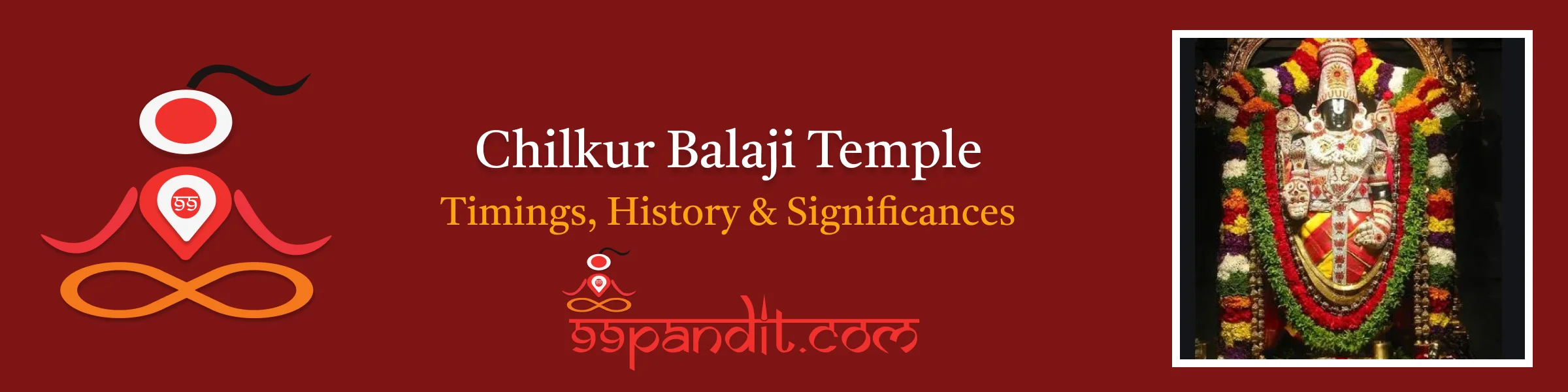
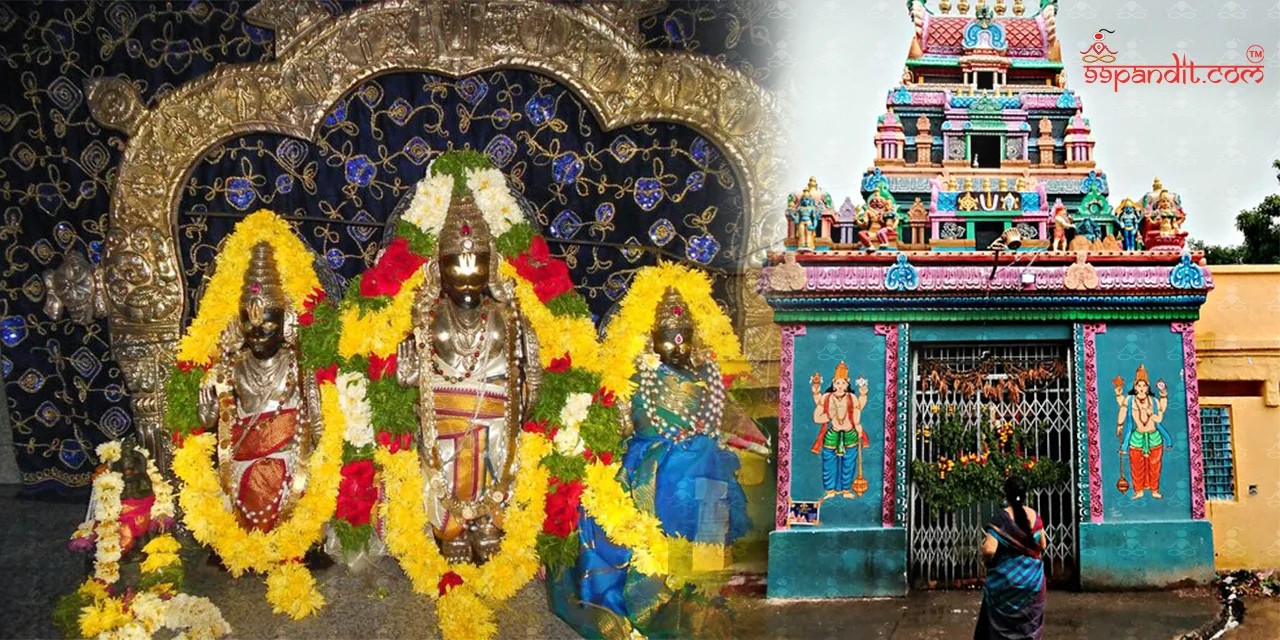
Chilkur Balaji Temple: Timings, History & Significances

The Chilkur Balaji temple is the Visa God temple of Hyderabad. This is a peaceful and revered Balaji temple located in the quaint village of Chilkur.

The temple is about 30 km from Hyderabad. The temple, covered by lush greenery, receives thousands of tourists yearly. It’s an excellent place for meditation and secluded retreats.

The Osman Sagar Lake’s serene water welcomes you when you go closer to the temple. Adds to the calm environment of the place of worship.

Chilkur Balaji Temple

You will get yourself from the rush of the city and in a state of faith and serenity as soon as you enter the temple.

The appearance of the Chilkur Balaji temple, its style, and its architecture make it more beautiful. It was built around half a thousand years ago.

That’s why it is a cultural heritage site. Thus, if you want to know more interesting facts about the temple, dive into the divine gem among the oldest temples of Telangana.

Chilkur Balaji Temple Timings

The pilgrims who are planning to seek the blessings of lord Balaji just the chilkur Balaji temple timings before going there.

The timing follows a particular schedule to adjust the multiple devotees who visit the temple regularly.

There are the regular timings:

  • Morning Hours: 5:00 AM to 8:00 PM
  • Afternoon Break: 1:00 PM to 4:00 PM (Temple remains closed)
  • Special Days: During festivals and special occasions, the temple may have extended hours to manage the increased influx of devotees.

History Of Chilkur Balaji Temple

The temple is one of the oldest in Hyderabad and is thought to have been constructed during the time of Madonna and Akkanna, the uncle of Bhakta Ramdas.

Based on multiple beliefs and ancient tales, the temple was built by the devotees of Balaji.

He used to visit Tirupati every year. Nonetheless, due to one occasion, he could not do so, suffering a serious illness.

Impressed by his faith, Lord Venkateshwara came into his dream and guided him to find his idol, along with the idols of Sridevi and Bhoodevi. He also instructs him to develop his glorious temple.

99pandit

BOOK TO GET 100% FREE CALL FROM PANDIT TO DECIDE DATE (MUHURAT)

99pandit

The devotee was touched by such incidents and spotted a molehill at the place given by the Lord.

Thus, he started digging at that place till his axe struck Lord Balaji’s idol. The earth suddenly turned scarlet as blood began to pour from the wounds.

Then, the devotee heard a supernatural voice telling him to pour milk all over the place.

This resulted in the idols of Lord Balaji, joined by Sridevi and Bhoodevi, emerging from the ground. These idols were then put in the temple.

Since then, all devotees who are unable to go to Tirupati for any reason can receive the blessings of Sri Balaji Venkateswara in Chilkur.

With its picturesque setting, the shrine welcomes thousands of people from around the globe.

Rituals & Traditions of Chilkur Balaji Temple

In the temple of Chilkur Balaji, devotees perform specific rituals and customs.

The Unique Practice of Circumambulation

One of the most unique rituals of the temple is the performance of ‘Pradakshina’ and circumambulation.

The Chilkur Balaji temple allows devotees to perform 108 pradakshinas across the temple.

People walk around the sanctum shrine 11 times while seeking a wish and 108 times after their wish is achieved.

Such a unique process is considered to have the strength to complete the devotee’s wishes.

It’s mainly for those looking to get a visa to travel abroad. Thus, the name is called ‘Visa Balaji.’

Devotional Services

There are various devotional services and rituals performed for the entire day in the temple. It includes Suprabhatam, Archana, and Harathi (aarti).

The rituals offer a profound spiritual experience and boost a deep relationship between the devotees and the lord.

Significance Of 108 Pradakshinas in Chilkur Balaji Temple

Sri Chilkur Balaji temple is called as visa Balaji Temple, as we have mentioned already in the article.

But you know about a unique ritual performed in this temple. This is a tradition of performing 108 pradakshinas around the sanctum. There is a simple explanation for the importance of 108 circumambulations.

The Ritual of 11 Pradakshinas

The custom of 11 pradakshinas begins where the journey starts. Offering to the deity for the wish to be granted, followers do pradakshina around the sanctum shrine with hope and confidence. The request was made to the god, lord Balaji, represented by the number 11.

Chilkur Balaji Temple

What is the meaning of 11? It shows the devotee’s dedication to the divine of the temple and their faith in Eleven11, which means ‘1 soul and 1 body’, 108 means ‘1 shows the existence of the almighty, 0 shows creation, and 8 shows the time taken by the human to come into the world.’

The majority of devotees come here to get the visa issue resolved. Hence, to justify the alternate name of the Visa Balaji temple.

The Fulfillment and the Return

Whenever a wish of devotees is granted – especially if this is about getting a visa – they visit the temple to seek blessings.

They show appreciation to god and perform 108 pradakshina. This is a way to show your dedication.

Hinduism attributes great holy significance to the number; it is thought to stand for the cosmos, eternity, and the complete life cycle.

The Process of Performing 108 Pradakshinas

Executing 108 circumambulations is a religious activity to fulfill your wishes. Here’s how devotees often undertake the spiritual journey.

Preparation: Pilgrims usually ready themselves mentally and spiritually before starting the 108 pradakshinas. It might include fasting, meditation, and reciting prayers.

Execution: The pradakshinas are accomplished by walking across the sanctum in a clockwise direction. Every pradakshina physically manifests the devotee’s appreciation and faith in the divine.

99pandit

BOOK TO GET 100% FREE CALL FROM PANDIT TO DECIDE DATE (MUHURAT)

99pandit

Mindful Devotion: As they perform the circumambulation, followers remain mindful and recite the name of lord balaji and specific prayers. Such mindfulness helps to manage spiritual aim and dedication.

Completion: Based on 108 pradakshina, followers experience a profound sense of gratitude and spiritual upliftment. It’s the time of a strong connection with the divine and justification of faith.

Location of Chilkur Balaji Temple

The Chilkur Balaji temple is situated in the serene village of Chilkur. The village is around 30 km from Hyderabad, the capital city of Telangana.

The temple stands amidst natural beauty and offers devotees a peaceful and calm environment.

  1. Temple Location: Chilkur temple, Chilkur, Moinabad Mandal, Ranga Reddy District, Telangana, India.
  2. Proximity to Hyderabad: The temple is in proximity to Hyderabad. It provides a suitable getaway from the rush of the city and makes it easily accessible to both locals and visitors.
  3. Scenic Surroundings: The temple’s scenic surroundings can provide the serene sightseeing of the Osman Sagar Lake, adding to the spiritual experience of its guests.

Best Time To Visit Chilkur Balaji Temple

The right time to visit the Chilkur Balaji temple is from March to June, as the temperatures go beyond 40 degrees Celsius.

Rains follow the temperature until October, making it highly unstable. But due to this, you may feel humidity and dampness in the weather.

Chilkur Balaji Temple

Hence, the best time to visit Andhra is between October and December, when the weather is most pleasant during the period.

When traveling to Chilkur Balaji, try to ignore weekend plans as you may face a crowd of devotees coming in large numbers to perform pradakshina. You could be in a long queue.

Festivals & Special Days Of Visits to Chilkur Balaji Temple

A number of festivals and events are celebrated in the Shri Chilkur Balaji temple with great faith. A few of the major festivals are:

Brahmotsavam

This is a huge annual festival celebration with custom rituals, processions, and cultural activities. It is held in March or April.

Vaikunta Ekadasi

Organized in December or January, the festival marks an encouraging day when pilgrims invoke the deity to get blessings for prosperity and inner growth.

Pavitrotsavam

In August, a purification ceremony is performed. In this, special rituals and prayers are scheduled to seek forgiveness for any wrongdoings in regular honoring.

Hanuman Jayanti

To celebrate the birth anniversary of lord Hanuman, a true devotee of lord Balaji. It comes in April, and people perform it with special prayers and parades.

The unavailability of financial transactions makes a spiritually enriching environment at the Chilkur Balaji temple.

99pandit

BOOK TO GET 100% FREE CALL FROM PANDIT TO DECIDE DATE (MUHURAT)

99pandit

The goal stays on sincere dedication and faith, boosting a deep connection with the deity.

The ritual supports the dedication of the temple to manage spirituality and authenticity.

How To Reach Chilkur Balaji Temple?

You can be there by road, train, and air, following the route:

By Road

Private vehicle: Reaching the Chilkur Balaji temple is one of the most comfortable options via road. You can reach the temple by road using your own vehicle or by booking a taxi.

It will take around 45 minutes to 1 hour from the Hyderabad city center, based on the traffic situation.

Public transportation: The regular buses of TSRTC (Telangana State Road Transport Corporation) connect Hyderabad with Chilkur.

You can get a ticket and depart from Mahdipatnam or other main bus stops in the city. The bus ride is a comfortable option to reach the temple.

Cab services: You can use a taxi or cab to reach the temple directly. However, it can be a little costly; the option is for those who want a direct or private route.

By Train

Nearest railway station: The closest railway station to the Chilkur Balaji temple is the Hyderabad Deccan railway station. You can book a taxi from the station or get a bus to reach the temple.

Other railway stations: The other major railway stations are the Secunderabad and Kacheguda railway stations in Hyderabad. You can easily find a taxi or public transport to reach the temple from these stations.

By Air

Nearest airport: The closest airport to the Chilkur Balaji temple is Rajiv Gandhi International Airport from Shamshabad, Hyderabad.

From the airport: You can book a taxi or cab or use the airport shuttle service to reach the temple.

It will take around 40-50 minutes as this is approximately 28 km.

Tips for Visiting Chilkur Balaji Temple

  • There are multiple shops in front of the temple for coconuts, flowers, and other items to offer inside the temple. Yet, no offerings are accepted.
  • When visiting the temple, thank the deity by performing 108 pradakshinas, take regular breaks, and do not come without eating anything.
  • If you need to donate to the maintenance of the temple, you can deposit the amount in their bank account.
  • You can also read religious stories and other books for just 5Rs.
  • There is no service for VIPs, and neither does the temple have a donation box for the devotees. The temple believes in equality in the eyes of god.
  • The temple is located in a quiet and peaceful village known as Chilkur Village. Hence indeed, enjoying the greenery and sightseeing around, one could not find something better than this.

Conclusion

Sri Chilkur Balaji temple is a sign of deep-rooted faith and dedication of millions of followers who invoke lord Balaji’s blessings.

The rich history, serene location, and unique customs of this temple make it an important pilgrimage destination.

Whether you’re a true devotee seeking divine blessings to get your visa or just searching for a place of peace and holiness, this is one.

Chilkur Balaji offers a stunning experience that is both fulfilling and memorable. Schedule your visit to this auspicious temple and immerse yourself in the divinity of lord Balaji.

Sri Kanchi Kamakshi Amman Temple: Timings, History & Secrets

Sri Kanchi Kamakshi Temple: In the cities of India, Goddess Shakti is mainly worshipped in the part of Kanchipuram. The place holds significance among the other Shakti peethas.

Similarly, the three places where the goddess Shakti worshiped are Kanchipuram, where Kanchi Kamakshi Amman is honored—Madurai, where Goddess Meenakshi and Kashi, where the visalakshi deity is revered.

This is a sacred place of Shakti peetha. At this place, Parasakti, containing Saraswathi and Parvathi as her eyes, rules kanchi as goddess Kamakshi.

Kanchi Kamakshi Temple

The kanchi kamakshi amman temple was known in Perunaraatrupadai, a religious Tamil literature. It praises the renowned Sangam era.

The king of Kanchipuram who ruled it was Thodaiman Ilandiraiyan of the Pallava dynasty; he constructed the temple.

It is considered that Adi Sankaracharya, an 8th-century Indian Vedic scholar, developed the Sri Chakra in the shrine.

Excited to know more about the temple? Read the complete article to know the timings, history, and secrets of the Kanchi Kamakshi temple.

Timing of Kamakshi Amman Temple

If you are planning to visit the kanchi kamakshi temple, it’s important to know the timing of the temple to experience spirituality.

The temple mainly follows a schedule that observes multiple rituals and darshans for the entire day.

Morning time – The temple opens early at 5:30 am for the devotees. It enables them to involve themselves in sacred rituals and see the first rays of the sun lighting the divine sanctum.

Afternoon time – In the afternoon, the temple remains closed till 12:00 pm. It’s advised to see certain timing for the darshan and rituals during the afternoon. It might be changed based on regular schedules.

Evening time – The evening time for darshan starts from 4:00 pm to 8:00 pm, especially enchanting at the Kamakshi temple.

The glow of lamps, the fragrance of incense, and the soothing mantra chanting make a serene environment for followers.

Folklore of Kanchi Kamakshi Amman

As per the legend, Goddess Kamakshi is situated in the temple after the demolition of the demon Bhandasura.

The demon originated from the ashes of Manmatha (god of love). She did a penance on a fire pit to honor lord shiva, who came to her and married her.

It’s believed that Kamakshi was originally a Ugra Swaroopini. After installing the Sri chakra, Adi Sankara embodied her as the Shanta Swaroopini.

99pandit

BOOK TO GET 100% FREE CALL FROM PANDIT TO DECIDE DATE (MUHURAT)

99pandit

According to the legends, during the days of Adi Sankara, the presence of Ugra Swaroopini could be experienced.

On the request of Sankaracharya to not leave the temple complex, the Goddess established.

The sign of this festival image of Kamakshi asking to leave from Sankaracharya, at his premise in the inner prakram, every time she is taken out for a procession.

Who Is Lord Kamakshi?

Representing the power of nature, Kamakshi Devi is explained as the supreme goddess of tranquility and beauty.

Also known as Kamakshi Amman, the Goddess is revered in the form of Maa Parvati and Goddess Shakti.

She is described as a manifestation of Goddess Tripura Sundari Devi, or universal mother goddess.

Being lord shiva’s consort, she is depicted as Kamakshi in South India and Kamakhya in East India.

Her name explains the ‘desirable one,’ or if you entirely translate, it’s ‘one whose eyes are full of passion.’

The story begins when Lord Shiva opens his third eye to destroy Kama Dev, the god of love.

But the universe has other plans with a twist of fate; what Shiva wanted to kill resisted and ended up becoming Bhanda, a demon.

It’s assumed that Goddess Kamakshi destroyed the asura that was created from the ashes of Kama Dev.

The Goddess at the Kamakshi temple at Kanchipuram is thought to be the greatest and most powerful shrine honored to Goddess Kamakshi. The deity is observed to be the reigning deity in the Kanchi.

She is even honored at the Meenakshi temple situated in Madurai and at Varanasi, established as Visalakshi.

Goddess Kamakshi is Raja Rajeshwari and an incarnation of widespread control – Parasakti.

This is why there is no particular Ambal or Sakti asylum in Shiva sanctuaries inside the borders of Kanchipuram.

Sri Adi Shankara had set up and purified a Srichakra in front of the Goddess, and the ordinary veneration is performed for this chakra – alluded to as the Kamakoti Peeta.

Significance of Kamakshi Amman Name

The deity is most known and referred to as ‘Sri Kamakshi.’ The name ‘Kamakshi’ derives from Sanskrit, where Ka means Goddess Saraswati, Ma means Goddess Lakshmi, and Akshi means eyes.

Hence, Goddess Kamakshi is considered to be one whose both eyes represent goddess Saraswati and goddess Lakshmi.

History Behind The Kamakshi Amman Temple

It is one of the Shakti peethas, the place where Navem or Nabhi of Goddess Sati felt when lord Vishnu’s Sudarshan chakra chopped Goddess Sati’s body.

The temple is thought of as the center of the earth or the eastern semicircle. According to the belief, after taking birth to kill Asur Bhandasur, the goddess sat here getting ‘kanya swaroop.’

The image of ‘swayambhu’ indicates it has originated but not been created. She is thought to have three forms in the temple.

It includes Sthula, Sukshama, and Shunya. Goddess Kamakshi built the idol of lord Shiva with mud in kanchi to revere him.

Kanchi Kamakshi Temple

To verify her worship, lord shiva formed herself as the Kamba River, which has high tides.

Still, the goddess did not allow the mud idol to be destroyed in the tides; she grasped it closely with her hands.

She worshiped lord shiva by standing on a needle tip, which was covered by 5 fires to remove from the livelihood interest.

It made lord shiva happy with her dedication and to marry her. There are multiple Shiva temples in Kanchi, but ‘Sri kamakshi amman temple’ is the only one, along with the goddess shrine. Eight Shakti goddesses cover the temple premises.

In the temple of Kamakshi Amman, a standing idol of a deity is made of gold. The posture of an idol to which she prayed and called Bangaru Kamakshi. After an attack on the temple, the gold idol of the goddess was moved to Thanjavur.

Master Shiva and Vishnu encompass the Kamakshi sanctuary, arranged in the heart of Kanchipuram.

On one side, there are different Shiva sanctuaries and a few Vishnu sanctuaries and is alluded to as huge or Shiva Kanchi.

Architecture Of Kanchi Kamakshi Temple

In an area of around 5 acres, Sri kanchi kamakshi temple is situated. The architecture of the temple is one of complicated design.

The temple tank and multiple mandapams are discovered on the outer premises of the temple. It includes 100 pillared halls and Dwajaarohana Mandap.

Once entering the four-pillared hall of the temple, you would then enter the inner prakaram, and then following the series of steps, you will get to the sanctum.

Interesting Things Of Kanchi Kamakshi Temple

The kanchi kamakshi temple is distributed in an area of 5 Acres, along with four entrances, every one with a towering gopuram.

The main gate is on the eastern side and leads to the sanctum sanctorum, where the goddess is located.

The idol of the goddess is made from gold and silver and is adorned with jewels and flowers.

99pandit

BOOK TO GET 100% FREE CALL FROM PANDIT TO DECIDE DATE (MUHURAT)

99pandit

The goddess idol is seated in a yogic position, keeping a sugarcane bow, a lotus, a parrot, and even a noose in her four arms.

She is covered by multiple other lords, like lord shiva, Vishnu, Brahma, and Ganesha.

The temple premise has many other shrines as well, like halls and ponds with their essence and beauty. Some of the notable things are:

The Golden Lotus Pond

In the temple premises, a large pond can be seen in the center of the temple, where followers take a dip and cleanse themselves before seeking darshan.

The pond contains a golden lotus in the centre, which is said to have been developed by the goddess Parvati herself.

The pond even has many fish and turtles that are known as sacred and fed by tourists.

The Aadi Peeta Mandapam

Adi Peeta Mandapam is a hall where the original model of the goddess Kamakshi was set up by the sage Durvasa.

The goddess idol is now placed in individual chambers and only carried during special events.

The hall even has a yantra made on the floor, which is thought to have a strong influence and energy.

The Gayatri Mandapam

Another hall where the deity is revered is Gayatri, the incarnation of the Vedas. The hall contains a Gayatri statue with five faces and ten hands, holding multiple weapons and signs. The hall has the idol of Goddess Saraswati, too (goddess of learning and arts).

The Bangaru Kamakshi Mandapam

A hall with a replica of the original shrine of the goddess Kamakshi is placed. The idol is made of gold and adorned with priceless stones and pearls.

It has a silver chariot, which is used to bring idols during processions and celebrations.

The sanctuary, moreover, has a gallery, a library, a marriage corridor, and an eating lobby, where free dinners are served to the lovers every day.

Kanchi Kamakshi Temple

The sanctuary is moreover known for its various rituals, such as the Navratri, the Pongal, the Maha Shivaratri, and the Brahmotsavam. The celebration attracts thousands of pioneers and visitors from all over the world.

The sanctuary also offers different administrations and ceremonies, such as the archana, the abhishekam, the kumkum archana, and the kalasa puja. It can be performed by the lovers for their well-being and prosperity.

The Kamakshi Amman Sanctuary is a place where you can involve the divine elegance and gifts of the mother goddess, who fulfills the wants of her aficionados.

It is a place where you can respect the imaginative and building wonders of the old Dravidian civilization, which have stood the test of time and history.

It is a place where you can submerge yourself in the wealthy and dynamic culture and conventions of Tamil Nadu, which are celebrated with fervor and bliss.

Dress Code for Kanchi Kamakshi Temple

To manage the temple’s sanctity and appreciate religious customs, visitors wish to adopt a certain dress code and dress modestly, mainly in sarees or traditional Indian clothes.

Followers are supposed to remove their shoes before entering the temple. Specific areas and racks are allocated for that.

How To Reach Kamakshi Amman Temple?

Kamakshi Amman temple in kanchi, which is about 75 km from Chennai, the capital city of Tamil Nadu.

You can get to Kanchipuram by multiple transport modes like bus, train and airplane.

By Air

The closest airport to the temple is Chennai International Airport, It’s well connected to big cities in India and abroad.

From the airport, you can get a taxi, cab, bus, or train to reach Kanchipuram, which will take up to 2 hours to reach the temple.

By Train

Kanchipuram railway station is the nearest one, which is about 3 km away from the temple.

You can get a train from Chennai or other closest cities to Kanchipuram; it will take about 1 hour.

You can take an auto, cycle-rikshaw, or taxi from the station to reach the temple. It will just take 10 minutes.

By Road

You can also drive to Kanchipuram by taking the NH 48 or NH 32, which are well-maintained and beautiful interstates.

You can also take transport from Chennai or other adjacent cities to Kanchipuram, which will take around 2 hours.

The transport stand is approximately 2 km from the sanctuary, and you can take an auto-rickshaw, a cycle-rickshaw, or a taxi to the sanctuary, which will take around 10 minutes.

The best time to visit the Kamakshi Amman Sanctuary is between October and March, when the climate is wonderful and comfortable.

You can, moreover, visit the sanctuary amid the celebration season, when the sanctuary is brightened with lights and blooms and the air is merry and exuberant.

Be that as it may, you ought to be prepared for the swarm and the surge and book your convenience and transport in development.

The Best Time to Visit Kamakshi Amman Temple

The suitable time to explore the kanchi kamakshi temple is from October to March when the weather is pleasant and convenient to see the beautiful views.

Benefits of Honoring Goddess Kamakshi

Goddess Kamakshi indicates and helps her followers who pray with dedication and pure heart.

She is incarnated as the goddess of fertility and blesses the one who is looking to become a parent.

99pandit

BOOK TO GET 100% FREE CALL FROM PANDIT TO DECIDE DATE (MUHURAT)

99pandit

She is also known for blessing her devotees with fame and virtue. You would be able to get rid of any impure or negative energies.

You can achieve mental peace and overcome depression. The goddess will bless you with good health and physical well-being. You would be able to achieve the job you seek along with success and prosperity.

Tips To Follow While Visiting Kamakshi Temple in Kanchi

There are a few tips you need to consider if you want to seek the darshan of the goddess:

  • Always wear decent clothes while entering the temple, as it’s a sacred place. Ignore wearing Western, short dresses like sleeveless tops, short skirts, and other revealing clothes. Cover your head and shoulders with a scarf and shawl, and remove shoes before entering the premises.
  • Follow the instructions of the temple, like keeping silent, not capturing idol photos or videos, not touching the shrine and yantra, and not bringing any leather items. Do not eat non-vegetarian food before going to the temple.
  • Appreciate the customs and culture of temples, like being involved in aarti, presenting flowers and fruits to the deity, and invoking blessings of the priests and temple staff.
  • Be aware of timings and the charges of temples like opening and closing, the darshan and puja timing and the puja cost. You can go through the temple’s official website or contact the staff to know more details.
  • Take care of the touts and beggars outside the temple, who can try to fraud you or harrass for money. Do not give them attention and report to the temple authorities or police if they are troubling you.

Conclusion

Hence, I’m sure the blog has driven you through the entire details needed to plan your trip to kanchi kamakshi temple.

A sacred place where the goddess Kamakshi is situated is called ‘Nabisthana Ottiyana Peetam.’ Therefore, embrace divinity by visiting the temple.

This is one of the holy temples that gives an experience of spiritual energy. The ancient architecture, rituals, and occasions give more for a strong religious experience.

Thus, the next time you find yourself in Tamil Nadu, be sure to visit the sacred abode of the goddess Kamakshi in Kanchipuram.

Ram Temple in Ayodhya: History, Significance & Budget

Ram Temple in Ayodhya excites the world over. The Ram temple in Ayodhya is the most awaited Hindu temple in the world. Devotees of the Hindu religion are eager and excited about the construction of this temple.

Ayodhya, located in Uttar Pradesh, is the birthplace of Lord Ram. It is one of the holiest locations in the Hindu religion.

The construction of this much-awaited temple is taking place at Shri Ram Janm Bhumi Teerth Kshetra in Ayodhya.

Ram Temple in Ayodhya

The inauguration of the Shri Ram Temple in Ayodhya will take place on 22nd January 2024.

Prime Minister Narendra Modi will inaugurate the grand Ram temple in Ayodhya. Devotees can find complete information about the Shri Ram temple in Ayodhya on 99Pandit.

Ram Mandir in Ayodhya: Opening Date

The construction of the most awaited Ram temple in Ayodhya is going to be completed soon.

Lord Ram is one of the most important deities in the Hindu religion. Ayodhya is the birthplace of Lord Ram. Devotees have awaited the Ram temple in Ayodhya for hundreds of years.

There were some delays and setbacks. The Supreme Court in its judgement in 2019, gave land to Shri Ram Mandir Trust under the Government of India.

The government allocated a budget for the construction of the grand Ram Temple in Ayodhya.

99pandit

100% FREE CALL TO DECIDE DATE(MUHURAT)

99pandit

The construction of the temple is in the final stage. The inauguration of the temple is scheduled for 22nd January 2024 by Prime Minister Narendra Modi.

The inauguration of the temple will take place in perfect muhurat. Saints from all over India and other dignitaries will attend the event.

Top 10 Activities

The inauguration of the Ram temple in Ayodhya will take place on January 22, 2024. Before the inauguration of the temple on this date, related activities will start taking place from January 16, 2024.

The list of top 10 activities for the inauguration of the Ram temple in Ayodhya is listed.

  • January 22 – Puja of Ram Lalla in the morning
  • January 21 – Panch Koti Samoohik Sundarkand PathWelcome Ram on 99Pandit
  • January 20 –  Vaastu Shanti Puja
  • January 19 –  Agni sthapna Puja, Navgraha sthapna, and Havan
  • January 18 – Ganesh Ambika Puja, Matrika Puja, Varun Puja, etc
  • January 17 –  Mangal Kalash Yatra
  • January 16 –   Dashvidh Bath, Lord Vishnu Puja, Godan, etc

Architecture of Ram Temple in Ayodhya

Ram temple in Ayodhya is one of the most important temples in the Hindu religion. The Sompura family of Ahmedabad created the initial design of the temple. Chandrakant Sompura is the principal architect of the Shri Ram temple in Ayodhya.

He has received assistance from Ashish and Nikhil Sompura (his sons). The Sompuras have created the design for over 100 Hindu temples worldwide for the last 15 generations. The Sompuras created a new design for the Ram temple in Ayodhya in 2020.

Ram Temple in Ayodhya

The new design of the temple is as per the Shilpa Shastra and Vaastu Shastra. The new design of the temple is slightly different from the original design.

The Ram Mandir in Ayodhya will be 161 feet tall, 235 feet wide, and 360 feet long.

The Shri Ram Temple complex will be the third-largest Hindu temple shrine in the world.

The temple is built in the religious (North Indian) architectural style known as the Gujar-Chalukya style.

The main structure of the temple will have three stories. It will be erected on an elevated platform.

There will be three mandaps – Kudu, Nritya, and Rang in the centre between the entrance and sanctum sanctorum.

There will be two mandaps for Kirtan and Prarthana (prayer). Shikhara of the mandaps will be in the traditional Naagar style.

The sanctum sanctorum (Garbha Griha) of the temple will be octagonal. There will be a total of 366 columns in the temple structure.

There will be depictions of deities such as Lord Shiv, Chausath (64) Yogini, and the Dashavatar of Lord Vishnu in the columns. The stairway of the temple will be 16 feet wide.

Features of the Main Temple 

The total area of Shri Ram Janm Bhoomi (Birth Place) Teerth Region will be more than 70 acres. Features of the main temple are listed.

  • Total built-up area of temple: 57,400 Sq. ft.
  • Total number of floors: 3
  • Height of each floor: 20 feet
  • Columns on ground floor: 160
  • Columns on the first floor: 132
  • Columns on the second floor: 74
  • Number of gates  in the temple: 12

There will be many religious and other important facilities inside the Shri Ram Birth Place Teerth Region.

There will be facilities such as a lecture hall, prayer hall,  educational institution,  museum, and prasadam facility for the devotees.

History of Ram Temple in Ayodhya

Lord Ram is the avatar of Lord Vishnu. Lord Ram was born in Ayodhya. He was born in the reputed Suryavansh (Raghuvansh).

King Dashrath and Queen Kaushalya (princess of Kaushal Desh) were his father and mother.

King Dashrath was the ruler of a vast span of land from the Himalayas to Lanka in the Indian Ocean.

The people of the kingdom were prosperous and content. The palace of King Dashrath (and the area) where Lord Ram and his three brothers (Bharat Ji, Lakshman Ji, and Ripudaman Ji) were worshipped by the devotees as Shri Ram Janmbhoomi (Birth Place) Teerth Region. People in the whole region were devotees of Lord Ram.

Historians believe the Mughals built a mosque in the area in the sixteenth century. A disagreement on the mosque developed in the 1850s.

Vishwa Hindu Parishad (VHP), which belongs to the Sangh Parivar made efforts to reclaim the land for the Ram temple in the 1980s.

99pandit

100% FREE CALL TO DECIDE DATE(MUHURAT)

99pandit

The VHP began the construction of a temple in November 1989. The disputed mosque structure came down in December 1992.

There were certain clashes in the following years. The Archeological Survey of India (ASI) conducted studies between 1978 and 2003.

The ruins of a Hindu temple were revealed in these studies. People have tried to create disputes regarding this land.

It was in the year 2019 that the Supreme Court gave a ruling that the land should be transferred to the Government of India (GoI) and that the government should make a trust.

The government made a trust known as the Shri Ram Janmabhoomi Teerth Kshetra.

Significance of The Ram Temple in Ayodhya

Shri Ram Janmabhoomi

Devotees worship Lord Ram as the seventh avatar of Lord Vishnu. Lord Ram was born as a prince to King Dashrath and Queen Kaushalya during the treta yug, thousands of years before Kali Yug.

As per the sacred texts of the Hindu religion, the kaliyuga started in 3102 BCE. Devotees worship deities in many locations in Ayodhya. The entire fortified town is known as Ramdurg, the fort of Lord Ram.

Deity

The main deity of the Shri Ram Temple in Ayodhya is Lord Ram in the form of an infant. The principal deity of the temple is known as Shi Ram Lalla Virajman.

The final layout of the Ram Mandir in Ayodhya will have temples for Lord Sun, Lord Ganesh, Lord Shiva, Devi Durga, and Lord Brahma in the Shri Ram Janmbhoomi (birthplace) Teerth Region.

Budget of The Ram Temple in Ayodhya

Ram temple in Ayodhya is one of the most important temples in the Hindu religion. After the verdict of the Supreme Court in 2019, the Vishwa Hindu Parishad started collecting donations for the construction of the grand Ram temple in Ayodhya.

Devotees gave large donations for the construction of the temple in Ayodhya. The budget of Ram Temple in Ayodhya is 18000 crore rupees. L&T is constructing the project without any charges.

Ram Temple in Ayodhya

PM Narendra Modi will inaugurate the grand temple on 22nd January 2024. The Ram Temple in Ayodhya will be one of the largest temples in India and the world.

Ram Temple in Ayodhya: Donations and Booking

Booking for Shri Ram Temple in Ayodhya has not started yet. Once the booking starts,  devotees can follow simple steps to complete the booking for the Ram temple in Ayodhya.

Devotees can visit the official website of the Shri Ram temple in Ayodhya at srjbtkshetra.org and make donations.

It is easy to complete donations for the Shri Ram temple. Click on donations and select the donation option (bank). Devotees can download the donation receipt after completing the donation.

Final Glimpse

Ram Temple in Ayodhya is one the most important temples for the devotees of the Hindu religion.

The Ram temple in Ayodhya is dedicated to Lord Ram. People have tried to create issues regarding the land of the birthplace of Lord Ram.

The Archaeological Survey of India carried out many surveys. The ruins of a Hindu temple were revealed in the studies.

The Supreme Court gave a ruling in 2019 to make a trust to build the temple of Lord Ram in Ayodhya.

Triloki Nath Pandey, a prominent leader of VHP, regarded Ram Lalla as his next ‘human’ friend.

The government created a trust for the construction of the temple. PM Narendra Modi will inaugurate the temple on January 22nd 2024.

Devotees can visit the website or app of 99Pandit to learn more about the Ram temple and its inauguration on January 22nd, 2024.

Frequently Asked Questions

Q.What is the Ram Temple in Ayodhya?

A.Ram temple in Ayodhya is one of the most important temples in the Hindu religion. Ram temple is dedicated to the seventh avatar of Lord Vishnu, that is, Lord Ram.

Q.What is the budget of the Ram Temple in Ayodhya?

A.The budget of Ram temple in Ayodhya is 18000 rupees (government budget). Devotees have also given donations for the construction of Ram temple in Ayodhya.

Q.Where is Ram Temple located?

A.Ram temple is located in Ayodhya, Uttar Pradesh. It is one of the most important temples in the Hindu religion.

Q.What is the date of the inauguration of the Ram Temple in Ayodhya?

A.The date of inauguration of the Ram Temple in Ayodhya is 22nd January 2024. PM Narendra Modi will inaugurate the Ram Temple in Ayodhya.

Hinglaj Mata Mandir: Place, Mythology & Importance

Hinglaj Mata Mandir: Want to know who Hinglaj Mata is and why the followers worship her? What are the mythology and importance of this place? Want to know about it? Show your interest in reading this article.

In this blog, we are focusing on describing the importance, place, and mythology of the Hinglaj mata mandir.

This is the only hindu temple in the world whose way to visit is a volcano. Located in Pakistan is among the most vulnerable places, but some hindu places remain now due to their sacredness. The temple is one of them which is a UNESCO site in Pakistan.

Hinglaj Mata Mandir

Hinglaj Mata temple in Pakistan receives a huge number of visitors from all over the world.

It’s one of the most popular Shaktipeeth among 51, and visiting it is a must for Hindus. This is due to the fact that without its darshan, visiting Char Dham is not worth it.

Who is Goddess Hinglaj?

Goddess Hinglaj is called Adi Shakti and is the embodiment of the goddess Sati. She was the first wife of lord shiva and the incarnation of Adi Shakti Durga.

The goddess has many names as Hinglaj devi, Hingula, and Nani mandir. However, the Nani mandir is revered by mostly Pakistani Muslims and Sindhi Muslims who have faith in goddesses.

The temple, rooted in the rugged terrain of Balochistan, Pakistan, stands as a testament to the ancient hindu spirituality and devotion.

The sacred place called Hinglaj Mata Mandir or Nani Mandir is scattered around the Indian subcontinent.

99pandit

BOOK TO GET 100% FREE CALL FROM PANDIT TO DECIDE DATE (MUHURAT)

99pandit

Every one of these peethas indicates a location where part of Goddess Sati’s body is thought to have fallen, following self-immolation and Lord Shiva’s subsequent dance of cosmic destruction.

Among these sacred locations, the Hinglaj Shakti Peeth is special because it is thought to be the location where Sati’s head, or in other traditions, her brahmarandhra (the crown of the head), fell.

Despite its distant position, the site attracts pilgrims from all over the world because of its great spiritual influence.

Where is the Goddess Hinglaj Located in Pakistan?

The temple of Hinglaj Mata is located in the middle of Hingol National Park on the Makran coast in the Lasbela district of Balochistan.

The entire temple premise is spread around an area of 6400 square meters in the desert of Makran.

The complex houses multiple sub-temples devoted to other hindu deities as the main shrine of the goddess is in a small cave at the end of the range of the Kirthar mountains.

Hinglaj Mata Mandir

The temple is rooted on the bank of the Hingol River in the desert stretch and hence gives life to the mountain region.

The area is still isolated due to the desert and dry landscape. Still, a lot of devotees are collected in the yearly celebration in April.

Yet, the temple Caretakers cater to goddesses throughout the year and conduct rituals like aarti and bhog.

They schedule the annual celebration and work for the infrastructure development of the temple as well.

The Legend and Significance of Temple

The tale of this shakti is connected to hindu mythology. As per the legend, Goddess Sati, consort of lord Shiva, was deeply hurt when her father King Daksha insulted lord shiva during a grand yagna.

She was unable to bear the humiliation and immolated herself in the sacrificial fire.

The grief-stricken and enraged, lord Shiva picked up Sati’s lifeless body and started tandava, the dance of cosmic devastation.

To stop this world-ending dance, lord Vishnu cut Sati’s body into many pieces with his Sudarshan chakra. The pieces fell at different subcontinent of the world.

Mythology of Hinglaj Mata Temple

The history of the temple states that King Daksha was the son of lord Brahma and had many powers and prominent rank among deities.

He had a daughter named Sati who was the wife of lord shiva and Adi Shakti. She married the lord against the wish of her father. Hence, Daksha started to hate lord shiva and goddess Sati.

To insult lord shiv, Daksha organized a maha yagna and invited all the deities except Shiva.

Yet, sati decided to visit the event ignoring the formality of the invitation. Once reaching there, her father began to insult her and mock lord shiva.

99pandit

BOOK TO GET 100% FREE CALL FROM PANDIT TO DECIDE DATE (MUHURAT)

99pandit

It was unbearable for the goddess and she decided to give up on her life by immolating into sacred fire.

When lord shiva knew about the incident, he became angry and thought of destroying the universe.

He started to perform tandav in the pain of losing Goddess Sati. He began wandering in the universe carrying the dead body of Sati in his lap.

The other gods were worried about the situation and decided to split the dead body from lord shiva. Following this, it was impossible to alleviate the anger of lord shiva.

Then lord Vishnu ordered his sudarshan chakra to cut the body of Sati into many pieces.

As a result, the Sudarshan chakra dismembered Sati’s body into 108 parts, among them 51 fell on Earth while others were on different planets.

Thus, the place where the body part of the goddess Sati fell on earth is known as Shakti Peeth and Hinglaj Mata temple is the place where her head is believed to have fallen.

Why is the Volcano Thought the Door to Visit The Temple?

Chandra Gup Mud Volcano is the volcano that is thought to be the door to visiting the temple.

It’s because only the Chandra group can allow the devotees to visit the main temple. If it accepts the wishes of visitors, only then they can enter the temple.

In the Makran desert area, the Chandra Gup mud volcano is active. The hindu followers revere the volcano as the Bhairav form of lord Shiva.

This is about 300 feet high and has more than 450 steps to climb up. Devotees climb the volcano to present Prasad and get permission to seek the blessings of goddesses.

Hinglaj a Symbol of Unity Among Devotees

Hinglaj Mata temple has been a powerful sign of unity among Hindus worldwide. Apart from the temple’s location in Pakistan, a primarily Muslim country.

Hindus around the world visit temples whether in India, Pakistan, or the US, they share a deep reverence for Nani hinglaj.

The temple has a reminder that Hinduism, as a faith, goes above political boundaries and unites people with shared traditions, beliefs, and religious practices.

In Pakistan, the local hindu and Muslim followers have worked together to serve the sanctity of the temple.

Hinglaj Mata Mandir

It makes sure that it remains accessible to visitors. At the same time, Hindus in India, Europe, and North America have supported these efforts, promoting a sense of solidarity around borders.

Hindus of many nationalities gather in Hinglaj to reaffirm their common cultural identity and show their devotion to the deity.

This solidarity is demonstrated by the yearly Hinglaj Yatra, in which thousands of pilgrims traverse the untamed hills of Balochistan to arrive at the temple.

To exemplify the spirit of unity that Hinglaj embodies, pilgrims from all over the world unite on this journey.

The temple has thus come to represent resiliency and unity, serving as a reminder to Hindus worldwide that their religion and culture are not limited by national or regional borders.

How to Reach Hinglaj Mata Temple?

Pakistan does not care for religious centres unlike India which belong to Indigenous peoples. The reason, devotees suffer many problems in reaching the temple in Balochistan.

They can travel to the temple only in groups as the route is isolated and lacks infrastructure.

A devotee can’t reach the temple alone due to fear of getting attacked by robbers. Here are the ways to reach Hinglaj Mata Temple:

By Airport

If you decide to come through the Air route, then Jinnah International Airport is the closest option to reach the temple.

The airport is in Karachi, though Turbat International Airport is also accessible for landing but the distance from here is more than Karachi.

The temple is at a distance of around 240 km from Karachi and is located in the west. Once reaching there, you can book a bus or travel the rest by road.

By Road

The best option is to visit the Hinglaj Mata temple in Pakistan. The Karachi Quetta highway links Karachi to the Quetta district.

Thus, reaching there, the route to Hingol National Park on Makran desert road.

Hinglaj Yatra: A Visit to Spiritual Enlightenment

The main Hinglaj yatra is about a 45 km barefoot journey from Chandra Gup mud volcano to the main temple. It is necessary to take permission from Baba bhairav before beginning the journey.

When the yatra starts it includes activities like holy baths and visiting every temple on the way to the main premise. Below are the things performed during the yatra to the temple.

1. Getting permission from Chandra gup (Volcano mud)

Before reaching the temple, devotees have to go through Chandra Gup mud volcano to cleanse themselves by observing fast and waking up all night.

They present coconuts, rose petals, and baked rotis to Baba and seek permission to enter the temple. Their wish only be granted when the tossed coconut comes out from the mud.

2. Taking a holy bath in the Aghor River

After stepping down from the volcano, devotees need to take a bath in the Aghor River. The essence of the river is the same as the Holy River Ganga in India.

Hence, a first-time devotee donates his hair and moustaches in the river following the hindu custom.

3. Taking Blessing of Lord Ganesha

After having the bath, devotees visit Ashapuri Dham and please lord Ganesha. They take his blessings before starting the yatra as Lord Ganesha is considered to be vighnaharta. Pilgrims pay for achieving their yatra successfully without any problem.

4. Visiting Other Temples on the way

On the way to reach Hinglaj temple, there are various small temples where devotees seek darshan and are blessed by the deities. The temples include Pathri Wali Mata Mandir and Kali Mata Mandir.

5. Final visit to Hinglaj Mata Temple

In the end, devotees reach the Hinglaj Temple through a newly constructed gate. In the Hinglaj Mandir, Mata resides inside a small cave.

99pandit

BOOK TO GET 100% FREE CALL FROM PANDIT TO DECIDE DATE (MUHURAT)

99pandit

The principal idol of Mata is a tiny rock coated with Sindoor (Vermillion). The idol contains only the head because of its belief.

Places to Visit Near Hinglaj Mata Mandir

1. Hingol National Park
This is one of the largest national parks located in Pakistan and covers the Hinglaj Devi temple.

The park is popular for its diverse wildlife, including the Persian leopard, along with stunning landscapes, like the Princess of Hope rock formation.

2. Kund Malir Beach
Situated along the Makran Coastal Highway, the beach is popular for its serene sightseeing.

This is good to relax, swim, and take a stroll along the shoreline. It offers breathtaking views of the Arabian Sea and the nearest hills.

3. Ormara Beach
The next place to visit near Hinglaj, Ormara Beach is visited due to its calm waters and beautiful surroundings. It’s a great place for water activities like swimming and boating.

4. Bela
The town is popular for its historic fort, called Bela Fort. It dates back to the 17th century and is a unique historical attraction.

5. Kund Malir Desert
Apart from beaches, Kund Malir features a desert landscape with sand dunes. This is an amazing place for camel rides and experiencing the desert environment.

6. Gwadar
Gwadar, a port city renowned for its natural beauty, is a good choice if you are searching for a bigger metropolis.

You can go to the local markets, tour the Gwadar Port, and eat fresh seafood at neighbourhood eateries.

7. Jezira Haft Talar, or Astola Island
Astola Island is a secluded and unspoiled area in the Arabian Sea, despite being a little further from Hinglaj.

It is renowned for its varied marine life, coral reefs, and unusual rock formations. However, accessing the island necessitates rigorous preparation and authorization.

Conclusion

Hinglaj Mata Mandir is known as a beacon of religious significance, drawing pilgrims and curious followers alike to its remote location.

Its rich history, mythology, and challenging pilgrimage create a truly remarkable experience.

Whether you’re a devout hindu follower or an interested visitor, Hinglaj temple gives a glimpse into the world of faith. The history of the temple is intertwined in fascinating ways.

Remember that Hinglaj Shakti Peeth is more than just a place to visit; it is a journey into the core of long-standing customs and unwavering faith when you organize your trip or just learn more about this hallowed location.

I hope that your intellectual and physical tour of Hinglaj Mata Mandir will inspire and enlighten you.