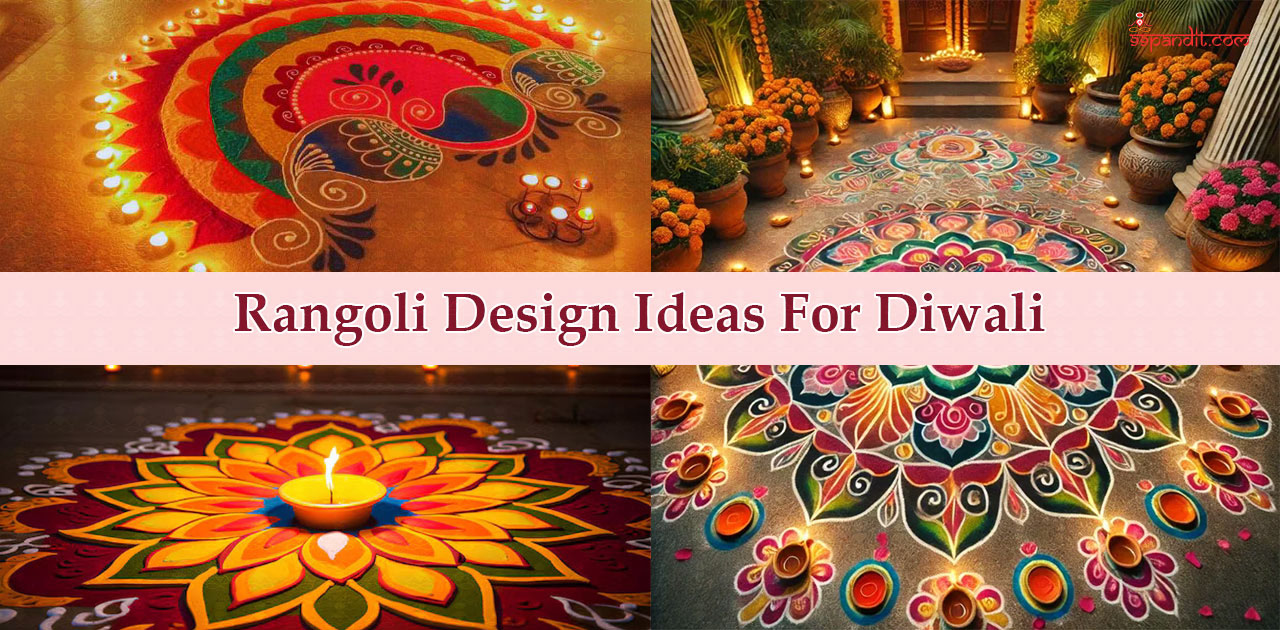
Top 10 Best Rangoli Design Ideas for Diwali Festival 2025

Rangoli Design for Diwali: Many festivals of India are complete with Rangoli, especially the festival of Diwali. On this festival of lights, people especially decorate their homes. Everyone uses lights, diyas, and rangoli.

Earlier, on Diwali, only diyas and lights were seen in the markets, whereas today, you will find particular types of rangoli powder for Diwali everywhere.
Rangoli Design for Diwali

You will also find many rangoli designs for Diwali on social media. The colours of rangoli and new tools and sieves have come into the market to make it, with the help of which gorgeous rangoli can be made quickly.

Usually, flowers, peacocks, or similar patterns are used in rangoli, but if you want to create a design that is different from this type, we can help you. People make beautiful Rangolis on Diwali to brighten up their entrances.

It is believed that making a Rangoli outside the main entrance or pooja room signifies the welcoming of Goddess Lakshmi and guests inside the house.

This practice has been going on for centuries now. In this blog, you will find one-of-a-kind rangoli patterns and designs that are easy to make and look completely new. Let’s get started!

What is Rangoli Design?

Rangoli design is a form of art that people, especially in India, draw in front of their homes on special occasions and festivals.

Rangoli is made outside your house on festivals or any auspicious occasion, especially during Diwali.

Colourful powder, flowers, leaves, rice flour, etc., are used to make beautiful Rangoli Designs on Diwali.

Rangoli, made of different designs and shapes, is made outside the door of the house, which further enhances the beauty of the house.

How did Rangoli start?

Rangoli is a unique reflection of Indian culture. It is not only an art but also a reflection of the Indian attitude towards religion, culture, and life.

In terms of its history, the practice of making rangoli is centuries old. There are many stories about how rangoli started, but it cannot be said with certainty where it began.

But rangoli is an essential part of our Indian culture. In old times, making rangoli was a daily activity.

Rangoli was made outside the doors of the house every day. However, gradually, its practice ended, and now it is made only at festivals.

Importance and Significance of Rangoli

Rangoli has been made on the festival of Diwali since ancient times. The word Rangoli is a Sanskrit word from the ancient point of view, which means expressing emotions through colours.

In India, Rangoli is also known as Alpana in many places. Now, if we talk about making Rangoli, then Rangoli is made using flowers, colours, Gulal, and flour. And its design is made in the Diwali puja.

Rangoli Design for Diwali

At the entrance of the house, many designs, such as Rangoli, Lakshmi ji’s footprints, a Swastika, a Lotus flower, and a Peacock, are made.

According to Hindu religious texts, making Rangoli before starting any auspicious work creates positive energy, and if there is any negative energy at that place, it is also destroyed.

Making Rangoli at the main door is considered auspicious, especially for the arrival of Goddess Lakshmi in the house. By doing this, the blessings of Goddess Lakshmi always remain.

The second belief is that when Lord Rama returned after spending 14 years in exile, people in Ayodhya welcomed him with great pomp by making rangoli and lighting lamps in every house.

Critical Ingredients for Rangoli Making

Every Rangoli is a beautiful artwork. Thus, to make Rangoli a beautiful piece of art featuring unique designs of Rangoli on Diwali that can beautify the home décor, there are several vital ingredients required, such as:

  • Coloured Rangoli Powders
  • Rangoli Stencils
  • Empty Cones
  • Sieve
  • Flowers petals
  • Chalk Sticks (for drawing the designs of Rangoli).
  • Thread
  • Scale (for measurement)

Top 10 Rangoli Designs for Diwali Festival 2025

While there are common forms and patterns of rangoli, the kinds of rangoli Designs for Diwali and patterns know no limit.

It is such a famous artwork that various Rangoli contests are held in schools, offices, and organizations to make Rangoli more popular among the young generation.

Look at some of these beautiful pieces of Unique Rangoli Designs for Diwali below.

1. Peacock Rangoli Design

The peacock is our National bird and is considered a symbol of happiness and joy because of its colourful, rich feathers of yellow, blue, and green.

It is an incredible sight when a peacock dances by sprawling its feathers, and it is worth watching.

Rangoli Design for Diwali 2025

Each one of us Indians has taken inspiration from it for generations, assuming it to be a bird of happiness. The peacock rangoli design in your home looks mesmerizing and spiritual.

2. Floral Rangoli Design on Diwali

Rangoli Design for Diwali

Flowers are the perfect representation of happiness and joy! If it’s about choosing Rangoli designs for Diwali, then Floral Rangoli design is the best to choose. You can create diverse styles of flower rangoli designs and make your home look beautiful.

3. Ganesha Rangoli Design for Diwali

Ganesha is said to bring prosperity and happiness, and therefore, coming up with the Ganesha Rangoli on Diwali is considered more than a lucky charm.

On Diwali day, Ganesha and Lakshmi are offered puja with the expectation that joy, happiness, and merriment are welcome at home.

Rangoli Design on Diwali

While the drawing of the Rangoli is believed to bring auspiciousness very much into vogue around the year, particularly during Deepavali, an invitation for a Ganesha Rangoli is complete good luck.

4. Corner Rangoli Design for Diwali

It has remained a widespread cultural practice in India for as long as it can be and remains so to this day.

Even now, Holi, Onam, Diwali, and other festivals can only be completed with a touch of different colours on every entrance rangoli in every household.

Rangoli Design on Diwali 2025

A corner rangoli design is one of the preferred choices in this busy world, where most apartments are tiny.

5. Border Rangoli Designs

Rangoli Design for Diwali

Let’s make a slight change this year. Instead of putting Rangoli in the centre or at the side of your floor entrance, Border Rangolis enrich not only the beauty of your doorway but also your entire floor with colourful organic colours or even flowers.

6. Colorful Rangoli

It’s also good to make attractive coloured rangolis, which can be made in front of the door or the puja room in your house. This rangoli with lamps, flowers, and leaves will add beauty to the house.

Beautiful Designs of Rangoli for Diwali

The above tales give an impeccable justification for the popularity of such rangolis, especially on the occasion of Diwali. For such colours, you will not have a problem finding them in the market.

7. Rangoli made of peepal leaves, bangles, and grains

Beautiful Designs of Rangoli for Diwali

You can also make a rangoli with the help of old bangles, grains like wheat, jowar, millet, ragi, lamps, and various colours, and make Ganesha shapes on it with peepal leaves. Your rangoli will look unique, and everyone will praise it.

8. Rice Rangoli

If you want to make some special rangoli, you can do it with the help of rice lying in the house. If you wish to, then colour the rice in different colours a day or two before and dry it in the sun. Then make rangoli with it.

Beautiful Designs of Rangoli for Diwali

Simple Red and White Rangoli—If you are going to make a simple rangoli this Diwali, you can make a round-shaped rangoli with a crisscross pattern using white and red colours.

9. Artificial Rangoli

Artificial Rangolis are so popular these days and are mainly a good choice for people who do not have a desire to design them on their own.

Beautiful Diwali Rangoli

Unlike other types of Rangoli designs, where we get to employ coloured powders and all that you see, artificial Rangolis are designed using beads, ornaments, leaves, Rangoli stickers, and other materials.

10. Easy Rangoli with Stencil

Enhance your home with rangoli stencils that are quickly delivered to your doorstep. All these tools make the intricate art almost as simple as using software with an interface.

Even if you are a first-timer at programming, using some of these tools, you may be able to master the trade quickly enough.

Beautiful Diwali Rangoli

All that is needed is to put the stencil, dust colourful pigments, and remove the stencil to see stunning patterns. People can always choose from traditional designs to modern and creative ones.

Spiritual Significance of Rangoli

According to Hindu mythology, simply practising rangoli makes the environment godly and calls a specific deity during a festival.

In turn, it assists in helping people get the greatest utility out of it. For the deity, the place is clean enough to visit at any point in time, like Diwali, which is described as an auspicious time.

Diwali rangoli can help create a barrier of Purity, Prosperity, and Peace in the home. According to one aspect of spirit, all the energies of smell, taste, touch, and smell exist concurrently.

Going with the principles, it is felt that if there is a change in how the Rangoli is made, it produces different forms of energy.

The people around the home can experience a variety of spiritual dimensions, such as intellect, memory, pleasure, calmness, and divinity.

Benefits of Rangoli

  • Making rangoli is an art, and those who love art make it a hobby. In such a situation, the first significant advantage of making rangoli is that you feel very positive while making it, and this process removes your stress.
  • When you make Rangoli, your finger and thumb form Gyan Mudra, which makes your brain active and energetic and plays a vital role in intellectual development.
  • This mudra is also very effective for your health in terms of acupressure. It protects you from high blood pressure and provides mental and spiritual peace. 
  • The positive and negative effects of colours have been acknowledged by science and various medical systems. When you come in contact with colours, the energy emitted by them affects you, which makes it possible to treat many types of mental and physical problems. 
  • Rangoli, made from different colours and flowers, spreads positive energy in your home and the surrounding environment, which makes the mind happy and the environment extremely positive. It also affects your health.

Conclusion

Rangoli is a part of religious traditions and has deep cultural significance. Different types of rangoli are made in other regions, which reflect the cultural identity of that place.

Rangoli is an integral part of Indian culture, which has been preserved and cherished for generations. Earlier, rangoli was made only by married women of the house.

Rangoli is believed to please Goddess Lakshmi and bring prosperity to the house. Women of the house are considered the form of Lakshmi, so rangoli made by their hands is considered auspicious.

It is believed that rangoli brings positive energy into the house and removes negative energy. However, making rangoli was prohibited for widowed women.

Rangoli is considered a medium to please the gods and goddesses and bring positive energy into the house. Making rangoli during festivals is considered auspicious.

It is also considered a symbol of social unity. Women of the house used to come together and help each other make rangoli.

Similarly, women of the neighbourhood used to work together to make rangoli in public places.

This increased the feeling of love towards each other, and people lived more harmoniously with each other.
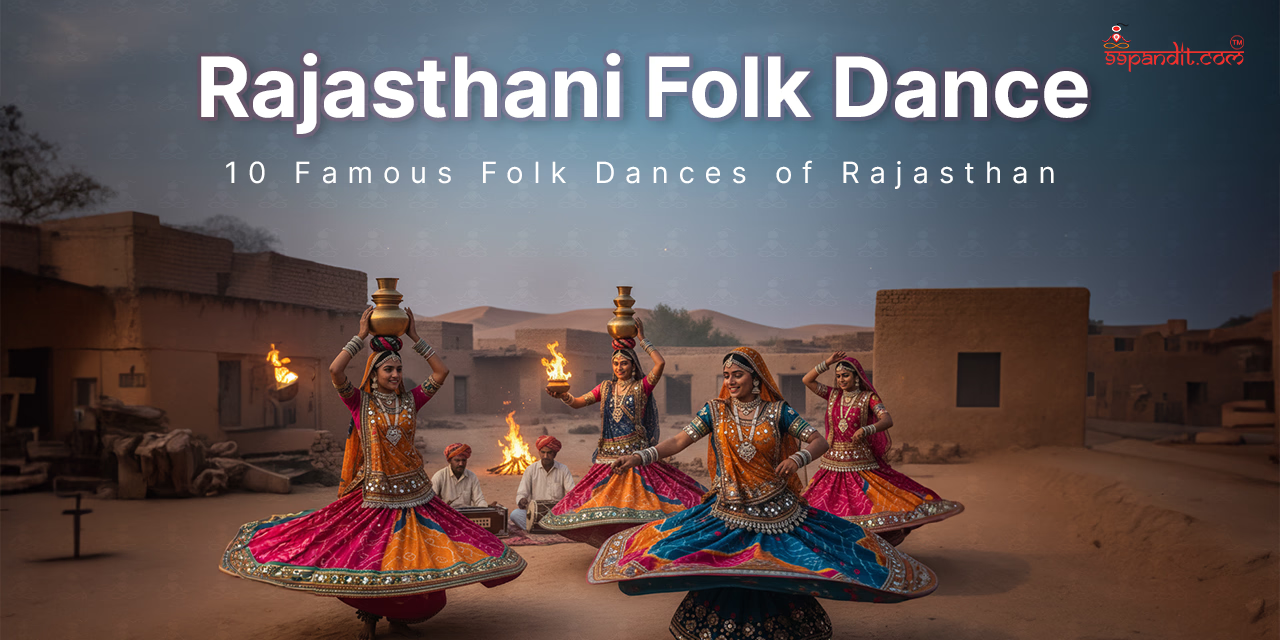
Rajasthani Folk Dance: 10 Famous Folk Dances of Rajasthan

Rajasthan and its vivid culture and traditions are famous all over the country and throughout the world. The folk dances given through Rajasthani Folk Dance are the state’s identity.

The folk dances are not just a source of entertainment; they also provide some insight into the tradition, festivals, and the story of the land and history of Rajasthan.

Rajasthani Folk Dance

When audiences see this dance, they will know the soil and sound and embrace the lifestyle through the performance of folk dances. Rajasthani Folk Dance mystifies individuals from all age groups.

The dances combine the art of music and rhythm with how beautiful dancers can appear (due to colourful costumes, etc), together to fascinate people.

Women wear colourful Ghagra to perform the Ghoomar dance. Sometimes, women of the Kalbelia group dance with snake-like flexibility.

These dances most easily and beautifully express the happiness, devotion, and culture of Rajasthan.

This article starts with an overview of the history and significance of Rajasthani Folk Dance, then outlines 10 different types of folk dance (Ghoomar, Kalbelia, Bhavai, Puppet Dance, and more), including the costumes, instruments, role in festivals, identity in the present, and international popularity.

Historical & Cultural Significance of Rajasthani Folk Dance

Rajasthani Folk Dance contributes more than just entertaining an audience. It is an artistic expression of culture, traditions, and feelings of the state’s people.

The dances are a representation of art and music, as well as a presentation representative of Rajasthan’s history and folk life, and provide meaning to the Rajasthani cultural expressions, which is one cultural legacy.

It is one of the significant pieces of modern legacy that offers both teaching and understanding.

Each dance has its audience by engaging people with its diversity of colours, rhymes, melodies, and messages.

The History of Rajasthani Folk Dance

Rajasthani Folk Dance developed from ancient times. In earlier times, the dance was performed to mark a season, celebrate a festival, farming, or remember a victorious war.

The dances were also specifically the highlight of palaces and festivals during the Rajput period. When, for instance, the dance of ‘Ghoomar‘ was performed by royal women.

Or when people of the Kalbelia caste would dance along with their livelihood and snake-catching art. The men & women would dance separately, with each dance depicting a different story.

The Cultural Significance of Rajasthani Folk Dance

Rajasthani Folk Dance is a component of the culture of Rajasthan. The dance and its meaning can be seen in all homes and all villages during festivals, weddings, and religious ceremonies.

Each dance has its own uniqueness, both musically and instrumentally, and even in costumes.

Through Rajasthani Folk Dance, there are moments of sharing happiness, worship, and the spot of relationships.

This is why the Folk Dance, in its various versions, continues its identity, even today, with contemporary culture and globalisation.

Top 10 Famous Rajasthani Folk Dances You Must Know

Rajasthan is very famous for its folk dances. Every region and every society here has its own special dance.

These dances are not one kind of art, but rather part of the tradition of the people’s culture and everyday life. Some dances show happiness, some show courage, and some show hard work.

Some dances are part of the ceremony of religious occasions, while others add beauty to the occasion of weddings and festivals.

In the dances, the songs, rhythm, dress, and musical instruments create a scene of beauty. Women dance wearing colourful Ghaghra and Odhni, while men use things like drums, manjira, and fake horses.

Each dance has its own special identity and story. In this section, we will tell you about 10 famous Rajasthani Folk Dances.

These include Ghoomar, Kalbelia, Bhavai, Gair, Kathputli, Kachhi Ghodi, Chari, Terah Tali, Fire Dance, and Maand Dance.

1. Ghoomar Dance

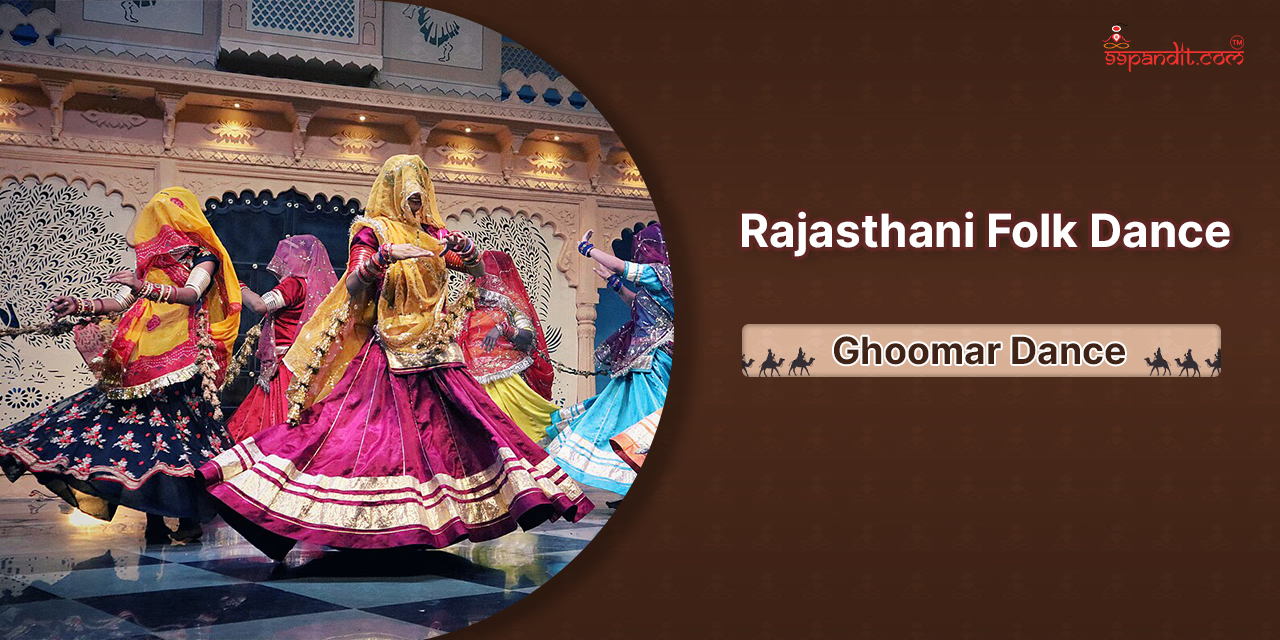
Ghoomar is the most famous and attractive folk dance of Rajasthan. It is mainly performed by women.

Ghoomar is the dance performed by women in circles during weddings, festivals, or special occasions.

Rajasthani Folk Dance

The dance is much more enjoyable when you see the beautiful Ghaghra of multiple colours while dancing, that’s awesome.

Ghoomar is generally performed on festive occasions such as weddings, events like Teej and Gangaur, which are festivals. Ghoomar is considered a way to have fun and express happiness.

Musical Instruments: Ghoomar uses Dholak, Nagada, Manjira, and Harmonium, and women dance to those beats.

Dress/Costume: In this dance, women wear long Ghaghra of bright colours, complemented with a traditional dupatta, along with Traditional jewellery. The dance looks even more beautiful due to the rotation of the Ghaghra.

2. Kalbeliya Dance

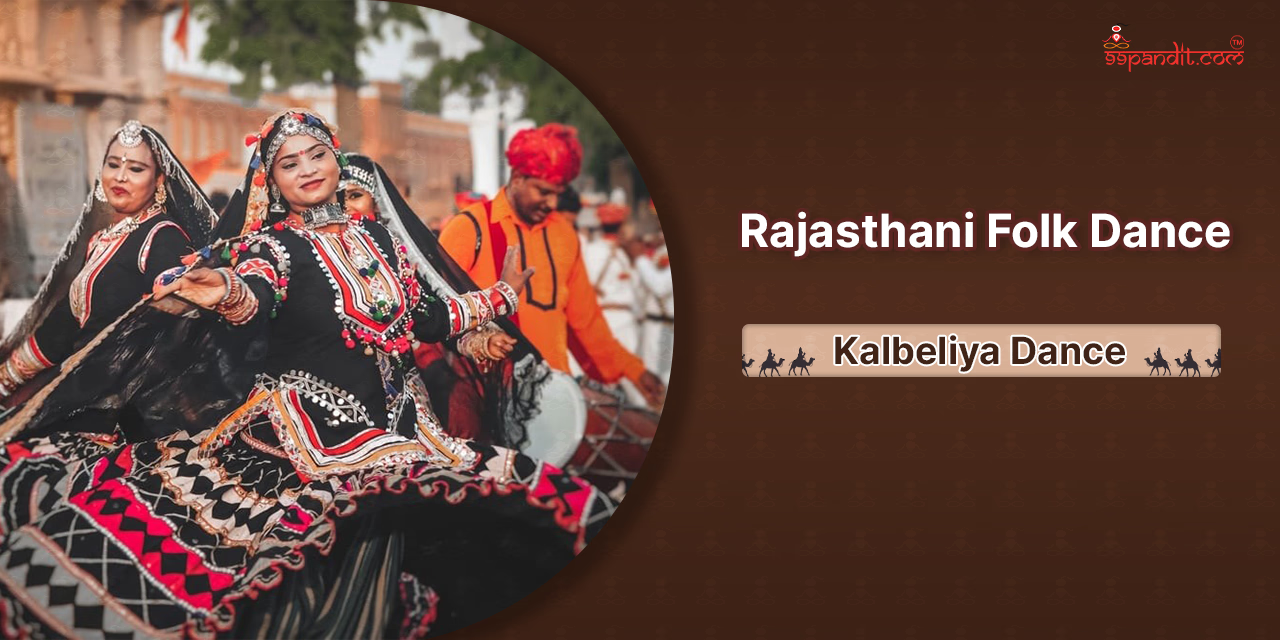
Kalbelia is Rajasthan’s most popular tribal dance. Women of the Kalbelia caste perform it. The Kalbelia caste is known as a snake “Catcher“.

The dance has movements and flexibility that resemble those of a snake. When the women sway and wave to the rhythm, the audience’s reactions are mesmerised.

Rajasthani Folk Dance

This dance is mostly performed in fairs, festivals, and cultural programs. Especially when there is Nag Panchami or other religious occasions, it is specially performed.

Musical Instruments: Instruments like Punghi (Been), Dholak, Manjira, and Khanjari are played in the Kalbelia dance. The sound of the Been makes the dance look even more lively.

Dress/Costume: The special identity of this dance is the black, embroidered Lehenga-Choli.

Beautiful work is done on it with silver and colored threads. When the women spin fast, their Ghagra looks as if a snake is waving with its hood raised.

3. Bhavai Dance

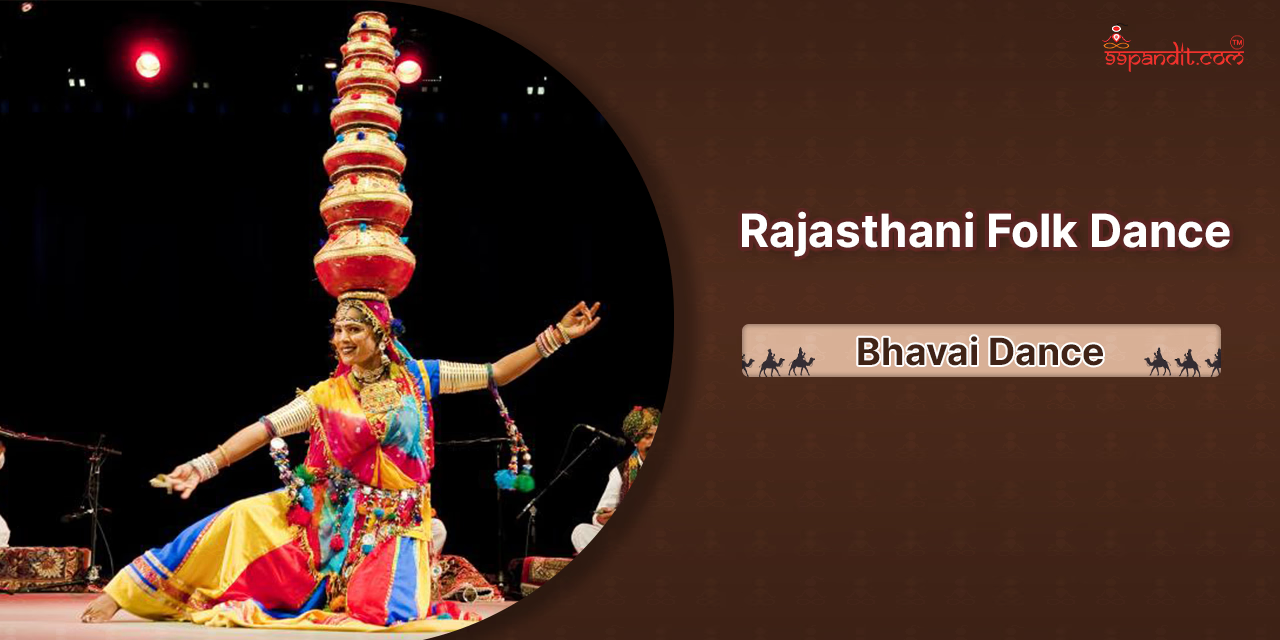
Bhawai dance has its roots in the rural life of Rajasthan. In olden times, women used to go to fetch water by keeping pots on their heads for everyday work.

Over time, this habit turned into art and then came to the people in the form of the Bhawai dance.

Rajasthani Folk Dance

In this, the dancers dance by keeping many pots, or even swords, on their heads. They also perform dances out of balance on a plate, glass, or the edge of a sword.

This dance draws an astonished audience every time because of the incredible balance and confidence displayed in every dance move.

Musical Instruments: Dholak, Harmonium, and Been (Pungi) are used to produce rhythm and music in the Bhawai dance. Their tunes make the Bhawai dance more interesting.

Dress/Costume: Women performing the Bhawai dance wear brightly colored, wavy skirts, an embroidered choli, and a dupatta.

Their costumes often have mirror work and golden borders. Male artists come on stage wearing a traditional dhoti and a safa (turban).

4. Chari Dance

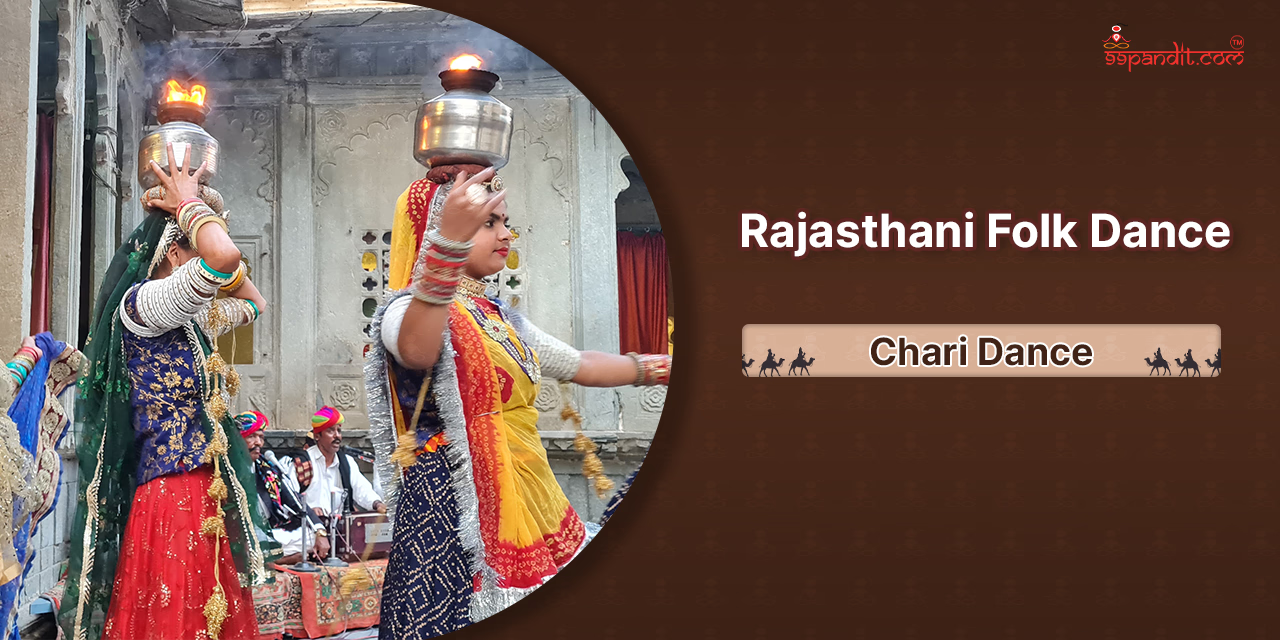
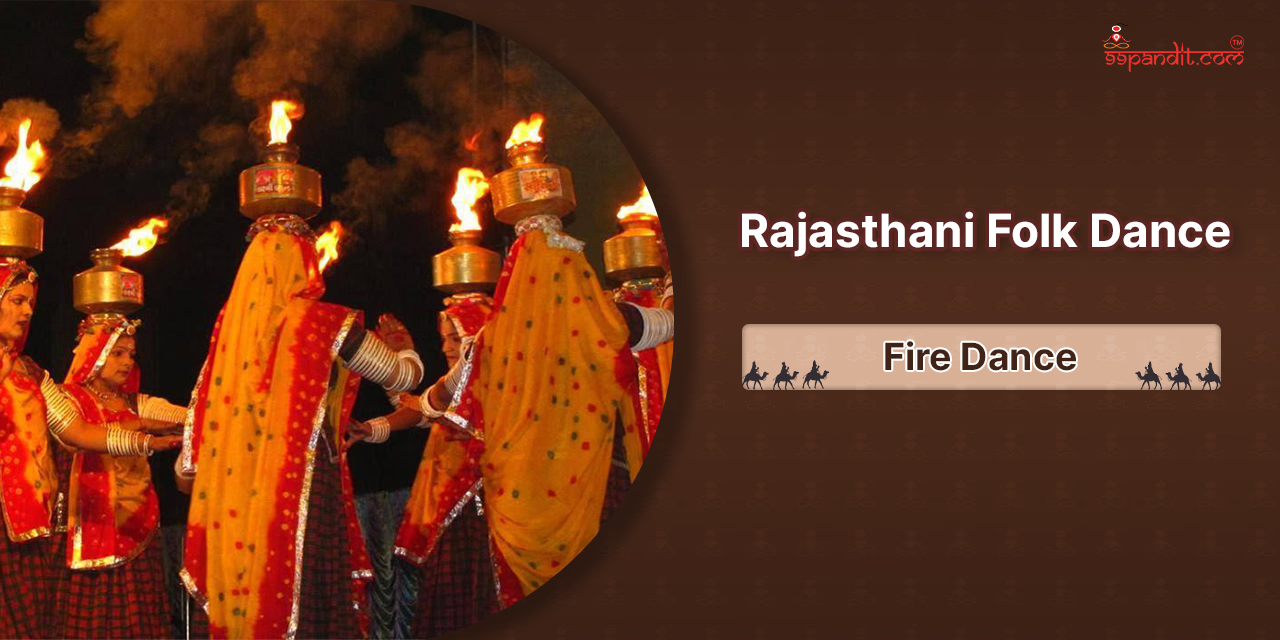
Chari dance is a sacred and blessed folk dance from Rajasthan. In this, women dance while putting brass or clay charis (pots) on their heads.

Burning lamps or fire are also kept in the pots, which makes this dance even more beautiful. This dance is especially done at weddings, childbirth, and festivals.

Rajasthani Folk Dance

It is believed that the Chari dance is an emblem of happiness and prosperity. Village women used to receive blessings from gods and goddesses by doing a puja.

Musical Instruments: Dhol, Nagada, and Harmonium are mainly used in it. Women slowly move and walk on their feet.

Dress/Costume: Women wear colourful Ghaghra-Choli and heavy jewellery. They have a pallu on their head, which helps in covering the flame of the fire.

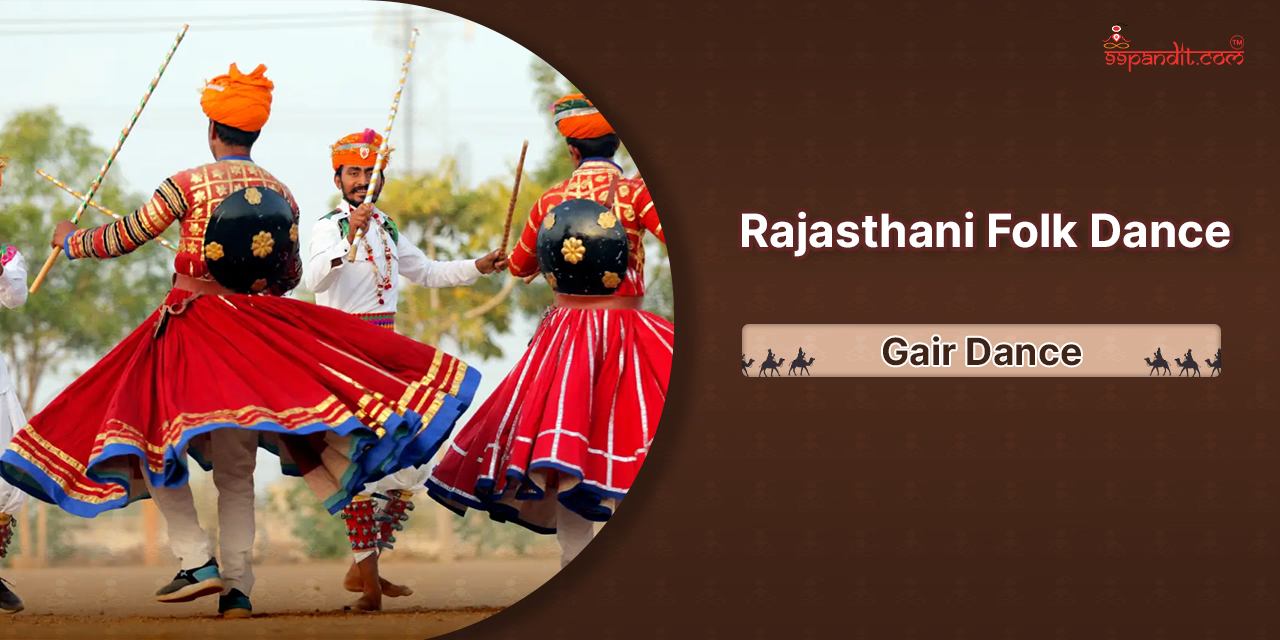
5. Gair Dance

Gair dance is a cheerful group dance of Rajasthan. In this dance, men & women dance in circles and use sticks or swords.

This dance is performed in the/Holi and Gangaur festivals. Villagers come together on the festive occasion to meet, sing, and play colours; thus, this dance shows the unity and enthusiasm of Rajasthan.

Rajasthani Folk Dance

Musical Instruments: In Gair dance, dhol, nagada, and shehnai sounds are played, which give a lively feeling to the whole atmosphere.

Dress/Costume: In Gair dance, Male artists wear dhoti and safa (turbans) in bright colour combinations, and women participate in this dance wearing Ghaghra-Choli.

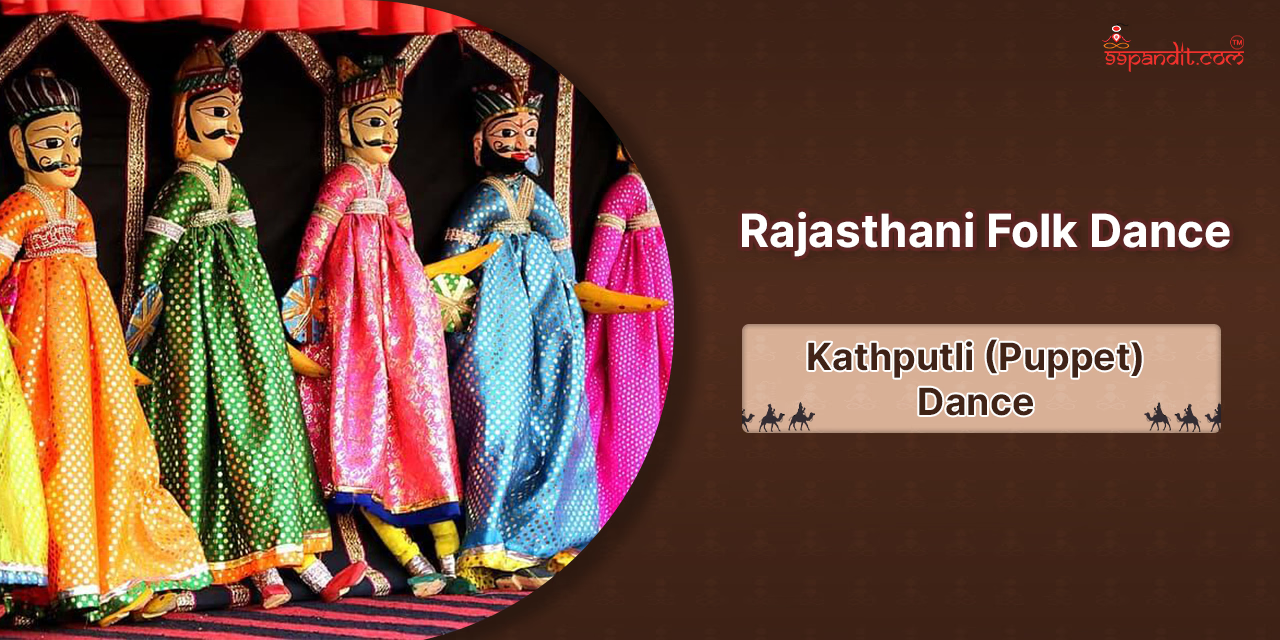
6. Kathputli (Puppet) Dance

Kathputli dance is the most famous puppet dance of Rajasthan. In this, puppets made of wood and cloth dance with the help of strings. Puppet dance is a centuries-old tradition.

In olden times, puppeteers used to go from village to village to tell stories and perform folk tales. This is a living example of the folk art and folk tales of Rajasthan.

Rajasthani Folk Dance

Musical Instruments: The tunes of the Dholak and Sarangi are prominent in this. Sometimes the artists also sing while telling the story.

Dress/Costume: The puppets are dressed in a Rajasthani Ghaghra-Choli and a turban. Their clothes definitely have bright colours and mirror work.

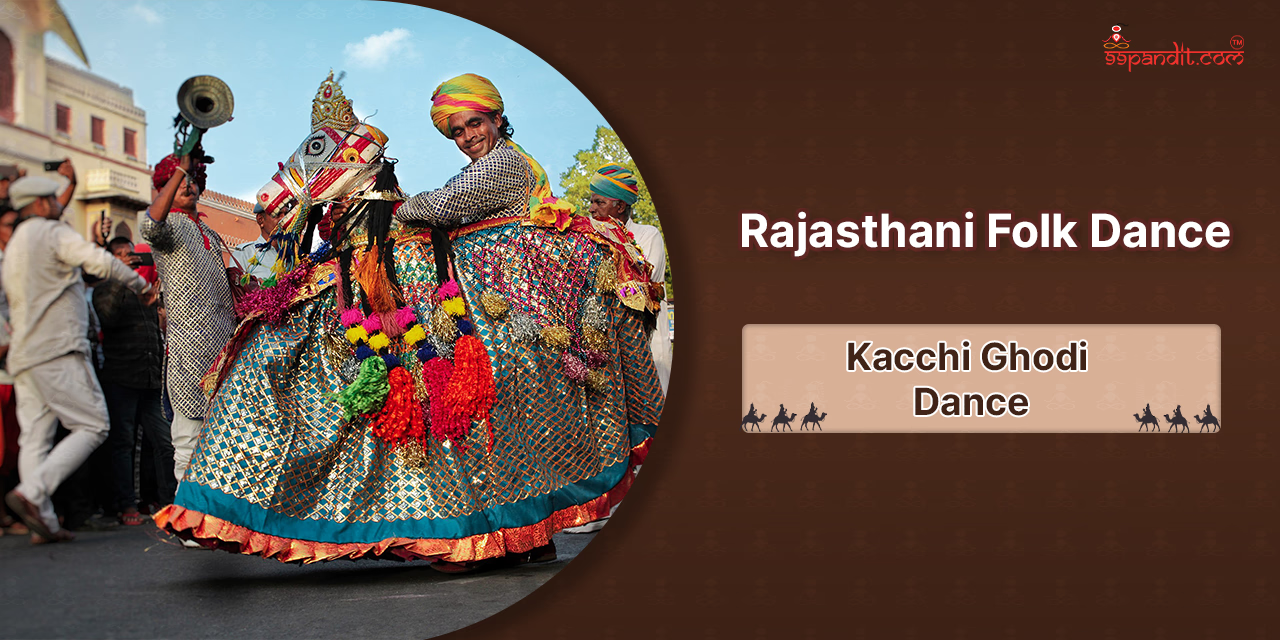
7. Kacchi Ghodi Dance

Kachhi Ghodi dance is an exciting and heroic folk dance of Rajasthan. In this, the artists dance wearing fake horse costumes.

The dancers wrap a decorative model of a horse around their waist and create a battle scene using a sword. This dance is done mainly at weddings and festivals.

Rajasthani Folk Dance

Kachhi Ghodi dance is derived from the stories of Rajasthan’s bandits and warriors. This dance describes the stories of valour, stories of cleverness, and stories of courage.

The folk singers chanting the songs of valour, accompanied by dholak and bean, make the environment even more energetic.

Musical Instruments: Dholak, Nagada, and Bean are primarily played. The loud sounds of these musical instruments excite the audience.

Dress/Costume: Males wear a white dhoti and a colourful kurta along with a Rajasthan safa.

The fake horse costume has embroidery work and mirror work. This costume looks so real that the audience really feels like riding a horse.

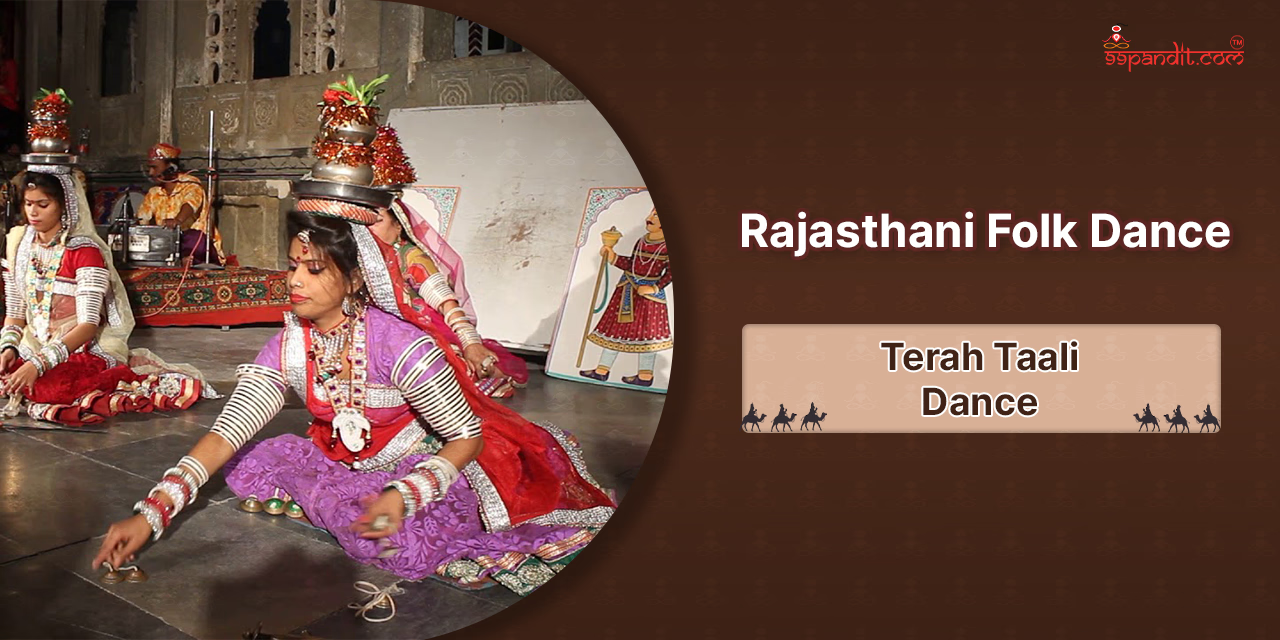
8. Terah Taali Dance

Terah Taali is a very distinct and devotional folk dance of Rajasthan. In this dance, women suspend thirteen small cymbals known as manjeeras from multiple areas of their bodies so that whenever they move their feet and hands.

It creates a sweet rhythm. The niece of Hinglaj Mata is closely linked to worship. The dance is performed by women of the Kamad community primarily to express their deep devotion and faith.

Rajasthani Folk Dance

Terah Taali is not only a form of entertainment but also a means of illustrating spiritual strength and dedication.

Musical Instruments: The main instruments used in Terah Taali are the dholak and harmonium.

But the real music comes from the manjeeras tied to the dancer’s body, which create a magical rhythm as they move.

Dress/Costume: The dancers wear colourful ghaghra-choli and odhani decorated with mirrors and embroidery.

They also wear bangles, anklets, and armlets, which shine as they perform. The whole look adds grace and beauty to the dance.

9. Fire Dance

Fire dance is one of the most fascinating dances of Rajasthani culture. In Rajasthan, the Fire Dance is a thrilling and courageous folk dance.

Fire is a prominent element in this dance. Dancers dance, jump, and twist among flames, firewood, hot coals, and jump through fire to perform.

Rajasthani Folk Dance

Dancers sometimes carry fire sticks to dance with, making intricate designs in the air. This spectacle is exhilarating, combining bravery and dexterity.

Fire Dance originated in the Bhil community of Rajasthan. Fire Dance is generally performed at village fairs, festivals, and celebrate events in rural areas of the desert.

Musical Instruments: The strong beats of the dhol and nagada give energy to the dance. The fast rhythm makes the performance even more dramatic and powerful.

Dress/Costume: The male dancers usually wear light and colourful dhoti-kurta with turbans, so they can move easily near the fire.

Sometimes, they also decorate their faces with natural colours, which adds to the wild and energetic look of the dance.

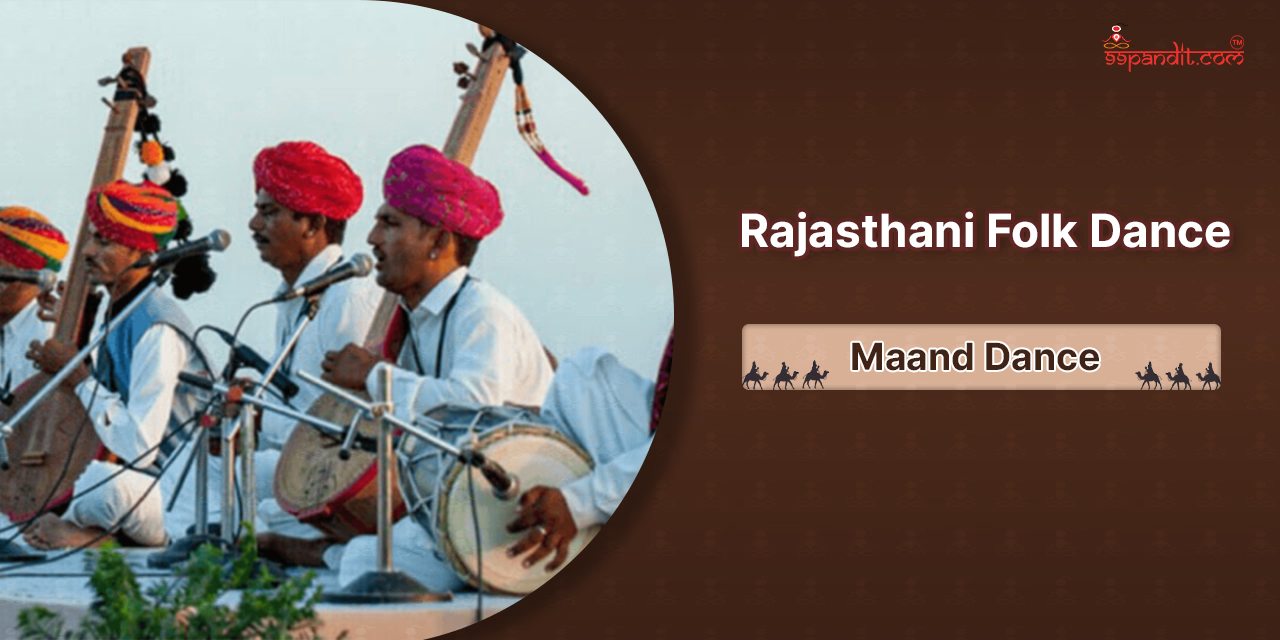
10. Maand Dance

Maand Dance is a graceful and royal folk dance of Rajasthan. People perform it on soft Maand songs, which are very famous in Rajasthani music.

The dance is slow, full of expressions, and looks very elegant. It shows the pride, beauty, and culture of Rajasthan.

Rajasthani Folk Dance

Maand Dance started in the royal courts of Rajasthan. Long ago, kings and nobles enjoyed this dance during festivals and special events.

It became a symbol of respect and tradition. The dance mixes folk sweetness with classical style, which makes it very unique.

Musical Instruments: The main instruments are sarangi, dholak, tabla, and harmonium. The sound of the sarangi makes the dance emotional and royal.

Dress/Costume: Women wear heavy embroidered ghaghra-choli with dupatta, decorated with shiny mirrors and golden lace.

Men wear dhoti-kurta with colourful turbans. The costumes make the whole performance look royal and grand.

Role of Rajasthani Folk Dance in Festivals & Celebrations

Rajasthani folk dance is not just about music and steps; it is the heartbeat of Rajasthan.

These dances carry history, colours, and traditions. When the drum beats and the ghagra twirls, everyone feels the joy and spirit of Rajasthan.

Rajasthani Folk Dance Role in Festivals

  • In Rajasthan, folk dances always complete celebrations like Diwali, Holi, Teej, Gangaur, and Makar Sankranti.
  • The sound of the dholaks and manjiras makes celebrations more glowing and delightful.
  • It is great to see villagers and urbanites dancing together, sharing their smiles and energy.
  • Folk dances keep traditional practices alive and honour gods and goddesses, too.
  • The Gair dance during Holi, Ghoomar during Gangaur, and Chakri dance on Teej add uniqueness and charm to each festival.

Role of Rajasthani Folk Dance in Celebrations

  • People do not limit celebrations to festivals. Weddings, birthdays, fairs, and community gatherings also come alive with folk dance.
  • Family and friends use dance to express their excitement.
  • Guests from far and wide come to enjoy and learn about Rajasthani heritage.
  • Music, dance, and colourful costumes create moments that people never forget.
  • At every celebration, Rajasthani folk dance brings rhythm, beauty, and unity.

Conclusion

Rajasthani Folk Dance acts not only as an art form, but also as the true essence and culture of Rajasthan.

When observing folk dances, we experience the mindset, devotion, happiness, and lifestyle through their dance.

The elegance of Ghumar, the flexibility of Kalbelia, puppet stories, and the unique identity of Chari dance are enjoyed by everyone.

Today, Rajasthani Folk Dance no longer exists just as a highlight of Rajasthan, as it has continuously expanded from villages to megacities and the rest of the globe.

It is exciting to observe that our traditions persist and carry meaning even during modern times, fundamentally resonating with people in shapes and forms.

There is no reason for us to regard Rajasthani Folk Dance as simply entertainment. Rather, take pride as a beautiful heritage to carry forward.

Learning, singing, and performing these dances allows us to pass on the true identity of Rajasthan to future generations.

Hindu Gotra Lists and Surnames: A Comprehensive Guide

In this article, we will explain the Hindu Gotra Lists and Surnames with their details. The term ‘gotra’ is an essential element of human life as this is used to identify their identity.

As per Hindu tradition, gotra is the identification of a kinship group that is seen as identical to lineage or genealogy. Similarly, gotra and surnames are used to denote individuals with his family.

Hindu Gotra and Surnames

In its broadest sense, it refers to those descended from a single patriarchal or typical male progenitor. The gotras form an exogamous unit.

In Hindu tradition, the gotra plays a vital part in marriages, and it is forbidden to marry someone from the same gotra. It is not the same as a surname, despite the fact that it is sometimes used that way.

What Is The Term Gotra & Surname?

Gotra is the descent, meaning in another language. The given name of a family is often distinct from its gotra, although it is relatively similar to a family name.

Given names may reflect the traditional occupation, place of residence, or other significant family trait rather than the gotra.

Gotra translates to “go” as cow, land, Veda, and Gurudev. Gotras are the only things those who are Brahman, Kshatriya, or Vaishya have.


The other castes don’t have gotras because they historically weren’t allowed to attend school. Today, all castes use the self-declared name of their gotra.

People from different castes may share the Hindu Gotra and Surnames social system. But among matrilineal Tulu/Malayalee speakers, there is a remarkable exception where the lineages are the same across castes.

Origin Of Hindu Gotra And Surnames

Gotra, which refers to a herd of cows and denotes a tightly related ancestry, is referenced in the Rig Veda.

Additionally, members of a specific gotra share characteristics, whether acquired via work or inherited traits.

According to the Vedic theories, the Brahmins are the close relatives of the seven sages who are acknowledged to be Brahma’s children and were conceived through yogic prowess.

Hindu Gotra and Surnames

Gautama Maharishi, TlShandilya, Bharadwaja, Vishvamitra, Jamadagni, Vashista, Kashyapa, and Atri.

The 108 gotras, especially those of the Brahmins, have evolved from these eight sages, known as gotrakarins. Additionally, the Atreya and Gavisthiras gotras emerged from Atri.

Numerous Hindu gotras, according to Robert Vane Russell, were named after plants, animals, and other natural objects and had a tribal origin.

For instance, Bharadwaj suggests a lark, Kaushik suggests slipped from Kusha, Agastya from the agasti bloom, Kashyapa from the kachhap a turtle, and Taittiri from the titar a partridge. 

The common characteristic of totemism is that members of a family feel a connection to the animals or trees. They also agree not to hurt or murder them in any way.

Importance Of Hindu Gotras And Surnames in Marriage

People who belong to the same gotra are regarded as kith and kin. As a result, Hindu tradition does not practice Marriage between them.

In addition, some people think that a child from such marriages will inherit hereditary illnesses.

Due to their varied gotras, maternal cousin marriages are common in South Indian Hindu culture.

However, because they belong to the same gotra, paternal cousins cannot be married.


The scientific rationale can be found in the old Vedic notion regarding the influence of gotra on marriages.

However, there is still much disagreement over it, and feminists have many unanswered questions. The scientific enhancement is outlined as follows:

The Gotra method essentially functions as a tool for locating the paternal gene in your family. In other words, identifying the Y chromosome.

Males have the XY chromosome, and females have the XX chromosome, as is clear.  As a result, those with the same gotra are regarded as belonging to the same clan.

Even though they might not be blood relatives, they will nonetheless be regarded as siblings. Additionally, entering into a marriage is strictly against the law of both religion and culture. 

However, there are discussions about this in the present-day 21st century. And occasionally it gets in the way of a couple who are in love and bonded by this theory.

Therefore, learning the gotras has been seen as a crucial element in Hindu marriages from ancient times.

Hindu Gotra Lists And Surnames

To let you know about the main Hindu gotra lists and surnames used by the Hindus as below:

Kaushika Kaundinya
Audala Manu
Angirasa Marichi
Atri Meena
Aatreya Parashar
Bharadwaj Sandilya
Bhargava Shiva(Shiv-adi)
Bhrigu Siwal
Brihadbala Upamanyu
Chandratre Upreti
Dhananjaya Vashista
Garg Vishnu
Gautam Vishvamitra
Harinama Yadav
Haritasya Jamadagni
Kadam Kashyapa

Except from these read about the Brahmin gotra lists and surnames as well:

Gotras
Agastya Garga Kavist Parashara Sankritya (Sakarawar) Vishnu
Atreyasa/Atri Gautamasa Katyayana Parthi Vasa Soral Vishnuvardhana
Alambani Aguhilya Krishnatreya or Krishnatreya Pouragutsya Srivatsa Vishnu Vriddha
Angad Ghrita kaushika Kundina Gowtama Punagashella Sumarkanth Vishvani
Angirasa Harita/Haritasa Kusha Ratheetarasa Suryadhwaja Yaska
Ahabhunasa Hukman Bhal Kutsa Purang Shaktri Vaidya/Baidya
Aupamanyava Jamadagni Kutsasa Pradnya Shaunaka Vartantu
Babhravya Jatukarna Lakhi Rathitara Sravan Vanitas Vishwagni
Bharadwaj Kalabodhana/ Kalaboudha /Kalabhavan Lohit Rohingya Surya Uts Asya
Bhargava Kamakayana Vishwamitra Lohita-Kowsika Rauksaayana Swatantra Kabisa Suparna
Bhakdi Kanva Lomasha Saminathen Tugnait Shiva
Bhaskara Kaushikasa Mandavya Sanatana Roushayadana Kuvera
Chandilya Kapi Marichi Salankayana Upadhyay Sawarna
Charora Kapil Markandeya Sangar Upmanyu (Upamanyu) Saharia Joshi
Chikitasa Kapinjala Mauna Bhargava Sanaka Upreti Sauparna
Chyavana Karmani Matanga Sanaga Vadula Savaran
Dalabhya Kashyapa Maudgalya Moudgalya Sanjaya Valmiki Savita
Darbhas Koundinyasa Mudgala (Maudgalya, Moudgil, Modgil, Mudgal) Sankhyayana Vardhviyasa Somnasser
Dev Kaunsh Mudgal Sankrithi(Sankrityayan) Vardhulasa Pratanansya
Dhananjaya Kaushal/Kaushalas/Kushal Mihirayan Sankyanasa Vardy Swasa Veetahavya
Dhanvantari Kaushik/Koshik/Koushik,Kushika/Ghrita kaushika Naidhruva Shatamarshana Vashishta Vatsyayan
Galvasaya Kaustubha Nithunthana/Naithunthasa Shandilya, sanas Vatsa Nrusimhadevara
Kayagas Naidruva Kashyapa Sandilyasa Shandelosya

Why Do We Follow Hindu Gotra and Surnames for Marriages?

According to the exogamy norm of the conventional matrimonial system, weddings within the gotra (also known as “sagotra marriages”) are not authorized.

The terms “sa” and “gotra,” which both mean the same or related things, are combined to form the compound word “sagotra.”

It is customary in Hindu culture to inquire about the bride and groom’s kula-gotra, or “clan lineage,” before allowing the marriage.

Hindu Gotra and Surnames

The gotra considers its members to be siblings; hence, getting married to one of them is frowned upon.

Marriage between members of the same gotra is discouraged in almost all Hindu families since it is thought that they have the same ancestor.

The marriage of people from different gotras is consequently promoted. However, marriage is permitted within the jaati and even advised.

For instance, the Mudirajas of Andhra Pradesh and Tamil Nadu have 2600 Gotras, whereas the Jats and Rajputs have 3000 Gotras.

For the majority of Hindus, gotra is always passed down from father to child. The Malayali and Tulu people, on the other hand, pass it down from mother to child.

The Sanskrit term Saha udara’ (), which means co-uterine or born of the same womb, is the source of the tatsama words sahodara’ (brother) and sahodari’ (sister).

Marriages between a lady and her maternal uncle were permitted in groups where gotra membership was carried down from the father to the children, however, these marriages were prohibited in matrilineal societies, such as the Nairs and Tuluvas, where gotra membership was passed down through the mother.
Hindu society in South India is far more likely to allow cross-cousin marriages (children of a brother and a sister) since their gotras are different.

Therefore, a man is permitted to wed either his paternal aunt’s daughter or his maternal uncle’s daughter, but not his paternal uncle’s daughter. She would be regarded as comparable to be treated as a sister with the same gotra.

In addition to adhering to the gotra requirements for marriage, North Indian Hindu society also has additional rules that define incest broadly and go beyond the basic gotra definition.


Due to the assumption that both clans share a common patrilineal ancestor, some groups in North India forbid marriages with specific other clans.

Marriage inside the gotra of the mother’s father, and maybe some others, is forbidden in some communities.

A potential workaround for sagotra marriages is to execute a ‘Dathu’ (adoption) of the bride to a family of a different gotra (typically, dathu is given to the bride’s maternal uncle, who belongs to a different gotra by the same regulation) and let them perform the ‘kanyadanam’ (kanya’ (girl) + ‘dhanam’ (to)).

Sum Up

Although Brahmin gotra lists and surnames are infused with a little cultural history and heritage. You can learn more about the diversity and richness of Brahman culture by looking at this list of surnames. 

All segments of society held the Brahmins in high respect and primarily linked them with priestly responsibilities.

Even though they are typically occupational names, some surnames, including Gowda, Reddy, Modi, Agarwal, Varma, Naik, and Sheth, may also be Brahmin surnames. 

This list of surnames was carefully considered before being put together, and it has been divided into several sections for your convenience. Learn more about their culture by scrolling through the list.

Unlocking the Power of the Kundalini Chakra: 7 Steps to Activation

Kundalini Chakra: What if I tell you that you have a power within that can transform your life in ways you never imagined?

Suppose that on a busy day, something deep within makes sense, something odd happens by coincidence, or energy surges.

These experiences are not random but might be an activation of the Kundalini Chakra. Generally, they are referred to as “sleeping energy” at the base of your spine.

kundalini-chakra-2

Kundalini is the gateway to spiritual awakening, inner peace, and a higher level of consciousness. 

Nowadays, more people are looking for Kundalini awakening to free themselves from stress, emotional traumas, and find their life purpose. It is not only about spirituality but more about unlocking your full potential and living with energies flowing inside you. 

Let’s tap into these energies through this blog by 99Pandit. We will discuss Kundalini Chakra and also the seven steps of activation. 

What is Kundalini Chakra?

The Kundalini Chakra is a powerful energy in the body that is said to reside at the base of your spine. In Sanskrit, “Kundalini” means coiled.

It depicts that there are energies in your body that are seen as a sleeping snake curled up, lying dormant, and just waiting to get unlocked. 

In the human body, there are 1,72,000 energy channels known as nadis, which are said to be connected through different nerves. Out of 109 centres, seven are considered really important as they balance the flow of energy in your body.

These centre forms of energy enable a person to achieve higher understanding and spiritual strength. 

Moreover, there is a hypothesis that each of the Kundalini chakras signifies various aspects of the body and mind of a person. Although it is a necessity to survive, love, emotion, and creativity are all imperative.

It is believed that this chakra leads to balance and offers both personal and spiritual development upon the passing of Kundalini through this chakra.

7 Chakras and their role within Kundalini Awakening

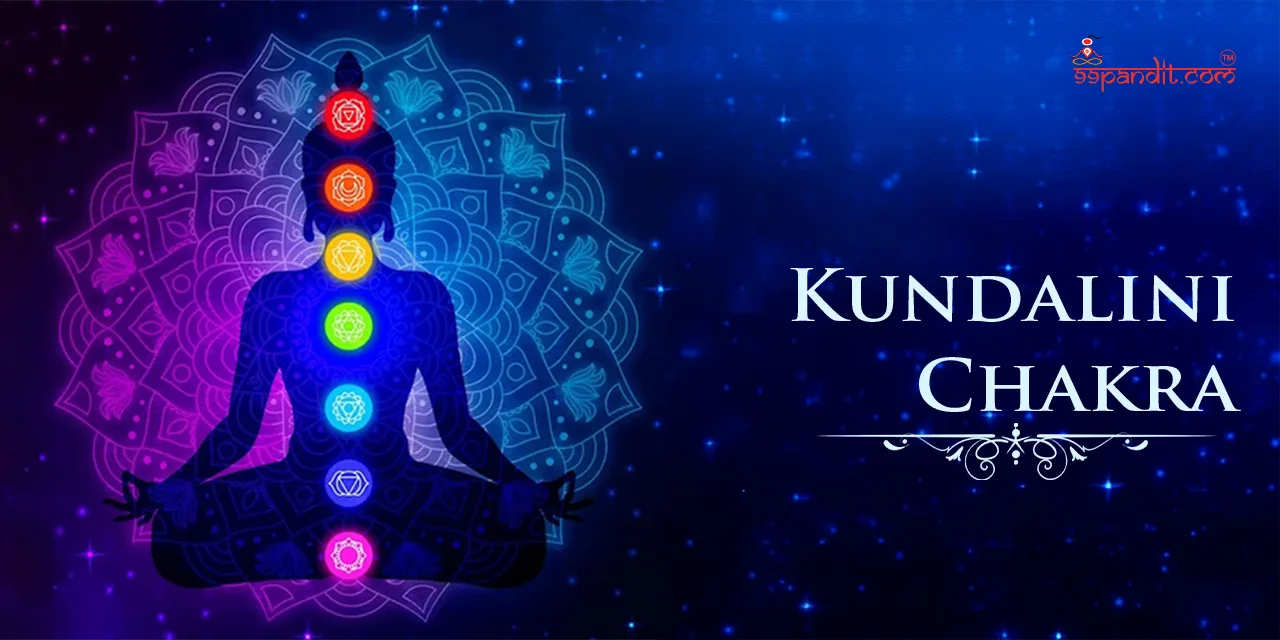
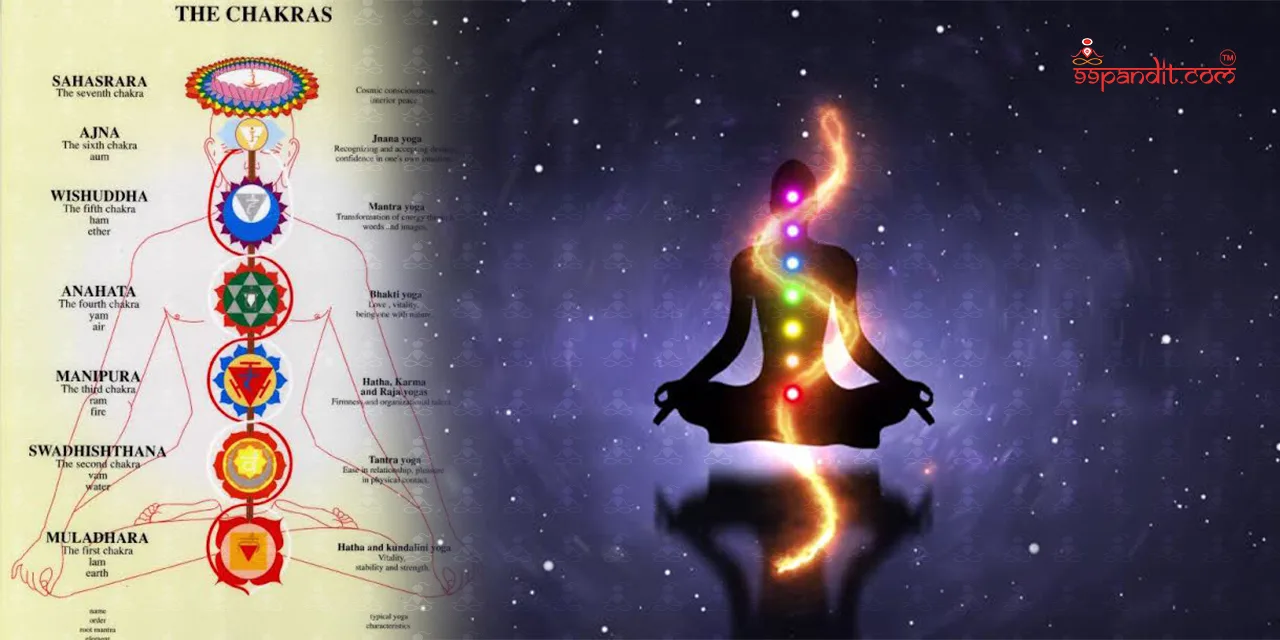
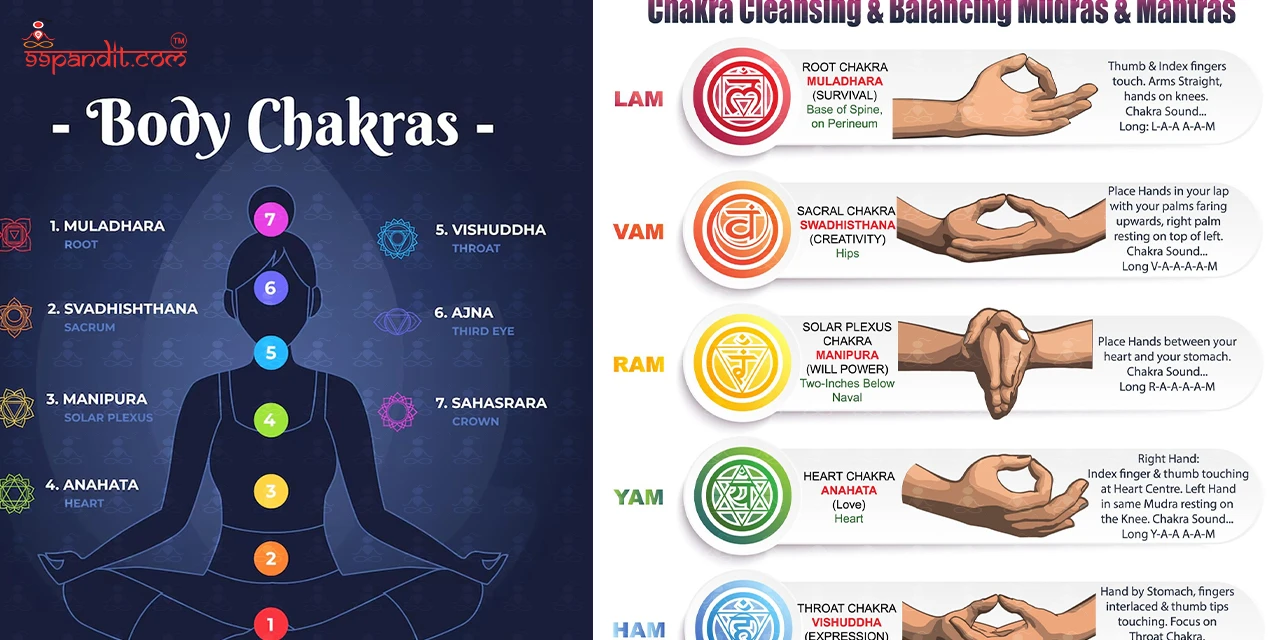
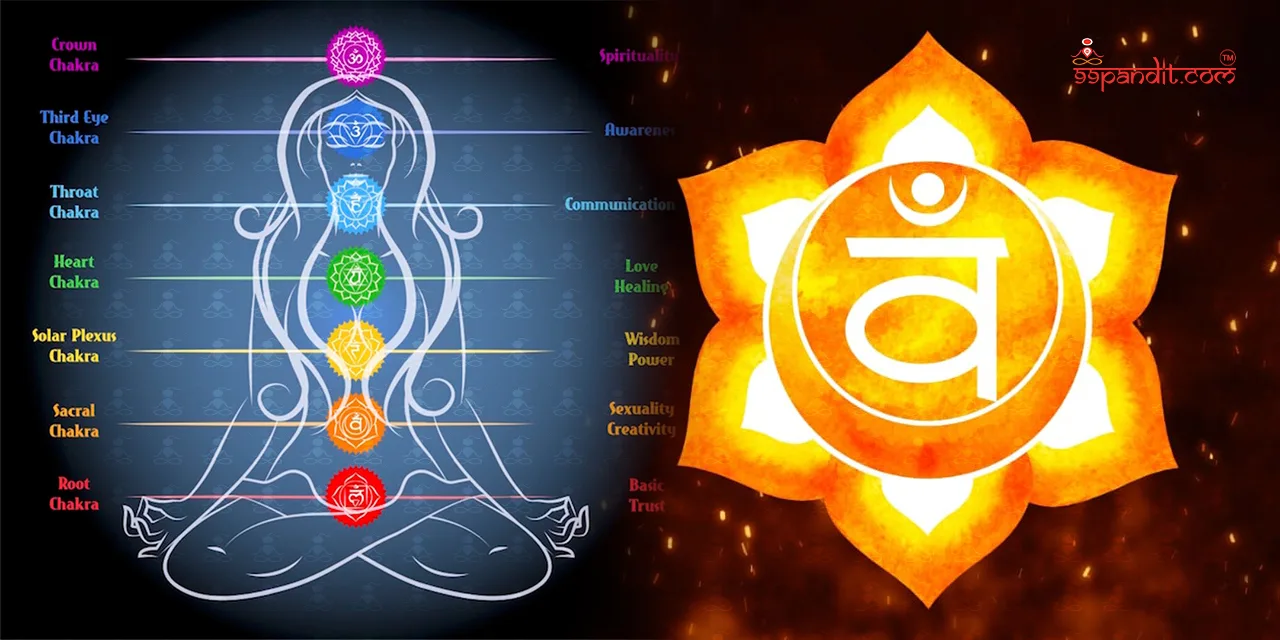
There are seven crucial chakras lined along the backbone of our body, and it is the centre of energy where life force flows.

The manner in which this energy flows directly impacts how we sense and experience our lives in different aspects, like spiritual, mental, and physical.

Below, we have mentioned seven major Chakras and their role in Kundalini Chakra activation:

1. Root Chakra (Muladhara)

  • Colour: Red 
  • Location: Base of the spine 
  • Element: Earth 

The Root Chakra is a stage where Kundali activation generally starts. It provides grounding and helps a person eliminate insecurity and fear. 

2. Sacral Chakra (Svadhisthana)

  • Colour: Orange 
  • Location: Below the navel 
  • Elements: Water 

When Kundalini arises here, emotional barriers start to get removed, and a healthy relationship is built. 

3. Solar Plexus Chakra (Manipura)

  • Colour: Yellow 
  • Location: Stomach 
  • Elements: Fire 

The Chakra is in the stomach region, and is said to be related to will and self-trust. It gives it direction and focus in life.

4. Heart Chakra (Anahata)

  • Colour: Green 
  • Location: Centre of the chest 
  • Elements: Air 

It helps one to open his/her heart to love and forgiveness. The chakras also offer emotional healing.

kundalini-chakra-2

5. Throat Chakra (Vishuddha)

  • Colour: Blue 
  • Location: Throat 
  • Element: Ether 

Your throat Chakra controls how you communicate and whether you tell the truth. Kundalini, by flowing in these chakras, strengthens your speech and expression.

6. Third Eye Chakra (Ajna)

  • Colour: Purple 
  • Location: Between the eyebrows 
  • Element: Light 

The Ajna chakra has the meanings of innervision, intuition, and wisdom. With the coming of this chakra, Kundalini also brings more sight and knowledge.

7. Crown Chakra (Sahasrara)

  • Colour: Violet 
  • Location: Top of the head 
  • Element: Cosmic energy

It is the final chakra in the Kundalini Chakra. It exposes you to a stronger state of consciousness and spiritual insight.

The Spirituality Behind Kundalini Activation

Kundalini activation is not a stream of energy. It is a long-term process that has been referred to in Hindu scriptures like the Upanishads and Tantras.

In those, it is mentioned that when this dynamic energy is activated, the person becomes more energetic and harmonised towards the divine. 

Another source of ancient yogic text, the Hatha Yoga Pradipika, owes a very few methods to reawaken the chakra Kundalini: pranayama, mudras, bandha, etc.

It also removes blocks, cleansing the soul and providing an entry to higher knowledge.

In contrast to usual spiritual practices, Kundalini awakening connects the most significant level of consciousness.

It is a very strong but holy practice that benefits you in spiritual and personal growth.

It requires commitment, awareness, and supervision from an experienced pandit, spiritual teacher, or guide, however.

Preparing Yourself for Kundalini Activation

It is necessary to prepare yourself both within and out before we tell you how to awaken your Kundalini Chakra. The following are some easy practices that you can pursue: 

  1. Practice Self-Discipline: Doing regular exercise such as meditation, yoga, and deep breathing, particularly in the morning, helps you remain focused and control your heart and mind. 
  2. Remain Mentally Balanced: It is vital to keep your mind calm during the transformation process of Kundalini awakening. 
  3. Heal Emotional Scars: Break the shackles of the past and become emotionally sharp so that you never become overpowered in the process.
  4. Get Advice from a Respected Guru: You are always advised to be taught by an experienced guru or pandit who will guide you to the right path under proper methods.
  5. Simple Practices: Start with learning the simple yoga and pranayama, before shifting towards the advanced Kundalini awakening practices. 
  6. Adopt a healthy lifestyle: One should follow a strict diet, get a good amount of sleep, and do daily exercise for a smoother flow of energy in your body. 
  7. Be Patient and trust the Process: It is not magic; things will take time. That’s why you have trust and process gently and deliberately. 

7 Powerful Steps to Activate the Kundalini Chakra

Awakening the Kundalini Chakra is a spiritual discipline involving reaching out to your inner self and the cosmic energies.

As much as the process is not that simple, with discipline using consistency, it is possible to hasten the Kundalini awakening process.

kundalini-chakra-4

Here’s how you can activate your Kundalini Chakra: 

1. Practice Kundalini Yoga

Kundalini Yoga is a type of yoga that assists an individual in activating energy at the base of your spine.

Through the fusion of meditation, Chanting, breathing, and postures, you are able to activate the chakra and shift the sleeping energy upward.

2. Master Pranayama (Breath Control)

Pranayama is also referred to as a breathing technique. Applying it towards opening your chakra can truly do miracles when it comes to clarity and inner calmness.

You are able to practice exercises such as Nadi Shodhana (alternate nostril breathing) and Kapalbhati (skull shining breath).

3. Mindfulness and Daily Meditation

Mediation is a simple but effective method to awaken the Kundalini energy. Through quieting your mind and concentrating on your inner self, you are able to provide space for the energy.

You are able to try various forms of mediation to assist the process, including:

  • Kundalini meditation is a mix of breathwork, chanting, and manifestation to guide the energy from the base of the spine to the upper chakras. 
  • The meditation also helps you align and balance your seven chakras. 
  • Mindfulness practices also keep a person attentive and make them more aware of any shift of energy in the body. 

4. Chant Powerful Mantras

To activate your Kundalini Chakras, you can also chant mantras such as “Sat Nam” or Om. The vibration generated through these mantras balances the energy and brings clarity to the mind. 

5. Visualise the Energy Rising

Now it’s time for visualisation. You should imagine the flow of energy moving upwards from the base of the spine.

It helps in improving your focus and guides Kundalini through the seven stages of the chakras. 

6. Follow a Balanced Lifestyle

Another step that you must follow to activate your Kundalini Chakra is to have a balanced lifestyle. Eat healthy and sativa food while maintaining positive thinking; all this will help you to awaken your Kundalini chakra. 

7. Cultivate Self-Love and Acceptance

Self-love is the most essential part of this Kundalini awakening journey. That’s why try saying kind words to yourself and eliminate self-doubt from your life.

A positive attitude will help you intensify your bond with your higher self and boost your confidence. 

How to Know If Your Kundalini Chakra Is Awakening: 8 Key Symptoms

Now that you are aware of the steps to awaken your Kundalini Chakra, let’s know how you should get to know when they are getting activated. The experience brings various types of symptoms in your body. 

Here are some common symptoms that you can notice: 

1. Physical symptoms

  • You can encounter intense heat generation in your spine. Generally, warmth or energy will feel like driving upwards through the spine.
  • Vibration or tingling sensation. Many people describe these as light waves moving around the body, and others describe them as more intense vibrations. 
  • You can also feel your body moving spontaneously, acquiring yoga poses and gestures without conscious thought. 
  • Might feel more sensitive to light and sound. Your senses become more keen and help you be aware of your surroundings. 

2. Emotional symptoms

  • Emotions that come and go: Awakening of the Kundalini Chakra can sometimes lift your mood, and sadness can follow in the next movement. Old emotion blockages might come out as part of the process. 
  • Deep feelings of joy, peace, or love: Many people have reported a more profound sense of peace, happiness, and a strong connection as the energy moves around their body. 

3. Spiritual symptoms

  • Improve intuition and psychic capabilities: You can start getting insights, hints, or sometimes even predictive visions as your energy opens up. 
  • Feeling connected: One of the most profound symptoms is feeling highly connected with the universe’s energy. It means the boundaries between the self and the world will be dissolved.

Kundalini Awakening Stages: A Step-by-Step Journey Explained

The process of Kundalini awakening is not something that you can complete in just a snap of the fingers. It is a time-consuming journey for your personal growth, healing, and knowing yourself better. Additionally, the process happens step-by-step and not all at once. 

kundalini-chakra-3

Below, we have mentioned the stages of Kundalini awakening: 

1. The Start: Awakening the Energy

Usually, it begins by feeling a sensation inside your body, i.e., heating, tingling, or buzzing at the base of the spine.

You may become hypersensitive to your surroundings and may have a liking for doing yoga, meditation, and reading a book. It is an indication that your Kundalini energy has begun flowing within you.

2. Flow of Energy: The Journey Begins Up the Spine

When Kundalini energy begins to move up from the bottom of the spine, you may feel heat and vibration in your neck, back, or head.

Your senses become sharper and start spotting emotion more easily.

It is normal to see an improved institution powered by an inner voice. Some of the moments make you excited, while others feel unfamiliar. 

3. Cleansing and Releasing: Emotional Purification

Here, Kundalini energy helps remove your past pain, negative thoughts, and struggles. You may feel mood swings, confusion of feelings, or discomfort.

But do not panic, it’s part of healing. Just attempt to do relaxing and soothing yoga, meditation, and express your heart.

4. Self-Discovery and Emotional Balance

When the different emotions in the past are clear, something within you feels balanced. You start seeing that your old ideas, choices, and the way you live your life are changing.

Moreover, you will love to get connected with new people and be attracted to new hobbies. 

5. Spiritual Clarity: The Illumination Stage

At the fifth stage of the Kundalini awakening journey, your connection with your higher self will become stronger.

You might see your life purpose getting clear and see signs that guide you in your journey. Plus, you can feel more inclined towards learning and growing in spirituality. 

6. Becoming Your True Self: The Embodiment Stage

At the last stage, you will see results in your daily life from the lessons that you have learned. You are bound to be less drawn towards materialistic items and pay more attention to truth and doing what your heart tells you to do. It is about being balanced, patient, and loving even in the difficult days.

7. Merging with the Universe: The Final Stage

In the final stage, you feel more connected with the universe and more connected to people, animals, and others.

Such a connection invites peace, love, and acceptance in your life. Even during the hard times of your life, you will feel calm, which helps you overcome them with strength. 

Benefits of Kundalini Awakening for Mind, Body & Spirit

  1. Clear Mind: Kundalini Chakra awakening helps you stay more alert and present in the situation. It makes your mind clear, which leads to better decision-making. 
  2. Emotional Healing: You will get free from your old emotional blockages. And start feeling less nervous and more forgiving.
  3. Stronger Body Energy: Activating your chakra helps you feel more active and energetic. Many people have reported improved sleeping patterns and greater strength. 
  4. Balanced Emotions: It decreases the mood swings and makes you feel more stable and happier in your life. 
  5. Inner Peace: Kundalini Chakra brings your focus to the centre and brings inner peace. It enables a person to tackle the challenges without trembling. 
  6. Self-Awareness: The person will start knowing their true self. Their choice and the action you take will be more genuine and taken with confidence.

Conclusion

Well done, you have reached the end of the article on how to unlock the power of the Kundalini Chakra. The activation of this chakra tends to revolutionise the body, mind, and soul of a person.

Read our seven steps to awaken your Chakra and walk towards a world of balanced and peaceful life. But keep in mind, you need to have faith in the process, as the process takes time and helps bring you closer to yourself.

We hope you find this article helpful for awakening your Kundalini Chakra. So, modify your hidden power to connect with spirituality and lead to a better life.

By recognising its importance and doing daily practices, you can help cultivate better and form a spiritual connection. You can visit 99Pandit for more such blogs and book a verified pandit for any type of puja. 

Lord Shiva Abhishekam in Hindi: शिव अभिषेक व उनके लाभ

Lord Shiva Abhishekam: हिन्दू धर्म में भगवान शिव को प्रसन्न करने के लिए कई विभिन्न प्रकार की पूजा की जाती है। उन्ही में से एक है शिव अभिषेक करना। माना जाता है कि समस्त देवतागणों में से भगवान शिव को प्रसन्न करना बहुत ही आसान है।

इसी कारण उन्हें प्रसन्न करने के लिए भक्तों द्वारा शिव अभिषेक (Shiva Abhishekam) किया जाता है। जैसा कि आप सभी लोग जानते है सावन का महीना भगवान शंकर तथा माता पार्वती को समर्पित किया जाता है| हिन्दू धर्म में इस सावन के महीने को बहुत ही शुभ माना जाता है।

शिव अभिषेक

सावन के माह में शिव अभिषेक के लिए विभिन्न प्रकार की सामग्री का उपयोग होता है। अलग-अलग सामग्री द्वारा शिव अभिषेक करने से अलग-अलग ही लाभ प्राप्त होता है।

शिव अभिषेक करने में प्रत्येक सामग्री का एक अलग ही महत्व है। आज इस लेख के माध्यम से हम आपको अलग-अलग सामग्री से शिव अभिषेक करने से होने वाले लाभ के बारे में जानकारी प्रदान करेंगे।

इसी के साथ हम राशि के अनुसार भी यह जानेंगे कि किस राशि के व्यक्ति को किस सामग्री से शिव अभिषेक करना चाहिए।

इसी के साथ यदि आप ऑनलाइन माध्यम से किसी भी पूजा जैसे विवाह पूजन [Marriage Puja], रुद्राभिषेक पूजा [Rudrabhishek Puja], या गृह प्रवेश पूजा [Griha Pravesh Puja] के लिए पंडित जी को बुक करना चाहते है तो आप हमारी वेबसाइट 99Pandit की सहायता से ऑनलाइन पंडित बहुत आसानी से बुक कर सकते है।

इसके लिए आपको “Book a Pandit” विकल्प का चुनाव करना होगा और अपनी सामान्य जानकारी जैसे कि अपना नाम, मेल, पूजा स्थान, समय,और पूजा का चयन के माध्यम से आप अपना पंडित बुक कर सकेंगे।

शिव अभिषेक क्यों किया जाता है – Why is Shiva Abhishekam Performed?

सभी शिव भक्तों के द्वारा कभी न कभी शिव अभिषेक जरुर किया गया होगा। सनातन धर्म में शिव अभिषेक का बहुत ही बड़ा महत्व है

हिन्दू धर्म में यह माना जाता है कि अभिषेक करने से भगवान शिव अपने भक्तो से बहुत जल्दी प्रसन्न हो जाते है तथा उन्हें मनचाहा वरदान प्रदान करते है।

आज इस लेख में हम आपको बताएँगे कि शिव अभिषेक की शुरुआत किस प्रकार से हुई अर्थात शिव अभिषेक क्यों किया जाता है। साथ ही कथा के बारे में भी जानेंगे।

प्रलय के कारण सभी महत्वपूर्ण रत्न व औषधियाँ समुंद्र में समा गयी। इन्हें पुनः प्राप्त करने के लिए भगवान विष्णु ने सभी देवताओं व दानवों को समुन्द्र मंथन का आदेश दिया।

सबसे पहले समुद्र मंथन से एक विष की प्राप्ति हुई। यह कोई साधारण विष नहीं था, यह संसार का सबसे भयानक विष था। जिसका नाम हलाहल विष था।

इसकी गंध के कारण सम्पूर्ण विश्व में हाहाकार मच गया। इसका कोई उपाय नहीं मिलने पर भगवान विष्णु ने सभी को भगवान शिव के समक्ष भेज दिया तथा उनसे जगत की रक्षा के लिए भिक्षा मांगी

इसके बाद भगवान शंकर ने सम्पूर्ण जगत की रक्षा हेतु उस विष को ग्रहण कर लिया यह देख माँ पार्वती ने वह विष भगवान शिव के कंठ में ही रोक लिया जिस कारण उनका कंठ नीला हो गया|

विष को ग्रहण करने के कारण भगवान शिव के शरीर का तापमान बढ़ गया| उन्हें कैलाश जैसे ठन्डे स्थान पर भी पसीना आने लगा|

यह देखकर सभी देवताओं व दैत्यों ने उनका जल से अभिषेक किया| तभी से भगवान शंकर को जल चढ़ाया जाने लगा व तभी से शिव अभिषेक की भी शुरुआत हुई|

विभिन्न सामग्रियों से शिव अभिषेक के लाभ Benefits of Shiva Abhishekam to Various Materials

शिव अभिषेक भिन्न-भिन्न सामग्रियों से किया जाता है| आज हम आपको बताएँगे कि किस सामग्री से शिव अभिषेक (Shiva Abhishekam) करने पर किस फल की प्राप्ति होती है –

दूध से अभिषेक – Milk Abhishekam

दूध धर्म तथा मन पर प्रभाव के दृष्टिकोण से सात्विक माना जाता है| इसमें भी सबसे पवित्र तथा शुद्ध गाय के दूध को माना जाता है| शिव अभिषेक (Shiva Abhishekam) में दूध का एक अलग ही महत्व होता है|

कहा जाता है कि शिवलिंग का दूध से अभिषेक करने पर भक्तों की सभी मनोकामनाएं पूर्ण होती है| सोमवार का दिन भगवान शिव को बहुत ही प्रिय है, इस दिन दूध का दान करने से जातक का चंद्रमा ग्रह मजबूत होता है

शिव अभिषेक

देसी गाय के बिना मिलावट वाले दूध से शिव अभिषेक (Shiva Abhishekam) तथा रुद्राभिषेक करने से भक्तों की समस्त मनोकामनाएँ पूर्ण होती है|

इसके अलावा भक्त जल के पात्र में थोडा दूध मिलाकर उससे शिव अभिषेक तथा रुद्राभिषेक करते है तो इससे उनका मानसिक तनाव कम होता है| इस बात का अवश्य ध्यान रखे कि भगवान शिव पर चढ़ने वाला दूध कच्चा हो

दही से अभिषेक – Curd Abhishekam

भगवान शिव का विभिन्न सामग्रियों से अभिषेक किया जाता है इन्ही में दही भी शामिल है| जिन जातकों को संतान प्राप्त नहीं हो रही हो या आर्थिक तंगी से परेशान हो उन्हें भगवान शिव का दही से अभिषेक करना चाहिए

दही से भगवान शिव का अभिषेक करने से जातकों को संतान की प्राप्ति होती है तथा दही से रुद्राभिषेक करने से भवन तथा वाहन की प्राप्ति भी होती है सावन के महीने में भगवान शिव का दही से अभिषेक करने से भक्तों को सौभाग्य की प्राप्ति होती है

घी से अभिषेक – Ghee Abhishekam

लिंग पुराण में यह बताया गया है कि भगवान शिव के स्थान का दर्शन करना ही पुण्यदायी होता है| उससे सौ गुना फल स्पर्श करने से मिलता है|

जल अभिषेक से सौ गुना फल दूध से अभिषेक करने से, दूध से हज़ार गुना दही से अभिषेक करने से, दही से सौ गुना शहद से अभिषेक करने से, तथा घी से शिव अभिषेक करने से अनंत गुना फल की प्राप्ति होती है

इसके अतिरिक्त घी से शिव अभिषेक (Shiva Abhishekam) करने से भगवान शिव अपने भक्तों मोक्ष प्रदान करते है| भगवान शिव के स्मरण मात्र से ही भक्तों की मनोकामनाएँ पूर्ण हो जाती है| इसी बीच घी से भगवान शिव का अभिषेक मनुष्यों के लिए बहुत ही लाभदायी सिद्ध होता है|

शहद से अभिषेक – Honey Abhishekam

इससे पहले हमने दूध से अभिषेक करने से होने वाले फल बारे में बताया| अब हम जानेंगे शहद से अभिषेक करने से क्या लाभ होता है|

आपको बता दे कि भगवान शिव की सबसे पसंदीदा वस्तुओं में शहद को भी शामिल किया गया है| शहद से शिव अभिषेक (Shiva Abhishekam) करने का बहुत ही ख़ास महत्त्व बताया गया है|

शहद से भगवान शिव का अभिषेक करने से जातक को सम्मान तथा जीवन में तरक्की प्राप्त होती है| इसके साथ ही शहद से शिव अभिषेक करने से शुक्र ग्रह से होने वाले दुष्प्रभाव समाप्त होते है

पंचामृत से अभिषेक – Panchamrit Abhishekam

महाशिवरात्रि के शुभ अवसर पर भगवान शिव का पंचामृत से अभिषेक किया जाता है| भगवान शिव को पंचामृत बहुत ही प्रिय है|

माना जाता है सावन के महीने में पंचामृत द्वारा शिव अभिषेक करने से भक्तों को सौभाग्य की प्राप्ति होती है तथा उनकी समस्त मनोकानाएं भी पूर्ण होती है। सावन के माह में शिव अभिषेक (Shiva Abhishekam) करने का बहुत बड़ा महत्व है

सावन में भगवान शिव का अभिषेक करने से भय, रोग से छुटकारा मिलता है तथा धन की प्राप्ति होती है| पंचामृत को पांच अलग-अलग सामग्री दूध, दही, घी, शक्कर और शहद मिलाकर बनाया जाता है।

शिव अभिषेक (Shiva Abhishekam) के लिए पंचामृत बनाते समय शुद्धता का ध्यान रखना भी बहुत आवश्यक है।

चंदन से अभिषेक – Sandal Abhishekam

हिन्दू धर्म में भगवान शिव के अभिषेक का बहुत ही ज्यादा महत्व है| विभिन्न प्रकार की सामग्रियों से शिव अभिषेक (Shiva Abhishekam) किया जाता है|

इन्ही में चन्दन भी शामिल है| चंदन को पूजा की सबसे महत्वपूर्ण सामग्रियों में से एक माना जाता है| सावन के महीने में भगवान शिव का चंदन से अभिषेक करने पर जातक को सौभाग्य की प्राप्ति होती है|

यह महादेव के सभी भक्तों के लिए शुभता का प्रतीक माना जाता है| चन्दन से भगवान शिव का अभिषेक करना जातकों के लिए अच्छा भाग्य लाता है तथा इससे जातक का स्वास्थ्य भी सदैव अच्छा बना रहता है

नारियल जल से अभिषेक – Coconut Water Abhishekam

सावन के माह में भगवान शिव का अभिषेक करना भक्तों के लिए बहुत ही लाभदायक होता है| भगवान शिव का अभिषेक विभिन्न तरह की सामग्रियों से किया जाता है

इसमें नारियल के जल से शिव जी का अभिषेक करना भी शामिल है| सावन के माह में शिवलिंग पर नारियल के जल से अभिषेक करने से भक्तों को नकारात्मकता एवं तनाव से छुटकारा मिलता है

इसी के साथ ही अच्छी संतान व सुख समृद्धि का आशीर्वाद प्राप्त होता है| नारियल के जल से अभिषेक करना जातक को शांत जीवन जीने में सहायता करता है

चावल के पाउडर से अभिषेक – Rice Powder Abhishekam

हिन्दू धर्म में चावल को भी पूजन सामग्री की सूची में रखा जाता है| प्रत्येक पूजा सामग्री में चावल (अक्षत) अनिवार्य माना जाता है|

इस कारण महाशिवरात्रि पर भगवान शिव का अभिषेक चावल के पाउडर से करने पर जातक की धन संबंधी सभी समस्याएं धीरे-धीरे समाप्त होने लगती है तथा चावल के पाउडर से शिव अभिषेक करने से व्यक्ति को हर प्रकार के कर्ज से मुक्ति प्राप्त होती है

गन्ने के रस से अभिषेक – Sugarcane Juice Abhishekam

हिन्दू शास्त्रों में बताया गया है कि गन्ने के रस से भगवान शिव का सबसे उत्तम अभिषेक होता है| गन्ने के रस से भगवान शिव का अभिषेक करना बहुत ही शुभ माना जाता है

प्राचीन समय में भक्तों द्वारा भगवान शिव से धन प्राप्ति की कामना हेतु गन्ने के रस से उनका अभिषेक किया जाता था

यदि आप भी गन्ने के रस से भगवान शिव का अभिषेक करेंगे तो उनकी कृपा से आपको भी धन तथा एक बेहद स्वस्थ जीवन की प्राप्ति होगी

तिल के तेल से अभिषेक – Til Oil Abhishekam

भगवान शिव का अभिषेक महाशिवरात्रि तथा सावन के महीने में करना जातकों के लिए बहुत ही शुभ माना जाता है

महाशिवरात्रि के पावन पर्व पर भगवान शिव का अभिषेक तिल के तेल से करने का बहुत महत्व है| इस दिन भगवान शिव का तिल के तेल से अभिषेक करने से महादेव अपने भक्तों से बहुत ही प्रसन्न होते है व उनकी सभी मनोकामनाएँ पूर्ण होती है|

साथ ही इस दिन तिल के तेल से शिव जी का अभिषेक (Shiva Abhishekam) करने से जातक के ज्ञान में भी वृद्धि होती है व उसके लिए शिक्षा के सभी मार्ग भी खुल जाते है

जल से अभिषेक – Water Abhishekam

भगवान शिव को सोमवार का दिन समर्पित किया गया है| इस दिन भगवान शिव की पूजा करने से करने से शिवजी अपने भक्तों से प्रसन्न होते है

सोमवार के दिन भगवान शिव का जल से अभिषेक करने से भक्तों की समस्त मनोकामनाएँ पूर्ण होती है| इसके अतिरिक्त शिव जी को जल चढाने से मनुष्य को मानसिक शांति भी प्राप्त होती है

भगवान शिव की कृपा पाने के लिए प्रत्येक सोमवार के दिन शिवजी की पूजा करने के साथ-साथ महामृत्युंजय मंत्र का जाप करना सबसे उत्तम उपाय माना जाता है

राशि के अनुसार शिव अभिषेक – Shiva Abhishekam According to Zodiac Signs

जिस प्रकार अलग-अलग सामग्री से भगवान से उसी प्रकार के लाभ प्राप्त होते है उसी प्रकार से यदि आप अपनी राशि के अनुसार शिव जी का अभिषेक करते है तो यह आपके लिए और भी अधिक लाभदायक हो सकता है तो आइये जानते है किस राशि के व्यक्ति को किस प्रकार से शिव जी का अभिषेक करना चाहिए –

मेष राशि – Aries

इस राशि के जातकों को अपनी पूजा का अधिक लाभ प्राप्त करने के लिए जल के पात्र में गुड़, गंगाजल, बिल्वपत्र एवं सुगंध मिलाकर भगवान शिव का अभिषेक करना चाहिए

शिव अभिषेक

वृषभ राशि – Taurus

जिन व्यक्तियों की राशि वृषभ है, उन्हें भगवान शिव की कृपा पाने के लिए सावन के सोमवार वाले दिन शुद्ध दूध, घी तथा दही से भगवान शिव का अभिषेक करना चाहिए।

मिथुन राशि – Gemini

इस राशि वाले शिव भक्तों को गन्ने के रस से अभिषेक करना बहुत ही लाभदायक होता है| इसलिए इन्हें सावन सोमवार को गन्ने के रस से शिव जी का अभिषेक (Shiva Abhishekam) करना चाहिए| इससे उन्हें धन की प्राप्ति भी होगी।

कर्क राशि – Cancer

कर्क राशि के जातकों को भगवान शंकर की कृपा पाने के सावन माह के प्रत्येक सोमवार के दिन भगवान शिव का घी से अभिषेक करना चाहिए।

सिंह राशि – Leo

इस राशि के सभी जातकों को भगवान शिव की कृपा पाने के लिए जल के पात्र में लाल पुष्प, काले तिल, गुड़ तथा शहद मिलाकर भगवान शिव का अभिषेक करना चाहिए।

कन्या राशि – Virgo

जिन भी जातक की राशि कन्या है इन्हें सावन के पहले सोमवार के दिन गन्ने के रस में शहद को मिलाकर भगवान शिव का अभिषेक करने से सौभाग्य की प्राप्ति होती है।

तुला राशि – Libra

तुला राशि वाले जातकों को भगवान शिव का आशीर्वाद प्राप्त करने के लिए जल के पात्र में शहद, सुगंध तथा चमेली का तेल मिलाकर उससे भगवान शिव का अभिषेक करना चाहिए।

वृश्चिक राशि – Scorpio

इन राशि के जातकों को अपनी पूजा का सम्पूर्ण लाभ प्राप्त करने के लिए सावन सोमवार के दिन दूध, घी, दही, शहद इत्यादि से भगवान शिव का अभिषेक करना चाहिए।

मकर राशि – Capricorn

इस राशि के आराध्य देव भगवान शिव ही है| मकर राशि वाले भक्तों के लिए नारियल के जल से अभिषेक करना बहुत ही शुभ माना जाता है।

धनु राशि – Sagittarius

इस राशि के समस्त जातकों को भगवान शिव को प्रसन्न करने के लिए सावन माह के प्रथम सोमवार को जल या दूध में हल्दी मिलाकर भगवान शिव का अभिषेक करना चाहिए।

कुंभ राशि – Aquarius

इस राशि के जातक भी भगवान शिव को माना जाता है| इस राशि के भक्तों को भगवान शिव का आशीर्वाद प्राप्त करने के लिए गंगाजल में सुगंध, काले तिल तथा शहद मिलाकर भगवान शिव का अभिषेक करना चाहिए।

मीन राशि – Pisces

मीन राशि के जातकों के लिए सबसे लाभदायक यही रहेगा कि वह सावन सोमवार के दिन दूध या जल में केसर मिलाकर उससे भगवान शिव का अभिषेक करें।

निष्कर्ष – Conclusion

आज इस लेख के माध्यम हमने आपको बहुत सारी बातों के बारे में बताया| जैसे शिव अभिषेक विभिन्न सामग्री का उपयोग करके किया जाता है।

उन सभी सामग्रियों से शिव अभिषेक (Shiva Abhishekam) करने का अलग महत्व है| इसके अलावा हमने विभिन्न राशियों के लिए अलग-अलग शिव अभिषेक की प्रक्रिया के बारे में बताया है।

इसकी सहायता से आप अपनी राशि के अनुसार भगवान शिव की कृपा प्राप्त करने के लिए उनकी पूजा कर सकते है।

हिन्दू धर्म में बताया गया है कि भगवान शिव स्वभाव के बहुत ही भोले है| भगवान शंकर केवल एक लोटा जल से ही अपने भक्तों से प्रसन्न हो जाते है।

आमतौर पर शिव अभिषेक एक लिंगम पर किया जाता है| अभिषेक शब्द संस्कृत भाषा से लिया गया है जो किसी भी भगवान को पवित्र स्नान कराने की भक्ति पूर्ण गतिविधि को दर्शाता है।

जब आप शिव जी का अभिषेक करते है तो उस समय आपका मन एकाग्र होता है। आपका सम्पूर्ण मन व हृदय भगवान शिव की छवि तथा दिव्य विचारों से भरा हुआ रहता है। शिव जी का अभिषेक करते समय मनुष्य का अहंकार धीरे-धीरे नष्ट हो जाता है।

इसी के साथ यदि आप किसी भी आरती या चालीसा जैसे हनुमान चालीसा [Hanuman Chalisa], खाटूश्याम जी की आरती [Khatu Shyam Ji Ki Aarti], या जया एकादशी व्रत कथा [Jaya Ekadashi Vrat Katha] आदि भिन्न-भिन्न प्रकार की आरतियाँ, चालीसा व व्रत कथा पढना चाहते है तो आप हमारी वेबसाइट 99Pandit पर विजिट कर सकते है

इसके अलावा आप हमारे एप 99Pandit For Users पर भी आरतियाँ व अन्य कथाओं को पढ़ सकते है इस एप में सम्पूर्ण भगवद गीता के सभी अध्यायों को हिंदी अर्थ समझाया गया है

Shadi ke Saat Vachan in Hindi: 7 Vachan of Hindu Marriage

Shadi ke Saat Vachan in Hindi: हिंदू धर्म के 16 संस्कारों में से विवाह संस्कार एक महत्वपूर्ण संस्कार है। हिंदू विवाह में यूं तो कई तरह के रीति-रिवाज होते हैं लेकिन सबसे जरूरी होते हैं शादी के सात वचन। ये सात वचन, शादी के दौरन अग्नि के सात फेरे लेते हुए पति-पत्नी एक दूसरे को सात वचन देते हैं।

इन सात वचनों के बिना विवाह अधूरा माना जाता है। यह शादी के सात वचन पति-पत्नी अपने जीवन की आखिरी सांस तक निभाते हैं।

वचनों के साथ पति-पत्नी अपने रिश्ते को और भी मजबूत बनाते हैं। आज इस ब्लॉग में 99Pandit के साथ हम आपको बताएंगे शादी के सात वचनों का हिंदी अर्थ और सात वचनों का महत्व क्या है।

Shadi ke Saat Vachan in Hindi

इतना ही नहीं, 99Pandit के साथ आप शादी के लिए बिना परेशानी के पंडित भी बुक कर सकते हैं। यह प्लेटफार्म आपको कुशल और अनुभवी पंडित प्रदान करता है। आप आसानी से शादी की पूजा के लिए पंडित (Pandit for Marriage Puja) बुक करवा सकते हैं।

शादी के सात वचन क्या है? What is meant by Shadi Ke Saat Vachan?

शादी के सात वचन (Shadi ke Saat Vachan in Hindi) को सप्तपदी भी कहा जाता है। अग्नि को साक्षी मान कर उसके फेरे लगा कर वर- वधू एक दूसरे को शादी के सात वचन देते हैं।

विवाह समारोह के दौरान, ये पारंपरिक वचन पारिवारिक पुजारी (या पुरोहित) द्वारा दिए जाते हैं और फिर पवित्र अग्नि के चारों ओर युगल द्वारा मंत्रोच्चार किया जाता है।

मंत्रोच्चार के अलावा, युगल अग्नि के चारों ओर सात मंगल फेरे (या कदम) भी लगाते हैं। कभी-कभी पुरोहित सात वचनों की शुरुआत दोहराए गए वचनों या मंत्रों की एक और श्रृंखला और दुल्हन को अक्सर इस्तेमाल किए जाने वाले आशीर्वाद से करते हैं: “जैसा इंद्र के लिए सचि, अग्नि के लिए स्वाहा, चंद्र के लिए रोहिणी, नल के लिए दमयंती, विवस्यात के लिए भद्रा, वशिष्ठ के लिए अरुंधति, विष्णु के लिए लक्ष्मी, अपने पति के लिए तुम हो।”

99pandit

BOOK TO GET 100% FREE CALL FROM PANDIT TO DECIDE DATE (MUHURAT)

99pandit

ये पारंपरिक हिंदू प्रतिज्ञाएँ और कुछ नहीं बल्कि जोड़े द्वारा एक दूसरे से किए गए विवाह वादे हैं। ऐसी प्रतिज्ञाएँ या वादे जोड़े के बीच एक अदृश्य बंधन बनाते हैं क्योंकि वे एक साथ सुखी और समृद्ध जीवन के लिए वादा करते हैं।

अगर आपके परिवार में किसी व्यक्ति की शादी होने वाली है, तो आप उसके लिए 99Pandit से पंडित बुक करा सकते हैं।

शादी के सात वचन हिंदी में – Shadi ke Saat Vachan in Hindi

हिंदू विवाह के सात वचन विवाह को पवित्रता और दो अलग-अलग व्यक्तियों के साथ-साथ उनके समुदाय और संस्कृति के मिलन का प्रतीक मानते हैं।

इस रस्म में, जोड़े प्यार, कर्तव्य, सम्मान, वफादारी और एक फलदायी मिलन की शपथ लेते हैं, जहाँ वे हमेशा के लिए साथी बनने के लिए सहमत होते हैं। ये शपथ संस्कृत में पढ़ी जाती हैं।

आइए हिंदू शादी के सात वचनों (Shadi ke Saat Vachan in Hindi) के बारे में गहराई से जानें और हिन्दी में इन हिंदू विवाह प्रतिज्ञाओं का अर्थ समझें।

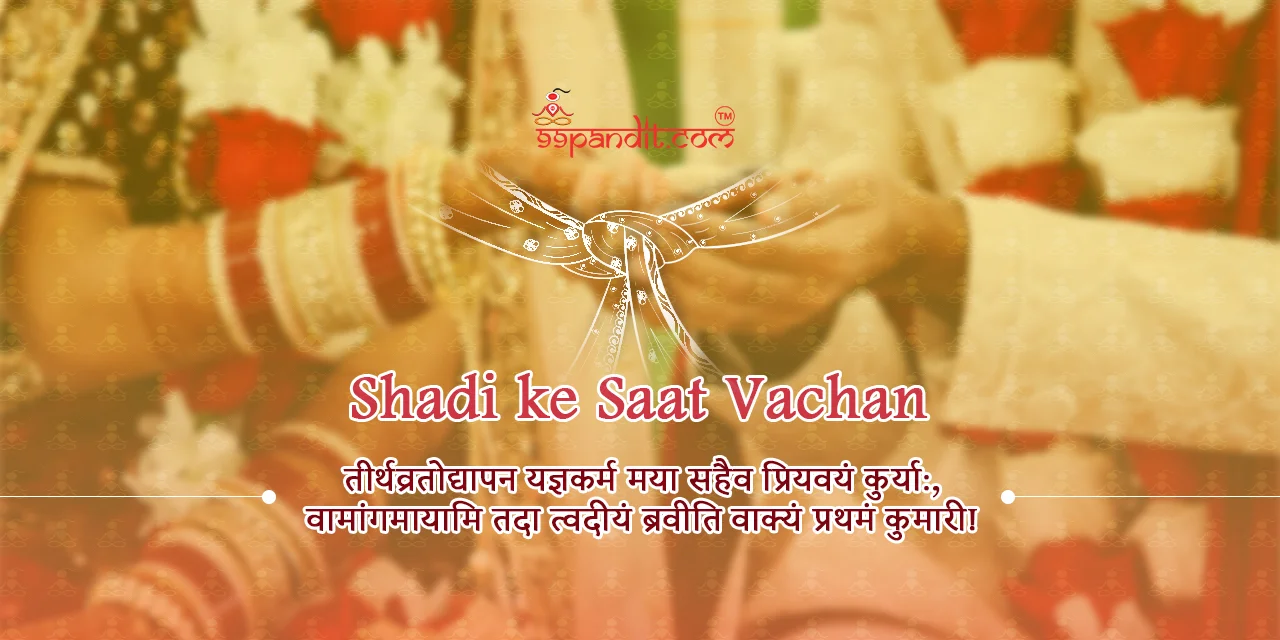
1. पहला वचन

तीर्थव्रतोद्यापन यज्ञकर्म मया सहैव प्रियवयं कुर्या:,
वामांगमायामि तदा त्वदीयं ब्रवीति वाक्यं प्रथमं कुमारी!

Shadi ke Saat Vachan in Hindi

अर्थात: पहले वचन में पति-पत्नी द्वारा अपने जीवन साथी से एक जोड़े के रूप में साथ रहने और तीर्थ यात्रा पर जाने का वादा है।

इस वचन के माध्यम से कन्या वर से कहती है कि यदि आप किसी भी तीर्थ स्थान पर जाओ तो मुझे भी अपने संग ले जाना।

यदि आप किसी भी प्रकार व्रत एवम धार्मिक कार्य करते हैं। तो उसमें मुझे भी अपना भागीदार बनाना। यदि आप इसे कार्य करते हैं तो मैं आपके वामांग में आना चाहती हूं।

इस वचन में वर-वधू भोजन, पानी और अन्य पोषण की प्रचुरता के लिए पवित्र आत्मा के प्रति अपना आभार व्यक्त करते हैं, और साथ रहने, एक-दूसरे का सम्मान करने और एक-दूसरे की देखभाल करने की शक्ति के लिए प्रार्थना करते हैं।

2. दूसरा वचन

पुज्यो यथा स्वौ पितरौ ममापि तथेशभक्तो निजकर्म कुर्या:
वामांगमायामि तदा त्वदीयं ब्रवीति कन्या वचनं द्वितीयम!!

Shadi ke Saat Vachan in Hindi

अर्थात: दूसरे फेरे में माता-पिता दोनों के लिए समान सम्मान की बात कही जाती है। साथ ही, जोड़ा शारीरिक और मानसिक शक्ति,आध्यात्मिक शक्तियों और स्वस्थ और शांतिपूर्ण जीवन जीने के लिए प्रार्थना करता है।

दूसरे वचन में कन्या वर से दूसरा वचन मांगते हुए कहती है कि जिस प्रकार आप अपने अभिभावक अर्थात अपने माता-पिता का सम्मान करते हैं। उसी प्रकार मेरे माता-पिता कभी सम्मान करें, तो मैं आपके बमांग में आना स्वीकार करती हूं।

3. तीसरा वचन

जीवनम अवस्थात्रये पालनां कुर्यात
वामांगंयामितदा त्वदीयं ब्रवीति कन्या वचनं तृतीयं!!

Shadi ke Saat Vachan in Hindi

अर्थात: तीसरे वचन में कन्या अपने वर से यह वचन मांगती है कि वह जीवन के तीनों चरणों (युवावस्था, प्रौढ़ावस्था, वृद्धावस्था) में स्वेच्छा से उसका अनुसरण करेगा।

साथ ही, दंपत्ति सर्वशक्तिमान ईश्वर से प्रार्थना करते हैं कि वे धर्मी साधनों और उचित उपयोग द्वारा अपने धन में वृद्धि करें, तथा आध्यात्मिक दायित्वों की पूर्ति करें। तो ही मैं आपके वामांग में आना स्वीकार करती हूं।

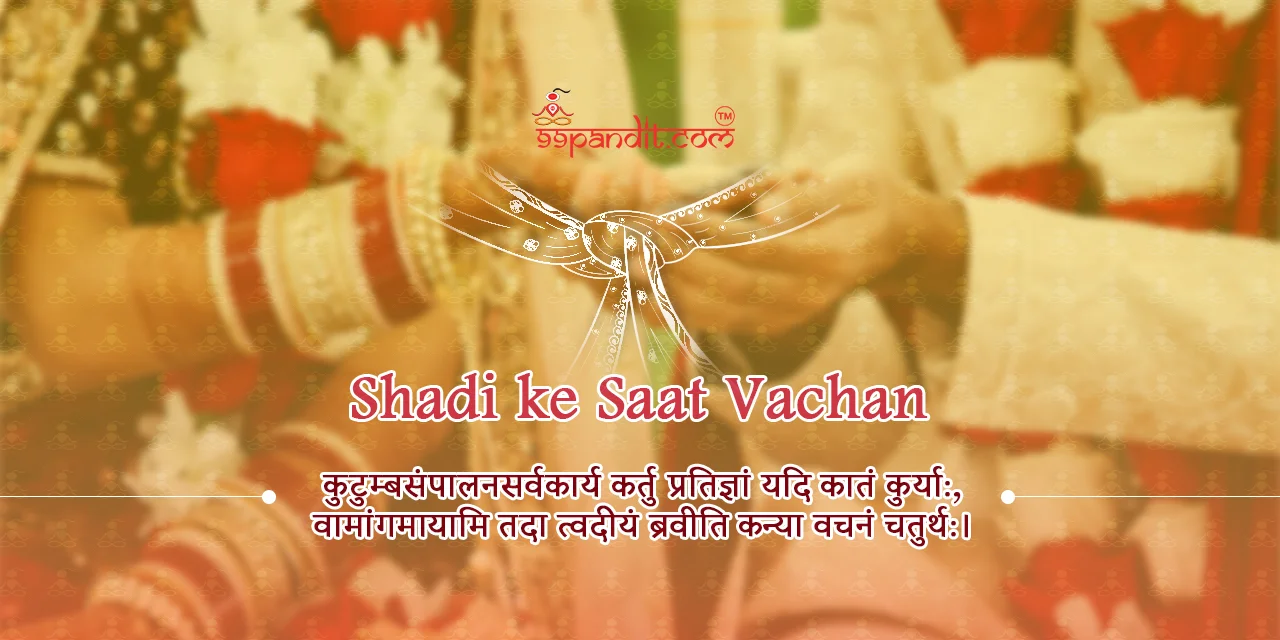
4. चौथा वचन

कुटुम्बसंपालनसर्वकार्य कर्तु प्रतिज्ञां यदि कातं कुर्या:,
वामांगमायामि तदा त्वदीयं ब्रवीति कन्या वचनं चतुर्थ:।

Shadi ke Saat Vachan in Hindi

अर्थात: चौथा वचन में कन्या वर से कहती है कि अब तक आप परिवारिक चिंता से मुक्त थे। लेकिन अब विवाह के बंधन में बंध रहे हैं। तो अब आप परिवार की आर्थिक खर्च उठाने की प्रतिज्ञा करें। तो मैं आपकी वह मांग में आना स्वीकार करती हुँ।

चौथा वचन हिंदू विवाह में महत्वपूर्ण सात वचनों में से एक है। यह इस बात का एहसास दिलाता है कि इस शुभ घटना से पहले, युगल स्वतंत्र थे और पारिवारिक चिंता और जिम्मेदारी से पूरी तरह अनभिज्ञ थे।

लेकिन, तब से चीजें बदल गई हैं। अब, उन्हें भविष्य में पारिवारिक जरूरतों को पूरा करने की ज़िम्मेदारी उठानी होगी।

साथ ही, फेरे में जोड़ों से आपसी प्रेम और विश्वास से ज्ञान, खुशी और सद्भाव प्राप्त करने और एक साथ लंबे समय तक खुशहाल जीवन जीने के लिए कहा जाता है।

5. पांचवा वचन

स्वसद्यकार्ये व्यहारकर्मण्ये व्यये मामापि मन्‍त्रयेथा
वामांगमायामि तदा त्वदीयं ब्रूते वच: पंचमत्र कन्या!!

Shadi ke Saat Vachan in Hindi

अर्थात: पांचवे वचन में कन्या वर से कहती है कि अगर अपने घर के कार्यों में लेन देन हेतु या अन्य किसी कार्य हेतु धन का व्यय करते समय यदि आप मेरी राय ले तो, मैं आपके वामांन में आना चाहती हूं।

यहाँ, दुल्हन घर के कामों में सहयोग करने, विवाह और अपनी पत्नी के लिए अपना बहुमूल्य समय निवेश करने के लिए कहती है । वे मजबूत, गुणी और वीर बच्चों के लिए पवित्र आत्मा का आशीर्वाद चाहते हैं।

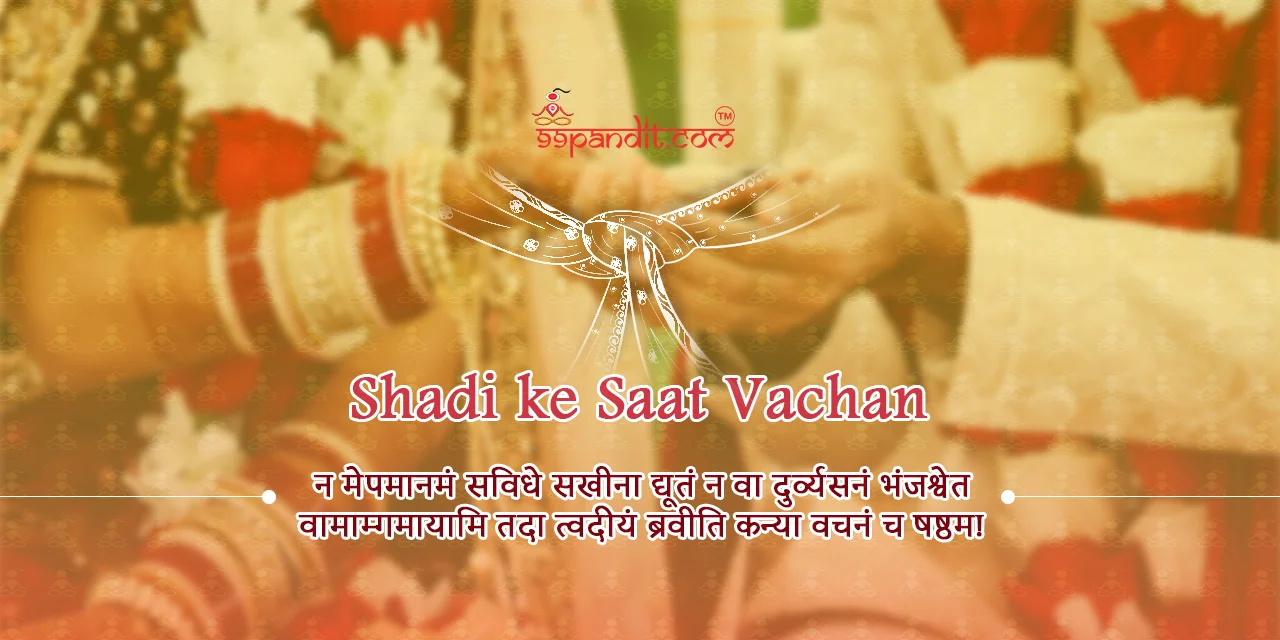
6. छठा वचन

न मेपमानमं सविधे सखीना द्यूतं न वा दुर्व्यसनं भंजश्वेत
वामाम्गमायामि तदा त्वदीयं ब्रवीति कन्या वचनं च षष्ठम!

Shadi ke Saat Vachan in Hindi

अर्थात: छटे वचन में कन्या वर से ये वचन मांगती है कि अगर वो चार लोगों के बीच अर्थात अपने सहेलियों के बीच बैठी हो। तो आप मेरा किसी भी कारण से अपमान नहीं करेंगे। यदि आप अपने आप को जुआ ,शराब से दूर रखते है। तो मैं आपके वामंग में आना स्वीकार करती हूँ।

यह फेरा हिंदू विवाह के सात वचनों में से एक है। यह दुनिया भर में प्रचुर ऋतुओं के लिए और आत्म-संयम और दीर्घायु के लिए मनाया जाता है।

यहाँ, दुल्हन अपने पति से सम्मान की मांग करती है, खासकर परिवार, दोस्तों और अन्य लोगों के सामने। इसके अलावा, वह अपने पति से जुआ और अन्य प्रकार की शरारतों से दूर रहने की अपेक्षा करती है।

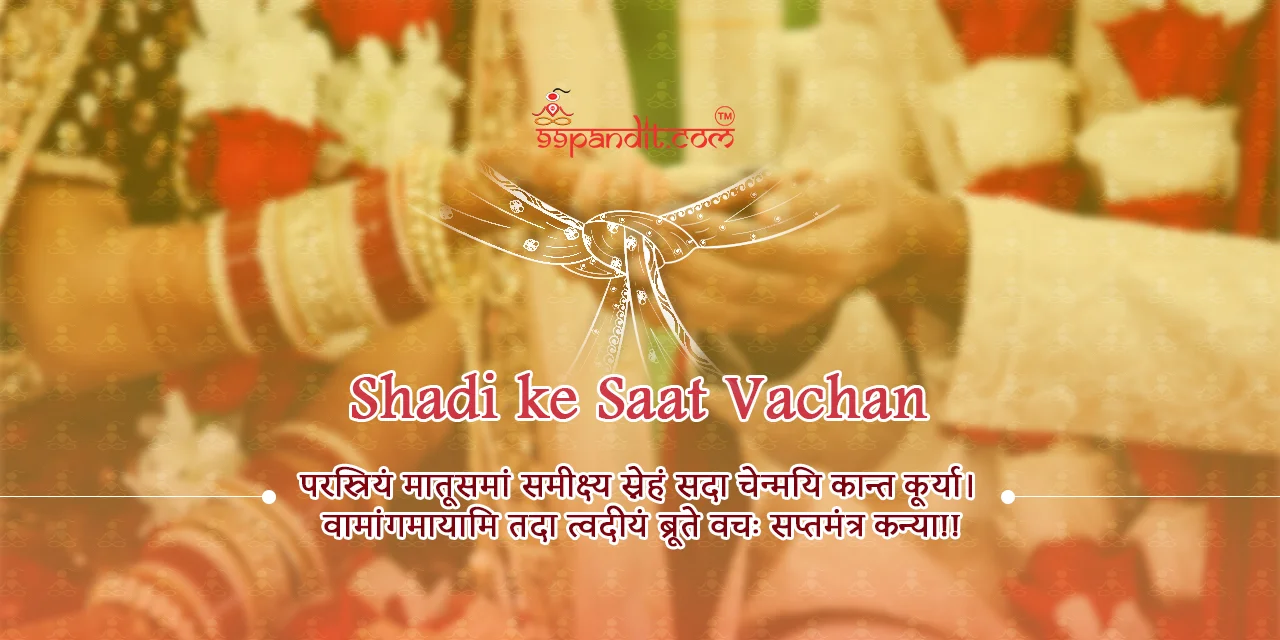
7. सातवा वचन

परस्त्रियं मातूसमां समीक्ष्य स्नेहं सदा चेन्मयि कान्त कूर्या।
वामांगमायामि तदा त्वदीयं ब्रूते वचः सप्तमंत्र कन्या!!

Shadi ke Saat Vachan in Hindi

अर्थात: अंतिम व सातवे वचन में कन्या ,वर से मांगती हैं कि आप एक पराई स्त्री को सदैव अपनी माता के रूप में देखेंगे।

कभी भी तीसरे व्यक्ति को पति – पत्नी के प्रेम में बीच भागीदार नही बनाएंगे । यदि यह वचन आप मुझे दे तो मैं आपके वामांग में आना स्वीकार करती हूँ।

इस वचन में जोड़े से सच्चे साथी बनने और न केवल अपने लिए बल्कि ब्रह्मांड की शांति के लिए भी समझदारी, वफादारी और एकता के साथ आजीवन साथी बने रहने के लिए कहा जाता है।

यहाँ, दुल्हन दूल्हे से कहती है कि वह उसका सम्मान करे, ठीक वैसे ही जैसे वह अपनी माँ का सम्मान करता है और विवाह के बाहर किसी भी व्यभिचारी रिश्ते में लिप्त होने से बचता है।

शादी के सात वचन का महत्त्व

सप्तपदी (संस्कृत में शाब्दिक अर्थ सात कदम) विवाह के सात वचनों को संदर्भित करता है जो दूल्हा और दुल्हन प्रत्येक कदम पर लेते हैं।

ईसाई समारोह में कही जाने वाली प्रतिज्ञाओं की तरह ही यह हिंदू विवाह में सबसे महत्वपूर्ण रस्मों में से एक है।

हिंदू धर्म में विवाह के लिए सात फेरों के साथ सात वचन बहुत महत्वपूर्ण हैं। हिंदू धर्म में 7 सांख्य को अत्यंत शुभ माना जाता है।

99pandit

BOOK TO GET 100% FREE CALL FROM PANDIT TO DECIDE DATE (MUHURAT)

99pandit

जिस प्रकार मनुष्य के सात क्रियाएं, पृथ्वी पर सात महाद्वीप, इंद्रधनुष में सात रंग, सात ऋषि, एवं सप्ताह में सात दिन होने इत्यादि के कारण 7 संख्या को शुभ माना जाता है।

विवाह में अग्नि देवता को साक्षी मानकर वर और कन्या अपने रिश्ते को मजबूत करने हेतु सात कसम खाते हैं और सात फेरे लेते हैं। सनातन धर्म में भी पति-पत्नी के रिश्तों को सात जन्मों तक बताया गया है।

जिस प्रकार भगवान अग्नि के साथ रंग होते हैं। उसी प्रकार सात फेरों के माध्यम से पति- पत्नी का साथ जन्मो जन्मांतर तक बना रहता है।

शादी के सात वचन की कथा- सावित्री और सत्यवान की कथा

विवाह के सात वचन की परंपरा (सप्तपदी) और इसकी शुरुआत के पीछे एक सुंदर कहानी है। सावित्री और सत्यवान की कथा।

जब सावित्री के प्रिय पति सत्यवान की अल्पायु में मृत्यु हो जाती है, तो उसकी समर्पित पत्नी सावित्री मृत्यु के देवता यम के पीछे-पीछे जाती है, जब वह उसकी आत्मा को ले जाता है। जब यम को पता चलता है कि वह उनका पीछा कर रही है, तो वे उसे वापस लौटने को कहते हैं।

वह जवाब देती है कि वह पहले ही उसके साथ सात कदम से अधिक चल चुकी है और इसलिए वह उसकी दोस्त बन गई है। वह उसका मित्र बनकर उससे बातचीत शुरू करता है।

अपनी बुद्धि और विवेक से वह मृत्यु के देवता को जीत लेती है, जो उसके पति को पुनः जीवन प्रदान करता है। दोस्ती या किसी भी रिश्ते की शुरुआत में सात चरणों का महत्व ऐसा ही है।

निष्कर्ष

हिंदू शादियाँ समृद्ध संस्कृति का प्रतिबिंब हैं। जैसे की हमने आपको बताया, विवाह संस्कार में वर-वधु द्वारा लिए गए शादी के सात वचन (Shadi ke Saat Vachan in Hindi) बहुत महत्वपूर्ण हैं।

सात वचन पति-पत्नी के बीच के संबंध को मजबूती प्रदान करते हैं। तथा साथ ही साथ उनके बीच प्रेम सामंजस्य को भी बढ़ावा देते हैं।

सात वचन के साथ, सात फेरे लेने से उनके वैवाहिक जीवन में अटूट विश्वास बना रहता है। जो उनके भविष्य को सुरक्षित एवं खुशहाली बनाती हैं तथा इसमें लिया गया प्रत्येक संकल्प रिश्ते को मजबूती प्रदान करता हैं।

हिंदू मान्यता यह है कि आप न केवल एक-दूसरे के नाम, पते, परिवार और मन को एकजुट कर रहे हैं, बल्कि अपनी आत्माओं को भी एकजुट कर रहे हैं।

यह प्रथा इतनी पवित्र इसलिए है क्योंकि इस दिन आपको भगवान शिव और उनकी पत्नी देवी पार्वती का रूप माना जाता है। तो, आपका मिलन दिव्यता की तरह अद्वितीय माना जाता है।

इसके साथ ही आज के ब्लॉग में बस इतना ही, आगे ऐसे ही और ब्लॉग पढ़ने के लिए जुड़े रहे 99Pandit के साथ।

Tilak in Hinduism – तिलक: हिंदू धर्म में तिलक की मान्यता, प्रकार व लाभ

हिन्दू धर्म में कई ऐसे परम्पराएँ है जो कि लोगों के लिए बहुत ही महत्वपूर्ण है| लेकिन अब इस विज्ञान के आगे हिन्दू संस्कृति की कोई मान्यता नहीं रही है| हमारे हिन्दू धर्म में तिलक लगाने का बहुत ही अधिक महत्व बताया गया है| माथे पर तिलक को लगाना हमारे हिन्दू धर्म की संस्कृति को झलकाता है|

अगर सीधी भाषा में बोला जाएं तो तिलक हिन्दू धर्म के लोगो की पहचान है| प्राचीन काल में जब बड़े – बड़े राजा – महाराजा किसी शुभ कार्य के लिए जाते थे तो माथे पर तिलक अवश्य ही लगवाते थे| इसके अलावा भी वह जब युद्ध के लिए जाते थे तो युद्ध में विजय पाने के लिए अपने इष्ट देव को याद करके माथे पर तिलक लगाकर जाते थे|

तिलक

हिन्दू धर्म की मान्यताओं के अनुसार वैसे तो तिलक को माथे पर लगाया जाता है लेकिन माथे के अलावा भी तिलक को गले, हृदय, दोनों हाथ, पीठ और नाभि को मिलाकर अन्य 12 जगहों पर तिलक लगाया जाता है| हिन्दू धर्म में तिलक लगाने को बहुत ही शुभ माना जाता है| आज के समय में लोग वैज्ञानिकों की ज्यादा मानने लगे है|

वैज्ञानिकों ने भी इस बात की पुष्टि कर दी है कि तिलक को माथे पर लगाने के कई सारे फायदे है| उनका भी मानना है कि तिलक को मस्तक पर लगाने से शरीर में शांति और ऊर्जा की अनुभूति होती है| भारत देश में हिन्दू धर्म में तिलक अनेक प्रकार के है| तिलक कई प्रकार के होते है जैसे – भस्म तिलक, चन्दन तिलक, रोली तिलक, सिंदूर तिलक इत्यादि अनेकों प्रकार के तिलक होते है|

हिन्दू धर्म में तिलक की मान्यता

सनातन धर्म में सभी मतों के लोगों के लिए जैसे कि शैव, शाक्त और वैष्णव एवं अन्य सम्प्रदाय में तिलक अलग – अलग प्रकार के होते है| हिन्दू धर्म में लोग अधिकतर लाल रंग के कुमकुम का तिलक लगाते है|

हिन्दू धर्म में स्त्रियाँ भी पूजा करने के पश्चात लाल कुमकुम का ही तिलक लगाती है क्योंकि लाल रंग को ऊर्जा और स्फूर्ति का प्रतीक भी माना जाता है| तिलक स्त्रियों की सुन्दरता में वृद्धि कर देता है| तिलक देवी माता की पूजा से जुड़ा हुआ है| देवी माँ की पूजा करने के बाद माता के आशीर्वाद के स्वरुप में तिलक को मस्तक पर लगाया जाता है|

माता के पूजन के बाद तिलक लगाने से आशीर्वाद तो मिलता ही है| साथ ही देवी माँ की असीम कृपा भी प्राप्त होती है| इसके अलावा चन्दन का तिलक लगाने से सभी पापों का नाश होता है| चन्दन का तिलक लगाने से यह प्राणों की रक्षा भी भी करता है| तथा लक्ष्मी माँ का आशीर्वाद भी बना रहता है|

99pandit

100% FREE CALL TO DECIDE DATE(MUHURAT)

99pandit

चन्दन का तिलक लगाने से ज्ञान भी सक्रिय रहता है| शैवों की परंपरा के अनुसार यह लोग चन्दन की आड़ी रेखा के रूप में ही तिलक लगता है| दूसरी ओर शाक्त सम्प्रदाय के लोग अधिकतर सिंदूर से बना तिलक ही लगाते है| सिंदूर को शाक्त मत में उग्रता का प्रतीक माना जाता है| यह तिलक लगाने वाले की शक्ति और तेज को बढ़ाने में सहायता करता है|

इनमे से कुछ प्रमुख प्रकार के तिलक भी है जैसे – लालश्री तिलक, रामानंद तिलक, विष्णुस्वामी तिलक इत्यादि कुल चौसठ प्रकार के तिलक वैष्णव धर्म में माने जाते है जिनके बारें में हम आगे इस आर्टिकल के माध्यम से  सम्पूर्ण विस्तार से जानेंगे|

तिलक कितने प्रकार के होते है

तिलक चार प्रकार के होते है या हम ये भी यह भी कह सकते है कि इन चार चीज़ों से तिलक बनाकर तैयार किया जाता है| ये चार प्रकार निम्न है –

  • कुमकुम
  • केसर
  • चन्दन
  • भस्म

कुमकुम हल्दी चूना मिलकर बना होता है| यह हमारे आज्ञा चक्र की शुद्धि करता है| साथ ही कैल्शियम प्रदान करते हुए ज्ञान चक्र को भी सक्रिय कर देता है|

केसर का तिलक मस्तिष्क को शांत और शीतल रखने का कार्य करता है|

चन्दन का तिलक भी दिमाग को शांत को करके मानसिक शांति प्रदान करता है|

भस्म से बने तिलक को लगाने से यह मस्तक के रोम छिद्रों में उपस्थित सभी विषाणुओं को नष्ट कर देता है|

सनातन धर्म में तिलक के अनेको प्रकारों का विवरण किया गया है| अलग – अलग धर्म और सम्प्रदाय के अनुसार तिलक को विभिन्न प्रकारों में बांटा गया है| सनातन धर्म में मुख्यत: शैव, शाक्त और वैष्णव आदि सम्प्रदाय शामिल है|

तिलक

सिंदूर को शाक्त सम्प्रदाय में उग्रता का प्रतीक माना जाता है| यह तिलक लगाने वाले की शक्ति और तेज को बढ़ाने में सहायता करता है| वैष्णव सम्प्रदाय में कुल चौसठ प्रकार के भिन्न – भिन्न तिलक का वर्णन किया गया है| इनमे से कुछ प्रमुख प्रकार के तिलक भी है जैसे – लालश्री तिलक, रामानंद तिलक, विष्णुस्वामी तिलक इत्यादि कुल चौसठ प्रकार के तिलक वैष्णव धर्म में माने जाते है|

इन सब में सबसे प्रमुख तिलक रामानंद तिलक और विष्णुस्वामी तिलक है| विष्णु स्वामी तिलक दोनों भोहों के बीच में दो चौड़ी खड़ी रेखाओं से बना होता है| रामानंद तिलक भी विष्णु स्वामी तिलक की भांति ही है| इसमें उस विष्णुस्वामी तिलक के मध्य में कुमकुम की खड़ी रेखा खींची जाती है|

सप्ताह के दिनों के अनुसार तिलक

सोमवार:

सोमवार का दिन भगवान शंकर को समर्पित किया गया है| इस वार का ग्रह चंद्रमा को माना गया है| हिन्दू धर्म के अनुसार चंद्रमा को मन का कारक माना गया है| अपने मन को काबू में करने के लिए दिमाग को शांत रखना आवश्यक है| इसके लिए इस दिन सफ़ेद चन्दन का तिलक लगाना उचित माना गया है| यदि आप चाहे तो भस्म या विभूति से भी तिलक लगा सकते है|

मंगलवार:

हिन्दू धर्म के अनुसार मंगलवार का दिन हिन्दू देवी – देवताओं में हनुमान जी को समर्पित किया गया है| इस वार का ग्रह भी मंगल को माना गया है| मंगल ग्रह लाल रंग का नेतृत्व करता है| इस दिन लाल चन्दन या फिर चमेली के तेल में घुले हुए सिंदूर के तिलक को लगाना शुभ माना गया है| इस तिलक को लगाने से व्यक्ति की ऊर्जा और कार्यक्षमता में भी अत्यंत बढ़ोतरी होती है|

बुधवार:

यह दिन भगवान गणेश जी और देवी माँ दुर्गा को समर्पित किया गया है| इस दिन के स्वामी के रूप में बुध ग्रह को जाना जाता है| इस दिन सूखे सिंदूर, जिसमे कोई सा भी तेल ना मिला रखा हो, का तिलक लगाया जाता है| इस तिलक को लगाने से व्यक्ति की बुद्धि में सुधार होता है|

गुरूवार:

गुरूवार को बृहस्पति के नाम से भी पहचाना जाता है| बृहस्पति को ऋषियों का गुरु माना जाता है| गुरूवार का यह दिन ब्रह्मा जी समर्पित किया गया है| इस दिन का स्वामी बृहस्पति ग्रह है| बृहस्पति ग्रह पीले रंग या सफ़ेद मिले हुए  पीले रंग का प्रतिनिधित्व करता है|

99pandit

100% FREE CALL TO DECIDE DATE(MUHURAT)

99pandit

इसलिए इस दिन सफ़ेद चन्दन को घिसकर उसमे केसर मिलाकर उसका तिलक लगाना चाहिए| इस दिन हल्दी का तिलक भी लगाया जा सकता है| इससे मन में आने सकारात्मक विचारों में वृद्धि होगी और आर्थिक तंगी भी दूर होगी|

शुक्रवार:

यह दिन भगवान विष्णु की धर्मपत्नी माता लक्ष्मी जी को समर्पित है| इस दिन के स्वामी शुक्र ग्रह ही है| शुक्र ग्रह को दैत्यराज भी कहा जाता है क्योंकि शुक्राचार्य असुरों के गुरु थे| इस दिन लाल चंदन का तिलक लगाना बहुत ही शुभ माना जाता है| इसको तिलक को लगाने से तनाव तो दूर होता ही है बल्कि साथ ही साथ सुख – समृद्धि भी बढ़ती है|

शनिवार:

शनिवार का दिन एक नहीं बल्कि तीन देवता, क़ाल भैरव, शनिदेव और यमराज को समर्पित किया गया| इस दिन विभूति, भस्म या लाल चन्दन का तिलक लगाने से भैरव भगवान प्रसन्न होते है और सभी कष्टों का निवारण करते है|

रविवार:

रविवार का दिन भगवान विष्णु और सूर्य देव का दिन है| इस दिन के स्वामी सूर्य ग्रह है जो सभी ग्रहों के राजा है| इस दिन लाल चन्दन या हरि चन्दन का तिलक लगाने से भगवान विष्णु की विशेष कृपा प्राप्त होती है और मान – सम्मान में बढ़ोतरी होती है|

तिलक लगाने का मंत्र व उंगलियों का महत्व

तिलक लगाने का मंत्र
चन्दनस्य महत्पुण्यं पवित्रं पापनाशनम् |
आपदं हरते नित्यं लक्ष्मीस्तिष्टि सर्वदा ||

तिलक के बिना आपके द्वारा किया गया कोई भी धार्मिक कार्य मान्य नहीं है| इसलिए कभी भी बिना तिलक के पूजा नहीं करनी चाहिए| हमेशा भगवान को लगाने के बाद जो तिलक बचे| उसका ही इस्तेमाल करना चाहिए| हिन्दू धर्मग्रंथों के अनुसार किसी भी पूजा, पितृकर्म और देवा आदि सभी पूजा करने से पहले मस्तक पर तिलक जरूर लगाना चाहिए|

ब्राह्मण को तिलक लगाने का मंत्र
केशवानन्न्त गोविन्द बाराह पुरुषोत्तम |
पुण्यं यशस्यमायुष्यं तिलकं मे प्रसीदतु ||

कोई भी ब्राह्मण यदि बिना तिलक के रहता है तो उसे दोष लगता है| इसलिए ब्राह्मण को हमेशा तिलक लगाए रखना चाहिए|

भगवान को तिलक लगाने का मंत्र –
श्रीखंडं चन्दनं दिव्यं गंधाढयं सुमनोहरम |
विलेपनं सुरश्रेष्ठ चन्दनं प्रतिगृह्यताम ||
ॐ तं यज्ञं बर्हिषि प्रौक्षन पुरुषं जातमग्रतः |
तेन देवा अयजन्त साध्या ऋषयश्च ये || 

तिलक लगाने के लिए उंगलियों का महत्व

हिंदू धर्म के अनुसार तिलक को लगाने के भी कुछ नियम है जिन्हें हमारे शास्त्रों में भी बताया गया है| हमे भी तिलक लगाते समय उन नियमों का पालन करना चाहिए| इन नियमों ने उँगली से तिलक लगाना भी इसी में शामिल है| जिन व्यक्तियों को मोक्ष की कामना है|

उन्हें अंगूठे से तिलक निकलना चाहिए| जिस व्यक्ति को धनवान बनने की इच्छा हो उसे मध्यमा उंगली से तिलक लगाए| सुख व शांति की कामना करने वाले व्यक्ति को अनामिका उंगली से तिलक लगाए|

इसके अलावा किसी भी युद्ध में विजय पाने या शत्रु के नाश के लिए तर्जनी उंगली की सहायता से मस्तिष्क पर तिलक लगाना चाहिए| तिलक को सही नियम से लगाए जाने पर यह व्यक्ति के जीवन में खुशहाली भर देता है|

तिलक लगाते समय ध्यान देने योग्य बातें

  • तिलक लगाते समय ध्यान रखें कि आप जिसके भी तिलक लगा रहे है तो तिलक उसके दोनों भौहों के मध्य में ही लगना चाहिए|
  • तिलक के भगवान के आशीर्वाद के रूप में लगाया जाता है| इसलिए तिलक लगाने से पूर्व स्नान अवश्य कर ले|
  • जब भी आप तिलक लगवाएं तो आपका मुख सदा उत्तर दिशा की ओर होना चाहिए|
  • जो भी ब्राह्मण सुबह – शाम हवन करते है| उन्हें हमेशा तिलक लगाकर ही हवन करना चाहिए क्योंकि बिना तिलक लगाए हवन का फल प्राप्त नहीं होता है|
  • लाल चन्दन, विभूति, सफ़ेद चन्दन, कुमकुम, हल्दी और भस्म का तिलक लगाना हिन्दू धर्म में बहुत शुभ माना जाता है|
  • भगवान को हमेशा अपनी अनामिका उंगली से ही तिलक लगाना चाहिए| इससे मन को शांति की अनुभूति प्राप्त होती है|
  • कनिष्क तिलक या ऋषि कार्यों में तिलक हमेशा छोटी उंगली से लगाया जाता है|
  • पितृ संबंधी सभी कार्यों में तिलक मध्यमा उंगली से लगाना चाहिए|
  • भगवान को अंगूठे से तिलक नहीं लगाना चाहिए|

तिलक लगाने से होने वाले लाभ

हिन्दू धर्म में तिलक लगाने बहुत बड़ा महत्व और तिलक लगाने के कई सारे लाभ भी बताये गए है| तिलक कई प्रकार के होते है| तिलक को केवल लगाने मात्र से ही मनुष्य का व्यक्तित्व काफी प्रभावशाली होता है|

तिलक लगाने से व्यक्ति के आत्म विश्वास और आत्मबल में वृद्धि होती है| नियमित रूप से मस्तक पर तिलक लगाने से मस्तक में शीतलता बनी रहती है और लोग सुख व शांति का अनुभव करते है| तिलक लगाने से कई तरह की मानसिक बिमारियों से छुटकारा मिलता है|

तिलक

तिलक लगाने से मस्तिष्क में सेराटोनिन हर्मोन स्त्रावित होता है| जिससे व्यक्ति की उदासी दूर होती है और मन में उत्साह की भावना को जगाता है| हल्दी से बना तिलक लगाने से त्वचा से सभी कीटाणु मर जाते है|

हल्दी में ऐसे तत्व होते है जो हमारी त्वचा पर उपस्थित कीटाणुओं को नष्ट कर देता है| धार्मिक मान्यताओं के अनुसार, चन्दन का तिलक लगाने से मनुष्य के सभी पापों का नाश होता है| ज्योतिषियों का भी यह मानना है कि तिलक लगाने से ग्रहों के दोषों का नाश होता है| और मनुष्य के सौभाग्य में बढ़ोतरी होती है|

निष्कर्ष

हमने इस आर्टिकल के माध्यम से आपको तिलक का हिन्दू धर्म में क्या महत्व है, के बारे में बताया| माथे पर तिलक के प्रकार कितने होते है, तिलक कितने प्रकार के होते है तथा तिलक का क्या महत्व है| इसके अलावा भी अगर आप किसी और पूजा के बारे में जानकारी लेना चाहते है। तो आप हमारी वेबसाइट पर जाकर सभी तरह की पूजा या त्योहारों के बारे में सम्पूर्ण ज्ञान ले सकते है।

इसके अलावा अगर आप ऑनलाइन किसी भी पूजा जैसे सुंदरकांड पाठ,अखंड रामायण पाठ, गृह प्रवेश पूजन और विवाह पूजा के लिए भी आप हमारी वेबसाइट 99Pandit  की सहायता से ऑनलाइन पंडित  बहुत आसानी से बुक कर सकते है।

आप हमे कॉल करके भी पंडित जी को किसी की कार्य के बुक कर सकते है जो कि वेबसाइट पर दिए गए है फिर चाहे आप किसी भी राज्य से हो। हम आपको आपकी भाषा वाले ही पंडित जी से ही जोड़ेंगे|

अक्सर पूछे जाने वाले प्रश्न

Q.हिन्दू धर्म में तिलक क्यों लगाते है ?

A.हिन्दू धर्म में तिलक लगाना इस बात संकेत है कि उस व्यक्ति ने किस धर्म से अपनी अध्यात्म की शिक्षा प्राप्त की है|

Q.तिलक किसका प्रतीक है ?

A.हिन्दू धर्म में तिलक भगवान के आशीर्वाद का प्रतीक है|

Q.तिलक कहाँ लगाना चाहिए ?

A.तिलक को हमेशा ही दोनों भौहों के मध्य में लगाना चाहिए|

Q.तिलक लगाने से क्या लाभ है ?

A.तिलक लगाने से ग्रहों से होने वाले दोष व नकारात्मक प्रभावों से मुक्ति मिलती है|