Muktinath Temple, Nepal: Timings, History & How to Reach

The Muktinath temple in Nepal is one of the auspicious places, which is located in the Muktinath valley in Mustang, Nepal.

The word Muktinath derives from two words: Mukti, meaning salvation, and Nath, meaning God. The temple is dedicated to lord Vishnu, it is considered a religious symbiosis between Hindus and the Vaishnavites.
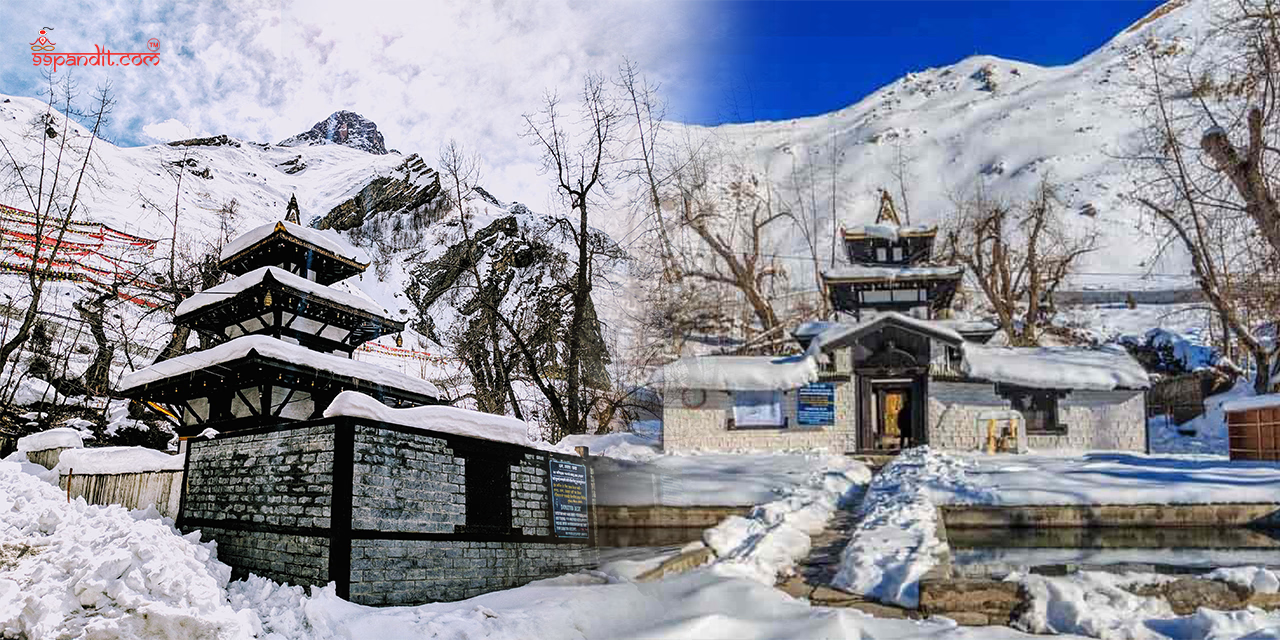
Muktinath Temple

The temple is located amidst the beautiful landscapes of the Annapurna mountain range in Nepal, known as a testimony to the country’s rich cultural heritage and natural beauty.

Starting a journey to this sacred temple not just promises a spiritual experience, but also lets you experience its rich history and the influence of two major religions, Hinduism and Buddhism.

This article covers the religious significance of the temple, the cultural blend of Hindu and Buddhist customs, and the fascinating legends associated with it.

You will also know helpful guide tips, trekking details, and the right time to visit the temple. Keep reading the article.

Muktinath Temple Darshan Timings

The Muktinath temple opens at 5 AM and closes at 8:30 PM. The temple also organizes multiple rituals at this time. The followers perform the rituals like aarti and pujas.

Below are the timings of the Muktinath Temple:

Rituals From To
Morning Darshan 5:00 AM 12:00 PM
Evening Darshan 2:00 PM 9:00 PM
Seva Sankalpa 8:00 AM 9:00 AM
Tirtha Prasad 1:00 PM 3:00 PM
Pooja Timings 6:30 PM 8:30 PM


The Meaning of Muktinath

The meaning of Muktinath has deep spiritual importance that attracts devotees from all around the world.

Translating the word comes with the meaning of ‘liberation’, ‘salvation’, and ‘nath’ means ‘lord’, or ‘protector’.

Hence, Muktinath is often translated as ‘lord of liberation’, a place where the soul can get moksha from the cycle of birth and death.

In short, Muktinath means ‘the protector of liberation’ – an auspicious place where Hindu and Buddhist devotees visit for spiritual freedom and salvation.

Hindu texts refer to Muktinath as a place that helps devotees achieve moksha, the ultimate religious objective of liberation from the pains and life’s sufferings.

Buddhists visit the temple as a special site of enlightenment where followers can liberate themselves from attachment to the world.

The temple is found in an area between the two major belief systems, producing a place acknowledging both beliefs, and an energy distinctly felt by people from multiple religions.

Introduction to Muktinath Temple

Muktinath temple in Nepal has been a place of great spiritual significance. It’s believed that Lord Vishnu Murthi, Goddess Sri Devi, and Bhoo Devi bless Jeevan Mukthi here.

Mukthinath is also considered one of the eight holy places popular for honoring lord vishnu, swayambhu kshetras, or divya kshetras.
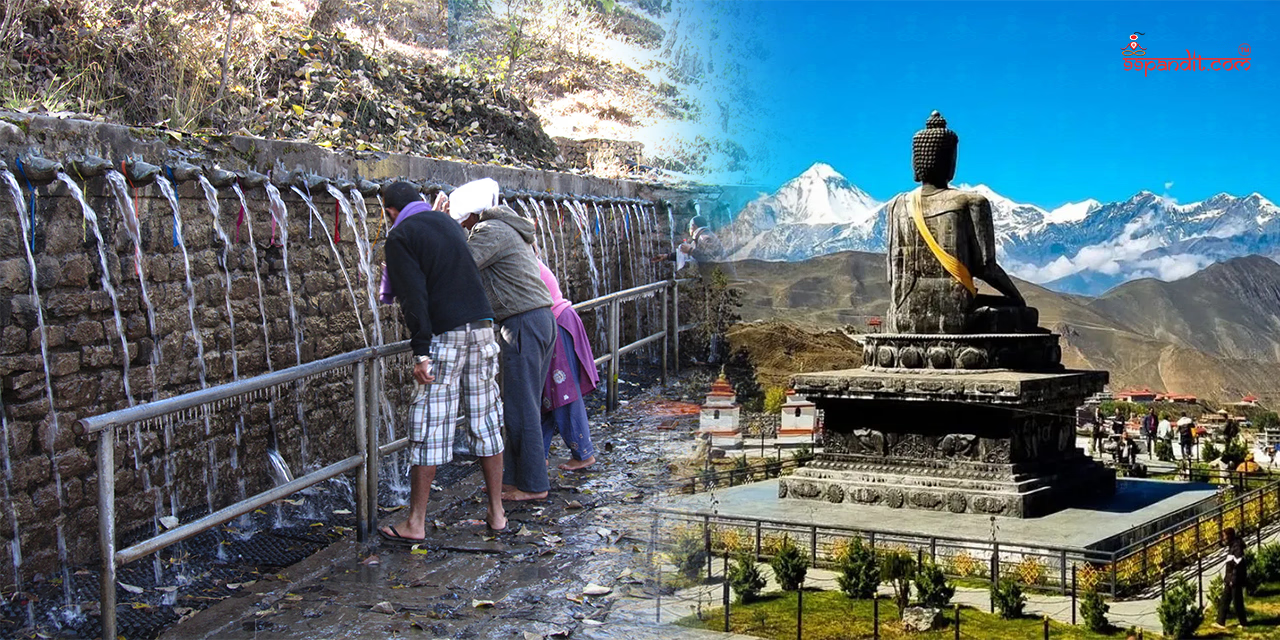
Muktinath Temple

Along with Muktinath, seven other places are part of Svayam Vyakta Kshetras called Badrinath, Pushkar, Naimisharanya, Tirupati, and Thotadri. The water is provided via 108 bull faces in the outside courtyard.

History of Muktinath Temple

The history of Nepal’s Muktinath temple dates back to the 19th century. It is mentioned that ‘Sabarna Prabha’, a Nepalese queen, started constructing the temple. Hindus are believed to have developed this Vishnu temple.

A well-known Tibetan yogi named Shabkar visited the Muktinath temple in Nepal in 1818 and stayed there for many days to learn the place in more detail.

According to Tibetan Buddhism tradition, Guru Rinpoche (also known as Padmasambhava), the creator of Tibetan Buddhism, is believed to have meditated at Muktinath on his way to Tibet.

Damodar Kunda, the main origin of Shaligram and the Gandaki river, is found close to the Muktinath temple.

The kund, also known in Tibetan as ‘Men-Chu’, is linked to Guru Rinpoche’s life and is termed the beginning of Mukti Kshetra.

A Sacred Bond Between Tulsi and Shaligram That Started at Muktinath

Indian mythology shows that Lord Shiva had an enormous fight with Jalandhar (the king of Asuras, who was powerful).

Jalandhar was a schemer who went to an extreme by assaulting Kailash in order to acquire Parvati (wife of Lord Shiva). Then Jalandhar transformed himself and used his powers to emulate Shiva.

Because of her spiritual power, Parvati could easily perceive reality, and she instantly called upon Shiva to help her.

Soon thereafter, they fought, but with the loyalty of her wife, Jalandhar was mostly safe. Later, other gods choose to employ a little strategy to overcome the great evil.

In order to appear before Vrinda, Lord Vishnu exerts his power to appear like a duplicate of Jalandhar.

Vrinda was inattentive and did the same as her husband. She, then, abandons Lord Shiva, and he kills Jalandhar.

After becoming aware of the truth, Vrinda swears at Lord Vishnu and tells him to spend the remaining days of his life as a stone (Shila).

Then Lord Vishnu takes birth as Shaligram in the Muktinath region. Vrinda kills herself by cursing, and the Tulsi plant grows out of her ashes.

Lord Vishnu appreciates Vrinda and loves her due to her fidelity, which impressed him very much. As a result, there should be a Tulsi leaf when venerating the Shaligram.

Spiritual Significance of Muktinath Temple

The Muktinath temple intricately represents the interrelated relationship between Hinduism and Buddhism.

A Buddhist monk is available at the temple to offer prayers along with a local nun who looks after the worship.

This is the only Divya desam temple outside of India, and it ranks 106th out of 108 Divya desams in Hinduism.

It’s also one of the char dham in Nepal and known as mukti kshetra, which means the ‘liberation arena’ (moksha).

In the Vishnu Purana, there are scripts and the Gandaki mahatmya that describe the importance of this divine temple. The Sri Vaishnava literature says that Thiru Saligramam is its old name.

The shaligram shila, which is the non-anthropomorphic form of Vishnu, is believed to have originated from the neighbouring Gandaki river.

Muktinath is known as one of the 24 tantric sites and an important place for Dakinis, goddesses called sky dancers, among the Tibetan Buddhists.

They identify the murthi of Muktinath temple as a manifestation of Avalokitevara, who signifies the Buddha’s collective compassion.

It’s also known as Chumig Gyatsa by Buddhists, due to its hundred waters, which is named in Tibetan.

Where is the Muktinath Temple Located?

The Muktinath temple resides tucked away in Nepal’s Muktinath Valley, at the core of the Thorong La Mountain pass in Mustang.

This is adjacent to the Ranipauwa village in the Annapurna area of Nepal. Many international tourists visit the temple, mainly while on the Annapurna Circuit trek.
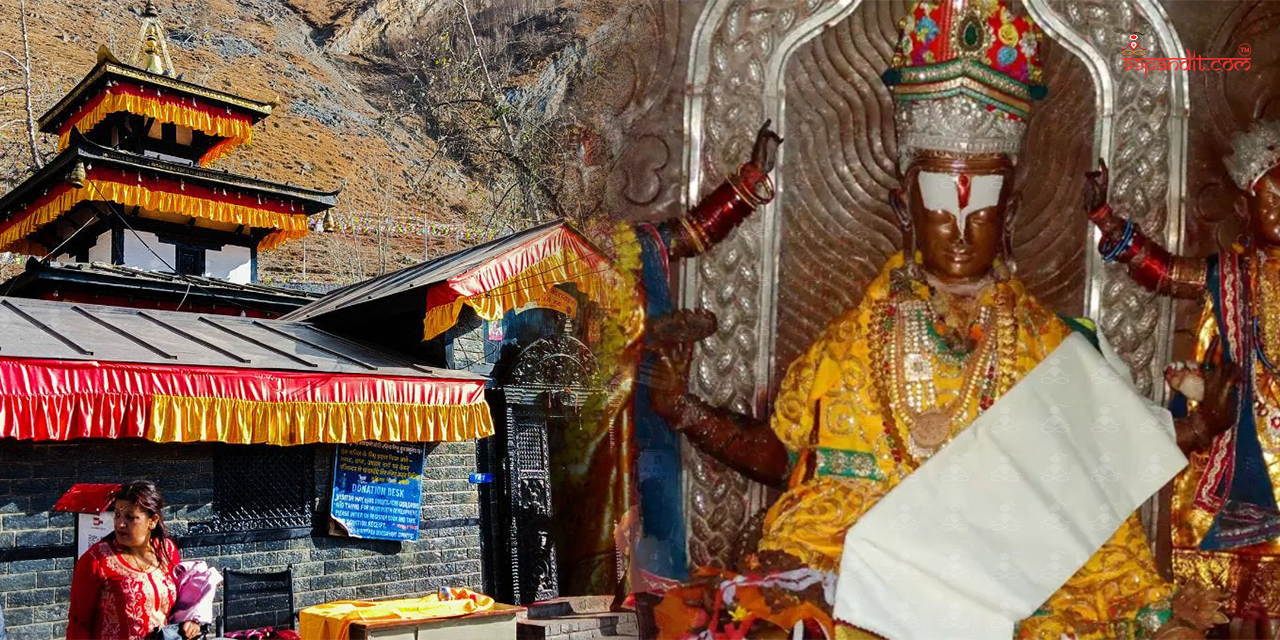
Muktinath Temple

This is established at an altitude of 3800 meters above sea level, which makes it one of the highest temples in the world.

It has a beautiful view of the Tibetan plains to the north and the snow-capped Annapurna mountains to the south.

How to Reach Muktinath Temple, Nepal

There are different ways to reach the Muktinath temple in Nepal. It can be visited using these ways:

Nepal Muktinath Mandir by Road

Seeking darshan at the lord vishnu temple by road, it takes around 6 nights/7 days by the route Kathmandu – Pokhara – Jomsom – Muktinath. This distance from Kathmandu to Muktinath is about 400 km.

If you’re taking the Prithvi Highway from Kathmandu to Pokhara and then going through the towns of Jomsom, Tatopani, Ghasa, Marpha, and Kagbeni, you can reach the temple.

Muktinath Temple of Nepal by Flight

Travelling to the Muktinath temple by road takes (4 nights / 5 days) by the route Kathmandu – Pokhara – Jomsom – Muktinath.

The closest airport to the temple is Jomsom. There are no direct flights accessible from Kathmandu to Muktinath. First, you have to reach Pokhara, then get a flight to Jomsom.

The flight routing from Kathmandu to Pokhara often takes one hour, and the flight from Pokhara to Jomsom allows you to reach in an hour.

Muktinath Nepal Temple by Helicopter

From Kathmandu to Muktinath, a helicopter is also available. It takes up to one and a half hours to get to Nepal’s Muktinath temple by helicopter.

You can easily trek from Ranipauwa to the Muktinath temple in just 30 minutes, approximately.

Muktinath Permit Nepal

The temple of Lord Vishnu is located in a trekking and conservation area. Hence, two permit passes are required to enter this zone.

One of the trekker’s information management systems permits, and the second is the Annapurna Conservation Area Project permit.

People who are travelling to the Muktinath temple should have these passes to enter the area.

Top Places to Visit around Muktinath Temple

  • Samba Gompa
  • Vishnu Paduka
  • Mukteshwar Mahadev Temple
  • Narshing Gompa
  • 108 Mukti Dhara
  • Mukti Kunda
  • Jwala Mai Temple
  • Sangye Buddha
  • Santok Palri Lingma Guru.

Best Time to Visit Vishnu Temple

Traveling to Muktinath Temple could be a profound experience, and selecting the right time to visit the temple can boost it manifold.
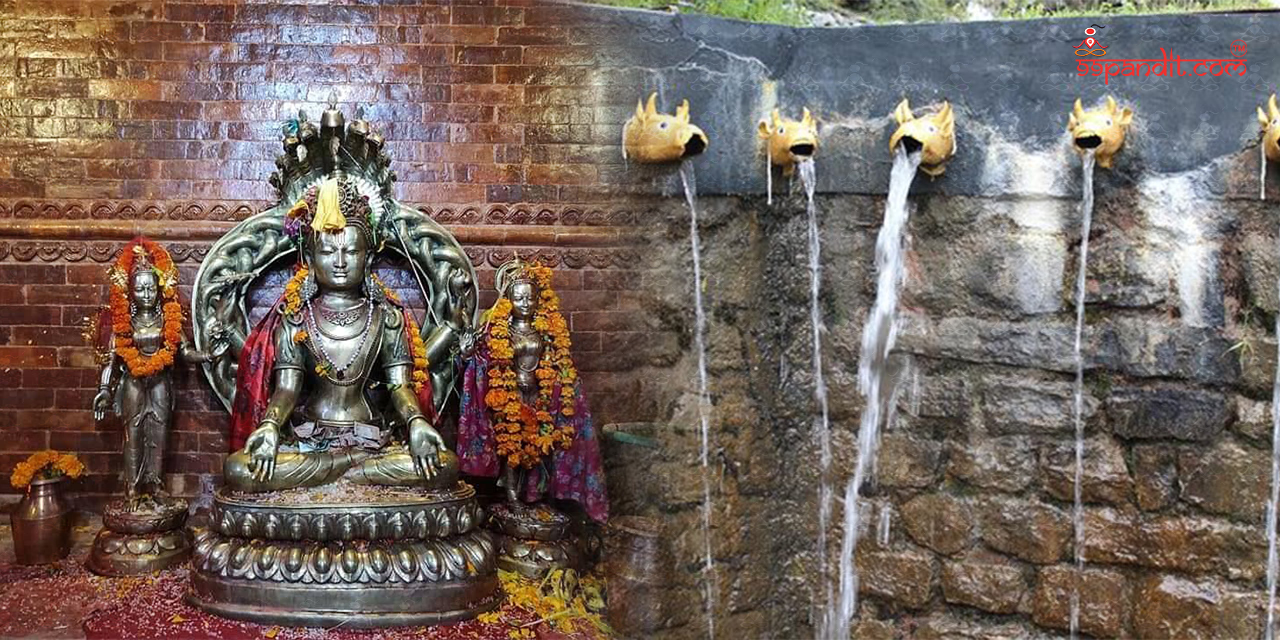
Muktinath Temple

Let’s find out the ideal time to visit, depending on weather conditions and the vibrant festivals that the region offers.

Spring (March to May):

  • Description: The best time to seek darshan at the temple is in the spring. During this time, the weather is pleasant, with clear skies giving breathtaking views of the covered mountains.
  • Recommendation: Perfect for trekking and outdoor activities.

Summer (June to August):

  • Description: Such a time is perfect that marks the monsoon season, identified by frequent rains and cloudy atmospheres.
  • Recommendation: It might not be the right time for trekking, but the rains bring a fresh burst of greenery, which makes the landscapes picture-perfect views.

Autumn (September to November):

  • Description: Another best time to seek the blessings of the lord is Autumn, with perfect weather and a few drops of rainfall. The clear skies give a perfect chance for photography.
  • Recommendation: A preferred time for pilgrimage and trekking.

Winter (December to February):

  • Description: The province experiences cold weather and snowfall at this time. Numerous trails should be closed due to snowy weather.
  • Recommendation: Perfect for those seeking to experience the winter environment, but be ready for cold conditions and limited accessibility.

Conclusion

So we have reached the end of this detailed guide. Let’s take a moment to discuss the unique and different journey you’ll have at the Muktinath temple.

The number of followers of this holy place is more than just a religious experience; it’s also a choice to learn about the region’s rich culture, history, and stunning natural scenery.

This temple is not just a sacred place, but a transformative one for the spirit and heart. There are 108 sacred water spouts, an eternal flame, and a panoramic scene of the Himalayas that will generate everlasting memories for all pilgrims.

Whether you’re a spiritual pilgrim, a curious traveller, or an adventure seeker, the place gives experiences that will power your mind and possibly enhance your life.

The purpose of seeking liberation in Muktinath is relevant to all, irrespective of their cultural background; hence, no two experiences will be similar.

Are you planning your trip to Muktinath? Go through this important information to simplify your journey and make a booking in advance.
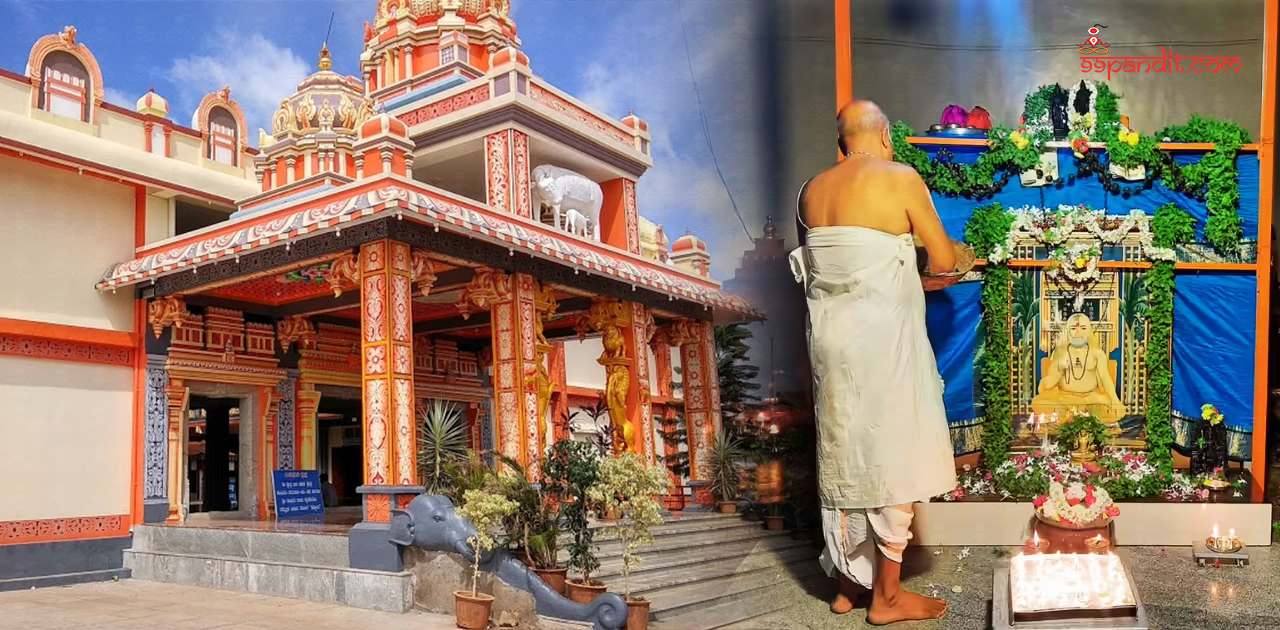
Exploring Kamadhenu Kshetra – History, Significance, & Rituals

Kamadhenu Kshetra is a holy place where natural peace, positivity, and divine vibes are abundant. It is also well known for the mythological and historical mentions of it.

Both devotees and tourists visiting here experience mental peace and spiritual energy. It is said that special blessings of Kamdhenu Mata (mother of all cows) are received in this area, and wishes are fulfilled by worshipping here.

Kamadhenu Kshetra

This area’s specialty is also hidden in its history and mythological stories. It is mentioned in the Puranas and religious texts, and the stories here connect devotees with spiritual knowledge and culture.

His place has a rich history and interesting mythological tales. These narratives appear in time-tested religious scriptures, the Puranas, that integrate people with spiritual teachings and traditions.

The temples on this land have exquisite architecture and fine carvings that attract visitors. The special festivals and rituals at Kamdhenu Kshetra provide every participant with a spiritual experience and blessings.

So today, in this blog, we will know about the History, Significance, Rituals other creative facts about Kamdhenu Kshetra.

If you want, you can book a pandit from 99Pandit for any puja or ritual, which will help you in getting the puja done at home or anywhere in the city.

All & About Kamadhenu Kshetra

Kamadhenu Kshetra is a famous pilgrimage site in Bangalore that has been made even more well-known because of its peace and beauty.

Once you arrive and are actually here in this holy place, you can feel the peace of the area with its enormous amount of trees and plants, the open sky, and ponds or lakes around every corner.

Kamadhenu Kshetra

This area is known not only because of its religious significance but also for one’s mental tranquillity and spiritual energies.

Tourists and devotees come to this area where they can be refreshed mentally and spiritually be at peace with their souls.

Location and Why It’s Sacred

Kamadhenu Kshetra is situated on Magadi Road, Kadabagere Cross in Bangalore. It can easily be reached through road transport, like a taxi or an auto, or it is also a part of the public transport system.

The surroundings have natural sites like lakes, rivers, and green landscapes, making it even more attractive.

The spiritual significance of this place is not just in its physical setting but is deeply connected to the religious importance of Kamdhenu Mata.

The blessings of the mother are felt always and always anytime here. This is where devotees come to seek wishes and hence purposeful praying to get balance in life, mental peace, and spiritual experience.

The grandeur of the temples and the beautiful natural atmosphere together create a vibe where the spiritual energy and peace are felt.

Furthermore, a kind of positive energy in the environment here empowers everyone mentally and spiritually.

Veteran devotees and tourists will feel the divinity and peace as they enter Kamadhenu Kshetra for the first time.

Stories That Shape Kamadhenu Kshetra

Kamadhenu Kshetra has never just been a place of religion; it has been a place that contains a gathering of history, culture, and spirituality. The devotees and tourists who come here are not the same.

They get a different experience that evolves from their links to ancient stories and their relevance to the religious significance of the stories.

Kamadhenu Mata lives here, and her special aura makes it sacred. Local people, and of course, from the Puranas, say that worshipping the mother brought happiness, wealth, and peace of mind.

Mythology and Historical Mentions

Mythology:

There were a lot of old memories in the Kamadhenu Kshetra. It is said that Mata Kamadhenu fulfils devotees’ wishes here.

Many of the Puranas talk of Kamadhenu’s miracles, as well as the experiences of the devotee.

They come here and experience a mental, balanced, energetic, and spiritual, powerful state during meditation and worship. All of the effects of such stories still lure devotees to Kamadhenu.

Historical Mentions:

Kamadhenu Kshetra has had a historically significant role, too. Once, many sages, saints, and rulers came to meditate and worship.

This place had been a site of great religious functions, celebrations, and festivals. There was a celebration of spiritual practices and social local devotion.

This celebration of historical events and happenings gave Kamadhenu Kshetra a place of cultural and religious importance.

Architectural Beauty of Kamdhenu Kshetra

The architecture in Kamadhenu Kshetra offers a different layer of nuance and reasons to note.

Kamadhenu Kshetra

Surrounding the temples and other religious spots, this site is not only worship but also considered a masterpiece of art and culture. Each temple has religious symbols and traditions ingrained in the craft.

Architectural Features

  • Temple Design: The temples are created in a fully traditional Rajasthani style featuring religious symbols. The carved panels on the columns and the framework for the doors depict stories that relate to gods and goddesses.
  • Ceilings and Domes: A number of temples of Kamadhenu Kshetra have colorfully painted carpentry and paintings in the ceilings and domes, representing a range of religious stories.
  • Idols and Sculptures: The idols of Gods and Goddesses in the temples are an excellent example of craftsmanship. Every idol is completed with intricate detail.
  • Courtyards and Courtyard Spaces: The large open courtyards and courtyard spaces allow for individual reflection and worship as a devotee. There is space in every corner to find peace and positive energy.
  • Decorations and Symbols: The temples have bells, lamps, and symbolic items decorating them to make worship and rituals an entirely impactful experience.
  • Architectural Style: This uniquely designed architectural environment blends ancient arts with modern craft, landscaping the space, enhancing it, and engaging patrons.

Temples and Rituals You Can’t Miss at Kamdhenu Kshetra

Kamdhenu area is very special not only from a historical and mythological point of view, but also from a religious point of view.

The idols of gods installed in the temples, their architecture, and the daily worship rituals here give the devotees a deep spiritual experience.

Main Temples and Their Deities

  • Kamdhenu Mata Temple – The main attraction of this area, where devotees worship the Mother Cow. People believe that Kamdhenu Mata’s grace fulfills every wish here.
  • Shiva Temple – Rudrabhishek and Shiva Archana are performed here every day. There is a special crowd in the Shravan month and at the time of Mahashivratri.
  • Vishnu Temple – The evening aarti scene in Lord Vishnu’s temple is very captivating.
  • Ganesh Temple – Devotees come to seek Ganpati Bappa’s blessings before starting a new work.

Major Rituals

  • Cow worship and Cow Service – Devotees serve and worship the idol of Kamdhenu Mata and live cows in special rituals.
  • Abhishek and Havan – Devotees perform Abhishek on the Shivling with water, milk, ghee, and honey, and they conduct Havan with Vedic mantras.
  • Rituals on Special Festivals – Special Puja is done here on Navratri, Shravan month, and special Chaturdashi.
  • Bhajan-Kirtan and Katha – Bhajan-Kirtan, Aarti, and Bhagwat are organised by devotees throughout the night.
  • Donation and Annakshetra – Along with religious activities, devotees here consider cow service, Ann-daan, and feeding the saints as pious.

Festivals and Blessings for you at Kamdhenu Kshetra

The area around Kamadhenu Kshetra is historically known as the land of festivals and celebrations.

Devotees celebrate every major Hindu festival here with majestic attention, and their great faith and enthusiasm ignite within.

Kamadhenu Kshetra

The combination of the sound of temple bells and the excitement of Shobha Yatras renders this holy site even more spiritual.

Pilgrimage is an everyday occurrence here, and people who are travelling visit during the festivals to receive special blessings.

Major Festivals

  • Makar Sankranti: Devotees offer puja, donation, and bhog prasad to Surya Dev on this day.
  • Navratri: Veneration of 9 forms of Maa Durga, along with a number of cultural activities like garba/dandiya.
  • Diwali: Lighting of diyas, Lakshmi & Ganesh Ji puja by decorating the temple.
  • Gopashtami: Special puja of Gau Mata and Kamadhenu.

Spiritual Benefits

  • Chanting mantras during the Yatra purifies the mind.
  • Participating in festivals brings unity and prosperity to the family.
  • Sighting Kamadhenu gives blessings of wealth, children and peace, and happiness.
  • Worshipping cows during festivals helps wash away sins and bring virtue.

Your Guide to Visiting Kamadhenu Kshetra

Kamadhenu Kshetra is more than simply a spiritual location; this area is a divine experience that blends faith, culture, and devotion into one distinct and different setting.

If you are taking a trip here, you must remember these travel tips, the best times to visit, the area’s customs, and the appropriate dress.

By remembering or addressing these things, your trip may be smoother and more spiritually enriching.

This holy site is renowned for its peace, positivity, and connections to Hindu mythology.

Travel Tips for Visitors

  • Always have an ID verification and cash for small local shops (usually digital payment won’t work there).
  • Wear something comfortable on your feet. Slippers and shoes aren’t appropriate inside the temple (respect for reverence).
  • Keep a water bottle with you – just don’t bring plastic inside the temple.
  • Don’t use a mobile phone; be courteous and quiet in the temple.

Best Time to Visit Kamadhenu Kshetra

  • Festivals: The best time is Navratri, Diwali, and special Kamadhenu Puja days – when the temple decorations look absolutely divine.
  • Season: October to February, the weather is most comfortable for darshan and rituals.
  • Morning Hours: Early morning darshan and puja are a different kind of pleasure – there is peace and less crowd.
  • Avoid Peak Summer: Summer months (May–June) can be very uncomfortable.

Local Customs to Follow

  • Always remove footwear before entering the temple.
  • Buy flowers, sweets, and incense sticks from local vendors only – this is also a service.
  • Follow the timeline/queue for Darshan and do not push in the crowd.
  • Do not touch the idols without permission.
  • If a cow is inside the temple, people consider serving it and taking blessings very auspicious.

Dress Code for Men & Women

Men: Ideal would be Dhoti-kurta or modest kurta-pyjama. No shorts or sleeveless shirts.
Women: Attire should include a Saree, salwar-suit, or other modest Indian ethnic wear.

Conclusion

Kamadhenu Kshetra is not only a religious place but a sacred ground, rich with faith, devotion, and positivity.

When you come here, you experience peace and spiritual energy unlike anywhere else. The sound of temple bells, the sound of Vedic mantras, and the pleasant atmosphere make your mind absolutely happy.

If you want to perform any puja, homa, or path here with your family, then you need not worry at all.

In today’s digital age, you can book a certified and experienced priest through trusted platforms like 99Pandit.

Whether you are in Kamadhenu Kshetra or at your home, if you want to perform the puja, you can book a pandit from 99Pandit & if you want puja samagri, you can buy it from shop.99pandit.com.

The entire material, method, and procedure are done in an absolutely authentic manner.

So, whenever you travel to Kamadhenu Kshetra, you can make your trip even more meaningful by experiencing a well-organised puja along with your devotion.

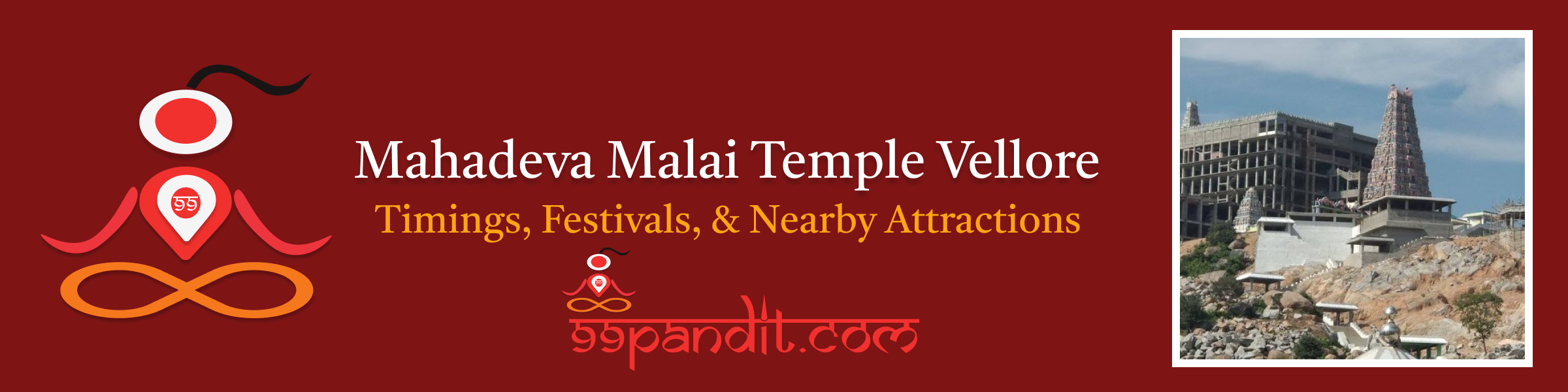
Mahadeva Malai Temple Vellore: Timings, Festivals, & Nearby Attractions

Mahadeva Malai Temple, Vellore, is a stunning Hindu temple in the rural town of Kankuppam, Tamil Nadu.

It is situated at the top of the Mahadeva Malai hill, which is stated to be an extension of the well-known Arunachal hill of Thiruvananamalai.

Mahadeva Malai Temple Vellore

The principal deity here is Lord Shiva. As a renowned pilgrimage spot for Hindus, thousands of pilgrims approach this temple every year.

It is the residence of numerous festivals and functions. Veiled with a dense forest, the temple is much more than a worship place, which is deeply important in Tamil Nadu.

Offering prayer here ensures peace and prosperity in one’s life. Besides religious importance, the architecture and hilltop location of the temples make it a favourite destination for tourists.

Through this blog, we will discover the extraordinary Mahadeva Malai temple in Vellore. We will also discuss its history, darshan timing, and much more.

Darshan Timings and Pooja Schedule at Mahadeva Malai Temple

Mahadeva Malai Temple, Vellore, is available to its devotees all year round and allows prayers to be offered to Lord Shiva.

Several pujas and abhishekams are conducted in the temple on special days. Below are the darshan timings of the temple:

Daily Darshan Timing

Session Timing Details
Morning Darshan 6:00 AM – 12:00 PM Morning aarti and Abhishekam
Evening Darshan 4:00 PM – 8:00 PM Evening aarti and special puja


Special Pooja & Abhishekam

  • Mondays: A special abhishekam is performed for Lord Shiva.
  • Pradoshma Days (every fortnight): A sacred ceremony is performed, and oblations are offered to the god.
  • Maha Shivratri: A Cultural festival and puja of Lord Shiv that lasts all night.

What is the Mahadeva Malai Temple?

Mahadeva Malai Temple is a significant hill temple dedicated to Lord Shiva, the God of Gods. Located near Vellore, the temple offers a unique blend of spirituality and nature.

It lies to the west of Katpadi. The temple is estimated to be 500 years old and was constructed by one of the traders of the Pandya dynasty.

It is said that the idols of Shiva Lingam and Lord Nandi in the temple were naturally created. Here, Lord Shiva is worshipped along with her beloved wife, Goddess Kamakshi.

In addition, they are also in the temple to worship Lord Ganesha and Lord Murugan. Praying at this temple will bring good health, wealth, and tranquillity in life.

You need to take a short walk of around 20 minutes to get to the temple. The temple is better known for its spiritual significance as well as its Dravidian architecture, exquisite carvings, and picturesque landscape.

There are some ancient practices and legends that the temple holds that contribute to pilgrimage as an added attraction.

The Legend Behind Mahadeva Malai Temple

The temple of Mahadeva Malai is soaked in divine myths that reflect its religious importance.

According to myth, there was a merchant who was a true follower of Lord Shiva. He desires to obtain the darshan of Lord Shiva.

Hence, he was requested to go to Kalahasthi on the auspicious day of Maha Shivratri. After which, he left for Kalahasthi and reached the place known as K.V. Kuppam.

Mahadeva Malai Temple Vellore

While on his route to the pilgrimage, he asked a person how far the location is. He was told that the destination is still very far away.

It was already the day of Maha Shivratri. A merchant feels disappointed and sits due to not being able to reach Kalashasthi on the festival.

That’s when an aged man came to him and promised to offer him the divine darshan. Both of them climb the hill, and later, a merchant finds out that the aged man himself is Lord Shiva.

He directed the merchant to construct a temple on that spot. Therefore, that place later became known as “Keezh Vazhi Thunai Kuppam”.

History of Mahadeva Malai Temple

The history of the Mahadeva Malai temple is closely linked to the life and services of Mahananda Siddha. He was a saint born on December 6 in Dharmpuri district.

Being a turmeric merchant, he was a worshipper of Lord Shiva. By the age of thirty-five, he undertook the renovation of many temples in Tamil Nadu.

Additionally, he began services such as Annadhanam at the Lokuvakulam Bhradwajeeswarar temple in Kalshasthi.

During one night, Lord Shiva appeared in his dream and blessed him to live for a thousand years.

He told him to go to Mahadeva Mount and live in a cave while worshipping him and protecting devotees.

Following his guidance, Mahananda Siddha went to Mahadeva Mount. There, Lord Shiva asked him to protect all the living creatures from suffering and diseases.

Known for his extraordinary practices, a sage proved that life would be possible even without food and water. He meditates on fire to get Prana and Amirta (nectar) from his mouth to feed his body.

He also built a set of steps to climb the temple and offer a hundred or a thousand devotees daily. From then on, he has been known as the protector of the Mahadev Malai temple.

Significance of Mahadeva Malai Temple

The temple has great significance in the life of Lord Mahadev devotees and spiritual seekers.

Furthermore, the presence of Mahanada Siddha as guardians in a divine form also provides a distinctive identity to this site to make it a holier place to worship Lord Shiva. Its chief deity, Shiva Lingam and Nandi, is both Swayambhu, i.e., self-incarnated.

Mahadeva Malai Temple Vellore

Numerous devotees believe that his penance and blessings generate a positive vibration within the temple and provide relief from pain and diseases.

The main reason behind the significance of the temple is the fact that Lord Shiva himself realized this location as his dwelling place.

With Goddess Kamakshi installed here as her spouse, the shrine symbolises peace and blessings for the household.

In spiritual aspects, the Mahadev Malai temple is a living symbol of faith, divine protection, and acceptance.

The daily Annadhanam and peaceful atmosphere of the temple make a unique blend of community services and devotion.

Architecture & Temple Highlights

The temple of Mahadeva Malai unites the natural beauty with the conventional Dravidian architecture.

Its architectural design can still be perceived in the temple’s craftsmanship. Key architectural and structural highlights include:

  • Dravidian Style: The whole structure of the temple is built in Dravidian style and has detailed carving all over.
  • Interactive Cravings: The pillars and walls of the temple are carved with various incidents from Hindu mythology and South Indian culture.
  • Idols & Shrines: The temple is the house of the idols of Dakshina Moorthy and Kali Amman. It also has small shrines for Lord Ganesha and Lord Murugan.
  • Temple Tank: A sacred tank in the temple premises for rituals.
  • Dwajasthambam & Mandapam: A tall Dwajasthambam (flagstaff) in front of Mandapam.
  • Meditation Hall: A temple also has a separate meditation hall for devotees.
  • Welcome Arch: Devotees are welcomed by an arch at the 19th Kilometre of the Gudiyatham highway.

Best Time To Visit Mahadeva Malai Temple

Planning to visit Mahadeva Malai Temple? Want to know the ideal timing to plan your visit? Then let us tell you that the best time to visit the temple is in the winter season.

The weather from December to February is very pleasant and makes the trip more peaceful.

Additionally, to get the best exposure, you can visit during the festivals such as Maha Shivratri and Panguni Uthiram.

We suggest that you plan your trip during the early morning to avoid crowds and for a peaceful darshan.

How to Reach Mahadeva Malai Temple?

The Mahadeva Malai temple is situated close to Katpadi, 21 km from Vellore city. It is well-connected to both locals and travellers.

1. By Road

The temple is well-connected by road to its surrounding cities such as Katpadi, Vellore, and Gudiyatham. You can go by private taxi, car, or bus.

The temple arch is 19 km from the Gudiyatham highway, and if coming from Gudiyatham town, it will be 11 km from Katpadi.

2. By Rail

Katpati Junction is the closest railway station and is 12 km away from the main temple.

It also has daily trains running from the major cities such as Chennai, Bengaluru, and Tirupati. You can book a taxi or a private cab from there to reach the temple.

3. By Air

If you are travelling using this mode of transport, then Chennai International Airport is the closest airport. It is about 150 km from Vellore, and a bus or taxi can be booked to reach the main temple.

4. Trekking Route

Travellers can either drive up to the temple or even opt for the tracking route built by Mahanada Siddha.

It is a route covered in greenery and offers some fantastic views of nature during the journey.

Major Festivals Celebrated at Mahadeva Malai Temple

The grand festive celebration at the Mahadeva Malai temple is something worth experiencing. Below we have mentioned some of them:

Mahadeva Malai Temple Vellore

1. Maha Shivaratri

  • Maha Shivaratri is a festival dedicated to Lord Shiva, among the popularly celebrated festivals in the Mahadeva Malai temple.
  • People keep fast and worship Lord Shiva all night while singing devotional songs, chanting hymns, and dancing.

2. Panguni Uthiram

  • Another widely celebrated festival to observe the divine union of Goddess Paravarti and Lord Shiva in the month of Pangui.
  • During this, the temple is decorated with flowers, garlands, and special rituals are performed.

3. Other Festivals

Pradosham: As per the Hindu calendar, it is celebrated on the thirteenth day of Tryodashi, the lunar fortnight. On this day, a holy bath is offered to Lord Shiva with curd, milk, honey, ghee, and more.

Karthigai Deepam: Just like Diwali, it is a festival of light for Tamil people. The temple shines out with hundreds of diya, and a special prayer is offered to the Shiva lingam.

Navaratri: The nine-day festival to honour Goddess Kamakshi. It is a celebration of divine feminine energy and includes different offerings and traditions each day.

Nearby Attractions to Visit Around the Mahadeva Malai Temple

While on your trip to Mahadeva Malai Temple, you can visit some of the surrounding places, such as:

1. Sripuram Golden Temple

The Sripuram Golden Temple, also called the Sri Lakshmi Narayan Temple, is 15 km from Vellore. It is dedicated to Goddess Mahalakshmi, the goddess of wealth.

The thing that caught the attention of the pilgrims was the pure-gold structure of the temple, made of 1500 kg of gold.

2. Jalakandeswarar Temple

Jalakandeswarar temple is one of the ancient temples in Vellore. It is a worship place of Lord Shiva, known for its detailed carving and Dravidian-style architecture. The temple also has a water tank with a circumference of 8000 ft.

3. Amirthi Zoological Park

For animal lovers, there is a mini zoo situated 25 km away from Vellore. The area is surrounded by greenery and provides a small picnic space for travellers.

4. Vellore Fort

Situated in the heart of Vellore, the historic place is said to date back to the 16th century.

Its huge walls, wide moat, and beautifully blended different religions make it worth visiting. If you are also a history lover, then it must be a place.

Conclusion

The Mahadeva Malai temple in Vellore is one of the most paramount temples in Tamil Nadu. It is a holy place built to honour Lord Shiva by one of the traders of the Pandya dynasty.

As mentioned earlier, the myths of Mahananda Siddha and the rooted past make it a highly important place for followers of Lord Shiva.

Not only that, but the beautiful place at the top of the hill and the architecture of Dravidian style have drawn thousands of people to this religious site.

Whether you’re going there to seek blessings or explore as a traveller, the temple welcomes everyone with open hearts.

From the stunning beauty to the grand festival celebrations, the temple adds charm to your spiritual journey.

However, we will recommend doing darshan in the morning to avoid the crowd. So plan your spiritual journey to Mahadev Malai Temple today.

We hope this article has provided you with all the information that you are looking for. Connect with 99Pandit for all kinds of puja services.

Vittala Temple Hampi: Timings, History & Architecture

The Vittala Temple in Hampi is a sacred place that is popular for its exceptional architecture and unmatched craftsmanship.

It’s considered to be one of the largest and most well-known structures in Hampi. The temple is found in the north-eastern part of Hampi, near the banks of the Tungabhadra River.

Vittala Temple Hampi

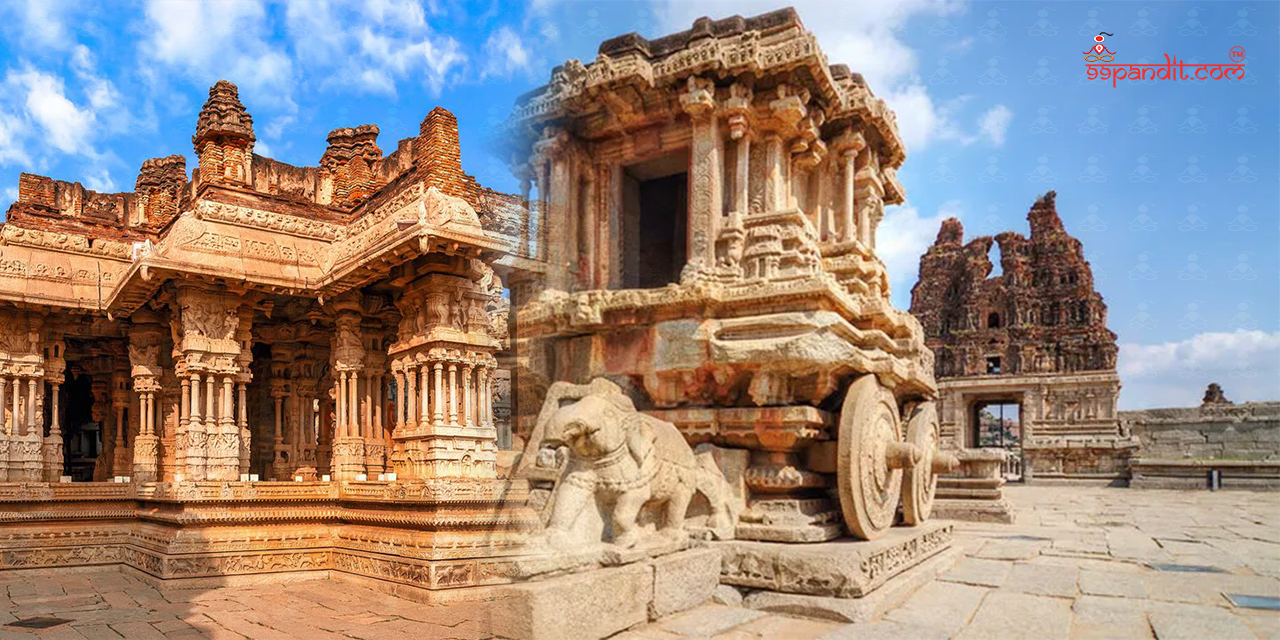
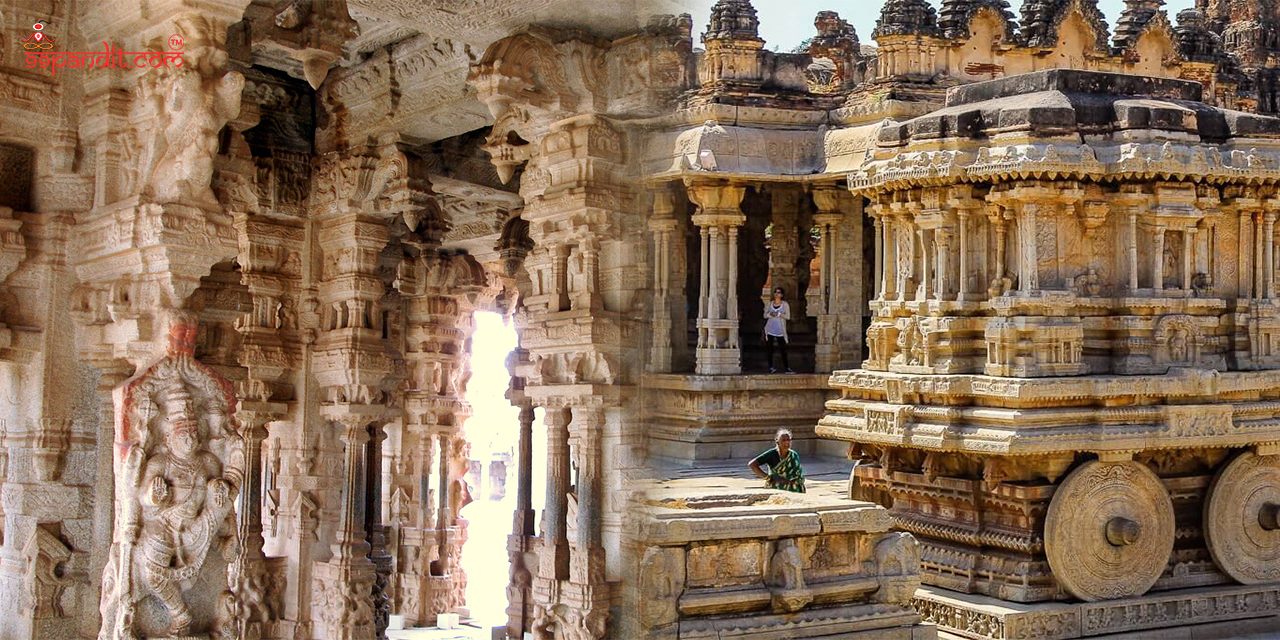
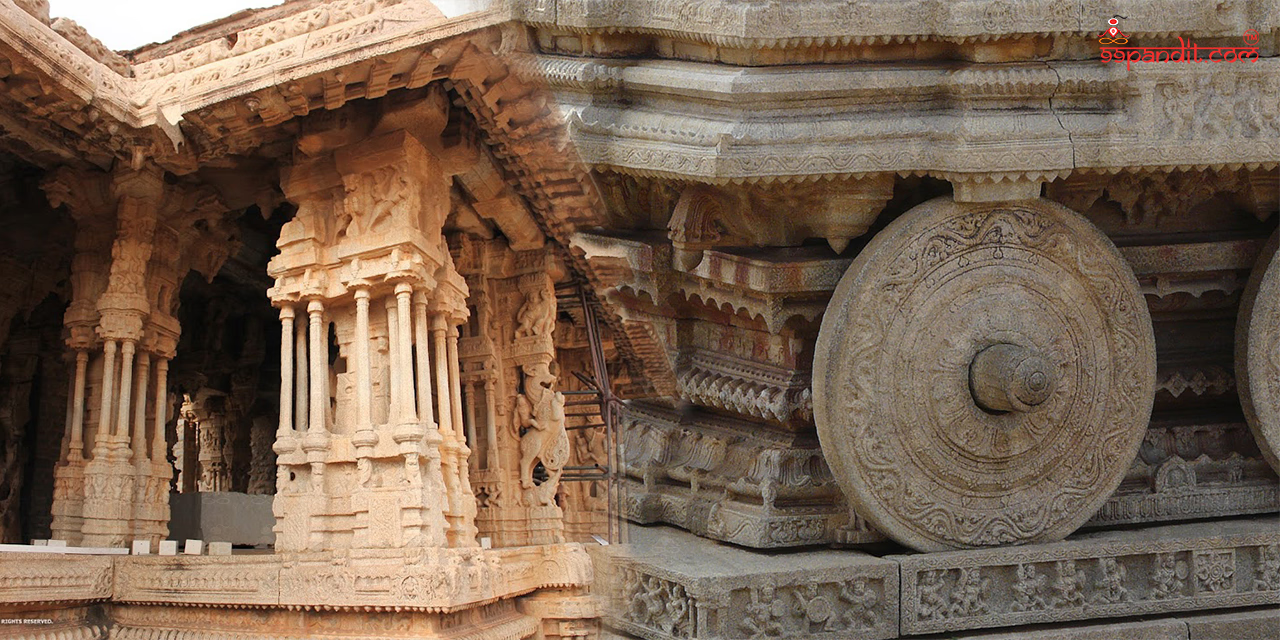
The iconic temple has beautiful stone structures like the incomparable stone chariot and the eye-catching musical pillars.

This predominant monument of this place is the centre of attraction of the ruined town, which is a must-see place for visitors and tourists.

In this article, we are going to talk about the timing, history, and entry fee of the Vittala temple in Hampi. Keep reading the blog to know more information about this place.

Timings of Vittala Temple

Apart from the time, the temple is often open for darshan from early morning to late evening.

Though it’s advised to check the latest timings as they can differ depending on the special events, festivals, or rituals.

Basically, the door of the temple opens in the morning at 6:00 AM and will close around 8:00 or 9:00 PM.

Best Time to Visit Vittala Temple

The right time to visit the Vittala temple is between October and March due to good temperature and weather in these months, which is from 16 to 32 degrees Celsius.

Also, there is a post-monsoon season in between these times when the weather is pleasant and cool breezing or soothing evenings.

It’s the perfect time to spend on the banks of the beautiful Tungabhadra River. Hence, plan your trip to seek blessings from Lord Vishnu accordingly.

History of Vittala Temple, Hampi

The history of Vittala Temple dates back to the 15th century during the reign of the Vijayanagara Empire.

Vitthala temple was developed during the rule of the king Devaraya II between 1422 AD and 1466 AD.

Many parts of the temple were elaborated and enriched during the kingdom of Krishnadeveraya between 1509 AD and 1529 AD.

Vittala Temple Hampi

Over the years, the rulers worked to achieve their growth and improvement, resulting in the masterwork that we experience today.

The temple is now known as Shri Vijaya Vitthala temple, and it is devoted to lord Vitthala, who is called Lord Vishnu. The idol of the lord was cherished in the temple.

It’s considered that the temple was developed as a residence for lord vishnu in his incarnation of Vittala, and he had found the temple to be too glorious for his use and had come back to live in his own space.

Architecture Hampi Vittala Temple

Vittala temple, located in Hampi, is known as the most beautiful temple and monuments in the region, representing the extraordinary art of the engineers and the architects of those times.

The craftsmanship and architectural excellence of the artists and sculptors could be seen in their full glory within the premises. It was developed in the Dravidian style of architecture.

The complex has various features that are inherently found in the structure of the region. As per the legend, the temple had a connected hall to the main shrine.

Presently, the open hall or mandapa was a later development – probably made during the later expansions. The Vittala Temple was enclosed by three towering gateways and soaring compound walls.

There are many halls and small shrines inside the compound, where several gods and goddesses are placed.

Also, these smaller structures have amazingly carved and ornate detailing made all over them.

Vittala Temple Primary Legends

A Grand Abode for Vishnu: According to legend, the temple was made particularly for lord vishnu in his incarnation of Vittala. King Vijayanagara rulers anticipated a truly magnificent place for god.

Too Grand for the Deity: Yet, after seeing the extravagant and rich temple, lord vishnu thought it was too big for him. He advised a simple and more humble residence.

Returning to Pandharpur: As per the legend, lord vishnu decided to return to his real home in Pandharpur, which was known for its simplicity.

Major Centres of Vittala Temple in Hampi

1. Maha Mandapam

This is the main hall, which is called the Maha mandapam, and is located inside the inner courtyard.

The mandapa has a different ornate base with horse engravings, warriors, swans, and many other traditional ornamental themes. The column structure has four small halls and wonderful carvings.

2. Stone Chariot

The temple complex has a majestic stone chariot, which is one of the known designs in India. The stone chariot increases the beauty of the entire complex with its grandeur.

The stone chariot has an engraved Garuda design, the half-human and half-eagle vehicle, or a carrier of lord vishnu. It’s one of the three chariots in India.

3. The Musical Pillars

The musical pillars are a witness to a beautiful masterwork in design. This is one of the main attractions of the temple, and these were engraved out of single pieces of stone that can be tuned to emit music, mainly the musical notes.

The main mandapa has around 50 musical pillars. The main pillars are covered by 7 minor pillars that generate musical notes similar to different musical instruments.

Significance of Vittala Temple, Hampi

Historical Significance

Vijayanagara Empire: The premise of the temple is proof of the grandeur and architectural prowess of the reign of Vijayanagara.

It was one of the most powerful and prosperous empires in South India during the 14th to 17th centuries.

Vittala Temple Hampi

Krishnadevaraya’s Era: The temple’s major development and embellishment were performed during the reign of Krishnadevaraya, one of the most renowned rulers, describing the zenith of Vijayanagara art and culture.

Architectural Significance

Dravidian Architecture: The Vittala Temple is a good example of Dravidian architecture, famous for its elaborate and intricate carvings, majestic pillars, and comprehensive use of granite.

Stone Chariot: This is the iconic stone chariot of the temple, which is one of India’s most identified and celebrated memorials, indicating the artistic and engineering skills of the time.

Musical Pillars: The Ranga Mantapa, or main hall, consists of 56 musical pillars that create various musical notes when hit, showing advanced knowledge of acoustics and an exceptional level of craftsmanship.

Cultural Significance

  • Centre of Art and Music: The Vittala temple was a cultural destination where different kinds of art, along with music and dance, thrived. The musical pillars show that the temple is not just a place to honour but a palace to witness cultural performances.
  • Carvings and Sculptures: The Vittala Temple complex is decorated with intricate carvings and sculptures representing scenes from Hindu mythology, daily life, and royal parades. This gives practical insights into the cultural and social life of the Vijayanagara era.

Religious Significance

  • Dedicated to Vitthala (Vishnu): Vittala temple is devoted to lord vishnu’s incarnation, Lord Vittala. He is a significant deity in Hinduism. It is known as a major pilgrimage site and attracts followers from around the country.
  • Spiritual Atmosphere: This is a serene and sacred environment, blended with its architectural splendor, which builds a profound spiritual experience for devotees and worshippers alike.

Entry Fee of Vittala Temple

The entry fee of the Vittala temple is INR 30/- per person for indians. For the adults, the fee from another country is INR 500/-, which is approximately $7 per person.

There is no entry fee for children under 15 years old from any country. You could be charged to take a camera inside the temple, which is INR 25/-.

How to Reach Vittala Temple, Hampi

By Air: Bellary Airport is the nearest airport to the Hampi temple. It receives only domestic flights from big cities, along with regular Bengaluru flights. The airport is located 64 kilometres from Hampi city.

By Rail: Hospet railway station is the nearest station, located around 10 kilometres from Hampi.

Vittala Temple Hampi

The railway station links all the big towns and cities around the state and a few places across the country.

By Road: This is the best option to reach the Hampi temple by road, as it has the best connectivity.

There are many buses running by KSRTC and KSTDC accessible along with cabs, and private cars from cities such as Mysore and Bengaluru to reach Hampi.

Myths & Beliefs of Vittala Temple

The Disappearing Deity: The main deity of the temple, Lord Vitthala, has a story of disappearance. There’s a belief that the real idol disappeared mysteriously one day after the construction of the temple.

The Stone Chariot: The temple complex itself is a fascinating belief about the stone chariot. It is said that it’s not merely a structure, but an auspicious vehicle used by the deity or his consort, Goddess Lakshmi, to travel.

Musical Blessings: A musical pillar of the Ranga mandapa, another source of faith. Touching these pillars is said to create musical notes, and some believe this is a way to get blessings from the divine.

Other Places to Visit Near Vitthala Temple

There are a few places that you can visit around the Vittala temple in Hampi. These are:

  1. Sugriva’s Cave: This is the home of Sugriva from Ramayan, who is believed to have lived here.
  2. Carcasses along the banks of the Tungabhadra River: You will see different ruins when you walk beside the bank of the river. Most of them are still unrecognised.
  3. King’s Balance: This is a physical balance on which it is believed that the king sat on one side, and on the other side, gold or other priceless items are kept, which are considered to donate according to the weight.
  4. Achyutha Rama Temple: The temple is a beautiful monument in Hampi that is filled with creative carvings and complex paintings that are adorned by most pilgrims.

Conclusion

The Vittala Temple, Hampi, is known as an inspiration for India’s cultural heritage and architectural beauty.

Each corner of the temple, mainly the royal pillars, and amazing stone chariots, shows the aura of indian culture in the fusion of spiritual importance.

The temple continues to mesmerise visitors with its eternal attraction and religious significance.

Sigandur Chowdeshwari Temple: Timings, History & Festivals

Sigandur Chowdeshwari Temple: In many places across India, we can discover various temples worshipping Maa Durga. One such temple is located in the Shimoga Shakti District of Karnataka, alongside the Sharaathi River.

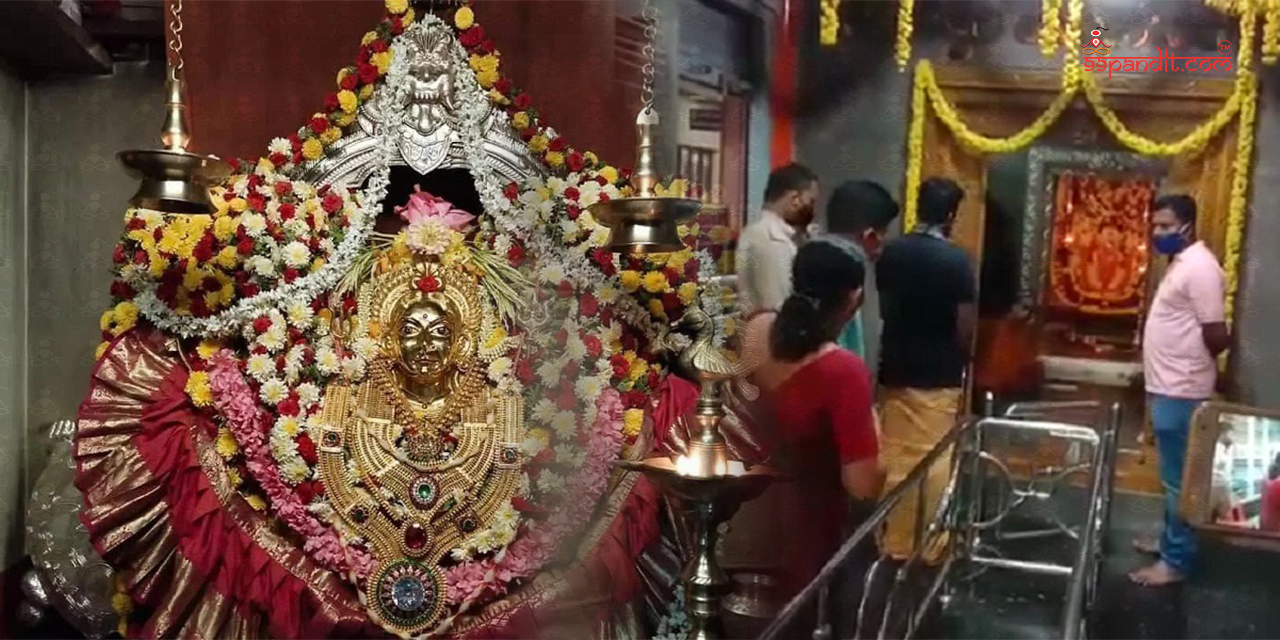
Shri Sigandur Chowdeshwari temple is not only a place of worship but also a symbol of faith, devotion, and protection.

Sigandur Chowdeshwari Temple

Thousands of devotees flock to the temple seeking blessings, resolution of their issues, and to pray for sanity.

It is said that the goddess herself is the protector of her devotees from injustice. The people in Karnataka say that anybody who tries to hurt the innocent is punished by Chowdeshwari Amma.

After visiting this temple, people felt positive energy throughout their bodies. If you are also thinking of visiting this temple, then you are on the right page.

In this blog, we will learn incredible things about the Sigandur Chowdeshwari Temple in Karnataka. So, without further ado, let us get started with 99Pandit!

Darshan Timings of Shri Sigandur Chowdeshwari Temple

Rituals  Timing
Regular Puja  5:00 AM to 02.30 PM
Darshana 4:00 PM to 7:00 PM
Afternoon Break 02.30 PM to 4:00 PM

Every day at 5:00 AM, the temple will open for devotees. After abhisheka and alankara of Shri Sigandur Chowdeshwari Maa, devotees are allowed for darshanam and to perform sevas. The temple will stay open till 2:30 PM for darshana to devotees on all days.

Devotees are allowed to take Darshana of Chowdeshwari Amman from 4:00 PM to 7:00 PM, and there will not be any Sevas during this period.

The temple will open as per the schedule even on Saturday, Sunday, and any Holidays. The temple doors are closed during the afternoon from 2:30 PM to 4:00 PM.

Overview of Singandur Chowdeshwari Temple

Shri Singandur Chowdeshwari Amman’s temple is one of the most glorious places of divine power.

The temple is dedicated to Sigandureshwari Amman and is located in the village of Sigandur, Shivamogga, Karnataka.

Devotees from all over the country and abroad visit here to have darshan of the goddess.

This divine temple is the focal point of the village of Sigandur. The temple is dedicated to Goddess Sigandur (Chowdeshwari).

It is widely believed that 300 years ago, a statue of the goddess was found on the banks of the holy Sharavathi River. The temple also sees devotees throughout the year.

History of Singandur Chowdeshwari Temple, Karnataka

In the 18th century, there existed a village called Madenur (in Karur Gram Panchayat), which is situated in Sagar Taluk and Shimoga District.

The family of Sri Sheshappa Nayak lived in this village, who became the real reason for Sri Devi to come to earth and bless thousands of devotees.

One day, Sri Sheshappa decided to go hunting with these villagers in the “Siege Valley” forest and went out to hunt alone.

Sigandur Chowdeshwari Temple

As he was moving forward on the forest path while hunting, he forgot the path he had taken. As it got dark at sunset, he was frightened and suddenly saw a bright light, and was startled.

Then Sri Sheshappa shouted to Choudamma’s mother, “Kapadu Choudamma,” and lost consciousness and fell down.

After some time, he woke up and saw some shining stones with blurred eyes. A sweet mother-like voice echoed, “Don’t worry, child. I will stay here to bless the world.

You should build a temple for me here and worship me as Chaudamma. I will bless all the devotees who come to pray to me at this place,” said the voice.

After regaining full consciousness, Sheshappa went home, remembering the voice, and went to bed with the same thought.

The next morning, he tried to remember what had happened the day before, quickly took a bath, performed puja, and started his journey towards Siege Valley again.

There, he was amazed to see Adi Shakti in the form of a shining stone. From that day, Shri Sheshappa’s routine changed.

He started performing daily puja to Adi Shakti and then continued doing all the regular work. This is how Shri Singandur Chowdeshwarin Amman is worshipped here.

Shri Singandur Chowdeshwari Temple: Architecture

In this portion, we are going to look at the beauty of the Sigandur Chowdeshwari Temple in the state of Karnataka.

We will look at the celestial motifs seen on the temple walls and the thoughtfully carved sanctum, which are just a few of the unique proclivities that characterize this temple as a divine work of art.

The Singandur Temple is an example of true architectural beauty. The temple is a work of artistic mastery and devotion, from the intricately carved exterior to the pillars, which are magnificently carved symbols of dreams and beauty supporting the temple itself.

The Sigandur Chowdeshwari Temple is a valuable resource of distinctive design details and artistic expressions that distinguish it from other temples.

The temple includes some unusual components that make it a creative masterpiece of the divine.

Instead of only aesthetic appeal, the layout and structures of the Sigandur Chowdeshwari Temple also have significant artistic and spiritual meaning.

The structures, whether those that reach upward as spires or inward as courtyards, are architecture serving as a bridge from one architecture to another, allowing a sensory experience for everyone who walks into the temple from the earthly to the divine.

Sigandur Chowdeshwari Temple: Location

The Sigandur temple is on the small island of Sigandur on the bank of the Sharavati River, about 40 km away.

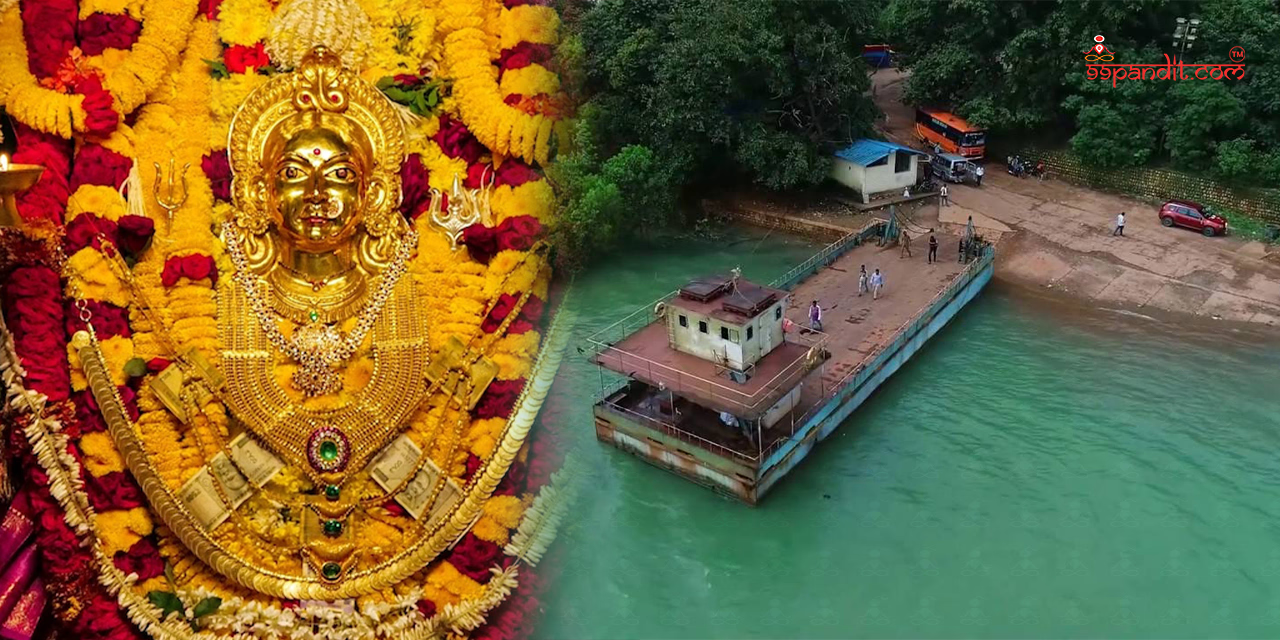
It draws devotees from all over the state of Karnataka, particularly from the south. Pilgrims arrive from Sagara/Shivamogga by barge to cross the Sharavati backwaters when coming from Mangalore.

Singandur Chowdeshwari Temple

Barge ride adds to your experience as it provides a scenic view of the backwaters and forest around it. Barge service operates only till 5 pm every day.

Vehicles can also be ferried on the barge, but during festivals, people are given preference over vehicles.

Festivals Celebrated in Chowdeshwari Temple

Ashada (June–July) is a special month during which a great crowd of devotees visits the temple.

Thousands of people come here and experience a barge taking them to the Goddess. Every year, a fair is organised during Makar Sankranti on the 14th and 15th of January.

Devotees take a bath in the holy water of the river Sharavathi and pray to the Goddess for their well-being and prosperity.

During this time, devotees visit here from many parts of Karnataka. Devotees need to carry their food as no hotels or restaurants are nearby.

The accommodation is only available to a limited number of people. Luckily, people can have the free prasadam meals at the temple:

Afternoon Prasadam is available from 12:00 pm to 3:30 pm
Night Prasadam is available from 7:30 pm to 9:00 pm

Important Tips While Visiting the Temple

  1. Please follow the temple rules for quick and easy Darshana.
  2. Every Devotee needs to be respected as you expect.
  3. No Specific dress code for Darshana; however, Shorts for Men and Western dress for Women are not allowed.
  4. Cooperate with the temple Staff for any bag checks for security purposes.
  5. Take care of your valuables like purses, ornaments, Mobile phones, etc.
  6. Don’t put coins or tie rings with tags anywhere in the temple to leave it as your souvenir of the god; it is a superstitious belief.
  7. No eatables are allowed inside the temple.
  8. Smoking and spitting are prohibited within the temple premises.
  9. Maintain cleanliness in the temple premises and Q-complex.
  10. Please follow and cooperate with the temple customs.
  11. Use of Mobile phones in the temple premises is prohibited.
  12. The Timings may vary during special days. You can get the details from the temple admin counter.
  13. Any donations you can make the payment at the admin counter itself (By UPI, by cash, by cheque, or by RTGS/NEFT) are allowed.
  14. Any donations made will not be applicable for special entrance during Amavasya / Hunnime / Special days.

Ways to Reach the Temple

As I told you before, Shri Sigandur Chowdeshwari Amman Temple is located on the banks of the Sharavathi River.

Sigandur Chowdeshwari Temple

Visiting the temple itself is quite an experience. After reaching the Sagar township, the final leg of travel is across the river by ferry.

1. By Road:

Sagar is the nearest town, about 42 kilometres from the temple, and you can get transport from Sagar either in a taxi or an auto, or you can avail the KSRTC (Karnataka State Road Transport Corporation) bus. The drive will take you through the lush green and rural countryside.

2. By Rail:

The closest rail station is Sagar Jambagaru Railway Station (SGRJ), which connects to Bengaluru, Mysuru, and Hubli. You could either take a cab or use local transport to reach the temple.

3. By Air:

Hubli Airport is a nearby airport (around 200 kilometres), or you could take Mangaluru International Airport (around 250 kilometres), and use transportation from the airport to include the flight distance.

4. Ferry Ride:

The finest part of the whole pilgrimage is the ferry ride across the Sharavathi River. The ferries run throughout the day to take cars and passengers to the temple side. So, do not miss the incredible journey to the temple.

Travel Tips to Sigandur Chowdeshwari Temple

  1. Plan your journey first and ensure you reach the desired locations to avoid inconvenience, as transport resources are limited.
  2. If you are using public transport, then find out the starting and ending timings before you take it.
  3. The launcher will be available at a gap of 30-45 minutes and heavy enough to carry a caravan or a bus also.
  4. By road, you can reach in multiple ways, but roads are more curved, dark, and mainly single roads, which are suggested to be driven by an expert or reached during the daytime.
  5. No luxury hotels will be available after Shimoga/Sagar/Kollur/Murudeshwara. Plan to stay well in advance. Yes, temple rooms are available, but during special / Amavasya / Poonam / Jatra days, it would be difficult to get. During regular days, you can rest assured at the temple stay.
  6. BSNL and Jio now provide strong data connectivity and voice services, while other mobile networks remain very limited.
  7. No ATM facility is available. Suggested to take the necessary cash from Kollur or Sagar.
  8. You can use the UPI payment facility with Paytm, PhonePe, or other QR payment in and around Temple, but the Mobile Network should be JIO.

Conclusion

In the state of Karnataka, the Sigandur Kshetra of Chowdeshwari Amman of Sagar Karuru is an important pilgrimage site.

Not only the temple, but also the beautiful and safe surrounding environment created by lush greenery and situated on a small bank of the Sharavati River, provides and supports a sacred space for the Kshetra and pilgrimage purposes.

The temple is as famous as any other temple of Maa Durga. The main deity of this temple is one of the incarnations of Maa Durga.

It is famous as a religious field where there is no distinction between any caste, religion, rich, or poor.

Thousands of devotees came to the temple to seek the blessings of Chodeshwari Amman.

This temple has a firm belief that Chodeshwari Amman will never give up on those who are defeated.

By placing their hardships and pains in the lap of the goddess, they get relief from their evil deeds. I hope you liked reading this blog.

99Pandit always tries to cater to the articles and blogs of your interest. For more such interesting articles, stay tuned with 99Pandit. See you another time!

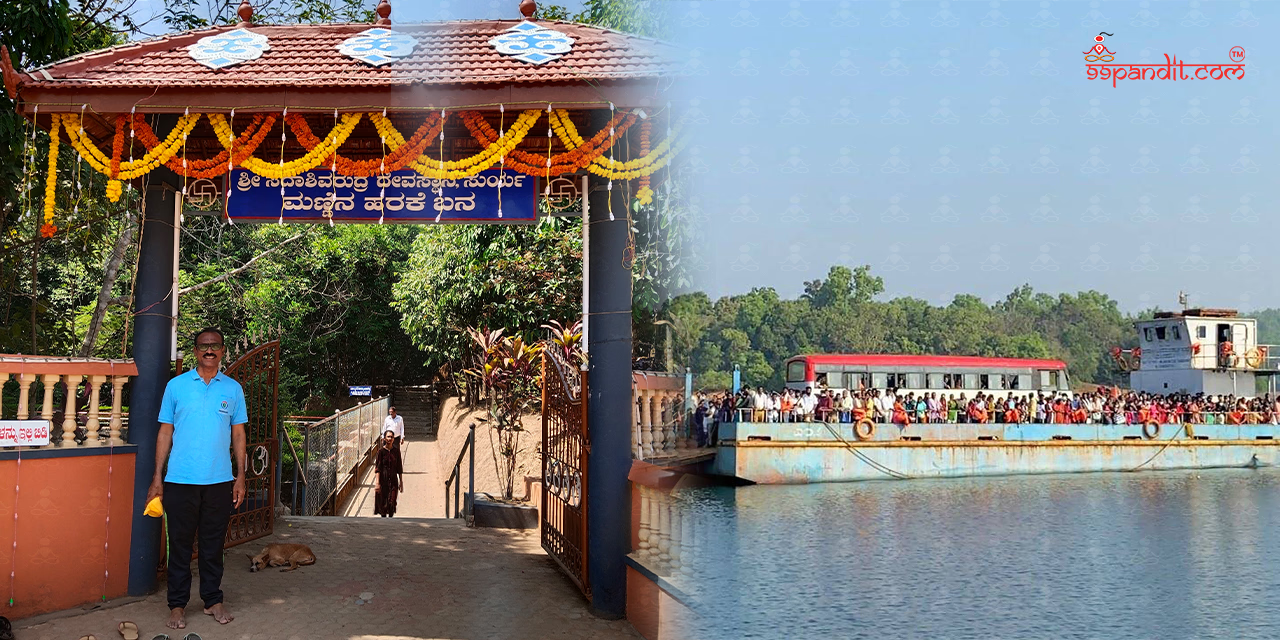
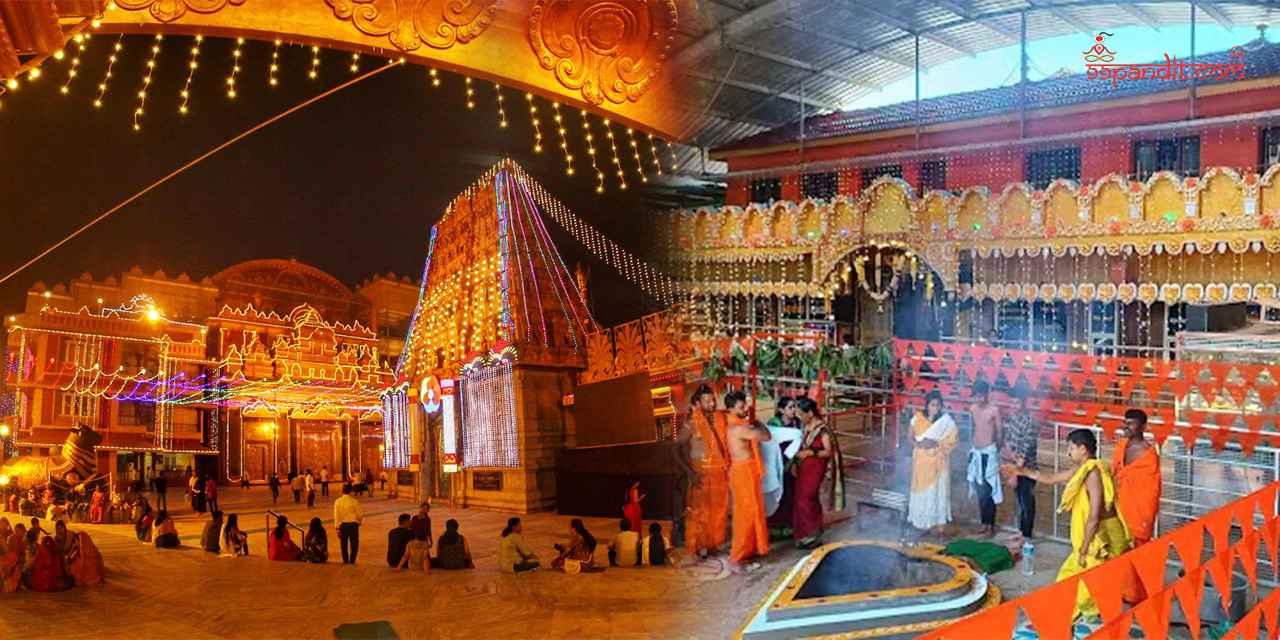
Kotilingeshwara Temple: Darshan Timings, History & Significance

Kotilingeshwara Temple is a sacred temple in Hindu mythology and an auspicious shrine in India. This is one of the popular temples in the state of Karnataka.

The temple is dedicated to lord shiva. This is established in Kammasandra village. Thousands of followers visit the temple on special occasions.

Kotilingeshwara Temple

On the days of Mahashivratri, Dussehra, and Ramnavami, the count of devotees and tourists increases.

In this article, we are going to talk about the Kotilingeshwar temple’s history, darshan timings, and its significance in Hinduism.

Kotilingeshwara Temple Darshan Timings

The temple draws large pilgrims during weekends. This is preferred to reach the temple early in the morning (preferably, 8 AM) to avoid the crowd.

The major festival of the temple is Mahashivratri, which is celebrated with enthusiasm and usually draws around 2 lakh devotees.

The temple is accessible to devotees at the following times:

  • Morning Darshan: 6:00 AM to 12:30 PM
  • Evening Darshan: 5:00 PM to 8:00 PM

Aarti Timings:

The temple organizes many aarti ceremonies:

  • Mangal Aarti: 6:00 AM
  • Evening Aarti: 7:00 PM

Pooja & Seva Offerings:

Pooja / Seva

Time
Temple Opening

6:00 AM

Abhishekam Pooja

6:10 AM
Maha Mangala Aarti & Naivedya

7:00 AM

Maha Prasad Distribution

7:15 AM
Darshan Begins

7:15 AM


Overview of Kotilingeshwara Temple

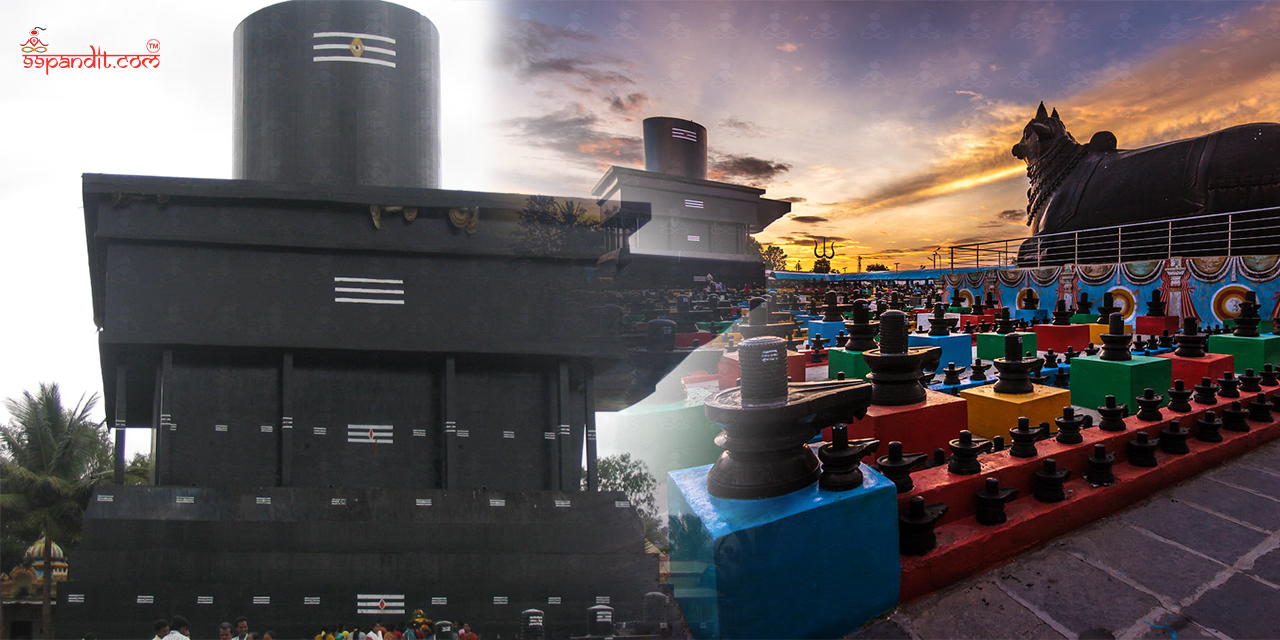
In Kannada, ‘koti’ means a core, and Kotilingeshwar is 1 crore shivalingas. The temple has the largest shivalinga, which is installed along with 90 lakhs of other shivalingas of numerous sizes.

Along with a 33mts shivalinga and an 11mts high lord nandi, the bull is the main center of the place.

Followers can donate different sizes of shivalinga that can be set up in the name of the donor who offered it. The road to the temple is easily accessible and found in Kammasanadra village.

Also, when there are a lot of devotees who visit the temple every day, it draws millions of people on special occasions like Mahashivratri.

In the temple, you will see 11 smaller temples devoted to other lords such as Lord Ram, Vishnu, Mahesh, Brahma, Goddess Karumaari, Lord venkataramni swamy, Goddess Annapoorneshwari, and Amma, and many others.

History & Significance of Kotilingeshwara Temple

The Kotilingeshwar Temple is one of the biggest Shiva linga in the world. Around the world, devotees seek blessings and make valuable offerings and huge donations to the temple.

The temple was developed by Sri Manjunatha. He belongs to the Brahmin family, Shivait category. He was an atheist and never had faith in god.

Kotilingeshwara Temple

But Manjunatha’s family followed lord shiva. This is a wonderful temple located at Kammasandra village between Bangrapet and Bethamangala.

The lord is thought to be the largest Shivalinga in the world, with a height of 108 ft. There are 35-foot-tall Nandis just in front of the Shiva idol.

Swami Shiva Murthy developed the temple, and in the same year, the first linga was established in the complex of the temple.

The different deities within the temple are lord Brahma, lord vishnu, and lord Maheshwara. The name of ‘Kotilingheshwar’ itself explains ‘lord of a crore lingas’ (a crore being ten million).

Best Time to Visit Kotilingeshwara Temple

The temple is open year-round, without any boundaries. Hence, irrespective of the day or month of the year, you can seek the blessings of the lord in a temple.

Moreover, there are special days throughout the year when the splendor of the temple goes up a notch.

Visiting the temple during the auspicious day of Maha Shivratri allows you to witness the big celebrations.

As Karnataka experiences hot and humid weather during summer, it’s right to avoid those days.

You can schedule your visit in the winter, i.e, between October and March. The weather is pleasing and perfect for exploring the outdoor spots.

Kotilingeshwara Temple, Rajamundry

The legend said that a sage called Gautama was cursed by lord indra, and to free himself from the curse, the sage established a Shiva linga and offered prayers to the lord.

He worships the lingam with 10 million river waters. The same Shiva lingam can now be seen in the precincts of the temples.

The temple is known to believers of lord shiva and the Maha Shivratri festival, which is performed in the temple with a lot of fervour.

Facilities at Kotilingeshwara Temple

As the temple is not old, all the basic needs are available for the pilgrims and tourists visiting the temple.

There are restrooms, washrooms, taps at different places for washing hands, a marriage hall where bulk marriages are performed, a meditation hall, and an exhibition center on the complex.

There is even a small market selling knick-knacks, small shivlingas, and puja materials outside of the temple. Kotilingeshwara Temple has ample parking spaces available along with food stalls.

Important Details of the Lord Shiva Temple

It is advised to have basic details to know about the temple to make your temple visit memorable. It’s about the timings, entrance fees, and rules.

Kotilingeshwara Temple

Timings

The temple opens in the morning from 7 AM to 9:30 PM. You have to reach the temple gates to hold your space in the waiting line, which can be long.

The management inside the temple is swift and arranged, making the darshan and offering hassle-free from the crowded line of devotees.

Entrance Fee

The authority of the temple charges 20rs according to the Kotilingeshwara temple. It is only applicable for adults and children who enter the temple complex for free.

The fee is the same for all devotees, and there are no extra amenities or favours for special darshans.

If you are bringing a camera, there might be an extra charge to carry it inside the temple of 100Rs. The parking charges are 30rs outside the temple.

Etiquettes and Rules

When you enter the temple, keep silence and maintain temple decorum. Photography is not allowed there.

Keep calm and wait for your turn to ensure a quick darshan. All you have to do is follow the rules given by the temple’s team.

What to Do in Kotilingeshwara Temple?

If you’re eager to know about the history of the Kotilingeshwar temple, you will be left amazed by the temple’s construction and story.

Apart from offering your prayers, multiple other experiences await you inside the temple. You can offer your prayers and seek blessings from lord shiva.

Perform abhishekam on the shivlinga using sacred water and offerings. This is advised and significant experience for many followers.

You can dive into the majestic view of the largest Shiva linga. The sheer scale and beautiful design of the temple structure will leave you speechless.

Also, venture outside the central linga and see many small lingas sprinkled throughout the grounds of the complex.

Each Shiva Linga has its own significance and adds to the temple’s unique experience. At the end, take the time to feel the calmness and tranquility of the place.

Find a quiet spot inside the temple and indulge yourself in meditation and self-reflection.

How to Reach Kotilingeshwar Temple?

Because of the central attraction, reaching the Kotilingeshwar temple is not difficult. The place is well-connected via road, trains, and air. This is the breakdown of all the transportation facilities.

By Air – The nearest airport to the temple is Bangalore Kempegowda. Travelers can book a taxi or cab, or public transport from the airport to reach Kolar. This is approximately 100 km and takes 2.5 hours to reach there.

By Rail – From Bangalore, Mangalore, Hubli, and Hassan, there is a well-connected rail network to Kolar.

By Road – By road from Bangalore, you can reach Kola. This is around 2 hours and a beautiful drive crossing via the lush green way on either side of the road.

Online Booking and Temple Services

Presently, the Kotilingeshwar temple does not allow online booking to seek darshan or any kind of special puja rituals.

All bookings and offerings should be made on-site at the premises. People are advised to arrive early to prevent waiting times, mainly on weekends and festival days.

Dress Code:

Men: Shirt with trousers or dhoti/pyjama with upper cloth
Women: Saree, half-saree with blouse, or churidar with pyjama and dupatta

Places to Visit Around Kotilingeshwar Temple

Kotilingeshwar Temple is the main place to visit. While this is not the only spot tourists explore in the area. There are a few worth adding to your itinerary for your best experience.

Kotilingeshwara Temple

1. Kolar Gold Fields

This is located around 8 km from the temple; the gold fields have a rich mining history. It has a museum surrounding, giving access to the mine’s history and significance.
2. Bangarapet

It is 14 km away from the Kotilingeshwar temple, and a perfect spot for history buffs. The place is home to the Jumma masjid, a 17th-century mosque representing Indo-Islamic architectural impacts.

3. Nandi Hills

This is not considered a tourist spot, but it is worth visiting once. Located around 115 km from the temple, Nandi Hills is a popular hill station known for its attractions such as Fort Nandi and Tipu’s Drop.
Conclusion

So, to complete the article, we would like to say the Kotilingeshwara Temple is a sacred place where spiritual energy, dedication, and faith blend effectively.

While you need to set up a personal shiva linga or be involved in sacred rituals, the temple gives you an unforgettable experience.
From its largest Shiva linga to the millions of lingas spread around the complex, every inch of this place radiates devotion and collective energy.

Hence, prepare your visit accordingly, follow the dress code, and indulge yourself in the divine environment of lord shiva’s abode in Karnataka.

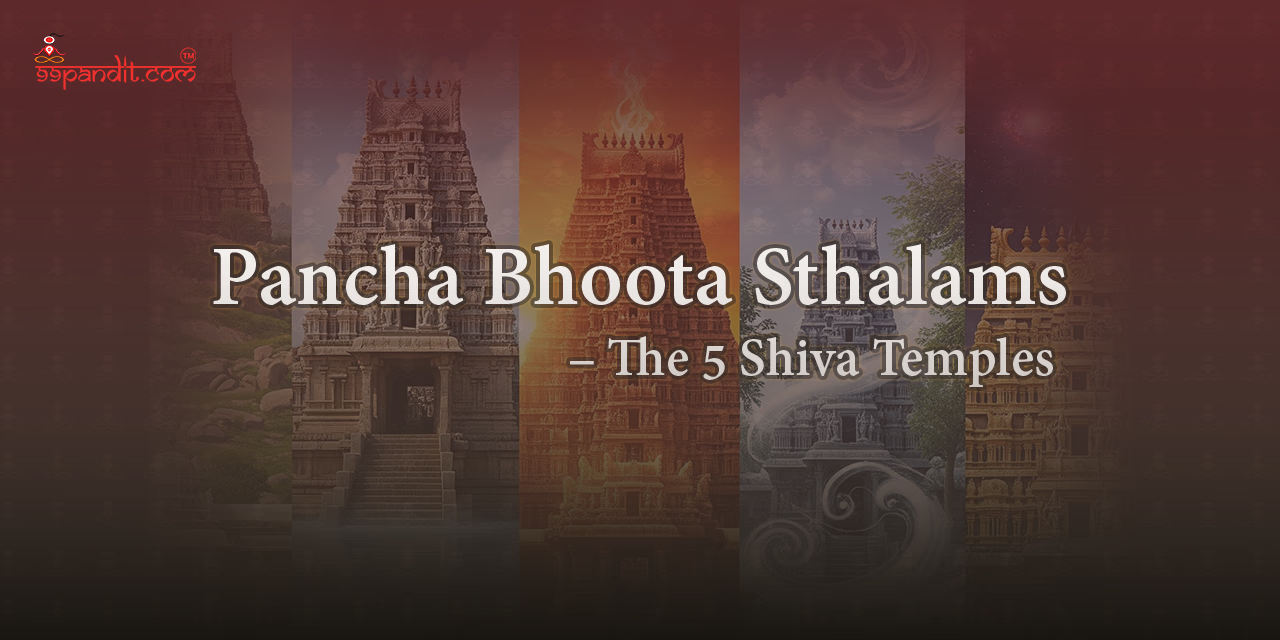
Pancha Bhoota Sthalams: The 5 Shiva Temples

The Pancha Bhoota Sthalams are ancient Hindu temples dedicated to Lord Shiva, the God of Gods.

Located in the South Indian state, each temple symbolizes one of the five elements of nature: Earth, Water, Fire, Air, and Ether. It is believed that all creation within the universe is composed of these elements.

Pancha Bhoota Sthalams

These ancient architectural wonders stand as the guardians of these five elements, each with a holy Lingam representing its natural energy.

In addition to the crescent moon and tangled hairs, Shiva is the eternal yogi, the complete balance of these cosmic energies.

Visiting the temples has the ability to realign mind, body, and soul and charge you with centuries of history, spirituality, and beliefs.

This article will take you on a journey through Pancha Bhoota Sthalams. We will discuss their significance, the mythical story behind them, and much more.
What are Pancha Bhoota Sthalams?

Pancha Bhoota Sthalams are the five ancient Shiva temples that represent different aspects of natural elements.
In Sanskrit, “Pancha” refers to five, “Bhoota” means all five elements, and “Sthalams” refers to place.

Lord Shiva is widely worshipped in different parts of India, but in South India, he is revered as the presiding deity of the five elements of nature.

In this form, He is called Bhootapati or Bhootnath – the Lord of the Elements. Here, Lord Shiva is worshipped in a Lingam shape representing a specific nature element.

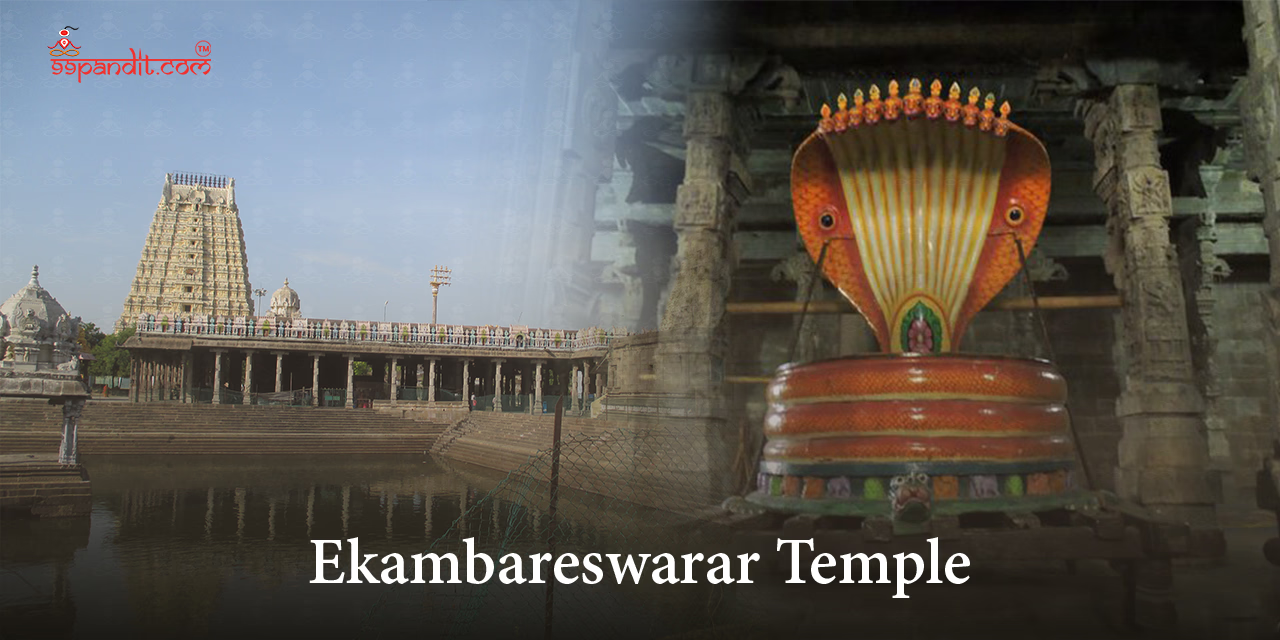
Similar to the display of the Earth element at the Ekambareswarar Temple, all five temples are very significant in Hindu mythology and religious rituals.

Bhoota Sthalams are believed to be a means to be with nature, look for balance, and advance devotion to Lord Shiva. South India houses four of them in Tamil Nadu and one in Andhra Pradesh.

People are amazed that these temples are geographically aligned in almost a straight line and said to have been built centuries ago.

A perfect alignment and mix of astronomy and engineering make them a true wonder. Every temple has its own story to tell, with the essence of spirituality.

List of Pancha Bhoota Sthalams and Their Locations

Here’s a quick look at the famous Pancha Bootha Sthalams:

Temples  Locations 
Ekambareswarar Temple Kanchipuram
Jambukeswarar Temple Thiruvanaikaval
Arunachalesvara Temple or Annamalaiyar Temple Tiruvannamalai 
Sri Kalahasti Temple Srikalahasti
Thillai Nataraja Temple Chidambaram 


1. Ekambareswarar Temple

Location: Kanchipuram, Tamil Nadu
Element: Earth (Prithvi)

Ekambareshwarar Temple in South India is one of the largest temple complexes in Kanchipuram. It’s a temple devoted to Lord Shiva and has Dravidian-type architecture.

The temple is encircled by a huge temple tank and green surroundings. The Shiva lingam of the Earth element is formed with sand in this temple.

Pancha Bhoota Sthalams

A scarred mango tree in the temple courtyards caught the attention of many and was believed to be over 3,500 years old.

Devotees all over the world visit this holy site seeking a sense of stability and worshipping this lingam, which is said to remove all the obstacles from life. The divine energy and calm atmosphere bring peace and strengthen the visitors.

Mythological Story Behind the Ekambareswarar Temple

According to legends, Goddess Parvati, to get back to Lord Shiva, formed a Shiva Lingam from the sand of the Earth beneath the divine mango tree at this location. To test her faith and devotion, Lord Shiva sent Maa Ganga to trouble her.

But Parvati convinced Maa Ganga not to harm her and agreed not to disrupt her penance. Impressed by her devotion, Lord Shiva accepted her wish and got married.

The temple and a mango tree are a testament to their pure love, and it is said that whoever prays to this Earth lingam gets spiritual blessings from God.

Architectural Highlights

Being the largest temple in Kancipuram, it is famous for its massive gopuram (entrance tower), which stands nearly 60m tall.

The hall of the temple has over 950 carved pillars displaying Chola dynasty architecture.

Moreover, other than the main lingam, there is the Sahasra Lingam that contains 1008 smaller lingams carved on it.

Best Time to Visit

Visiting between the months of February to April is considered good, as this time you can also experience the festivals such as the Panguni Uthiram.

The morning hours are 6:00 AM to 11:00 AM, and the evening hours are 5:00 PM to 8:30 PM.

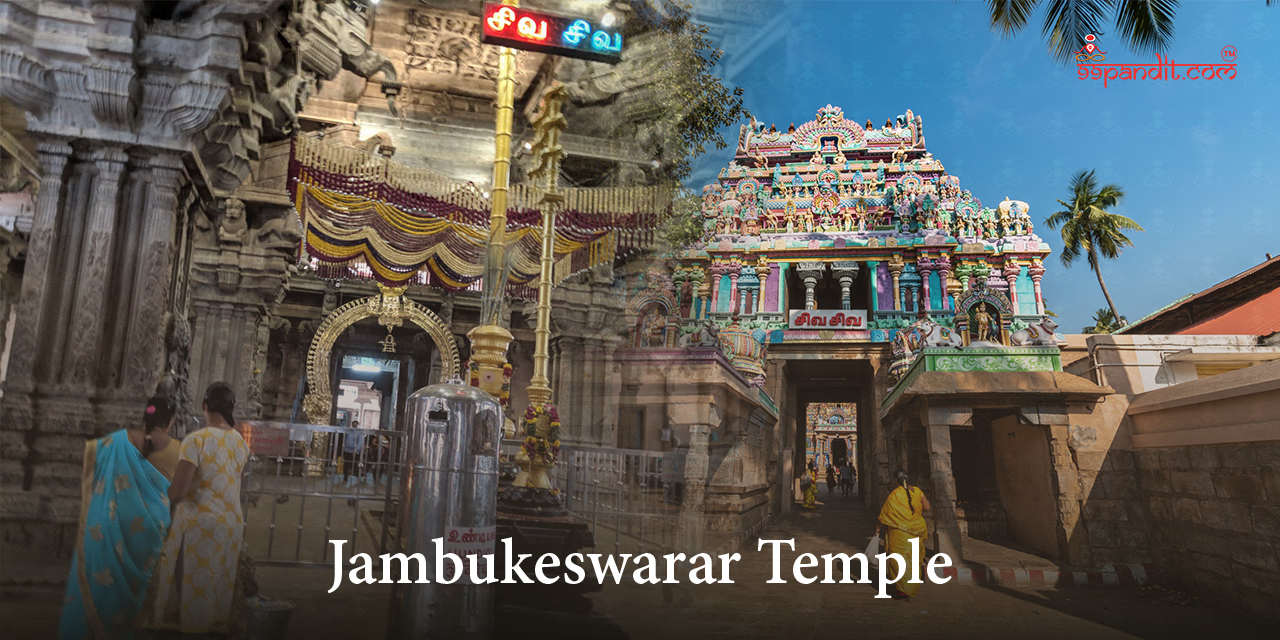
2. Jambukeswarar Temple

Location: Thiruvanaikaval, Tamil Nadu
Element: Water (Apas)

Jambukeshwar Temple is another Pancha Bootha Sthalam located in Thirvanaikaval, two kilometres from the famous Rangan Temple.

It represents the water element and is renowned for its amazing architectural style and sacred water tank. The Lingam of Shiva here is called Appu Lingam.

Pancha Bhoota Sthalams

According to the legends, it is said to have been constructed by Kocenganna Chola around 1800 years ago. The temple is ranked the 13th largest in India and covers over 18 acres of land.

The lingam of the temple is partially surrounded by water, a potent symbol of purity and fluidity that depicts the dynamic character of life.

Mythological Story Behind Jamukeshwar Temple

As per the story, Goddess Paravati took the form of Akilandeshawri and found a Jambu tree to perform her penance.

She made a Lingam out of water and worshipped Lord Shiva. Impressed by her devotion, Lord Shiva appeared and taught her Shiva Gana.

Since then, this temple has held the essence of the Guruji-shiysa relationship. Even today, priests of this temple dress up like women and offer prayers to Lord Shiva as a symbolic portrayal of Goddess Akhilandeshwari’s worship.

Architectural Highlights

The temple is an architectural beauty with a magnificent hall and sanctum with an unending water supply through a subterranean source.

It is among the 275 Paadal Petra Sthalams, which means it is glorified in the hymns by the four greatest Saivite saints, referred to as Nayanars. The free air and sacred tanks double the charm of the sacred spot.

Best Time to Visit

If you plan to visit the Jambukeshwar temple, it is best to visit during February and March. This is when most of the grand events are enjoyed, like the Natyanjali dance festival.

  • Morning: 5:30 AM – 12:30 PM
  • Evening: 4:00 PM – 8:30 PM

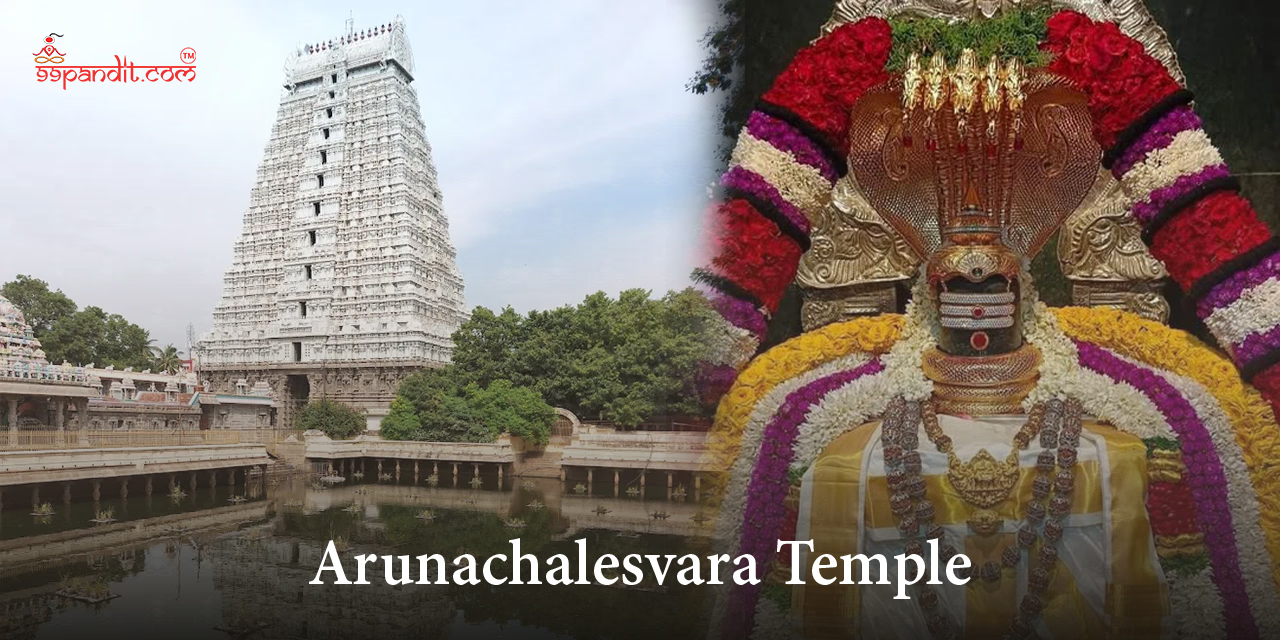
3. Arunachaleswarar Temple

Location: Thiruvannamalai, Tamil Nadu
Element: Fire (Agni)

Arunchaleswarar Temple, or Annamaliyar Temple, is a beautiful temple located at the base of Mount Arunachala in Thiruvannamalai.

It is one of the Pancha Bhoota Sthala, where Lord Shiva is said to have manifested in the form of a ray of light, representing the element of fire.

Pancha Bhoota Sthalams

It occupies eighth position as one of the biggest Hindu temples in the world, and it is one of the most frequented places in Tamil Nadu.

Glimmers of the divine power and the history of this temple attract thousands of worshippers annually, seeking perfection and God’s salvation.

The large temple structure and the tranquil surroundings offer a comfortable environment.

Mythological Story Behind Arunachaleswarar Temple

A long time ago, Lord Vishnu and Brahma had a battle over who was the superior god of the two.

That’s when Lord Shiva manifested himself as an infinite column of fire and challenged them to find the end or the start.

While Lord Vishu admitted defeat, Brahma lied about finding it. Outraged, Lord Shiva cursed Brahma that no one would worship him. This is the reason for the appreciation of the Lingodbhava form of Shiva.

Even now, as a part of the festival of Karthigai Deepam, a large fire is lit somewhere on the heights of Arunchala hill, to show the immense light of knowledge.

Architectural Highlights

The temple stretches over 25 acres and has Dravidian-style architecture. It was built in the 9th century by the Chola dynasty, and the Vijaynagar dynasty added an expansion.

It contains four main gateways, known as gopuram, and all these are surrounded by shrines, mandapams, and chambers, decorated with sculptures and carved.

Additionally, the thing that caught the attention of many is that its gopuram on the eastern side is 66 meters tall.

Best Time to Visit

Plan your trip between the months of October to March at Arunachaleswarar Temple is best as weather is quite lovely.

The temple’s hours are in the morning from 5:30 AM to 12:30 PM and in the evening from 3:30 to 9:30 PM.

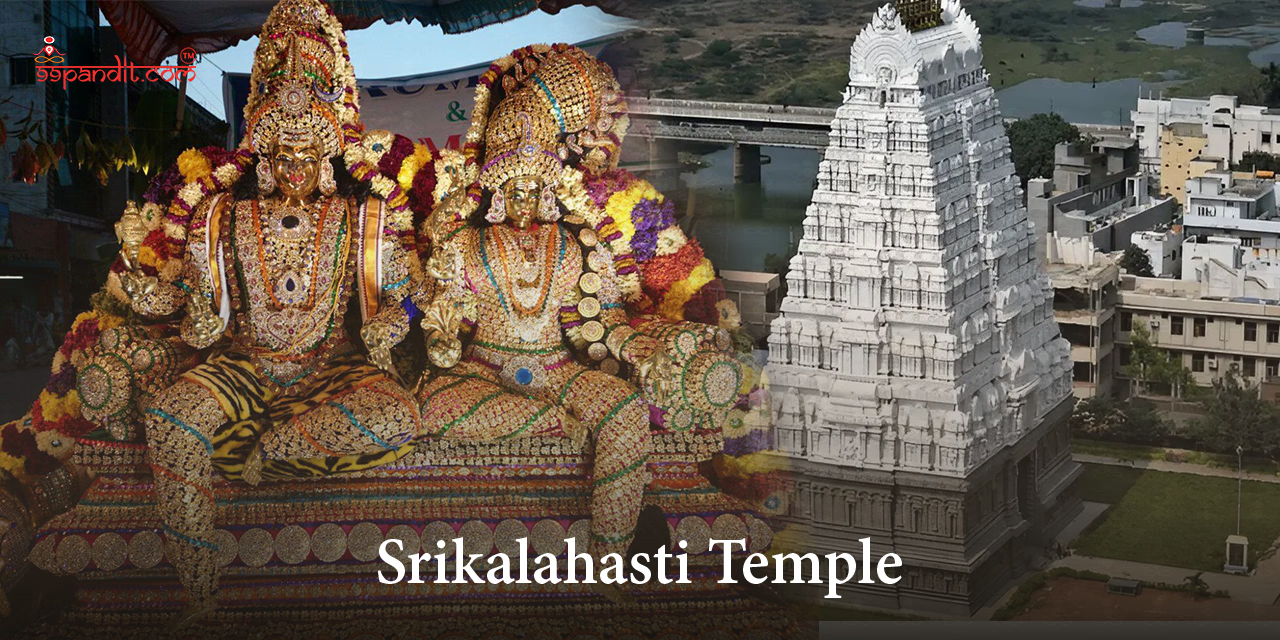
4. Srikalahasti Temple

Location: Srikalahasti, Andhra Pradesh
Element: Air (Vayu)

Srikalahasteeswara Temple, or Sri Kalahasti, is a sacred place in Andhra Pradesh. It is dedicated to Lord Shiva, who symbolizes the air aspect.

The view of the temple presented to the visitors is magnificent as the Swarnamukhi River flows by its sides, and around it are mountains.

Pancha Bhoota Sthalams

The temple is believed to be linked with the Rahu and Ketu, which are some of the key aspects of Indian astrology.

The temple is also renowned for rituals concerning horoscopes, such as the fascinating Rahu Ketu Sarpa Dosha Nirvana Pujas.

It is also a shrine house of Goddess Parvati, who is referred to as Gana Prasunambika Devi.

Devotees of Lord Shiva come to the sacred place to attain blessings for spiritual enlightenment and to achieve clear thinking.

Mythological Story Behind SriKalahasti Temple

The mythological legend related to this temple is mingled in the narration, where a spider (Sri), a snake (Kala), and an elephant (Hasti) offer Shiva services in their own style.

They are all liberated despite the numerous differences in their worship. The narration describes how dedication and identity are above all others. Also, it is regarded as a very favourable location to clear old karma.

Architectural Highlights

The temple of Sri Kalahasti is nearly 36 km distant from the famous temple of Tirupati.

It is alleged to have been constructed in the 5th century and thereafter changed by the Chola and Vijayanagar kings in the 12th century.

The temple is renowned for its remarkable architectural design and white Vayu Lignam.

It is believed that this lingam is self-manifested (Swayambhu). No one can touch this holy lingam, neither the devotees nor the priests.

Best Time to Visit

If you wish to be a part of a grand celebration such as Maha Shivratri, you may go in February or March.

In the morning, the darshan time is between 6:00 AM – 1:00 PM and during the evening, 4:00 PM – 9:00 PM.

5. Thillai Nataraja Temple

Location: Chidambaram, Tamil Nadu
Element: Ether (Sky)

As the name of the temple itself indicates, the Thillai Nataraja temple is located in honour of Lord Shiva in his form of dancing and Lord Govindaraja Perumal (Vishnu).

It is one of the few temples where Shavite and Vaishnavite gods coexist. The Lord Shiva lingam at Chidambaram represents the Ether element and is said to be 1000 years old.

Pancha Bhoota Sthalams

The word “Chidanbaram” is derived from the word “Chit”, which refers to consciousness, and “Ambaram” means sky. Together, they mean “Sky of Consciousness”, which is the supreme goal of human life.

It is the only temple among the Pancha Bhoota Sthalam, where Lord Shiva is depicted in an anthropomorphic idol rather than the Lingam. Here, Lord Shiva is also worshipped in his formless form.

Mythological Story Behind Thillai Nataraj Temple

The story of this temple revolves around Lord Shiva Natarajan’s form. Once, Lord Shiva, with Lord Vishnu in the form of Mohini, walked around the Thillai forest.

The sages living in this forest believed in the magic that could control God through rituals and mantras.

Their wives were delighted by the beauty of Lord Shiva and Vishnu. On seeing this, the sages got angry and invoked scores of snakes.

Lord Shiva lifted them and wore them as an ornament around his neck. After that, they sent a tiger, which Lord Shiva skinned and wore as a shawl.

Then the rishi invoked Muyalakan, who represents arrogance and ignorance. Lord Shiva crushed the demon under his feet, performed Urdhva Tandav, and disclosed his real form to everyone.

Architectural Highlights

The Thillai Natraj Temple was built in the 10th century and covers 20 hectares of the city area.

Its design is created in Chola-Pandyan style and includes 9 Gopurams, among which one is made of gold-plated by the Chola King Parantaka.

Plus, inside the temple, you will also see detailed carvings of Bhratnatyam postures on the walls.

Best Time To Visit

The ideal time to go to this temple and have the blessings of Lord Shiva in the Nataraj avatar is from December to February. Morning is from 6:00 AM to 12:00 PM, and evening is from 5:00 PM to 10:00 PM.

Travel Tips for Visiting the Pancha Bhoota Temples

A trip to the Pancha Bhoota temples will not only give you inner peace but also tie you with cosmic forces and spirituality.

In case your trip also includes visiting the Lord Shiva temple, then the tips below will offer you a hassle-free journey:

  • When visiting such temples, wear modest clothes. To show respect, do not wear shorts or sleeveless clothes.
  • Visit the temple early in the morning to avoid the crowd and have a peaceful darshan.
  • Take off your shoes outside on the shoe space before going into the temple.
  • Please do not take pictures without consent, because many of them do not allow photography at all.
  • To enrich your experience, consider visiting during some of their well-known festivals, such as Mahashivratri and Panguni Uthiram.
  • It is always important to verify the time of temples before arriving at any of them.

Conclusion

The Pancha Bhoota Sthalams are the five Shiva temples, and in every one of them, a particular element of nature is represented.

These are air, water, earth, fire, and ether, and all creations in the world are said to have these in them.

These lovely temples not only demonstrate the superiority of Lord Shiva but also the faith people have in him.

Each one of them is the symbol of a specific element, meaning, and their individual stories.

The divine powers and awe-inspiring architecture with historicity make this sacred place a once-in-a-lifetime destination.

These pancha bhoota temples not only give you an otherworldly experience but also touch your lives with the energies of Lord Shiva. That’s it for 99Pandit today. I hope you liked this article on Pancha Bhoota Stalams.

Kumaran Kundram Temple: Timings, Architecture, & Festivals

You have heard about many Lord Murugan temples that are famous for their religious significance and rich history. But have you heard about the temple named Kumaran Kundram Temple in Chennai?

Today, we are here to inform you about one of the most significant and auspicious temples of Lord Murugan, also known as Lord Kartikeya, son of Mata Parvati and Lord Shiva.

Kumaran Kundram Temple

This temple is known as the Kumaran Kundram temple. It is a small temple dedicated to Lord Murugan situated at a hillock, facing the north, in Chrompet, Hastinapur.

It is assumed that the temple is around 40 years old. Here, the presiding deity is Lord Murugan, called Shri Swaminathaswamy.

In our Hindu culture, Lord Murugan is portrayed as a great warrior and is popular in South India. To reach the temple, one has to climb eighty steps leading to the temple.

With 99Pandit, we will learn amazing facts about the Kumaran Kundram Temple in Chrompet.

From Darshan timing, its origin, architecture, benefits, to the popular festivals celebrated there. So, buckle up, and let us get started!

Darshan Timings of Kumaran Kundram Temple

Days Morning Timings Evening Timings
Monday 7 am to 10:50 am 7 am to 10:50 am
Tuesday 4:30 pm to 8:20 pm 7 am to 10:50 am
Wednesday 4:30 pm to 8:20 pm 7 am to 10:50 am
Thursday 4:30 pm to 8:20 pm 7 am to 10:50 am
Friday 4:30 pm to 8:20 pm 7 am to 10:50 am
Saturday 4:30 pm to 8:20 pm 7 am to 10:50 am
Sunday 4:30 pm to 8:20 pm 7 am to 10:50 am


Introduction to Kumaran Kundram Temple

Kumaran Kundram Murugan Temple is a Murugan temple near Kurempet in Kanchipuram district.

The presiding deity of this temple is Swaminath Swami (Balasubramaniar). At the presiding deity, Swaminath is depicted in the form of a bridge with a staff in his hand.

There is an elephant chariot in front of his shrine. The presiding deity, Sri Swaminathaswamy, appears with Valli and Deivanai.

He circumambulates Swamimalai on the days of Aadi Thaikrithigai, Thirukarthigai, Thaipusam, and Panguni Utthiram. The deity is believed to be the equivalent of the one in Swamimalai.

The Swaminath Swami Temple in Chromepet is located between the hill temples of Trisoolam and Tiruneermalai.

Lord Murugan (Lord Karikeya) is one of the most beloved and famous deities in South India. The Kumaran Kundram, like any other temple dedicated to Murugan, is on top of a hill.

Location of Kumaran Kundram Temple

In this section of the blog, we will tell you the location of the temple. The Kumaran Kundram temple is found about 2km from Chomepet, Chennai.

The temple is located in a small town called Hastinapuram. As said before, the temple has a 40-year-old history.

To visit the main temple, one has to climb eighty steps. After climbing the steps, Lord Kumaran Kundram or Lord Swaminathan will appear.

Kumaran Kundram Temple

Also, since he is in the form of a bridge, he is known as Balasubramania Swamy (Bala Murugan). The Swaminath Swami Temple in Chromepet is located between the hill temples of Trisoolam and Tiruneermalai.

Along with Kumaran Kundram, there are other deities also present in the temple. One of them is Meenakshi Sundareswarar, which is found midway up the hill.

The journey here is embarked upon with the dignity of Siddhi Vinayak, who appears at the foot of the hill.

Architecture of Kumaran Kundram Temple

Here, you will get to know the architectural significance of the Kumaran Kundram temple in detail.

In the year 1956, Saint Chandrasekarendra Sarawathi Swamigal of Kanchi Mutt asked devotees to construct the Murugan Temple in Chromepet.

The Temple was then gradually constructed in 1979. The Temple has a 5-tiered Rajagopuram.

The Kumaran Kundram temple is a replica of the original in Thanjavur. The main deity is in a standing posture and is etched in granite.

Lord Murugan is in the child form and holding a staff in his hand. Opposite his sanctum is the elephant carrier.

There are Sub Shrines for Lord Shiva, Sarebeshwarar, Ambal, Vishnu, and Anjaneya. There is a Navagraha Sannadhi on the foothill.

Kumaran Kundram temple is a Dhyana Mantapam beneath the sanctum. There are famous Murugan hymns that are carved on the walls in the Prakaram (compound around the sanctum).

Inside the temple, the peepal tree named Thala Viruksham is present. The Pushkarani or the Sacred Tank is known as a Kumara Theertham.

Kumaran Kundram has a relaxed and calm atmosphere and a scenic view of the surroundings from the hillock all around.

Origin of Kumaran Kundram Temple

The history of the Murugan temple is very fascinating and distinct from other temples. The temple is estimated to be 40 years old.

The history begins in 1956, when a saint of the Kanchi Mutt known as Shri Chandrasekarendra Saraswati Swamigal came to Chrompet.

When he saw the hillock, he suggested that a temple be built to Lord Murugan. The people decided to build the temple for Siddhi Vinayagar that year.

Kumaran Kundram Temple

Almost two decades had passed when the people decided that they would clear the hillside to form a path and uncovered a Vel (spear), which is the main weapon of Murugan.

This find encouraged the people to move quickly in constructing the temple. The people consecrated their Sri Swaminathaswamy temple in 1979.

Slowly over time, the temple gets a few more shrines added, the addition of the hall, and Dwaja Sthambam (Flag mast).

Over time, the temple went through phases where it was built and consecrated. The temple’s 5-tier Rajagopuram (main tower) structure took place in 2011-2012 and was finished in early 2014.

The temple was sanctified in February 2014, and thousands of devotees attended the temple and participated in the activities.

Benefits of Visiting the Temple

Devotees pray to the deity here to assist them in surmounting barriers in getting married and being childless.

Murugan always faces the northern direction, and devotees make sacred offerings to acquire wealth in the family.

So, he is described as Aishwarya Murugan. Lord Murugan is considered a fantastic protector for the body and soul.

This immensely popular God, and son of Shiva and Parvati, is a wonderful healer and can cure the mental, physical, and psychological problems of his devotees. He tests the devotion of his devotees, and once treated fairly, they surrender.

At the Kumaran Kundram temple, devotees perform Abishekam to Murugan, Shiva, and Ambal, wearing new clothes as their contribution. People worship him to get blessings from Lord Murugan.

With the blessings received from the Kumaran Kundran temple, there will be the removal of family problems, disputes, litigation, and uncertainty.

An individual who visits the temple establishes rapport between the couple, establishing family peace.

Lord Murugan protects his devotees from the evil effects of the planets and the repercussions of karma.

Lord Murugan provides children to mates, and provides descendants to carry the family forward. He brings peace into people’s lives and joy and hope into the family environment.

Lord Murugan enhances the abilities of planet Mars (Kuja or Sevvai) within the devotee’s natal chart to impart courage, virility, strength, and valour, and slakes the evil effects of the planet.

Popular Festivals Celebrated in the Temple

There are several festivals that are celebrated in the Kumaran Kundran temple in order to honour Lord Murugan (Lord Kartikeya).

On the night of the full moon, there is a monthly circumambulation that draws a huge crowd every month.

The procession deity appears with his consorts Valli and Deivanai. On auspicious and festival days of Aadi, Thai Krithigai, Thirukarthigai, Thai Poosam, and Panguni Uthiram, the deity goes in a procession around the hill.

Kumaran Kundram Temple

The temple celebrates the annual Soora Samharam festival in October-November and Karthigai Deepam in November-December.

Another festival named Soora Samharam is also celebrated in this temple. It is celebrated to honour Lord Kartikeya.

Soora Samharam is the killing of the demon Soorapadam by Lord Murugan. It is one of the prime festivals of this temple.

This festival falls on the 6th day of the waxing moon after Diwali. The festival is an elaborate celebration with fireworks.

On Kanda Shashti festival day, Murugan goes in a procession on the elephant carrier after performing Soora Samharam. Maha Kanda Shashti was celebrated similarly in this temple to the Thiruchendur temple.

Conclusion

In conclusion, Kumaran Kundram is a prominent temple of Lord Murugan in Chromepet, Chennai. Many devotees visit this temple and ask for blessings from Lord Murugan.

The preceding deity is Lord Kumaran, also known as Swaminath Swami (Balasubramaniar). This temple is filled with auspicious puja and rituals worshipped by devotees.

Many devotees came here with problems, and Lord Murugan is believed to solve their problems.

Many believe that if you are struggling in marriage, with debts, and want to conceive a baby, then you must visit this temple.

Lord Kumaran blesses devotees with Positivity in life, wealth, and prosperity. The Kumaran Kundram temple is filled with divine energies.

Along with Lord Murugan, there are deities like Lord Vishnu, Lord Shiva, Lord Ganesha, and the Navgrahas also present.

So this is it for today. How many of you already know about this temple? I hope you gain deep knowledge about this incredible temple in Chennai.

For more such blogs and articles, stay connected with 99Pandit. You can even follow us on Instagram, where you can easily get informed about any festival.

Nanjangud Temple: Timings, History, Architecture, & Significance

Nanjangud Temple: Numerous temples in India are dedicated to Lord Shiva. It doesn’t matter whether you live in the North or the South. In India, we have temples of Lord Shiva with great significance.

One of the oldest temples where Lord Shiva is worshipped is in Karnataka. This Temple is one of the most admirable temples of Mahadev.

Nanjangud Temple

This temple is not just a temple of Lord Shiva, but a living gem of centuries of history and architecture.

The Nanjangud Mandir draws thousands of pilgrims and visitors. This temple is also known as the Dakshina Kashi, which means the Varanasi of the South.

In this blog, we shall learn about the great history, architectural magnificence, and religious importance of the sacred temple, Nanjangud Temple in Karnataka.

Along with this, we will share some great places to visit near the temple. So let us get started!!

Rituals and Darshan Timing of the Temple

Rituals  Time
Usha Kala Abhishekam 6:30 AM
Pratha Kala Abhishekam 9:00 AM
Sangama Kala Abhishekam 11:00 AM
Madhyana Kala Abhishekam 12:00 PM
Pradoshkala Abhishekam 6:30 PM
Ekanta Kala Abhishekam  8:00 PM

The temple hours for darshan are as follows:

  • Morning – 6:00 AM to 1:00 PM
  • Afternoon – 4:00 to 8:30 PM.
  • On special days, the temple opens for Darshan on Sundays and Mondays from 6:00 AM until 8:30 PM.

About Nanjangud Temple in Karnataka

Nanjangud Temple is also known as Nanjeshwara Temple or Srikanteshwara Temple. This temple is dedicated to Nanjuda.

The temple is located in Nanjangud, Mysore city, in the state of Karnataka. It is located on National Highway 17 on the banks of the Kabini River, 22 km from Mysore.

It is believed that the temple is about a thousand years old. There is a huge statue of Lord Shiva installed outside.

The temple has been built in memory of the battle fought by Lord Ganesha with various gods. It is said that the royal family of Nanjangud used to come to this temple.

Regarding the Shiva Linga established at this place, known as Dakshina Kashi of the South. It is believed that it was established by the sage Gautama.

History of Nanjangud Temple

The history of the Nanjangud temple is believed to be more than a thousand years old. Some believe that the temple was built by the Ganga Rulers in the 9th century during their occupation of this land.

While some believed that the temple was constructed by the Kings of Chola in the 12th century. After that, the Hoysala Kings made numerous additions.

Nanjangud Temple

The kings of Mysore carried out various renovations in the temple. Tipu Sultan and his father, Hyder Ali, were very much related to the temple. The temple is famously known in Nanjangud as the Varanasi of the South.

Hyder Ali was included in the temple by donating a necklace to God, as his elephant’s eye was healed by the temple’s holy water.

It is said that Nanjuda had cured Hyder Ali’s favourite elephant, due to which Hyder Ali was pleased and gifted him a priceless necklace. Even today, that necklace is worn by him on special occasions.

Significance of Nanjangud Temple

As said earlier, the Nanjangud temple is one of the most significant temples of Lord Shiva in South India. It is also known as the Kashi of the South.

It is a highly sought-after pilgrimage site within India, and it holds such historical and architectural importance.

The temple’s surroundings illustrate architectural structures that describe its glorious past and grandeur.

This temple is a Srikanteshwara temple and is a temple to Lord Shiva. The temple name has significance. Nanju means poison in the Kannada language.

Nanjundeshwara means the God who drank the poison. This name comes from the mythology associated with the great churning of the ocean.

This is the reason why Nanjangud is named, as Nanjangud means the residence of God Nanjundeshwara.

It is also thought by the devotees that the Lord cures many varieties of diseases. Nanjangud means, in other words, the place where Nanjundeshwara lives.

Nanjungud Rasabaley is a famous variety of bananas in the town that made the town famous in the region.

Architectural Brilliance of The Nanjangud Mandir

The glorious and spiritual Nanjangud Temple is an architectural wonder built in the Dravidian style.

It has undergone renovation and enlargement by various kings and dynasties, including the Cholas, Hoysalas, Krishnadevaraya, and most recently, the Wodeyaras of Mysore, from the 9th century until the 19th century.

It was during the Cholas or Gangas that the Garba Griha was built. In the 13th century, the mandapa in the front was built.

The shrine was subsequently changed to a brick and mortar shikara during the Vijayanagara period.

This was the next step in the building process. In 1845, the brick and mortar gopuram was built.

The whole temple complex covers a little over 1 acre of land. The temple measures 385 feet x 160 feet, making it one of the biggest temples in Karnataka.

The main Gopura (tower) at the entrance is about 120 feet tall and is also one of the biggest in the state. There are 121 statues of Shiva depicted in various avatars with more than 65 Lingas.

The inner walls of the temple also depict 32 forms of Lord Ganapati. This is the only temple where 32 forms of Lord Ganesha can be seen.

Rathothsava at Nanjangud Temple

The temple serves as the hub for many religious festivals. One of the most important annual festivals taking place each year is the Panchamaha Rathothsava, which has followers of Srivaishnavism and Vaishnavism coming together at this temple.

The unique part that defines this festival is a procession of 5 chariots. The first chariot is the Ganapathy Ratha, and the following one is the Chandikeshwara Ratha.

Nanjangud Temple

Last, the other 3 chatlocks are Gautama Ratha, Subramanya Rath, and Parvathi Ratha; Gautama Ratha being roughly 90 feet tall. The Chariot festival is held twice every year.

The traditional pujas are offered to five idols on different chariots- famously Lord Nanjundeshwara, Lord Ganapathi, Lord Subramanya, Lord Chandikeshwara, and Goddess Parvathi. After the completion of the puja, many devotees pull the Chariots all over the town.

Other Festivals celebrated in the Temple:

  1. Maha Shivaratri
  2. Sri Girija Kalyana Mahotsava
  3. Chikkajathre
  4. Doddajathre
  5. Thepotsava
  6. Lakshadeepotsava

Key Attractions of the Temple

There are the following key attractions to see near the temple. These are:

1. Ranganathaswamy Temple

If you are planning to visit the Nanjangud Temple, also be sure to visit the Ranganatha Swamy temple.

Get blessings and take part in the rituals at this temple found at the center of Nanjangud.

This temple is dedicated to Lord Vishnu (Ranganathaswamy. The temple was built in beautiful Dravidian-style architecture.

2. Srikanteshwara Temple

One of the main interests there is the Srikanteshwara Temple. The Temple has a high tower known as a Shikhara and is dedicated to Lord Shiva.

If you plan to visit Mysore city or are on your way to the city of Mysore, do not forget this enchanting place, which you need to add to your bucket list.

3. Parashurameshwara Temple

The ancient temple is also dedicated to Lord Shiva. The temple is also known for its historical significance and architecture.

The temple still shows Early Chola architecture, and the historical documents that show ancient period religious practices in that region.

4. Nanjangud Fort

The temples in Nanjangud are better known; however, Nanjangud Fort provides snapshots of Nanjangud’s historical stories.

The fort still has remnants of its walls and gates to show how Nanjangud used to be. The fort gave a strategic advantage during battles.

Travel Tips for Visitors

Dress appropriately

The Nanjangud temple is a sacred site, so you will want to dress appropriately beforehand.

Temples will actually expect you to be dressed in traditional garb, for example, a saree or a kurta-pyjama, to respect the temple’s place in the respective religion.

Nanjangud Temple

It is respectful and will, at the very least, help you feel welcome in the environment. In any case, do not dress in clothing that is too short or bright, as that may, at best, be considered inappropriate and, at worst, disturb the experience of another devotee.

Take off your shoes

Before entering the Nanjangud temple doors, it is a general practice to take off your shoes before entering the temple. You want to maintain hygiene, but you will likely also want to respect God himself.

By taking off your shoes, you ensure that the temple is honored and prepared for your immediate religious presence and that you honor the environment of the temple.

Keep Calm

Temples are considered to be a sacred environment. Each individual has a responsibility to maintain the peace and be respectful in the temple.

A singular loud conversation or vibrating mobile phone can disrupt the peace for other individuals.

We should exercise restraint in all manners of our behavior to respect the personal feelings of others in their temple experience.

Avoid Photographing

Multiple temples have photography policies due to the preservation of sanctity. Because they may have their own motivations, it ruins the respectful sanctity of the location and puts a distraction in the way of their worship.

Where a person may simply enjoy the act of taking a picture of the idol or a location, they should consider seeking permission.

This ensures that you are abiding by the temple rules, but also respect the great importance and attention of other devotees.

Follow the Right Way to Donate

Donating is a nice habit to have, but you need to be sure to go about it properly. Many times, devotees throw money into the donation box without thinking, which is not right.

Also, be sure about where your donation is actually going. If you consider a few of these tips while visiting the temple, your overall experience will be enhanced.

Visiting one of the places of worship should not just be the darshan, but also should incorporate a place of spiritual peace.

Conclusion

Nanjangud Temple has a vast history and cultural identity, with much built form and religious history.

It is an ancient town that developed with temples, history, and is immersed in the South Indian vibe without being within Mysore.

The temple of Nanjangud is situated on the bank of the river Kapila. The river Kapila is one of the tributaries of the Cauvery (Kaveiri) River.

Nanjangud or Garalapuri is famous for having the big Nanjundeswara or Srikanteswara temple.

Nanjunda is explained as Shiva who had taken Halahala or poison, and this Nanjunda became Vishakanta or Shrikanta as he digested it.

Then the names of the deity are Nanjundeswara and Srikanteshwara. The one who cures the diseases of his devotees.

I hope you liked reading this article. 99Pandit always tries to cater to the content every spiritual person needs to know.

This helps you in connecting with your roots. For more such blogs, stay tuned with 99Pandit!