Pandit for Rajashyamala Puja: Cost, Vidhi & Benefits

Rajashyamala Puja is the Hindu ritual among the puja performed to appease Goddess Rajashayamala Devi who is a very powerful Goddess.

The puja is performed to obtain the blessings of the goddess and success in business or political life.

Rajashyamala Puja

This Rajashyamala puja intends to improve career opportunities, growth, and prospects in your career. Put yourself in attraction mode to draw food fortune your way.

As per Hindu belief, the characteristics of Goddess Raja Shyamala Devi known as the Three-Eyed, Goddess Shakti. Performing this puja blesses the native with knowledge, speech, wealth, and happiness.

Key Insights:

  • To achieve enormous power in politics or any other endeavour you are pursuing.
  • Based on the Janma Nakshatra, done on a lucky day.
  • Usually performed in the evening.
  • Sri Raja Shyamala Devi is the main deity.

However, there are some major benefits of performing this puja, which we will discuss in the upcoming sections. Please read the complete blog carefully where you will find the article beneficial.

What is Rajashyamala Puja?

Rajashyamala Devi or Raja Matangi Mata is known as a goddess in Sri Vidya Upasana. Goddess Shyamala Devi, referenced in the Brahmanda Purana, is not only a myth.

The Lalitodhvaba story (Manifestation of Lalita) in the Brahmanda Purana describes how Lalita Parameswari created her.

She is the goddess of speech and all forms of art, music, and dance that express inner understanding in an outward manner.

Raja Shyamala Devi Puja can provide one secret ability for dominating foes, drawing admirers, mastering the arts, and obtaining ultimate knowledge.

Rajashyamala Puja Mantra:

Om Shyamalayai cha vidhmahe, Matang Jayai Dheemahi, Tanno Devi Prachodayat

राजा श्यामला देवी मंत्र: ॐ श्यामलयै चा विद्महे, मातंग जयै धीमही, तन्नो देवी प्रचोदयात

Who is The Main Deity Of Rajashyamala Puja?

Rajashymala or Matangi from the Dasha Maha Vidya is another name for Raja Matangi. She is the goddess of tantra.

Raja Shyamala Mata, the holy mother, represents one of the ten tantric goddesses referred to as the Dasha Maha Vidyas.

In addition to Shyamala Devi and Shyamalai, other names for the goddess include Maha Mandhirini, Sri Raja Shyamala, and Devi Matangi.

The ten tantric celestial mother goddesses known as Dasa Mahavidya include her as the ninth one.

People believe that Shyamala Devi descends from the sugarcane bow (karumbu vill) of the deity Sri Lalitha Tripura Sundari. Raja Paripalani of Lalitha and Mantrika also refers to her.

Adhi Devatas represent Shyamala Devi as the Vedha matha and the ninth Vaaghdevi. The principal manthiri held the royal insignia and is known by the name Muthreshwari, Matangi. He is Sri Lalitha Parameshwari’s Mahamandhiri and advisor.

Why Perform Rajashyamala Puja?

The great goddess aids in finding employment and establishing favourable career prospects if you have already received a pink slip from your employer.

When you call her through a havan or homa, she instantly grants all of your prayers.

How To Perform Rajashyamala Puja

Set the puja date according to the Janma Nakshatra of the individual and take into account the Yoga and Thithi of that specific date.

Raja Shyamala Devi is a very potent goddess; doing puja in her honour would help you succeed in business and politics.

The following rituals are conducted to perform the Rajashyamala puja: Ganapathi Pooja, Punyahavachanam, Kalasa Pooja, Navagraha Pooja, summoning Raja Shyamala Devi, singing the Raja Shyamala Devi Mantra, and finally completing the homam according to Shastras and Vidhi.

Rajashyamala Puja

The puja is traditionally carried out throughout the nine-day Navratri celebration, which honours the Goddess Durga.

Devotees perform prayers and rituals during the Rajashyamala puja to invoke the blessings of prosperity, success, and protection from harm from Raja Shyamala Devi.

The rituals involve singing hymns and mantras, burning lights or diyas, and making offerings of flowers, fruits, and sweets to the goddess. A Hindu priest typically carries out the puja in a temple or at home.

However, if you are searching for the right skilled pandit to get the blessings of Goddess Rajashyamala Devi, you can go with 99Pandit.

This platform provides an experienced and reliable pandit to help you with your religious requirements.

Benefits Of Rajashyamala Puja

For the devotees who organize Rajashyamala puja at the home, Office, or temple. Goddess bless them with many benefits.

Some of the benefits we are mentioning here so you can have a look at these. It aids in getting beyond any issues or challenges with the government.

Blesses and shields one’s family from suffering and financial woes, bringing you great wealth in life. The individual improves their musical ability, knowledge, and wisdom.

It helps to find work, change careers, change your career prospects, and accomplish your goal of getting a promotion if you so desire. Develop your magnetism to draw in people, businesses, money, success, and wealth.

Speaking persuasively and using vaak Siddhi, Face radiance and happiness, learn new abilities and talents, physical security, and defence against animal bites.

The most important benefit of Rajashyamala puja you get is Vijaya Prapti, Success in whatever you do, and Gains and favourable circumstances.

Acquire knowledge and knowledge dominance to have an advantage over others, particularly in terms of vocation.

Rajashyamala puja is a very potent invocation and a chance that God has given us to improve our professional chances, give them the proper boost with His blessings, and pursue our aspirations as we intend our careers to be.

Book Pandit For Rajashyamala Puja

Thrive spiritually by participating in Rajashyamala Puja. You can communicate with the goddess of abundance and peace with our online puja service. Get an engaging puja experience to add more prosperity and meaning to your life.

Enjoy a comprehensive set of rituals, mantra chanting, and holy offerings created just to bestow Raja Shyamala Devi’s heavenly blessings onto you. Let 99Pandit assist you in leading a virtuous life!

Rajashyamala Puja

Your full name, date of birth, place of birth, time, and puja sankalp should be provided. The Puja may also contain the names of your family and other loved ones.

You can perform Sankalp through online video calls. The Priest performs Sankalp on your behalf.

Email Us or Contact Us on the given details on the website or directly call us to submit your inquiry. The benefits you will get if you find our service users at the time of puja booking:

  • You can get in touch with knowledgeable and skilled Vedic priests.
  • According to the Vedic writings’ descriptions and instructions, we execute the homas.
  • Pooja Samagri can also be found on the shop.99pandit.com.
  • We provide package choices that allow you to reserve the priests and pooja samagri all at once. On our website, you can choose to order them separately.
  • You can begin and end puja on time with the best possible puja samagri thanks to our purohits’ punctuality.
  • From the beginning to the end of the puja, we supervise and assist at every step.

Sum Up

Now book a Pandit for Rajashyamala puja today to get success in your business or political things. Yagam or homam is a kind of worship that involves throwing clothing and food into a fire to placate a god.

The worshipers worship the goddess Raja Matangi in Rajashyamala puja. The Ganapathi puja is performed before the homam to ensure a smooth completion of the puja, with no hurdles in the way.

Following the rituals of puja by an experienced pandit, puja is complete without any hassle.

The support for the puja provided by 99Pandit makes it very exclusive for the natives. The pandit ji performs many rituals.

99Pandit provides a pandit who performs the puja with complete devotion and dedication. And step by step, the process followed in the Rajashyamala puja. Raja Shyamala Devi invokes following these pujas.

Mantra chanters and performers follow Vedic traditions to dedicate the puja to Raja Shyamala Devi by completing the homam.

Get connected with us without any hesitation if you have any doubts or queries regarding services or puja.

Happy Rajashyamala Puja !!

Frequently Asked Questions

Q.Who is Goddess Rajashayamala in the Hindu religion?

A.Rajashymala or Matangi from the dasha maha vidyas is another name for Raja Matangi. She is the goddess of tantra. Raja Shyamala Mata, the holy mother, represents one of the ten tantric goddesses called the Dasha Maha Vidyas.

Q.What is Rajashyamala puja?

A.Rajashyamala puja is the Hindu ritual among the puja performed to appease Goddess Rajashayamala Devi who is a very powerful Goddess. The devotees perform the puja to obtain the blessings of the goddess and achieve success in business or political life.

Q.Why is Rajashyamala puja performed by the native?

A.Rajashyamala puja intends to improve your career opportunities, growth, and prospects. Put yourself in attraction mode to draw food fortune your way.

Q.Where can we book the pandit for Rajashyamala puja?

A.Book pandit with 99Pandit for Rajashyamala puja and Enjoy a comprehensive set of rituals, mantra chanting, and holy offerings created just to bestow Raja Shyamala Devi’s heavenly blessings onto you.

Q.Is Goddess Rajashyamala one of the goddesses in the ten mahavidyas?

A.In addition to Shyamala Devi and Shyamalai, other names for the goddess include Maha Mandhirini, Sri Raja Shyamala, and Devi Matangi. The tenth tantric celestial mother goddess known as Dasa Mahavidya includes her as the ninth.
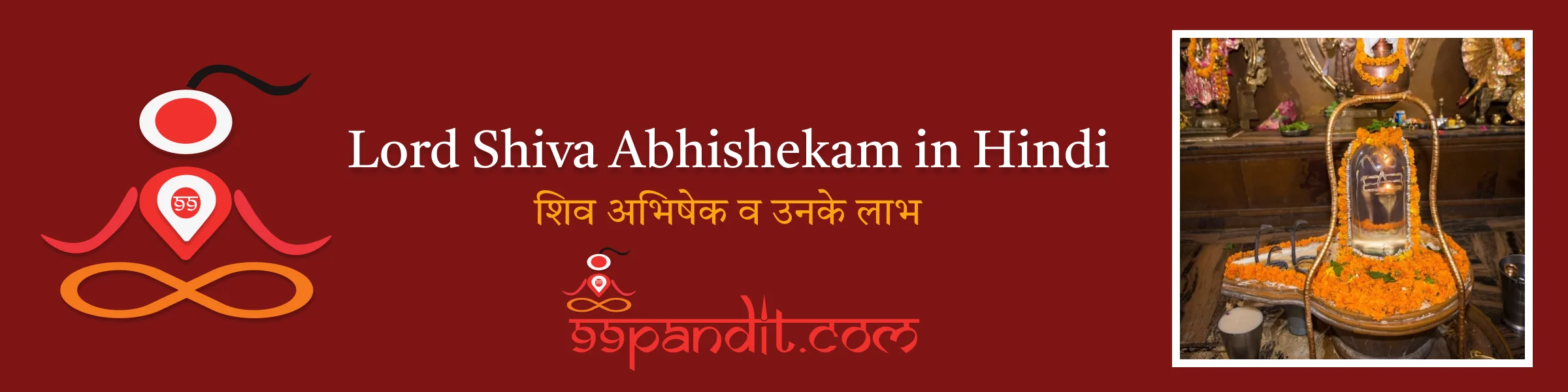
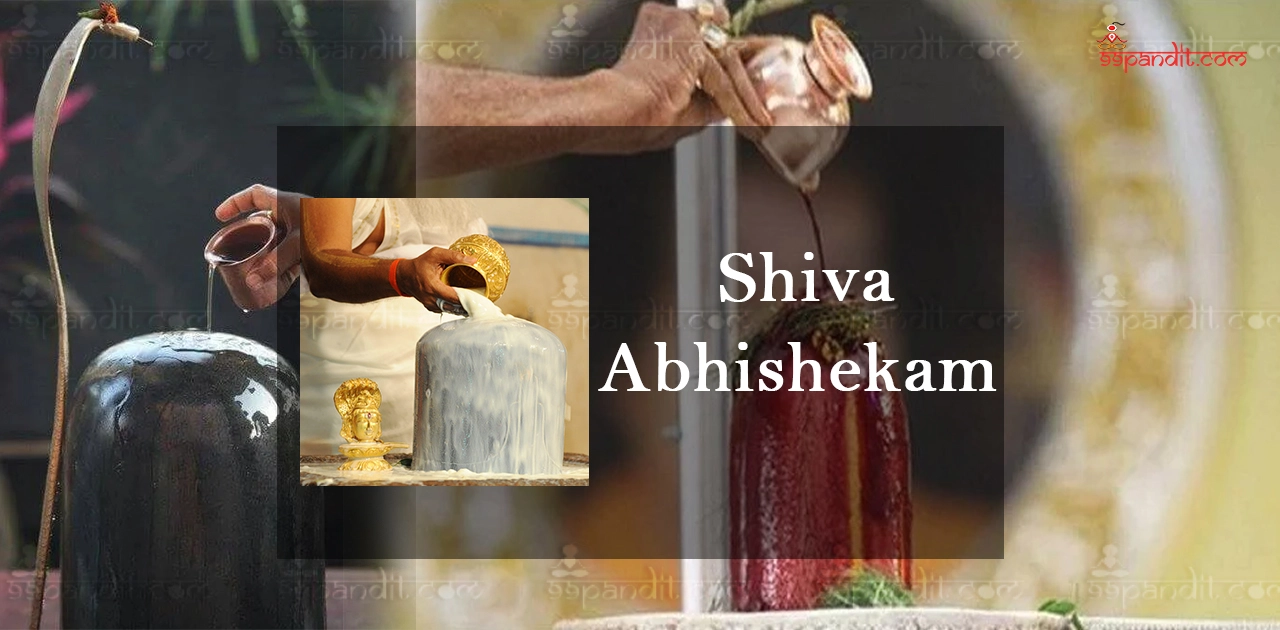
Lord Shiva Abhishekam in Hindi: शिव अभिषेक व उनके लाभ

Lord Shiva Abhishekam: हिन्दू धर्म में भगवान शिव को प्रसन्न करने के लिए कई विभिन्न प्रकार की पूजा की जाती है। उन्ही में से एक है शिव अभिषेक करना। माना जाता है कि समस्त देवतागणों में से भगवान शिव को प्रसन्न करना बहुत ही आसान है।

इसी कारण उन्हें प्रसन्न करने के लिए भक्तों द्वारा शिव अभिषेक (Shiva Abhishekam) किया जाता है। जैसा कि आप सभी लोग जानते है सावन का महीना भगवान शंकर तथा माता पार्वती को समर्पित किया जाता है| हिन्दू धर्म में इस सावन के महीने को बहुत ही शुभ माना जाता है।

शिव अभिषेक

सावन के माह में शिव अभिषेक के लिए विभिन्न प्रकार की सामग्री का उपयोग होता है। अलग-अलग सामग्री द्वारा शिव अभिषेक करने से अलग-अलग ही लाभ प्राप्त होता है।

शिव अभिषेक करने में प्रत्येक सामग्री का एक अलग ही महत्व है। आज इस लेख के माध्यम से हम आपको अलग-अलग सामग्री से शिव अभिषेक करने से होने वाले लाभ के बारे में जानकारी प्रदान करेंगे।

इसी के साथ हम राशि के अनुसार भी यह जानेंगे कि किस राशि के व्यक्ति को किस सामग्री से शिव अभिषेक करना चाहिए।

इसी के साथ यदि आप ऑनलाइन माध्यम से किसी भी पूजा जैसे विवाह पूजन [Marriage Puja], रुद्राभिषेक पूजा [Rudrabhishek Puja], या गृह प्रवेश पूजा [Griha Pravesh Puja] के लिए पंडित जी को बुक करना चाहते है तो आप हमारी वेबसाइट 99Pandit की सहायता से ऑनलाइन पंडित बहुत आसानी से बुक कर सकते है।

इसके लिए आपको “Book a Pandit” विकल्प का चुनाव करना होगा और अपनी सामान्य जानकारी जैसे कि अपना नाम, मेल, पूजा स्थान, समय,और पूजा का चयन के माध्यम से आप अपना पंडित बुक कर सकेंगे।

शिव अभिषेक क्यों किया जाता है – Why is Shiva Abhishekam Performed?

सभी शिव भक्तों के द्वारा कभी न कभी शिव अभिषेक जरुर किया गया होगा। सनातन धर्म में शिव अभिषेक का बहुत ही बड़ा महत्व है

हिन्दू धर्म में यह माना जाता है कि अभिषेक करने से भगवान शिव अपने भक्तो से बहुत जल्दी प्रसन्न हो जाते है तथा उन्हें मनचाहा वरदान प्रदान करते है।

आज इस लेख में हम आपको बताएँगे कि शिव अभिषेक की शुरुआत किस प्रकार से हुई अर्थात शिव अभिषेक क्यों किया जाता है। साथ ही कथा के बारे में भी जानेंगे।

प्रलय के कारण सभी महत्वपूर्ण रत्न व औषधियाँ समुंद्र में समा गयी। इन्हें पुनः प्राप्त करने के लिए भगवान विष्णु ने सभी देवताओं व दानवों को समुन्द्र मंथन का आदेश दिया।

सबसे पहले समुद्र मंथन से एक विष की प्राप्ति हुई। यह कोई साधारण विष नहीं था, यह संसार का सबसे भयानक विष था। जिसका नाम हलाहल विष था।

इसकी गंध के कारण सम्पूर्ण विश्व में हाहाकार मच गया। इसका कोई उपाय नहीं मिलने पर भगवान विष्णु ने सभी को भगवान शिव के समक्ष भेज दिया तथा उनसे जगत की रक्षा के लिए भिक्षा मांगी

इसके बाद भगवान शंकर ने सम्पूर्ण जगत की रक्षा हेतु उस विष को ग्रहण कर लिया यह देख माँ पार्वती ने वह विष भगवान शिव के कंठ में ही रोक लिया जिस कारण उनका कंठ नीला हो गया|

विष को ग्रहण करने के कारण भगवान शिव के शरीर का तापमान बढ़ गया| उन्हें कैलाश जैसे ठन्डे स्थान पर भी पसीना आने लगा|

यह देखकर सभी देवताओं व दैत्यों ने उनका जल से अभिषेक किया| तभी से भगवान शंकर को जल चढ़ाया जाने लगा व तभी से शिव अभिषेक की भी शुरुआत हुई|

विभिन्न सामग्रियों से शिव अभिषेक के लाभ Benefits of Shiva Abhishekam to Various Materials

शिव अभिषेक भिन्न-भिन्न सामग्रियों से किया जाता है| आज हम आपको बताएँगे कि किस सामग्री से शिव अभिषेक (Shiva Abhishekam) करने पर किस फल की प्राप्ति होती है –

दूध से अभिषेक – Milk Abhishekam

दूध धर्म तथा मन पर प्रभाव के दृष्टिकोण से सात्विक माना जाता है| इसमें भी सबसे पवित्र तथा शुद्ध गाय के दूध को माना जाता है| शिव अभिषेक (Shiva Abhishekam) में दूध का एक अलग ही महत्व होता है|

कहा जाता है कि शिवलिंग का दूध से अभिषेक करने पर भक्तों की सभी मनोकामनाएं पूर्ण होती है| सोमवार का दिन भगवान शिव को बहुत ही प्रिय है, इस दिन दूध का दान करने से जातक का चंद्रमा ग्रह मजबूत होता है

शिव अभिषेक

देसी गाय के बिना मिलावट वाले दूध से शिव अभिषेक (Shiva Abhishekam) तथा रुद्राभिषेक करने से भक्तों की समस्त मनोकामनाएँ पूर्ण होती है|

इसके अलावा भक्त जल के पात्र में थोडा दूध मिलाकर उससे शिव अभिषेक तथा रुद्राभिषेक करते है तो इससे उनका मानसिक तनाव कम होता है| इस बात का अवश्य ध्यान रखे कि भगवान शिव पर चढ़ने वाला दूध कच्चा हो

दही से अभिषेक – Curd Abhishekam

भगवान शिव का विभिन्न सामग्रियों से अभिषेक किया जाता है इन्ही में दही भी शामिल है| जिन जातकों को संतान प्राप्त नहीं हो रही हो या आर्थिक तंगी से परेशान हो उन्हें भगवान शिव का दही से अभिषेक करना चाहिए

दही से भगवान शिव का अभिषेक करने से जातकों को संतान की प्राप्ति होती है तथा दही से रुद्राभिषेक करने से भवन तथा वाहन की प्राप्ति भी होती है सावन के महीने में भगवान शिव का दही से अभिषेक करने से भक्तों को सौभाग्य की प्राप्ति होती है

घी से अभिषेक – Ghee Abhishekam

लिंग पुराण में यह बताया गया है कि भगवान शिव के स्थान का दर्शन करना ही पुण्यदायी होता है| उससे सौ गुना फल स्पर्श करने से मिलता है|

जल अभिषेक से सौ गुना फल दूध से अभिषेक करने से, दूध से हज़ार गुना दही से अभिषेक करने से, दही से सौ गुना शहद से अभिषेक करने से, तथा घी से शिव अभिषेक करने से अनंत गुना फल की प्राप्ति होती है

इसके अतिरिक्त घी से शिव अभिषेक (Shiva Abhishekam) करने से भगवान शिव अपने भक्तों मोक्ष प्रदान करते है| भगवान शिव के स्मरण मात्र से ही भक्तों की मनोकामनाएँ पूर्ण हो जाती है| इसी बीच घी से भगवान शिव का अभिषेक मनुष्यों के लिए बहुत ही लाभदायी सिद्ध होता है|

शहद से अभिषेक – Honey Abhishekam

इससे पहले हमने दूध से अभिषेक करने से होने वाले फल बारे में बताया| अब हम जानेंगे शहद से अभिषेक करने से क्या लाभ होता है|

आपको बता दे कि भगवान शिव की सबसे पसंदीदा वस्तुओं में शहद को भी शामिल किया गया है| शहद से शिव अभिषेक (Shiva Abhishekam) करने का बहुत ही ख़ास महत्त्व बताया गया है|

शहद से भगवान शिव का अभिषेक करने से जातक को सम्मान तथा जीवन में तरक्की प्राप्त होती है| इसके साथ ही शहद से शिव अभिषेक करने से शुक्र ग्रह से होने वाले दुष्प्रभाव समाप्त होते है

पंचामृत से अभिषेक – Panchamrit Abhishekam

महाशिवरात्रि के शुभ अवसर पर भगवान शिव का पंचामृत से अभिषेक किया जाता है| भगवान शिव को पंचामृत बहुत ही प्रिय है|

माना जाता है सावन के महीने में पंचामृत द्वारा शिव अभिषेक करने से भक्तों को सौभाग्य की प्राप्ति होती है तथा उनकी समस्त मनोकानाएं भी पूर्ण होती है। सावन के माह में शिव अभिषेक (Shiva Abhishekam) करने का बहुत बड़ा महत्व है

सावन में भगवान शिव का अभिषेक करने से भय, रोग से छुटकारा मिलता है तथा धन की प्राप्ति होती है| पंचामृत को पांच अलग-अलग सामग्री दूध, दही, घी, शक्कर और शहद मिलाकर बनाया जाता है।

शिव अभिषेक (Shiva Abhishekam) के लिए पंचामृत बनाते समय शुद्धता का ध्यान रखना भी बहुत आवश्यक है।

चंदन से अभिषेक – Sandal Abhishekam

हिन्दू धर्म में भगवान शिव के अभिषेक का बहुत ही ज्यादा महत्व है| विभिन्न प्रकार की सामग्रियों से शिव अभिषेक (Shiva Abhishekam) किया जाता है|

इन्ही में चन्दन भी शामिल है| चंदन को पूजा की सबसे महत्वपूर्ण सामग्रियों में से एक माना जाता है| सावन के महीने में भगवान शिव का चंदन से अभिषेक करने पर जातक को सौभाग्य की प्राप्ति होती है|

यह महादेव के सभी भक्तों के लिए शुभता का प्रतीक माना जाता है| चन्दन से भगवान शिव का अभिषेक करना जातकों के लिए अच्छा भाग्य लाता है तथा इससे जातक का स्वास्थ्य भी सदैव अच्छा बना रहता है

नारियल जल से अभिषेक – Coconut Water Abhishekam

सावन के माह में भगवान शिव का अभिषेक करना भक्तों के लिए बहुत ही लाभदायक होता है| भगवान शिव का अभिषेक विभिन्न तरह की सामग्रियों से किया जाता है

इसमें नारियल के जल से शिव जी का अभिषेक करना भी शामिल है| सावन के माह में शिवलिंग पर नारियल के जल से अभिषेक करने से भक्तों को नकारात्मकता एवं तनाव से छुटकारा मिलता है

इसी के साथ ही अच्छी संतान व सुख समृद्धि का आशीर्वाद प्राप्त होता है| नारियल के जल से अभिषेक करना जातक को शांत जीवन जीने में सहायता करता है

चावल के पाउडर से अभिषेक – Rice Powder Abhishekam

हिन्दू धर्म में चावल को भी पूजन सामग्री की सूची में रखा जाता है| प्रत्येक पूजा सामग्री में चावल (अक्षत) अनिवार्य माना जाता है|

इस कारण महाशिवरात्रि पर भगवान शिव का अभिषेक चावल के पाउडर से करने पर जातक की धन संबंधी सभी समस्याएं धीरे-धीरे समाप्त होने लगती है तथा चावल के पाउडर से शिव अभिषेक करने से व्यक्ति को हर प्रकार के कर्ज से मुक्ति प्राप्त होती है

गन्ने के रस से अभिषेक – Sugarcane Juice Abhishekam

हिन्दू शास्त्रों में बताया गया है कि गन्ने के रस से भगवान शिव का सबसे उत्तम अभिषेक होता है| गन्ने के रस से भगवान शिव का अभिषेक करना बहुत ही शुभ माना जाता है

प्राचीन समय में भक्तों द्वारा भगवान शिव से धन प्राप्ति की कामना हेतु गन्ने के रस से उनका अभिषेक किया जाता था

यदि आप भी गन्ने के रस से भगवान शिव का अभिषेक करेंगे तो उनकी कृपा से आपको भी धन तथा एक बेहद स्वस्थ जीवन की प्राप्ति होगी

तिल के तेल से अभिषेक – Til Oil Abhishekam

भगवान शिव का अभिषेक महाशिवरात्रि तथा सावन के महीने में करना जातकों के लिए बहुत ही शुभ माना जाता है

महाशिवरात्रि के पावन पर्व पर भगवान शिव का अभिषेक तिल के तेल से करने का बहुत महत्व है| इस दिन भगवान शिव का तिल के तेल से अभिषेक करने से महादेव अपने भक्तों से बहुत ही प्रसन्न होते है व उनकी सभी मनोकामनाएँ पूर्ण होती है|

साथ ही इस दिन तिल के तेल से शिव जी का अभिषेक (Shiva Abhishekam) करने से जातक के ज्ञान में भी वृद्धि होती है व उसके लिए शिक्षा के सभी मार्ग भी खुल जाते है

जल से अभिषेक – Water Abhishekam

भगवान शिव को सोमवार का दिन समर्पित किया गया है| इस दिन भगवान शिव की पूजा करने से करने से शिवजी अपने भक्तों से प्रसन्न होते है

सोमवार के दिन भगवान शिव का जल से अभिषेक करने से भक्तों की समस्त मनोकामनाएँ पूर्ण होती है| इसके अतिरिक्त शिव जी को जल चढाने से मनुष्य को मानसिक शांति भी प्राप्त होती है

भगवान शिव की कृपा पाने के लिए प्रत्येक सोमवार के दिन शिवजी की पूजा करने के साथ-साथ महामृत्युंजय मंत्र का जाप करना सबसे उत्तम उपाय माना जाता है

राशि के अनुसार शिव अभिषेक – Shiva Abhishekam According to Zodiac Signs

जिस प्रकार अलग-अलग सामग्री से भगवान से उसी प्रकार के लाभ प्राप्त होते है उसी प्रकार से यदि आप अपनी राशि के अनुसार शिव जी का अभिषेक करते है तो यह आपके लिए और भी अधिक लाभदायक हो सकता है तो आइये जानते है किस राशि के व्यक्ति को किस प्रकार से शिव जी का अभिषेक करना चाहिए –

मेष राशि – Aries

इस राशि के जातकों को अपनी पूजा का अधिक लाभ प्राप्त करने के लिए जल के पात्र में गुड़, गंगाजल, बिल्वपत्र एवं सुगंध मिलाकर भगवान शिव का अभिषेक करना चाहिए

शिव अभिषेक

वृषभ राशि – Taurus

जिन व्यक्तियों की राशि वृषभ है, उन्हें भगवान शिव की कृपा पाने के लिए सावन के सोमवार वाले दिन शुद्ध दूध, घी तथा दही से भगवान शिव का अभिषेक करना चाहिए।

मिथुन राशि – Gemini

इस राशि वाले शिव भक्तों को गन्ने के रस से अभिषेक करना बहुत ही लाभदायक होता है| इसलिए इन्हें सावन सोमवार को गन्ने के रस से शिव जी का अभिषेक (Shiva Abhishekam) करना चाहिए| इससे उन्हें धन की प्राप्ति भी होगी।

कर्क राशि – Cancer

कर्क राशि के जातकों को भगवान शंकर की कृपा पाने के सावन माह के प्रत्येक सोमवार के दिन भगवान शिव का घी से अभिषेक करना चाहिए।

सिंह राशि – Leo

इस राशि के सभी जातकों को भगवान शिव की कृपा पाने के लिए जल के पात्र में लाल पुष्प, काले तिल, गुड़ तथा शहद मिलाकर भगवान शिव का अभिषेक करना चाहिए।

कन्या राशि – Virgo

जिन भी जातक की राशि कन्या है इन्हें सावन के पहले सोमवार के दिन गन्ने के रस में शहद को मिलाकर भगवान शिव का अभिषेक करने से सौभाग्य की प्राप्ति होती है।

तुला राशि – Libra

तुला राशि वाले जातकों को भगवान शिव का आशीर्वाद प्राप्त करने के लिए जल के पात्र में शहद, सुगंध तथा चमेली का तेल मिलाकर उससे भगवान शिव का अभिषेक करना चाहिए।

वृश्चिक राशि – Scorpio

इन राशि के जातकों को अपनी पूजा का सम्पूर्ण लाभ प्राप्त करने के लिए सावन सोमवार के दिन दूध, घी, दही, शहद इत्यादि से भगवान शिव का अभिषेक करना चाहिए।

मकर राशि – Capricorn

इस राशि के आराध्य देव भगवान शिव ही है| मकर राशि वाले भक्तों के लिए नारियल के जल से अभिषेक करना बहुत ही शुभ माना जाता है।

धनु राशि – Sagittarius

इस राशि के समस्त जातकों को भगवान शिव को प्रसन्न करने के लिए सावन माह के प्रथम सोमवार को जल या दूध में हल्दी मिलाकर भगवान शिव का अभिषेक करना चाहिए।

कुंभ राशि – Aquarius

इस राशि के जातक भी भगवान शिव को माना जाता है| इस राशि के भक्तों को भगवान शिव का आशीर्वाद प्राप्त करने के लिए गंगाजल में सुगंध, काले तिल तथा शहद मिलाकर भगवान शिव का अभिषेक करना चाहिए।

मीन राशि – Pisces

मीन राशि के जातकों के लिए सबसे लाभदायक यही रहेगा कि वह सावन सोमवार के दिन दूध या जल में केसर मिलाकर उससे भगवान शिव का अभिषेक करें।

निष्कर्ष – Conclusion

आज इस लेख के माध्यम हमने आपको बहुत सारी बातों के बारे में बताया| जैसे शिव अभिषेक विभिन्न सामग्री का उपयोग करके किया जाता है।

उन सभी सामग्रियों से शिव अभिषेक (Shiva Abhishekam) करने का अलग महत्व है| इसके अलावा हमने विभिन्न राशियों के लिए अलग-अलग शिव अभिषेक की प्रक्रिया के बारे में बताया है।

इसकी सहायता से आप अपनी राशि के अनुसार भगवान शिव की कृपा प्राप्त करने के लिए उनकी पूजा कर सकते है।

हिन्दू धर्म में बताया गया है कि भगवान शिव स्वभाव के बहुत ही भोले है| भगवान शंकर केवल एक लोटा जल से ही अपने भक्तों से प्रसन्न हो जाते है।

आमतौर पर शिव अभिषेक एक लिंगम पर किया जाता है| अभिषेक शब्द संस्कृत भाषा से लिया गया है जो किसी भी भगवान को पवित्र स्नान कराने की भक्ति पूर्ण गतिविधि को दर्शाता है।

जब आप शिव जी का अभिषेक करते है तो उस समय आपका मन एकाग्र होता है। आपका सम्पूर्ण मन व हृदय भगवान शिव की छवि तथा दिव्य विचारों से भरा हुआ रहता है। शिव जी का अभिषेक करते समय मनुष्य का अहंकार धीरे-धीरे नष्ट हो जाता है।

इसी के साथ यदि आप किसी भी आरती या चालीसा जैसे हनुमान चालीसा [Hanuman Chalisa], खाटूश्याम जी की आरती [Khatu Shyam Ji Ki Aarti], या जया एकादशी व्रत कथा [Jaya Ekadashi Vrat Katha] आदि भिन्न-भिन्न प्रकार की आरतियाँ, चालीसा व व्रत कथा पढना चाहते है तो आप हमारी वेबसाइट 99Pandit पर विजिट कर सकते है

इसके अलावा आप हमारे एप 99Pandit For Users पर भी आरतियाँ व अन्य कथाओं को पढ़ सकते है इस एप में सम्पूर्ण भगवद गीता के सभी अध्यायों को हिंदी अर्थ समझाया गया है

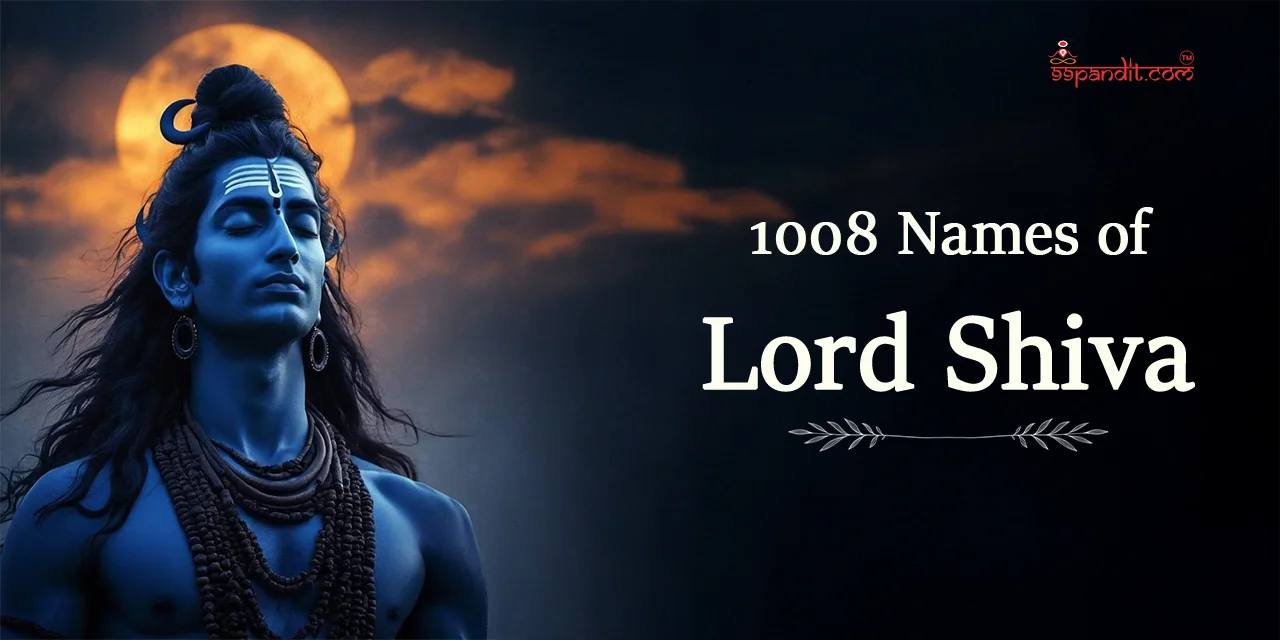
1008 Names of Lord Shiva: Complete List with Meanings

The 1008 Names of Lord Shiva are not just ordinary names but a collection that reveals the countless qualities and powers of one of the Hindus’ most sacred gods.

Lord Shiva, the destroyer and transformer, is described in the Shiva Purana by different names. All of them highlight the quality of his cosmic power.

1008 Names of Lord Shiva

Every one of these names has deep religious significance and is usually chanted while praying or meditating to seek the blessings of Lord Shiva.

From Mahadev (the Greatest God) to Trilokinatha (Lord of the Three Worlds), all these names tell us something about his position in the universe–the creator, destroyer, and preserver.

Repeating the Lord Shiva’s names while performing mala jaap (prayer with beads) is said to cleanse the mind and soul.

With 99Pandit, we would like to take you on a religious pilgrimage where you will be able to learn about the 1008 names of Lord Shiva.

Who is Lord Shiva?

In Hinduism, Lord Shiva is considered a god of destruction and is among the principal deities.

He is part of the Trimurti, a sacred trinity of three gods: Brahma (the creator), Vishnu (the preserver), and Shiva (the destroyer).

The role of Lord Shiva is to destroy the negative energies, break the old, and make room for new creation.

1008 Names of Lord Shiva

In the Shiv Purana, he is referred to as “Adiyogi” (the first yogi). He is the sole god worshipped by both Asuras and Devatas.

He is serene and yet powerful, but a fierce warrior in a fight against evil. People worship Lord Shiva so that they may obtain inner peace, protection, and spiritual progress.

His many names are an explanation of his divine qualities and presence everywhere in the universe.

Spiritual Significance of Chanting the 1008 Names of Lord Shiva

Recitation of the 1008 names of Lord Shiva, or as it is also known, Shiva Sahasranama. It is a holy practice that has fantastic spiritual benefits.

The practice is generally carried out in puja, especially on Mondays and during events like Maha Shivratri.

There are 1008 names of Lord Shiva mentioned in Hindu scriptures like the Shiva Purana, Linga Purana, and Mahabharata.

It is thought that repeated recitations of these names by individuals will compel them to seek the blessings of Lord Shiva and achieve prosperity, wealth, and success.

Per Hindu tradition, repetition of the names is equivalent to conducting a thousand Ashvamedha Yajnas.

Reciting them, it is said, produces a vibration intended to calm the mind, clean the heart, and charge with divine energy.

The rituals are said to cleanse previous Karma and lead the soul towards moksha (liberation).

List of 1008 Names of Lord Shiva with Meaning

Following are the 1008 names of lord Shiva with the meanings for easy understanding:

  1. Shiva – Pure
  2. Hara – Destroyer
  3. Mrda – Gracious
  4. Rudra – Terrible
  5. Puskara – Nourisher
  6. Puspalocana – Of Flowery Eyes
  7. Arthigamya – Accessible To The Suppliants
  8. Sadacara – Of Noble Conduct
  9. Sarva – All-in-all
  10. Mahesvara – Great Lord
  11. Candrapida – With Moon For The Diadem
  12. Candramauli – With Moon For Its Crest-jewel
  13. Visva – Universe
  14. Visvambharesvara – Lord Of The Earth
  15. Vedantasarasandoha – The Essence Of Vedanta Philosophy
  16. Kapalin – With A Skull In The Hand
  17. Nilalohita – Blue-blooded
  18. Dhyanadhara – Object Of Meditation
  19. Aparicchedya – Inexplicable
  20. Gauribhartr – Husband Of Gauri
  21. Ganesvara – Lord Of Ganas
  22. Astamurti – Having Eight Cosmic Bodies
  23. Visvamurti – Universe-bodied
  24. Trivarga – Bestower Of Virtue, Wealth And Love
  25. Sargasadhana – Achiever Of Creation
  26. Jnanagamya – Accessible To Perfect Knowledge
  27. Drdhaprajna – Of Steady Intellect
  28. Devadeva – Lord Of Gods
  29. Trilocana – Three-eyed
  30. Vamadeva – Lovely God
  31. Mahadeva – Great God
  32. Patu – Efficient
  33. Parivrdha – Chief
  34. Drdha – Firm
  35. Visvarupa – Multiformed
  36. Virupaksa – Odd-eyed
  37. Vagisa – Lord Of Speech
  38. Surassattama – The Most Excellent God
  39. Sarvapramanasamvadin – In Whom All Authorities And Proof Agree
  40. Vrsanka – Bull-bannered
  41. Vrsavahana – Bull-vehicled
  42. Isa – Lord
  43. Pinakin – Holding Bow
  44. Khatvangin – Holding Missile Khatvanga
  45. Citravesa – Of Variegated Dress
  46. Cirantana – Eternal Being
  47. Tamohara – Remover Of Ignorance
  48. Mahayogin – Great Yogin
  49. Goptr – Protector
  50. Brahmandahrt – Heart Of Cosmos
  51. Jatin – With Matted Hair
  52. Kalakala – Slayer Of Death
  53. Krrtivasas – Wearing Hide
  54. Subhaga – Comely
  55. Pranatatmaka – Soul Of Devotees
  56. Unnadhra – Uplifted
  57. Purasa – Divine Being
  58. Jusya – Worhty To Be Served
  59. Durvasas – Sage Durvasas
  60. Pursasana – Chastiser Of The Tripuras
  61. Divyayudha – Having Divine Weapons
  62. Skandaguru – Preceptor Of Skanda
  63. Paramesthin – Staying At The Acme
  64. Paratpura – Greater Tham The Greatest
  65. Anadimadhyanidhana – With No Beginning, Middle Or End
  66. Girisa – Lord Of Mountains
  67. Girijadhava – Husband Of Parvati
  68. Kuberabandhu – Kinsman Of Kubera
  69. Srikantha – Of Glorious Neck
  70. Lokavarnottama – Excellent Of All Castes In The World
  71. Samadhivedya – Who Can Be Realised Through Trance
  72. Kodandin – Holding Bow
  73. Nilakantha – Blue-necked
  74. Parasvadhin – Holding Axe
  75. Visalaksa – Wide Eyed
  76. Mrgavyadha – Hunter Of Animals
  77. Suresa – Lord Of Gods
  78. Suryatapana – Scorcher Of The Sun
  79. Dharmadhyaksa – Presiding Deity Of Virtue
  80. Ksamaksetra – Splitter Of The Eyes Of Bhaga
  81. Urga – Fierce
  82. Pasupati – Lord Of Beasts, The Individual Souls
  83. Tarksya – Identical With Garuda
  84. Priyabhakta – Favourite Of The Devotee
  85. Parantapa – Scorcher Of Enemies
  86. Datr – Donor
  87. Dayakara – Compassionate
  88. Daksa – Skilful
  89. Kapardin – Having Matted Hair
  90. Kamasasana – Chastiser Of Cupid
  91. Smasananilaya – Residing In Cremation Ground
  92. Suksma – Subtle
  93. Smasanastha – Staying In The Cremation Ground
  94. Mahesvara – Great God
  95. Lokakartr – Creator Of The Worlds
  96. Mrgapati – Lord Of Deer
  97. Mahakartr – Great Maker
  98. Mahausadhi – Great Medicine
  99. Somapa – Inbiber Of Somajuice
  100. Amrtapa – Drinker Of Nectar
  101. Saumya – Gentle
  102. Mahatejas – Of Great Splendour
  103. Mahadyuti – Of Great Brilliance
  104. Tejomaya – Full Of Lustre
  105. Amrtamaya – Full Of Nectar
  106. Annamaya – Of The Nature Of Food
  107. Sudhapati – Lord Of Nectar
  108. Uttama – The Most Excellent
  109. Goptr – Protector
  110. Jnanagamya – Attainable Through Perfect Knowledge –
  111. Puratana – Ancient Being
  112. Niti – Justice
  113. Sunitii – Good Justice And Policy
  114. Suddhatman – Pure Soul
  115. Soma – Accompanied By Uma
  116. Somatra – Excelling The Moon
  117. Sukhin – Happy Being
  118. Ajatasatru – Whose Enemy Is Not Yet Born
  119. Aloksambhavya – Whose Existence Is Inferred As Possible Through Lustre
  120. Havyavahana – Carrier Of Sacrificial Offerings, I.e. Fire
  121. Lokankara – Maker Of The Worlds
  122. Vedakara – Originator Of The Vedas
  123. Sutrakara – Composer Of Aphorisms
  124. Santana – Eternal
  125. Maharsi – Great Sage
  126. Kapilacarya – Preceptor Kapila
  127. Visvadipti – Light Of The Universe
  128. Trilocana – Three-eyed
  129. Pinakapani – Holding Pinaka In The Hand
  130. Bhudeva – God Of The Earth
  131. Svastida – Bestower Of Weal
  132. Sukrta – Meritorious
  133. Sudhi – Intelligent
  134. Dhatrdhaman – Abode Of The Creator
  135. Dharmakara – Creater Of The Lustre
  136. Sarvada – Bestower Of All
  137. Sarvagocara – Visible To All
  138. Brahmarsk – Creator Of Brahma
  139. Visvasrk – Creator Of The Universe
  140. Sarga – Creation
  141. Karnikarapriya – Fond Of The Pericarp Of The Lotus
  142. Kavi – Poet
  143. Sakha –
  144. Visakha –
  145. Gosakha
  146. Shiva – The Cause Of Welfare
  147. Bhisak Anuttama – Excellent Physician
  148. Bhavya – Good
  149. Puskala – Eminent One
  150. Sthapati – Architect
  151. Sthira – Steady
  152. Vijitatman – Self-conqueror
  153. Vidheyatman – Self-controlled
  154. Bhutavahanasarathi – With Bhutas As Charioteers
  155. Sagana – Accompanied By Ganas
  156. Ganakaya – With Ganas As Body-guards
  157. Sukirti – Of Good Fame
  158. Chinnasamsaya – One To Whom Doubts Have Been Cleared
  159. Kamadeva – Identical To Cupid
  160. Kamapala – Protector Of The Desires
  161. Bhasmoddulitavigraha – Whose Body Is Dusted With Bhasma
  162. Bhasmapriya – Fond Of Bhasma
  163. Bhasmasayin – Lying On The Basma
  164. Kamin – Lover
  165. Kanta – Brilliant
  166. Krtagama – One Who Has Created Agamas
  167. Samavarta – Who Whirls The Wheel Of Wordly Existence
  168. Anivrttatma – Whose Soul Never Turns Black
  169. Dharmapunja – Mass Of Virtue
  170. Sadashiva – Auspicious Forever
  171. Akalmasa – Sinless
  172. Punyatman – Meritorious Soul
  173. Caturbahu – Four-armed
  174. Durasada – Difficult To Access
  175. Durlabha – Rare One
  176. Durgama – Impassable
  177. Durga – Difficulties of Being Attained
  178. Sarvayudhavisarada – Expert In Wielding Weapons
  179. Adhyatmayoganilaya – Stationed In Spiritual Yoga
  180. Sutantu – Wearing Good Fabric Of Universe
  181. Tantuvardhana – Enhancer Of The Fabric
  182. Subhanga – Having Auspicious Limbs
  183. Lokasaranga – Essence Of The Worlds
  184. Jagadisa – Lord Of The Universe
  185. Bhasmasuddhikara – Causing Purity Through Bhasma –
  186. Abhiru – Non-cowardly
  187. Ojasvin – Vigorous
  188. Suddhavigraha – Of Pure Body
  189. Asadhya – Unachievable
  190. Sadhusadhya – Achievable Easily By The Saintly
  191. Bhrtyamarkatarupadhrk – Assuming The Form Of The Servile Monkey
  192. Hiranyaretas – Gold-semened
  193. Paurana – Ancient One
  194. Ripujivahara – Destroyer Of Enemies
  195. Balin – Strong
  196. Mahahrada – Deep Eddy
  197. Mahagarta – Deep Ditch
  198. Siddha
  199. Vrndaravandita – Saluted By The Gods
  200. Vyaghracarmambara – Wearing The Tiger Hide
  201. Vyalin – Clapsed By Serpents
  202. Mahabhuta – Great Living Being
  203. Mahanidhi – Great Storehouse
  204. Amrta – Nectar
  205. Amrtapa – Drinker Of The Nectar
  206. Srimat – Glorious
  207. Pancajanya – Favourable To The Five Classes Of Beings
  208. Prabhanjana – Hailstorm
  209. Pancavimsatitattvastha – Stationed In Twentyfive Principles
  210. Parijata – Celestial Tree
  211. Paratpara – Greater Than The Greatest
  212. Sulabha – Easy To Access
  213. Suvrata – Of Good Rites
  214. Sura – Heroic
  215. Vanmayaikanidhi – Treasure Stored In All Extant Literature
  216. Varnasramaguru – Preceptor Of Castes And Stages Of Life
  217. Varmin – The Religious Student
  218. Satrujit – Conqueror Of The Enemies
  219. Satrutapana – Scorcher Of Enemies
  220. Asrama – Stage Of Life
  221. Sramana – Ascetic
  222. Ksama – Emaciated
  223. Jnanavat – Wise
  224. Acalesvara – Lord Of The Mountains
  225. Pramanabhuta – The Authoritative Proof
  226. Durneja – Difficult To Be Known
  227. Suparna – Garuda Of Good Wings
  228. Vayuvahana – Having Wind As Vehicle
  229. Dhanurdhara – Wielder Of The Bow
  230. Dhanurveda – Science Of Archery
  231. Guna – Attribute
  232. Sasigunakara – Storehouse Of The Qualities Of The Moon
  233. Satya – Truth
  234. Satyapara – Devoted To Truth
  235. Adina – Non-distressed
  236. Dharma – Sacred Virtue
  237. Godharmasana – Chestiser Of The Beastly Natured
  238. Anantadrsti – Of Infinite Vision
  239. Ananda – Bliss
  240. Danda – Punishment
  241. Damayitr – Suppressor
  242. Dama – Controller Of Senses
  243. Abhicarya – Worth Of Being Approached
  244. Mahamaya – Of Great Maya
  245. Visvakarmavisarada – Adept In All Activities Of The Universe
  246. Vitaraga – Devoid Of Passion
  247. Vinitatman – Of Well Disciplined Soul
  248. Tapasvin – Ascetic
  249. Bhutabhavana – Conceiver And Creator of Living Beings
  250. Unmattavesa – Having The Guise Of A Mad One
  251. Pracchanna – Hidden One
  252. Jitakama – Conqueror Of Lust
  253. Jitendriya – Conqueror Of Sense Organs
  254. Kalyanaprakrti – Of Good Nature
  255. Kalya – Agreeable
  256. Sarvaloka Prajapati – Creator Of The Worlds
  257. Tarasvin – Forceful
  258. Taraka – One Who Takes Across And Saves
  259. Dhimat – Intelligent
  260. Pradhana – Chief
  261. Avyaya Prabhu – Imperishable Lord
  262. Lokapala – Protector Of The Worlds
  263. Antaratman – Immanent Soul
  264. Kalpadi – The Beginning Of Aeon
  265. Kamaleksana – Lotus Eyes
  266. Vedasastrarthatattvajna – Knower Of The Principles And Meanings Of The Sastras
  267. Niyamin – Observer Of Reatraints
  268. Niyamasraya – Support Of Observances And Restraints
  269. Candra – Identical With The Moon
  270. Surya – Identical With The Sun
  271. Sani – Saturn
  272. Ketu – Planet Ketu
  273. Varamga – Excellent Bodied
  274. Vidrumacchavi – Having The Lustre Of Coral
  275. Bhaktivasya – Subservient to Devotion
  276. Parambrahma – Great Brahman
  277. Mrgabanarpana – One Who Discharged Arrows On The Deer
  278. Anagha – Faultless
  279. Adri – Mountain
  280. Adyalaya – Resident Of The Mountain
  281. Kanta – The Luminous
  282. Paramatman – Great Soul
  283. Jagadguru – Preceptor Of The Universe
  284. Sarvakarmalaya – Abode Of All Rites
  285. Tusta – Satisfied
  286. Mangalya – Auspicious
  287. Mangalavrta – Surrounded By Auspiciousness
  288. Mahatapas – Of Great Austerity
  289. Dirghatapas – Of Long Penance
  290. Sthavistha – Grossest One
  291. Sthavira-dhruva – Aged And Steady
  292. Ahan – Day
  293. Samvatsara – Year
  294. Vyapti – Concomitance
  295. Pramana – Proof
  296. Paramtapas – Supreme Penance
  297. Samvatsarakara – One Causing The Year
  298. Mantra Pratyaya – Credence
  299. Sarvatapana – Scorcher Of All
  300. Aja      Unborn
  301. Sarvesvara – Lord Of All
  302. Mahatejas – Of Great Lustre
  303. Mahabala – Of Great Strength
  304. Yogya – Worthy Yogin –
  305. Maharetas – Of Great Virility
  306. Siddhi – Achievement
  307. Sarvadi – Beginning Of All
  308. Agraha – Older
  309. Vasu – Wealth
  310. Vasumanas – Of Praiseworthy Mind
  311. Satya – Of Truthful Existence
  312. Sarvapapahara – Destroyer Of Sins
  313. Hara – Remover Of Sins
  314. Sukirti – Of Good Fame
  315. Sobhana – Of Good Beauty
  316. Sragvin – Wearing Garlands
  317. Vedanga – Ancillary Of The Vedas
  318. Vedavit – Knower Of The Vedas
  319. Muni – Ascetic
  320. Bhrajisnu – Lord Of Worlds
  321. Duradhara – Unconquerable
  322. Amrta – Nectar
  323. Sasvata – Permanent
  324. Santa – Quiescent
  325. Banahasta – Holding Arrows In The Hand
  326. Pratapavat – Valorous
  327. Kamandaludhara – Holding Water Pot
  328. Dhanvin – Having Bow
  329. Avanmanasagocara – Inexpressible And Inconceivable
  330. Atindriya Beyond The Scope Of Sense Organs
  331. Mahamaya – Wielding Great Maya
  332. Sarvavasa – Abode Of All
  333. Catuspatha – Of Four Paths
  334. Kalayogin – United In Time
  335. Mahanada – Of Loud Sound
  336. Mahotsaha – Of Great Zeal
  337. Mahabala – Of Great Strength
  338. Mahabuddhi – Of Great Intellect
  339. Mahavirya – Of Great Virility
  340. Bhutacarin   Moving About With The Bhutas
  341. Purandara – Destroyer Of The Cities
  342. Nisacara – Stalking At Night
  343. Mahasakti – Of Great Strength
  344. Mahadyuti – Of Fically Indicated
  345. Srimat – Glorious
  346. Sarvacarya – Preceptor Of All
  347. Manogati – Having The Velocity Of The Mind
  348. Bahusruti – Of Many Years Or Of Great Fame
  349. Mahamaya – Of Great Maya
  350. Nityatatman – Of Restrained Soul
  351. Dhruva – Steady
  352. Adhruva – Unsteady
  353. Tejastejas – Splendour Of Splendours
  354. Dyutidhara – Having Brilliance
  355. Janaka – Father
  356. Sarvasasana – Chastiser Of All
  357. Nrtyapriya – Fond Of Dance
  358. Nityanrtya – Ever Dancing
  359. Prakasatman – Of Luminous Soul
  360. Prakasaka – The Illuminator
  361. Spastaksara – Of Clear Worlds And Syllables
  362. Budha – Wise
  363. Samana – Impartial
  364. Sarasamplava – Floating The Essence
  365. Yugadikrt – Cause Of The Beginning Of Yugas
  366. Yugavarta   Causing The Yugas To Resolve
  367. Gambhira – Grave
  368. Vrsavahana – Bull Vehicle
  369. Ista – One Who Is Wished For Or Worshipped
  370. Visista – Special Or Well Equipped
  371. Sistesta – Liked By The Cultured
  372. Sulabha – Easy Of Access
  373. Sarasodhana – Purifier Of The Essence
  374. Tirtharupa – Of The Form Of The Holy Centre
  375. Trithanaman – Named After The Holy Centres
  376. Tirthadrsya – Visible At The Holy Centres
  377. Tirthada – Bestower Of Tirthas
  378. Apam Nidhi – Storehouse Of Waters
  379. Adhisthana – Supporting Base
  380. Durjaya – Difficult To Be Conquered
  381. Jayakalavit – Knower Of The Time Of Conquest
  382. Pratisthita – Well Established
  383. Pramanajna – Knower Of Testimonies
  384. Hiranyakavaca – Having a Golden Coat Of Mail
  385. Hari – Identical With Visnu
  386. Vimocana – Releaser
  387. Suragana – Having Gods As Attendants
  388. Vidyesa – Lord Of Lore
  389. Bindusamsraya – Stationed In The Mystic Dot
  390. Vatarupa – In The Form Of Wind
  391. Amalonmayain – Free From Impurity
  392. Vikartr – Special Maker
  393. Gahana – Dense
  394. Guha – Identical With Kartikeya
  395. Karana – Cause
  396. Kartr – Active
  397. Sarvabandhavimocana – Releaser From All Bondages
  398. Vyavasaya – Determination
  399. Vyavasthana – Establisher Of Order
  400. Sthanada – Bestower Of Proper Position
  401. Jagadadija – Origination At The Beginning Of The Universe
  402. Guruda – Conferer Of Weighty Things
  403. Lalita – Simple And Delicate
  404. Bheda – Difference
  405. Navatman – New Soul
  406. Atmani Samsthita – Stationed In The Soul
  407. Viresvara – Lord Of Heroes
  408. Virabhadra – Identical With Virabhadra
  409. Virasana Vidhi – Knowing The Mode Of Sitting In The Heroic Posture
  410. Guru – Preceptor
  411. Viracudamani – Crest Jewel Of Heroes
  412. Vettr – Knower
  413. Cidananda – Sentience And Bliss
  414. Nadisvara – Lord Of Rivers
  415. Ajnadhara – Holder Of Behests
  416. Triculin – Holding The Trident
  417. Sipivista – Entering And Stationed In Rays
  418. Sivalaya – Of Auspicious Residence
  419. Balakhilya – Identical With Sage Balakhilyas
  420. Mahavira – Great Hero
  421. Tigmamsu – Of Fiery Rays
  422. Badhira – Deaf
  423. Khaga – Tranversing The Sky
  424. Abhirama – The Charming One
  425. Susarana – Worthy Refuge
  426. Subrahmanya – Identical With Kumara
  427. Sudhapati – Lord Of Nectar
  428. Maghavat – Identical With Indra
  429. Kausika – Identical With Sage Kausika
  430. Gomat – Possessing Cows, Rays, Etc
  431. Virama – Final Stoppage
  432. Sarvasadhana – Having All Equipment
  433. Lalataksa – Having Eye In The Forehead
  434. Visvadeha – Having The Universe As Body
  435. Sara – Essence
  436. Semsara Cakrabhrt – Holder Of The Wheel Of Worldly Existence
  437. Amoghadanda – Of Never Failing Punishment
  438. Madhyastha – Stationed In The Middle
  439. Harina – Deer
  440. Brahmavarcasa – Having The Brahminical Lustre
  441. Paramartha – The Greatest Entity
  442. Paramaya – Wielding The Great Maya
  443. Sancaya – Collection
  444. Vyaghrakomala – Tender To The Tiger
  445. Ruci – Interest
  446. Bahuruci – Having Great Interest
  447. Vaidya – Physician
  448. Vacaspati – Lord Of Speech
  449. Ahaspati – Lord Of The Day, The Sun
  450. Rave – Sun
  451. Virocana – Sun, Moon, Or Fire
  452. Skanda – Karttikeya
  453. Sastr – Chastiser
  454. Vaivasvata Yama – Yama The Son Of The Sun
  455. Yukti – Joint
  456. Unnatakirti – Of Lofty Fame
  457. Sanuraga – Loving
  458. Puranjana –
  459. Kailasadhipati – Lord Of Kailasa
  460. Kanta – Brilliant
  461. Savitr – Sun
  462. Ravilocana – Having The Sun As The Eye
  463. Visvottama – Excellent In The Universe
  464. Vitabhaya – Free From Fear
  465. Visvabhartr – Supporter Of The Universe
  466. Anivarita – Unobstructed
  467. Nitya – Eternal
  468. Niyatakalyana – Of Invariable Welfare
  469. Punyasravanakirtana – Hearing About And Glorification Of Whom Is Meritorious
  470. Durasrava – Heard Far Off
  471. Visvasaha – Forebearer Of Everything
  472. Dhyeya – Worth Of Being Meditated Upon
  473. Duhsvapna Nasana – Destroyer Of Bad Dreams
  474. Uttarana – He Who Takes Across
  475. Duskriha – Destroyer Of Wicked Deeds
  476. Vijneya – Worthy Of Being Known
  477. Duhsaha – Unbearable
  478. Dhava – Lord
  479. Anadi – Having No Beginning
  480. Bhu – Earth
  481. Bhuvah Laksmih – Wealth And The Glory Of The Earth
  482. Kiritin – Wearing The Crown
  483. Tridasadhipa – Lord Of The Gods
  484. Visvagoptr – Protector Of The Universe
  485. Visvakartr – Creator Of The Universe
  486. Suvira – Good Hero
  487. Rucirangada – Bestower Of Beautiful Limbs
  488. Janana – The Progenitor
  489. Janajanmadi – Cause Of Birth Of The People
  490. Pritman – Possessing Pleasure
  491. Nitiman – Just
  492. Dhruva – Steady
  493. Vasistha – Sage Vasistha
  494. Kasyapa – Sage Kasyapa
  495. Bhanu – Sun
  496. Bhima – Terrible
  497. Bhimaparakrama – Of Terrible Exploit
  498. Pranava – The Mystic Syllable Om
  499. Satpathacara – Transversing The Path Of The Good
  500. Mahakosa – Of Great Treasure
  501. Mahadhana – Of Great Wealth
  502. Janmadhipa – Lord Of Birth
  503. Mahadeva – Great Lord
  504. Sakalagamaparaga – One Who Had Mastered All Vedas
  505. Tattva – Tenet
  506. Tattvavit – Knower Of Truth
  507. Ekatman – Single Soul
  508. Vibhu – All Prevading
  509. Visnuvibhusana – Ornament Of Visnu
  510. Rishi – Sage
  511. Brahmana – Knower Of Brahman
  512. Aisvaryam – Lordliness
  513. Janmamrtyujaratiga – Who Is Beyond Birth, Death And Old Age
  514. Pancatattvasamutpatti – Origin Of The Five Principles
  515. Visvesa – Lord Of The Universe
  516. Vimalodaya – Of Pure Rise
  517. Anadyanta – Having Neither Beginning Nor End
  518. Atmayoni – Having The Self As The Source
  519. Vatsala – Darling
  520. Bhutalokadhrk – Supporter Of The World Of Living Beings
  521. Gayatrivallabha – Lover Of The Gayatri Mantra
  522. Pramsu – Lofty
  523. Visvavasa – Abode Of The Universe
  524. Prabhakara – Sun
  525. Sisu – Infant
  526. Girirata – Delighted In The Mountain
  527. Samrat – Emperor
  528. Susena – Having an Auspicious Army
  529. Surasatruha – Slayer Of The Enemies Of the Gods
  530. Anemi – Having No Restricting Rims
  531. Istanemi Mukund – Bestower Of Salvation Or Identical With Lord Visnu
  532. Vigatajvara – Free From Fever
  533. Swayamjyoti – Self-luminous
  534. Mahajyoti – Of Great Splendour
  535. Tanujyoti – Of Short Splendour
  536. Acnacala – Non-fickle
  537. Pingala – Of Tawny Colour
  538. Kapilasmasru – Of Brown Moustache
  539. Bhalanetra – With An Eye In The Forehead
  540. Trayitanu – Having The Vedas For Body
  541. Jnanaskandha – With Branching Knowledge
  542. Mahaniti – Of Great Justice
  543. Visvotpatti – Origin Of The Universe
  544. Upaplava – Obstacle, Distressing
  545. Bhaga – Fortune
  546. Vivasvat – Sun
  547. Ditya – Sun
  548. Gatapara – One Who Has Reached The Other Shore
  549. Brhaspati – Preceptor Of Gods
  550. Kalyanagunanaman – Having Auspicious Attributes And Names
  551. Papaha – Destroyer Of Sins
  552. Punyadarsana – Of Meritorious Vision
  553. Udharakirti – Of Liberal Renown
  554. Udyogin – Enterprising
  555. Sadyogin – Of Good Yoga
  556. Sadasattrapa – Ashamed Of The Good And The Bad
  557. Naksatramalin – Having The Garlands Of Stars
  558. Nakesa – Lord Of Heaven
  559. Svadhisthana – Self-Based
  560. Sadasraya – Support Of The Six Principles
  561. Pavitra – Holy
  562. Papnasa – Destroyer Of Sins
  563. Manipura – Filled With Jewels
  564. Nabhogati – Traversing The Firmament
  565. Hrtpundarikasina – Occupying The Lotus Of The Heart
  566. Sakra – Identical With Indra
  567. Santi – Peace
  568. Vrsakapi – Of The Form Of Dharma Or Boar Incarnation
  569. Usna – Hot
  570. Grhapati – Lord Of The House
  571. Krsna Samartha – Capable
  572. Anarthanasana – Destroyer Of Evil Calamities
  573. Adharmasatru – Inimical To Evil
  574. Ajneya – Unknowable
  575. Puruhuta – Invoked Many Times
  576. Purusruta – Very Famous
  577. Brahmagarbha – Having Brahma Within
  578. Brhadgarbha – Having Big Womb
  579. Dharmadhenu – Cow Of Virtue
  580. Dhanagama – Source Of Wealth
  581. Jagaddhitaisin – Well Wisher Of The Universe
  582. Sugata – Having a Good Gait
  583. Kusalagama – Source Of Welfare
  584. Hiranyavarna – Golden Coloured
  585. Jyotismat – Luminous
  586. Nanabhutarata – Interested In Different Living Beings
  587. Dhvani – Sound
  588. Arogya – Health
  589. Namanadhyaksa – Presiding Deity Of Obeisances
  590. Visvamitra – Sage Visvamitra
  591. Dhanesvara – Lord Of Wealth
  592. Brahmajyoti – Brilliance Of Brahma
  593. Vasu – The Semidivine Beings
  594. Dhaman – Splendour
  595. Mahajyoti – Of Great Splendour
  596. Anuttama – Excellent
  597. Matamaha – Maternal Grandfather
  598. Matartisvan – Wind God
  599. Nabhasvat – Vaporous Air
  600. Nagaharadhrk – Wearing Garlands Of Serpents
  601. Parasara – All The Five Sages
  602. Niravaranirvara – Uncovered And Unprevented
  603. Vairancya – Son Of Brahma
  604. Vistarasravas – Kusa Cared
  605. Atmabhu – Self Born
  606. Aniruddha – Unobstructed
  607. Atri Jnanamurti – Knowledge Embodied
  608. Mahayasas – Of Great Renown
  609. Lokaviragrani   – Leader Of The Heroes Of The World
  610. Vira – Heroic
  611. Candra – Moon
  612. Satyaparakrama – Of Truthful Exploit
  613. Vyalakalpa – Resembling A Huge Serpent
  614. Mahakalpa – Of Great Conception
  615. Kalpavrksa – Wish-Yielding Kalpa Tree
  616. Kaladhara – Possessing Arts
  617. Alankarisnu – Desirous Of Adorning
  618. Acala – Unmoving
  619. Rocisnu – Appealing
  620. Vikramonnata – Lofty In Valour
  621. Ayu      Longevity
  622. Sabdapati – Lord Of Words
  623. Yagmin – Eloquent
  624. Plavana – Floating
  625. Sikhisarathi – Having Fire As Charioteer
  626. Asamsprsta – Untouched
  627. Atithi – Guest
  628. Satrupramathin – Suppressor Of Enemies
  629. Padapasana – Tree Seated
  630. Vasusravas – Wealth-eared
  631. Kavyavaha – Bearing Kavya Offerings
  632. Pratapta – Heated
  633. Visvabhojana – Universe Dieted
  634. Japya – Worthy Of Being Worshipped With Japas
  635. Jaradisamana – Subduer Of Old Age, Etc
  636. Lohita – Red
  637. Tanunapat – Fire God
  638. Prsadasva – Wind God
  639. Nabhaoyoni – Origin Of Firmanent
  640. Supratika – Of Good Symbols
  641. Tamisraha – Destroyer Of Darkness
  642. Nidagha – Summer
  643. Tapana – Sun
  644. Meghabhaksa – Devouring Clouds
  645. Parapuranjaya – Conqueror Of The Cities Of Enemies
  646. Sukhanila – Pleasing Wind
  647. Sunispanna – Well Born
  648. Surabhi – Fragrant
  649. Sisiratmaka – Winter
  650. Vasanta Madhava – Spring
  651. Grisma – Summer
  652. Nabhasya – Month Of Bhadrapada
  653. Bijavahana – Carrier Of Seeds
  654. Angiraguru – Preceptor Angiras
  655. Vimala Atreya – Pure Son Of The Sage Atri
  656. Visvavahana – Having The Universe As Vehicle
  657. Pavana – Sanctifier
  658. Purajit – Conqueror Of The Cities
  659. Sakra – Indra
  660. Traividya – Of Three Lores
  661. Navavarana – Preventer Of The Nine
  662. Manobuddhi Ahamkara – Mind Intellect Ego
  663. Ksetranjna – Individual Soul
  664. Ksetrapalaka – Protector Of The Field
  665. Jamadagni – Sage
  666. Jalanidhi – Storehouse Of Water
  667. Visvagalaya, Visvaga – Universal Abode
  668. Aghora – Non Terrible
  669. Anuttara – Unsurpassed
  670. Yajna – Sacrifice
  671. Srestha – Excellent
  672. Nihsreyasaprada – Bestower Of Salvation
  673. Saila – Mountain
  674. Gaganakundabha – Resembling The Sky Flower Kunda
  675. Danavari – Enemy Of The Danavas
  676. Arindama – Suppressor Of Enemies
  677. Janaka, Caru – Beautiful
  678. Nihsalya – Free From Painting Dart
  679. Lokasalyadhrk – Holder Of The Darts Of The World
  680. Caturveda – Four Vedas
  681. Caturbhava – Possessed Of The Four-Fold Emotions
  682. Catura – Skilful
  683. Caturapriya – Fond Of The Skilful
  684. Amnaya – Vedas
  685. Samamnaya – Well Reited Vedas
  686. Tirthadeva – Lord Of The Holy Centre
  687. Sivalaya – Having an Auspicious Residence
  688. Bahurupa – Multiformed
  689. Maharupa – Immense Formed
  690. Sarvarupa – Omniformed
  691. Caracara – Prevailing The Mobile And Immobile Being
  692. Nyayanirnayaka – Decider Of Justice
  693. Neya – Led
  694. Nyayagamya – Knowable Through Justice
  695. Niranjana – Spotless
  696. Sahasramurdhan – Thousand Headed
  697. Devendra – Lord Of The Gods
  698. Sarvasastra Prabhanjana – Breaker Of Weapons And Missiles
  699. Mundin – Of Clean Shaven Head
  700. Virupa – Hideous Formed
  701. Vikrta – Deformed
  702. Dandin – Staff Bearing
  703. Danin – Donor
  704. Gunottama – Excelling In Good Qualities
  705. Pigalaksa – Tawny Eyed
  706. Bahvaksa – Many Eyed
  707. Nilagriva – Blue-Necked
  708. Niramaya – Free From Sickness
  709. Sahasrabahu – Thousand Armed
  710. Sarvesa – Lord Of All
  711. Saranya – Worthy Of Taking Refuge In
  712. Sarvalokadhrk – Supporter Of All The Worlds
  713. Padmasana – Lotus Seated
  714. Paramjyoti   The Greatest Splendour
  715. Paramparya Phalaprada – The Bestower Of Benefits
  716. Padmagarbha – Lotus Wombed
  717. Mahagarbha – Huge Womb
  718. Visvagarbha – Having The Universe In The Womb
  719. Vicaksana – Skilful
  720. Paravarajna – Knower Of The Greatest And The Smallest
  721. Varada – Bestower Of Boons
  722. Varenya – Excellent
  723. Mahasvana – Of Loud Sound
  724. Devasuraguru – Preceptor Of The Gods And Asuras
  725. Devadevasuranamaskrta – Lord Adored By The Gods And The Asuras
  726. Devasuramahamitra – Friend Of The Gods And The Asuras
  727. Devasuramahesvara – Lord Of The Gods And The Asuras
  728. Divya – Divine Being
  729. Devasuramahasraya – Great Base Of The Gods And The Asuras
  730. Devadeva – Lord Of The Gods
  731. Anaya – Having No Mean Strategy
  732. Acintya – Inconceivable
  733. Devatatma – Soul Of All Deities
  734. Atmasambhava – Self Born
  735. Sadyojata – Sudden Born
  736. Asuravyadha – Hunter Of The Asuras
  737. Devasimha – Lion Among The Gods
  738. Divakara – Sun
  739. Vibudhagracara – Going At The Head Of Gods
  740. Srestha – Most Excellent
  741. Sarvadevottamottama – Most Excellent Of All The Gods
  742. Sivajnanarata – Interested In The Knowledge Of Shiva
  743. Srimat – Glorious
  744. Sikhi – Fire God
  745. Sriparvatapriya – Fond Of The Mountain Sriparvata
  746. Vajrahasta – Having The Thunderbolt In The Hand
  747. Siddhakhadga – Having Steady Sword
  748. Narasimha Nipatana – One Who Felled Down Narasimha
  749. Brahmcarin – Traverse Of The Path Of Brahman
  750. Lokacarin – Moving About In The World
  751. Dharmacarin – The Traverser Of The Path Of Virtue
  752. Dhanadhipa – The Lord Of Wealth
  753. Nandin – The Delighted One
  754. Nandisvara – Identical With Nandisvara
  755. Ananta – The Infinite
  756. Nagnavrttidhara – One Adopting The Activities Of The Naked
  757. Suci – The Pure
  758. Lingadhyaksa – The Presiding Lord Of The Lingas
  759. Suradhyaksa – Presiding Deity Of The Gods
  760. Yudadhyaksa – Presiding Deity Of The Yugas
  761. Yugapaha – Destroyer Of Yugas
  762. Svadhama – Self-Housed
  763. Svagata – Self Prevading
  764. Svargin – Attaining Heaven
  765. Svara – Accent
  766. Svaramaya Svana – Vowel Sound
  767. Banadhyaksa – Supervisor Of Arrows
  768. Bijakartr – Creator Of Seeds
  769. Karmakrt – Performer Of Rites
  770. Dharmasambhava – Born Of Virtues
  771. Dambha – Arrogance
  772. Lobha – Covetousness
  773. Sambhu – Bestower Of The Weal
  774. Sarvabhutamahesvara – Great Lord Of All Living Beings
  775. Smasanilaya – Dweller In The Cremation Ground
  776. Tryaksa – Three Eyed
  777. Setu – Bridge
  778. Apratimakrti – Of Unequalled Features
  779. Lokottarasphuta – Most Excellent In The World
  780. Loka – The World
  781. Tryambaka – Three Eyed
  782. Nagabhusana – Having Serpents For His Ornaments
  783. Andhakari – Enemy Of Andhaka –
  784. Mayadvesin – Enemy Of Maya
  785. Visnukandharapatana – One Who Felled The Neck Of Visnu
  786. Hinadosa – Deficient In Blemishes
  787. Aksayaguna – Of Unending Attributes
  788. Daksari – Inimical To Daksa
  789. Pusadantabhit – Tooth Breaker Of Pusan (sun)
  790. Purna – Full
  791. Purayitr – The Filler
  792. Punya – Meritorious
  793. Sukumara – Very Delicate And Tender
  794. Sulocana – Of Good Eyes
  795. Sanmargapa – The Lord Of The Path Of The Good
  796. Priya – Loving
  797. Adhurta – Non Roguish
  798. Punyakriti – Of Meritorious Fame
  799. Anamya – Free From Sickness
  800. Manojava – Having The Speed Of The Mind
  801. Tirthakara – Maker Of Holy Centres
  802. Jatila – Having Matted Hair
  803. Niyamesvara – Lord Of Restraints
  804. Jivitantakara – Cause Of The End Of Life
  805. Nitya – Eternal
  806. Vasuretas – Cold Semened
  807. Vasuprada – Bestower Of Riches
  808. Sadgati – Goal Of The Good
  809. Siddhida – Bestower Of Siddhis
  810. Sajjati, Siddha – Of Good Nativity
  811. Khalakantaka – Thorny To The Knavish
  812. Kaladhara – Possessor Of Digits
  813. Mahakalabhuta – The Being Of Great Kala
  814. Satyaparayana – Devoted To Truth
  815. Lokalavanyakartr – Creator Of The Beauty Of The Worlds
  816. Lokottarasukhalaya – Abode Of The Most Excellent Happiness
  817. Candrasanjivana – Enlivener Of The Moon
  818. Sastr – Chastiser
  819. Lokagraha – Grasper Of The Worlds
  820. Mahadhipa – Great Lord
  821. Lokabandhu – Kinsman Of The Worlds
  822. Lokanatha – Ruler Of The Worlds
  823. Krtajna – Grateful
  824. Krttibhusita – Adorned With The Elephant’s Hide
  825. Anapaya – Without Danger Or Distress
  826. Aksara – Imperishable
  827. Kanta – Brilliant
  828. Sarvasastrabhrdvara – Foremost Among The Bearers Of All Weapons
  829. Tejomaya – Full Of Brilliance
  830. Dyutidhara – Resplendent
  831. Lokamani – Honouring The World
  832. Ghrnarnava – Ocean Of Mercy
  833. Sucismita – Of Pure Smiles
  834. Prasannatman – Of Delighted Soul
  835. Ajeya – Invincible
  836. Duratikrama – Untransgressable
  837. Jyotirmaya – Refulgent
  838. Jagannatha – Lord Of The Universe
  839. Nirakara – Shapeless
  840. Jaesvara – Lord Of Waters
  841. Tumbavina – Having His Vina Made Of The Gourd
  842. Mahakaya – Of Huge Body
  843. Visoka – Free From Sorrow
  844. Sokanasana – Destroyer Of Sorrows
  845. Trilokapa – Lord Of The Three Worlds
  846. Trilokesa – Suzerain Of The Three Worlds
  847. Sarvasuddhi – All Pure
  848. Adhoksaja – Identical With Visnu
  849. Avyaktalaksan – Of Unmanifest Characteristics
  850. Vyaktaavyakta Deva – Lord Of Manifest And Unmanifest
  851. Visam Pati – Lord Of Subjects
  852. Para Shiva – Great Shiva
  853. Vasu – Wealth
  854. Narasara – Breath, Essence Of The Nose
  855. Manadhara – Holder Of Honour
  856. Yama – Restrainer
  857. Prajapala – Protector Of Subjects
  858. Hamsa – Swan
  859. Hamsagati – Having The Gait Of Swan
  860. Vayas – Bird
  861. Vedhas – Dispenser
  862. Vidhatr – Disposer Of Fate
  863. Dhatr – Sustainer
  864. Srastr – Creator
  865. Hartr – Destroyer
  866. Caturmukha – Four Faced
  867. Kailasasikharavasin – Resident On The Top Of Kailasa
  868. Sarvasin – Residing In All
  869. Sadagati – Always Moving
  870. Hiranyagarbha Druhina – Identical With Brahma
  871. Bhutapala – Protector Of The Bhutas
  872. Bhupati – Lord Of The Earth
  873. Sadayogin, Yogavid, Yogin – Great Yogin
  874. Varada – Bestower Of Boons
  875. Brahmanapriya – Fond Of Brahmins
  876. Devapriya – Fond Of Gods
  877. Devantha – Lord Of Gods
  878. Devaka – Shining
  879. Devacintaka – One Considerate Of The Gods
  880. Virupaksa – Of Uneven Eyes
  881. Vrsada – Granter Of Virtues
  882. Vrsavardhana – Enhancer Of Virtues
  883. Nirmama – Detached
  884. Nirahankara – Free From Egotism
  885. Nirmoha – Free From Delusion
  886. Nirupadrava – Harmless
  887. Darpaha – Destroyer Of Arrogance
  888. Darpada – Bestower Of Arrogance
  889. Drpta – Arrogant
  890. Savarthaparivartaka – Cause Of Change In Everything
  891. Sahasrarcis – Thousand Rayed
  892. Bhutibhusa – Having Bhasma As Ornament
  893. Snigdhakrti – Of Loving Shape
  894. Adaksina – Non Chivalrous
  895. Bhutabhavya Bhavannatha – Lord Of The Past, Present And Future
  896. Vibhava – Affluence
  897. Bhutinasana – Destroyer Of Prosperity
  898. Arthnartha – Of Good And Bad Fortune
  899. Mahakosa – Of Great Treasure
  900. Parakaryaikapandita – Sole Scholar In Other’s Activities
  901. Niskantaka – Free From Thorns
  902. Krtananda – Taking Delight
  903. Nirvyaja – Free From False Pretexts
  904. Vyajamardana – Suppressor Of False Pretexts
  905. Sattvavat – Possessing Sattva
  906. Sattvika, Sattva, Krtaneha – Loving
  907. Krtagama – One Who Has Made Agamas
  908. Akampita – Non-Trembling
  909. Gunagrahin – Grasping Goodness
  910. Naikatman – Non Single Soul
  911. Naikakarmakrt – Performing Many Activities
  912. Suprita – Well Pleased
  913. Sukhada – Bestower Of Happiness
  914. Suksma – Subtle
  915. Sukara – Of Good Hands
  916. Caturmukha – Four Faced
  917. Kailasasikharavasin – Resident On The Top Of Kailasa
  918. Sarvasin – Residing In All
  919. Sadagati – Always Moving
  920. Hiranyagarbha Druhina – Identical With Brahma
  921. Bhutapala – Protector Of The Bhutas
  922. Bhupati – Lord Of The Earth
  923. Sadayogin, Yogavid, Yogin – Great Yogin
  924. Varada – Bestower Of Boons
  925. Brahmanapriya – Fond Of Brahmins
  926. Devapriya – Fond Of Gods
  927. Devantha – Lord Of Gods
  928. Devaka – Shining
  929. Devacintaka – One Considerate Of The Gods
  930. Virupaksa – Of Uneven Eyes
  931. Vrsada – Granter Of Virtues
  932. Vrsavardhana – Enchanser Of Virtues
  933. Nirmama – Detached
  934. Nirahankara – Free From Egotism
  935. Nirmoha – Free From Delusion
  936. Nirupadrava – Harmless
  937. Darpaha – Destroyer Of Arrogance
  938. Darpada – Bestower Of Arrogance
  939. Drpta – Arrogant
  940. Savarthaparivartaka – Cause Of Change In Everything
  941. Sahasrarcis – Thousand Rayed
  942. Bhutibhusa – Having Bhasma As Ornament
  943. Snigdhakrti – Of Loving Shape
  944. Adaksina – Non Chivalrous
  945. Bhutabhavya Bhavannatha – Lord Of The Past, Present And Future
  946. Vibhava – Affluence
  947. Bhutinasana – Destroyer Of Prosperity
  948. Arthnartha – Of Good And Bad Fortune
  949. Mahakosa – Of Great Treasure
  950. Parakaryaikapandita – Sole Scholar In Other’s Activities
  951. Niskantaka – Free From Thorns
  952. Krtananda – Taking Delight
  953. Nirvyaja – Free From False Pretexts
  954. Vyajamardana – Suppressor Of False Pretexts
  955. Sattvavat – Possessing Sattva
  956. Sattvika, Sattva, Krtaneha – Loving
  957. Krtagama – One Who Has Made Agamas
  958. Akampita – Non-Trembling
  959. Gunagrahin – Grasping Goodness
  960. Naikatman – Non Single Soul
  961. Naikakarmakrt – Performing Many Activities
  962. Suprita – Well Pleased
  963. Sukhada – Bestower Of Happiness
  964. Suksma – Subtle
  965. Sukara – Of Good Hands
  966. Vighnanasana – Destroyer Of Obstacles
  967. Sikhandin – Having a Tuft
  968. Kavacin – Having A Coat Of Mail
  969. Sulin – Having A Trident
  970. Jatin – With Matted Hair
  971. Mundin – Having a Clean Shaven Head
  972. Kundalin – Having Earrings
  973. Amrtyu – Deathless
  974. Sarvadrk – Seeing All
  975. Simha – Leonine
  976. Tejorasi – Heap Of Splendour
  977. Mahamani – Of Great Jewel
  978. Asamkhyeya – Innumerable
  979. Aprameyatman – Of Immeasurable Atman
  980. Viryavat – Of Great Virya
  981. Viryakovida – Knower Of Virility
  982. Vedya – Comprehensible
  983. Viyogatman – Of Disunited Soul
  984. Saptavaramunisvara – Identical With The Seven Junior Sages
  985. Anuttama – The Most Excellent
  986. Duradharsa – Incapable Of Being Attacked
  987. Madhura – Sweet
  988. Priyadarsana – Of Loving Vision
  989. Suresa – Lord Of Gods
  990. Smarana – Recollection
  991. Sarva – Destroyer
  992. Sabda – Comprehensible Through Words Of The Scripture
  993. Pratapatdvara – Foremost Among Those Who Blaze
  994. Kalapaksa – Time Winged
  995. Valayikrtavasuki – Having Vasuki As His Wristlet
  996. Mahesvasa – Having a Great Bow
  997. Mahibhartr – Lord Of The Earth
  998. Niskalanka – Stainless
  999. Visrnkhala – Free From Fetters
  1000. Dyumani – Jewel Of The Firmament
  1001. Tarani – Sun
  1002. Dhanya – Blessed
  1003. Siddhida – Bestower Of Siddhis
  1004. Siddhisadhana – Achiever Of Siddhis
  1005. Visvatah Sampravrtta – Engaged In The Activities From Everywhere
  1006. Vyudhoraska – Of Braod Chest
  1007. Mahabhuja – Of Great Arma
  1008. Sarvayoni – Source Of Everything

1008 Names of Lord Shiva

Ashtottara Shatanamavali of Lord Shiva

  • Om Shivae Namah
  • Om Harae Namah
  • Om Mrdae Namah
  • Om Rudrae Namah
  • Om Puskarae Namah
  • Om Puspalocanae Namah
  • Om Arthigamyae Namah
  • Om Sadacarae Namah
  • Om Sarvae Namah
  • Om Mahesvarae Namah
  • Om Candrapidae Namah
  • Om Candramauliae Namah
  • Om Visvae Namah
  • Om Visvambharesvarae Namah
  • Om Vedantasarasandohae Namah
  • Om Kapaline Namah
  • Om Nilalohitae Namah
  • Om Dhyanadharae Namah
  • Om Aparicchedyae Namah
  • Om Gauribhartrae Namah
  • Om Ganesvare Namah
  • Om Astamurtiye Namah
  • Om Visvamurtiye Namah
  • Om Trivarge Namah
  • Om Sargasadhanaye Namah
  • Om Jnanagamyaye Namah
  • Om Drdhaprajnae Namah
  • Om Devadevae Namah
  • Om Trilocanae Namah
  • Om Vamadevae Namah
  • Om Mahadevae Namah
  • Om Patue Namah
  • Om Parivrdhae Namah
  • Om Drdhe Namah
  • Om Visvarupae Namah
  • Om Virupakse Namah
  • Om Vagse Namah
  • Om Surassattamae Namah
  • Om Sarvapramanasamvadine Namah
  • Om Vrsankae Namah
  • Om Vrsavahane Namah
  • Om Ise Namah
  • Om Pinakine Namah
  • Om Khatvangine Namah
  • Om Citravesae Namah
  • Om Cirantanai Namah
  • Om Tamoharae Namah
  • Om Mahayogine Namah
  • Om Goptre Namah
  • Om Brahmandaharte Namah
  • Om Jatine Namah
  • Om Kalakale Namah
  • Om Krrtivasase Namah
  • Om Subhage Namah
  • Om Pranatatmakae Namah
  • Om Unnadhrae Namah
  • Om Purasae Namah
  • Om Jusyai Namah
  • Om Durvasase Namah
  • Om Pursasane Namah
  • Om Divyayudhe Namah
  • Om Skandagure Namah
  • Om Paramesthine Namah
  • Om Paratpure Namah
  • Om Anadimadhyanidhanae Namah
  • Om Girese Namah
  • Om Girijadhave Namah
  • Om Kuberabandhue Namah
  • Om Srikanthae Namah
  • Om Lokavarnottamae Namah
  • Om Samadhivedyae Namah
  • Om Kodandine Namah
  • Om Nilakanthae Namah
  • Om Parasvadhine Namah
  • Om Visalakshe Namah
  • Om Mrgavyadhe Namah
  • Om Suresae Namah
  • Om Suryatapanne Namah
  • Om Dharmadhyakse Namah
  • Om Ksamaksetrae Namah
  • Om Urgae Namah
  • Om Pasupatie Namah
  • Om Tarksye Namah
  • Om Priyabhakte Namah
  • Om Parantape Namah
  • Om Datre Namah
  • Om Dayakare Namah
  • Om Daksae Namah
  • Om Kapardine Namah
  • Om Kamasasane Namah
  • Om Smasananilaye Namah
  • Om Suksmae Namah
  • Om Smasanasthae Namah
  • Om Mahesvare Namah
  • Om Lokakarte Namah
  • Om Mrgapatie Namah
  • Om Mahakarte Namah
  • Om Mahausadhie Namah
  • Om Somape Namah
  • Om Amrtape Namah
  • Om Saumye Namah
  • Om Mahatejase Namah
  • Om Mahadyute Namah
  • Om Tejomaye Namah
  • Om Amrtamaye Namah
  • Om Annamaye Namah
  • Om Sudhapate Namah
  • Om Uttamae Namah
  • Om Goptre Namah
  • Om Jnanagamyaye Namah
  • Om Puratane Namah
  • Om Nitie Namah
  • Om Sunitie Namah
  • Om Suddhatmane Namah
  • Om Some Namah
  • Om Somatrae Namah
  • Om Sukhine Namah
  • Om Ajatasatrue Namah
  • Om Aloksambhavyai Namah
  • Om Havyavahane Namah
  • Om Lokankare Namah
  • Om Vedakare Namah
  • Om Sutrakare Namah
  • Om Santanae Namah
  • Om Maharsiye Namah
  • Om Kapilacaryae Namah
  • Om Visvadiptaye Namah
  • Om Trilocanae Namah
  • Om Pinakapaniye Namah
  • Om Bhudevae Namah
  • Om Svastidae Namah
  • Om Sukrtae Namah
  • Om Sudhie Namah
  • Om Dhatrdhamane Namah
  • Om Dharmakare Namah
  • Om Sarvadae Namah
  • Om Sarvagocarae Namah
  • Om Brahmarske Namah
  • Om Visvasrke Namah
  • Om Sarge Namah
  • Om Karnikarapriyae Namah
  • Om Kaviye Namah
  • Om Sakhae Namah
  • Om Visakhae Namah
  • Om Gosakhae Namah
  • Om Shivae Namah
  • Om Bhisak Anuttamae Namah
  • Om Bhavyaye Namah
  • Om Puskalae Namah
  • Om Sthapatye Namah
  • Om Sthirae Namah
  • Om Vijitatmane Namah
  • Om Vidheyatmane Namah
  • Om Bhutavahanasarathye Namah
  • Om Saganaye Namah
  • Om Ganakaye Namah
  • Om Sukirtee Namah
  • Om Chinnasamsayae Namah
  • Om Kamadevae Namah
  • Om Kamapalaye Namah
  • Om Bhasmoddulitavigrahae Namah
  • Om Bhasmapriyae Namah
  • Om Bhasmasayine Namah
  • Om Kamine Namah
  • Om Kantaye Namah
  • Om Krtagamae Namah
  • Om Samavarte Namah
  • Om Anivrttatmane Namah
  • Om Dharmapunjae Namah
  • Om Sadashivae Namah
  • Om Akalmasae Namah
  • Om Punyatmane Namah
  • Om Caturbahue Namah
  • Om Durasadae Namah
  • Om Durlabhae Namah
  • Om Durgamae Namah
  • Om Durgae Namah
  • Om Sarvayudhavisarade Namah
  • Om Adhyatmayoganilaye Namah
  • Om Sutantue Namah
  • Om Tantuvardhane Namah
  • Om Subhangae Namah
  • Om Lokasarange Namah
  • Om Jagadisae Namah
  • Om Bhasmasuddhikare Namah
  • Om Abhirue Namah
  • Om Ojasvine Namah
  • Om Suddhavigrahae Namah
  • Om Asadhyae Namah
  • Om Sadhusadhyae Namah
  • Om Bhrtyamarkatarupadhrke Namah
  • Om Hiranyaretase Namah
  • Om Pauranae Namah
  • Om Ripujivahare Namah
  • Om Baline Namah
  • Om Mahahradae Namah
  • Om Mahagarte Namah
  • Om Siddhae Namah
  • Om Vrndaravanditae Namah
  • Om Vyaghracarmambaraye Namah
  • Om Vyaline Namah
  • Om Mahabhutae Namah
  • Om Mahanidhye Namah
  • Om Amrtae Namah
  • Om Amrtape Namah
  • Om Srimate Namah
  • Om Pancajanye Namah
  • Om Prabhanjane Namah
  • Om Pancavimsatitattvastha Namah
  • Om Parijatae Namah
  • Om Paratparae Namah
  • Om Sulabhae Namah
  • Om Suvratae Namah
  • Om Sure Namah
  • Om Vanmayaikanidhae Namah
  • Om Varnasramagurue Namah
  • Om Varmin Namah
  • Om Satrujite Namah
  • Om Satrutapanae Namah
  • Om Asrame Namah
  • Om Sramanae Namah
  • Om Ksame Namah
  • Om Jnanavate Namah
  • Om Acalesvare Namah
  • Om Pramanabhute Namah
  • Om Durnejae Namah
  • Om Suparnae Namah
  • Om Vayuvahane Namah
  • Om Dhanurdharae Namah
  • Om Dhanurvedae Namah
  • Om Gunae Namah
  • Om Sasigunakarae Namah
  • Om Satyae Namah
  • Om Satyaparae Namah
  • Om Adinae Namah
  • Om Dharmaye Namah
  • Om Godharmasane Namah
  • Om Anantadrstie Namah
  • Om Anandae Namah
  • Om Dandae Namah
  • Om Damayitre Namah
  • Om Damae Namah
  • Om Abhicaryae Namah
  • Om Mahamaye Namah
  • Om Visvakarmavisarade Namah
  • Om Vitaragae Namah
  • Om Vinitatmane Namah
  • Om Tapasvine Namah
  • Om Bhutabhavane Namah
  • Om Unmattavesae Namah
  • Om Pracchannae Namah
  • Om Jitakamae Namah
  • Om Jitendriyae Namah
  • Om Kalyanaprakrti Namah
  • Om Kalye Namah
  • Om Sarvaloka Prajapate Namah
  • Om Tarasvine Namah
  • Om Tarakae Namah
  • Om Dhimate Namah
  • Om Pradhanae Namah
  • Om Avyaya Prabhoe Namah
  • Om Lokapale Namah
  • Om Antaratmane Namah
  • Om Kalpadi Namah
  • Om Kamaleksane Namah
  • Om Vedasastrarthatattvajnae Namah
  • Om Niyamine Namah
  • Om Niyamasraye Namah
  • Om Candrae Namah
  • Om Suryae Namah
  • Om Sane Namah
  • Om Ketue Namah
  • Om Varamgae Namah
  • Om Vidrumacchavie Namah
  • Om Bhaktivasyae Namah
  • Om Parambrahmae Namah
  • Om Mrgabanarpanae Namah
  • Om Anaghae Namah
  • Om Adraye Namah
  • Om Adyalaye Namah
  • Om Kantaye Namah
  • Om Paramatmane Namah
  • Om Jagadgure Namah
  • Om Sarvakarmalayae Namah
  • Om Tustae Namah
  • Om Mangalyaye Namah
  • Om Mangalyavrtae Namah
  • Om Mahatapasye Namah
  • Om Dirghatapasye Namah
  • Om Sthavisthe Namah
  • Om Sthavira-dhruvae Namah
  • Om Ahane Namah
  • Om Samvatsare Namah
  • Om Vyaptie Namah
  • Om Pramane Namah
  • Om Paramtapasye Namah
  • Om Samvatsarakare Namah
  • Om Mantra Pratyaye Namah
  • Om Sarvatapane Namah
  • Om Aje Namah
  • Om Sarvesvare Namah
  • Om Mahatejase Namah
  • Om Mahabale Namah
  • Om Yogye Namah
  • Om Maharetase Namah
  • Om Siddhie Namah
  • Om Sarvadi Namah
  • Om Agrahae Namah
  • Om Vasue Namah
  • Om Vasumanase Namah
  • Om Satyaye Namah
  • Om Sarvapapahare Namah
  • Om Hare Namah
  • Om Sukirte Namah
  • Om Sobhanae Namah
  • Om Sragvine Namah
  • Om Vedange Namah
  • Om Vedavite Namah
  • Om Mune Namah
  • Om Bhrajisnue Namah
  • Om Duradharaye Namah
  • Om Amrtae Namah
  • Om Sasvate Namah
  • Om Santae Namah
  • Om Banahaste Namah
  • Om Pratapavate Namah
  • Om Kamandaludharae Namah
  • Om Dhanvine Namah
  • Om Avanmanasagocarae Namah
  • Om Atindriyae Namah
  • Om Mahamaye Namah
  • Om Sarvavasae Namah
  • Om Catuspathe Namah
  • Om Kalayogine Namah
  • Om Mahanadae Namah
  • Om Mahotsahae Namah
  • Om Mahabale Namah
  • Om Mahabuddhie Namah
  • Om Mahavirye Namah
  • Om Bhutacarine Namah
  • Om Purandaraya Namah
  • Om Nisacaraya Namah
  • Om Mahasaktaye Namah
  • Om Mahadyutaye Namah
  • Om Srimate Namah
  • Om Sarvacaryaya Namah
  • Om Manogataye Namah
  • Om Bahusrutaye Namah
  • Om Mahamayaya Namah
  • Om Nityatatmane Namah
  • Om Dhruvaya Namah
  • Om Adhruvaya Namah
  • Om Tejastejase Namah
  • Om Dyutidharaya Namah
  • Om Janakaya Namah
  • Om Sarvasasanaya Namah
  • Om Nrtyapriyaya Namah
  • Om Nityanrtyaya Namah
  • Om Prakasatmane Namah
  • Om Prakasakaya Namah
  • Om Spastaksaraya Namah
  • Om Budhaya Namah
  • Om Samanaya Namah
  • Om Sarasamplavaya Namah
  • Om Yugadikrite Namah
  • Om Yugavartaya Namah
  • Om Gambhiraya Namah
  • Om Vrsavahanaya Namah
  • Om Istaya Namah
  • Om Visistaya Namah
  • Om Sistestaya Namah
  • Om Sulabhaya Namah
  • Om Sarasodhanaya Namah
  • Om Tirtharupaya Namah
  • Om Tirthanamanaya Namah
  • Om Tirthadrsyaya Namah
  • Om Tirthadaya Namah
  • Om Apamnidhaye Namah
  • Om Adhisthanaya Namah
  • Om Durjayaya Namah
  • Om Jayakalavit Namah
  • Om Pratisthitaya Namah
  • Om Pramanajnaya Namah
  • Om Hiranyakavacaya Namah
  • Om Haraye Namah
  • Om Vimocanaya Namah
  • Om Suraganaya Namah
  • Om Vidyesaya Namah
  • Om Bindusamsrayaya Namah
  • Om Vatarupaya Namah
  • Om Amalonmayine Namah
  • Om Vikartr Namah
  • Om Gahanaya Namah
  • Om Guhaya Namah
  • Om Karanaya Namah
  • Om Kartr Namah
  • Om Sarvabandhavimocanaya Namah
  • Om Vyavasayaya Namah
  • Om Vyavasthanaya Namah
  • Om Sthanadaya Namah
  • Om Jagadadijaya Namah
  • Om Gurudaya Namah
  • Om Lalitaya Namah
  • Om Bhedaya Namah
  • Om Navatmane Namah
  • Om Atmanisamsthitaya Namah
  • Om Viresvaraya Namah
  • Om Virabhadraya Namah
  • Om Virasanavidhaye Namah
  • Om Gurave Namah
  • Om Viracudamanaye Namah
  • Om Vettre Namah
  • Om Cidanandaya Namah
  • Om Nadisvaraya Namah
  • Om Ajnadharaya Namah
  • Om Triculine Namah
  • Om Sipivistaya Namah
  • Om Sivalayaya Namah
  • Om Balakhilyaya Namah
  • Om Mahaviraya Namah
  • Om Tigmamsave Namah
  • Om Badhiraya Namah
  • Om Khagaya Namah
  • Om Abhiramaya Namah
  • Om Susaranaya Namah
  • Om Subrahmanyaya Namah
  • Om Sudhapataye Namah
  • Om Maghavataya Namah
  • Om Kausikaya Namah
  • Om Gomate Namah
  • Om Viramaya Namah
  • Om Sarvasadhanaya Namah
  • Om Lalataksaya Namah
  • Om Visvadehaya Namah
  • Om Saraya Namah
  • Om Samsaracakrabhrte Namah
  • Om Amoghadandaya Namah
  • Om Madhyasthaya Namah
  • Om Harinaya Namah
  • Om Brahmavarcasaaya Namah
  • Om Paramarthaya Namah
  • Om Paramayaya Namah
  • Om Sancayaya Namah
  • Om Vyaghrakomalaya Namah
  • Om Rucaye Namah
  • Om Bahurucaye Namah
  • Om Vaidyaya Namah
  • Om Vacaspataye Namah
  • Om Ahaspataye Namah
  • Om Ravaye Namah
  • Om Virocanaya Namah
  • Om Skandaya Namah
  • Om Sastre Namah
  • Om Vaivasvatayamaya Namah
  • Om Yuktyai Namah
  • Om Unnatakirtaye Namah
  • Om Sanuragaya Namah
  • Om Puranjanaya Namah
  • Om Kailasadhipataye Namah
  • Om Kantaya Namah
  • Om Savitre Namah
  • Om Ravilocanaya Namah
  • Om Visvottamaya Namah
  • Om Vitabhayaya Namah
  • Om Visvabhartre Namah
  • Om Anivaritaya Namah
  • Om Nityaya Namah
  • Om Niyatakalyanaya Namah
  • Om Punyasravanakirtanaya Namah
  • Om Durasravaya Namah
  • Om Visvasahaya Namah
  • Om Dhyeyaya Namah
  • Om Duhsvapnanasanaya Namah
  • Om Uttaranaya Namah
  • Om Duskrihaya Namah
  • Om Vijneyaya Namah
  • Om Duhsahaya Namah
  • Om Dhavaya Namah
  • Om Anadaye Namah
  • Om Bhave Namah
  • Om Bhuvalaksmaye Namah
  • Om Kiritine Namah
  • Om Tridasadhipaya Namah
  • Om Visvagoptre Namah
  • Om Visvakartrre Namah
  • Om Suviraya Namah
  • Om Rucirangadaya Namah
  • Om Jananaya Namah
  • Om Janajanmadaye Namah
  • Om Pritimane Namah
  • Om Nitimane Namah
  • Om Dhruvaya Namah
  • Om Vasisthaya Namah
  • Om Kasyapaya Namah
  • Om Bhanave Namah
  • Om Bhimaya Namah
  • Om Bhimaparakramaya Namah
  • Om Pranavaya Namah
  • Om Satpathacaraya Namah
  • Om Mahakosaya Namah
  • Om Mahadhanaya Namah
  • Om Janmadhipaya Namah
  • Om Mahadevaya Namah
  • Om Sakalagamaparagaya Namah
  • Om Tattvaya Namah
  • Om Tattvavit Namah
  • Om Ekatmane Namah
  • Om Vibhave Namah
  • Om Visnuvibhusanaya Namah
  • Om Rsaye Namah
  • Om Brahmanaya Namah
  • Om Aisvaryaya Namah
  • Om Janmamrtyujaratigaya Namah
  • Om Pancatattvasamutpattaye Namah
  • Om Visvesaya Namah
  • Om Vimalodayaya Namah
  • Om Anadyantaya Namah
  • Om Atmayonaye Namah
  • Om Vatsalaya Namah
  • Om Bhutalokadhrce Namah
  • Om Gayatrivallabhaya Namah
  • Om Pramsave Namah
  • Om Visvavasase Namah
  • Om Prabhakaraya Namah
  • Om Sisave Namah
  • Om Girirataya Namah
  • Om Samrate Namah
  • Om Susenaya Namah
  • Om Surasatruhane Namah
  • Om Anemaye Namah
  • Om Istanemaye Mukundaya Namah
  • Om Vigatajvaraya Namah
  • Om Swayamjyotishe Namah
  • Om Mahajyotishe Namah
  • Om Tanujyotishe Namah
  • Om Acnacalaya Namah
  • Om Pingalaya Namah
  • Om Kapilasmasrave Namah
  • Om Bhalanetraya Namah
  • Om Trayitanave Namah
  • Om Jnanaskandhaya Namah
  • Om Mahanitaye Namah
  • Om Visvotpattaye Namah
  • Om Upaplave Namah
  • Om Bhagaya Namah
  • Om Vivasvate Namah
  • Om Ditye Namah
  • Om Gataparaya Namah
  • Om Brhaspataye Namah
  • Om Kalyanagunanamanaya Namah
  • Om Papahaya Namah
  • Om Punyadarsanaya Namah
  • Om Udharikirtaye Namah
  • Om Udyogine Namah
  • Om Sadyogine Namah
  • Om Sadasattrapaya Namah
  • Om Naksatramaline Namah
  • Om Nakesaya Namah
  • Om Svadhisthanaya Namah
  • Om Sadasrayaya Namah
  • Om Pavitraya Namah
  • Om Papnasaya Namah
  • Om Manipuraya Namah
  • Om Nabhogataye Namah
  • Om Hrtpundarikasine Namah
  • Om Sakraya Namah
  • Om Santaye Namah
  • Om Vrsakapaye Namah
  • Om Usnaya Namah
  • Om Grhapataye Namah
  • Om Krsnasamarthaya Namah
  • Om Anarthanasanaya Namah
  • Om Adharmasatrave Namah
  • Om Ajneyaya Namah
  • Om Puruhutaya Namah
  • Om Purusrutaya Namah
  • Om Brahmagarbhaya Namah
  • Om Brhadgarbhaya Namah
  • Om Dharmadhenuve Namah
  • Om Dhanagamaya Namah
  • Om Jagaddhitaisinaye Namah
  • Om Sugataya Namah
  • Om Kusalagamaya Namah
  • Om Hiranyavarnaya Namah
  • Om Jyotismate Namah
  • Om Nanabhutarataya Namah
  • Om Dhvanaye Namah
  • Om Arogyaya Namah
  • Om Namanadhyaksaya Namah
  • Om Visvamitraya Namah
  • Om Dhanesvaraya Namah
  • Om Brahmajyotishe Namah
  • Om Vasave Namah
  • Om Dhamane Namah
  • Om Mahajyotishe Namah
  • Om Anuttamaya Namah
  • Om Matamahaya Namah
  • Om Matartisvane Namah
  • Om Nabhasvate Namah
  • Om Nagaharadhrce Namah
  • Om Parasare Namah
  • Om Niravarananirvaraya Namah
  • Om Vairancyaya Namah
  • Om Vistarasravasaya Namah
  • Om Atmabhave Namah
  • Om Aniruddhaya Namah
  • Om Atrijnanamurtaye Namah
  • Om Mahayasase Namah
  • Om Lokaviragranaye Namah
  • Om Viraya Namah
  • Om Candraya Namah
  • Om Satyaparakramaya Namah
  • Om Vyalakalpaya Namah
  • Om Mahakalpaya Namah
  • Om Kalpavrksaya Namah
  • Om Kaladharaya Namah
  • Om Alankarisnave Namah
  • Om Acalaya Namah
  • Om Rocisnave Namah
  • Om Vikramonnataya Namah
  • Om Ayave Namah
  • Om Sabdapataye Namah
  • Om Yagmine Namah
  • Om Plavanaya Namah
  • Om Sikhisarathaye Namah
  • Om Asamsprstaya Namah
  • Om Atithaye Namah
  • Om Satrupramathine Namah
  • Om Padapasanaya Namah
  • Om Vasusravasaya Namah
  • Om Kavyavahaya Namah
  • Om Prataptaya Namah
  • Om Visvabhojanaya Namah
  • Om Japyaya Namah
  • Om Jaradisamanaya Namah
  • Om Lohitaya Namah
  • Om Tanunapate Namah
  • Om Prsadasvaya Namah
  • Om Nabhaoyonaye Namah
  • Om Supratikaya Namah
  • Om Tamisrahaya Namah
  • Om Nidaghaya Namah
  • Om Tapanaya Namah
  • Om Meghabhaksaya Namah
  • Om Parapuranjayaya Namah
  • Om Sukhanilaya Namah
  • Om Sunispannaya Namah
  • Om Surabhaye Namah
  • Om Sisiratmakaya Namah
  • Om Vasantamadhavaya Namah
  • Om Grismaya Namah
  • Om Nabhasyaya Namah
  • Om Bijavahanaya Namah
  • Om Angiragurave Namah
  • Om Vimalatreyaya Namah
  • Om Visvavahanaya Namah
  • Om Pavanaya Namah
  • Om Purajite Namah
  • Om Sakraya Namah
  • Om Traividaya Namah
  • Om Navavaranaya Namah
  • Om Manobuddhiahankarayai Namah
  • Om Ksetranjnaya Namah
  • Om Ksetrapalakaya NamahVisvagalaya
  • Om Jamadagnaye Namah
  • Om Jalanidhaye Namah
  • Om Visvagalayaya Namah
  • Om Aghoraya Namah
  • Om Anuttaraya Namah
  • Om Yajnaya Namah
  • Om Sresthaya Namah
  • Om Nihsreyasapradaya Namah
  • Om Sailaya Namah
  • Om Gaganakundabhaya Namah
  • Om Danavarine Namah
  • Om Arindamaya Namah
  • Om Janakaya Namah
  • Om Nihsalyaya Namah
  • Om Lokasalyadhrce Namah
  • Om Caturvedaya Namah
  • Om Caturbhavaya Namah
  • Om Caturaya Namah
  • Om Caturapriyaya Namah
  • Om Amnayaya Namah
  • Om Samamnayaya Namah
  • Om Tirthadevaya Namah
  • Om Sivalayaya Namah
  • Om Bahurupaya Namah
  • Om Maharupaya Namah
  • Om Sarvarupaya Namah
  • Om Caracaraya Namah
  • Om Nyayanirnayakaya Namah
  • Om Neyaya Namah
  • Om Nyayagamya Namah
  • Om Niranjanaya Namah
  • Om Sahasramurdhane Namah
  • Om Devendra Namah
  • Om Sarvasastra Prabhanjanaya Namah
  • Om Mundine Namah
  • Om Virupaya Namah
  • Om Vikrtaya Namah
  • Om Dandine Namah
  • Om Danine Namah
  • Om Gunottamaya Namah
  • Om Pigalaksaya Namah
  • Om Bahvaksaya Namah
  • Om Nilagrivaya Namah
  • Om Niramayaya Namah
  • Om Sahasrabahave Namah
  • Om Sarvesaya Namah
  • Om Saranyaya Namah
  • Om Sarvalokadhrkaya Namah
  • Om Padmasanaya Namah
  • Om Paramjyotaye Namah
  • Om Paramparya Phalapradaya Namah
  • Om Padmagarbhaya Namah
  • Om Mahagarbhaya Namah
  • Om Visvagarbhaya Namah
  • Om Vicaksanaya Namah
  • Om Paravarajnaya Namah
  • Om Varadaya Namah
  • Om Varenyaya Namah
  • Om Mahasvanye Namah
  • Om Devasuraguruve Namah
  • Om Devadevasuranamaskrtaya Namah
  • Om Devasuramahamitre Namah
  • Om Devasuramahesvare Namah
  • Om Divyaya Namah
  • Om Devasuramahasraye Namah
  • Om Devadevaya Namah
  • Om Anayaya Namah
  • Om Acintya Namah
  • Om Devatatma Namah
  • Om Atmasambhave Namah
  • Om Sadyojataya Namah
  • Om Asuravyadhaya Namah
  • Om Devasimhaya Namah
  • Om Divakaraya Namah
  • Om Vibudhagracare Namah
  • Om Sresthaya Namah
  • Om Sarvadevottamottamaya Namah
  • Om Sivajnanarataya Namah
  • Om Srimate Namah
  • Om Sikhaye Namah
  • Om Sriparvatapriyaya Namah
  • Om Vajrahastaya Namah
  • Om Siddhakhadgaya Namah
  • Om Narasimhanipataya Namah
  • Om Brahmacarine Namah
  • Om Lokacarine Namah
  • Om Dharmacarine Namah
  • Om Dhanadhipaya Namah
  • Om Nandine Namah
  • Om Nandisvaraya Namah
  • Om Anantaya Namah
  • Om Nagnavrtidhara Namah
  • Om Sucaye Namah
  • Om Lingadhyakse Namah
  • Om Suradhyakse Namah
  • Om Yudadhyakse Namah
  • Om Yugapahaya Namah
  • Om Svadhama Namah
  • Om Svagata Namah
  • Om Svarginaya Namah
  • Om Svaraya Namah
  • Om Svaramaya Svanaya Namah
  • Om Banadhyakse Namah
  • Om Bijakartre Namah
  • Om Karmakrt Namah
  • Om Dharmasambhave Namah
  • Om Dambhaya Namah
  • Om Lobhaya Namah
  • Om Sambhue Namah
  • Om Sarvabhutamahesvare Namah
  • Om Smasanilayaya Namah
  • Om Tryaksaya Namah
  • Om Setave Namah
  • Om Apratimakrtaye Namah
  • Om Lokottarasphutaya Namah
  • Om Lokaya Namah
  • Om Tryambakaya Namah
  • Om Nagabhusane Namah
  • Om Andhakari Namah
  • Om Mayadvesine Namah
  • Om Visnukandharapatane Namah
  • Om Hinadosaya Namah
  • Om Aksayagune Namah
  • Om Daksaraya Namah
  • Om Pusadantabhite Namah
  • Om Purnaya Namah
  • Om Purayitre Namah
  • Om Punyaya Namah
  • Om Sukumare Namah
  • Om Sulocanaya Namah
  • Om Sanmargapaya Namah
  • Om Priyaya Namah
  • Om Adhurtaya Namah
  • Om Punyakrite Namah
  • Om Anamyaya Namah
  • Om Manojave Namah
  • Om Tirthakaraya Namah
  • Om Jatila Namah
  • Om Niyamesvare Namah
  • Om Jivitantakaraya Namah
  • Om Nityaya Namah
  • Om Vasuretasaya Namah
  • Om Vasupradaya Namah
  • Om Sadgati Namah
  • Om Siddhida Namah
  • Om Sajjati Siddha Namah
  • Om Khalakantakaya Namah
  • Om Kaladhara Namah
  • Om Mahakalabhutaya Namah
  • Om Satyaparayana Namah
  • Om Lokalavanyakartraya Namah
  • Om Lokottarasukhalaya Namah
  • Om Candrasanjivana Namah
  • Om Sastra Namah
  • Om Lokagrahaya Namah
  • Om Mahadhipaya Namah
  • Om Lokabandhaya Namah
  • Om Lokanathaya Namah
  • Om Krtajnaya Namah
  • Om Krttibhusitaya Namah
  • Om Anapaya Namah
  • Om Aksaraya Namah
  • Om Kantaya Namah
  • Om Sarvasastrabhrdvara Namah
  • Om Tejomaya Namah
  • Om Dyutidhara Namah
  • Om Lokamani Namah
  • Om Ghrnarnava Namah
  • Om Sucismitaya Namah
  • Om Prasannatmanaya Namah
  • Om Ajeya Namah
  • Om Duratikrama Namah
  • Om Jyotirmaya Namah
  • Om Jagannathaya Namah
  • Om Nirakara Namah
  • Om Jaesvaraya Namah
  • Om Tumbavina Namah
  • Om Mahakaya Namah
  • Om Visoka Namah
  • Om Sokanasana Namah
  • Om Trilokapa Namah
  • Om Trilokesaya Namah
  • Om Sarvasuddhaya Namah
  • Om Adhoksaja Namah
  • Om Avyaktalaksanaya Namah
  • Om Vyaktaavyakta Deva Namah
  • Om Visam Pati Namah
  • Om Para Shiva Namah
  • Om Vasu Namah
  • Om Narasara Namah
  • Om Manadhara Namah
  • Om Yamaya Namah
  • Om Prajapala Namah
  • Om Hamsa Namah
  • Om Hamsagati Namah
  • Om Vayas Namah
  • Om Vedhas Namah
  • Om Vidhatr Namah
  • Om Dhatra Namah
  • Om Srastra Namah
  • Om Hartra Namah
  • Om Caturmukha Namah
  • Om Kailasasikharavasin Namah
  • Om Sarvasin Namah
  • Om Sadagati Namah
  • Om Hiranyagarbha Druhina Namah
  • Om Bhutapala Namah
  • Om Bhupati Namah
  • Om Sadayogin Namah
  • Om Varada Namah
  • Om Brahmanapriya Namah
  • Om Devapriya Namah
  • Om Devantha Namah
  • Om Devaka Namah
  • Om Devacintaka Namah
  • Om Virupaksa Namah
  • Om Vrsada Namah
  • Om Vrsavardhana Namah
  • Om Nirmama Namah
  • Om Nirahankara Namah
  • Om Nirmoha Namah
  • Om Nirupadrava Namah
  • Om Darpaha Namah
  • Om Darpada Namah
  • Om Drpta Namah
  • Om Savarthaparivartaka Namah
  • Om Sahasrarcis Namah
  • Om Bhutibhusa Namah
  • Om Snigdhakrti Namah
  • Om Adaksina Namah
  • Om Bhutabhavyabhavannatha Namah
  • Om Vibhava Namah
  • Om Bhutinasana Namah
  • Om Arthnartha Namah
  • Om Mahakosa Namah
  • Om Parakaryaikapandita Namah
  • Om Niskantaka Namah
  • Om Krtananda Namah
  • Om Nirvyaja Namah
  • Om Vyajamardana Namah
  • Om Sattvavat Namah
  • Om Sattvika Namah
  • Om Krtagama Namah
  • Om Akampita Namah
  • Om Gunagrahin Namah
  • Om Naikatmana Namah
  • Om Naikakarmakrt Namah
  • Om Supritaya Namah
  • Om Sukhadaya Namah
  • Om Suksma Namah
  • Om Sukara Namah
  • Om Caturmukhaya Namah
  • Om Kailasasikharavasin Namah
  • Om Sarvasin Namah
  • Om Sadagati Namah
  • Om Hiranyagarbha Druhina Namah
  • Om Bhutapala Namah
  • Om Bhupati Namah
  • Om Sadayogin Namah
  • Om Varadaya Namah
  • Om Brahmanapriya Namah
  • Om Devapriya Namah
  • Om Devantha Namah
  • Om Devaka Namah
  • Om Devacintaka Namah
  • Om Virupaksa Namah
  • Om Vrsada Namah
  • Om Vrsavardhana Namah
  • Om Nirmama Namah
  • Om Nirahankara Namah
  • Om Nirmoha Namah
  • Om Nirupadrava Namah
  • Om Darpaha Namah
  • Om Darpada Namah
  • Om Drpta Namah
  • Om Savarthaparivartaka Namah
  • Om Sahasrarcis Namah
  • Om Bhutibhusa Namah
  • Om Snigdhakrti Namah
  • Om Adaksina Namah
  • Om Bhutabhavya Bhavannatha Namah
  • Om Vibhava Namah
  • Om Bhutinasana Namah
  • Om Arthnartha Namah
  • Om Mahakosa Namah
  • Om Parakaryaikapandita Namah
  • Om Niskantaka Namah
  • Om Krtananda Namah
  • Om Nirvyaja Namah
  • Om Vyajamardana Namah
  • Om Sattvavat Namah
  • Om Sattvika Namah
  • Om Krtagama Namah
  • Om Akampita Namah
  • Om Gunagrahin Namah
  • Om Naikatman Namah
  • Om Naikakarmakrt Namah
  • Om Suprita Namah
  • Om Sukhada Namah
  • Om Suksma Namah
  • Om Sukara Namah
  • Om Vighnanasana Namah
  • Om Sikhandin Namah
  • Om Kavacin Namah
  • Om Sulin Namah
  • Om Jatin Namah
  • Om Mundin Namah
  • Om Kundalin Namah
  • Om Amrtyu Namah
  • Om Sarvadrk Namah
  • Om Simha Namah
  • Om Tejorasi Namah
  • Om Mahamani Namah
  • Om Asamkhyeya Namah
  • Om Aprameyatman Namah
  • Om Viryavat Namah
  • Om Viryakovida Namah
  • Om Vedya Namah
  • Om Viyogatman Namah
  • Om Saptavaramunisvara Namah
  • Om Anuttama Namah
  • Om Duradharsa Namah
  • Om Madhura Namah
  • Om Priyadarsana Namah
  • Om Suresa Namah
  • Om Smarana Namah
  • Om Sarva Namah
  • Om Sabda Namah
  • Om Pratapatdvara Namah
  • Om Kalapaksa Namah
  • Om Valayikrtavasuki Namah
  • Om Mahesvasa Namah
  • Om Mahibhartr Namah
  • Om Niskalanka Namah
  • Om Visrnkhala Namah
  • Om Dyumani Namah
  • Om Tarani Namah
  • Om Dhanya Namah
  • Om Siddhida Namah
  • Om Siddhisadhana Namah
  • Om Visvatah Sampravrtta Namah
  • Om Vyudhoraska Namah
  • Om Mahabhuja Namah
  • Om Sarvayoni Namah

Conclusion

Chanting the 1008 names of Lord Shiva is extremely auspicious and helps achieve enormous spiritual and material benefits.

Lord Shiva, the destroyer of darkness and personification of growth, can be easily satisfied with genuine devotion.

Reading the 1008 names of lord Shiva or Shiva Ashtottara Shatanamavali invokes his divine grace, protects from evil, bestows peace, and grants prosperity.

Particularly in the month of Shravan and on Mondays, worshipping Mahadev is most effective. It can help devotees gain inner strength, achieve clarity, and remove all the negative powers.

We hope you enjoy reading this piece, and if you want to book a pandit for any kind of puja, you can visit our platform, 99Pandit.

Lord Ganesha Family: Story of Hindu God Ganesha

Lord Ganesha Family: In the Hindu culture, to start any new venture or journey, it is mandatory to worship Lord Ganesha to seek his blessings.

But we all know about Lord Ganesha’s powers and his significance in worship. But have you ever researched Lord Ganesha’s Family?

Do you know who the family members of Lord Ganesha are and why they were worshipped? How many of you know about Lord Ganesha’s Family?

Although Lord Ganesha is more commonly recognized as celibate, the Ganesha Purana and the Mudgala Purana, which are writings dedicated to him, mention his wives Siddhi and Buddhi (also called Riddhi).

Lord Ganesha Family

Siddhi is a term for spiritual strength, and Buddhi is a term for intellect. The consorts suit Lord Ganesha because people regard him as the God of wisdom and spiritual knowledge.

According to the Ganesha Purana, Lord Brahma made prayers to Lord Ganesha while engaging in a rite in his honour.

Siddhi and Buddhi, two of his daughters born from his intellect, were two of the offerings that Lord Ganesha gladly took as his brides. Here is the list of Lord Ganesha with family members:

Father and Mother: Lord Shiva and Goddess Parvati

Brothers: The most well-known sibling of Ganesha is his elder brother, Kartikeya. He has four brothers: Sukesh, Jalandhar, Aiyappa, and Bhuma.

Sisters: Ashok Sundari is Lord Ganesha’s sister. However, Ganesha’s sisters Jaya, Vishhar, Shamilbari, Dev, and Dotli were Naag kanya children of Lord Shiva, who also had several other daughters. Nahusha was the husband of Ashok Sundari.

Ganesha has five wives, including the well-known Riddhi and Siddhi. Tushti, Pushti, and Shri are his other wives.

Lord Ganesh has two sons, Shubh and Labh, as well as two grandsons, Amod and Pramod.

Description Of Lord Ganesha’s Family

Goddess Parvati made Lord Ganesha, who is the younger son of Lord Shiva. Where the diversities, discrepancies, and disagreements never spoiled the Lord Shiva’s family relations.

Thus, the family of Lord Shiva is considered the best example of unity in diversity. The family of Lord Ganesha followed suit.

As we described above, the family members of Lord Ganesha have two sons, Shubh and Labh, along with their two grandsons, Amod and Pramod.

We can see that the members of his family imply each of these things when we refer to Lord Ganesha as the lord of wisdom, wealth, prosperity, knowledge, and profit.

The Ganesha Chaturthi mantra extends an invitation to Lord Ganesha, his wives Riddhi and Siddhi, and his sons (Shubh and Labh).

99pandit

BOOK TO GET 100% FREE CALL FROM PANDIT TO DECIDE DATE (MUHURAT)

99pandit

We ask Lord Ganesha and his entire family to bless us by chanting (Om Sri Ganesha Namah, Riddhi Siddhi Shubh Labh).

If Lord Ganesha arrives alone, devotees anticipate that he won’t remain long before returning to his family. Lord Ganesha stays with his devotee because the entire family invited him.

The tale of Lord Ganesha’s sons, as well as Shubh and Labh’s characteristics, are regarded as a reflection.

If we consider the story, all of us are Ganapatis (Our bodies are composed of the five elements known as pancha-mahabhuta, and we are the masters or owners).

Hence, Lord Ganesha shows us the way of achieving intellectual wealth to live an enjoyable and rewarding life.

Lord Ganesha’s Sons: Shubh And Labh

There is mention of Lord Ganesha’s two sons in the Shiva Purana. In some of the temples, there are idols of Lord Ganesha with their family members, including his wives and two sons.

Lord Brahma conducted Lord Ganesha’s marriage with Siddhi and Riddhi (also called Buddhi). Later in the due course of time, Shubh and Labh were born.

Son of Ganesha

Shubh, Riddhi, and Labh are the Sons of Ganesha. Shubh is also known as the God of prosperity, while Labh is the god of profit.

People call Labh the giver of the biggest profit, and they call Shubh the protector of that bounty.

Lord Ganesha Family

Lord Ganesha represents knowledge, Siddhi represents spiritual well-being, and Labh represents profit, while Ganesha is known for wisdom, Riddhi for intellect, and Shubh for auspiciousness.

Only when intelligence is used with wisdom can it be fortunate or advantageous to anyone.

As a result, people refer to Lord Ganesha as the one who possesses the qualities of his wife and sons.

Lord Ganesha’s Daughter: Santoshi Maa

Santoshi, the daughter of Lord Ganesha, is also well known. The goddess of satisfaction is Santoshi Maa.

Despite the widespread misconception, none of the scriptures refer to Ganesha’s daughter. As previously mentioned, the Shiva Purana describes the birth of Lord Ganesha’s son.

The origin narrative of Santoshi Maa begins with Ganesha’s sister Manasa joining him to celebrate the festival. His sons pray to Ganesha for a sibling.

99pandit

BOOK TO GET 100% FREE CALL FROM PANDIT TO DECIDE DATE (MUHURAT)

99pandit

Ganesha produces Santoshi Mata with two flames that emerge from the breasts of his two wives, Riddhi and Siddhi, after originally refusing to do so in response to the persistent requests of his two wives, Riddhi and Siddhi, sons, sister, and the heavenly sage Narada.

Narada ordered this Ganesha’s daughter, born from the mind, to fulfil everyone’s desires always, thus she is known as Santoshi Maa, the goddess of satisfaction.

Ganesha Iconography

Lord Ganesha possesses an elephant-headed human body. He typically has four hands and is holding a noose and a goad in his upper hands.

Lord Ganesha holds a bowl of modaks in one of his lower hands and shows another lower hand in the Abhay Mudra. Lord Ganesha’s mount is a mouse.

Ganesha Chaturthi is a holiday commemorating the anniversary of Lord Ganesha’s birth.

Ganesha Incarnations

The Mudugal Purana identifies eight incarnations of Lord Ganesha, with the most notable being known as Ashta Vinayaka. Also revered are 32 various incarnations of Lord Ganesha.

Some Facts About Lord Ganesha

  • Ganesha, the Hindu god of water, enjoys red flowers, durva or duub (a species of grass), and Shami leaves.
  • His primary weapons are Pash and Ankush, and the lion served as Ganpati’s carrier during Satyug. Ganesha’s carrier during the Treta Yuga was a peacock. His career was a mouse during the Dwapar. He rides a horse in Kalyug.
  • Om Gam Ganapataye Namaha ” is Ganesha’s Jap Mantra.
  • Ganesha enjoys Modaks and besan ladoos.
  • People worship Ganesha in ways that include Ganesh Stuti, Ganesh Chalisa, Ganesh Aarti, and Shri Ganesh Sahastranamavali.
  • Ganesha has 12 primary names. They are Gajanana, Lambodar, Vikat, Vighnavinashak, Vinayaka, Dhumtaketu, Ganadhyaksha, Ekanth, Kapil, Gajkarnak, and Vikat.

Booking Process Of Pandit From 99Pandit

The skilled, experienced, and informed pandits of 99Pandit do pujas according to your community’s language and location’s customs.

We handle every stage of the procedure, including arranging the right Pandit and selecting the best Muhurat, Puja Samagri, and flowers, among other things.

Lord Ganesha Family

You only need to reserve the service, then kick back and unwind while we take care of making sure you have a fulfilling and divine Puja experience.

The booking process for Pandit to perform any ceremony or ritual becomes easier with 99Pandit.  Please feel free to contact us. Call us at 8005663275 or WhatsApp at 8005663275 for more details. Vedic Puja Ceremony | One-Stop Solution | Truly Hassle-Free

Conclusion

Lord Ganesh holds a central place in Hindu culture, particularly renowned for his role in initiating new beginnings.

While many people know about his significance and powers, fewer know about his family.

Ganesha’s family includes his parents, lord Shiva and Goddess Parvati, his brothers and his sisters. He also has two wives, Riddhi and Siddhi and two sons, shubh and Labh.

The family of Lord Ganesha exemplifies unity despite their diversity. Each member of his family symbolizes different aspects of wisdom, wealth and knowledge, making Ganesh’s blessings holistic and complete.

In Hindu worship, it is common to invite Ganesh and his entire family for blessings. This practice emphasizes the interconnectedness of wisdom, prosperity and spiritual well-being.

Understanding Ganesh’s family helps devotees appreciate the full spectrum of what he represents.

To learn more or to book a pandit for a Ganesha puja, you can visit 99Pandit. They offer a seamless experience, ensuring your ceremony is both fulfilling and divine. Visit https://dev.99pandit.com/service for more details.

Frequently Asked Questions

Q. Who is Lord Ganesha?

A.Lord Ganesha is more commonly recognized as a celibate; the Ganesha Purana and the Mudgala Purana, which are writings dedicated to him, contain information about his wives Siddhi and Buddhi (also called Riddhi).

Q. Who are the family members of Lord Ganesha?

A.In the family of Lord Ganesha, the members are Father and Mother, Lord Shiva and Goddess Parvati, and Brothers (elder brother, Kartikeya), Sisters: Ashok Sundari, Ganesha’s wives Riddhi and Siddhi, Ganesh’s sons, Shubh and Labh, as well as two grandsons, Amod and Pramod.

Q.What about the Ganesha iconography?

A.Lord Ganesha is portrayed as having an elephant-headed human body. He typically has four hands and is holding a noose and a goad in his upper hands. While holding a bowl of modaks in his other lower hand, Lord Ganesha is shown with one of his lower hands in the Abhay Mudra. Lord Ganesha’s mount is a mouse.

Q. Who are Lord Ganesha’s Sons?

A.Shubh is the son of Lord Ganesha and Riddhi, and Labh is the son of Lord Ganesha with Siddhi. Shubh is also known as the God of prosperity, whereas Labh is the god of profit. The Labh is called the giver of the biggest profit, whereas the Shubh is called the protector of that bounty.

Q. Who is the daughter of Lord Ganesha?

A.Santoshi, the name of Lord Ganesha’s daughter, is also well known. The goddess of satisfaction is Santoshi Maa. Despite the widespread misconception, none of the scriptures refer to Ganesha’s daughter.

Q. What are the important facts about Lord Ganesha?

A.Ganesha, the Hindu god of water, enjoys red flowers, durva or duub (a species of grass), and Shami leaves. His primary weapons are Pash and Ankush, and the lion served as Ganpati’s carrier during Satyug. Ganesha’s carrier during the Treta Yuga was a peacock. His career was a mouse during the Dwapar. He rides a horse in Kalyug. “Om Gam Ganapataye Namaha” is Ganesha’s Jap Mantra.

33 Koti Devi Devta: Myths, Facts, & Spiritual Insights

33 Koti Devi Devta: According to the faith of Sanatan Dharma, having 33 crores of gods is a hugely misunderstood thing.

This is connected to a misconception of the Sanskrit word Koti, a fact that overshadows the true significance of Sanatan philosophy.

It recognises 33 categories of divine beings, highlighting the omnipresence of divinity in every form of life and nature.

In Sanatan Dharma, as per the belief in 33 crore deities, everyone has a unique name and form.

33 Koti Devi Devta

This notion, often mentioned in discussions and satire, relies on a misconception of terms. The truth is huge, as the confusion stems from the two meanings of the word koti.

While scriptures offer clarity, the misunderstanding by some has led to the circulation of this myth.

Many elements of this belief to the concept that Hindus revere each aspect as God, terms in the fact of 33 crore devatas. Yet, the truth is more convincing and profound.

In this blog, we will talk about the origins and importance of the 33 koti devi devta in Hinduism to reveal the real meaning behind the concept.

The Origin of 33 Koti Devi Devta

The term 33 koti devi-devta has its roots in ancient Hindu scriptures. Especially the Vedas and Upanishads.

These texts mention the number 33 in terms of divine beings, but the performance of ‘koti’ as ‘crore’ came much later. To know this better, let’s see the key references:

1. Brihadaranyaka Upanishad: This text consists of “33 gods” without using the term “koti.”
2. Yajurveda: It lists 33 deities split into three groups of eleven each.
3. Rigveda: This ancient text also refers to 33 gods in different hymns.

Such early references advise that the original vision was more about 33 certain deities rather than 33 crore.

Understanding the Term “Koti”

It is most important to grasp the meaning of the term ‘koti’ in Sanskrit. While it can certainly refer to crores, it also indicates ‘types’ or classifications. In the term of 33 koti devi devta, ‘koti’ represents 33 types instead of 33 crores.

Know The Concept of 33 Crore Gods

The context of 33 crore gods and goddesses is usually misunderstood. It’s important to identify that this number is not meant to be understood literally.

99pandit

BOOK TO GET 100% FREE CALL FROM PANDIT TO DECIDE DATE (MUHURAT)

99pandit

Rather than indicating the infinite forms and incarnation of the divine in Hindu philosophy. Below are some key factors to know:

Myths of 33 Koti Devi Devta

According to Hinduism, one of the most unique and misunderstood ideas is that of the ‘33 koti devi devta.’

The discussion has led to multiple paths, especially the belief that there are around 330 million gods and goddesses in Hinduism.

33 Koti Devi Devta

While the community is indeed diverse and inclusive of multiple divine forms. This significant idea stems from a linguistic and imperative misconception.

The Myth: 33 Koti = 33 Crore (330 Million) Gods

The phrase ‘Koti’ in Sanskrit explains both the meaning of ‘type’ and ‘class’, and even ‘crore’.

Passing the time, Koti was twisted individually in the numerical sense. It drives the belief that there are 33 crore devi devtas in Hinduism.

However, ancient Vedic texts and scriptures like the Yajurveda, Atharvaveda, and Brahmanas state that there are 33 types or categories of deities, not 330 million solely deities.

Why Does Confusion Exist?

  • The word “koti” is frequently mispronounced as “crore” rather than “type” or “class.”
  • Translations and oral traditions frequently expanded the concept without consulting the original sources.
  • The idea was spread by popular culture and even certain religious leaders, perhaps to highlight the wide spiritual reach of Hinduism.

The Deeper Meaning

The concept of 33 Koti Devtas reflects divine principles of nature, cosmic order, healing, and transformation.

Rather than focusing on literal numbers, Hinduism emphasises unity in diversity — many names and forms representing the one Supreme Reality (Brahman).

33 Koti Devi Devtas: Breaking Down The Number

Let’s check the breakdown of 33 koti devi devtas and explore their importance to better understand the concept:

  • 8 Vasus: Describing the components of nature
  • 11 Rudras: Forms of Lord Shiva symbolising destruction and transformation
  • 12 Adityas: Solar deities illustrating diverse aspects of the sun
  • 2 Ashvins: Twin gods of medicine and healing

The 33 Koti deities are classified as follows:

8 Vasus Name –

  1. Apa
  2. Dhruva
  3. Soma
  4. Dhara
  5. Anila
  6. Anala
  7. Pratyusha
  8. Prabhasa

11 Rudras Name –

  1. Manu
  2. Manyu
  3. Shiva
  4. Mahat
  5. Ritudhvaj
  6. Ahanas
  7. Umrateras
  8. Kala
  9. Vamadeva
  10. Bhava
  11. Dhrit-Dhvaja

12 Adityas Name –

  1. Anshuman
  2. Aryaman
  3. Indra
  4. Tvashta
  5. Dhatu
  6. Parjanya
  7. Pusha
  8. Bhaga
  9. Mitra
  10. Varuna
  11. Vivasvat
  12. Vishnu

In some scriptures, the two Ashwin Kumar’s substitute Indra and Prajapati among the 33 koti devtas.

Significance in Hindu Philosophy

The term 33 koti devi devta has deep philosophical importance in Hinduism:

  • Infinite Divine Manifestations: In Hindu philosophy, it shows the concept that the divine can take multiple forms to cater to the requirements and understanding of devotees.
  • Harmony with Nature: Multiple of these devotees embody natural energies, highlighting the significance of living in harmony with nature.
  • Spiritual Flexibility: The idea offers a reliable approach to spirituality, housing numerous beliefs and methods within Hinduism.
  • Unity in Diversity: Indeed, in massive numbers, every deity is thought to be an incarnation of one supreme reality, supporting the idea of unity in diversity.

Popular Deities Among the 33 Koti

Below are a few popular gods and goddesses in Hinduism:

  • Brahma: The creator
  • Vishnu: The preserver
  • Shiva: The destroyer
  • Ganesha: Remover of obstacles
  • Lakshmi: Goddess of wealth and prosperity
  • Saraswati: Goddess of knowledge and arts
  • Hanuman: The monkey god known for devotion and strength

Tulsidas and the Concept of Universal Divinity

Goswami Tulsidas Ji stunningly covers the significance of Hindu philosophy in the Ramcharitmanas:

“Siyaram may sab jag jani, karahu pranam jori jug pani.”

Translates to: ‘Understand the entire world to be saturated by Lord Shri Ram. Tuck your hands in worship and bow to all.’

99pandit

BOOK TO GET 100% FREE CALL FROM PANDIT TO DECIDE DATE (MUHURAT)

99pandit

The phrase strengthens the belief that lord Shri Ram, a manifestation of lord Vishnu, lies in every being and component of the universe.

The omnipresence shows why every part of life and nature is thought to be divine in Hinduism.

How To Worship in Sanatan Dharma?

Following the Hindu customs represents reverence for every element of creation:

  • Aspects such as fire, trees, earth, water, and air are honoured.
  • During Shraddha Paksha, crows are presented with food as part of ancestral traditions.
  • On Ekadashi, ants are revered.
  • The owl, the vehicle of Lakshmi Mata, is also revered.
  • Lord Ganesha is honoured in the form of an elephant-headed, and lord Vishnu’s Varaha incarnation shows respect for a boar.

The Divine Connection in All Beings

According to the Shrimad Bhagavad Gita, all living things are home to Bhagwan Shri Hari. Since all life is seen as an extension of the divine, this notion is consistent with the concept of 33 crore divine forms.

Misconceptions And Clarifications

Multiple misconceptions around the idea of 33 koti devi-devta:

  • Literal Interpretation: Several wrongly believe that Hindus honour 330 million distinct deities.
  • Polytheism vs. Monotheism: While Hinduism seems polytheistic, it’s more exactly mentioned as henotheistic or even monotheistic at its base.
  • Idol Worship: The gods appear to be manifestations of one supreme reality, not as individual gods to be pleased independently.

The Role of 33 Koti Devi Devta in Hinduism

The idea of the 33 Koti Devi-Devta is still very important in modern Hinduism:

33 Koti Devi Devta

  • Personal Preference: It enables followers to select gods who align with their own values and requirements.
  • Rituals and Festivals: A number of Hindu holidays honour certain gods from this extensive pantheon.
  • Art & Culture: India’s rich creative and cultural traditions are inspired by the country’s numerous deities.

It is easier to appreciate the richness and adaptability of Hindu spiritual practices when one is aware of this idea.

Conclusion

The concept behind 33 koti devi devta, or 33 crore deities in Hinduism, is a fascinating part of ancient religion.

Far from being a literal number of deities, it shows the infinite ways in which the divine can be perceived and experienced.

The history embodies the profound philosophy of unity in diversity, which is central to Hinduism.

We can better appreciate the richness and adaptability of Hindu spiritual practices when we comprehend the actual meaning of the 33 Koti Devi-Devta.

It serves as a reminder that all facets of existence are connected by a unifying principle that lurks beneath the seeming multiplicity of forms and names.

We learn more about a specific religion, as well as the human search for the divine in all of its manifestations, as we continue to investigate and comprehend this rich history.

Hanuman Jayanti 2025: Date, Time & Fasting Procedure

Hanuman Jayanti 2025: What are the right times, dates, and Vidhi for Hanuman Jayanti 2025? Do you want to know the foremost things about Hanuman?

So, here we have explained everything about Hanuman Ji, which will help you to know about Hanuman Ji.

Read the whole article about Hanuman Ji and when the Hanuman Jayanti in 2025.

Hanuman Jayanti 2025

Hanuman’s birthday power time of the doer of the impossible Hanuman or Jayanti is a supremely powerful archetype. He is the 11th Rudra, the avatar of Shiva, and is capable of achieving anything.

The birthday of Lord Hanuman is commemorated as Hanuman Jayanti. The most important celebration of this day is to worship Lord Hanuman.

This Hanuman Jayanti is celebrated either in Chaitra month (April-May) on the day of Chaitra Purnima or in Vaishakha month (May-June).

Whenever you are supposed to travel to India you will get to see different folks worship Lord Hanuman in different ways.

The Hanuman Jayanti 2025 is mostly celebrated in the state of north India during the Chaitra Purnima.

On the other hand, Hanuman Jayanti is the celebration of forty-one days in Andhra Pradesh and Telangana starts the celebration of Hanuman Jayanti on the Chaitra Purnima performed on the tenth day of Vaishaka month (Krishna Paksha).

Order Your Hanuman Ji Puja Samagri & Get 50% Discount

Where the people in Tamil Nadu celebrate the Hanuman Jayanti during Margashirsha Amavasya (December-January) and the people in Karnataka celebrate Hanuman Vrat on Shukla paksha Trayodashi during a similar month.

Hanuman Jayanti Date & Time

So, here we have told you the right day and time for Hanuman Jayanti. This will help you prepare from now on.

Read below to know more. According to the Hindu calendar, Hanuman Jayanti is celebrated on the day of the full moon in the Chaitra month.

The Gregorian calendar takes place in March and April. According to legend, Lord Hanuman was born on Chaitra Purnima. This year, the Hanuman Jayanti Date will be observed on Saturday, April 12, 2025.

The right tithi and time to perform the Hanuman Jayanti 2025 on Purnima tithi begin at 03:21 AM on April 12, 2025, which will end the next day at Purnia tithi ends at 05:51 AM on April 13, 2025.

Here is the right time, date, and Vidhi that you are looking for. This will help you to prepare the things for the upcoming birthday of God Hanuman.

However, if you are looking for the service or want to hire a pandit to perform any puja. 99Pandit will help you out with this and provide you with all the services related to Hinduism.

We the team of 99Pandit will help you in all the activities related to Hinduism. We will help you in all the activities and rituals that are foremost for you.

About God Hanuman Ji

God Hanuman is renowned for his bravery, strength, and pure devotion, and his father Wayu.

The winds God is connected to extraordinary wisdom and prana or life force energy. Though, it is believed that he can bestow these traits.

To those who devote themselves to him, Hanuman Jayanti’s birthday is a 24-hour power period during which his energy is abundant.

99pandit

BOOK TO GET 100% FREE CALL FROM PANDIT TO DECIDE DATE (MUHURAT)

99pandit

Hanuman can revitalize your spirits, bestow relief from suffering and the adverse effects of enemies and fill you with unconquerable courage and strength. To achieve success in your pursuits.

Introduction To Hanuman Jayanti

A Hindu celebration called Hanuman Jayanti honours the anniversary of Lord Hanuman’s birth.

He is Shri Rama’s Param Bhakt, who is tasked with putting an end to the suffering of his devotees.

Mahavira, Bajrangbali, Anjaneya, Pawan Putra, Anjaniputra, Kesari Nandan, and Maruti are just a few of Lord Hanuman’s monikers.

Hanuman Jayanti 2025

On the day of Hanuman Jayanti, worshippers fast for the entire day, visit the temple, offer vermilion or red cloth and marigolds, and take part in processions and religious celebrations.

Hindus adore Lord Hanuman, a devoted follower of the Hindu deity Rama, throughout India as a result of his unwavering devotion to the god Rama.

On the fifteenth day of Shukla Paksha in the month of Chaitra, Hanuman Jayanti is observed (The Chaitra Purnima).

On this day, Lord Hanuman, also known as the Vanara God, was born. Hanuman Jayanti is a holiday commemorating his birth.

Hanuman regards himself as the 11th Rudra incarnation of Lord Shiva, he possesses several virtues like immense devotion, power, knowledge, divine ability, bravery, intelligence, and an attitude of selfless service.

He has dedicated his entire life to serving Lord Rama and Mata Sita, never displaying courage or cleverness for no apparent reason.

Throughout India, people widely observe Hanuman Jayanti, a significant Hindu holiday. Lord Hanuman is known as Lord Varuna.

The Grand Invocation Of 108 Types of Boon-Bestowing Hanuman

This year the hangman’s birthday will be invoking the unique 08 types of boon. Bestowing Hanuman with ashtamsa waratah anjaniya in a grand five-priest fire lab.

To gain his potent blessings to overcome obstacles and remove internal and external negatives.

Boosting physical and mental energy gains confidence and courage to face challenges and enemies and gain his divine protection.

Divine persona of Hanuman as ashtamsa varada anjanaya. Sacred texts depict this majestic form of Hanuman with his right hand held in protection.

Habana Madra’s pose symbolizes his ability to remove fears and protect all his left hand holding his mace Gada symbolizes.

99pandit

BOOK TO GET 100% FREE CALL FROM PANDIT TO DECIDE DATE (MUHURAT)

99pandit

Goddess Lakshmi is believed to reside in the palm of Ash teams, Bharata, and Anjaneya, helping them win over inner negativities.

However, Hanuman’s long tail curled behind his back facing the north symbolizes wealth and growth.

So, his legs turned towards the south showing his power to grant longevity as the south is the direction of the God of death Yama his comforting.

He showcases his compassion towards his devotees by comparing his brilliant eyes to the sun and the moon.

The 108 Types Of Blessings of Hanuman on His Birthday

The epics of Ramayana and Mahabharata and other sacred texts have mentioned the divine powers of Hanuman.

According to traditional belief, Hanuman Jayanti is the key time. When Hanuman’s energy is abundantly available to receive the below.

  • Uncommon blessings grant protection from enemies.
  • This helps overcome internal and external negativities.
  • Eliminate suffering and improve well-being.
  • Get rid of the fear of death and enjoy longevity to help enjoy growth, wealth, and auspiciousness.
  • This will clear bad karma (deeds)
  • Help gain the grace of eight Lakshmi’s Ashta Lakshmi grant a fulfilling life.

So, these are the foremost things that everyone should follow. These are the things that teach us so many things and provide us to learn more in our lives.

This becomes foremost for every person to walk on the right path and learn from our God and Goddess.

What To Do When I Fast On Hanuman Jayanti?

Hanuman Jayanti (the birthday of Hanuman) is celebrated in the month of Chetramas’s Purnima tithi, as Hanuman is also known as Bajrang Bali. Hanuman Jayanti is also celebrated in some places on the 14th day of Kartik Maas.

Therefore, people in India from Hindu families fast on this day. So, here are some of the things that you need to know: One who fasts on this day of Hanuman Jayanti.

He/ she must sleep on the surface, not on the bed. However, before sleeping they must chant the name of Hanuman Ji including God Ram and Goddess Sita Ji.

Hanuman Jayanti 2025

After waking up in the ambrosial hours. The devotees should again do the same thing. Devotees must chant the name of Hanuman Ji, God Ram, and Goddess Sita Ji.

Thus, after having a bath, one must take Ganga Jal (Water from the river Ganga) in his or her hand.

Now put the ideal of God Hanuman in the East, chant the name of God Hanuman, and worship him.

Death Of Hanuman Ji

God Rama gave Hanuman Ji the boon of immortality, so he has never died. They are immortal even today.

When Lord Shri Ram Ji conquered Lanka, then once Hanuman Ji went to Shri Ram Ji to get the boon of his devotion.

All About Hanuman Jayanti Festival

Hanuman Jayanti is a time to reflect on Lord Hanuman’s heroic deeds and unwavering devotion to Lord Rama.

The epic story of the Ramayana vividly describes the amazing role of Lord Hanuman, a model follower of Lord Rama, in circumstances requiring strength, willpower, and courage.

People view Lord Hanuman as a representation of strength and vitality. Hanuman Chalisa’s statement, “Bhoot Pisaach Nikat Nahi Aawe, Mahavir Jab Naam Sunave,” alludes to Mahavira purging his followers’ lives of all negativity. One should worship Lord Hanuman if one wants to banish all evil or spirits.

Many people widely hold the notion that honouring Lord Hanuman will aid in easing the suffering brought on by Saturn, also known as Lord Shani in astrology.

As Lord Hanuman interrupted Lord Shani’s boasting, the latter apologized to Hanuman ji and vowed never again to obstruct Shri Ram and Hanuman’s work.

You might go to Maruti’s temple and worship Hanuman Jayanti to make it a fruitful day.

People traditionally affix a crimson tilak (vermilion mark) to the idol of Lord Hanuman and offer Ladoos (sweets).

One of the significant puja rites includes giving crimson vermillion and ghee to the Hanuman deity. On this day, people might keep a fast (Vrat).

Doing these rituals in adoration of Rudra (Bajrangbali) will grant you on the occasion of Hanuman Jayanti, blessings and Anjaneya’s splendour. He will therefore constantly support his loyal followers.

śāntaḥ prayāsātpūrvaṃ viṣamādanantaraṃ ca।

Fasting Procedure Of Hanuman Jayanti Festival

You must be unsure of the best way to honour Hanuman Jayanti. Thus, the following lists the Vrat (fasting) and Puja Vidhi (worship) rituals:

  1. This fast uses the Tatkalik Tithi (Ratrivyapini).
  2. On the eve of the fast, after remembering Ram-Sita and Hanuman, go to bed on the floor.
  3. After getting up early, recall Hanuman and Ram-Sita once more.
  4. After taking a shower, get ready early in the morning.
  5. With water in hand, make a sankalp for the Vrat.
  6. Next, take a seat close to the idol or image of Lord Hanuman that is facing east. Face either the east or the north while seated.
  7. Offer Lord Hanuman your most respectful prayers.
  8. Moreover, adore him by performing all of Shodashopachara.

On Hanuman Jayanthi, may the Lord Hanuman bless you !!

Greetings on Hanuman Jayanti !!

Book Pandit For Hanuman Jayanti By 99Pandit

Hanuman ji was born in India at 6:03 am on Chaitra Purnima, the last day of the Tretayuga, as to the exact horoscopes of astrologers, with the Chitra Nakshatra and the Aries ascendant converging. A little hill village’s cave is where it took place.

99pandit

BOOK TO GET 100% FREE CALL FROM PANDIT TO DECIDE DATE (MUHURAT)

99pandit

To perform the Hanuman Jayanti at your home you can consult and book a pandit online for Hanuman Jayanti from 99Pandit. The charges for the Pandit from 99Pandit are very reliable and user-friendly.

The pandit will perform the Hanuman Jayanti puja in the right Vedic ritual manner. Book a Pandit for Hanuman Jayanti online | Find a Pandit Near Me.

Conclusion

In the Puranas, the worship of Hanuman Jayanti has been said to be of great importance.

It is believed that by worshipping Hanuman Ji Maharaj on this day, he removes all the sorrows of his devotees and always protects them. By meditating Lord Hanuman on this day, a person attains happiness and peace.

Apart from this, if a person is under the inauspicious condition of Shani Dev, then he should fast on Hanuman Jayanti.

By doing this all types of Saturn defects are removed. On the day of Hanuman Jayanti 2025, all the devotees should chant Hanuman Chalisa, Sunderkand Path etc.

Frequently Asked Questions

Q. What is the purpose of Hanuman Jayanti?

A.Hanuman Jayanti is a holiday commemorating Lord Hanuman’s birth as the monkey god and devoted follower of Lord Rama. The festival is observed on the day of the full moon in the Chaitra month.

Q. Why is Tuesday considered special for Lord Hanuman?

A.It is thought that Lord Hanuman is a manifestation of Lord Shiva. The birth of Hanuman, the son of Kesari and Anjana, occurred on a Tuesday during the Chaitra full moon. As a result, devotees worship Lord Hanuman on Tuesdays.

Q.What is the date of Hanuman Jayanti 2025?

A.This year, Hanuman Jayanti will be observed on Saturday, April 12, 2025.

Q. What is the Hanuman Jayanti Festival?

A.A Hindu celebration called Hanuman Jayanti honours the anniversary of Lord Hanuman’s birth. He is Shri Rama’s Param Bhakt, who is tasked with putting an end to the suffering of his devotees. Mahavira, Bajrangbali, Anjaneya, Pawan Putra, Anjaniputra, Kesari Nandan, and Maruti are just a few of Lord Hanuman’s monikers.

Q. What is the significance of Lord Hanuman?

A.God Hanuman is renowned for his bravery, strength, and pure devotion, and his father Wayu. The winds God is connected to extraordinary wisdom and prana or life force energy.

Pandit for Hanuman Homam: Cost, Vidhi & Benefits

The Devotees have scheduled Hanuman Homam to bless the devotees with prosperity and happiness and to protect them from evil eyes and negative energies.

Lord Hanuman is Lord Rama’s most devoted follower. Lord Hanuman bestows His followers with several blessings and instils in them a sense of confidence and delight. Hanuman is a manifestation of Lord Shiva.

It is claimed that when Lord Vishnu adopted the form of Ram to combat the greatest demon ruler, Ravan, the other Gods also manifested as monkeys and bears to aid him.

Hanuman Homam

Sri Lakshmanan and Sri Hanuman are the respective incarnations of God Sheshanag and Lord Shiva.

Lord Hanuman, who represents steadfastness and fidelity, is the twelfth Rudra or holy manifestation of Lord Shiva.

You also receive bravery and inner tranquillity from Lord Hanuman’s almighty grace.

He aids in defending you against both expected and unexpected perils. His blessings can ward off curses and “evil eyes.”

The remover of foes and bad forces is Lord Hanuman. By removing potential risks and threats, Hanuman Homam is essential in ensuring protection.

Hanuman Homam for success in all endeavours to get the best outcomes. Hanuman Homam is a good choice for achieving lasting peace of mind while avoiding dangers and other issues.

Order Your Hanuman Ji Puja Samagri & Get 50% Discount

Anyone who desires to eliminate doshas, harmful forces, and unfavourable planet combinations in their birth chart can perform this powerful Hanuman homam.

Do you want to know what benefits you will get when you perform Hanuman homam and what the significance of performing this homam?

What Is Hanuman Homam

Why is Hanuman homam performed to worship Lord Hanuman, and who was Lord Hanuman? Lord Hanuman, also known as Anjaneya, represents bravery and power.

A devoted follower of Lord Rama, he is frequently pictured with the Lord and Sita, bowing in a Namaste salutation and kneeling on the Lord’s right side.

In a different representation of Lord Hanuman, his chest is seen to be open, revealing Lord Rama and Sita within his heart as a sign of reverence.

99pandit

BOOK TO GET 100% FREE CALL FROM PANDIT TO DECIDE DATE (MUHURAT)

99pandit

By using the Gada and the Vajra, Lord Hanuman displays a few symbols. Another significant representation of Lord Hanuman is the Panchamukha, or “five faces,” which includes Hanuman as well as Hayagriva, Narashima, Garuda, and Varaha as four faces.

He has some important things like him, and it is said that before going to conduct Hanuman Homam, you should know some important facts about Lord Hanuman to make him happy and bless the devotee with powerful energies.

  • Parents: Vayu, Anjana
  • Weapon: Gada
  • Food: Urad dal Vada, ladoo
  • Her: Tulsi
  • Flowers: Lal vastra, Lal aasan, Lal phal
  • Color: Orange Sindoor
  • Festivals: Hanuman Jayanti

The auspicious days to perform Hanuman Homam are considered to be Tuesdays and Saturdays, which come with auspicious hours to get positive energy levels.

You gain bravery and inner tranquillity, thanks to Hanuman Homam. This homam will assist you in overcoming curses, and his blessings can help fight off “evil eyes.”

Hanuman Homam is carried out by first calling upon Lord Hanuman through the recitation of Mantras and then carrying out the homam following the Vedic scriptures and shastras.

Significance Of Hanuman Homam

God, the remover of foes and bad forces, is Hanuman. By removing potential risks and threats, Hanuman Homam is essential in ensuring protection. It offers strategies for gaining success in all endeavours to get the best outcomes.

Hanuman possesses tremendous strength and is incredibly strong. To fully benefit from this Fire Lab, one must have a solid awareness of its characteristics.

Hanuman is considered to free human beings from sorrow and afflictions in his special form as Sankat Mochan (the remover of anguish).

Hanuman Homam

By completing this Fire Lab, you can gain incredible confidence to deal with life’s unforeseen challenges, making even the most challenging jobs simple.

Feel the energy from the Fire Lab permeate your mind and spirit as it enables you to complete tasks that at first seem impossible.

Additionally, this homam is a good choice for strengthening Marriage bonds and preventing arguments and conflicts.

According to strict rules, it is possible to erase all forms of obstacles from your life with this Homam.

Our Lord Hanuman homam performed following Vedic Astrological rites and mantras can bring about life-changing outcomes like success, tranquillity, and wealth in your life.

Our knowledgeable and trustworthy Pandits do the proper Puja Vidhi and adhere to the essential Hanuman Pooja Benefits, demonstrating our dedication to providing you with high-quality service.

Why Hanuman Homam Is Performed

Lord Hanuman is honoured during the Lord Kapeeshwara Puja. In Vedic Astrology, Mars represents Lord Hanuman.

This pooja is used to appease the planet Mars. Because of this, the native gets what they want out of life.

Receiving Lord Rama’s blessings is one of the main purposes of this puja. These two deities are therefore highly well-known and help people find serenity, harmony, and courage.

99pandit

BOOK TO GET 100% FREE CALL FROM PANDIT TO DECIDE DATE (MUHURAT)

99pandit

This is a remarkable ceremony that uses cutting-edge spiritual technology to call forth as many as five divinities in a single Fire Lab.

Therefore, it is carried out by priests with years of experience in these practices with the utmost devotion, commitment, and care.

While Hanuman himself is capable of bestowing a variety of advantageous blessings, this homa, which invokes five of these deities, including Anjaneya, can be extremely effective in providing the devotees with enormous welfare and benefits.

How To Perform Hanuman Homam

The rituals of Hanuman Homam are performed by an expert pandit who has the skilled knowledge of the complete Homam process in detail.

The rituals include Kalash Sthapana, which includes Gauri Ganesh, Punyavachan, Shadosh, Matrika, and Navgrah; Panchang; 64 yogini Pujans; Shetrapal Pujans; Swasti Vachans; Sankalpa; Ganesh Pujans; Abhishek Navgraha Puja; and 108 chants of each planetary mantra.

Along with it, pandits will perform other rituals, such as Hanuman Mantra Japa, Hanuman’s Patha Chalisa, Yajna, and Aarti.

Therefore, the majority of us will perform this puja to reap the desired benefits. At 99Pandit, you can perform the required puja since we provide the greatest puja services from the most knowledgeable pandits at a great price.

  • One must perform Puja in a clean space.
  • Offer Hanuman your prayers.
  • Use water to wash the Hanuman god.
  • After sprinkling some water over the location where you are performing puja, sprinkle some more on yourself.
  • Put a Hanuman statue on the red fabric.
  • You then apply kumkum paste to Hanuman Murti.
  • The diya and the incense.
  • Present Lord Hanuman with flowers and food.

To prevent any difficulties for customers, we make sure to offer the best quality services to be performed with satisfying results.

We promise that our customers will receive the greatest Online E-Puja Services and quality control from only the most seasoned and knowledgeable priests.

The mantra that is chanted during Hanuman Homam is:

Om Reeng Hreem Markata Markadaya Swaha
Or
Om Anjaneyaya Swaha

Cost For Hanuman Homam

For the Lord Hanuman service, the cost may vary depending on your requirements. If you are performing Hanuman, it has a different cost, and if you are only performing Hanuman Homam, the cost difference will be.

Since the Vedic culture, devotees have practised this ceremonial worship of Lord Hanuman.

The priest conducts the pooja with the necessary rituals and items near the god, reciting all 1008 of his namavalis.

Hanuman Homam

The pooja may specifically be performed in the client’s name and according to their Sankalpa, or request.

The cost for Hanuman puja given by 99Pandit starts from Rs 1500 – Rs 2500, including Pandit Dakshina and other puja items.

Devotees perform this Homam similarly to Hanuman pooja, but it also involves readings of the Lord’s 1008 namavalis and 1008 moola mantras.

The 108 Lord Hanuman’s moola mantras are recited during the homam as part of the 1/10 team number. Shanti mantras and poornahuti can conclude it.

The cost for Hanuman Homam starts from Rs 3500 – Rs 5000 with basic puja samagri brought by Pandit ji.

Experienced Pandits have carried out the Hanuman Pooja and have worked in this capacity for at least the last two generations.

Additionally, the priests perform each of these poojas following the strict instructions provided in the Vedic literature and following the teachings of revered saints.

Customers will undoubtedly benefit the most from this Hanuman puja, and it is guaranteed.

Advantages Of Hanuman Homam

Lord Hanuman Homam bestows upon a person the ability to battle every disease. Also, attain excellent health, strength, vigour, courage, overcome obstacles, and find peace of mind.

Give leadership skills a boost, and the worshipper gains the courage to overcome the barriers. He teaches us to be dependable and trustworthy via his devotion.

99pandit

BOOK TO GET 100% FREE CALL FROM PANDIT TO DECIDE DATE (MUHURAT)

99pandit

People who seek to improve their lives by gaining knowledge, wisdom, and power find Lord Hanuman Homam helpful.

Lord Hanuman Homam would cure all illnesses, and he would also give them the fortitude to battle their illnesses. Additionally, this Havan offers mental tranquillity and inspiring ideas.

  1. It is more fortunate to perform Lord Hanuman’s homam during Hanuman Jayanti.
  2. It instils confidence, a warrior mentality, and a fearless attitude in one’s life.
  3. People gain power and protection from evil in their native environment.
  4. It promotes mental and physical development.
  5. Any unfavourable planet combinations that are transiting have less impact.
  6. The birth chart reduces any unfavourable planetary configurations that cause anxiety and worry.
  7. By doing Hanuman homam, one dealing with Shani Sade Sati might get power.
  8. Neutralize negative energy related to Saturn in the birth chart.
  9. It facilitates the channelling of good energy in one’s life.
  10. Lord Hanuman’s Homam can strengthen character attributes such as courage and tenacity.
  11. If performed properly, Hanumanta Puja brings luck and fortune.
  12. It lowers debt and helps the financial situation.

Final Thoughts

During the ritual of Hanuman Homam, chanting Hanuman Chalisa instils peace of mind and boosts confidence. You will develop courage and be able to resist negativity with the aid of God Hanuman’s prayers.

If someone is in debt and struggling to make payments, or if they have lent money that can’t be repaid, reciting Hanuman prayers offers the best remedy.

One of the most revered deities in Hinduism is Lord Hanuman. He possesses limitless strength.

In addition to being strong and brave, he is also easygoing and sympathetic. He bestowed his followers with numerous blessings.

A person becomes powerful, bold, and determined through the Hanuman puja. Come and visit the website 99Pandit to book a pandit for Hanuman Homam.

Receive blessings from Lord Hanuman to overcome any hurdles and eliminate negative energies.

Pandit for Maha Mrityunjay Jaap: Cost, Vidhi & Benefits

In this blog, we will discuss the Maha Mrityunjay Jaap and how it is performed. Vidhi, what is the Significance of Maha Mrityunjaya Jaap, and what are the scientific reasons for performing this at your home?

We know what the cost is if you want to perform Maha Mrityunjaya Jaap at your home or house.

The Maha Mrityunjaya Jaap promotes healing, protection, and spiritual growth. Hindus have been using it for centuries.

The mantra is dedicated to Lord Shiva, who is powerful. This ancient practice involves chanting the mantra a specific number of times, which can vary based on the individual’s needs and circumstances.

Maha Mrityunjaya Jaap

So let’s start with the Maha Mrityunjaya mantra which is;

 त्र्यम्बकं यजामहे सुगन्धिं पुष्टिवर्धनम् ।
उर्वारुकमिव बन्धनात् मृत्योर्मुक्षीय मामृतात्

Om Tryambakam Yajamahe
Sugandhim Pushtivardhanam
Urvarukamiva Bandhanan
Mrityor Mukshiya Maamritat

The mantra is, “We worship the three-eyed Lord Shiva, who is fragrant and who nourishes all beings; May he liberate me from death, for the sake of immortality, Even as a cucumber is effortlessly released from its bondage to the vine.

According to Hindu mythology, Maha Mrityunjaya Jaap has several benefits that can help individuals in many ways.

Chanting the Maha Mrityunjay Jaap can provide protection from negative energy and evil spirits.

The Maha Mrityunjay Jaap also claims to heal physical ailments and diseases. It is believed that the mantra can help the body recover from illness and injuries faster.

Path of Maha Mrityunjaya Jaap Puja

The famous mantra Maha Mrutunjaya, dedicated to Lord Shiva, derives its foundation from the Rig Veda, observed during the Maha Mrityunjaya Jaap Puja.

The mantra intends to honour Shiva, the three-eyed deity who rules over all living things.

99pandit

BOOK TO GET 100% FREE CALL FROM PANDIT TO DECIDE DATE (MUHURAT)

99pandit

Thus, Maha Mrutunjay Puja should be performed by anyone afraid of bad things happening to them or losing their fear.

Additionally, people occasionally refer to it as the Rudra mantra, which alludes to Lord Shiva’s enraged aspect. The most effective mantra for –

  • Overcoming and preventing early death.
  • Additionally, safeguard your family members from physical, mental, and emotional harm.
  • dangers to health.
  • Long lifespan.
  • I wish you success and joy (Sukh-Samriddhi) in your lives.
  • Maintain and improve your health by removing the bottom of the Form.

What are the scientific benefits behind “Maha Mrityunjaya Jaap”

Chanting the Maha Mrityunjaya Jaap can also promote mental and emotional stability.

It can help individuals to manage stress, anxiety, and depression and feel more calm and centered.

The Maha Mrityunjaya Jaap is a powerful tool for spiritual growth and self-discovery.

It can help individuals to connect with their higher selves and experience a deeper sense of inner peace and contentment.

Maha Mrityunjaya Jaap

The Maha Mrityunjaya Jaap can also help individuals to overcome fear and obstacles in life.

The mantra is believed to provide strength and courage and to help individuals face challenges with confidence.

Origin of Maha Mrityunjaya Jaap

The Maha Mrityunjaya Jaap originates from the Rigveda and is a powerful Vedic mantra.

This mantra is also known as the “Tryambakam Mantra” because it addresses the three-eyed Hindu deity, Lord Shiva.

In Hindu mythology, Lord Shiva himself revealed the Mahamrityunjaya Jaap to Sage Markandeya, whom he had saved from death.

Later, the sages incorporated the Mahamrityunjaya Jaap into the Yajurveda, one of the four Vedas of Hinduism.

99pandit

BOOK TO GET 100% FREE CALL FROM PANDIT TO DECIDE DATE (MUHURAT)

99pandit

The Mahamrityunjaya Jaap is a potent prayer that people consider for physical, mental, and spiritual well-being.

It is believed to have the power to remove all kinds of obstacles, protect from evil energies, and grant longevity and Good Health.

The mantra is chanted in many Hindu rituals, especially during important ceremonies like weddings, House Warming Ceremony, and other auspicious occasions.

People also chant it during times of distress, such as illness or family problems, to seek the blessings of Lord Shiva for protection and healing.

Good time for “Maha Mrityunjaya Jaap” is ?

The Maha Mrityunjaya Jaap can be chanted at any time to bring spirituality into your life.

People often chant the mantra at 4 am before starting their daily lives because it relieves stress and brings good luck to their workday.

This mantra can generate high levels of positivity in a person’s life if chanted 108 times a day, according to the Shiva Purana.

How to do Maha Mrityunjay Jaap at Home

Devotees dedicate the Maha Mrityunjay Jaap to Lord Shiva, and it serves as a powerful Hindu mantra.

Many believe it can conquer death and promote good health and longevity. Here are the steps to perform Maha Mrityunjaya Jaap at home:

Find a quiet and clean place in your home where you can sit comfortably without any distractions.

  • Firstly, light a lamp or candle and incense sticks to create a peaceful atmosphere. Next, sit in a comfortable posture and take a few deep breaths to calm your mind.
  • Then,  begin the chanting of the Maha Mrityunjaya Mantra, “Om Tryambakam Yajamahe Sugandhim Pushti-Vardhanam, Urvarukamiva Bandhanan Mrityor Mukshiya Maamritat.”
  • You can use a mala or prayer beads to keep count of the number of times you chant the mantra. The recommended number of times to chant the mantra is 108, but you can also choose to do more or less, depending on your preference.
  • Visualize a healing and protective energy surrounding you as you concentrate on the mantra’s meaning.
  • After completing the chanting, sit in silence for a few minutes, expressing gratitude for the blessings and protection you have received.

Remember to perform Maha Mrityunjaya Jaap with devotion, sincerity, and faith. With regular practice, you may experience the positive effects of the mantra in your life.

How Can Maha Mrityunjay Jaap Heal You?

The Maha Mrityunjaya Jaap empowers those who chant it with healing and protection, as it is a potent Vedic chant. Here’s how to use this mantra for healing:

Find a comfortable and quiet place where no one will disturb you. For mental and physical relaxation, close your eyes and take a few deep breaths. Begin chanting the Maha Mrityunjay Jaap.

As you chant the mantra, keep your attention on its meaning. Chant the mantra at least 108 times, as many spiritual traditions consider this number sacred. To keep track of the number, use a mala or prayer beads.

Maha Mrityunjaya Jaap

After you finish chanting, take a few deep breaths and visualize yourself surrounded by healing light.

You can also imagine the Mahamrityunjaya Jaap energy flowing through your body, bringing healing and protection. Repeat this practice daily or as often as you feel necessary for healing and protection.

Remember that the “Maha Mrityunjay Jaap” is a powerful tool for healing, but it is not a substitute for medical treatment or professional help.

If you are experiencing physical or mental health issues, it’s essential to seek appropriate care from a qualified healthcare provider.

Maha Mrityunjaya Jaap Puja Step

When one chants the Maha Mrityunjaya Jaap properly, they perform the ceremony with devotion and precision.

Pandits seek the blessings of the gods after completing the recitation of 125,000 Maha Mrityunjaya Jaap, ensuring that the puja is conducted with the correct rituals and procedures.

99pandit

BOOK TO GET 100% FREE CALL FROM PANDIT TO DECIDE DATE (MUHURAT)

99pandit

They mentioned that they performed all this chanting and puja on behalf of their client.

The puja and procedure for various types of Vedic Pujas may vary because people perform it on the day they complete the Maha Mrutunjaya Puja.

Maha Mrityunjay Jaap Cost in Bangalore

The cost of performing maha Mrityunjaya Jaap depends on the number of times the mantra is chanted. 

Rudra mantra or Maha Mrityunjaya Mantra is a great death-conquering mantra. This mantra addresses Tryambaka. It means the third eye of lord shiva.

Chanting the Maha Mrityunjaya Mantra 1,25,000 times:

  • 5 pandits will be completed in 7 days.
  • 7 pandits will be completed within 5 days
  • 11 pandits finished in 3 days

99Pandit has a team of Qualified, Educated, and Experienced Pandits who perform Pujas in your area, in your language, and your district.

From hiring to distributing the privileged Pandit, providing him with the best Muhurat, Puja Things, Puja Samagri, Blossoms, etc., we handle the full process.

Conclusion

Mahamrityunjaya Jaap is one of the most important jaap pujas in the Hindu religion. Devotees perform this puja to get relief from the kaal sarp dosh. Kaal Sarp Dosh can have a significant negative impact on the lives of individuals.

By performing Mahamrityunjaya Jaap as per authentic vidhi, devotees can find inner peace and solace.

Devotees can reduce the harmful effects of negative conditions such as kaal sarp dosh by performing Mahamrityunjaya Jaap as per authentic vidhi.

Devotees perform this jaap to appease Lord Shiva. Performing this jaap allows devotees to connect with divine energy and seek forgiveness. They can get the power to face challenges in life with grace and fortitude.

With the help of 99Pandit, performing Mahamrityunjaya jaap is within the budget of the devotees.

Devotees can book pandits for pujas such as Satyanarayan Puja, Bhumi Puja, and Rudrabhishek Puja on 99Pandit.

It is easy to book pandit for pujas, jaaps, and homams on 99Pandit. Devotees enjoy booking pandits for pujas, jaaps, and homams on 99Pandit.

Frequently Asked Questions

Q. What is Maha Mrityunjaya Jaap?

A.Maha Mrityunjaya Jaap is a Hindu ritual of chanting the Maha Mrityunjaya mantra, which is believed to have healing and protective powers.

Q. What is the Maha Mrityunjaya mantra?

A.The Maha Mrityunjaya mantra is a powerful Vedic mantra that is also known as the “Great Death-Conquering Mantra”. It is chanted to invoke Lord Shiva’s blessings for protection against death and to attain spiritual enlightenment. The mantra is as follows:
Om Tryambakam Yajamahe Sugandhim Pushtivardhanam Urvarukamiva Bandhanan Mrityor Mukshiya Maamritat

Q. How is Maha Mrityunjaya Jaap performed?

A. Maha Mrityunjaya Jaap is usually performed by reciting the Maha Mrityunjaya mantra 108 times or in multiples of 108. The chanting can be done individually or in groups and can be accompanied by the use of a mala or rosary to keep track of the number of repetitions.

Q. What are the benefits of performing Maha Mrityunjaya Jaap?

A. Maha Mrityunjaya Jaap is believed to have several benefits, including Protection against death and illness, Improved physical and mental health, Increased longevity, Relief from suffering and pain, Spiritual growth and enlightenment.

Q. Is there a specific time or day for performing Maha Mrityunjaya Jaap?

A. There is no specific time or day for performing Maha Mrityunjaya Jaap. However, it is believed to be particularly beneficial to perform the Jaap during the early morning hours or during the Pradosh Kaal, which is the time just before sunset.

Q. Can anyone perform Maha Mrityunjay Jaap?

A. Yes, anyone can perform Maha Mrityunjaya Jaap. It is open to people of all genders, ages, and backgrounds. However, it is important to approach the practice with respect and reverence for the tradition and the mantra.


Ram Temple in Ayodhya: History, Significance & Budget

Ram Temple in Ayodhya excites the world over. The Ram temple in Ayodhya is the most awaited Hindu temple in the world. Devotees of the Hindu religion are eager and excited about the construction of this temple.

Ayodhya, located in Uttar Pradesh, is the birthplace of Lord Ram. It is one of the holiest locations in the Hindu religion.

The construction of this much-awaited temple is taking place at Shri Ram Janm Bhumi Teerth Kshetra in Ayodhya.

Ram Temple in Ayodhya

The inauguration of the Shri Ram Temple in Ayodhya will take place on 22nd January 2024.

Prime Minister Narendra Modi will inaugurate the grand Ram temple in Ayodhya. Devotees can find complete information about the Shri Ram temple in Ayodhya on 99Pandit.

Ram Mandir in Ayodhya: Opening Date

The construction of the most awaited Ram temple in Ayodhya is going to be completed soon.

Lord Ram is one of the most important deities in the Hindu religion. Ayodhya is the birthplace of Lord Ram. Devotees have awaited the Ram temple in Ayodhya for hundreds of years.

There were some delays and setbacks. The Supreme Court in its judgement in 2019, gave land to Shri Ram Mandir Trust under the Government of India.

The government allocated a budget for the construction of the grand Ram Temple in Ayodhya.

99pandit

100% FREE CALL TO DECIDE DATE(MUHURAT)

99pandit

The construction of the temple is in the final stage. The inauguration of the temple is scheduled for 22nd January 2024 by Prime Minister Narendra Modi.

The inauguration of the temple will take place in perfect muhurat. Saints from all over India and other dignitaries will attend the event.

Top 10 Activities

The inauguration of the Ram temple in Ayodhya will take place on January 22, 2024. Before the inauguration of the temple on this date, related activities will start taking place from January 16, 2024.

The list of top 10 activities for the inauguration of the Ram temple in Ayodhya is listed.

  • January 22 – Puja of Ram Lalla in the morning
  • January 21 – Panch Koti Samoohik Sundarkand PathWelcome Ram on 99Pandit
  • January 20 –  Vaastu Shanti Puja
  • January 19 –  Agni sthapna Puja, Navgraha sthapna, and Havan
  • January 18 – Ganesh Ambika Puja, Matrika Puja, Varun Puja, etc
  • January 17 –  Mangal Kalash Yatra
  • January 16 –   Dashvidh Bath, Lord Vishnu Puja, Godan, etc

Architecture of Ram Temple in Ayodhya

Ram temple in Ayodhya is one of the most important temples in the Hindu religion. The Sompura family of Ahmedabad created the initial design of the temple. Chandrakant Sompura is the principal architect of the Shri Ram temple in Ayodhya.

He has received assistance from Ashish and Nikhil Sompura (his sons). The Sompuras have created the design for over 100 Hindu temples worldwide for the last 15 generations. The Sompuras created a new design for the Ram temple in Ayodhya in 2020.

Ram Temple in Ayodhya

The new design of the temple is as per the Shilpa Shastra and Vaastu Shastra. The new design of the temple is slightly different from the original design.

The Ram Mandir in Ayodhya will be 161 feet tall, 235 feet wide, and 360 feet long.

The Shri Ram Temple complex will be the third-largest Hindu temple shrine in the world.

The temple is built in the religious (North Indian) architectural style known as the Gujar-Chalukya style.

The main structure of the temple will have three stories. It will be erected on an elevated platform.

There will be three mandaps – Kudu, Nritya, and Rang in the centre between the entrance and sanctum sanctorum.

There will be two mandaps for Kirtan and Prarthana (prayer). Shikhara of the mandaps will be in the traditional Naagar style.

The sanctum sanctorum (Garbha Griha) of the temple will be octagonal. There will be a total of 366 columns in the temple structure.

There will be depictions of deities such as Lord Shiv, Chausath (64) Yogini, and the Dashavatar of Lord Vishnu in the columns. The stairway of the temple will be 16 feet wide.

Features of the Main Temple 

The total area of Shri Ram Janm Bhoomi (Birth Place) Teerth Region will be more than 70 acres. Features of the main temple are listed.

  • Total built-up area of temple: 57,400 Sq. ft.
  • Total number of floors: 3
  • Height of each floor: 20 feet
  • Columns on ground floor: 160
  • Columns on the first floor: 132
  • Columns on the second floor: 74
  • Number of gates  in the temple: 12

There will be many religious and other important facilities inside the Shri Ram Birth Place Teerth Region.

There will be facilities such as a lecture hall, prayer hall,  educational institution,  museum, and prasadam facility for the devotees.

History of Ram Temple in Ayodhya

Lord Ram is the avatar of Lord Vishnu. Lord Ram was born in Ayodhya. He was born in the reputed Suryavansh (Raghuvansh).

King Dashrath and Queen Kaushalya (princess of Kaushal Desh) were his father and mother.

King Dashrath was the ruler of a vast span of land from the Himalayas to Lanka in the Indian Ocean.

The people of the kingdom were prosperous and content. The palace of King Dashrath (and the area) where Lord Ram and his three brothers (Bharat Ji, Lakshman Ji, and Ripudaman Ji) were worshipped by the devotees as Shri Ram Janmbhoomi (Birth Place) Teerth Region. People in the whole region were devotees of Lord Ram.

Historians believe the Mughals built a mosque in the area in the sixteenth century. A disagreement on the mosque developed in the 1850s.

Vishwa Hindu Parishad (VHP), which belongs to the Sangh Parivar made efforts to reclaim the land for the Ram temple in the 1980s.

99pandit

100% FREE CALL TO DECIDE DATE(MUHURAT)

99pandit

The VHP began the construction of a temple in November 1989. The disputed mosque structure came down in December 1992.

There were certain clashes in the following years. The Archeological Survey of India (ASI) conducted studies between 1978 and 2003.

The ruins of a Hindu temple were revealed in these studies. People have tried to create disputes regarding this land.

It was in the year 2019 that the Supreme Court gave a ruling that the land should be transferred to the Government of India (GoI) and that the government should make a trust.

The government made a trust known as the Shri Ram Janmabhoomi Teerth Kshetra.

Significance of The Ram Temple in Ayodhya

Shri Ram Janmabhoomi

Devotees worship Lord Ram as the seventh avatar of Lord Vishnu. Lord Ram was born as a prince to King Dashrath and Queen Kaushalya during the treta yug, thousands of years before Kali Yug.

As per the sacred texts of the Hindu religion, the kaliyuga started in 3102 BCE. Devotees worship deities in many locations in Ayodhya. The entire fortified town is known as Ramdurg, the fort of Lord Ram.

Deity

The main deity of the Shri Ram Temple in Ayodhya is Lord Ram in the form of an infant. The principal deity of the temple is known as Shi Ram Lalla Virajman.

The final layout of the Ram Mandir in Ayodhya will have temples for Lord Sun, Lord Ganesh, Lord Shiva, Devi Durga, and Lord Brahma in the Shri Ram Janmbhoomi (birthplace) Teerth Region.

Budget of The Ram Temple in Ayodhya

Ram temple in Ayodhya is one of the most important temples in the Hindu religion. After the verdict of the Supreme Court in 2019, the Vishwa Hindu Parishad started collecting donations for the construction of the grand Ram temple in Ayodhya.

Devotees gave large donations for the construction of the temple in Ayodhya. The budget of Ram Temple in Ayodhya is 18000 crore rupees. L&T is constructing the project without any charges.

Ram Temple in Ayodhya

PM Narendra Modi will inaugurate the grand temple on 22nd January 2024. The Ram Temple in Ayodhya will be one of the largest temples in India and the world.

Ram Temple in Ayodhya: Donations and Booking

Booking for Shri Ram Temple in Ayodhya has not started yet. Once the booking starts,  devotees can follow simple steps to complete the booking for the Ram temple in Ayodhya.

Devotees can visit the official website of the Shri Ram temple in Ayodhya at srjbtkshetra.org and make donations.

It is easy to complete donations for the Shri Ram temple. Click on donations and select the donation option (bank). Devotees can download the donation receipt after completing the donation.

Final Glimpse

Ram Temple in Ayodhya is one the most important temples for the devotees of the Hindu religion.

The Ram temple in Ayodhya is dedicated to Lord Ram. People have tried to create issues regarding the land of the birthplace of Lord Ram.

The Archaeological Survey of India carried out many surveys. The ruins of a Hindu temple were revealed in the studies.

The Supreme Court gave a ruling in 2019 to make a trust to build the temple of Lord Ram in Ayodhya.

Triloki Nath Pandey, a prominent leader of VHP, regarded Ram Lalla as his next ‘human’ friend.

The government created a trust for the construction of the temple. PM Narendra Modi will inaugurate the temple on January 22nd 2024.

Devotees can visit the website or app of 99Pandit to learn more about the Ram temple and its inauguration on January 22nd, 2024.

Frequently Asked Questions

Q.What is the Ram Temple in Ayodhya?

A.Ram temple in Ayodhya is one of the most important temples in the Hindu religion. Ram temple is dedicated to the seventh avatar of Lord Vishnu, that is, Lord Ram.

Q.What is the budget of the Ram Temple in Ayodhya?

A.The budget of Ram temple in Ayodhya is 18000 rupees (government budget). Devotees have also given donations for the construction of Ram temple in Ayodhya.

Q.Where is Ram Temple located?

A.Ram temple is located in Ayodhya, Uttar Pradesh. It is one of the most important temples in the Hindu religion.

Q.What is the date of the inauguration of the Ram Temple in Ayodhya?

A.The date of inauguration of the Ram Temple in Ayodhya is 22nd January 2024. PM Narendra Modi will inaugurate the Ram Temple in Ayodhya.