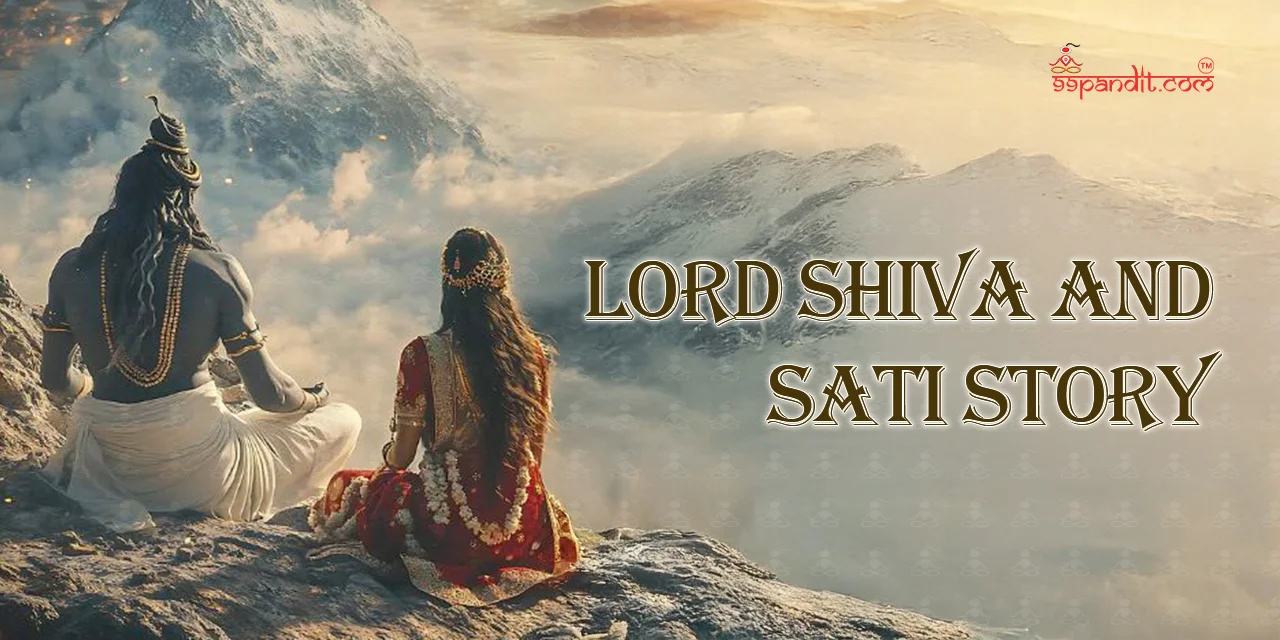
Lord Shiva and Sati Story: A Tale of Eternal Devotion

The eternal story of Lord Shiva and Sati is not unknown to all. An eternal, devoted story of Sati and Shiva has deep significance within the folds of ancient Hindu mythology, which lies in an extraordinary love story that has enchanted hearts for decades.

The story stepped in devotion, sacrifice, and divine association, a testament to the infinite power of love itself.

Lord Shiva and Sati Story

Let us take you back to the time we unravel the enchanting story of goddess Sati and Lord Shiva, showing their celestial journey filled with passion, tragedy, and basically eternal companionship.

Embrace yourself for a mesmerising tale that will leave you awestruck by their unwavering commitment and undying affection. An immortal story that remains to shine even in modern times.

Who is Sati?

Goddess Sati is known as the daughter of King Daksha and is considered to be an immense follower of Lord Shiva.

She is identified for her unwavering devotion toward lord shiva rather than her father’s disagreement.

Due to her faith and love, she became the first wife of lord shiva and lived with him at his place called Kailash Parvat. However, her story with lord shiva was incomplete and ended tragically.

She is recognized for her unflinching compassion, devotion, love, and sacrifices. She indicates the cycle of death and rebirth.

The Origin of Sati and Her Love for Lord Shiva

The third daughter of Swayambhuva Manu, Prasuti, married Daksha. They had various daughters, and one of them was Sati.

She was known for her exceptional beauty and grace, also called Mrignaini (whose eyes correspond to lotuses).

Though her heart was stuck on lord shiva, an ascetic, who comprehended for his simple living, wore deerskin, and lived in the Himalayas and graveyards.

Daksha’s hate towards lord shiva, indeed, she fell in love with him, that was unwavering.

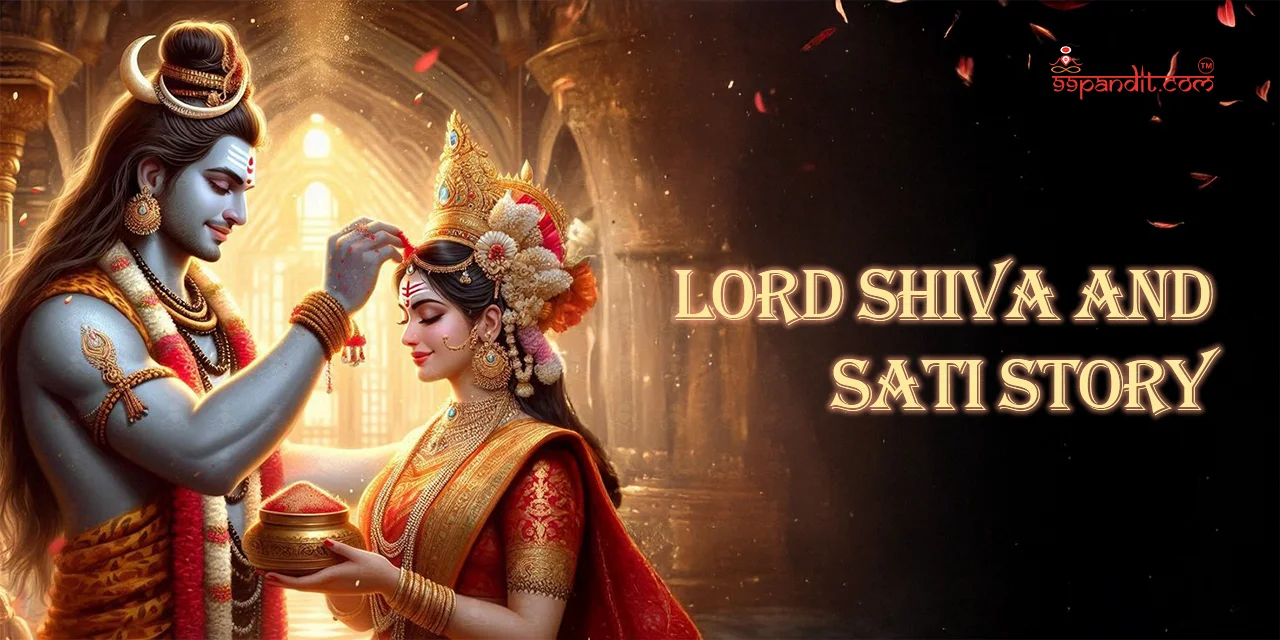
She requested lord shiva to marry her, even though Daksha was not in favour of the marriage.

Sati’s marriage to lord shiva was an important point in the story, as it set the stage for the following dispute that would drive forth lessons of humility, devotion, and respect.

Story of Lord Shiva and Goddess Sati

As we discussed before, Sati is the daughter of Daksha, who did not like lord shiva. At the same time, lord shiva is known as the god of immense and profound meditation, who is called for his detachment from worldly happenings.

It’s said that Sati loved Lord Shiva due to his spiritual aura, simple wearing, uniqueness, and more.

Considered as an admirer because of the uniqueness of lord Shiva, Sati opposed the wish of her father to be united with lord Shiva. She married lord Shiva and began to live her life in the mountains.

Lord Shiva and Sati Story

King Daksha once performed a grand ceremony of Yagna, a spiritual sacrifice. However, he intentionally did not summon Lord Shiva, which made Sati ashamed.

Since she felt offended by her father’s actions, she decided to see him and even attended the Yagna despite Lord Shiva’s warning.

However, it has been seen that when King Daksha visited the Yagna, he did not forget to insult and humiliate lord Shiva.

Her helplessness was felt because she observed her father insulting her husband. The inability to accept the disrespect drove her to be willing to give her life to a fire.

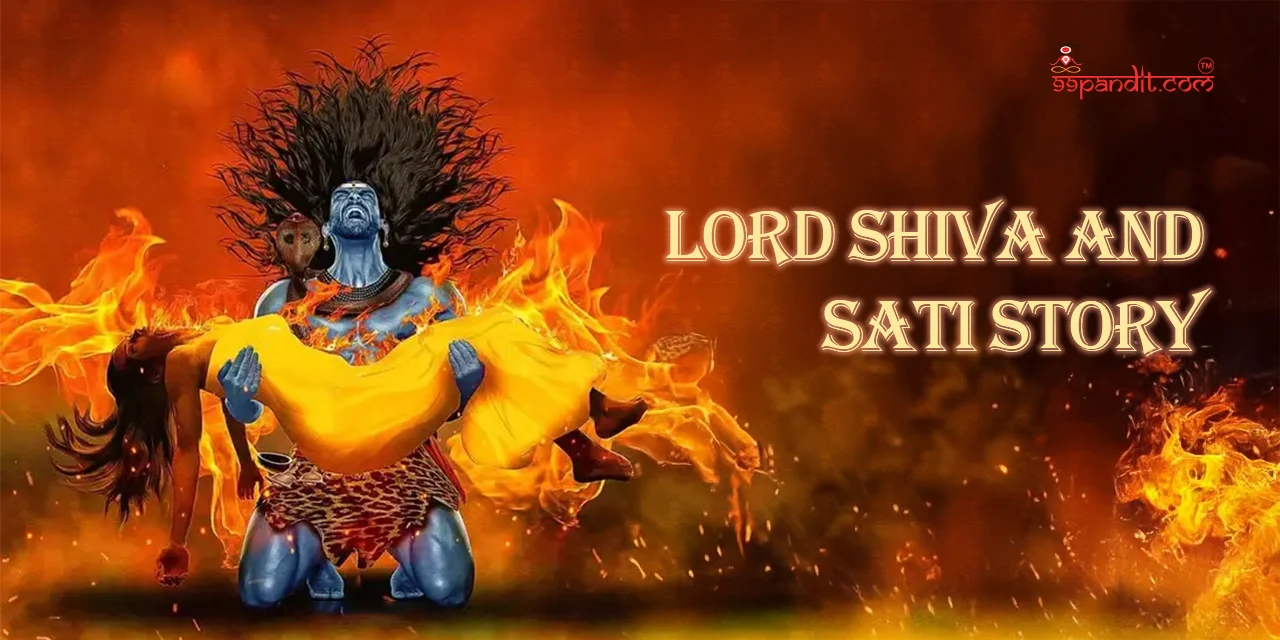
Lord Shiva was not aware of Sati’s sacrifice; thus, he was so overwhelmed with anger that he performed the dance of destruction known as Tandava.

It is the space-dance, a threat or a warning back to the universe. In order to protect the world against such an end, lord Vishnu scattered the remains of Sita in various parts of the world.

Thus, the location of her remains, which are assumed to have fallen, was named as Shakti Peethas.

Why did Lord Shiva Marry Goddess Sati?

Goddess Sati loved lord shiva from childhood, she was fascinated by the stories of him that made her a dedicated devotee.

She goes against her family’s wishes to marry someone else in her womanhood. It made lord Brahma plan the marriage of Sati and Shiva to make the lord involved in worldly relations.

According to Hindu mythology, she sacrificed her luxurious lifestyle to live with her love with unwavering devotion and worship.

She always passed the tough test of lord shiva and his followers, impressed him, and blessed her wish. She tied the knot with him happily and proceeded to Kailash.

Shiva’s Rage and Forgiveness to Daksha

After hearing the tragic news of Sati’s sacrifice by lord shiva, it shattered his heart with a lot of sorrow.

The peaceful, meditative lord, who often stayed untouched by worldly relations, was overwhelmed by pain and grief. It was not an ordinary pain by Daksha, but a cosmic conflict.

Shiva allows a primal roar that surprises the heavens. His pain transformed into anger and incarnated the fierce destroyer form of Rudra.

Lord Shiva and Sati Story

Shiva picked a strand of his matted hair and pounded it. Due to this, a terrifying fury arose in Virabhadra, a powerful warrior with deep powers and a fierce form of Bhadrakali, a manifestation of the goddess.

Shiva ordered them to go to Daksha’s yagna and ruin everything coming their way. The skies darkened, and the ground tumbled with the chaos of Virabhadra.

He beheaded Daksha to eliminate his arrogance and pride. He insulted lords and paid for it.

That time, according to Hindu mythology, a divine practice of justice where dharma certifies itself in the most terrifying form.

How did Lord Shiva forgive Daksha?

Even with the pain of losing his wife, lord Shiva calmed. The lifeless body of Sati left him in eternal mourning.

Shiva carried her body around the universe in a silent parade, unknowing of where to go. The earth shattered under the weight of his grief.

To balance the cosmic, lord Vishnu used his Sudarshan Chakra to cut Sati’s body into many pieces.

Her pieces fell on different locations on earth, which are known as shakti peeth – places where the goddess energy resides and are honoured by a lot of devotees today.

Lord Brahma and other gods approached Lord Shiva and pleaded for mercy. They insist he forgive Daksha and restore his life, hence dharma can be preserved.

Hearing their request, Shiva forgave Daksha and gave him the head of a goat. This activity shows his rebirth in humility and the removal of his ego.

Therefore, the yagna was completed in the name of Shiva, and Daksha finally knew his greatness and divine love.

Lord Shiva went into deep meditation in the Himalayas, but his heart still grieves for his love.

But he believes his beloved love-sati will return as Parvati, and their story will continue.

Are Goddesses Parvati and Sati the Same?

As per our beliefs, Sati is the first consort of lord shiva. When she sacrificed her life for the disrespect of her father for her husband, the lords decided to allow rebirth for her rebirth.

Therefore, Sati is incarnated in the form of the goddess Parvati. She is thought to be the daughter of Himavan, who is the mountain king, and Queen Mena.

Depending on epic mythologies, Parvati is characterized as a calm, gentle, and nourishing mother.

However, she is calm and dedicated. People also thought of her presence in other fierce sides like Durga, Kali, and more.

Effect of Self-Sacrifice on Story as it is Shown in the Story

The followers who are self-sacrificing are usually ignored in society. Their involvement might be small, but the impacts of their actions are far-reaching.

The tale of Goddess Sati and lord shiva is one example of the strength of self-sacrifice.

Lord Shiva and Sati Story

In this story, the goddess Sati sacrificed her life to save her husband from evil energy.

Her act of selflessness had a deep effect on society, as it indicates that love and devotion can win over evil.

The tale is a reminder that we all have the strength to make a difference in the world, no matter how small our actions may seem.

Discussion on Love and Relationship Conclave Motifs Found in this Mythological Tale

Since there are multiple interpretations of the sacred Hindu mythological tale of the eternal love between lord shiva and Mata Sati.

This is one of the most fascinating stories in the discussion on the council’s purpose found within it.

We can discuss multiple points in the story when it comes to discussing the love of both divine beings.

Firstly, why did Mata Sati sacrifice her life? Secondly, what is the meaning of her self-immolation? And thirdly, what does the tale teach us about their relationship?

When discussing her sacrifice, there are various theories. One belief said she loved Mahadev beyond the limit.

She was so dedicated to him that she wanted to give up her life to protect her husband’s respect and to be with him in the afterlife.

Another theory said that she killed herself to save her husband from her father’s curse.

Apart from the reason behind her death, it’s clear that she did everything out of extreme love and faith for the lord.

Goddess Sati’s self-immolation has a rooted meaning. As per our Hindu culture, fire is known as one of the elements among five worldly elements.

Sacrificing herself in the fire, the goddess can cleanse herself from all impurities and negativity.

The practice also shows her love towards lord shiva. She was so in love with him that she was willing to die for him.

Learnings from Lord Shiva and Sati’s Story

Below are some learnings that you can consider in your real life.

1. Love

No doubt, from childhood, Sati’s faith and love for lord shiva till her womanhood was rather unflattering. It teaches us the significance of love, passion, and dedication in a relationship.

2. Inner Strength

The self-sacrifice of Sati when her father Daksha insulted her husband shows her inner strength and deep devotion to Shiva, which made her take a step of sacrifice with strong powers.

3. Transcendence

Lord Shiva, depressed by the death of Sati and after her rebirth into the incarnation of Parvati, shows the cyclic behaviour of birth, death, and rebirth.

Mahashivratri: A Symbolic Night of Lord Shiva & Parvati’s Union

A significant Hindu festival, Maha Shivaratri is the night of celebration of the divine union of lord shiva and his consort, Goddess Parvati (incarnation of Sati).

The festival falls on the 14th night of the dark fortnight following the Hindu month of Phalguna.

Followers keep fasting, meditate, and present offerings to the deity throughout the night.

Why is Shivaratri Celebrated?

  • Celebration of divine marriage: It’s considered that Shiva and Parvati tied the knot on this day.
  • Cosmic energy night: People believe that spiritual powers are at their peak on this auspicious night, focusing on meditation and enlightenment.
  • Shiva’s cosmic dance: Some followers thought that on this night, the deity performing his cosmic dance indicates destruction and renewal.

Followers honour lord shiva by offering betel leaves, milk, sugar, and water to the Shivalinga.

Reciting mantras ‘Om Namah Shivay’ and awakening all night in meditation and dedication.

Conclusion

The tale of Sati and Lord Shiv is full of strong emotions, divine interventions, and strong lessons.

It tells about the great feeling of devotion and love between Sati and Lord Shiv, which was never appreciated by Daksha’s arrogance.

The tragic course of actions, beginning with the curse of Daksha by Lord Shiva to the self-immolation of Sati, is meant to reflect the dangerous existence of ego, lack of respect, and anger.

Meanwhile, it highlights the grace and mercy of Lord Shiv, who, despite the insult, acted with compassion instead of being retaliatory.

The sacrifice of Sati and the divine justice of Lord Shiv led to a discovery of the greater truths about fidelity, family, and forces of the Universe that instigated the whole mess.

The moral of the story is that we must be able to see the divinity in the people about us and also the consequences of not doing so, as taught by this story.

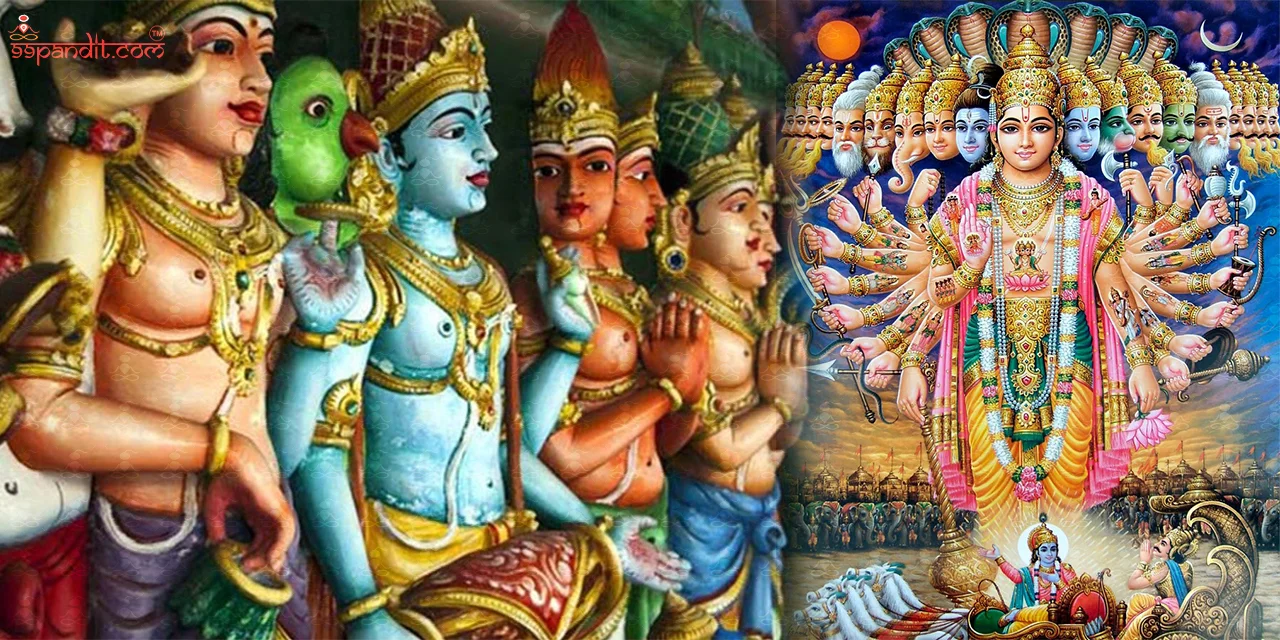
33 Koti Devi Devta: Myths, Facts, & Spiritual Insights

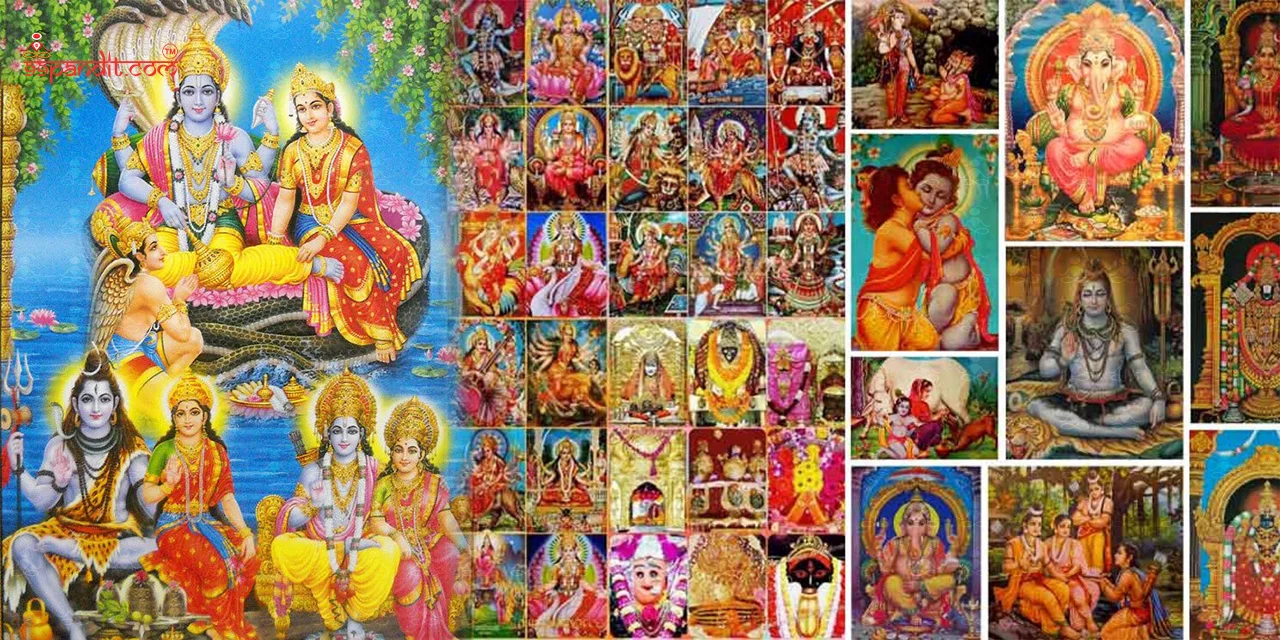
33 Koti Devi Devta: According to the faith of Sanatan Dharma, having 33 crores of gods is a hugely misunderstood thing.

This is connected to a misconception of the Sanskrit word Koti, a fact that overshadows the true significance of Sanatan philosophy.

It recognises 33 categories of divine beings, highlighting the omnipresence of divinity in every form of life and nature.

In Sanatan Dharma, as per the belief in 33 crore deities, everyone has a unique name and form.

33 Koti Devi Devta

This notion, often mentioned in discussions and satire, relies on a misconception of terms. The truth is huge, as the confusion stems from the two meanings of the word koti.

While scriptures offer clarity, the misunderstanding by some has led to the circulation of this myth.

Many elements of this belief to the concept that Hindus revere each aspect as God, terms in the fact of 33 crore devatas. Yet, the truth is more convincing and profound.

In this blog, we will talk about the origins and importance of the 33 koti devi devta in Hinduism to reveal the real meaning behind the concept.

The Origin of 33 Koti Devi Devta

The term 33 koti devi-devta has its roots in ancient Hindu scriptures. Especially the Vedas and Upanishads.

These texts mention the number 33 in terms of divine beings, but the performance of ‘koti’ as ‘crore’ came much later. To know this better, let’s see the key references:

1. Brihadaranyaka Upanishad: This text consists of “33 gods” without using the term “koti.”
2. Yajurveda: It lists 33 deities split into three groups of eleven each.
3. Rigveda: This ancient text also refers to 33 gods in different hymns.

Such early references advise that the original vision was more about 33 certain deities rather than 33 crore.

Understanding the Term “Koti”

It is most important to grasp the meaning of the term ‘koti’ in Sanskrit. While it can certainly refer to crores, it also indicates ‘types’ or classifications. In the term of 33 koti devi devta, ‘koti’ represents 33 types instead of 33 crores.

Know The Concept of 33 Crore Gods

The context of 33 crore gods and goddesses is usually misunderstood. It’s important to identify that this number is not meant to be understood literally.

99pandit

BOOK TO GET 100% FREE CALL FROM PANDIT TO DECIDE DATE (MUHURAT)

99pandit

Rather than indicating the infinite forms and incarnation of the divine in Hindu philosophy. Below are some key factors to know:

Myths of 33 Koti Devi Devta

According to Hinduism, one of the most unique and misunderstood ideas is that of the ‘33 koti devi devta.’

The discussion has led to multiple paths, especially the belief that there are around 330 million gods and goddesses in Hinduism.

33 Koti Devi Devta

While the community is indeed diverse and inclusive of multiple divine forms. This significant idea stems from a linguistic and imperative misconception.

The Myth: 33 Koti = 33 Crore (330 Million) Gods

The phrase ‘Koti’ in Sanskrit explains both the meaning of ‘type’ and ‘class’, and even ‘crore’.

Passing the time, Koti was twisted individually in the numerical sense. It drives the belief that there are 33 crore devi devtas in Hinduism.

However, ancient Vedic texts and scriptures like the Yajurveda, Atharvaveda, and Brahmanas state that there are 33 types or categories of deities, not 330 million solely deities.

Why Does Confusion Exist?

  • The word “koti” is frequently mispronounced as “crore” rather than “type” or “class.”
  • Translations and oral traditions frequently expanded the concept without consulting the original sources.
  • The idea was spread by popular culture and even certain religious leaders, perhaps to highlight the wide spiritual reach of Hinduism.

The Deeper Meaning

The concept of 33 Koti Devtas reflects divine principles of nature, cosmic order, healing, and transformation.

Rather than focusing on literal numbers, Hinduism emphasises unity in diversity — many names and forms representing the one Supreme Reality (Brahman).

33 Koti Devi Devtas: Breaking Down The Number

Let’s check the breakdown of 33 koti devi devtas and explore their importance to better understand the concept:

  • 8 Vasus: Describing the components of nature
  • 11 Rudras: Forms of Lord Shiva symbolising destruction and transformation
  • 12 Adityas: Solar deities illustrating diverse aspects of the sun
  • 2 Ashvins: Twin gods of medicine and healing

The 33 Koti deities are classified as follows:

8 Vasus Name –

  1. Apa
  2. Dhruva
  3. Soma
  4. Dhara
  5. Anila
  6. Anala
  7. Pratyusha
  8. Prabhasa

11 Rudras Name –

  1. Manu
  2. Manyu
  3. Shiva
  4. Mahat
  5. Ritudhvaj
  6. Ahanas
  7. Umrateras
  8. Kala
  9. Vamadeva
  10. Bhava
  11. Dhrit-Dhvaja

12 Adityas Name –

  1. Anshuman
  2. Aryaman
  3. Indra
  4. Tvashta
  5. Dhatu
  6. Parjanya
  7. Pusha
  8. Bhaga
  9. Mitra
  10. Varuna
  11. Vivasvat
  12. Vishnu

In some scriptures, the two Ashwin Kumar’s substitute Indra and Prajapati among the 33 koti devtas.

Significance in Hindu Philosophy

The term 33 koti devi devta has deep philosophical importance in Hinduism:

  • Infinite Divine Manifestations: In Hindu philosophy, it shows the concept that the divine can take multiple forms to cater to the requirements and understanding of devotees.
  • Harmony with Nature: Multiple of these devotees embody natural energies, highlighting the significance of living in harmony with nature.
  • Spiritual Flexibility: The idea offers a reliable approach to spirituality, housing numerous beliefs and methods within Hinduism.
  • Unity in Diversity: Indeed, in massive numbers, every deity is thought to be an incarnation of one supreme reality, supporting the idea of unity in diversity.

Popular Deities Among the 33 Koti

Below are a few popular gods and goddesses in Hinduism:

  • Brahma: The creator
  • Vishnu: The preserver
  • Shiva: The destroyer
  • Ganesha: Remover of obstacles
  • Lakshmi: Goddess of wealth and prosperity
  • Saraswati: Goddess of knowledge and arts
  • Hanuman: The monkey god known for devotion and strength

Tulsidas and the Concept of Universal Divinity

Goswami Tulsidas Ji stunningly covers the significance of Hindu philosophy in the Ramcharitmanas:

“Siyaram may sab jag jani, karahu pranam jori jug pani.”

Translates to: ‘Understand the entire world to be saturated by Lord Shri Ram. Tuck your hands in worship and bow to all.’

99pandit

BOOK TO GET 100% FREE CALL FROM PANDIT TO DECIDE DATE (MUHURAT)

99pandit

The phrase strengthens the belief that lord Shri Ram, a manifestation of lord Vishnu, lies in every being and component of the universe.

The omnipresence shows why every part of life and nature is thought to be divine in Hinduism.

How To Worship in Sanatan Dharma?

Following the Hindu customs represents reverence for every element of creation:

  • Aspects such as fire, trees, earth, water, and air are honoured.
  • During Shraddha Paksha, crows are presented with food as part of ancestral traditions.
  • On Ekadashi, ants are revered.
  • The owl, the vehicle of Lakshmi Mata, is also revered.
  • Lord Ganesha is honoured in the form of an elephant-headed, and lord Vishnu’s Varaha incarnation shows respect for a boar.

The Divine Connection in All Beings

According to the Shrimad Bhagavad Gita, all living things are home to Bhagwan Shri Hari. Since all life is seen as an extension of the divine, this notion is consistent with the concept of 33 crore divine forms.

Misconceptions And Clarifications

Multiple misconceptions around the idea of 33 koti devi-devta:

  • Literal Interpretation: Several wrongly believe that Hindus honour 330 million distinct deities.
  • Polytheism vs. Monotheism: While Hinduism seems polytheistic, it’s more exactly mentioned as henotheistic or even monotheistic at its base.
  • Idol Worship: The gods appear to be manifestations of one supreme reality, not as individual gods to be pleased independently.

The Role of 33 Koti Devi Devta in Hinduism

The idea of the 33 Koti Devi-Devta is still very important in modern Hinduism:

33 Koti Devi Devta

  • Personal Preference: It enables followers to select gods who align with their own values and requirements.
  • Rituals and Festivals: A number of Hindu holidays honour certain gods from this extensive pantheon.
  • Art & Culture: India’s rich creative and cultural traditions are inspired by the country’s numerous deities.

It is easier to appreciate the richness and adaptability of Hindu spiritual practices when one is aware of this idea.

Conclusion

The concept behind 33 koti devi devta, or 33 crore deities in Hinduism, is a fascinating part of ancient religion.

Far from being a literal number of deities, it shows the infinite ways in which the divine can be perceived and experienced.

The history embodies the profound philosophy of unity in diversity, which is central to Hinduism.

We can better appreciate the richness and adaptability of Hindu spiritual practices when we comprehend the actual meaning of the 33 Koti Devi-Devta.

It serves as a reminder that all facets of existence are connected by a unifying principle that lurks beneath the seeming multiplicity of forms and names.

We learn more about a specific religion, as well as the human search for the divine in all of its manifestations, as we continue to investigate and comprehend this rich history.

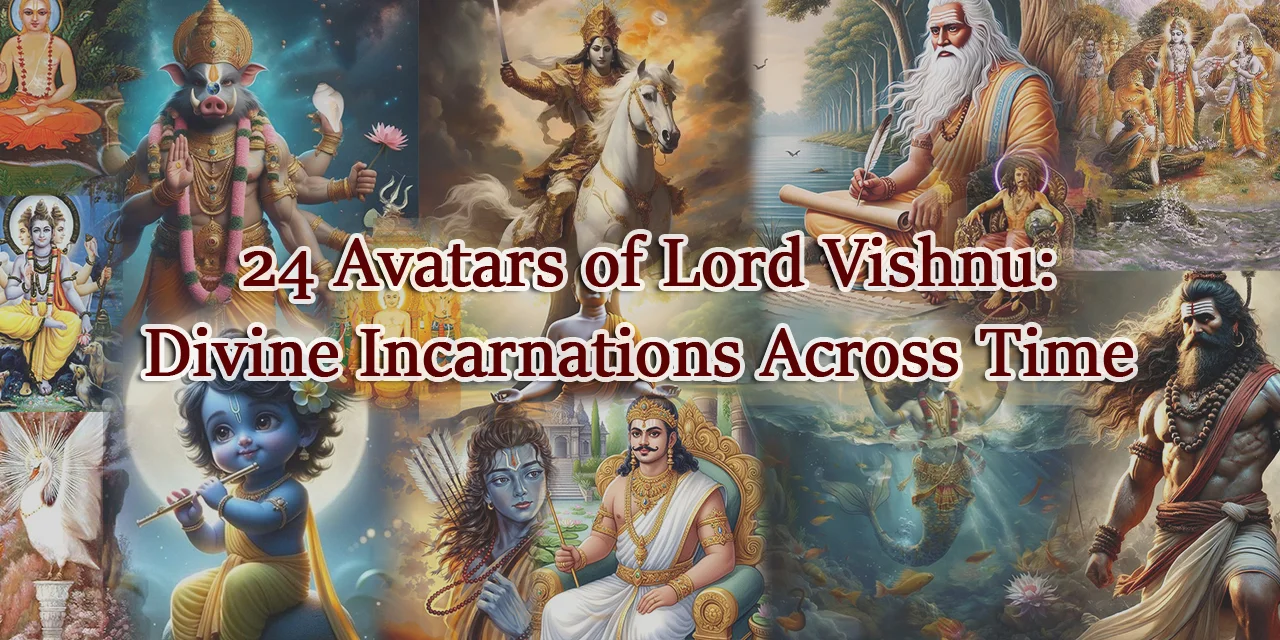
24 Avatars of Lord Vishnu: Divine Incarnations Across Time

24 Avatars of Lord Vishnu: Whenever evil increases on earth, Lord Vishnu takes an Avatar. In this way, it is said that he has taken 24 Avatars.

Only a few of his incarnations are popular among familiar people, but being nourishing, all 24 Avatars of Lord Vishnu have always saved the earth and humanity.

Lord Ram and Lord Krishna are incarnations of Lord Vishnu. Every avatar of Lord Vishnu has different qualities.

The quality of the Ram Avatar is that he is Purushottam, which means ‘supreme being.’ Like Lord Ram, the qualities of Lord Krishna are forgiveness and justice.

24 Avatars of Lord Vishnu

According to the Puranas, Lord Vishnu has 24 Incarnations, of which 23 have occurred so far, and the 24th Incarnation is yet to happen in the form of ‘Kalki Avatar.’

Out of these 24 incarnations, 10 are considered the main Avatars of Vishnu ji. They are popular among the people but provide very little information about the remaining 14 incarnations.

Lord Vishnu has taken many incarnations to protect the people and earth from evil. Today, we will tell you about the 24 incarnations Lord Vishnu took on earth to protect religion.

In this blog, we will discuss the qualities of the 24 Avatars of Lord Vishnu and learn the importance of these Avatars.

What is the Purpose of the 24 Avatars of Lord Vishnu?

The 24 Avatars of Lord Vishnu are said to come down to the planet to give power to good, defeat evil, lighten the load of the world, and bring peace. Each Avatar has a different purpose, which is to provide peace to society.

It is thought that “Avatar” or divine descendant means the Supreme Divine, assuming a temporary human form for his purposes, which are supposed to point towards the well-being of the world, which is his creation. Possibly,

Bhagwan Vishnu has taken birth on earth 23 times, and the 24th avatar is yet to be recognized as the ‘Kalki Avatar.’

Among these 24 avatars, 10 avatars, known as Dashavatara, are regarded as the prominent incarnations of Vishnu.

These Dasavatar are Matsya avatar, Kurma avatar, Varaha avatar, Narasimha avatar, Vamana avatar, Parashuram avatar, Rama avatar, Krishna avatar, Buddha avatar and Kalki avatar.

Among all the Avatars, Shri Krishna is the only one considered a Purna Avatar, a direct and full embodiment of the Supreme Divine Himself.

24 Avatars of Lord Vishnu

In this section, we will discuss the 24 Avatars of Lord Vishnu. These 24 Avatars of Lord Vishnu are– ​Shri Sankadi Muni, Varaha Avatar, Narada Avatar, Nar-Narayan, Kapil Muni, Dattatreya Avatar, Yajna, Lord Rishabhdev, Adiraj Prithu, Matsya Avatar, Kurma Avatar, Lord Dhanvantari, Mohini Avatar, Lord Narasimha, Vamana Avatar, Hayagriva Avatar, Shrihari Avatar, Parshuram avatar, Maharishi Vedvyas, Hans avatar, Shri Ram avatar, Krishna Avatar, Buddha Avatar, and Kalki Avatar.​

These Avatars are described as follows:

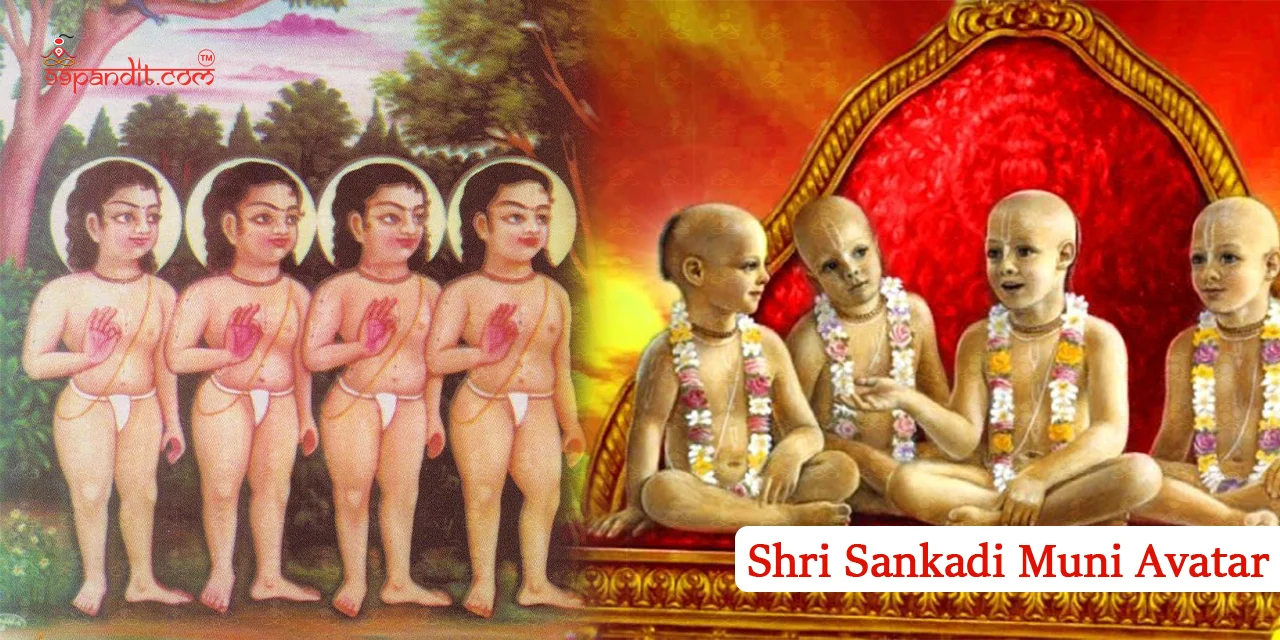
1. Shri Sankadi Muni Avatar

According to the Hindu scriptures, Lord Brahma underwent intense penance in the early stages of creation with a wish to form many worlds.

Gratified with Lord Brahma’s penance, Lord Vishnu incarnated as four sages, Sanaka, Sanandana, Sanatana, and Sanatkumara, from the Manas Putras of Brahma Ji.

24 Avatars of Lord Vishnu

The prefix ‘San’ indicates penance. These four were devoted to salvation from the beginning, involved in contemplation, always accomplished, and forever detached. They are regarded as the first avatars of Lord Vishnu.

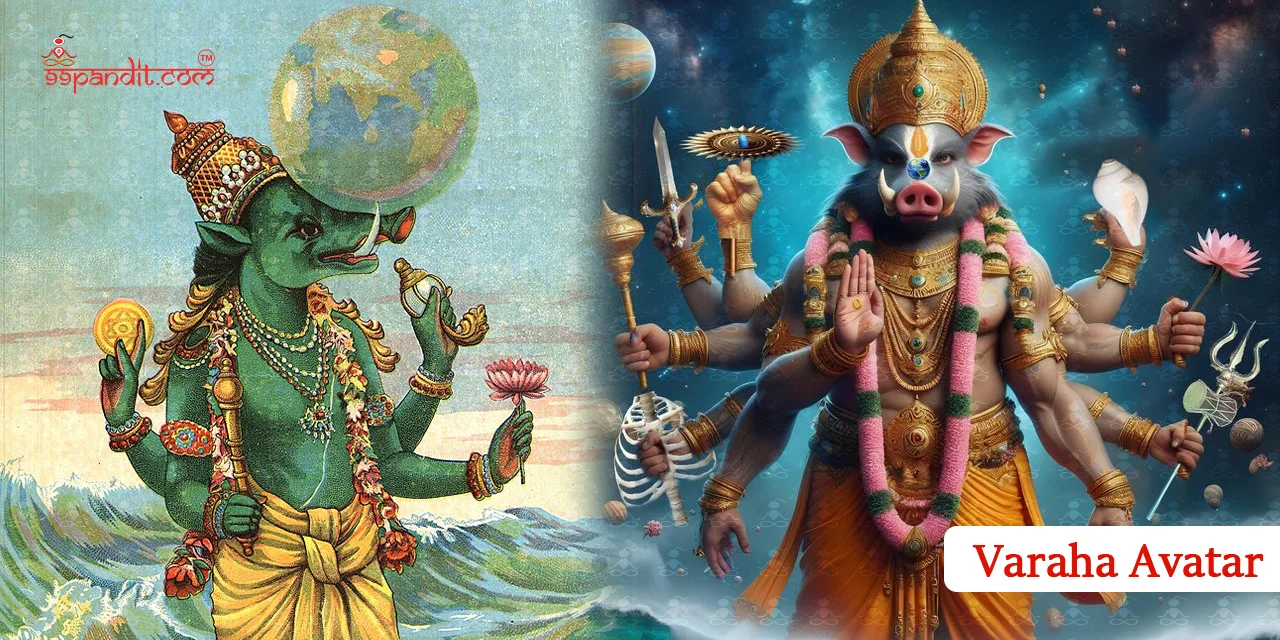
2. Varaha Avatar

As per the religious texts, the second Avatar of Lord Vishnu is Varaha Avatar. The mythological tale associated with Varaha Avatar is as follows-

In the ancient period, when the demon, Hiranyaksha, stole the earth and hid it in the ocean, Lord Vishnu incarnated as Varaha (the boar) from Lord Brahma’s nose.

All the gods and sages praised this form of Lord Vishnu. Lord Varaha began to look for the earth on all people’s insistence.

24 Avatars of Lord Vishnu

He found the world with his snout, entered the sea, and took it out by placing it on his teeth.

When the demon, Hiranyaksha, witnessed this, he provoked Lord Vishnu’s Varaha incarnation into a battle. There was a terrible battle between the two.

Ultimately, Lord Varaha slew Hiranyaksha. Then, Lord Varaha halted the water and set the earth upon it with his hooves.

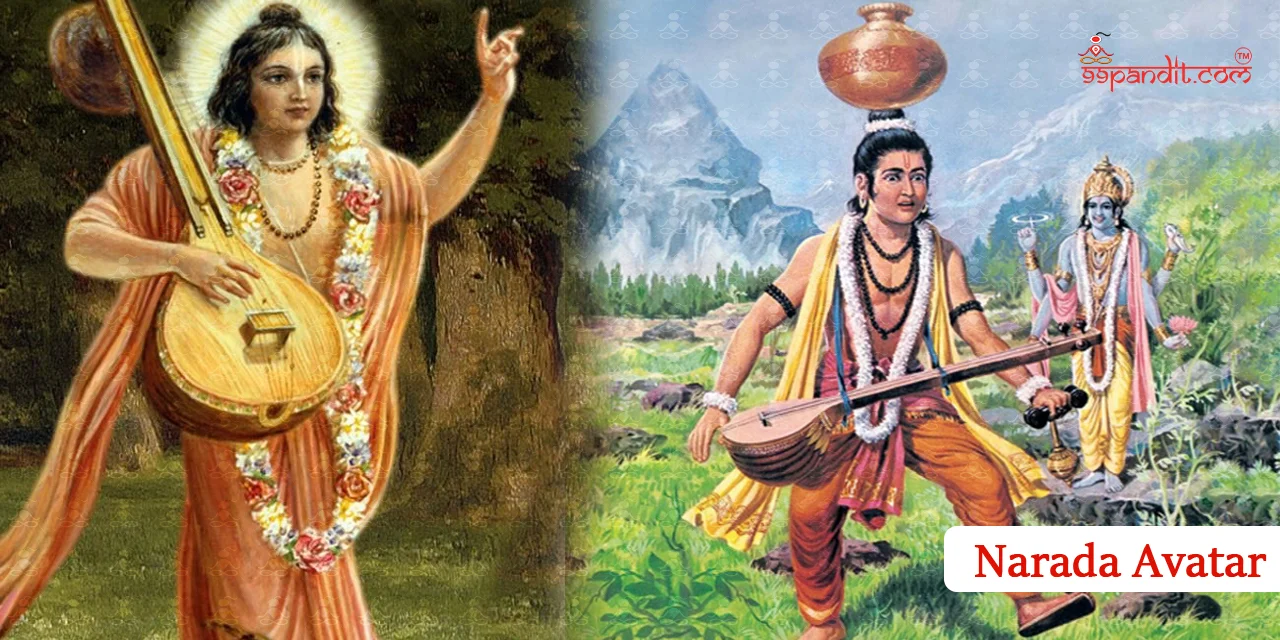
3. Narada Avatar​

According to the Puranas, Devarshi Narada is also one of Lord Vishnu’s incarnations and is considered the Manas Putra of Brahma Ji.

Lord Vishnu took incarnation on earth through the Narada Avatar to give his teachings.

He has achieved the status of Devarshi through severe penance and is one of the select devotees of Lord Vishnu.

24 Avatars of Lord Vishnu

Devarshi Narad always works to spread religion and ensure the well-being of the people.

In the scriptures, he is also referred to as the mind of God. In the 26th verse of the tenth chapter of Shrimad Bhagwat Geeta, Lord Krishna himself acknowledges his significance and says, “Devarshi Namchan Narad.” That is, I am Narad among the Devarshis.

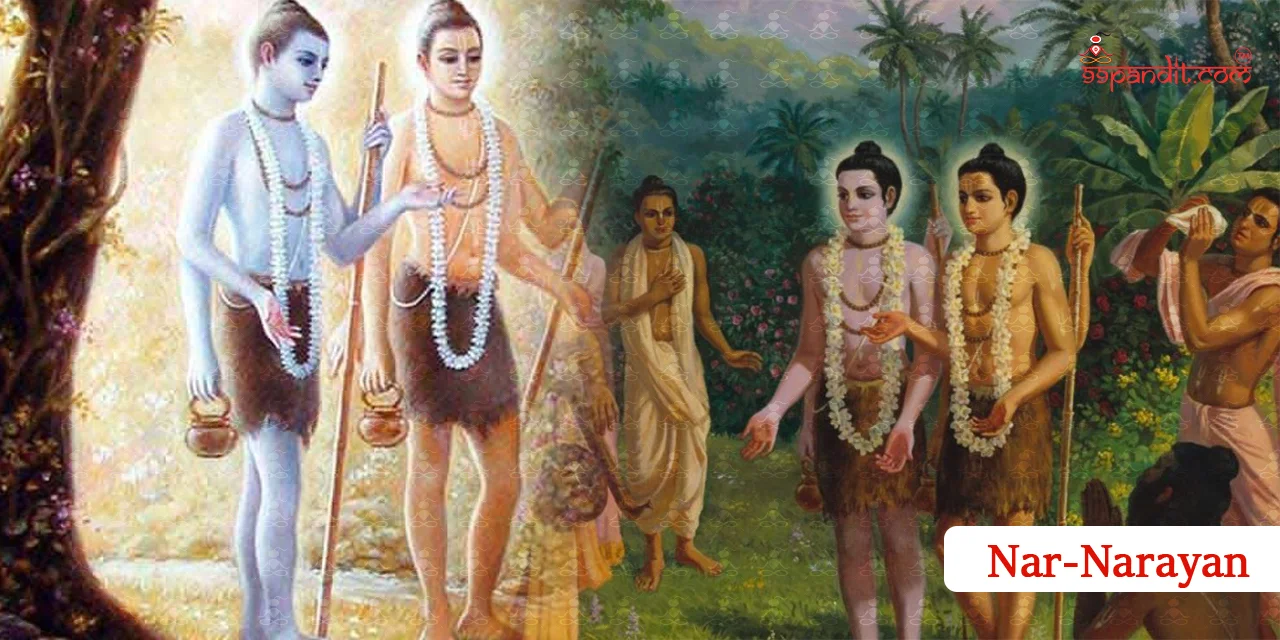
4. Nar-Narayan

Nar-Narayan is the fourth Avatar of Lord Vishnu. At the beginning of creation, Lord Vishnu took two incarnations to establish religion.

In this incarnation, he wore matted locks on his head. He had a swan in his hands, a chakra in his feet, and a Shrivatsa symbol on his chest.

24 Avatars of Lord Vishnu

His entire appearance was like that of an ascetic. According to religious texts, Lord Vishnu took this incarnation in the form of Nar-Narayan.

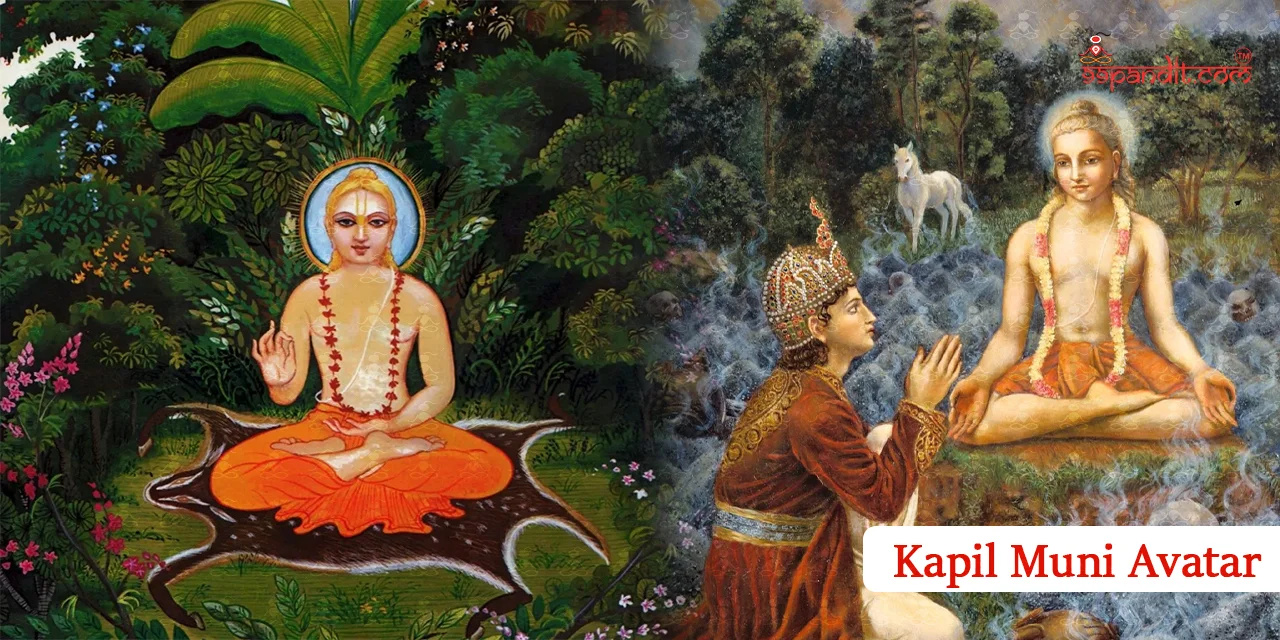
5. Kapil Muni Avatar

Kapil Muni Avatar is said to be the fifth incarnation of Lord Vishnu. He was a great Hindu saint who developed the Sankhya philosophy.

His father’s name was Maharshi Kardam, and his mother’s name was Devahuti. When Bhishma Pitamah died, Bhagwan Kapil, along with Vedgya Vyas and other sages, was present on his deathbed.

24 Avatars of Lord Vishnu

Because of Bhagwan Kapil’s anger, sixty thousand sons of King Sagar were reduced to ashes.

Bhagwan Kapil is the founder of the Sankhya philosophy. Kapil Muni is one of the twelve main Acharyas of the Bhagwat religion.

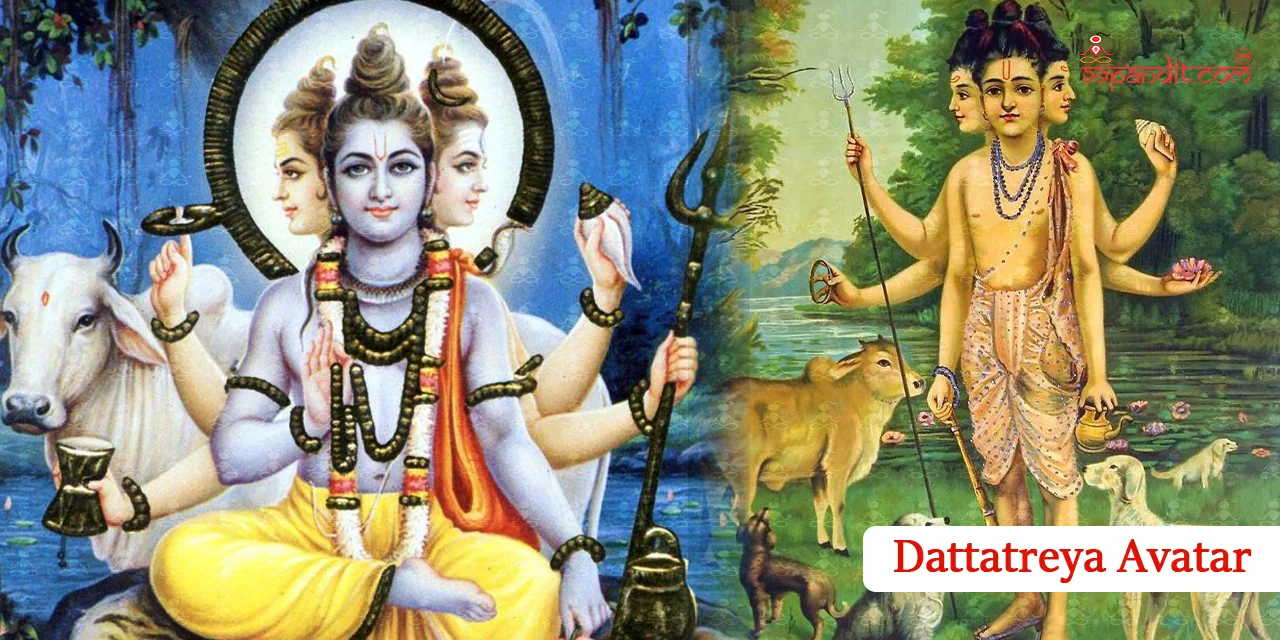
6. Dattatreya Avatar

Dattatreya Avatar is also one of the 24 Avatars of Lord Vishnu. Once, Goddess Lakshmi, Parvati, and Saraswati became excessively arrogant about their chastity towards their husbands. God arranged a Leela to deflate their pride.

In accordance, one day, Naradji arrived at Devlok while wandering and visited the three goddesses individually and informed them that their virtue was nothing compared to Anusuiya, wife of sage Atri.

The three goddesses informed their husbands and requested them to test Anusuiya’s fidelity to her husband.

Then, Lord Shankar, Vishnu, and Brahma went to Atri Muni’s ashram disguised as sages. Maharishi Atri was not present at the ashram at that time.

24 Avatars of Lord Vishnu

All three requested alms from Devi Anusuiya but also mentioned that you would have to offer us alms by becoming naked.

Anusuiya was surprised to learn this initially, but then, not wishing to offend the sages, she recalled her husband.

She stated that if my loyalty to my husband were absolute, then these three sages should turn into babies six months old.

The moment she uttered these words, the Tridev began weeping like infants. Then Anusuya turned into a mother and embraced them in her lap, nursed them, and began to rock them in the cradle.

The goddesses grew worried when the three gods failed to return to their positions. Then, Narada arrived there and narrated the entire incident.

The three goddesses approached Anusuya and apologized. Then Goddess Anusuya transformed the Tridev into their former shape.

Satisfied, Tridev granted her a boon that stated all three of us would be born as sons from your womb with our parts.

Then Chandrama was born from Brahma’s part, Durvasa from Shankar’s part, and Dattatreya from Vishnu’s part.

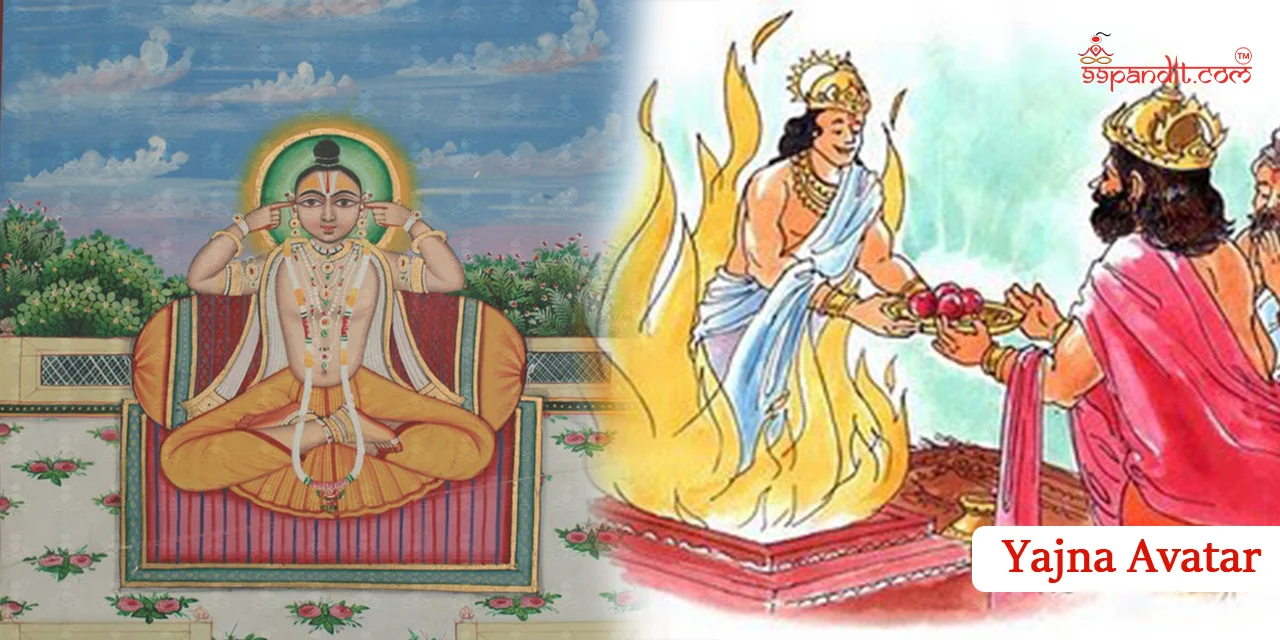
7. Yajna Avatar

Yagya was the seventh Avatar of Lord Vishnu. As per the religious texts, Lord Yagya was born during the Swayambhuva Manvantar.

Aakuti was delivered by Swayambhuva Manu’s wife, Shatarupa, from her womb. She was the wife of Ruchi Prajapati.

24 Avatars of Lord Vishnu

Lord Vishnu was born to Aakuti as Yagya. Lord Yagya also gave birth to twelve extremely intelligent sons from his wife, Dakshina.

During the Swayambhuva Manvantar, they were known as the twelve gods named Yam.

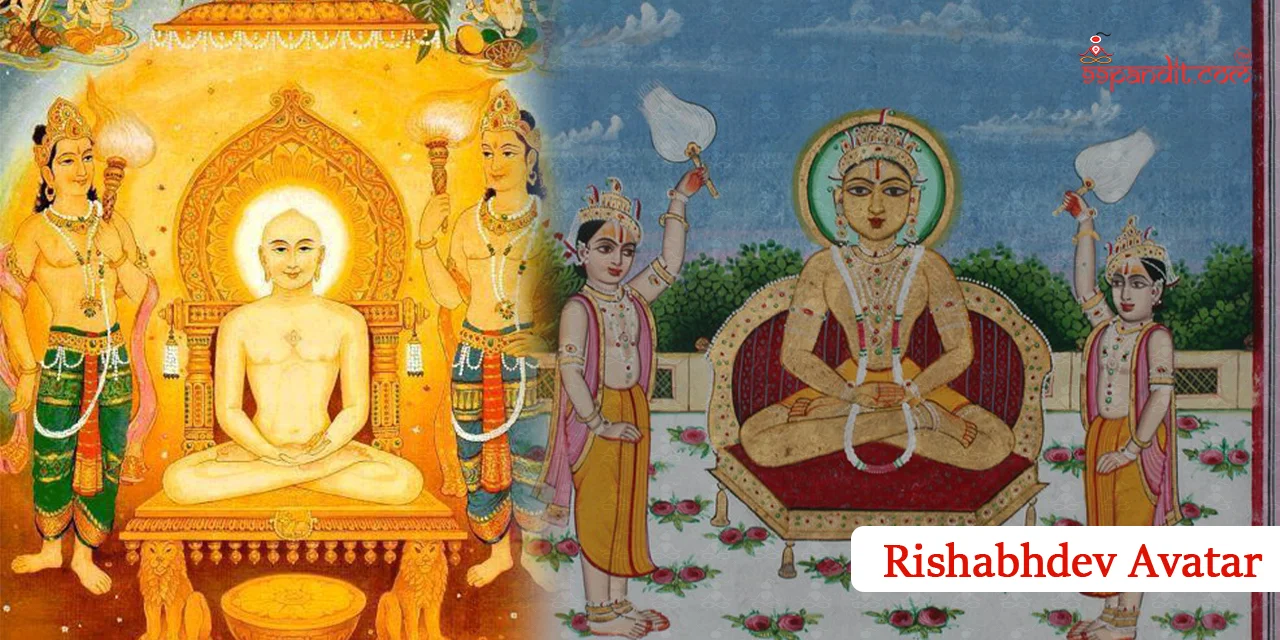
8. Rishabhdev Avatar

The eighth incarnation of Lord Vishnu is Rishabhdev. Religious texts say Maharaj Nabhi had no children.

Hence, he did a yagya along with his wife Merudevi with the aspiration of having a son.

24 Avatars of Lord Vishnu

Being satisfied with the yagya, Lord Vishnu himself manifested and blessed Maharaj Nabhi, saying that he would be born as his son.

As a blessing, after a few years, Lord Vishnu was born as a son of Maharaj Nabhi. Seeing the son’s immensely beautiful and healthy body, Maharaj Nabhi named him Rishabh (the best) because he possessed fame, oil, strength, wealth, glory, valor, and bravery.

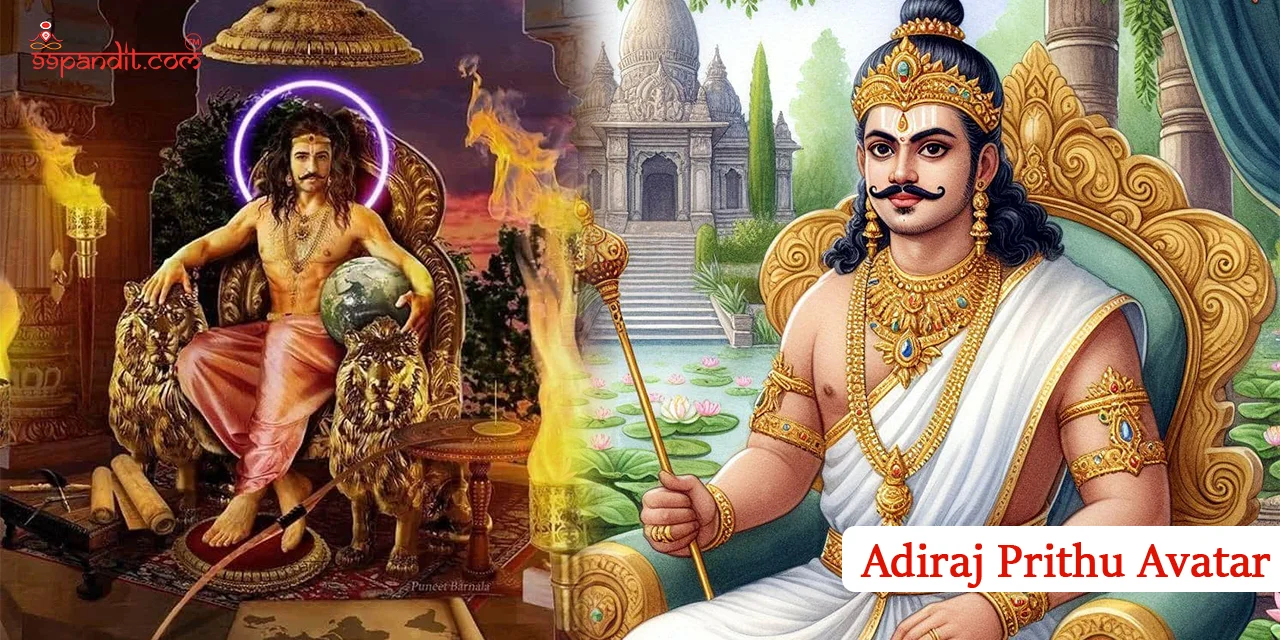
9. Adiraj Prithu Avatar

The name of another incarnation of Lord Vishnu is Adiraj Prithu. Religious texts state that in Swayambhuva Manu’s lineage, Prajapati, named Ang, was wedded to Sunitha, the mental daughter of death.

They had a son named Ven. He did not believe in God and requested worship of himself.

24 Avatars of Lord Vishnu

Then, the sages killed him with mantra-imbued Kusha grass. Then, the sages churned the arms of childless King Ven, from which a son named Prithu was born.

When the sages saw the chakra in Prithu’s right hand and the lotus mark on his feet, they declared that an incarnation of Shri Hari himself had come in the form of Prithu.

10. Matsya Avatar

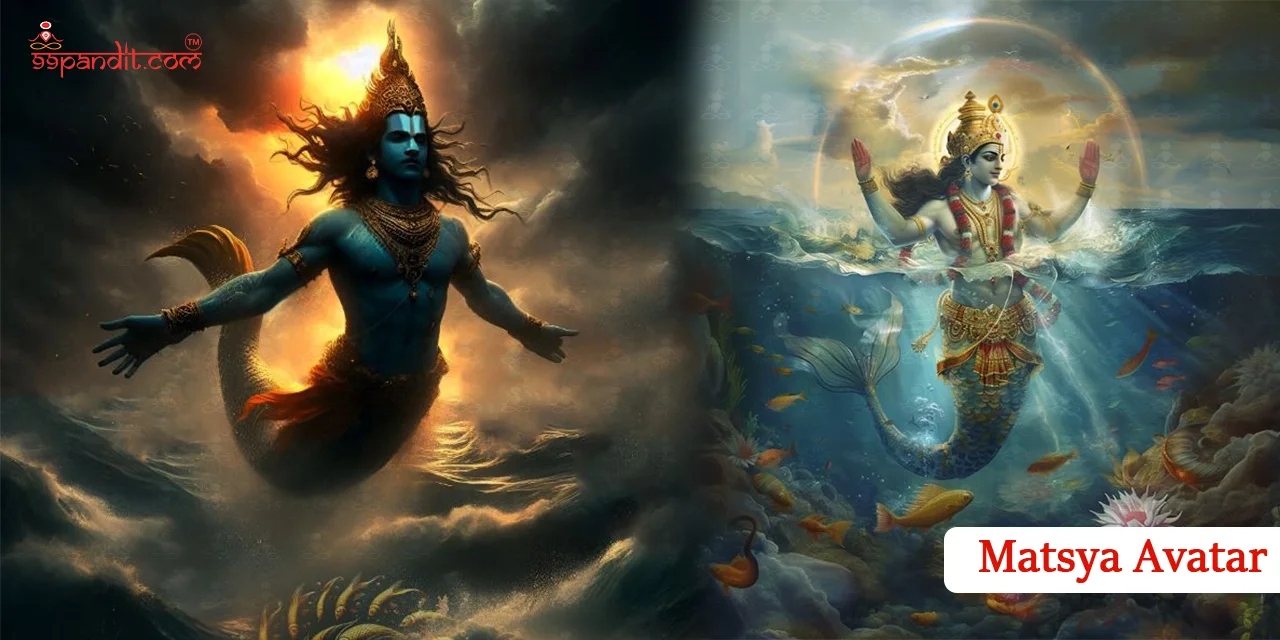
The 10th Incarnation of Lord Vishnu was Matsya Avatar (fish) to rescue the world from doom.

According to the tale, King Satyavrat was bathing Jalanjali in the river one day. Suddenly, a tiny fish approached his Anjali.

When he planned to release it in the sea, that fish said – Don’t send me to the sea. Otherwise, the big fish would devour me, and King Satyavrat would put the fish in his Kamandal.

24 Avatars of Lord Vishnu

When the fish grew more significant, the king kept it in his lake. When the fish saw it, it grew larger.

The king realized that this was not a normal creature. The king begged the fish to come in actual form. When the king prayed, the lord Vishnu came and said, “This is my mermaid.”

God informed Satyavrat—O King Satyavrat, there will be a tragedy seven days henceforth. Subsequently, a mighty ship would approach you with my inspiration.

Take the subtle body of the Sapta sages (Sapta Rishi), medicines, seeds, and animals and enter it. Once your vessel begins to waver, I will visit you in the guise of a fish.

Then you fasten that boat with my horn by Vasuki Nag. At that time, I will respond to you by questioning so that my glory, which goes by the name of Parabrahma, will be exposed in your heart.

Then, when the hour arrived, the fishery god Vishnu expounded philosophy to King Satyavrat, who is renowned by the name Matsyapuran.

11. Kurma Avatar

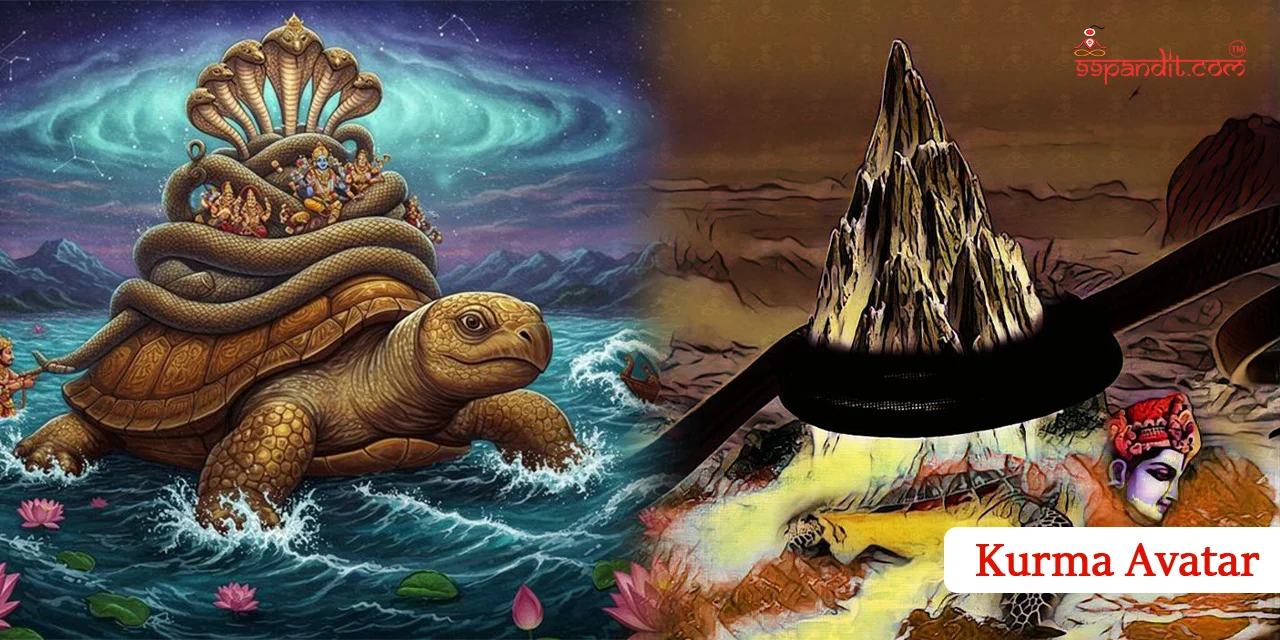
According to religious scriptures, Lord Vishnu took the form of a Kurma (tortoise) and helped churn the ocean.

Lord Vishnu then assumed the shape of a gigantic Kurma and became the foundation of Mount Mandara into the sea.

Maharishi Durvasa cursed Indra, the king of gods, to dehumanize him at one point in time.

When Indra approached Lord Vishnu, he requested him to churn the ocean. Then, Indra also consented to churn the ocean along with the demons and gods.

24 Avatars of Lord Vishnu

Mandarachal Mountain was converted into a churner to churn the sea, and Nagraj Vasuki was netted.

The gods and demons, forgetting their past enmity, pulled up Mandarachal and moved him towards the sea, but they were not able to take him far. Then Lord Vishnu put Mandarachal on the seashore.

The demons and gods transformed Mandarachal into the sea and transformed Nagaraja Vasuki into a leader.

But with no foundation below Mandarachal, he began to drown in the ocean. Lord Vishnu saw this, took the form of a gigantic Kurma (turtle), and became the foundation of Mandarachal in the sea.

Mandarachal began moving very quickly over the massive back of Lord Kurma, and thus, the sea churning was done.

12. Lord Dhanvantari

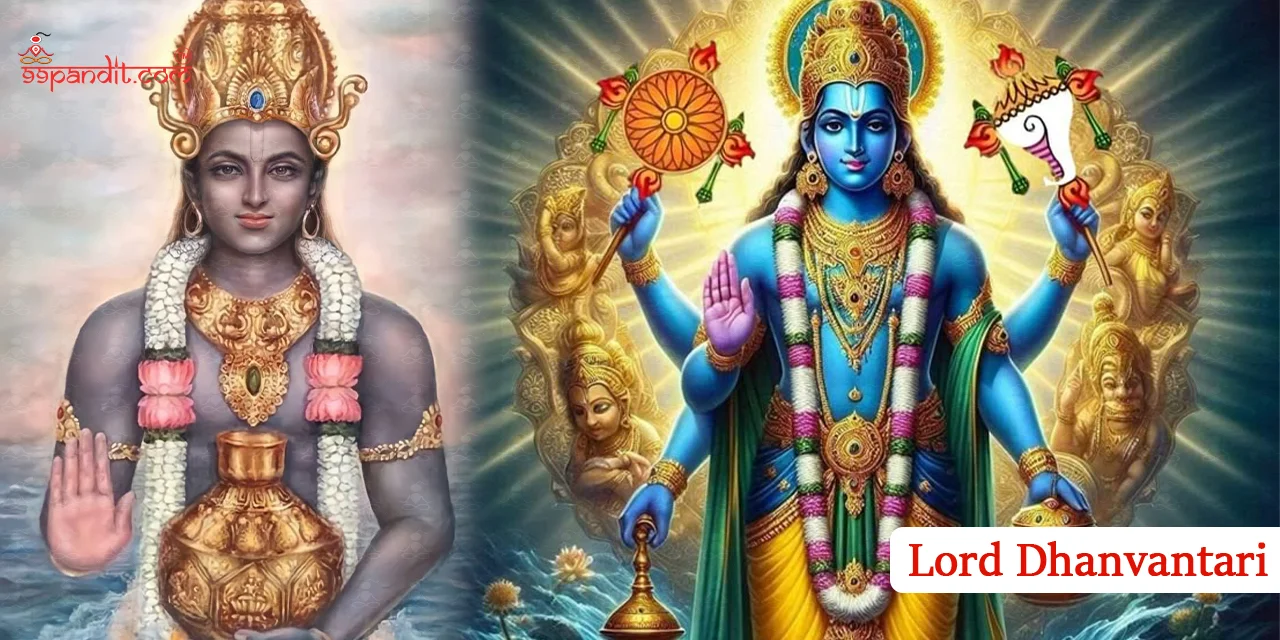
Lord Dhanvantri is another incarnation of Lord Vishnu. Dhanvantri is the god who appeared with a pot of nectar in his hand after the gods and demons churned the ocean. He is also known as the god of Ayurveda and is worshipped for good health.

According to religious texts, when the gods and demons churned the ocean together, the first thing that came out of it was a deadly poison that Lord Shiva drank.

24 Avatars of Lord Vishnu

After this, the Ucchaishrava horse, Goddess Lakshmi, Airavat elephant, Kalpa tree, Apsaras, and many other gems came out of the ocean churning.

At last, Lord Dhanvantari appeared with the Amrit Kalash. This Dhanvantari is considered to be the incarnation of Lord Vishnu, the lord of medicine.

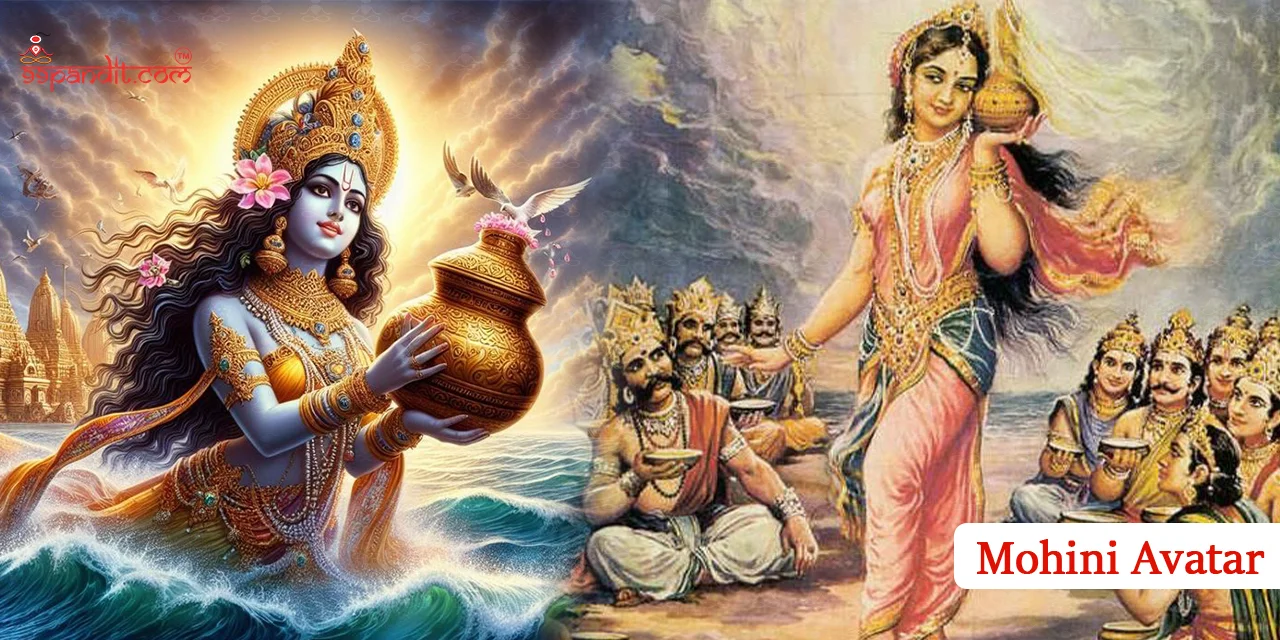
13. Mohini Avatar

According to the religious texts, when Lord Dhanvantari came out from the ocean with the pot of nectar, the discipline between gods and demons was lost.

The gods declared we should take it; the demons said we should take it. In this tug-of-war, Indra’s son Jayant stole the pot of nectar. There was a violent battle between the demons and the gods.

The Gods got worried and approached Lord Vishnu. So, Lord Vishnu took the form of Mohini. God bewitched all in the form of Mohini.

24 Avatars of Lord Vishnu

Mohini heard the Gods and Demons and told them that if they offered me this pot of nectar, I would let the Gods and Demons drink nectar one by one. Both agreed to it. The Gods sat on one side and the Demons on the other.

Then Lord Vishnu, as Mohini, began distributing Amrit to the Gods and Demons by singing pleasant songs and dancing.

Mohini was distributing Amrit only to the Gods, and the demons believed that they were also drinking Amrit. Thus, Lord Vishnu did a good thing to the Gods by becoming Mohini.

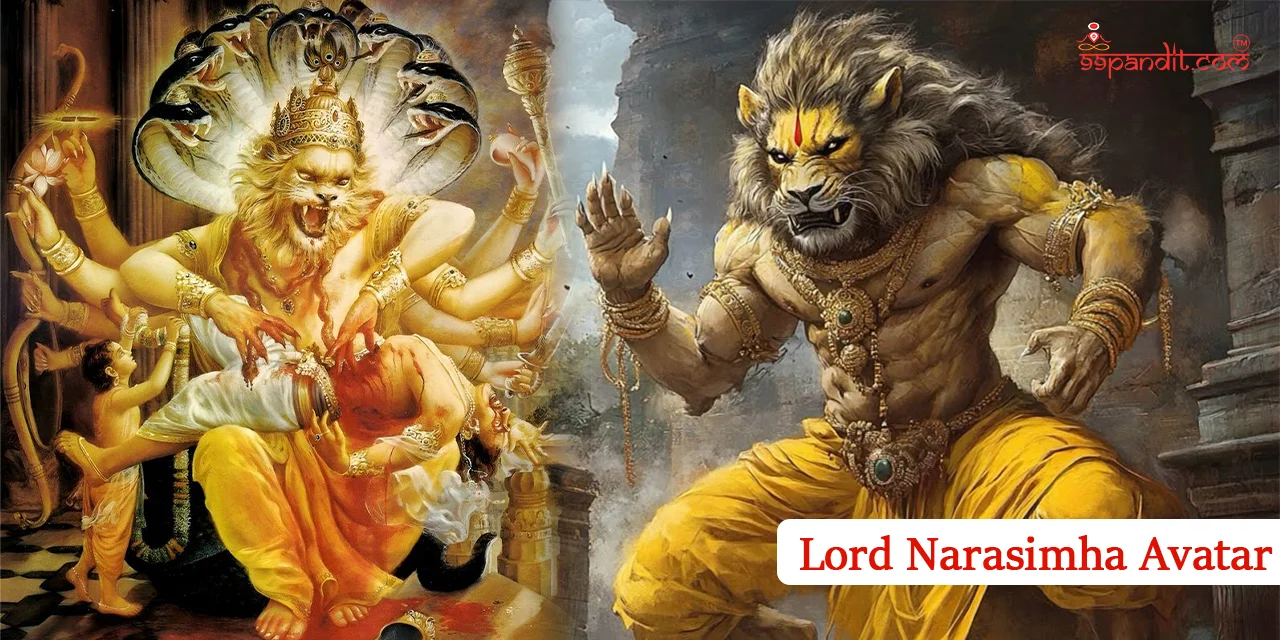
14. Narasimha Avatar

Lord Narasimha Avatar is the fourteenth incarnation of Lord Vishnu. Lord Narasimha is the half-human and half-lion incarnation of Lord Vishnu. Narasimha is a half-human and half-lion incarnation of Vishnu.

Lord Narasimha was conceived to end the demonic reign of King Hiranyakashyapu and ensure peace, order, righteousness, and other things constituting dharma on planet Earth.

24 Avatars of Lord Vishnu

Lord Vishnu descended to earth on his fourteenth avatar in the form of Narasimha, with a body similar to a lion on his top half and a human lower body.

In this form of Lord Vishnu, Narasimha defended Prahlada from his father, Hiranyakashipu, who was a demon.

Narasimha slew Hiranyakashipu by ripping apart his body using his nails. Lord Vishnu was forced to acquire this form because Lord Brahma had sanctified Hiranyakashipu so that no Human creature could kill him.

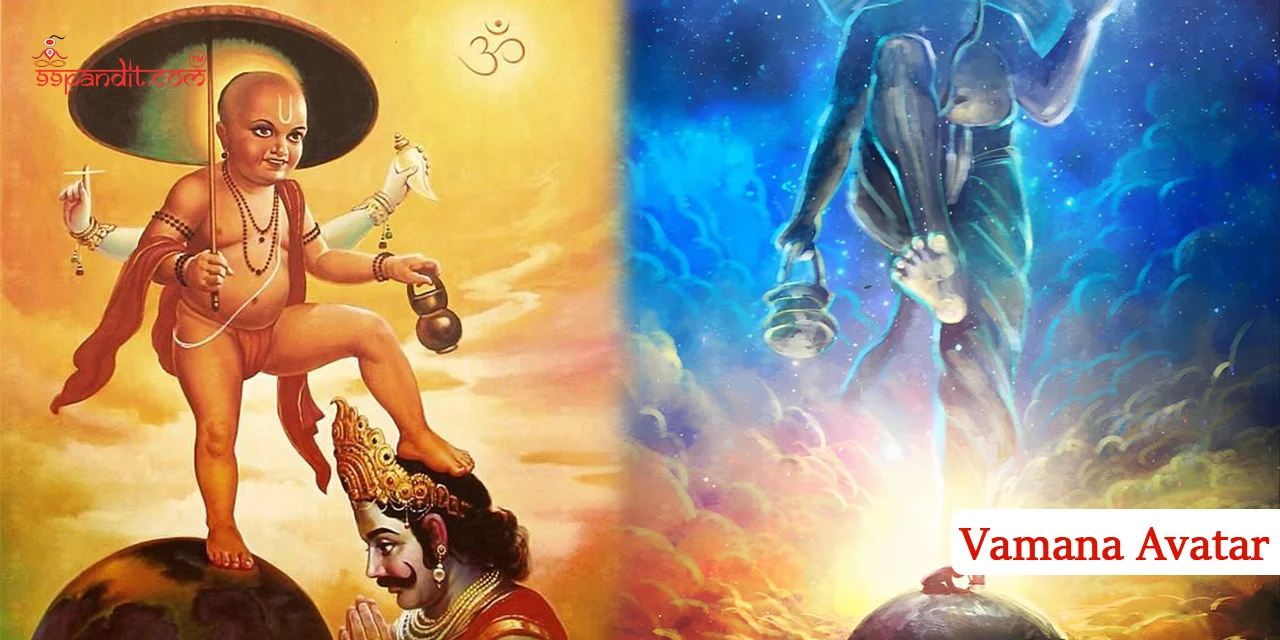
15. Vamana Avatar

Vamana was a brahmin. This avatar of Lord Vishnu appears and verifies King Mahabali’s increasing strength by cheating him during a sacrificing ritual when Bali, the demon king, had taken over the whole three worlds.

For the restoration of the gods’ power over heaven, Lord Vishnu, in the form of a dwarf, approached Bali when he was engaged in performing a ‘Yagya‘ and requested land covered by his three steps.

24 Avatars of Lord Vishnu

When Bali agreed, he transformed his form from a tiny dwarf to a giant. Consequently, he covered all three worlds with his two steps. Ultimately, he regained heaven for the deities.

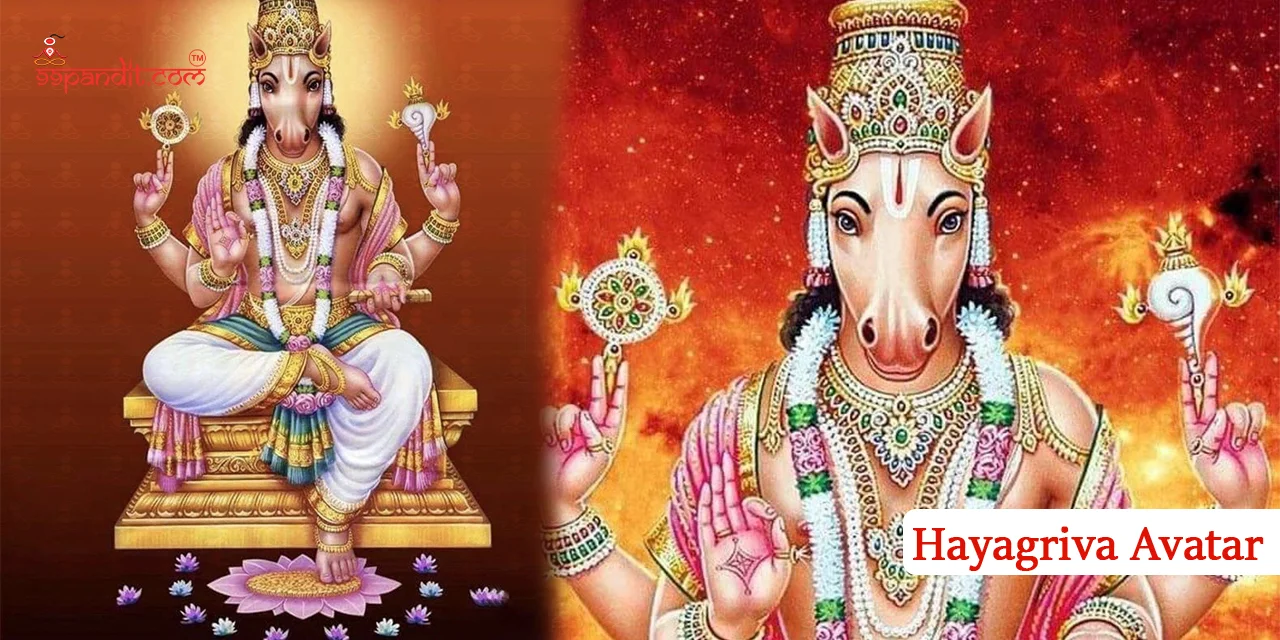
16. Hayagriva Avatar

According to religious scriptures, two mighty demons named Madhu and Kaitabh stole the Vedas from Brahma once upon a time and achieved Rasatal.

Brahma was extremely sad because of this theft and approached Lord Vishnu. Then, God incarnated himself in the form of Hayagriva.

24 Avatars of Lord Vishnu

In this form, Lord Vishnu had a horse-like face and neck. Then Lord Hayagriva arrived in Rasatal, killed the Madhu-Kaitabh, and restored the Vedas to Lord Brahma.

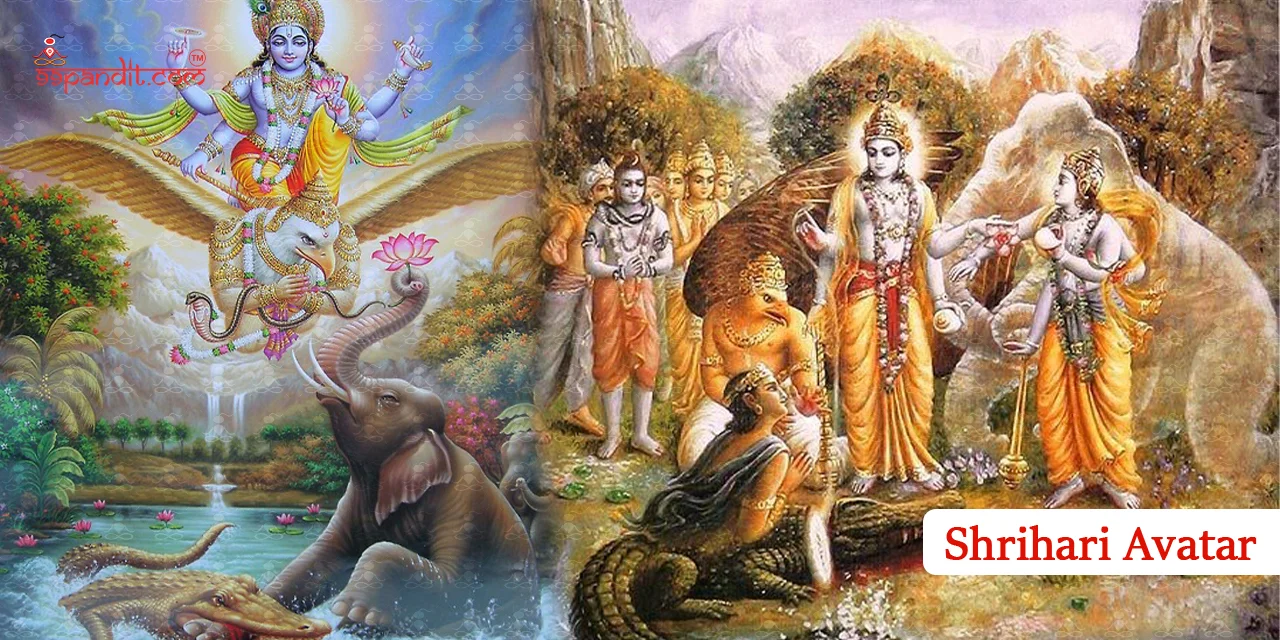
17. Shrihari Avatar​

The seventeenth incarnation was Shri Hari. According to the legend, a mighty Gajendra resided along with his arms in the valley of the Trikuta mountain.

One day, he went for a bath to the pond along with his arms. A crocodile caught his leg and began pulling it into the water.

24 Avatars of Lord Vishnu

The battle between Gajendra and the crocodile lasted for one thousand years. Finally, Gajendra falls, and he thinks of Lord Srihari.

Upon hearing Gajendra’s eulogy, Lord Srihari appeared and slew the crocodile with his chakra. Lord Srihari rescued Gajendra and appointed him as his counsellor.

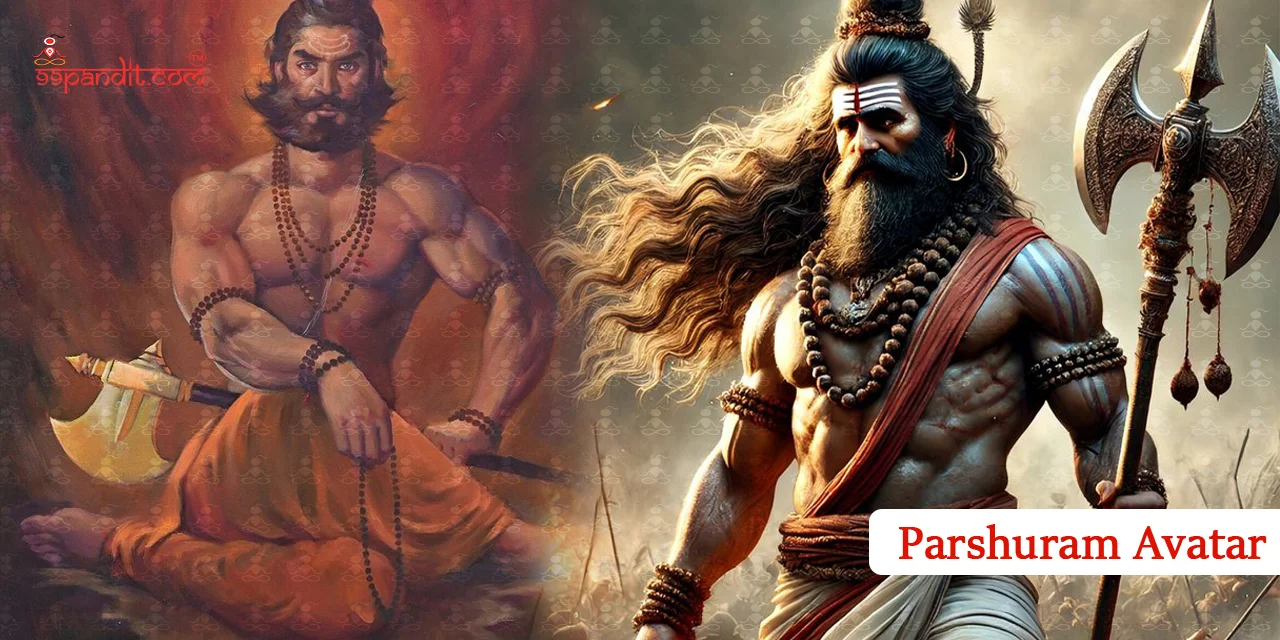
18. Parshuram Avatar

The eighteenth avatar of Lord Vishnu was Parshurama. According to the tale, Haiyavanshi Kshatriya Kartavirya Arjuna, the powerful one (Sahastrabahu), ruled the city of Mahishmati.

He used to be highly proud and tyrannical, too. After one requested Agnidev to have food, Sahastrabahu entered loudly and boasted that where you wish to take food, everywhere I dominate. Then, Agnidev began burning forests.

24 Avatars of Lord Vishnu

In a forest, there was sage Aapava performing penance. Agni also destroyed his ashram.

The sage, angry with Sahastrabahu, cursed that Lord Vishnu would take birth as Parashurama and destroy Sahastrabahu and all Kshatriyas.

Lord Vishnu was thus born as the fifth son of Maharishi Jamadagri of the Bhargava clan.

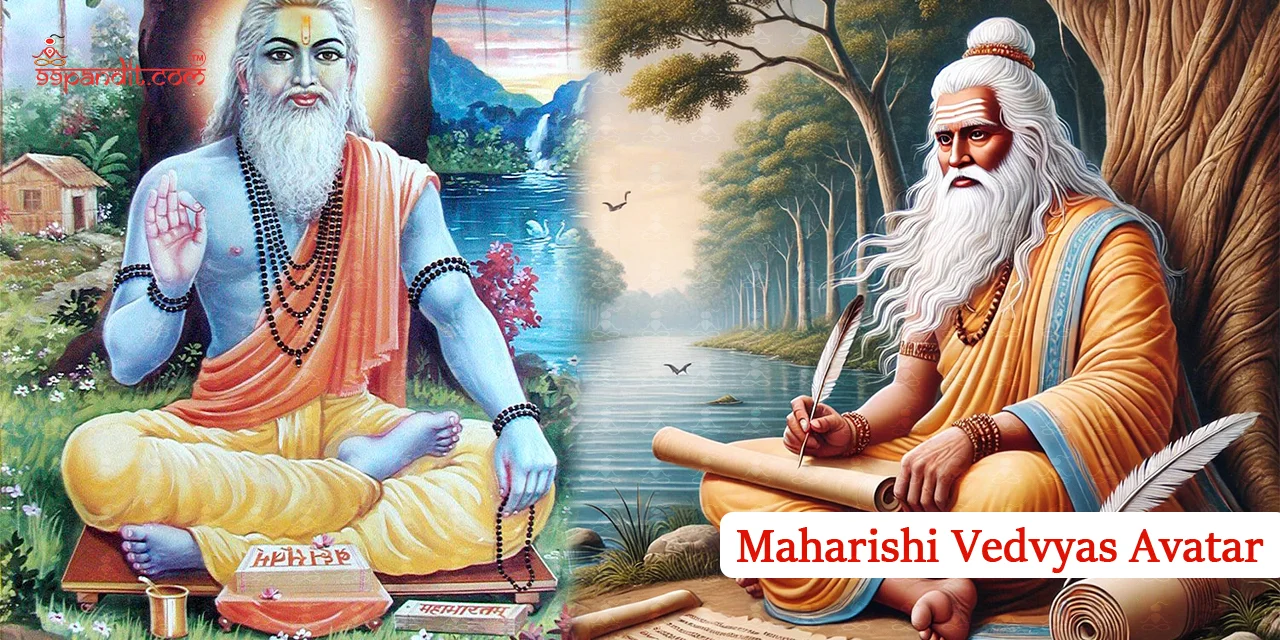
19. Maharishi Vedvyas Avatar

The nineteenth Avatar of Lord Vishnu is Maharishi Vedvyas. Maharishi Ved Vyas is also part of Lord Vishnu in the Puranas.

Lord Vedvyas was the avatar of Narayan. He manifested as the son of the great sage Maharishi Parashar.

24 Avatars of Lord Vishnu

He was born on the island of Yamuna from the Satyavati womb and was the foster daughter of Kaivartraj.

His complexion was black, so one of his names was Krishnadvaipayana. He separated the Vedas based on the strength and age of human beings. Hence, he is also referred to as Ved Vyas. He also wrote the Mahabharata.

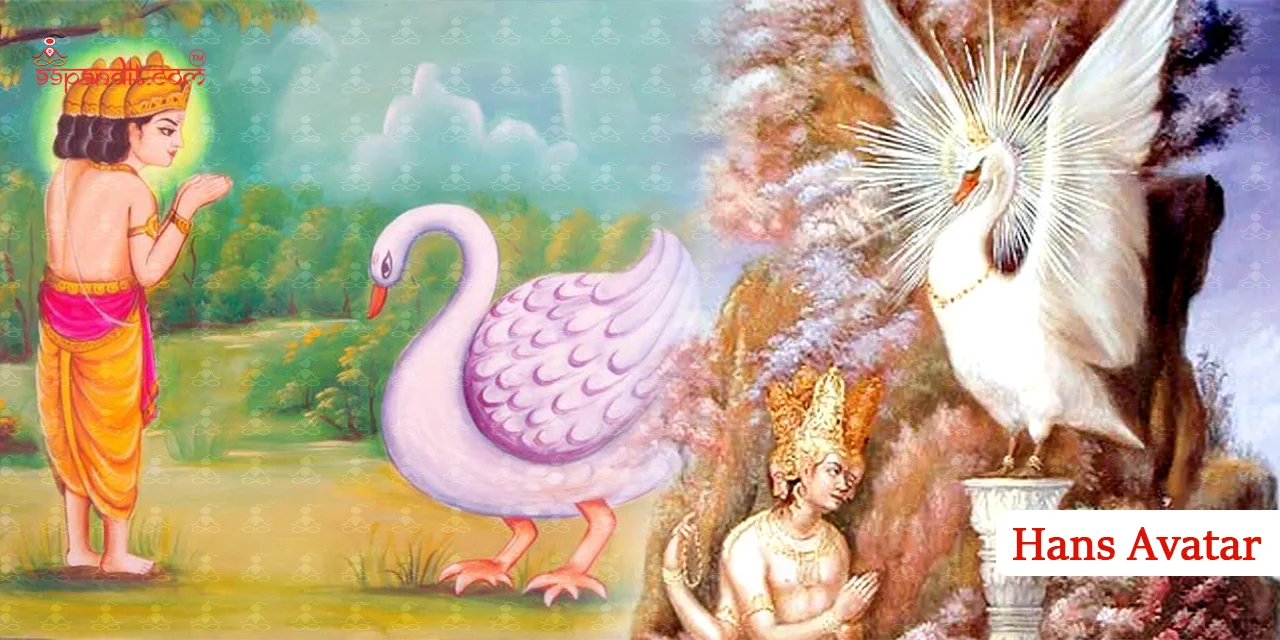
20. Hans Avatar

One day, Lord Brahma was sitting in his court. Then, his Manas Putra Sankadi arrived there and began talking about the salvation of human beings with Lord Brahma.

Lord Vishnu arrived there in the form of Maha Hans, and he resolved the confusion of the Sankadi sages. Then, all the people began worshipping Lord Hans.

24 Avatars of Lord Vishnu

The Shri Bhagwan became invisible in the form of Maha Hans and departed for his sacred abode.

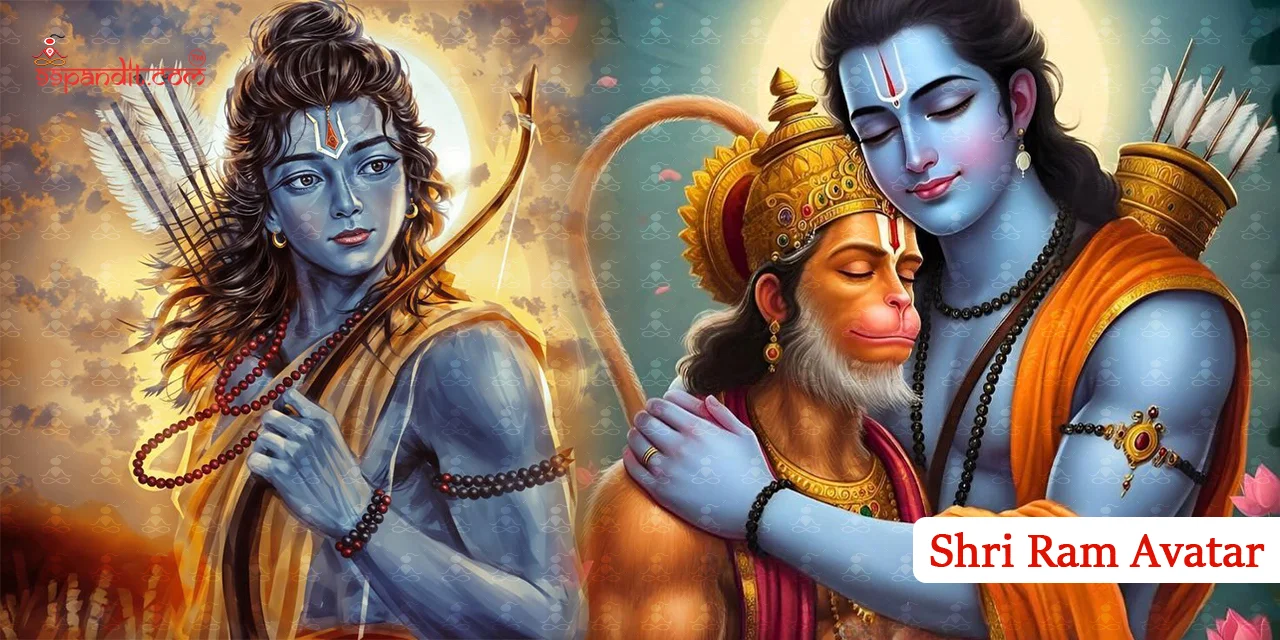
21. Shri Ram Avatar

During Treta Yuga, demon king Ravana was highly fearful. Even the gods used to fear him.

To slay him, Lord Vishnu took birth as the son of King Dasharath from Mother Kaushalya’s womb. In this avatar, Lord Vishnu slew numerous demons and obeyed the rules.

He took exile at his father’s behest. During his exile, the demon king Ravana abducted his wife, Mata Sita.

24 Avatars of Lord Vishnu

In search of Maa Sita, the Lord journeyed to Lanka, where a fierce war raged between Lord Rama and Ravana, in which Ravana was slain.

This way, Lord Vishnu emancipated the gods from terror by assuming the form of Rama.

22. Krishna Avatar

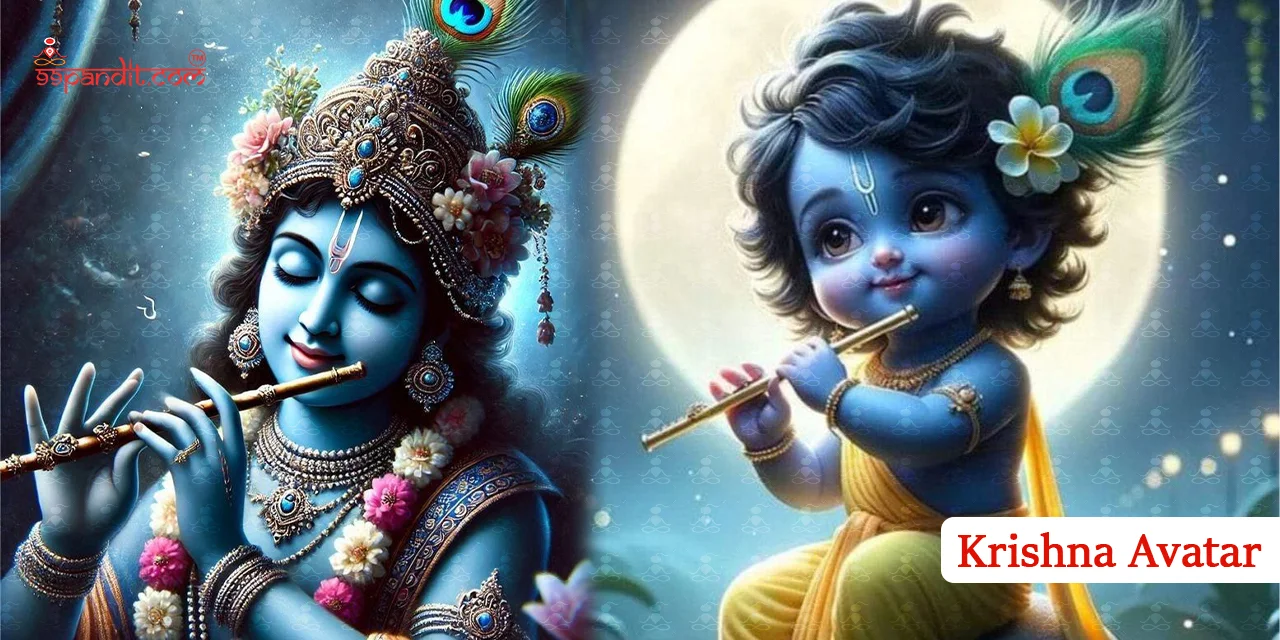
In Dwaparyug, Lord Vishnu killed the evil-doers by becoming Shri Krishna. Lord Shri Krishna was born in jail.

His father’s name was Vasudev, and his mother’s name was Devaki. Lord Shri Krishna showed many miracles in this birth and killed the evil-doers.

24 Avatars of Lord Vishnu

Lord Krishna also killed Kansa. He was Arjun’s charioteer during the Mahabharata war and taught the world the Gita.

He installed Dharma by enthroning Dharmaraja Yudhishthira as king. This form of Lord Vishnu is the finest of all incarnations.

23. Buddha Avatar

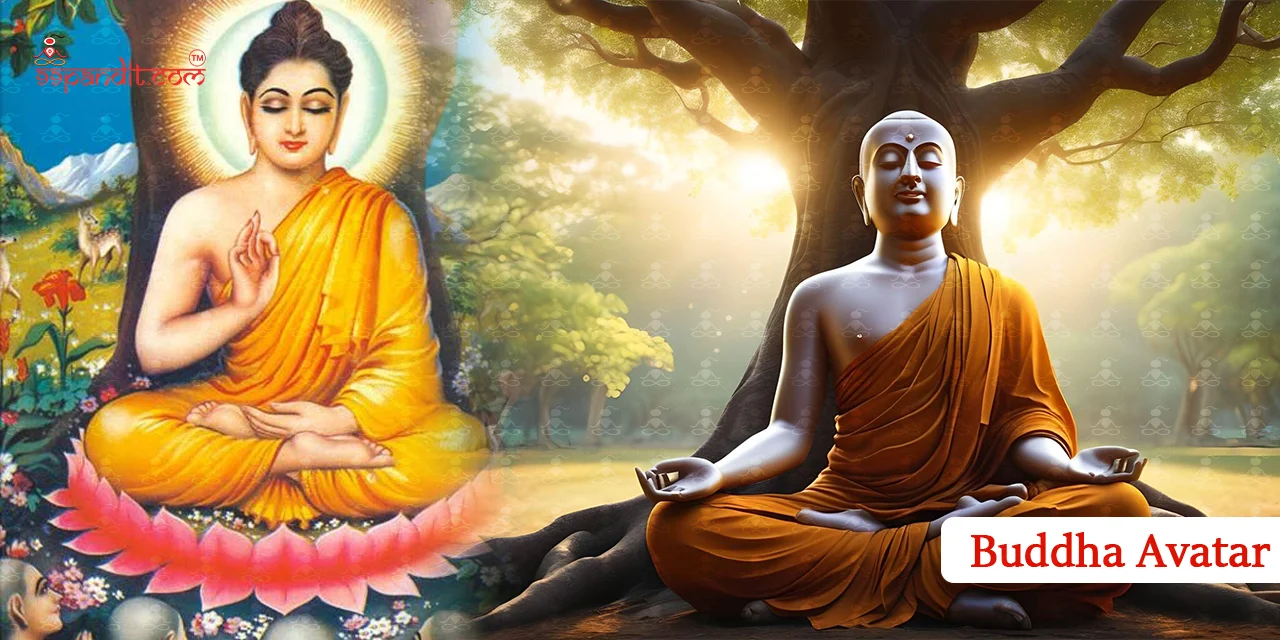
The 23rd incarnation of Lord Vishnu is Lord Buddha. There are several mythological tales about this avatar of Lord Vishnu.

24 Avatars of Lord Vishnu

He was born in Lumbini as Siddhārtha Gautama, later known as Gautama Buddha. He founded Buddhism and taught people the noble eightfold path to end all forms of suffering.

24. Kalki Avatar

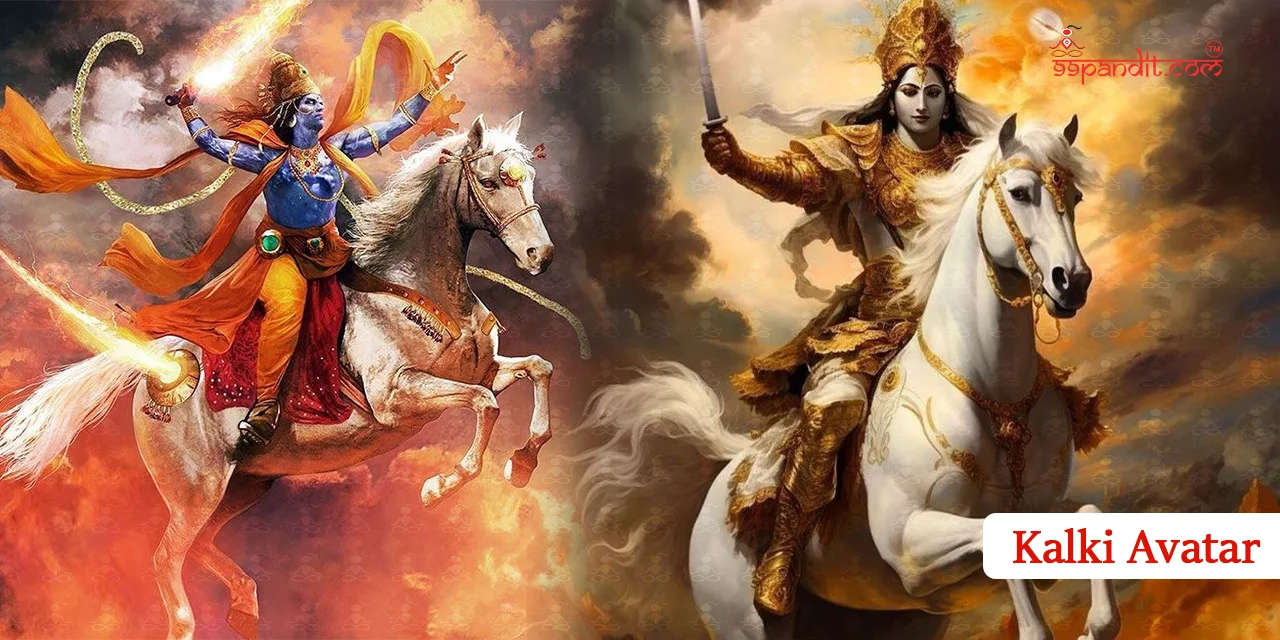
Kalki is the last and 24th avatar of Vishnu, who has not yet been born. He is believed to destroy all evil by defeating the demon Kali and creating new elements personified into one.

Kalki is shown as a warrior mounted on a Satyayuga or Kalkiyuga. Kali is all the evil feelings, and a white horse carrying a radiant sword.

24 Avatars of Lord Vishnu

Despite the variation in form or era, all his avatars had one universal aim, i.e., to eradicate all evil and to restore Dharma, the path of salvation. This is why Lord Vishnu is referred to as the protector and preserver of the universe.

Conclusion

In conclusion, we have described the 24 Avatars of Lord Vishnu. Lord Vishnu has taken incarnations on this planet from time to time. To protect the Dharma and bring peace, he underwent several incarnations.

It is said that the 24th incarnation of Lord Vishnu’s coming in the form of ‘Kalki Avatar’ is inevitable.

So far, Vishnu Ji has had 23 incarnations on earth. Of these, 10 are considered the prominent incarnations.

I hope you enjoyed reading this article. For more such articles and blog posts, stay connected with 99Pandit.

You can even book a Pandit for any puja, Jaap, Homam, etc, at your convenience. 99Pandit provides you with 100% authentic Pandit at your fingertips.

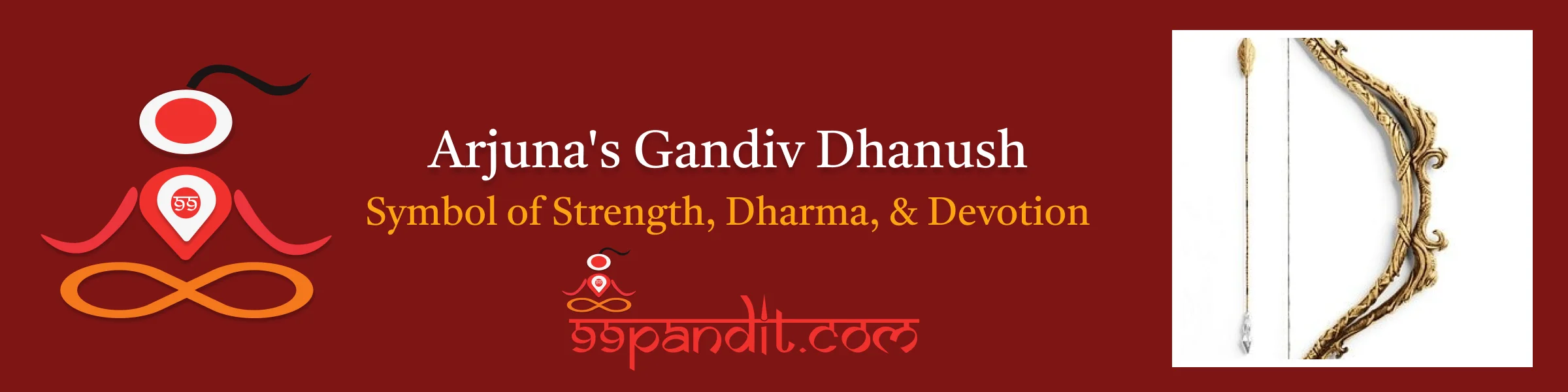
Arjuna’s Gandiv Dhanush: Symbol of Strength, Dharma, & Devotion

Gandiv Dhanush: In Mahabharat and Ramayan, there are mentions of divine and powerful weapons great warriors use.

One of the many mysteries of the Mahabharata period is the mystery of Arjun’s Gandiva.

Whether you have watched the Mahabharata series or studied the Mahabharata epic, you must know about Gandiva Dhanush.

Gandiv Dhanush

After Shri Ram’s bow, if any bow has been the most famous, it is Arjun’s Gandiva. In the Mahabharata period, Gandiva was considered to be such a bow that even the gods could not stand before it.

According to the Mahabharata story, it is said about Arjuna’s Gandiva bow that Arjuna’s Gandiva Dhanush was so powerful that not only humans but even gods could not face it.

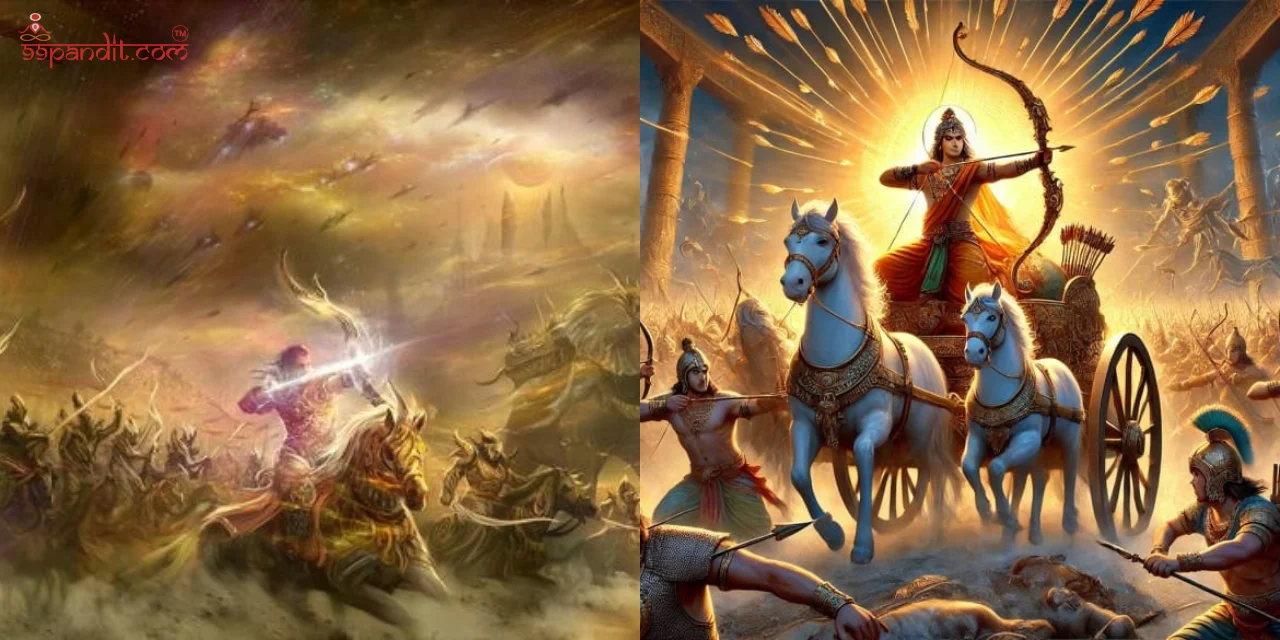
Arjuna’s Gandiva was so divine that it was capable of piercing many targets simultaneously.

In this blog, we explore the divine powers of Arjuna’s Gandiv Dhanush. Let us know where Arjuna got Gandiva from and what its powers were.

What is Arjuna’s Gandiv Dhanush?

Gandiv Dhanush is mentioned in the epic Mahabharat. This was Arjuna’s divine bow. The Gandiv Dhanush was made by Vishwakarma, the architect of the gods.

This bow first passed through the hands of Lord Shiva, then Devraj Indra, and then came to Agnidev.

When Agnidev requests Arjuna to burn the Khandav forest, he also gives him the Gandiva bow and a divine chariot.

99pandit

BOOK TO GET 100% FREE CALL FROM PANDIT TO DECIDE DATE (MUHURAT)

99pandit

Arjuna won numerous wars with this bow. This bow was extremely powerful and strong.

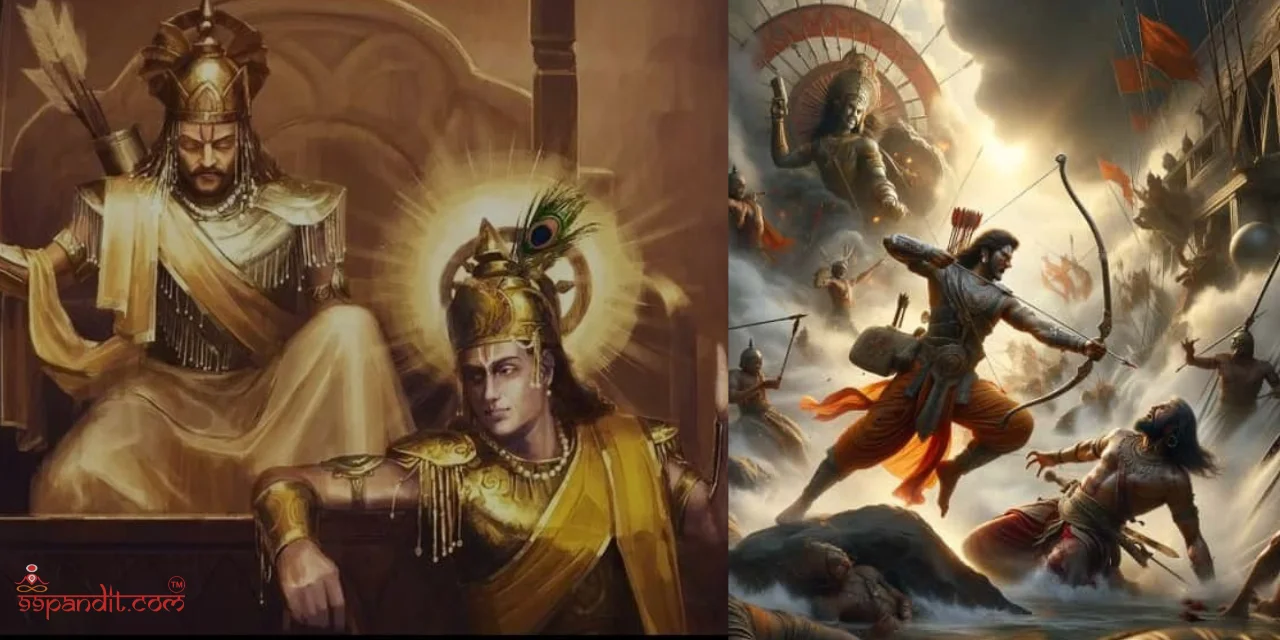
In the great war of Mahabharata, Arjuna defeated the huge army of Kauravas with the Gandiva bow and achieved victory. Because of this bow, everyone considered Arjuna a great archer in those days.

Who can handle the Gandiva Dhanush?

Brahmadev asked Devashilpi (the architect of gods) Vishwakarma to make a divine, unbreakable bow for himself.

There are many stories associated with the making of Gandiva, which is considered to be the most powerful bow in the world.

According to a legend, the Gandhiv Dhanush was made from the bones of the great sage Dadhichi.

The Gandiv Dhanush consisted of 108 strings and was not breakable. Brahmadev retained that bow with him for 1000 years and handed it over to Daksha Prajapati. Daksha Prajapati retained it for 503 years and then handed it over to Indra Dev.

Indra Dev retained it for 85 years and then passed it on to Chandradev. Chandradev retained the divine bow with him for 500 years and handed it over to Varunadev.

It was in the hands of Varuna Dev for 100 years until he donated the bow, along with two endless quivers, to Arjuna to assist him in enabling Agni to destroy the Khandav forest. In the Matsya war, Arjuna had already possessed it for 65 years.

Arjuna maintained this heavenly Gandiv Dhanush with himself throughout his lifetime and gave it to Varuna Dev before embarking on the Himalayas with Draupadi and his brothers.

The Mythological Story of Arjun Getting Gandiv Dhanush

According to the story of Mahabharata, when there was a dispute between Kauravas and Pandavas to get the throne of Hastinapur, Shakuni gave the Pandavas a forest named Khandavprastha to live in to calm them down for some time.

When Pandavas and Draupadi reached this forest to meet Shri Krishna, they saw only ruins at this place. Krishna called Vishwakarma to establish a city in the Khandav forest.

Gandiv Dhanush

Vishwakarma appeared and told Shri Krishna that Khandavprastha was settled by Mayasura, so Mayasura had complete information about this place. Please call him. At the request of Vishwakarma, Krishna called Mayasura.

Mayasura told the secret of Gandiva

Mayasura gave Krishna the details of Khandavprastha and took him to King Som’s chariot kept in a ruin there.

King Som’s chariot had Gandiva and Akshay Quiver, along with a mace. Mayasura gave Gandiva to Arjuna and told him that it was a divine bow that Daityaraj Vrishparva had obtained from Lord Shiva by doing rigorous penance.

Along with giving Gandiva, Mayasura gave Akshay Quiver to Arjuna and said that it was Agnidev’s quiver, which was also obtained by Daityaraj Vrishparva.

Mayasura told Arjuna that this quiver never runs out of arrows. In this way, Arjuna obtained Gandiva and Akshay Quiver from the Khandav Forest.

How was the world’s most powerful bow, Gandiv, made?

There are many stories associated with the making of Gandiva, which is considered to be the most powerful bow in the world.

According to a legend, Gandiva was made from the bones of a sage. The terror of a demon named Vattasur was increasing on Earth.

99pandit

BOOK TO GET 100% FREE CALL FROM PANDIT TO DECIDE DATE (MUHURAT)

99pandit

It had become very important to stop the cruelty of this demon. Seeing this dire situation, the great sage Dadhichi donated his bones so that weapons could be made to kill Vattasur.

Arjun’s Gandiva had the power of sage Dadhichi’s penance

In fact, due to the penance of Rishi Dadhichi, a divine power had come into the bones of his body, using which Vattasur could be killed.

Three bows were made from the bones of Rishi Dadhichi. One Pinak, second Sarang and third Gandiva. Indra’s Vajra was made from the bones of his chest.

Vattasur was killed with all these divine weapons. In this way, passing from one person to another, Arjuna received Gandiva.

The Second Story related to Arjuna’s Gandiv Dhanush

According to mythology, there is a bow (Gandiv Dhanush), arrow, and quiver (Akshay Tarkash) that can never be destroyed.

After shooting the arrow, it returns to the person, and the quiver never runs out of arrows. King Bali was the first one to have such an arrow.

The Bhrigu dynasty made King Bali perform a yagya for Vishwajit. Agnidev appeared from that yagya and gave King Bali a divine chariot made of gold, horses, a divine bow, and two inexhaustible arrows.

Gandiv Dhanush

Prahlad gave a divine garland that never fades, and Shukracharya gave a divine conch. Thus, equipped with divine weapons, King Bali defeated Indra.

King Bali started ruling the three worlds due to these divine bows (Gandiv Dhanush) and arrows.

Who gave the Gandiv Dhanush to Arjuna, and why?

According to legend, after drinking ghee continuously for 12 years in a yajna, Agnidev got indigestion. He went to Lord Brahma for a solution.

Lord Brahma said that if he burns the Khandava forest, then his problem will end when the various animals living there are satisfied.

Agnidev tried many times, but Indra Dev did not let him burn the Khandava forest to protect Takshak Naag and the animals. Agnidev again went to Brahma ji.

Then Brahma ji said that Arjuna and Krishna were sitting near the Khandava forest. He should ask for help from them.

Agnidev requested both of them for Khandava forest in the form of food. Even after Arjuna said that he did not have any bow arrow and a fast chariot, Agnidev took Gandiv Dhanush, an inexhaustible quiver (Akshay Tarkash), a chariot drawn by divine horses from Varundev and gave it to Arjuna.

Agnidev was satisfied after burning the Khandav forest with the help of Arjuna and Shri Krishna, and his disease was also cured.

All the gods, including Indra, came to save the Khandav forest, but this time they were facing Krishna and Arjuna.

Only Takshak Naag, Ashwasen, Mayasura, and four birds named Shangark survived that burning.

What are the powers of Gandiv Dhanush and Tarkash?

The specialty of Arjuna’s Gandiva Dhanush was that no other weapon could destroy it. This single bow was equal to 1 lakh bow.

Whoever held the Gandiva Dhanush, energy would flow in his body, and this is the reason why no one could defeat him in battle.

It is said that the Gandiva bow was supernatural. This bow was with Varuna. Varuna gave it to Agnidev, and Arjuna received it from Agnidev.

This bow was worshipped by gods, demons, and Gandharvas for infinite years. It could not be destroyed by any weapon and could withstand a lakh of other bows.

99pandit

BOOK TO GET 100% FREE CALL FROM PANDIT TO DECIDE DATE (MUHURAT)

99pandit

Whoever held it would be filled with power. Arjuna’s inexhaustible quiver (Akshay Tarkash) never ran out of arrows.

The chariot that Arjuna got had divine horses harnessed to give it speed, and Hanumanji was seated on the top of the chariot, and a monkey flag fluttered on the top.

Along with this, there were other animals present in the chariot that roared terrifyingly.

What was Gandiv Dhanush made of?

There are numerous legends about the origin of Gandiv Dhanush. One states that it was constructed from the horn of the demon Mura and weighed 55000 metric tons. It possessed 108 strings that could fire numerous arrows at a time.

Another legend states that Sage Dadhichi had given his bones to have three bows prepared.

The bows were Gandiva, Pinaka and Saranga. Indra’s Vajra, too, was prepared from the chest bones of the sage.

The Gandiv Dhanush was gifted to Arjun by the gods, by whose aid the Mahabharata war was won. The Pinak bow, belonging to Lord Shiva, was captured by Ravana.

Thereafter, it was in the possession of Lord Parashuram, and Lord Ram shattered the same bow and gained Sita Swayamvara.

The Sarang bow was with Lord Vishnu. After that, it is believed that this bow was taken by Shri Ram, and then it came to Shri Krishna.

Not only this, Indra had also given his Vajra to Karna during the Mahabharata war, because of whom Bhima’s son Ghatotkach died.

Maharishi Dadhichi had uttered that his bones must be used only for defending religion.

Another Story

The third tale is also identical. The third tale says that the bow was created from the severe penance of Kanva Muni.

He took Samadhi while performing penance, and his body became earth because of termites. A lovely bamboo tree sprouted in the earth.

Brahma ji liked the penance and created Kanva Muni from gold. He also bestowed some blessings upon him.

But as he was exiting the world, he noticed that the bamboo that had grown on his body was now valuable.

There was none other like it. Then, the same bamboo he gave to Vishwakarma and Pinak. Sarang and Gandiv Dhanush were made from it.

Conclusion

In conclusion, Arjuna’s Gandiv Dhanush is much more powerful than our imagination.

It is said that Gandiv Dhanush can fire countless arrows at one time. Arjuna got this powerful and divine Gandiv Dhanush from Agnidev.

The power of Arjuna’s Gandiv Dhanush can be estimated from the fact that the entire battlefield reverberates with the sound of Arjuna’s bow. Arjuna could hit his target from a very far distance.

At the same time, Arjuna’s inexhaustible quiver (Akshay Tarkash) never ran out of arrows.

Some arrows kept in the inexhaustible quiver were so divine that after hitting the target, they used to return to Arjuna’s quiver. No weapon could stand in front of Gandiv Dhanush.

I hope you liked reading this article. For more such informative and mythological articles, stay connected to 99Pandit.

We are here to serve you with your religious needs. You can even Book a Pandit for Puja online and get Pandit at your door.

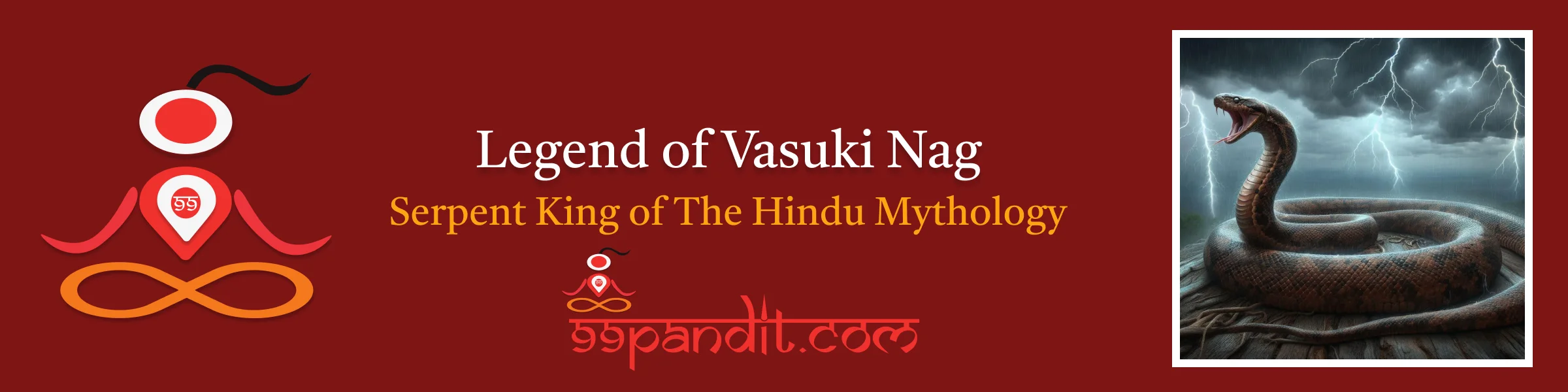
Legend of Vasuki Nag: Serpent King of The Hindu Mythology

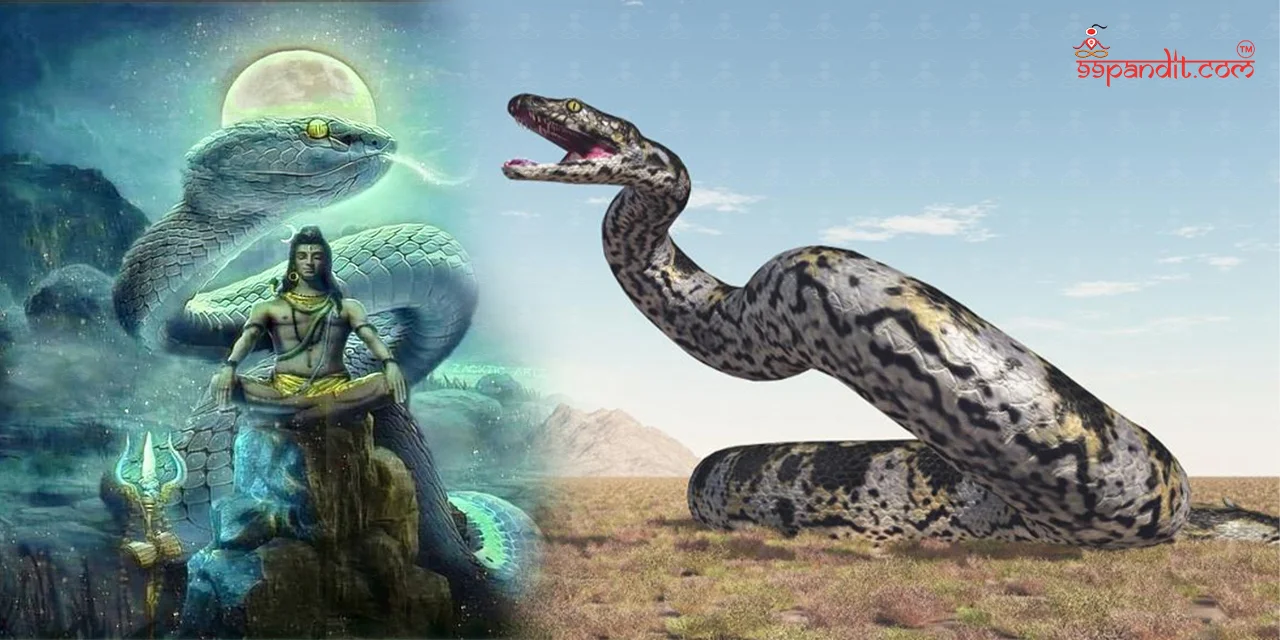
Vasuki Nag is one of the prominent followers of Lord Shiva, as he always sits on his neck. In Hindu mythology, snakes are represented as powerful and divine creatures with great spiritual effectiveness.

One of the most sacred snake lords in the Hindu religion is Vasuki, a powerful cobra and the king of serpents.

Vasuki Nag

Vasuki is the son of Sage Kashyap and his wife Kadru. And do you know that Sheshnag is Vasuki’s elder brother? The eternal snake on which lord Vishnu rests.

According to the Hindu epic Mahabharat, Vasuki resides in the palace of Varuna, the god of the sea. The blog posts describe Vasuki’s origin and history in detail.

Introduction to Vasuki Nag

The king of snakes, Vasuki Nag, is connected with the Hindu lord Shiva. He is represented around Lord Shiva’s neck, and his lineage can be traced back to Kadru and sage Kashyap.

The Hindu scriptures say that Vasuki became Lord Shiva’s chord, and he eradicated the three Tripurdahana towns. He is significantly considered a deity in every naga ritual.

In the epic Hindu Mahabharat, Lord Bhima, the son of Pandu, met Vasuki when they were in an underwater kingdom.

After helping Bhima drink nectar, Vasuki made him more powerful. He is considered to be the second king of Naga in Hinduism. He also has a naga mani, the most precious ornament of a serpent, on his head.

According to Hindu mythology, he is indicated as the wrapped neck around lord Shiva. This is thought to mean he was blessed and made an ornament.

Physical Traits

Vasuki, the king of naga, has many heads. He is known as the king of snakes, with a large body that can be seen in multiple forms.

One of these is residing in Patala Lok to rule over the snakes in the underworld. Another form lives in the palace of a water god called Varuna.

The third form lives on Mount Kailash with five heads. He is connected to the neck of lord Shiva and adorned with nagamani, a magical gemstone.

Family

Vasuki is the grandson of the universe’s creator, Brahma, and the son of Kashyapa and Kadru. Kadru and her sister Vinata requested boys from their husband, the sage Kashyapa:

Vinata requested two sons of Kadru that were greater than a thousand, while Kadru requested a thousand wonderful sons.

One of Kadru’s thousand sons, the second after the serpent Shesha Naag, was the future serpent king Vasuki.

99pandit

BOOK TO GET 100% FREE CALL FROM PANDIT TO DECIDE DATE (MUHURAT)

99pandit

Vinata gave birth to Aruna, who later became the charioteer of Surya, the Sun, and Garuda, who later became the mount of Vishnu.

Vasuki’s older brother, the serpent Shesha, went out to engage in his austere pursuits.

Despite his refusal to communicate with his brothers, Vasuki remained because he was more protective of them.

He was loyal and dedicated to achieving spiritual enlightenment. Manasa Devi is the king of the serpent, revered as a serpent goddess who cures diseases and bites.

Other Names

Vasuki Nag is regarded as having multiple names, like Upananda, Nanda, Sgara, Takshaka, Anavatapta, Utpala, and Balavan.

Modern Day Influence

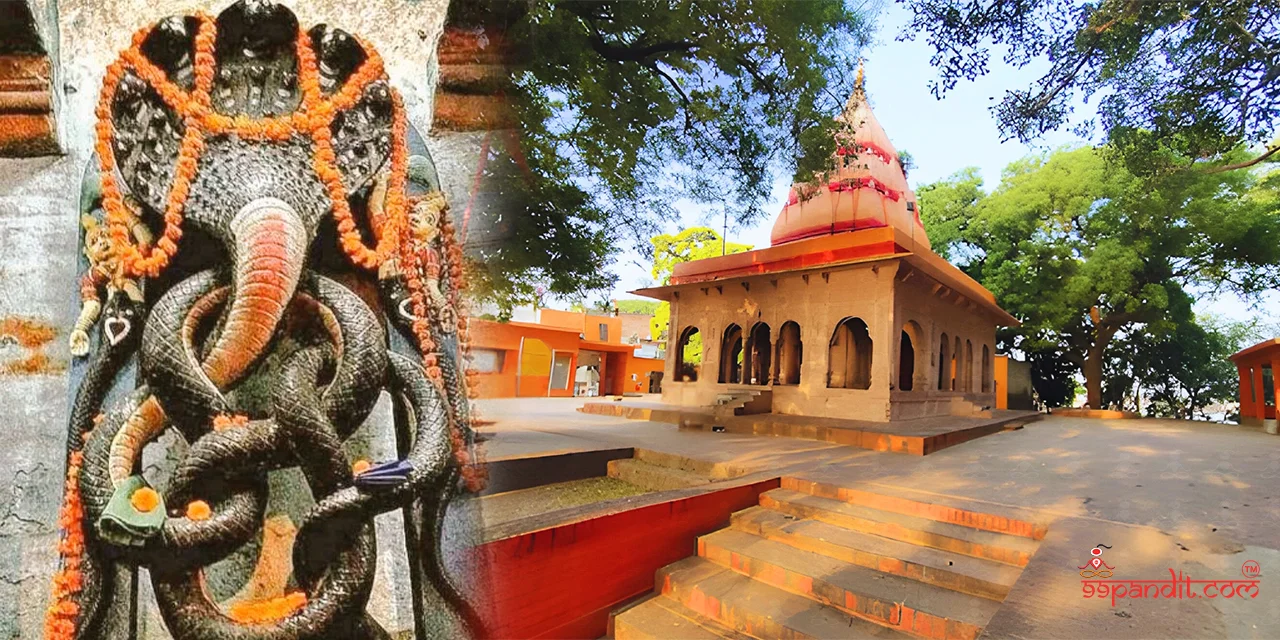
There are many temples located in Kerala and Andhra Pradesh dedicated to Vasuki. The temple is located near Haripad, at Mannarasala Illoma in Kerala.

As per the local legend, the Kukke Subramanya temple in Karnataka is considered to safeguard Vasuki from Garuda, who was riding on Vishnu’s mount.

Temple of Vasuki Nag in Varanasi

A temple in the holy city of Varanasi, dedicated to Nag Vasuki on the banks of the Ganga river.

This is a sacred temple, mainly during the festival of Nag Panchami, when followers seek blessings and perform rituals to revere Vasuki Nag for their protection and prosperity.

Lord Shiva’s Sacrifice

Seeing the perilous situation, the gods and Asuras seek lord shiva to help. Without thinking, Shiva, the embodiment of compassion and sacrifice, agreed.

He carried the deadly poison into his hands and drank it to rescue the universe. When the poison reached his throat, it changed to a blue neck. That makes him known as Neelkanth – the blue-throated lord.

Vasuki Nag

Engraved by lord shiva’s selflessness and driven by his pain, Vasuki decided to serve the lord for eternity.

As a symbol of pledge, he coiled around the lord’s neck, providing him strength and protection. Vasuki had saved the cosmos from collapse.

Story of Lord Shiva and Vasuki Nag

Vaskuki Nag is closely connected to Lord Shiva. He can be seen three times around his neck as an ornament.

The three coils signify the past, present, and future. Vasuki plays a significant role in multiple Hindu legends.

Multiple symbols of spiritual reverence and divine power worship him. The primal energy lies at the base of the spine, represented by Vasuki, and is said to be a source of religious awakening.

Furthermore, the snake is associated with worshipping Pashupatinath (the lord of creatures) and is seen as an essential Hindu deity.

According to the legend, once, the snake species was in peril and revered the Lord Shiva for help, who offered them space in his abode, Mount Kailash.

Yet, the snakes required warmth close to Shiva’s body due to Kailash’s very low temperature.

The Puranas contain numerous stories linked with Vasuki, yet the most well-known are Samundra Manthan and Tripura Dahana.

Likewise, in the Hindu epic Mahabharat, a tale states how Vasuki brought Bhima, one of the Pandavas, back to life.

Samundra Manthan (Churning of Milky Ocean)

Samudra Manthan, also called ocean churning, is an important event in Hindu mythology. At this event, Vasuki played an essential role.

Sri Hari Vishnu asked the Manthan between Asura and Devas to help achieve Amrita. Getting a rope sufficient to wrap around Mount Mandarachal is not easy.

They sought help from Vasuki to become a churning rope. With his help, the two entities were capable of pushing the ocean.

99pandit

BOOK TO GET 100% FREE CALL FROM PANDIT TO DECIDE DATE (MUHURAT)

99pandit

This is considered during Samudra Manthan. Garuda, the enemy of snakes, asks Vasuki to help with ocean churning.

Yet, rather than treating him kindly, Garuda asks for his assistance. As Garuda was also disrespectful, Vasuki was ready to help.

The serpent’s head and tail are dragged along the ground as it grabs him. While it folds in half, the massive bird cannot carry him. Hence, Lord Shiva then brings Vasuki as a bracelet.

Tripura Dahan (Destruction of Tripura)

According to Hindu scriptures, Vasuki made an excellent contribution to Tripura Dahan. Tripura was a fortress of the Asuras.

Three Asura brothers, Tarakasha, Vidyunmali, and Kamalaksha, had a boon from Lord Brahma. They asked to create three forts in heaven, in the sky, and on the earth.

The first fort was made of gold in heaven, the second was made of silver in the sky, and the third one was made of iron on the earth.

The forts will align and combine into one every 1000 years. Such a combined fort known as Tripura can be destroyed only with a single arrow that will spike its walls.

After Lord Brahma’s boon was granted, the demons became evil and started to act against the Veda religion.

Later, God sought help from Lord Shiva to destroy Tripura; hence, he mounted his chariot, took his bow, and proceeded to Tripura.

However, he discovered that his bow’s string was gone when he got there. At that point, the strong snake Vasuki volunteered to serve as his bowstring.

Lord Shiva graciously accepted Vasuki’s offer. Shiva used his arrow, the heavenly Pashupatastra, to slaughter the demons and burn Tripura to ashes just as the three cities were about to unite into one.

This story emphasises the value of sacrifice and devotion in Hindu mythology and is frequently seen as a sign of the strong tie between Lord Shiva and Vasuki.

Vasuki’s deed of becoming the string for Shiva’s bow further reinforces the idea that all living creatures, whatever their form, have a purpose in the greater scheme of things.

Vasuki Nag Blessed Bhima

Mentioned in the Hindu epic Mahabharat, the war between Pandavas and Kauravas, especially between Bhima and Duryodhan, is the most well-known.

One of the most dramatic situations is how Bheem gets poisoned by Duryodhan. As per the tale, Duryodhan set up a games camp alongside the Ganga River.

Yet, in every task, Bheem was undefeated, which made Duryodhan create a scheme to remove Bheema by poisoning his food.

He died after eating the food, and Duryodhan dumped his body by throwing it into the river.

As per the story, the snakes found the body of Bheem and took it to Nag Lok, their place in the underworld.

Vasuki brought life back to Bheem and blessed him with the strength of 1000 elephants.

Vasuki as a Sign of Spiritual Refinement

The snake depicted kundalini, the religious energy in Hinduism that resides dormant in every individual’s Muladhara chakra.

With religious practices like yoga, kundalini revives and starts climbing upwards via the Chakras, enabling the religious centers and driving them to enlightenment.

The coils of Vasuki across lord shiva’s neck indicate control over the Kundalini’s strength.

Therefore, Vasuki is seen as a sign of spiritual processing and the way to enlightenment.

Symbolism and Legacy of Vasuki Nag

Vasuki Nag has been seen as one of many aspects of Hindu belief, including strength, sacrifice, and safety.

As the serpent king, he is both feared and honored and represents the serpent’s dual nature as both savior and destroyer.

His involvement in the Samudra Manthan describes his willingness to bear the pain for the greater good, a quality that makes him a sign of selflessness and duty.

Vasuki Nag

Serpents like Vasuki are connected with water, fertility, and the underworld mentioned in Hindu mythology.

They are thought to be the guardians of treasures and secret knowledge, and Vasuki, as their captain, illustrates these qualities.

His legacy remains honored in multiple traditions and religious practices around India, where he is regarded as a lord who ensured balance and harmony in the universe.

He is also a powerful figure revered for his strength, wisdom, and dedication. His participation in Samudra Manthan and close connection with lord shiva show his importance in the cosmic order.

As a sign of protection and sacrifice, Nag Vasuki remains pleased and respected, mesmerising followers with the profound abilities he manifests.

Worship of Vasuki Nag

There are many practices of worshipping Vasuki in Hinduism, with the Naga Panchami festival being one of the most significant celebrations.

The festival, which is organized on the 5th day of the bright half of the Hindu month of Shravana (July- August), is dedicated to Vasuki and is believed to bring prosperity and good luck to those who honor him.

At the time of the festival, devotees offer milk and flowers to snakes, including live ones, to please the snake king and invoke his divine blessings.

99pandit

BOOK TO GET 100% FREE CALL FROM PANDIT TO DECIDE DATE (MUHURAT)

99pandit

In a few places in India, mainly in south India, there are temples dedicated to Vasuki, where detailed rituals and customs are performed to revere the king.

In Kerala, the Mannarasala Sree Nagaraja temple is devoted to Vasuki and offers homage to thousands of snakes.

Conclusion

The serpent king Vasuki Nag, a powerful aspect in Hindu mythology and spirituality, shows the intensity of kundalini strength.

His story reminds him of the significance of devotion and spiritual practice in getting enlightenment and liberation, and his worship is an integral part of Hindu spirituality.

Vasuki is essentially a symbol of our capacity for heavenly knowledge. By acknowledging and igniting this inner energy, we can access the deepest levels of spiritual consciousness, enlighten our inner Vasuki, and feel more connected to the cosmos.

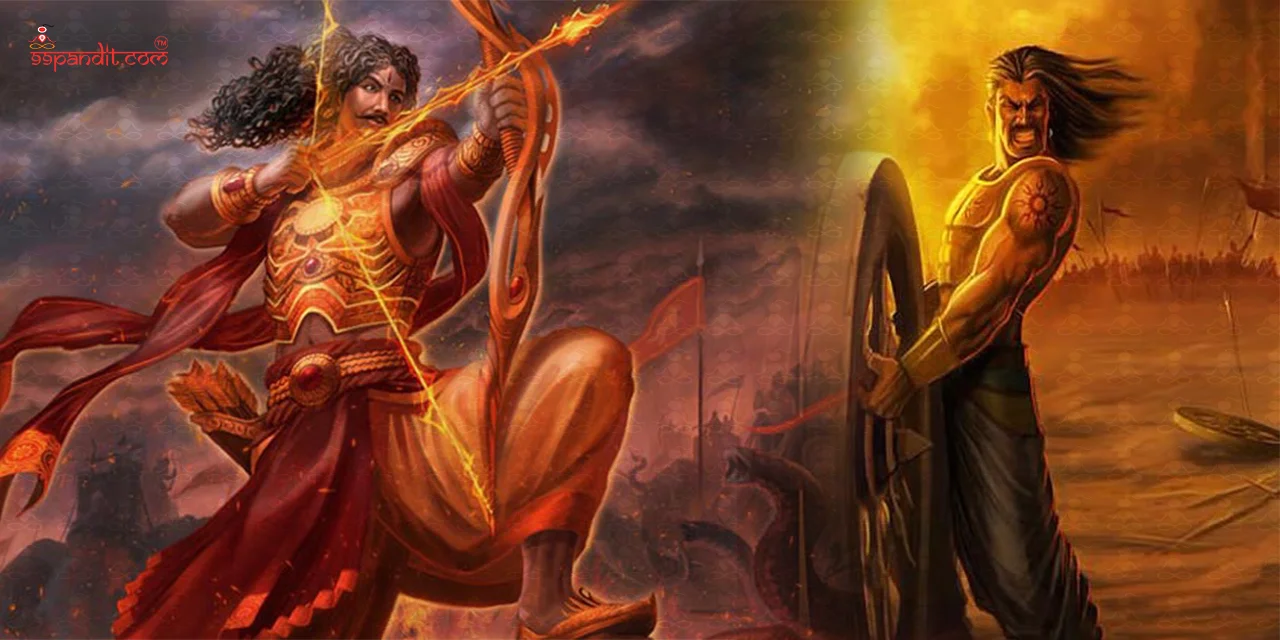
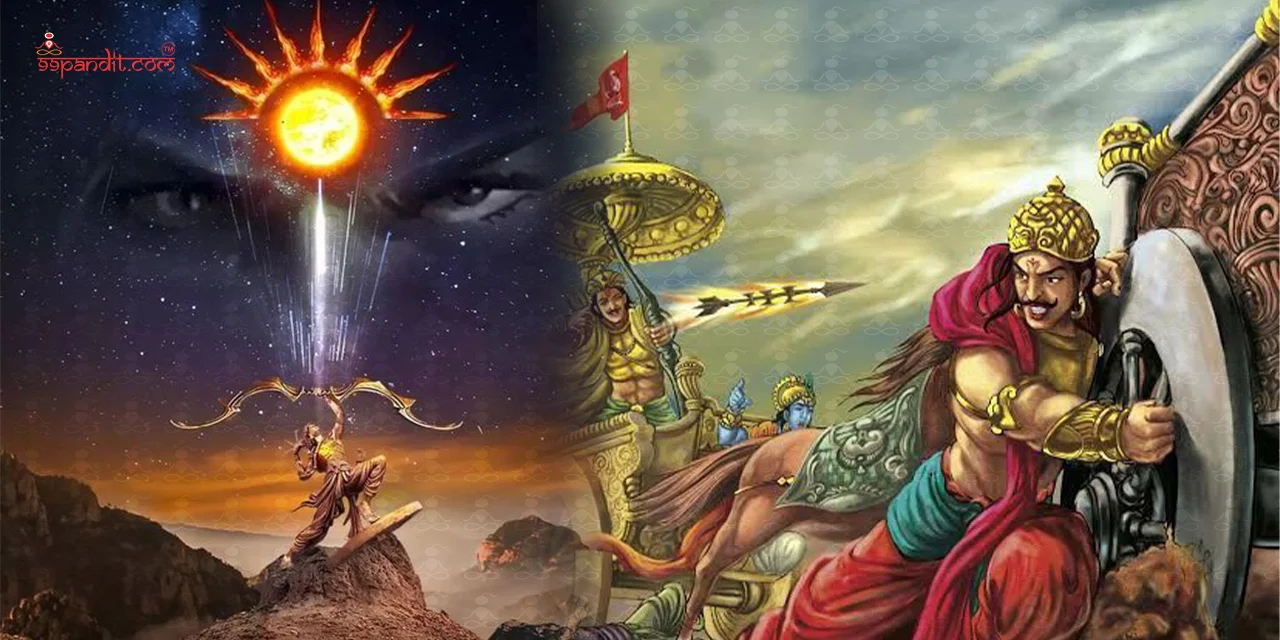
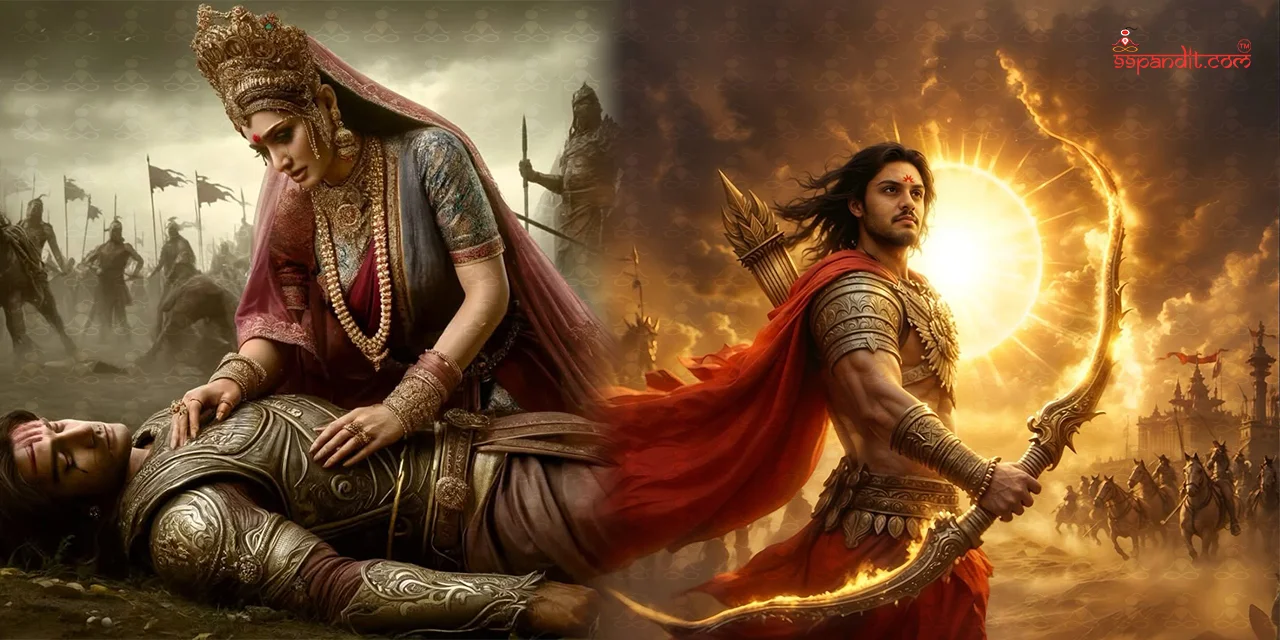
Suryaputra Karna in Mahabharat: Icon of Loyalty, Courage, & Sacrifice

Do you know the warrior Suryaputra Karna in Mahabharat? Not many people know who Karna is.

In the stories of Mahabharata, we often hear about many complicated relationships and confusing situations.

In this period, Danveer Karna is also mentioned a lot. Karna is a major antagonist of the epic Mahabharata.

Karna in Mahabharat

The great epic Mahabharata was composed by the creator of Vedas, Ved Vyas ji. In this epic, the valour and greatness of Suryaputra Karna have been described in detail.

Suryaputra Karna is also called Danveer. According to the experts of religious scriptures, in those times, Suryaputra Karna was equal to King Bali in giving donations.

Veer Karna never refused to give donations to anyone. Therefore, Karna is counted among the great donors.

Karna was an important character in Mahabharata, and he has been praised for ages. Apart from being skilled, he was also a very good warrior. But do you know if Karna in Mahabharata is a hero or villain?

Today, in this blog, we are going to explore everything you need to know about Suryaputra Karna in Mahabharata.

We will talk about the loyalty and sacrifice of Karna. We will also learn how he died. Come, let’s know everything about “Suryaputra Karna in Mahabharat: Icon of Loyalty, Courage, & Sacrifice:-

Who was Suryaputra Karna?

Karna was the son of Kunti, the mother of the Pandavas and Surya. Kunti gave birth to Karna before her marriage.

When Kunti received the Devahuti mantra from sage Durvasa, she called the Sun God just to test it, so she had to become a mother without marriage.

Then, out of fear of public disgrace, Kunti drowned her first child, Karna, in the Ganga immediately after his birth.

A charioteer found him, and he raised Karna. Who later came to be known as Daanveer Karna.

99pandit

BOOK TO GET 100% FREE CALL FROM PANDIT TO DECIDE DATE (MUHURAT)

99pandit

The secret of Karna’s birth is also hidden in a boon from the Sun God in his previous birth.

Karna’s birth and suffering throughout his life were also the result of his previous birth.

Being a son of a son, Karna had to face humiliation many times. He did not get respect in society.

Draupadi also refused to marry him, due to which he started hating the Pandavas. This was the reason that despite being Kunti’s son, Karna supported the Kauravas in the war of Mahabharata.

Education of Karna

Suryaputra Karna, instead of doing other work like his foster father Adhirath, mastered the art of war.

For this, Karna got full support from Adhirath. It is said that Suryaputra Karna first received the education of war art from Acharya Drona.

However, Karna failed to acquire the knowledge of the Brahmastra weapon. It is said that Suryaputra Karna tried to acquire the knowledge of using Brahmastra unfairly.

Knowing this, Acharya Drona refused to teach him. After this, Karna went to Parshuram ji to gain knowledge.

What curse was given to Karna in Mahabharata?

If we believe the Sanatan Dharma Guruji, Lord Parshuram gave complete education to Karna, the son of the Sun.

This included the knowledge of using Brahmastra. In those days, Lord Parshuram used to teach only Brahmins.

Once, Lord Parshuram was resting with his head on the thigh of Karna, the son of Sun. At that time, a scorpion started stinging Karna’s other leg.

Karna in Mahabharat

Knowing that the concentration of the Guruji should not be disturbed, Sun’s son Karna kept tolerating the scorpion’s sting. This created a big wound on Karna’s thigh.

Blood started flowing from this place. Lord Parshuram woke up from his sleep due to the flow of blood.

At that time, seeing the wound on Karna’s thigh, Lord Parshuram understood Karna’s power.

He said- Only a Kshatriya can have the power to bear so much pain. There is no doubt that you are a Kshatriya.

You got an education from me by deceit. Therefore, I curse you that when you need Brahmastra the most, at that time, you will forget to use it.

On the 17th day of the Mahabharata war, when the chariot of Surya Putra Karna sank into the earth, at the behest of Lord Krishna, Arjuna used Brahmastra on Surya Putra Karna.

However, Karna forgot to use Brahmastra at the time of need. In this way, Karna was killed by Arjun’s Brahmastra.

Mythological Story related to the Previous life of Suryaputra Karna in Mahabharata

In Satyug, sages Nara and Narayana, who were incarnations of Lord Hari, were performing penance.

A demon named Durdumbh (Dambhodbhava) had a boon that only a person who had performed penance for a thousand years could kill him.

99pandit

BOOK TO GET 100% FREE CALL FROM PANDIT TO DECIDE DATE (MUHURAT)

99pandit

The demon was also blessed with 100 armours and divine earrings by the Sun God. Whoever broke even one of his armours would die.

Troubled by Durdumbh’s atrocities, the gods went to Lord Vishnu and he sent everyone to Nara-Narayan. Nara-Narayan listened to the gods and promised to help them.

The Story of Nara-Narayana

The war with the demon began. First, Nara fought, and Narayana kept on doing penance.

After fighting for many days, Nara broke the demon’s armour and Nara also died. On this, Narayana got up and brought Nara back to life with the fruit of penance.

Now Nara started doing penance and Narayana started fighting. When Narayana broke the second armour, he also died, but Nara brought him back to life with the fruit of penance.

In this way, the war continued. Nara-Narayan kept fighting one by one, kept breaking the armour and kept on bringing each other back to life.

A Monster with 99 Armour

When the demon’s 99 armours broke one by one, the demon ran away and hid behind the Sun.

Sun God prayed to Nar-Narayan to protect the one who had surrendered. Then Narayan said okay, you will also have to bear the consequences of this.

Now, this demon will be born in Dwapar with your power, and the same armour and earrings will remain with him even then but will not be useful at the time of death.

Karna in Mahabharat was the same demon born with armour and earrings, but just before the war, Indra asked for the armour and earrings from him as a donation.

So, the armour did not remain, and Arjun was protected. According to the boon, if Arjun had broken Karna’s armour, he would also have died.

Sun God also tried a lot to protect Karna. He knew that Narayan Krishna would take incarnation in Mahabharata and protect the Pandavas, so he sent Karna as the eldest Pandava, but Tulsidas has written in Ramcharit Manas… “Hoihe Wahi Jo Ram Rachi Rakha…” Even after being born as a Pandava, Karna was ultimately killed in the war.

This story is told in the Adiparva of Mahabharata and the Bhagavata Purana, where the secret of the previous birth of Krishna and Arjuna has been told.

Karna’s generosity remained immortal

Karna may have met his end in the Mahabharata, but his generosity remained immortal.

Despite all the deceit and being in the camp of negative characters in the Mahabharata, Karna’s character is not tainted.

Maharathi Karna had a daily rule that he would bathe in the Ganga in the morning and offer water to the Sun God.

Immediately after the completion of the worship, whoever asked for anything from him, Karna would give that donation without hesitation.

Many times, this rule proved to be unfavourable for him; even knowing that the rule was against him, how could the son of the Sun, who burns himself to illuminate the whole world, deviate from his rule? Karna also never broke his rule.

Sacrifice of Suryaputra Karna in Mahabharat

The reason behind the name Daanveer Karna is that he did not hesitate to give anything.

The most famous incident of charity in his life happens just before the Mahabharata war when Devraj Indra asks for his armour and earrings. Only a few days were left for the war.

Karna was bathing in the river and worshipping the Sun as per his routine. At that very moment, a Brahmin came in front of him.

Karna in Mahabharat

Karna greeted him and asked him his wish, but the Brahmin remained silent. Karna kept asking questions, but the Brahmin remained silent.

Seeing this, Karna also became silent and started thinking that maybe Brahmin Dev is observing a vow of silence and he will say something after a special muhurta.

Then, the Brahmin started speaking and started praising Karna’s generosity. He said that he has heard a lot of praise for your generosity.

Whatever you resolve to do, you fulfil it. Even the clouds can rain only as much water as is in their coffers, but the limit of your charity is deeper than the ocean.

Hearing this oath of Karna, the Brahmin softly said- I want your armour and earrings.

Even after hearing this, Karna did not get disturbed at all and gladly agreed to give them by removing them from his body.

After donating the armour and earrings, he also said, I have come to know that you are not a Brahmin.

You are Devraj Indra. But I want to thank you that you have made me a normal human being.

Now, history and the world will not say that I won over Arjun because I had the armour and earrings. You have brought me to the position of equality.

Family of Suryaputra Karna

Fearing public disgrace, Kunti drowned Karna in the river. Later, on the banks of the Ganga, Hastinapur’s charioteer Adhirath found Karna, and he took the child to his home.

Karna was brought up by Adhirath’s wife, Radha. Hence, Karna is also called Radheya.

The name of the first wife of King Karna of ‘Anga‘ country was Vrishali. From Vrishali, he got 3 sons named Vrishsen, Sushen, and Vrishket.

From the second Supriya, he got 3 sons named Chitrasen, Susharma, Prasen, and Bhanusen. It is believed that Supriya was also known as Padmavati and Punnuruvi.

When Lord Krishna tested the generous Karna

In the pages of history, Karna is considered not only a mighty warrior but also a generous king.

There are many stories of Karna’s charity. It is said that whoever went to Karna and asked for something, would fulfill his wish somehow or the other.

Once, Shri Krishna himself went to Karna in the disguise of a Brahmin. He asked Karna for gold.

99pandit

BOOK TO GET 100% FREE CALL FROM PANDIT TO DECIDE DATE (MUHURAT)

99pandit

Karna said that right now, the gold is only in my teeth. You take it. The Brahmin said that for that, your teeth will have to be broken, which I cannot do.

On this, Karna himself broke his teeth took out the gold and gave it to Krishna in the form of a Brahmin.

Facts about Suryaputra Karna

First Fact:

Although this story is based on belief, it is said that Draupadi was in love with Maharathi Karna, and Karna also liked Draupadi.

Karna also went to the Swayamvar. King Drupad was against Bhishma, and Karna was in favour of Bhishma.

King Drupad had already told Draupadi that Karna is a charioteer’s son, and if you like him then you will be known as the wife of a slave throughout your life.

Disappointed in the Swayamvar, Draupadi took a tough decision and insulted Karna in front of the gathering by calling him a charioteer’s son.

Even then, during the disrobing, Draupadi had hope from Karna, but remembering his insult, Karna did not help Draupadi there.

Later, when Bhishma Pitamah was lying on his deathbed, Karna told him that he loved Draupadi.

Draupadi also heard this, and for the first time, Draupadi also came to know that Karna also loved her.

Second Fact:

Once, Kunti went to Karna and requested him to fight on the side of the Pandavas. Karna knew that Kunti was his mother.

Despite Kunti’s repeated attempts to convince him, Karna did not listen and said that he could not betray the person with whom he had spent his entire life till now.

Then Kunti asked, will you kill your brothers? To this, Karna, in a state of great dilemma, promised, ‘Mother, you know that no one who comes to Karna as a beggar goes back empty-handed, so I promise you that I will not raise my weapon against my other brothers except Arjuna.’

Third Fact:

Karna’s power was no less than Arjun and Duryodhan. He had Amoghastra given by Indra in exchange for armour and earrings.

While giving Amoghastra, Indra said that you can use it only once. Whoever is used to it will definitely die.

Karna used this Amoghasthra on the advice of Duryodhan on Bheema’s son Ghatotkach, while he wanted to use it on Arjun.

This was such a weapon whose attack could never go in vain. But according to the boon, it could be used only once.

Conclusion

In conclusion, Suryaputra Karna in Mahabharat is one of the most important and powerful characters.

There was no one as generous as Karna among the characters of Mahabharata. Karna was the son of Sun God, whom Kunti had received before marriage with the mantra given by Durvasa Rishi.

Karna had received divine armour and earrings from the Sun God, with which no one could harm him.

Suryaputra Karna was a great warrior and archer, but he was a great donor. It is said about him that no one returned empty-handed from his door.

I hope you gain some important insights about the Suryaputra Karna in Mahabharat. This is it for today.

I hope you enjoyed reading this article; for more such content and blogs, stay connected with us.

Along with this, if you are worried about how to find an authentic Pandit for your puja and related needs feel free to contact 99Pandit and book a Pandit Today.

Who are Lord Shiva’s Father & Mother: Discover the Truth

Do you know Who the Father of Lord Shiva is? How was Lord Shiva was born? Have you ever imagined the Lord Shiva’s Parents?

These types of questions arise in the minds of many people. Today, with 99Pandit, we are giving you answers to these questions.

Lord Shiva is one of the most important and revered deities in Hinduism. He is also known as Devo ke Dev Mahadev, which means god of all the gods.

Father of Lord Shiva

It is believed that Lord Shiva is eternal, infinite, and self-existent. When Lord Shiva is the best of all the gods, then curiosity arises in the mind about who Lord Shiva’s father and mother are because most of the devotees are unaware of Lord Shiva’s parents.

The Srimad Devi Bhagwat Purana and other religious texts tell the story of Lord Shiva’s birth.

In this blog, we will learn who Lord Shiva’s parents are and the birth story of Lord Shiva as per the Shiv Purana.

Who is the Father of Lord Shiva?

According to the Sacred Hindu scriptures, Lord Brahma, the creator of the universe, is said to be the father of Lord Shiva. However, birth was not biological; it was a result of cosmic energies.

Lord Shiva is said to have been born out of a cosmic egg called Hiranyagharbha. The egg, it is said, is the original form of the universe from which both Lord Brahma and Lord Vishnu were born. Lord Brahma was born as a lotus from the navel of Lord Vishnu

Who is the Mother of Lord Shiva?

The abstract nature of nature, or Prakriti, is regarded as Lord Shiva’s mother. Most individuals believe that Lord Shiva is Anandi.

The importance of this world cannot be stated to have started or to have developed through any phase.

As Lord Shiva exists in his present form as Anandi, he cannot experience a birth or what we would simply call the start of everyday life. He has survived beyond both his birth and his death.

Mythology also says that his mother and wife, Goddess Parvati, are his mother. Goddess Durga, the Mother of All, is also said to be Lord Shiva’s mother.

According to Shrimad Devi Bhagwat Purana, the Goddess Durga is Lord Shiva’s mother.

Hindu legends recount the numerous incarnations Lord Shiva has assumed in the world of men. In these incarnations, his parents are usually devoted followers of the Lord.

Evidence of Lord Shiva’s Father and Mother

According to the Shrimad Bhagvat Gita Chapter 14, Verses 3-5, Prakriti, or the Goddess Durga, gave rise to the three gunas: Sat (Satgun Vishnu), Raj (Rajgun Brahma), and Tam (Tamgun Shankar).

Prakriti has been called ‘Mother Nature’ because she gave birth to all living beings. I, the receiver of the Gita’s wisdom, am the father of all living things. I sow the seed in the womb of Durga (Prakriti), who gives birth to all creatures.

Father of Lord Shiva

The Shiv Purana provides conclusive details about Lord Shiva’s creator. In several places, Lord Sadashiv is mentioned as the father of Lord Shiva, Brahm, and Vishnu.

This makes it clear that Lord Shiva is born and dies and is not immortal. Shrimad Devi Bhagavad also establishes that Brahma, Vishnu, and Shiv take birth and expire.

Origin of Lord Shiva

The mythological texts contain various stories and beliefs about Lord Shiva’s parents and origin. Most of them say that Lord Shiva is Anandi (having no beginning) and self-generated.

Shiva is worshipped as the god of creation, status, and destruction and is considered the original power of the universe. However, some texts mention Lord Shiva’s parents.

Shrimad Bhagwat Devi Purana

According to Shrimad Bhagwat Devi Purana, once in Devarshi, Narada asked his father Brahma who created this world and who Lord Vishnu, Lord Shiva, and your parents are.

Answering Naradji’s questions, Brahmaji began to tell him about the birth of Lord Shiva, Lord Vishnu, and Brahmaji and their parents.

Brahma ji said that the trinity of Brahma, Vishnu, and Mahesh was born from the yoga of Goddess Durga and Shiva in the form of Brahma or Kaal-Sadashiva.

Mother Durga, in nature, is the mother of all three gods, and Kaal Sadashiv is our father.

Shiva Purana, Vidheshwar Samhita, Chapter 10

Another story about the origin of Lord Shiva is that once, Brahmaji and Lord Vishnu had a dispute.

In the dispute, Brahma ji said to Lord Vishnu, “I am your father because the origin of all creation is from me; I am Prajapati; therefore, I am your father.

Then Lord Vishnu told Brahma, “You are not my father, but I am your father because you are born from my navel lotus.”

Brahma ji and Vishnu ji’s dispute increased. Then Sadashiva reached there to resolve their dispute and said, Sons, I have given you two tasks in the form of origin and status of the world.

In the same way, I have assigned the task of destruction and Tirogati to Shiva and Rudra. I have five faces.

Akar (a) from one mouth, Ukar (u) from another, Mukar (m) from the third mouth, Bindu (.) from the fourth, and Naad (word) from the fifth. The word ‘om‘ was formed by combining these five elements. Om is my main mantra.

Shiva Purana

According to the Shiv Purana, Lord Shiva is considered eternal and self-existent. This Purana states that Lord Shiva has no birth and is beyond the beginning and end of creation.

There is a story in Shiva Purana in which there is a dispute between Lord Brahma and Lord Vishnu which the two are supreme deities, and Lord Shiva performs a Leela to end their dispute.

Father of Lord Shiva

At that time, a pillar of light (Linga) appeared. Mahadev orders Brahma and Lord Vishnu to find out the beginning and the end of that pillar.

Both Devata fails to detect the beginning and end of that pillar. Then, they realize that Lord Shiva is supreme.

Linga Purana

The Linga Purana is one of the 18 Mahapuranas that describes the story of Lord Shiva’s Jyotirlingas. It contains 11 thousand verses describing Lord Shiva’s glories.

The Linga Purana is considered the best of all Puranas. Even in Linga Purana Lord Shiva is said to be Swayambhu and Anandi.

It describes the glory of Shivlinga and its various forms. The Purana also recognizes Lord Shiva as the supreme power.

Conclusion

Lord Shiva is the highest deity in Hinduism. Shrimaddevi Mahapuran mentions Lord Shiva’s parents.

According to the Mahapuran, once Narad ji asked his father, Brahma ji, who created the universe. Also, who are Lord Vishnu, Lord Shiva, and your father?

Then Brahma ji told Narad ji about the birth of the Tridevs. He said that Durga, a form of nature, is the mother of all three of us, and Brahma, i.e., Kaal Sadashiv, is our father.

Lord Shiva is also known by many other names, such as Mahadev, Bholenath, Shankar, Mahesh, Rudra, and Neelkanth.

In Tantra Sadhana, he is also known as Bhairava. He is one of the main Gods of Hinduism and is also known as Rudra in the Vedas.

It is said that Lord Shiva is the Antaryami of human consciousness, i.e., he can read the human mind.

I hope you gain some valuable insight about Lord Shiva’s Parents. For more such articles, stay connected with 99Pandit.

Top 10 Most Powerful Hindu Gods: Origins, Powers, & Facts

Before discussing the Top 10 Most Powerful Hindu Gods, it is important to inform you that, in Hindu Dharma, it is believed that there are about 33 Koti Devi-Devta which means 33 types of God.

Including 12 Aditya,11 Rudra, and 8 Vasu along with Indra and Prajapati. The 12 Aditya are Anshuman,Aryaman, Indra, Twastha, Dhatu, Parjanya, Pusha, Bhag, Mitra, Varuna, Vivaswana, Vishnu.

Most Powerful Hindu Gods

The 11 Rudra includes Shambhu, Pinaki, Girish, Sthanu, Bharga, Bhava, Sadashiva, Shiva, Hara, Sharva, and Kapali. 8 Vasu are Aap, Dhruva, Soma, Dhar, Anil, Anal, Pratyusha, Prabhasa. Each God possesses different power and strength. Hinduism is the oldest religion and tradition in the entire world.

Most people only know about the Lord Brahma, Vishnu, and Mahesh (Shiva). But today in this blog, we will talk about the Top 10 Most Powerful Hindu Gods with their origin, power, and some unknown facts.

List of Top 10 Most Powerful Hindu Gods

  1. Lord Shiva.
  2. Lord Vishnu.
  3. Lord Brahma.
  4. Lord Ram.
  5. Lord Krishna.
  6. Lord Hanuman.
  7. Lord Ganesh.
  8. Lord Kartikey.
  9. Lord Indra.
  10. Lord Yama.

1. Lord Shiva

Lord Shiva is the supreme God and one of the three most powerful Gods in Hinduism. Shiva is the destroyer within the Trimurti, the Hindu trinity that includes Lord Brahma and Lord Vishnu. According to Hindu Mythology, Shiva is the creator, destroyer, and regenerator at the highest level. 

Lord Shiva is regarded as the formless, limitless transcendent, and unchanging absolute Brahman and the primal soul, self of universe. Shiva is also considered the patron god of Yoga, meditation, and arts.

Most Powerful Hindu Gods

Lord Shiva, who gives arms and ammunition in the boon is the Lord of all knowledge. Therefore, Lord Shiva is the most powerful deity of Hinduism.

Origin of Lord Shiva

According to Mythological stories, Lord Shiva was created thanks to an argument between Lord Brahma and Lord Vishnu. One day Lord Brahma and Lord Vishnu were arguing over who was the most powerful and superior among them. Suddenly, out of nowhere, a glaring and furious pillar appeared.

The top and the root of the pillar were invisible and both the Gods heard an oracle that asked them to compete with one another. They both had to find the start and end of the pillar.

To find this answer, Lord Brahma immediately became a goose and flew upwards to find the top of the pillar. Likewise, Lord Vishnu converted Himself into a boar and dug deep into the earth to find the end of the pillar. Both tried tirelessly but couldn’t locate the top or the end. When Lord Vishnu and Brahma gave up, they found Lord Shiva waiting for them.

This made them realize that there is another ultimate power that is ruling this universe and that is God Shiva! The eternity of the pillar symbolizes the never-ending eternity of God Shiva.

According to religious texts, Lord Shiva is Sayambhu, meaning the one who is not born from a human body. He was created automatically! Lord Shiva was there when there was nothing and He will stay even after everything is destroyed. That is why he is also loving and called the ‘Adi-Dev’ which means the oldest God in Hindu mythology.

Powers Of Lord Shiva

Lord Shiva is the major deity in Hinduism and is often referred to as the Lord of destruction, transformation, and regeneration. Shiva has a powerful weapon in his hand called ‘Trishul’ also known as the trident is one of the primary weapons of Lord Shiva and is often depicted as being held in his right hand.

The Trident represents the three important fundamental aspects of the universe: creation, preservation, and destruction. Lord Shiva’s trident is powerful and no one except Lord Shiva and Goddess Parvati can hold the trident.

Shiva has the most destructive weapon ‘Pashupatastra’ in his Pashupatinath form, which can wipe out the entire universe. Lord Shiva’s third eye (Ajna Chakra) has immense energy, which can turn anything into ash.

Facts About Lord Shiva

He is the supreme Yogi and his other name is Adiyogi. According to beliefs, Lord Shiva was the first one to practice Yoga.

  1. Lord Shiva is also considered to be the greatest dancer, many people worship the ‘Nataraja’ form of Lord Shiva as he is the king of all dance forms.
  2. Shiva is the only God to be worshiped in the form of ‘Linga’ or ‘Lingam’ which signifies the origination of the universe. 
  3. Lord Shiva is the commander of all Asuras and known to be the king of all Asuras as he treats both demigods and demons with equal empathy. 
  4. Shiva gets pleased easily as his name is Bholenath. He is easy to please and provides mercy to his devotees easily.

2. Lord Vishnu

Lord Vishnu is known as the preserver within the Trimurti, the triple deity of supreme power that includes Lord Brahma and Lord Shiva; Lord Vishnu has many forms and infinite incarnations, and all these incarnations incarnate in the physical world from time to time to perform different functions.

The form that Lord Vishnu takes while incarnating is suitable for that task. It is described in Bhagavad Gita that Lord Vishnu appears to protect the devotees and destroy the demons through the influence of his inner power.

Most Powerful Hindu Gods

A devotee should understand that Lord Vishnu does not appear in the form of a physical animal or human being, his appearance in the form of a Varaha idol, a horse, or a tortoise is only a display of his inner power.

Origin Of Lord Vishnu

Lord Vishnu is ajanma which means unborn, he is never born or dies. Rigveda mentions that Lord Vishnu is unborn and eternal. According to the most ancient Valmiki Ramayana, even Brahma doesn’t know the origin of Lord Vishnu.

According to the Vishnu Purana, Lord Vishnu was the only one to survive even after complete devastation (Pralay). Therefore, Lord Vishnu began the resurrection of the universe by giving birth to Brahma from his naval so that the cycle of creation, destruction, and recreation keep moving.

According to mythology, after giving birth to Brahma to create life on earth, Lord Vishnu also produced Lord Shiva from his forehead, to end the journey of the varied forms of life. Thus, he trusted Lord Brahma and Mahesh (Lord Shiva) with their respective duties to form a life cycle.

Powers Of Lord Vishnu

Lord Vishnu is omnipotent. He can travel instantly from anywhere. Lord Vishnu has many deadliest weapons, one of them is Sudarshan Chakra. The deadly discus of death, swirling around his fingers.

Along with Sudarshan Chakra, Lord Vishnu has weapons like Narayan Astra, Sharanga Bow, Nandaka Sword, and Kaumodaki Gadha. The powers of lord Vishnu are clear not only because he looks after the universe but also because he comes to Earth in different forms called avatars, like Matsya, Kurm, Varah, Ram, Krishna, and more.

Lord Vishnu is known as the preserver of the universe as he takes avatars to protect the universe from evil.

Facts About Lord Vishnu

  1. Lord Vishnu’s only female avatar was Mohini, who took the pot of amrita from Asuras and gave it to Devas.
  2. Lord Vishnu has more than 1000 names.
  3. The dark blue color of  Lord Vishnu symbolizes his purity and his eternal nature, similar to the seemingly limitless blue ocean.
  4. Lord Vishnu’s vehicle or vahan is Grauna, the eagle.
  5. Out of Lord Vishnu’s Dashavatar, the tenth avatar is still to be born and his name will be Kalki.

3. Lord Brahma

Lord Brahma is the deity that represents the universe’s creative force. He is part of the Trimurti, the great Hindu Trinity alongside Lord Shiva and Lord Vishnu the god stands for balance while Shiva and Vishnu represent two opposing forces: destruction and maintenance.

Lord Brahma is the master of time and one day for the god is equivalent to four thousand three hundred twenty million years for a mortal being in the dawn of time. Lord Brahma is depicted with four heads each reciting one of the four vedas and each looking in a different direction. He had a fifth head initially but Lord Shiva ripped it off.

Most Powerful Hindu Gods

After that, he had dared to insult the God of destruction. Lord Brahma has only one temple in his honor, unlike Lord Shiva and Lord Vishnu who have temples spread all over India, it is located in Pushkar Rajasthan where Lord Brahma defeated a Danav with a lotus flower. The lotus flower petals fell in that location and turned the region into a sacred place.

Origin Of Lord Brahma

According to the Vedas, Lord Brahma is often referred to as Prajapati. Lord Brahma was born of the supreme being Brahman and the female energy known as Maya. Wishing to create the Universe, Brahman first created the water, in which he placed his seed.

This seed transformed into a golden egg from which Brahma appeared. For this reason, Brahma is also known as the Hiranyagarbha. Hiranyagarbha means the golden Womb. It is the source of the manifested cosmos in Vedic philosophy and the creation of the universe. It finds mention in one hymn of Rigveda.

The remains of this golden egg expanded into the Brahmand or universe. Brahma gave birth to the eleven forefathers of the human race called the ‘Prajapatis’ and the seven great Sages ‘Saptrishi’ to help him further create the universe. This is how Lord Brahma was manifested based on the Vedas.

According to Vishnu Purana, Lord Brahma was self-born from a lotus flower which grew from the navel of Lord Vishnu at the beginning of the universe. Thus he was named Nabhija (born from the navel). According to Puranas, the only one to survive the complete devastation was Lord Vishnu.

Therefore, to keep the cycle of creation, destruction, and recreation moving, Lord Vishnu began the resurrection of the universe by creating Lord Brahma.

Powers Of Lord Brahma

Lord Brahma is the creator of weapons like Brahmaśira, one of the top 3 most powerful Astra apart from Shiva’s Trishul and Sudarshana. When Lord Brahma destroys Himself after His 100 years, all ends except for Shiva and Vishnu.

He then gives birth to Himself as Swayambhu Brahma (Hiranyagarbha). Lord Brahma has the divine and supreme power of creating infinites of multiverse as Hiranyagarbha.

Facts About Lord Brahma

  1. The lifespan of Lord Brahma is 100 divine years which is about 311 trillion human years.
  2. Lord Brahma is depicted with four heads each reciting one of the four vedas and each looking in a different direction.
  3. Lord Brahma has only one temple in his honor, it is located in Pushkar Rajasthan where Lord Brahma defeated a Danav with a lotus flower. The lotus flower petals fell in that location and turned the region into a sacred place.
  4. Daksha was born from Brahma’s right toe. A beautiful woman known as Prasuti was born from  Lord Brahma’s left toe. Upon Brahma’s advice, Daksha married Prasuti. Brahma instated Daksha as the first Prajapati and granted him lordship over all creatures.
  5. Brahma is the only god in the Vedic pantheon who doesn’t keep any weapons with him.

4. Lord Ram

Among the 10 incarnations of Lord Vishnu, the main incarnation is Shri Ram. Lord Shri Ram was born in Treta Yuga. There are many reasons behind taking this incarnation. Shri Ram’s incarnation is the combined result of many blessings and curses.

Demon kings Hiranyakashyap and Hiranyaksha were born as Ravana and Kumbhakarna in their second birth. According to the boon of Shri Hari, Hiranyakashyap and Hiranyak would be saved by his hands, due to this boon Shri Ram was born.

Most Powerful Hindu Gods

Also, pleased with the rigorous penance of sage Kashthya and Aditi, Lord Vishnu gave the boon of having a son, and himself appeared in the form of Shri Ram.

Origin Of Lord Ram

In Treta Yuga, when Lankapati Ravana had created terror in the entire universe. Then Lord Vishnu was born in the house of King Dasharatha and Queen Kaushalya. But his life was full of many difficulties. Keeping his father’s honor, he left the kingdom and spent 14 years in exile with his brother Lakshman and his wife Sita.

During that time, Ravana abducted Mother Sita, who was found by Lord Shri Ram with the help of Hanuman ji and the entire monkey army, and with this he killed Ravana.

Powers Of Lord Ram

Sage Agastya gifted Lord Ram Quivers that will never run out in a war, Divine Sword, Chariot, and Armor that cannot be pierced by weapon was also given to Lord Ram. As an avatar of Lord Vishnu, Lord Ram also has supreme and divine powers.

Lord Ram also received the Brahmastra, which can only be used once in a lifetime and could do severe damage. In the Treta Yug, Shri Ram was the only possessor of the Narayanastra. This arrow was the weapon of Lord Vishnu himself and showered a volley of missiles on the enemy. 

Lord Ram also has the Astra and Pashupatastra, The weapon of Lord Shiva, this arrow was so powerful that it could be discharged by the use of mind, eyes, and the bow. This astra was possessed by only two people, one being Meghnaad and the other Rishi Vishwamitra. 

While granting the divine arrows, Rishi Vishwamitra also gives Shri Ram the Pashupatastra and since then it has come into the possession of Shri Ram.

Facts About Lord Ram

  1. Lord Rama is considered as the one of oldest deities worshiped in human form.
  2. Lord Ram is the descendant of Surya Dev, this is why Lord Ram is called Suryavanshi. 
  3. According to Hindu Mythology, if anyone pronounces the name of Lord Ram three times, it is equal to remembering thousands of Gods.
  4. Rama has two meanings, the supreme Brahmin who is the eternally blissful spiritual self, and the one who is out of his own will to assume the enchanting form of Rama. 
  5.  Lord Ram is referred to as Maryada Purushottama within Hinduism which means the perfect man or lord of self-control.

5. Lord Krishna

The eighth and most mischievous incarnation of Lord Vishnu is Shri Krishna. In Dwapar Yuga, Lord Shri Hari destroyed Shri Krishna Avatar and many evil demons. When the whole world belonged to Mathura Naresh Kansa, then Shri Krishna killed him and peace in the world was disturbed.

Shri Krishna During Mahabharata, Jan Arjun deviated from his path, and then Shri Krishna gave him the knowledge of Geeta. Shri Krishna became Arjun’s guide and charioteer in the war.

Most Powerful Hindu Gods

With his guidance, Pandavas won in Mahabharata, and Dharmaraja Yudhishthir was made the king. This incarnation of Lord Vishnu not only taught the path of religion but also made us aware of love, friendship, devotion, what is true in the true sense, and what is the real way of life.

Origin Of Lord Krishna

Kansa, The ruler of Mathura was one such evil king. He had a sister named Devaki who was married to Vasudev. The day Devaki and Vasudev got married, a voice from the sky forecasted that Devaki’s 8th son would bring an end to Kansa’s rule and would kill him. A frightened Kansa held the couple captive.

He then vowed that he would kill every child of Devaki and Vasudev. Seeing their first seven children being killed by the cruel Kansa, the imprisoned couple feared giving birth to the 8th child. One night, Lord Vishnu appeared before them. He told them that as their son, he would return and rescue them from Kansa’s evil deeds.

The divine baby was born and the day he was born, Vasudev found himself magically freed from the prison. In a subconscious state of mind, he took the baby away from the prison and placed him in a safer place.

Vasudev reached a house in Gokul, exchanged Lord Krishna with a newborn girl of Nanda and Yashodha, and returned to prison with a girl child. Lord Krishna was raised by Yashodha.

After many years, the news confirming that Krishna was indeed the son of Devaki and Vasudeva broke out, and Krishna had to leave for Mathura, leaving behind his other family of Nand and Yashodha. After many years, considering the kingdom dangerous, he led the Yadavas to Kathiawar’s West Coast and set up his court in Dwarka.

Powers Of Lord Krishna

Lord Krishna possessed 16 kalas or divine qualities, including compassion, patience, forgiveness, justice, impartiality, detachment, spiritual powers, invincibility, generosity, beauty, dance, singing, honesty, truth, mastery of all arts, and control.

Lord Krishna killed many Danavas like Putana, Sakatasura, Bakasura, Aghasura, and Kaliya Naag with his divine and supreme powers. This makes Lord Krishna one of the most powerful Hindu gods.

Facts About Lord Krishna

  1. Lord Krishna married a beautiful princess from the Vitar kingdom named Rukmini.
  2. Lord Krishna, married seven other wives, Satyabhama Jamboti Kalindi, Nehna, Mitra, Binda, Lakshmana, and Batra.
  3.  Krishna is also famous for having 16,000 wives.
  4. Gandhari cursed Lord Krishna that 36 years from the day of Mahabharata, Krishna would die, and his kingdom Dwarika would be flooded.
  5. When Radha Rani died, Lord Krishna could not bear Radha’s death and broke his flute as a symbolic ending of love and threw it.

6. Lord Hanuman

Lord Hanuman was an incarnation of Lord Shiva and is considered to be a representation of strength, devotion, and perseverance. The mother of Lord Hanuman was Anjana. Anjana in her previous life was an apsara named Punjikasthala, who was born on earth as a vanara princess due to the curse of a sage.

Most Powerful Hindu Gods

Anjana was married to Kesari, a vanara chief, who was also the son of Brihaspati. It is said that Lord Hanuman’s steadfast commitment and devotion were so strong that he was free of all physical fatigue and harm. His last promise to Lord Ram was that he would stay on Earth in secret as long as the name of Lord Ram was remembered and worshiped.

Origin Of Lord Hanuman

Once upon a time, King Dasharatha was doing a great penance to obtain sons. Finally, Lord Brahma gave him a pudding that Dasharatha gave his queens to eat, as a result, Lord Ram, Bharath, Lakshman, and Shatrughna were born. On the other side, Anjana and Kesari intensely prayed to Vayu Dev to beget him as their child.

Pleased with their pure devotion and prayers, Vayu Dev granted the boon they sought. According to the Puranas, some pudding was taken away by the wind and dipped into Anjana’s hand.

Eating it, she also gave birth to Lord Hanuman. Lord Hanuman thus often known as Anjani Putra or Anjaneya meaning the son of Anjana or Vayu Putra meaning the son of Vayu Dev.

Powers Of Lord Hanuman

When Lord Hanuman assumed the Sun was a big fruit and left it up to grab and eat it. To punish Hanuman and stop him from snatching the sun out of the sky, Indra Dev intervened and struck Lord Hanuman with the thunderbolt or Vajra. It struck Lord Hanuman on his chin, and he fell to the earth.

His father Vayu, the God of air, became very upset and decided to take away all the air from Earth which poses a huge threat to all living beings. This led Lord Shiva to bring Hanuman back to his senses. The striking of Indra’s thunderbolt left Hanuman blessed, making him as strong as Indra himself.

After that Brahma gave Lord Hanuman the ability to grow bigger or shrink, smaller in size, and Agni Dev gave him a boon that fire wouldn’t hurt Hanuman. The God Varun gave him a boon that water wouldn’t harm him and his father Vayu blessed Hanuman so that he could be as fast as the wind.

Facts About Lord Hanuman

  1. Hanuman is also known as Punch Mukhi, meaning the one with five heads which are, Narsimha, Gurun, Varah, and Hayagriva. 
  2. Lord Hanuman has been known in Hinduism as the supreme devotee of Lord Ram.
  3. Shiva Purana mentions Lord Hanuman as an avatar of Lord Shiva.
  4. Lord Hanuman himself wrote a version of Ramayana.
  5. The devotees have colored the idols of Hanumans in the rich vermillion red for the well-being of Lord Ram.

7. Lord Ganesha

Hindus consider Lord Ganesha to be the most special among their gods. People believe that any prayer or ritual will be fruitless if they do not pay obeisance to Lord Ganesha, who is the God of knowledge, wisdom, prosperity, and fortune.

Devotees of Lord Ganesha believe that every ceremony ritual should begin by invoking Lord Ganesha’s name as he is the Vigna-Harta, meaning the remover of obstacles. Many people refer to him by names like Ganapati, Vinayak, Vigneshwara, and Lambodar, but he is popularly known as Ganesha.

Most Powerful Hindu Gods

With the head of an elephant, a broken tusk, a big belly, four arms, and riding a mouse, Lord Ganesha is the most unique God to look at.

Origin Of Lord Ganesha

Lord Ganesha was born to Lord Shiva and Parvati on the fourth day of the waxing moon period that falls between August and September. After several years of penance when Goddess Parvati was taking a bath with her friends, Lord Shiva arrived at her palace without any notice.

Parvati was unhappy with his behavior and decided to create a child of her own. She scraped some dirt from her body and shaped it into a beautiful boy. Bringing life into the boy, she instructed him not to allow anyone inside the palace while she was bathing. When Lord Shiva tried to enter again, the boy stopped him at the entrance. Lord Shiva lost control and broke into a fight.

Despite being well aware of the might of Lord Shiva and the repercussions that could follow, Lord Ganesha refused to disobey his mother even if it cost him his life. In a fit of rage, Lord Shiva severed the head of the child with his Trishul.

When Parvati came to the door, her eyes fell on her beheaded son, in no time she took the infuriated form of Kali and threatened to destroy the world, fearing her anger. Lord Shiva implanted the head of the first creature he saw, which was an elephant bringing Ganesha back to life.

Powers Of Lord Ganesha

People name Lord Ganesha the Vigna-Harta, which means the remover of obstacles. Among all the gods, Lord Ganesha is the most wealthy and powerful god. He acquires strength and knowledge as well. Lord Ganesha is worshiped by every god including the Trimurti (Lord Brahma, Lord Vishnu, and Lord Shiva). 

Lord Shiva beheaded Lord Ganesha after Lord Ganesha had already defeated all the gods led by Indra Dev. People refer to Lord Ganesha as Lambodara, meaning his stomach contains the entire cosmic eggs (universes).

Facts About Lord Ganesha

  1. Religion also worships Lord Ganesha in Jainism and Buddhism.
  2. The four arms of Lord Ganesha represent the mind, intellect, ego, and conscience.
  3. Holy texts state that Lord Ganesha’s stomach contains the entire cosmic eggs (universes).
  4. Lord Ganesha is worshiped by every god including the Lord Brahma, Lord Vishnu, and Lord Shiva.
  5. People consider Lord Ganesha the Pratham Pujya Devta, which means that every ceremony ritual should begin by invoking Lord Ganesha’s name. Without taking his name the ritual remains incomplete.

8. Lord Kartikeya

Lord Kartikeya, also known as Murugan in the Southern part of India is the second son of Lord Shiva and Goddess Parvati. He symbolizes perfection and people consider him Dev Senapati or commander-in-chief of the divine army, born specifically to destroy demons.

According to the scriptures, Lord Kartikeya was born to kill a demon named Tarakasur. Lord Shiva’s son was the only one who could defeat Tarakasur. Lord Shiva, known for his celibacy and severe asceticism, was far from any thought of marriage, making it impossible.

Most Powerful Hindu Gods

Kamdev, the love god, was sent to create an untimely mechanism around Lord Shiva and break his meditation with the arrow of lust. Though on awakening, Lord Shiva’s fiery gaze burns Kamdev to ashes.

His love dispersed across the entire universe. Ultimately, Mata Parvati, the incarnation of Mata Sati and Lord Shiva’s first wife. Lord Shiva fell in love with Mata Parvati and Lord Kartikeya was born to kill Tarakasur.

Origin Of Lord Kartikeya

Lord Shiva fell in love with Mata Parvati, but after so many years of meditation, his seed had become stronger. Agnidev received the seed from Shiva, even though he couldn’t stand severe burns, and dropped it in the Ganga River. Karikeya was born there.  

Later Ganga brought him to a forest called Saravan, which later became known as Saravna. Kalidas’s epic poem Kumara Sambhav, the birth of war god, tells a similar story. Later, six mothers called Kratika raised Kartikeya.

The Kratika‘s are six bright stars from a cluster of seven stars. The charming child mesmerized them when he appeared in the Ganga River. They all cared for him like a mother, which is why they called him Kartikeya, meaning son of the Kratikas.

There are different versions of these tales in many texts and regions of India. In the Mahabharata, the text shows Kartikeya as the son of Agni and Swaha. In the later books of the Mahabharata, Valmiki, the author of the Ramayana, depicts him as the child of Agni and Goddess Ganga. Shiva and Parvati portray themselves as Kartikeya’s parents.

In the South, people revere Lord Karthik as Lord Murugan. They believe him to be a Tamil deity. He has the same importance as that of Lord Krishna or Lord Ganesha.

Powers Of Lord Kartikeya

Lord Kartikeya has infinite physical strength. He has so much power that he can carry a vast number of universes or galaxies in his strong and mighty arms. Lord Kartikeya performs great miracles. During his childhood, he effortlessly killed 10 thousand billion demons with a spear given to him by Lord Agni.

During his childhood, Lord Kartikeya made the earth, all mountains, and 3 worlds tremble violently and he playfully defeated Indra and the other 32 gods along with their armies, all celestial forces. and all of them ran away in fear of him.

Vajra (Thunderbolt) of Indra which is the most powerful weapon could not affect him at all. Lord Kartikeya beheaded and killed the invincible demon Tarakasur. Then he also killed the entire clan of Asuras including his brothers and their sons.

Facts About Lord Kartikeya

  1. People in the south of India know Lord Kartikeya better as Murugan Swami.
  2. Dev Senapati, or commander-in-chief of the divine army, is considered to be Lord Kartikeya.
  3. Lord Kartikeya is the warrior God in Hinduism and represents strength, valor, and divine protection.
  4. In North India, Lord Karthikeya is the elder son. In South India, Lord Ganapati is the elder son.
  5. Lord Kartikeya has 6 faces. His 5 heads represent Shiva as the Bhootanaadha, the God of the 5 elements of nature, while the sixth head represents Goddess Shakthi as Kundalini Energy.

9. Lord Indra

The Vedic tradition considers Indra the supreme god. Lord Indra is one of the oldest gods of the Hindu pantheon. He is a Rigvedic deity meaning that Indra has a powerful presence in the Vedas.

The entire Rig Veda honors and expresses gratitude to him. The Buddhism, Cham, and Chinese traditions also mention Lord Indra. Lord Indra is a Vedic deity who is the king of heaven (Svarga).

Most Powerful Hindu Gods

He is the deity or King of the heavens, thunder, rains, lightning, storms, and war. People celebrate him for his powers. Lord Indra is a heroic God. He is the Lord of Shachi or Indrani.

Origin Of Lord Indra

Lord Indra was born to sage Kashyapa and Aditi. Aditi was the daughter of Daksha and one of the 13 wives of Kashyapa. A demon named Vritra threatened Aditi while she was pregnant with Lord Indra and was determined to kill the unborn child.

To protect her unborn baby, Aditi did a great penance to Lord Vishnu. Lord Vishnu, pleased with the devotion of Aditi appeared before her and instructed her to worship him with a special ritual. Aditi followed Vishnu’s instructions and performed the ritual. 

As a result of Aditi’s devotion and the ritual, Indra was born with extraordinary strength and power. He emerged from Aditi’s womb holding a thunderbolt, which became his iconic weapon, the Vajra.

The gods celebrated Indra’s birth and destined him to become their king. He would lead them to victory against the demons and maintain cosmic order.

Powers Of Lord Indra

Lord Indra has numerous powers and strengths. As a god of the Heavens, he controls the skies and thunder. Lord Indra leads the gods or devas. Indra dev has the power to summon elements like air, water, fire, and earth.

Lord Indra was born holding a thunderbolt, which became his iconic weapon, the Vajra. Other than the Vajra, Lord Indra also has a magical chariot pulled by horses. Lord Indra rides the giant white elephant known as Airavat.

Facts About Lord Indra

  1. Lord Indra is the eldest among the twelve Adityas, the gods who rule the various regions of the cosmos.
  2. The Rig Veda addresses Lord Indra in more than one-fourth of its hymns, and he is the deity of the Rig Veda.
  3. Lord Indra grew up to be a fierce warrior and killed Vritra, thus restoring the hydrosphere and balance of the creation.
  4. Lord Indra became the possessor of the elephant Airavata and the horse Ucchaihshrava which arose from the churning of the ocean.
  5.  Lord Indra has the power to summon elements like air, water, fire, and earth.

10. Lord Yama

Lord Yama, also known as Yamraja is the god of death in Vedic mythology. People believe he was the first mortal who died and then became the king of the dead and the lord of the afterlife. He is responsible for enforcing the law of Karma, and guiding the souls of the dead to their next destination based on their Karma. 

He located his most famous temple in Srivanchiyam, Tamil Nadu. According to Hindu mythology, Lord Yama is the son of Surya (Sun) and Saranyu. He is the twin brother of Yami, and the brother of Shraddha Deva, Manu.

Most Powerful Hindu Gods

Yama is also the stepbrother of Shani Dev. He is also famous in other mythologies apart from Hinduism and forms part of Iranian mythology.

Origin Of Lord Yama

Lord Yama is the son of Surya (Sun) and Saranyu. Mythologies suggest that Surya, Yamraj’s father, cursed him while Yamraj was still in his mother’s womb. Surya visited his wife Sandhya when she was pregnant with the twins. 

As Surya’s brightness was massive, Sandhya could not greet him properly and shut her eyes. Surya became so angry that he cursed the child in her womb, declaring that the child would be known for destruction.

Lord Surya also felt bad for Yama, who had faced many curses but had remained virtuous. Surya then gave a boon and made him the God of Death and the ultimate judge for all the living entities. Hindu Scriptures portray Lord Yama as a muscular royal man with a greenish or black complexion who rides a buffalo.

He rides a buffalo as his mount. He also appears with 2 dogs that serve as the gatekeepers for the city of Yamaloka.

Powers Of Lord Yama

Lord Yama has the power to grant or deny rebirth. He can summon and control various demons and spirits. Lord Yama, also known as Yamraja, is the god of death in Vedic mythology.

Lord Yama or Yamraj has the power to punish or reward souls based on their Karma. He has control over the cycle of death and life and also determines the fate of souls. Surya made him the God of Death and the ultimate judge of all the living entities.

Facts About Lord Yama

  1. Lord Yama is the twin brother of Yami, the brother of Shraddha Deva, Manu, and the stepbrother of Shani Dev.
  2. The temple of Lord Yama, which is the most famous, sits in Srivanchiyam, Tamil Nadu.
  3. Chaya (a replica of Yama’s mother) cursed Yama that his leg would become permanently damaged and eaten by maggots.
  4. People believe that Lord Yama was the first mortal who died and became the king of the dead.
  5. Lord Yama has two fierce dogs, Shyama and Sabala, who guard the gates of Yamaloka.

Conclusion

Experts consider the above-mentioned Lords the top 10 most powerful Hindu Gods. and till now we have figured out about those 10 most powerful Hindu gods and their origin, powers, and unknown facts.

But in Hindu religion not only do these 10 gods have special significance but many more gods and goddesses are also present, there are about 33 Koti Devi-Devta which means 33 types of God. Where the world revolves around the trident- Lord Brahma, Lord Vishnu, and Lord Shiva, the trident is incomplete without the other lords.

Om Mantra Chanting: ॐ का अर्थ, उच्चारण के फायदे व महत्व
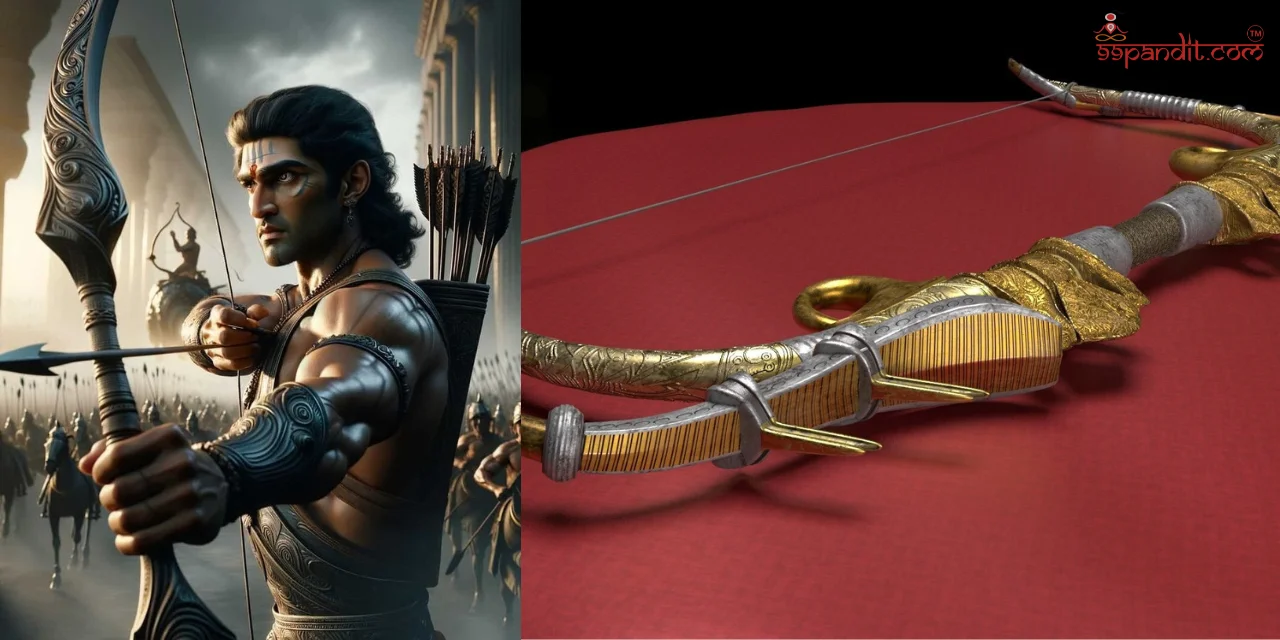
ॐ (ओम)” यह शब्द आपने अपने सम्पूर्ण जीवन कभी ना कभी जरुर सुना होगा, जब भी आपने इस ओम (ॐ) का उच्चारण सुना होगा| उस समय आपके मन यह ख्याल जरुर आया होगा कि इस शब्द की उत्पति कब और कैसे हुई होगी| तथा इस शब्द में ऐसी क्या शक्ति है, जिससे इसके उच्चारण मात्र से ही हमारे आस – पास का वातावरण में एक अलग ही सकारात्मकता फ़ैल जाती है|

तो आज हम इस लेख के माध्यम से इसी शब्द ओम (ॐ) के बारे में बात करेंगे और इसके शब्द के पीछे के कई रहस्यों के बारे में जानेंगे| सबसे पहले हम यह जानेंगे कि यानी ओम, जिसे ‘ओंकार’ या ‘प्रवण’ के नाम से भी जाना जाता है|

यह शब्द दिखने में केवल ढाई अक्षर का है, लेकिन समझने पर ज्ञात होता है कि इस ढाई अक्षर के इस शब्द में सम्पूर्ण ब्रह्माण्ड का सार समाया हुआ है| ओम (ॐ) का सम्बन्ध किसी एक धर्म से नहीं है लेकिन हिन्दू धर्म, बौद्ध धर्म, जैन धर्म और सिख धर्म में इस ओम शब्द को एक अलग ही पारंपरिक प्रतीक और पवित्र ध्वनि के रूप में दर्शाया जाता है|

Om Mantra Chanting

ओम किसी एक विशेष धर्म का नहीं है| यह ओम(ॐ) शब्द सभी का है, यह सार्वभौमिक है, तथा इस ढाई अक्षर के में सम्पूर्ण ब्रह्माण्ड समाया हुआ है| माना जाता है कि ओम (ॐ) को सर्वप्रथम ध्वनि माना जाता है|

पौराणिक कथाओं और वैज्ञानिकों के अनुसार यह माना जाता है कि जब इस ब्रह्माण्ड के भौतिक निर्माण के अस्तित्व में आने से पहले के समय जो ध्वनि इस ब्रह्माण्ड में विद्यमान थी| वह ओम (ॐ) शब्द की ही गूंज थी| यही कारण है कि ओम (ॐ) को ब्रह्माण्ड की आवाज़ की कहा जाता है|

ओम(ॐ) शब्द का अर्थ क्या है ? 

सनातन धर्म की मान्यताओं के अनुसार ओम (ॐ) शब्द की वास्तविकता का गठन सम्पूर्ण मनुष्य जाति के किये गए सबसे पवित्र और महान अविष्कारों में से ही एक है| माना जाता है ओम शब्द को सबसे पहले उपनिषदों में वर्णित किया गया था जो कि वेदांत से जुड़े हुए लेख होते है|

इन उपनिषदों में ओम (ॐ) शब्द को बहुत ही अलग – अलग तरह से बताया गया है जैसे कि “ब्रह्मांडीय ध्वनि”, “रहस्यमय शब्द” तथा “दैवीय चीज़ों का प्रतिज्ञान” इत्यादि| अगर संस्कृत भाषा में देखा जाए तो ओम शब्द तीन अलग – अलग शब्दों से मिलकर बना होता है| जैसे – “अ”, “उ” और “म”|

जब “अ” और “उ” शब्द को मिलाया जाता है तो “ओ” की ध्वनि प्राप्त होती है| जैसा कि आपने अनुभव किया ही होगा आप जब “अ” और “उ” शब्द का लगातार उच्चारण करते है तो यह स्वयं ही “ओ” की ध्वनि के रूप में उच्चारित होने लगता है| इसके पश्चात आखिरी शब्द “म” आता है| यह जो “अ” शब्द है| इस शब्द की ध्वनि गले के पिछले हिस्से से निकलती है|

99pandit

100% FREE CALL TO DECIDE DATE(MUHURAT)

99pandit

आपकी जानकारी के लिए बता दे कि “अ” एक ऐसा शब्द है जो जन्म लेने पश्चात मनुष्य के मुख से सबसे पहले निकलता है| इसलिए “अ” शब्द प्रारम्भ को दर्शाता है| इसके बाद में आता है “उ” शब्द जो कि तब निकलता है जब मनुष्य का मुख खुलने की स्थिति में हो| इसी कारण “उ” शब्द परिवर्तन के संयोजन को दर्शाता है|

इसके आखिर में आता है “म” शब्द जो तब उच्चारित होता है जब दोनों होंठ आपस में मिले हुए हो और मुख बंद हो| यह “म” शब्द अंत या समापन का प्रतीक माना जाता है| इसी वजह से जब यह तीनो शब्द आपस में मिलते है तो ओम (ॐ) शब्द की ध्वनि का निर्माण होता है| जिसका अर्थ है – प्रारंभ, मध्य और अंत|

ओम शब्द ऐसा है कि इसके अलावा कोई सी भी ध्वनि हो फिर चाहे वो कैसी भी ध्वनि हो या किसी भी भाषा में बोली जाती हो| वह सभी ध्वनियाँ इन तीनो अक्षरों के अंतर्गत ही आती है| इसके अलावा जो ये तीन अक्षरों के प्रतीक शब्द है प्रारम्भ, मध्य और अंत| यह तीनो स्वयं ही सृष्टि के प्रतीक के रूप में दर्शाया जाता है|

ॐ शब्द की व्याख्याएं –

  • – ब्रह्मा (निर्माता), – विष्णु (रक्षक), – शिव (विध्वंसक)
  • – वर्तमान, – भुत, – भविष्य 
  • – जागे होने की स्थिति, – स्वप्न की स्थिति, – गहरी निद्रा की स्थिति
  • – तामस (अज्ञान), – राजस (जुनून), – सत्व (शुद्धता)

ओम (ॐ) शब्द का सही उच्चारण

यह ओम शब्द एकमात्र ऐसा शब्द है जिसके केवल उच्चारण मात्र से ही हमारे आस – पास का वातावरण पवित्र हो जाता है| तथा हमारे मन में भी सकारात्मक भाव उत्पन्न होने लगते है| इस ओम शब्द को इस प्रतीक “ॐ” के रूप में लोगों के द्वारा पहचाना जाता है|

लेकिन माना जाता है कि जब भी ओम (ॐ) की बात की जाती है तो सबसे पहले ओम (ॐ) के उच्चारण पर अधिक जोर दिया जाता है| ऐसा इस कारण से किया जाता है क्योंकि अभी भी कई सारे लोग ऐसे है जिन्हें ओम (ॐ) का सही उच्चारण करने का तरीका नहीं पता है| 

ओम का उच्चारण सही प्रकार से किया जाना बहुत महत्वपूर्ण माना जाता है| धार्मिक परम्पराओं के अनुसार माना जाता है| किसी भी प्रकार की ध्वनि को किसी ना किसी ध्येय के हेतु बनाया जाता है|

Om Mantra Chanting

जैसा कि आप स्वयं की रोजाना की जिन्दगी में देखते ही होंगे कि संगीत किसी भी प्रकार हो लेकिन वह हमारे मन की स्थिति को काफी ज्यादा प्रभावित करता है| इस वजह से किसी भी प्रकार की धार्मिक ध्वनि या ओम की ध्वनि का नियम पूर्वक ही उच्चारण किया जाना चाहिए|

हिन्दू धर्म तथा वर्तमान में वैज्ञानिकों ने भी यह माना है कि इस ओम (ॐ) शब्द का उच्चारण करना मनुष्य की मानसिक स्थिति पर बहुत ही अच्छा और सकारात्मक प्रभाव डालते है| मान्यता है कि ओम का ध्यान करने से मनुष्य को मानसिक अशांति और जीवन में चल रही परेशानियों से राहत मिलती है|

आगे हम लेख के माध्यम से यह जानेंगे कि जब इस ओम शब्द के अर्थ को अपने मन और दिमाग में रखकर इसका ध्यान किया जाता है तो किस प्रकार यह व्यक्ति के मानसिक और स्वाभाविक दशाओं पर बहुत ही गहरा सकारात्मक प्रभाव डालता है|

ओम (ॐ) का जाप किस प्रकार किया जाता है 

सनातन धर्म की मान्यताओं के अनुसार इस ओम (ॐ) शब्द का जाप या इसका ध्यान, इस शब्द के अर्थ को अपने मन और दिमाग में रखकर ही करना चाहिए| यह ओम शब्द ईश्वर की प्रतिनिधित्व का प्रतीक माना जाता है| इसलिए ओम (ॐ) का जप करते समय आपको भगवान का चिंतन भी अपने मन में करते रहना चाहिए| तो आइये अब हम जानते है कि ओम का उच्चारण किस प्रकार से किया जाता है|

ओम (ॐ) उच्चारण जाप विधि –

  • ओम का ध्यान करने के लिए सर्वप्रथम एक शांत और आरामदायक स्थान का चुनाव करे तथा ध्यान करने के आसन में बैठ जाए,जैसे कि – सुखासन, पद्मासन इत्यादि| ओम का जाप करते समय इस बात का अवश्य ध्यान रखे कि आपकी रीढ़ की हड्डी व गर्दन बिलकुल सीधी होनी चाहिए| 
  • इसके पश्चात जप करने के लिए एक गहरी सांस को अन्दर भर ले| फिर अपनी सांस को धीरे – धीरे छोड़ते हुए ओम का उच्चारण करें| 
  • जब आप ओम का उच्चारण करेंगे तब आप नाभि के क्षेत्र में “ओ” अक्षर की ध्वनि से होने वाले कंपन को महसूस करेंगे| तथा इस कंपन को ऊपर की ओर आते हुए भी महसूस करेंगे|  
  • जैसे – जैसे आप ओम का उच्चारण जारी रखेंगे| उसी प्रकार आप इस कम्पन को अपने गले की ओर आता हुआ महसूस करेंगे| 
  • जब ओम की ध्वनि से उत्पन्न कंपन आपके गले तक पहुँच चुका हो तो इस समय “ओ” की ध्वनि को “म” की एक गहरी ध्वनि में बदल लेवे| 
  • इस उच्चारण के माध्यम से होने वाले कंपन को तब तक महसूस करे जब तक कि यह आपके सिर के ऊपरी सिरे तक नहीं पहुंच जाए| 
  • इसके पश्चात यदि आप चाहें तो आप इस प्रक्रिया को आपकी श्रद्धा के अनुसार कितनी भी बार कर सकते है लेकिन इसका उच्चारण कम से कम दो बार तो अवश्य ही किया जाना चाहिए| 
  • जब आपकी ओम (ॐ) उच्चारण की प्रक्रिया समाप्त हो जाए तो प्रक्रिया के पूर्ण होने के पश्चात भी आपको उठना नहीं चाहिए, बल्कि ध्यान की मुद्रा में ही बैठे रहकर अपने पूरे शरीर में ओम (ॐ) उच्चारण हुए कंपन को महसूस कीजिये| 

ओम (ॐ) का जप व ध्यान करने के फायदे 

जब भी कोई व्यक्ति ओम (ॐ) शब्द का जाप करता है| तो उसके पूरे शरीर में एक कंपन उत्पन्न होती है| जिससे व्यक्ति को अपने अन्दर एक अद्भुत शक्ति का अनुभव होता है| ओम का जाप करने से मनुष्य के शरीर में प्राण शक्ति का प्रवाह होता है| अधिक प्राण का अर्थ होता है अधिक जीवन, व्यक्ति को स्वयं के साथ ज्यादा संवाद करने तथा हमारे रिश्तों को अधिक सचेत करने में भी सहायक होता है|

99pandit

100% FREE CALL TO DECIDE DATE(MUHURAT)

99pandit

कई लोगों का मानना यह भी ओम (ॐ) केवल अध्यात्म व भगवान से सम्बन्ध रखता है, लेकिन ऐसा बिल्कुल भी नहीं है| ओम केवल अध्यात्म से सम्बंधित नहीं है बल्कि ओम (ॐ) शब्द का नियमित रूप से जप करने से शारीरिक और मानसिक बीमारियों से छुटकारा मिलता है| अब हम इस लेख के द्वारा आपको ओम (ॐ) शब्द के उच्चारण से संबंधित कुछ फायदों के बारे में जानेंगे| 

तनाव को दूर करके मन शांत करता है ओम (ॐ) का उच्चारण –

पौराणिक काल की मान्यताओं के अनुसार ओम (ॐ) शब्द का उच्चारण करने के व्यक्ति मानसिक शांति की अनुभूति होती है| जब आप नियमित रूप से ओम का उच्चारण करेंगे तो इसका प्रभाव आपको कुछ ही समय में देखने को मिल जाएगा|

जैसे – जैसे आप इसका उच्चारण करते रहेंगे| वैसे वैसे ही आपको यह अनुभव होने लगेगा कि धीरे – धीरे आपका मस्तिष्क हल्का व शरीर ढीला प्रतीत होगा| ऐसा इसलिए महसूस होता है क्योंकि इस समय हमारे शरीर से हर प्रकार की चिंता एवं तनाव बाहर निकलते है| 

ओम का उच्चारण बनाता है एकाग्रता को उत्तम – 

माना जाता है कि जब भी कोई व्यक्ति अपनी सांस पर काबू करके या उसे एक स्थान पर केन्द्रित करके इस ओम (ॐ) शब्द का उच्चारण नियमित रूप से करता है तो निश्चित रूप से ही उस व्यक्ति की ध्यान लगाने की क्षमता तथा एकाग्रता बहुत ही बेहतरीन हो जाती है| 

दिमाग और शरीर को डिटॉक्स करता है ओम (ॐ) उच्चारण – 

ओम (ॐ) का उच्चारण करने से जो कम्पन उत्पन्न होता है| वह कम्पन हमारे शरीर में तुरंत कार्य करता है| इस कारण से जब भी कोई व्यक्ति ओम का उच्चारण करता है तो उसके शरीर और दिमाग में उपस्थित सभी नकारात्मक ऊर्जाओं से छुटकारा दिलाने में बहुत ही ज्यादा सहायक होता है|

जब आप ओम का उच्चारण करने लगेंगे तो आपको अपना दिमाग हल्का तथा शरीर ढीला महसूस होने लगेगा| यही कम्पन का प्रभाव हमारे शरीर को साफ़ करने या हम कह सकते है कि हमारे शरीर को डीटॉक्स करने में मदद करता है| 

हिन्दू धर्म तथा अन्य धर्मों में ओम (ॐ) का महत्व 

सनातन धर्म में ओम के उच्चारण का बहुत बड़ा महत्व बताया है| हिन्दू धर्म के लोगों का मानना यह है कि यह ओम (ॐ) शब्द उनके लिए ईश्वरीय तथा अध्यात्मिक दोनों ही तरीकों से महत्व रखता है|

पौराणिक कथाओं के साथ – साथ वैज्ञानिकों ने भी यह दावा किया है कि इस सम्पूर्ण ब्रह्माण्ड में सर्वप्रथम कोई आवाज़ थी तो वह ओम की ही आवाज़ थी| कुछ विद्वानों के अनुसार ओम का सम्बन्ध हिन्दू धर्म के सबसे शक्तिशाली देवता भगवान शंकर (महादेव) से भी बताया गया है|

Om Mantra Chanting

यह ओम शब्द आत्मा और ब्रह्म (वास्तविकता, ब्रह्माण्ड) को प्रदर्शित करता है| ओम (ॐ) शब्द लगभग सभी वेदों, उपनिषदों तथा धार्मिक ग्रंथों में प्रारम्भ तथा अंत में विद्यमान होता है|

इसके अलावा भी कई प्रकार पूजाओं, शादी समारोह, अनुष्ठान तथा कुछ योग क्रियाओं को करने से पहले भी ओम शब्द का उच्चारण करना बहुत ही शुभ माना जाता है| हिन्दू धर्म के साथ – साथ जैन धर्म, सिख धर्म और बौद्ध धर्म के लोगों के द्वारा भी ओम (ॐ) को काफी महत्व दिया जाता है|  

निष्कर्ष 

आज के इस लेख के द्वारा हमने हिन्दू धर्म में ओम (ॐ) के महत्व के बारे में जाना कि ओम (ॐ) का सही उच्चारण किस प्रकार से किया जाता है| इसके अलावा यदि हम ओम का नियमित रूप से उच्चारण करते है तो यह हमारे लिए शारीरिक और मानसिक दोनों रूप से ही बहुत लाभदायक है| तथा अंत में हमने ओम (ॐ) उच्चारण का हिन्दू धर्म में तथा अन्य कुछ धर्मों में महत्व के बारे में भी जाना| 

हम उम्मीद करते है कि हमारे द्वारा बताई गई जानकारी से आपको कोई ना कोई मदद मिली होगी| इसके अलावा भी अगर आप किसी और पूजा के बारे में जानकारी लेना चाहते है। तो आप हमारी वेबसाइट 99Pandit पर जाकर सभी तरह की पूजा या त्योहारों के बारे में सम्पूर्ण जानकारी ले सकते है|

ओम का हिन्दू धर्म में बहुत ही बड़ा महत्व है| इसका नियमित रूप से उच्चारण करने से दिमाग को शान्ति मिलती है| किन्तु ओम का उच्चारण की कुछ नियमों के अनुसार होता है| इसके अलावा किसी भी पूजा के लिए एक बहुत ही अनुभवी पंडित को आप हमारी वेबसाइट 99Pandit से ऑनलाइन बुक कर सकते है| 99Pandit एक ऐसा ऑनलाइन विकल्प है| जिसके द्वारा किसी भी पूजा के लिए हर जगह पर पंडित सिर्फ एक कॉल पर बुक किये जाते है|

अक्सर पूछे जाने वाले प्रश्न

Q.ओम क्या है ?

A.“अ” शब्द प्रारम्भ को दर्शाता है, “उ” शब्द परिवर्तन के संयोजन को दर्शाता है तथा अंत में “म” शब्द अंत या समापन का प्रतीक माना जाता है|

Q.ओम (ॐ) की उत्पत्ति कैसे हुई ?

A.मान्यताओं के अनुसार ओम की उत्पत्ति भगवान शिव के मुख मानी जाती है|

Q.ओम किस भगवान से संबंधित है ?

A.अ – ब्रह्मा (निर्माता), उ – विष्णु (रक्षक), म – शिव (विध्वंसक)

Q.ओम का दूसरा नाम क्या है ?

A.ओम (ॐ) शब्द को प्रणव के नाम से भी जाना जाता है| जिसका अर्थ होता है – परमेश्वर|