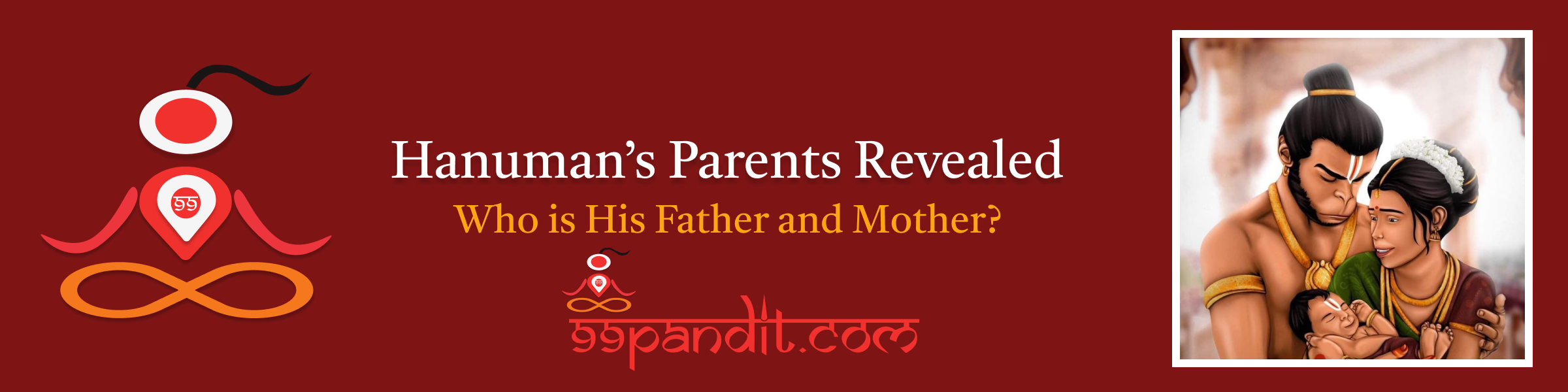
Hanuman’s Parents Revealed: Who is His Father and Mother?

Hanuman Father and Mother Name: Lord Hanuman is one of the most devoted gods in Hinduism. He is a great devotee of Lord Ram.

It is believed that wherever Ramayana is recited or Ram’s name is taken, Lord Hanuman is present there.

Hanuman Father and Mother Name

As per the Hindu Scripture, Lord Hanuman is the 11th Rudra Avatar (fierce incarnation) of Lord Shiva. Hanuman Ji was born in the monkey caste.

Hanumanji is said to be immortal. There is mention of him being a celibate in the Puranas; he is unmarried.

His mother’s name is Anjana (Anjani), and his father is Vanaraja Kesari. That is why he is called by names like Anjanaya and Kesari Nandan.

According to another belief, Hanuman Ji is also called the son of wind. Hence, he is also known by the name of Pawanputra or Vayuputra.

In this blog, we will learn about Hanuman’s Father and Mother’s name. Not only this, but we will also understand mythological stories about Lord Hanuman. So sit back, relax, and read this blog till the end.

What is the Name of Lord Hanuman’s Father and Mother?

In Hindu mythology, Lord Hanuman has a very special status. He has many names: Bajrang Bali, Maruti, and Pavanputra.

The story of how Lord Hanuman was born is not only fascinating but is also filled with spiritual as well as social teachings.

Let’s find out Lord Hanuman’s Father and Mother name. Hanuman ji’s mother’s name was Anjana, and his father’s name was Kesari.
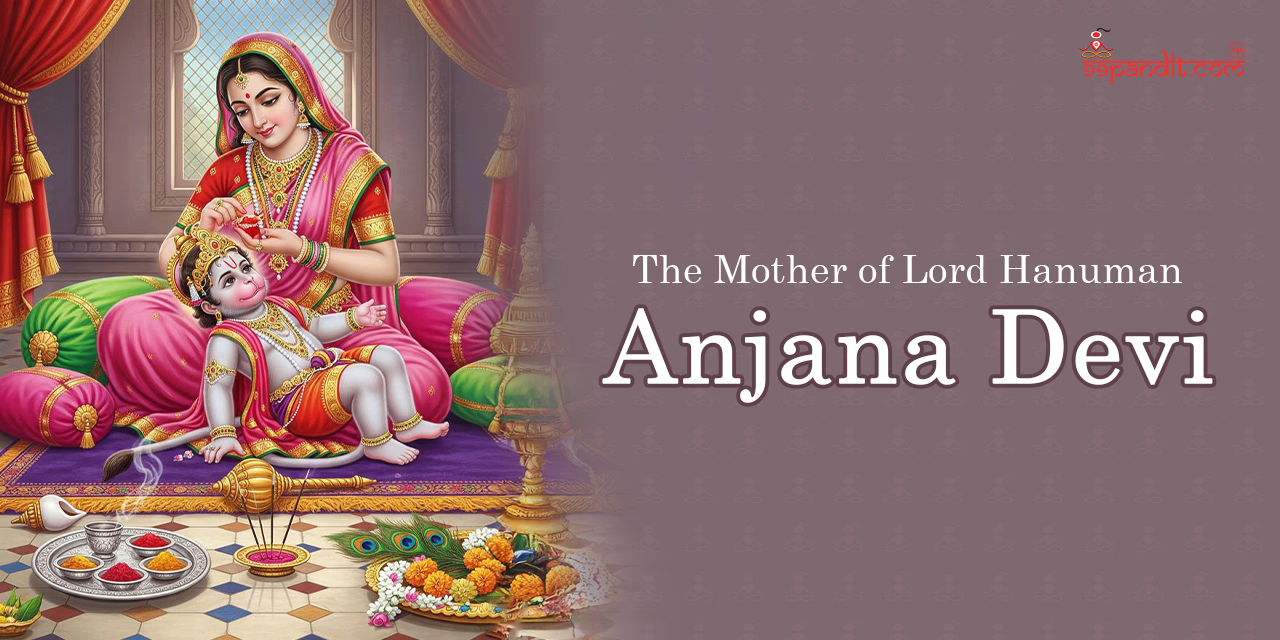
Hanuman Father and Mother Name

Mata Anjana was an Apsara who was cursed to live on earth. His father, Kesari, was a king of the Vanar community and was very powerful.

Lord Hanuman ji is called ‘Pavanputra‘ because Pawan Dev played an important role in His birth. According to mythology, Hanumanji is considered to be an incarnation or part of Lord Shiva.

There were many Devtas powers involved in Hanuman ji’s birth. Lord Hanuman Ji is a god who is said to be very easy to please.

About the Mother of Lord Hanuman: Anjana Devi

According to the Anjana Upakhyana found in the Ramayana and Puranas, Anjana Devi was an apsara or celestial nymph from heaven.

She was cursed to be born on Earth. In order to escape from Earth, Anjana was destined to give birth to a son with tremendous strength and virtue who would fulfill divine will.

Anjana was the ideal of beauty, devotion, and purity. Through great penance and prayer to Lord Shiva, Anjana received the boon of having a child with supernatural powers.

Her devotion to Lord Shiva was so great that he ultimately agreed to incarnate a portion of his own energy as her son. For these reasons, Hanuman is considered an incarnation (amsa) of Lord Shiva.

About the Father of Lord Hanuman: Kesari

Kesari was a mighty Vanara (monkey king) and an impressive warrior with power and bravery. He is the king of Sumeru Mountain and was the protector of dharma (righteousness).

According to the Valmiki Ramayana, Kesari was the son of Brihaspati. He even fought for Lord Rama during the war he had against Ravana.

Kesari is Hanuman’s earthly father. There was another divine force that was instrumental in Hanuman’s birth- the Wind God Vayu.
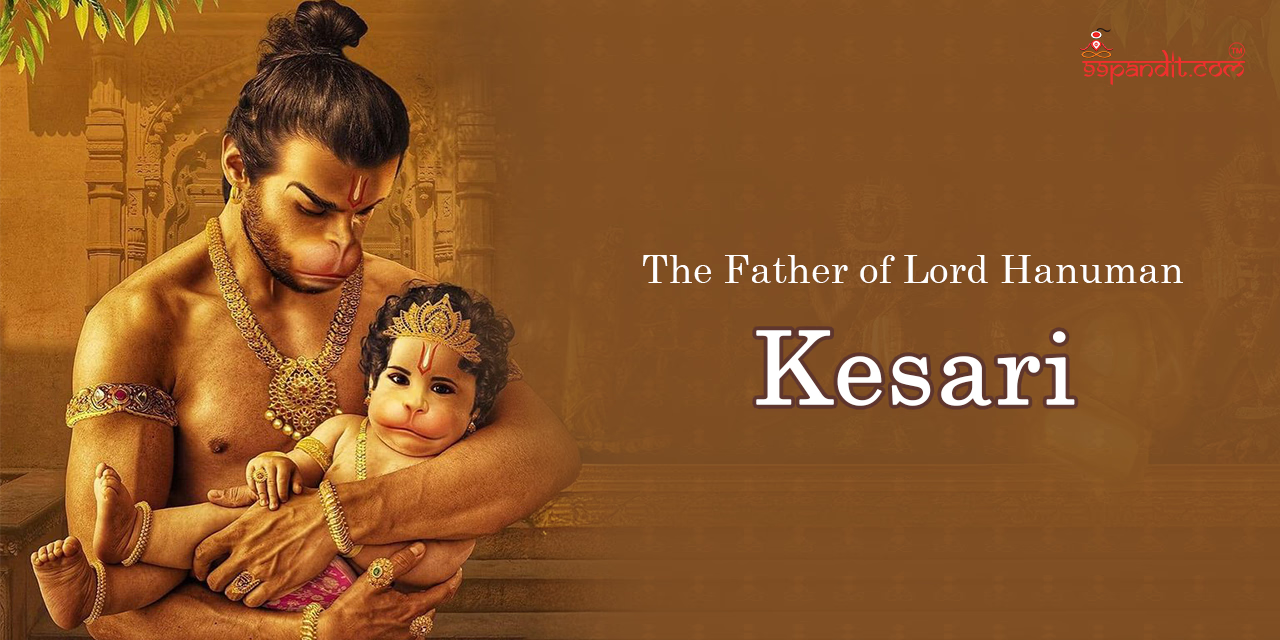
Hanuman Father and Mother Name

In both the Shiva Purana and the Ramayana, when Anjana desired a child, Vayu transported the divine aspect of Lord Shiva into her womb.

Lord Shiva is also called by several names, such as Keasri Nandan (Son of Kesari), Anjaneya (Son of Anjana), Maruti, Vayuputra, and Pavanputra.

Lord Hanuman is also linked with the wind god, which is why he is called Vayuputra (son of the wind).

So while Kesari and Anjana are rightly referred to as his human parents, his spiritual father is also acknowledged as Vayu Deva.

Mythological Stories About the Birth of Lord Hanuman

There are many mythological stories and religious texts about the birth of Hanumanji in the Puranas. One of those stories is very interesting.

According to this mythological story, when King Dasharath of Ayodhya was performing a havan with his wives to get a son, he was given a kheer in the havan. He was told to feed it to his queens.

After the havan was over, King Dasharath distributed the kheer among the three queens, but then a crow flew away a part of the kheer and dropped it where Mother Anjani was doing penance.

When the kheer fell into the hands of Anjana while she was doing penance, she accepted it as a prasad of Lord Shiva.

It is said that because of this prasad, Ram Ji was born in Ayodhya, and Hanuman Ji was born from Anjani’s womb.

In this way, both the Lord and the devotee incarnated on this earth together with the same prasad, and a unique relationship was formed from their birth itself.

Another Mythological Story

According to another legend, once everyone was present in the court of Devraj Indra, where Rishi Durvasa was also present.

There, an Apsara Punjikasthali of Devraj Indra was repeatedly coming and going from the court, which caused Rishi Durvasa to get angry.

He cursed Apsara Punjikasthali to become a monkey. Punjikasthali apologized a lot, but the Rishi did not take back his curse.

Yes, later, out of mercy, he did give her the boon that she could assume the form of her choice.

A few years after this incident, Punjikasthali was born in the house of the remarkable monkey King Viraj. She was named Anjani. When Anjani reached a marriageable age, she married Kesari.

It is said that in return for saving the lives of the sages, King Kesari had received a boon that he would get a son who could take any form he wished and who would be as powerful as the wind and like Rudra. Then Hanuman ji was born.

Lord Hanuman As The Incarnation of Lord Shiva

As we all know, Lord Hanuman is one of the many incarnations of Lord Shiva. It is known as the Rudra Avatar.

Many ancient scriptures define the supreme and divine powers of Lord Hanuman. Whether it is Ramayana, Mahabharata, or Shiva Purana, they all have their origin with Lord Hanuman.
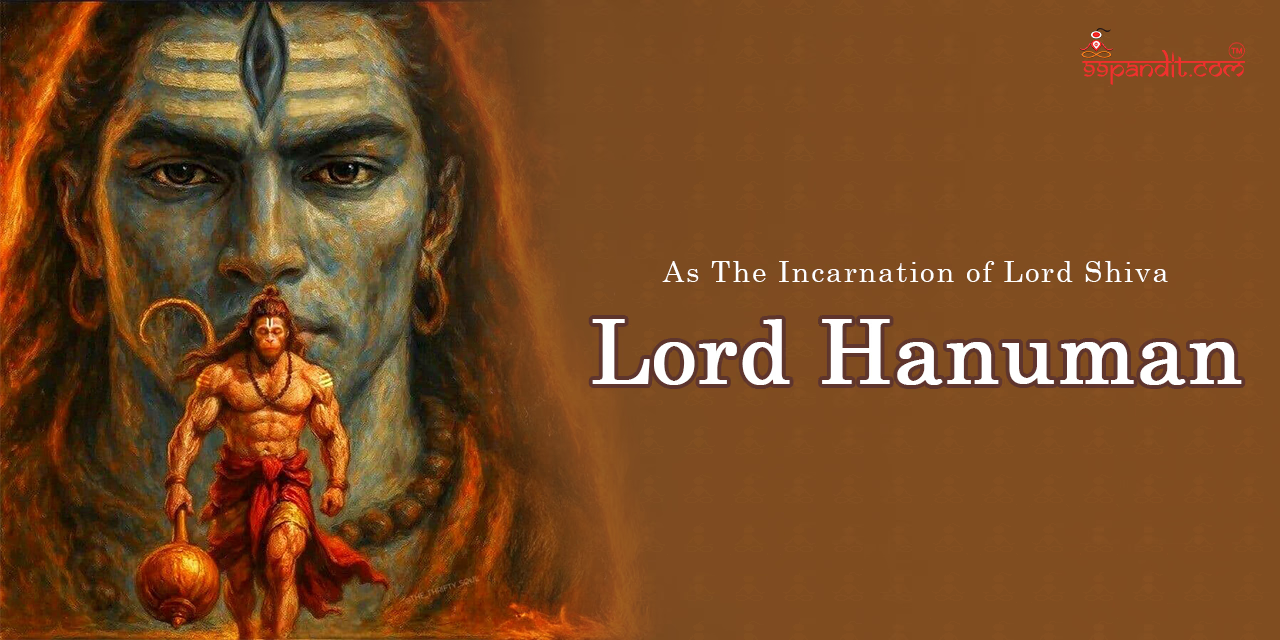
Hanuman Father and Mother Name

As Lord Shiva, Lord Hanuman has all the qualities of Lord Shiv, such as strength, devotion, and selfless service.

It is believed that by revering him, people obtain bravery, knowledge, and protection from all negativity.

There are several beliefs about taking the incarnation as Hanumanji. One of them is mentioned in the Shiva Purana.

It is believed that, when Lord Shiva got to know that Lord Vishnu was taking an incarnation as Lord Ram, he desired to serve him uniquely.

So, to fulfil this wish, he decided he would appear in the form of Hanuman, the greatest devotee of Lord Ram.

Names of Lord Hanuman Linked to His Father and Mother Names

In this section, we will discover the different names of Lord Hanuman that are linked to Hanuman’s Father and Mother’s names. These names are:

1. Anjaneya- The son of Anjana
2. Anjanisuta- The child of Anjana.
3. Maruti- Son of the wind god
4. Kesari Nandan- The son of Kesari
5. Anjanagarbhasambhoota- One who is born from the womb of Anjana
6. Pavanputra- The son of wind god
7. Kesari Kumara- Young son of Kesari.
8. Marutputra- Son of Marut (another name for Vayu, the wind).
9. Vayunandan- Beloved child of Vayu.
10. Vayuputra- Son of Wind God
11. Marutatmaja- The one who is born from the wind god

Other Names of Lord Hanuman

12. Deenabandhave- One who supports and protects the helpless
13. Kalanabha- The organizer of time
14. Chiranjivi- The Immortal One
15. Mahadhyuta- The most radiant one
16. Manojava- One who is faster than the mind
17. Ramabhakta- The devotee of Rama
18. Ramadhuta- The messenger of Rama
19. Sarvamayavibhanjana- The destroyer of all illusions
20. Sanjeevananagahatre- The one who carries the Sanjivani hill
21. Sarvarogahara- One who cures all ailments
22. Shoora- The gallant one
23. Vagmine- A great speaker
24. Vardhimainakapujita- One whom Mainaka worships
25. Vijitendriya- One who has controlled all the senses
26. Sarvadhukhahara- The remover of all worries
27. Vajranakha- The one with powerful nails
28. Mahakaya- The gigantic one
29. Kumarabrahmacharin- One who is youthful and celibate
30. Kapeeshwar- The Lord of Monkeys
31. Deenabandhava- The protector of the downtrodden
32. Chatrubhave- The four-armed one
33. Bheemasenasahayakrute- One who has helped Bhima
34. Lokapujya – Worshipped by the Universe
35. Mahadhyuta – Most Radiant
36. Mahakaya – One with a colossal body
37. Mahatmane – Supreme Being
38. Mahavira – Most Courageous
39. Marutatmaja- Adored Like Gems
40. Mahabala – Parakrama Of Great Strength

Conclusion

Lord Hanuman was born to serve Lord Ram to fight Ravana. Hanumanji was one of the Saptchiranjivis, who are still on the earth.

Mata Anjani, mother of Lord Hanuman, did a great penance to Lord Shiva to get him as a child.

Shiva Purana also mentions that he was one of the Rudra Avatars of Lord Shiva. Hanumanji’s Father, Kesari, was the Vanaraj of the Sumeru Mountain and ruled there.

Lord Hanuman is the oldest son of Kesari and Anjana Devi. Vayu Dev (wind god) is also considered the spiritual father of Lord Hanuman.

I hope you liked reading this blog. 99Pandit always offers you the best spiritual content to understand the religious importance of our Hindu religion.

Not only this, 99Pandot also offers Pandit for puja services such as Pandit for Office Puja, Satyanarayan Puja, Ganesh Puja, and many more.

We also provide you with the best quality of puja samagri along with the Vedic Pandit.

So, if you even need a Pandit for any Puja, you know where to book a Pandit that is 99Pandit– a one-stop solution for your Puja needs.
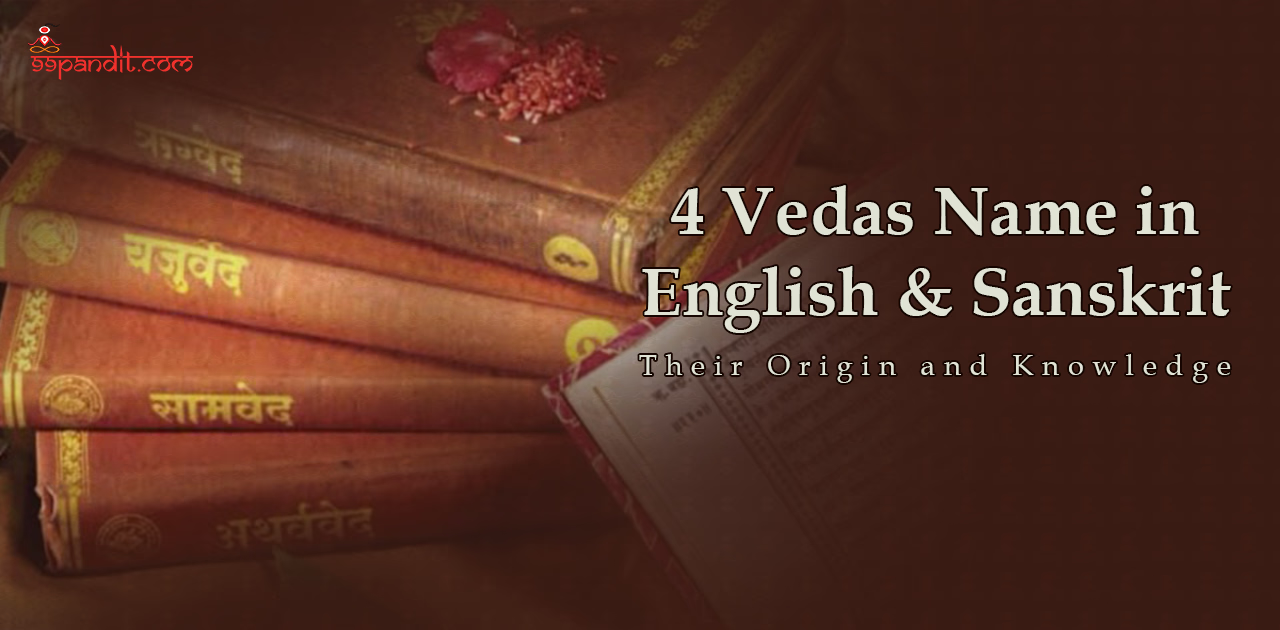
4 Vedas Name in English & Sanskrit: Origin & Knowledge

4 Vedas Name: The Vedas are known as the inspiration of Sanatan Dharma. The word “Veda” means knowledge, and this knowledge applies in all dimensions, not only to religious traditions but also to all aspects of life.

The Vedas teach a person how to engage in spiritual practices, how to engage in social behaviours, and how a person can conserve and purify their own life as they maintain their balance with nature.

4 Vedas Name

Perhaps that is the reason they are the oldest and most reliable source of human civilization.

The four Vedas’ names are not human creations, but God-based knowledge, obtained by sages and saints, through dedication and meditations, which were later protected and shared through oral tradition from generation to generation.

Because of this, the Vedas are as pure as they were thousands of years ago and relevant to today’s human existence.

In this article, we will learn the Sanskrit and English names of the 4 Vedas, and understand the mystery of their origin and creator.

We will discuss the knowledge and topics contained in each Veda, their significance in Sanatan Dharma, and the story of their preservation by oral tradition.

We will see the relevance of the Vedas in modern life and how they guide us even today.

4 Vedas Name in Sanskrit and English

The four Vedas of Sanatan Dharma are not just names, but are treasures of infinite knowledge. Each Veda has its own name in Sanskrit, and its English form is also popular.

The four Vedas in both Sanskrit and English are as follows: –

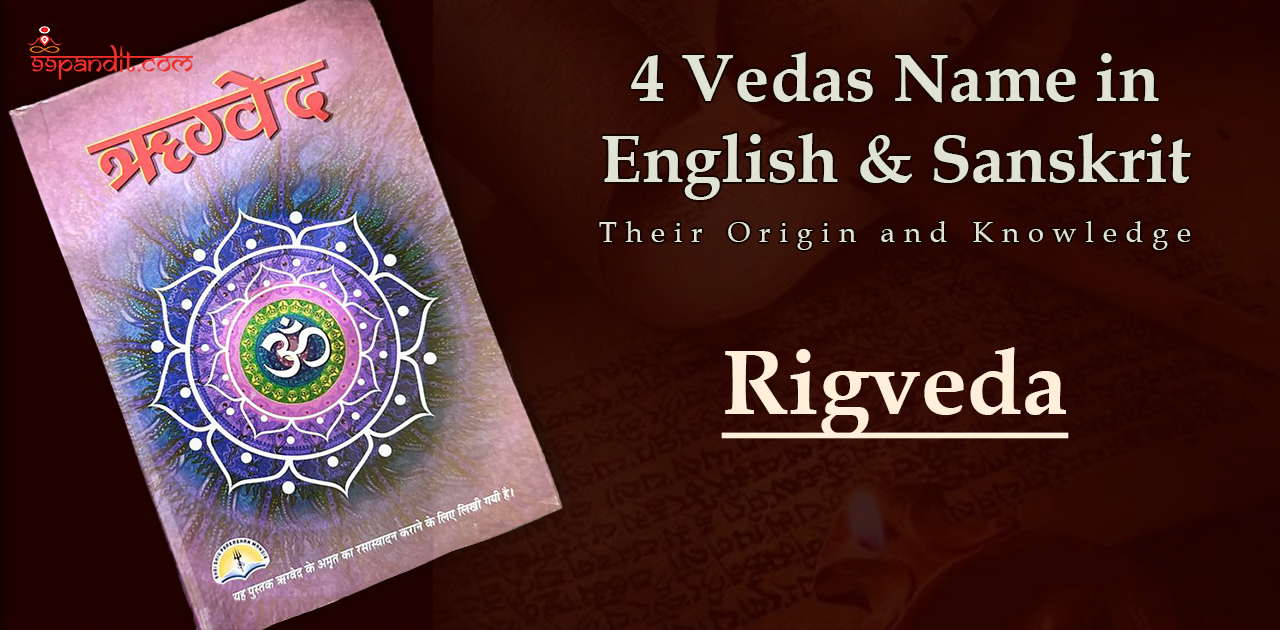
ऋग्वेद (Rigveda):

The first is the Rigveda, which is mainly a collection of mantras and hymns. It contains praise, prayers, and descriptions of the glory of various gods. This Veda is considered to be the soul of the Vedas.

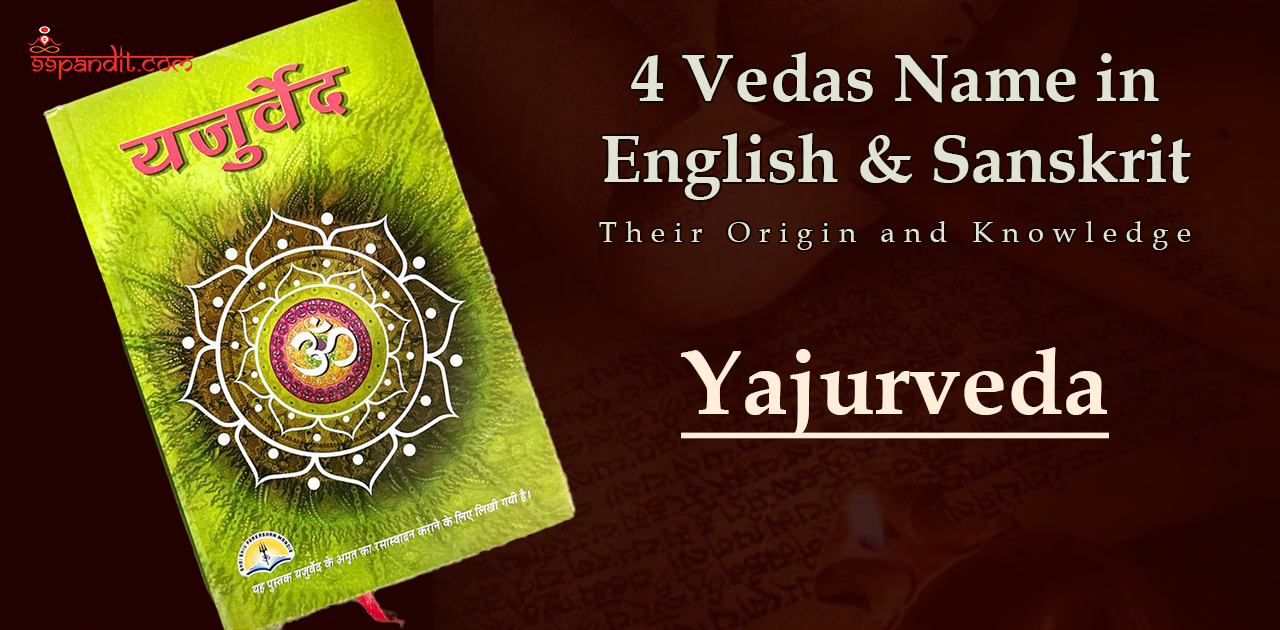
यजुर्वेद (Yajurveda):

The second is the Yajurveda. It describes the methods, mantras, and rituals of yagya and havan in detail.

सामवेद (Samaveda):

The third is the Samaveda. It is called the father of music because it has a tradition of presenting hymns through singing.

The mantras of the Samaveda are sung, so it is an excellent combination of both spirituality and music.

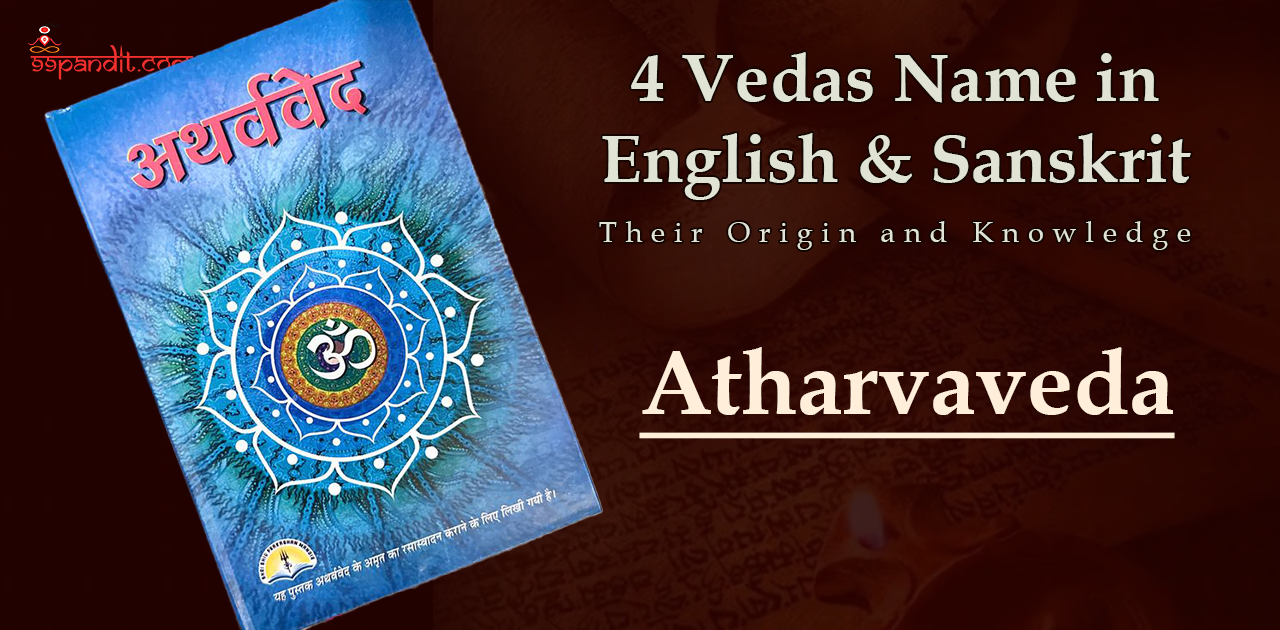
अथर्ववेद (Atharvaveda):

The fourth is the Atharvaveda. This Veda brings forth the practical and scientific side of life. It gives solutions to daily life problems, like medicine, astrology, Vastu, and mantras.

Together, these four Vedas reveal the knowledge of the Vedas, which enlightens human life in all directions, religion, karma, music, and science.

Origin of the 4 Vedas Name in Hindu Scriptures

The origin of the Vedas and the description of their creator is one of the deepest mysteries of Hinduism.

The Vedas are not just religious texts; they are considered to be eternal knowledge given by God.

It is clearly stated in the scriptures that the Vedas are not the creation of any man, but they appeared from the sound form of God himself.

That is why they are called “Shruti“, which means the knowledge that has been heard. The Vedas’ origin is linked to the very origin of the universe itself.

It is thought that when creation began, sound, or shruti, originated first, before any other creation. This divine sound, shruti, later took the form of the Vedas.

The Vedas are referred to as apaurusheya, or as being not sung, written, or otherwise created by man. They are eternal truths that came into being at the same time as creation.

The Puranas discuss that when God assigned the responsibility of creation to Brahma Ji, he was imbued with divine knowledge, knowledge that is now called the Vedas.

Knowledge and Wisdom in Each Veda

Considering the Vedas as a collection of religious mantras only would be underestimating their depth.

In fact, each Veda contains within itself the knowledge of a particular aspect of life and the universe.

4 Vedas Name

All four Vedas together illuminate all aspects of spirituality, science, art, and life.

Rigveda

The Rigveda is considered to be the oldest and most important Veda. It consists of about 10 mandalas and 1028 suktas.

The Rigveda mainly contains hymns (mantras or praises), which describe the glory of gods like Agni, Indra, Varuna, Mitra, Usha, etc.

Its primary purpose is to make man grateful to God through the praise and prayer of the gods.

The Rigveda also provides amazing knowledge of life philosophy, the origin of the universe, the forces of nature, and the social system. This Veda teaches us that life is incomplete without prayer and devotion.

Yajurveda

Yajurveda is called the Veda of rituals and yajna. It is a mixture of prose and mantras that explains the method of performing yajna and its importance.

Yajurveda explains how havan and yajna purify the environment and also purify the soul of man.

It has 40 chapters (adhyayan), which mention various rituals, yajna-methods, and sacrifice mantras.

Yajurveda teaches that knowledge and action are necessary. Dharma is established only through right action and conduct.

Samaveda

Samaveda is called the Veda of music and voice. It has about 1875 mantras, most of which are taken from the Rigveda, but they are presented in a singable tone and rhythm.

The importance of Samveda lies in the fact that it shows us that spirituality is not limited to reading scriptures or performing yagna. Still, God can also be attained through music and devotion.

The tradition of Indian classical music and ragas and raginis developed on the basis of the Samveda, which is why it is also called the “Father of Indian Music.”

Atharvaveda

Atharvaveda is considered the Veda of practical life and science. It has about 20 chapters and 730 suktas.

It contains knowledge of medicine, prevention of diseases, Astrology, Vastu Shastra, Mantra-Tantra, and solutions to problems of daily life.

This Veda teaches us that, along with spirituality, it is important to make physical life happy and healthy.

It also provides detailed knowledge on topics related to marriage, children, family life, and society.

The four Vedas touch every aspect of human life. The Rig Veda teaches us to praise God, and the Yajur Veda teaches us the method of right action and sacrifice.

The SamVeda inspires music and devotion, and the Atharva Veda gives solutions to problems of health, medicine, and practical life.

Thus, the Vedas are not only the basis of religious faith, but also guide the art of living a complete life.

Importance of the 4 Vedas Name in Sanatan Dharma

The Vedas are considered to be the foundation of Sanatan Dharma. If there were no Vedas, the form of religion would have remained incomplete.

Vedas are not just scriptures; they are the divine sound that introduced man to the true nature of God, nature, and soul. That is why they are called “Eternal knowledge.”

The Basis of Religion and Life

The Vedas tell us that religion is not limited to worship but is a complete way of life. The Rigveda has the importance of devotion and prayer, and the Yajurveda shows the path of right karma and yagya.

Samveda makes music and devotion a sadhana, and Atharvaveda gives solutions to the practical needs of life.

Thus, all four Vedas together teach that the real meaning of religion is truth, conduct, devotion, and good deeds.

Pivot of Society and Culture

The Vedas gave direction to Indian society and culture. The basis of family, marriage, education, roles of men & women, agriculture, business, and even politics is found in the Vedas.

The Vedas taught man that society can flourish only when all people perform their duties and remain truthful.

This is the reason why even today in Indian culture, Vedic mantras are recited in marriage, upanayan, yagna, Grihapravesh, and even death rituals.

The Path of Spiritual Practice

The Vedas tell us that God is one and that he is the basis of the whole creation. Man can attain self-knowledge through devotion, prayer, yagna, and sadhana.

The Vedas also teach that the soul is immortal and that birth and death are only a change of body.

With this knowledge, man can live life at a higher level, free from fear, attachment, and greed.

Respect for Science and Nature

The Vedas are not only spiritual texts but also the basis of science. The Rigveda and Atharvaveda praise the elements water, fire, air, earth, and sky.

The Yajur Veda describes how the atmosphere is purified by performing Yagya. Atharva Veda mentions medicines and medical science.

This means that the Vedas not only teach us Dharma but also teach us to respect nature and science.

Soul of Sanatan Dharma

The importance of the Vedas lies in the fact that Sanatan Dharma has no identity without them.

All the scriptures like the Upanishads, Puranas, Smritis, Gita, Ramayana, and Mahabharata are based on the Vedas.

Studying the Vedas is not just following Dharma, but it is a means to awaken the soul and understand the real purpose of life.

The importance of the Vedas in Sanatan Dharma is immeasurable. They teach us that Dharma is not just following beliefs but is a path of truth, love, compassion, and devotion to duty.

Life without the Vedas is incomplete, but with the Vedas, life becomes completely balanced and brings us closer to God.

How the 4 Vedas Names Were Preserved through Oral Tradition

The most amazing feature of the Vedas is that they were preserved for thousands of years not in written form, but only through Shruti and Smriti, i.e., oral tradition. This is a unique example from any other tradition in the world.

4 Vedas Name

Such a vast and profound knowledge of the Vedas was passed on from generation to generation only by listening, memorizing, and singing. This is why they are called “Shruti” – the knowledge that was heard and absorbed.

Beginning of the Oral Tradition of the Vedas

In that era, the sages and saints would listen to the divine sounds through deep meditation and sadhana and make them memorise them by reciting them to their disciples.

The Guruji would make his disciples recite the mantras repeatedly, and they would memorize them by repeating them in the same rhythm, tone, and pronunciation.

This tradition was so strong that not a single word, vowel, or syllable of the Vedas changed for thousands of years.

Importance of Pronunciation and Rhythm

The Veda is not just a collection of words, but vowels and rhymes are also significant in them. A slight error in pronunciation could change the meaning of the mantra.

Therefore, the sages developed special pronunciation methods called “Paath”—such as Jata Paath, Ghan Paath, Kram Paath, etc.

Through these methods, the disciples memorized the mantras by singing them repeatedly in different ways, so that there was no possibility of mistake.

Tradition of Branches and Gurukuls

When Maharishi Vedavyasa arranged the Vedas in four parts, he assigned each Veda to his disciples. These disciples further created their own branches (recensions).

Each branch was preserved in a special Gurukul. Thus, the Vedas were not limited to only one family or region, but were preserved by spreading all over India.

Memory and Discipline

In Gurukuls, students were taught the Vedas from a young age. They observed celibacy, served their Guruji, and practised mantras for hours daily.

Their memory was so strong that they could memorize thousands of mantras without any mistakes.

It was this discipline and austerity of the Vedapathis that kept the Vedas pure and unchanged.

Change in Written Form

It was only after about 500 BC that attempts were made to put the Vedas in written form. Until then, they were carried on through oral tradition only.

Even today, many Vedapathi traditions are carried on orally, and UNESCO has recognized them as “Intangible Heritage of Humanity.” This is proof that oral tradition not only kept the Vedas safe but also alive.

The oral preservation of the Vedas is a wonderful example of human memory, discipline, and devotion.

This shows that when knowledge is considered the word of God, man can do everything in his power to preserve it.

The Vedas are as pure and divine today as they were thousands of years ago, and the credit for this goes entirely to the sages and acharyas who protected the oral tradition.

Modern Relevance of the 4 Vedas Name in Daily Life

Many people today think that the Vedas are just an old book read only by scholars. But the truth is that the Vedas are a life philosophy useful for every era, every time, and every person.

4 Vedas Name

Whether today’s era is one of science and technology, the knowledge and power of the Vedas guide man in every situation.

Rigveda – The Basis of Knowledge and Prayer

In the mantras of the Rigveda, nature, sun, fire, wind, and water have been praised. In today’s time, its meaning is that we should respect nature, protect the environment.

Rigveda teaches that we should start our day with gratitude – bowing to the sun, considering fire as sacred, and considering water as the basis of life. This brings positivity and peace to a person.

Yajurveda – Teaching of Karma and Discipline

The Yajurveda teaches us the importance of rituals and discipline in life. Through the mantras of yagna and havan, it tells us that every human action should benefit society.

The meaning of Yajurveda in today’s busy life is to live your day with discipline, respect time, and do your work without any hassle. If we adopt this knowledge, we can maintain work-life balance and inner peace.

Samveda – The Basis of Music and Devotion

Samveda is also called the “Veda of Music“. Its mantras were sung. Even today, we see that music heals every human being. Stress, depression, anxiety – music therapy is a great remedy to fight all these.

Samaveda tells us that singing bhajans, kirtans, and mantras purifies the mind and awakens the feeling of devotion. Meaning, Samaveda is still an eternal treasure for music lovers.

Atharvaveda – Health, Peace and Day-to-Day Life

Atharvaveda is considered the “Veda of daily life”. It contains knowledge about health, medicine, relationships, and social life.

Herbal medicines, positive thoughts, remedies for peace – all these are found in the Atharvaveda.

In today’s modern lifestyle, where people are troubled by stress and health issues, Atharvaveda provides a holistic healing solution.

Use of Vedas in the Modern Context

  • Yoga and Meditation – Meditation with Vedic mantras calms the mind.
  • Spiritual Growth – Chanting mantras of the Vedas increases positivity and devotion.
  • Environmental Awareness – Vedas inspire the protection of nature and sustainable life.
  • Healthy Living – Lifestyle diseases can be controlled with the principles of Ayurveda and Atharvaveda.
  • Social Harmony – The Vedas talk about truth, non-violence, and love in society, which is relevant even today.

The Vedas have always been universal knowledge – neither limited to India nor to just one religion. Even today, their relevance is as much as it was in ancient times.

If every person brings even a small part of the knowledge of the Vedas into their life, then peace, prosperity, and positivity will automatically come into their life. That is why the Vedas are not just a religious text, but a lighthouse for human life.

Interesting Facts about the 4 Vedas Name

The four Vedas are not only textbooks, but also the most ancient source of knowledge, science, and culture.

Many things hidden in them still attract people. Let us know some interesting facts related to the four Vedas:

  1. Oldest text: The Rigveda is considered to be the oldest religious text in the world. It is about 3500 years old and has about 1028 suktas (hymns).
  2. The Storehouse of scientific knowledge: Vedas contain not only spiritual but also many principles related to mathematics, astrology, astronomy, Ayurveda, and Vastu.
  3. Basis of music: Samaveda is considered to be the beginning source of Indian classical music. Even today, many ragas and tunes are inspired by the mantras of the Samaveda.
  4. First medical knowledge: Atharvaveda is called the “First Ayurveda” because it describes medicines, herbs, and the treatment of diseases.
  5. Oral Tradition: For thousands of years, the Vedas were not preserved in written form, but through the “Shruti” tradition, i.e., orally from Gurujis to disciples.
  6. Contribution of Ved Vyas: Maharishi Ved Vyas divided the vast Vedic knowledge into four parts.
  7. Challenge of translation: The language of the Vedas is Vedic Sanskrit, which is difficult to understand even today. That is why scholars must practice deep knowledge to understand their true meaning.
  8. Global recognition: Not only India, but researchers worldwide consider the Vedas as the heritage of human civilization and study them.

Conclusion

All 4 Vedas are considered to be the soul of Sanatan Dharma. It is a religious text and a complete guide for life.

The Rigveda teaches us about the worship of gods and faith in nature. The Yajurveda teaches us the importance of karma and yajna.

The Samaveda teaches us the essence of devotion and music. The Atharvaveda teaches us the rules of medicine and daily life.

The knowledge of the Vedas is inhuman, that is, it was not written by any human being; instead, God sent it down in the form of Shruti in the hearts of sages.

The Guruji-disciple tradition protected it and made it reach us till today. Even today, the Vedas teach us to live a balanced and peaceful life.

They tell us how to maintain harmony with nature, physical and mental health, and love and respect in society.

Therefore, the Vedas are not only religious texts for us, but also a treasure of knowledge useful in every aspect of life. Studying them and reciting their mantras always makes life pure and meaningful.

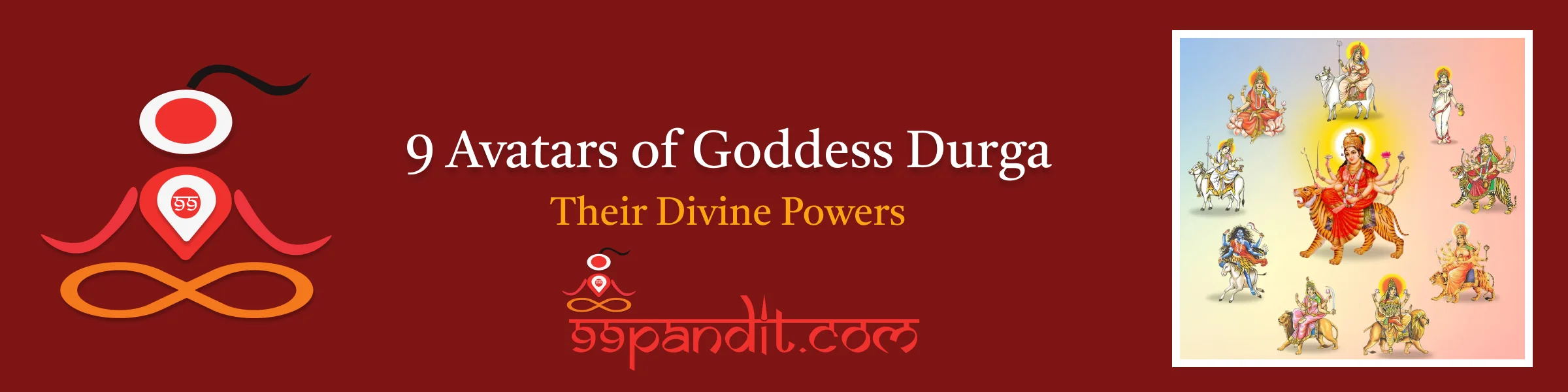
9 Avatars of Goddess Durga & Their Divine Powers

The 9 Avatars of Goddess Durga are not just religious idols but a blueprint of every woman’s life journey. The various forms of Maa Durga are the personification of strength, resilience, and power.

In each stage, Durga reminds us that growth is not linear. It’s messy, strong, and beautifully transformative. Goddess Durga is worshipped in many forms.

She is the mother of the world, and she is also Maa Annapurna, Maa Mahalakshmi, and Maa Saraswati. Mother sometimes takes the form of Maa Kali and sometimes Chandi.

9 Avatars of Goddess Durga

Sometimes she is worshipped as Brahmacharini and sometimes as Mahagauri. Each of her forms reflects every aspect of women’s power and also presents a wonderful example of women’s empowerment.

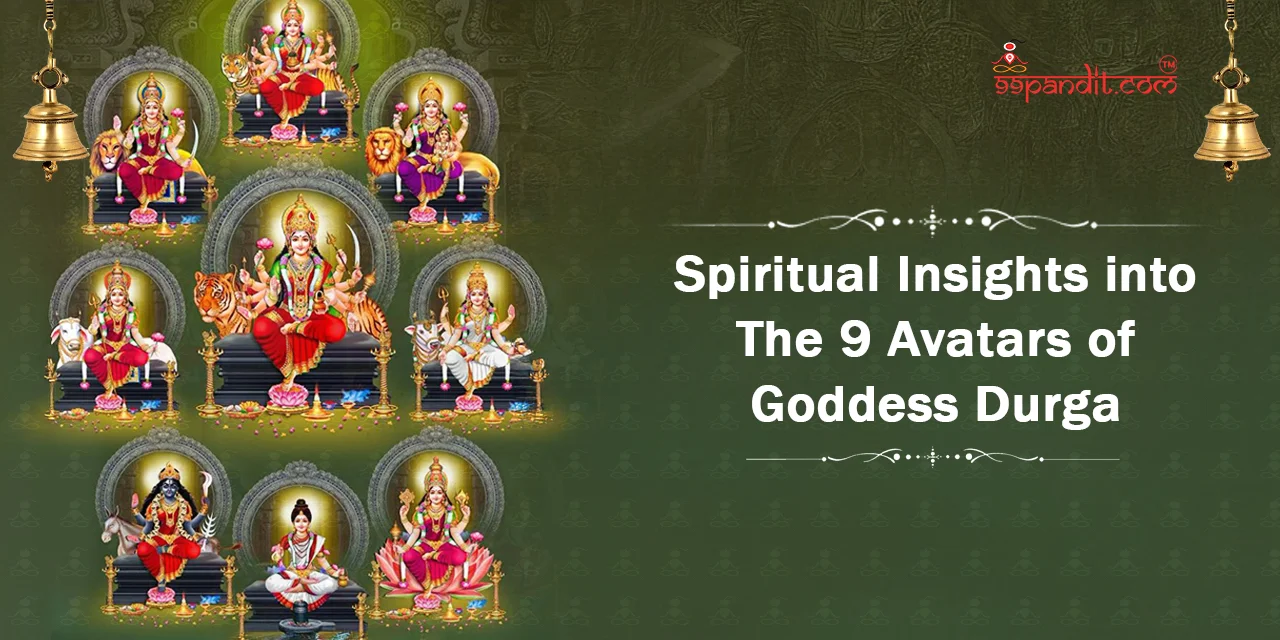
In this blog, we will deeply understand the spiritual insights into the 9 Avatars of Goddess Durga.

Along with this, we will also learn the divine mantras of the nine forms of Maa Durga.

With 99Pandit, we will also get to know how you can worship these 9 forms of Goddess Durga. So let us get started!

What are the 9 Avatars of Goddess Durga?

The 9 Avatars of Goddess Durga are- Maa Sailputri, Maa Brahmacharini, Maa Chandraghanta, Maa Khushmanda, Skand Mata, Maa Katyayani, Maa Kalratri, Maa Mahagauri, and Maa Siddhidatri.

These different forms of Goddess Durga are worshipped for nine days in the festival of Navratri. These nine forms give different Siddhis.

The nine Avatars of Maa Durga are different from the ten Mahavidya forms of the Goddess. Devi Mahapuran describes those ten Mahavidyas.

The nine forms of the Goddess have different personalities. Nine different lessons can be learned from her nine forms, which can be very beneficial in everyone’s life, especially for women.

Mantra-

प्रथमं शैलपुत्री च द्वितीयं ब्रह्मचारिणी।
तृतीयं चन्द्रघण्टेति कूष्माण्डेति. चतुर्थकम्।।
पंचमं स्कन्दमातेति षष्ठं कात्यायनीति च।
सप्तमं कालरात्रीति.महागौरीति चाष्टमम्।।
नवमं सिद्धिदात्री च नवदुर्गा: प्रकीर्तिता:।
उक्तान्येतानि नामानि ब्रह्मणैव महात्मना:।।

Meaning – First Shailputri, second Brahmacharini, third Chandraghanta, fourth Kushmanda, fifth Skandha Mata, sixth Katyayani, seventh Kalratri, eighth Mahagauri, and ninth Siddhidatri. These are the nine forms of Maa Durga.

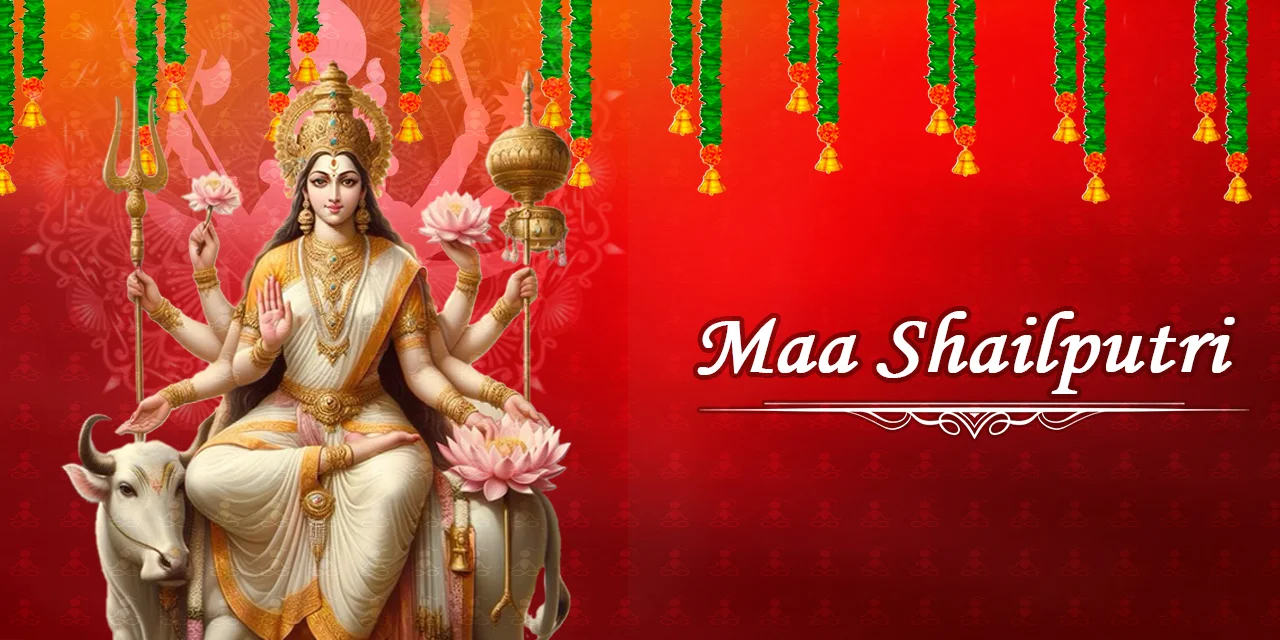
1. Maa Shailputri

Goddess Durga was born in the Himalayas as Parvati. Her mother’s name was Maina. That is why the first name of the goddess was Shailputri, i.e., daughter of Himalaya.

9 Avatars of Goddess Durga

Mother Shailputri is worshipped for wealth, employment and health. Shailputri teaches that for success in life, first of all, intentions should be strong and steadfast like a rock.

Mythological Story of Maa Shailputri

According to ancient mythology, Maa Shailputri was the daughter of Prajapati Daksha. The initial name of Maa Shailputri was Sati.

She was married to Lord Shiva, but King Daksha did not want his daughter to marry Lord Shiva, and he was angry with his daughter Sati and Lord Shiva.

Once Prajapati Daksha decided to perform a yagya. For this, he sent invitations to all the gods and goddesses, but did not invite his daughter Sati and son-in-law Lord Shiva.

Goddess Sati was restless about going to that yagya, but Lord Shiva forbade her from going there without an invitation.

But Sati Mata did not agree and remained adamant in her stubbornness. After this, Mahadev was forced to send her away.

When Sati reached her father, Prajapati Daksha’s place, no one treated her lovingly. They ridiculed her and Lord Shiva.

Goddess Sati was very hurt by this behaviour. She could not tolerate the insult of her husband and, in anger, sat in the yagya kund situated there.

When Shiva came to know about this, he reached there, burning in the flames of grief and anger and destroyed the yagya.

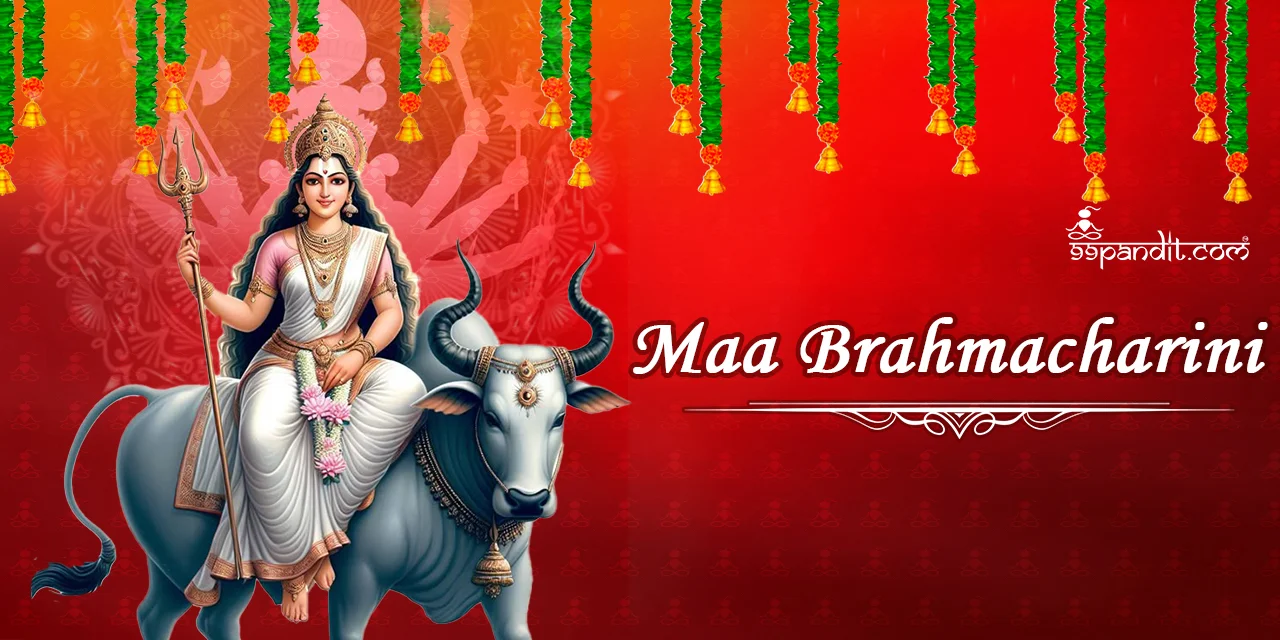
2. Maa Brahmacharini

Brahmacharini means one who follows the conduct prescribed by Brahma. One who helps one attain Brahma.

One who always lives with discipline. For success in life, it is very important to follow principles and rules. Without this, no destination can be reached.

9 Avatars of Goddess Durga

Discipline is most important. Brahmacharini is worshipped to attain supernatural powers. Many siddhis are attained by worshipping her.

Mythological Story of Maa Brahmacharini

In her previous life, Goddess Brahmacharini was born as the daughter of the king of the mountains, Himalaya. Also, on the advice of Naradji, she did severe penance to get Lord Shiva as her husband.

Due to this difficult penance, she came to be known as Tapashcharini, i.e. Brahmacharini.

She spent a thousand years eating only fruits and flowers, and lived on vegetables for a hundred years, living on the ground.

She kept a strict fast for some days and endured the extreme hardships of rain and sun under the open sky. For three thousand years, she ate broken Bilva leaves and kept worshipping Lord Shiva.

After this, she even stopped eating dry Bilva leaves. She kept doing penance by staying without water and food for several thousand years.

Due to giving up eating leaves, she was named Aparna. Due to the tough penance, the body of the goddess became very weak.

Gods, sages, Siddhagans, munis, all praised the penance of Brahmacharini as an unprecedented virtuous act and said- O goddess, till date no one has done such a tough penance. This was possible only because of you.

Your wish will be fulfilled, and you will get Lord Chandramauli Shivji as your husband. Now leave the penance and return home. Soon your father will come to take you.

The essence of the story of the mother is that the mind should not be disturbed even in the difficult struggles of life. All the success is achieved by the grace of Mother Brahmacharini Devi.

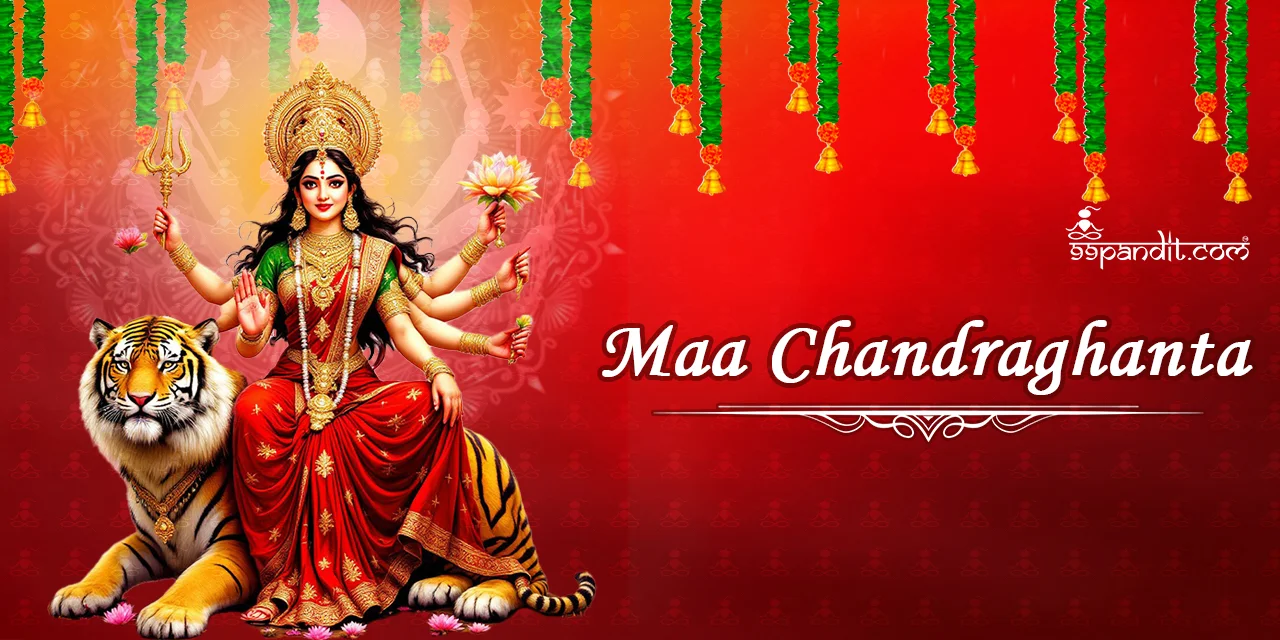
3. Maa Chandraghanta

This is the third form of the Goddess, who has a bell-shaped moon on her forehead. Hence, her name is Chandraghanta. This Goddess is considered to be the Goddess of satisfaction.

9 Avatars of Goddess Durga

Peace, along with success in life, cannot be experienced until there is a feeling of satisfaction in the mind. Anyone who is looking for self-welfare and peace should worship Maa Chandraghanta.

Mythological Story of Maa Chandraghanta

According to mythology, among the 9 Avatars of Goddess Durga, she took the form of Maa Chandraghanta when the terror of demons started increasing in heaven. Mahishasura was wreaking havoc and fighting a fierce war with the gods.

Because Mahishasura wanted to capture the throne of Devraj Indra and wanted to establish his supremacy over heaven, when the gods came to know about this, everyone got worried and approached Lord Brahma, Vishnu and Mahesh.

The Tridevas listened to the gods and expressed their anger. It is said that due to this anger, an energy came out of the mouth of the Tridevas, and from the same energy, a goddess named Maa Chandraghanta was born.

Lord Shankar gave his trident to that goddess, Vishnuji gave his chakra, Indra gave his bell, Surya gave his brightness, sword and lion. After this, Maa Chandraghanta killed Mahishasura and protected the gods and heaven.

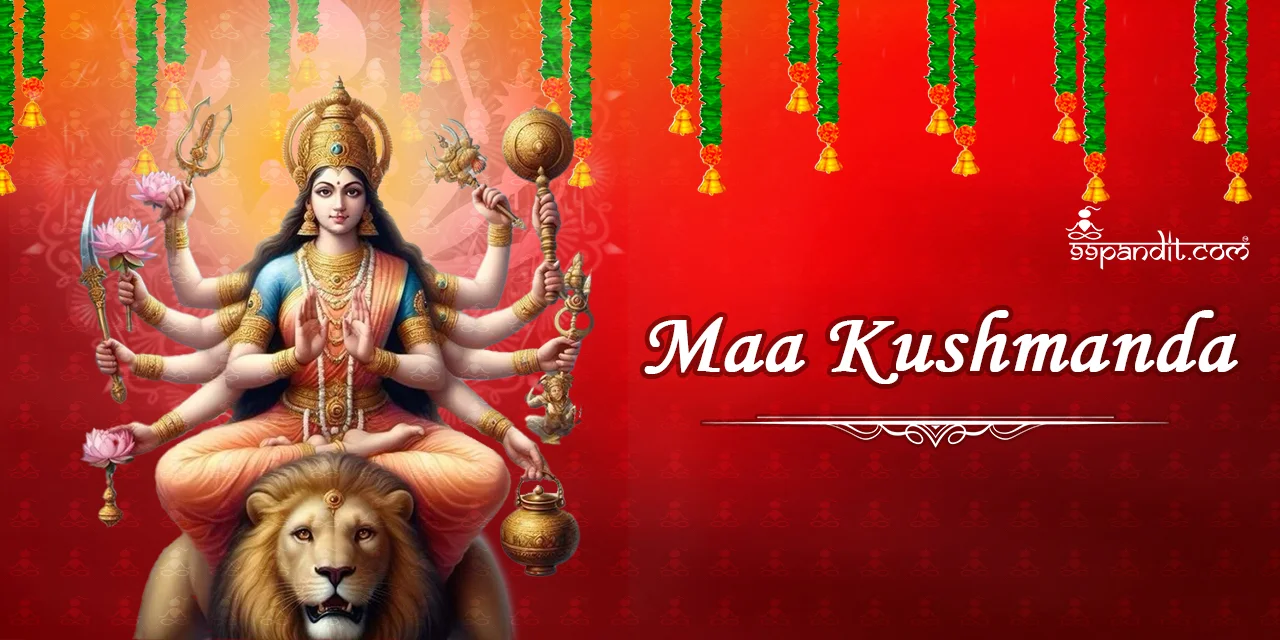
4. Maa Kushmanda

Maa Kushmanda is the fourth Avatar of Maa Durga. According to the scriptures, the universe was created by the gentle smile of this Goddess.

This is why she was named Kushmanda. This Goddess removes fear. Fear is the biggest obstacle in the path of success.

9 Avatars of Goddess Durga

One who wants to live a happy life free from all kinds of fears should worship Goddess Kushmanda.

Mythological Story of Maa Kushmanda

As per the ancient Hindu scriptures, Tridev (Lord Brahma, Lord Vishnu, and Lord Shiva) took the resolution to create the universe.

At that time, there was dense darkness in the entire universe. The entire universe was absolutely quiet.

There was no music, no sound, only a deep silence. In this situation, Tridev requested help from Jagat Janani Adishakti Maa Durga.

Maa Kushmanda, the fourth form of Jagat Janani Adishakti Maa Durga, created the universe instantly.

It is said that Maa Kushmanda created the universe with her light smile. The entire universe became illuminated with the smile on Maa’s face.

Thus, due to creating the universe with her smile, Jagat Janani Adishakti is known as Maa Kushmanda. The glory of the mother is unique. The mother’s abode is Surya Lok.

According to the scriptures, Maa Kushmanda resides in Surya Lok. The radiance on the face of Maa Kushmanda, who created the universe, makes the sun shine. The mother can reside in every place inside and outside Surya Lok.

A radiant aura appears on the face of the mother, which brings welfare to the entire world.

She is covered with a radiant radiance like the sun. This radiance is possible only through the mother of the world, Adishakti Maa Kushmanda.

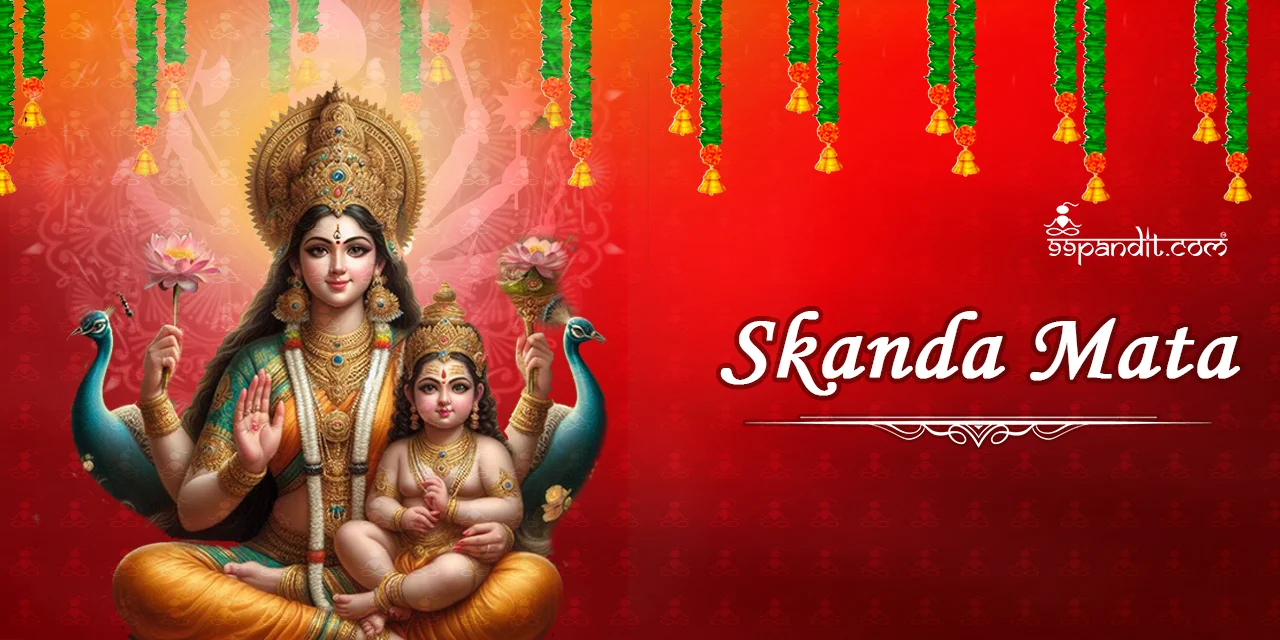
5. Skanda Mata

This form of Maa Durga is a symbol of love, kindness, compassion and care, which completely reflects the quality of motherhood. Kartikeya is the first son of Lord Shiva and Parvati; one of his names is Skanda.

Being the mother of Kartikeya, i.e. Skanda, the fifth form of the Goddess is named Skanda Mata.

9 Avatars of Goddess Durga

Apart from that, she is also the giver of power. For success, it is necessary to have both the ability to accumulate power and the ability to create. This form of the Mother teaches and provides this.

Mythological Story of Skanda Mata

According to the ancient mythological tale, a demon named Tarakasur was performing severe penance to please Lord Brahma. Lord Brahma was pleased with his severe penance and appeared before him.

Asking for a boon from Lord Brahma, Tarakasur asked for immortality. Then Lord Brahma explained to him that whoever is born on this earth has to die.

Disappointed, he said to Lord Brahma that he should die at the hands of Lord Shiva’s son. Tarakasura believed that Lord Shiva would never marry.

Therefore, he would never die. Then he started committing violence against people. Troubled by the atrocities of Tarakasura, all the gods approached Lord Shiva and prayed for freedom from Tarakasura. Then, Shiva married Parvati and became the father of Kartikeya.

Mother Parvati took the form of Skanda Mata to train her son Skanda (Karthikeya) for war. After taking war training from Skandamata, Lord Kartikeya killed Tarakasur.

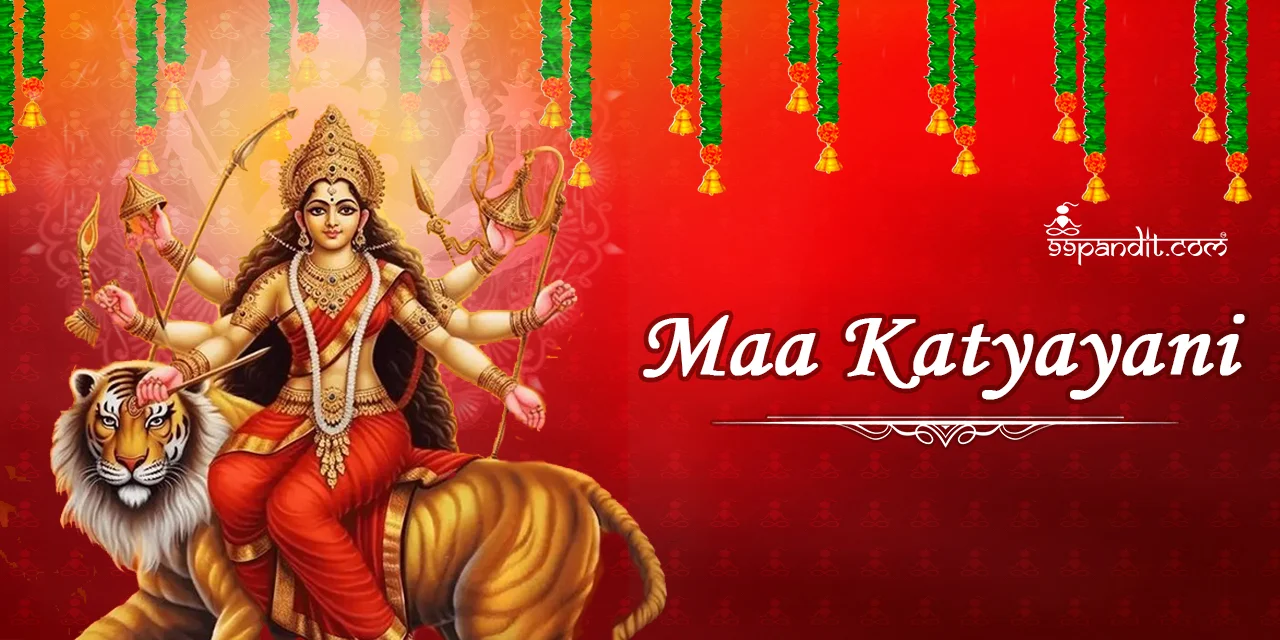
6. Maa Katyayani

Maa Katyayani is the 6th Avatar of Goddess Durga. She is the daughter of sage Katayana.

Sage Katyayana did a lot of penance for Goddess Durga, and when Durga was pleased, the sage asked for a boon so that Goddess Durga could be born in his house as a daughter.

9 Avatars of Goddess Durga

She was named Katyayani because she was Katyayana’s daughter. She is the goddess of health. Success can never be achieved with a disease and a weak body.

The body needs to be healthy to reach its destination. Those who want freedom from disease, grief, and suffering should please Goddess Katyayani.

Mythological Story of Maa Katyayani

According to mythology, Sage Katyayana was a great devotee of Goddess Durga. One day, pleased with his penance, Goddess Durga blessed him to be born as his daughter.

Goddess Durga is called Maa Katyayani because she is the daughter of Sage Katyayana.

It is believed that by worshipping Maa Katyayani, a person can control their senses. It was Maa Katyayani who killed Mahishasura.

That is why Maa Katyayani is also called Mahishasura Mardini. Apart from this, Mata Rani is called the goddess who destroys demons and asuras.

Lord Shri Krishna also did this worship. According to mythology, Maa Katyayani was also worshipped by Lord Rama and Shri Krishna.

It is said that the gopis worshipped this form of Maa Durga to get Lord Shri Krishna as their husband. Maa Durga took this incarnation to maintain religion in the universe.

7. Maa Kaalratri

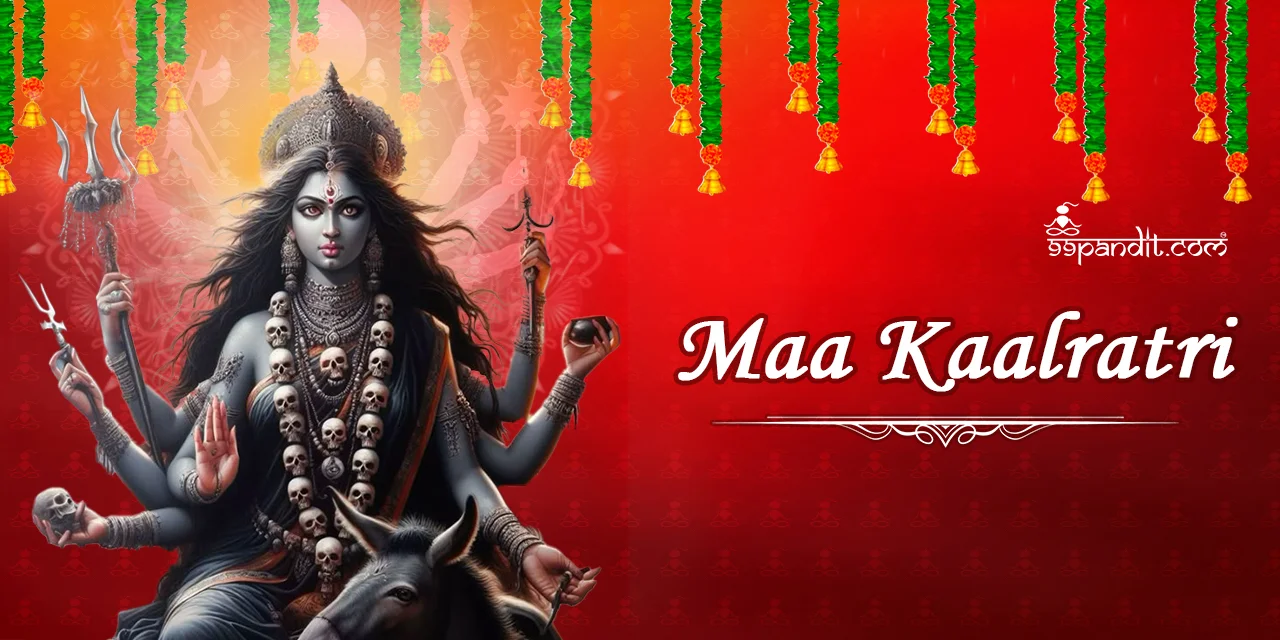
Kaalratri is one of the most powerful forms of Maa Durga. Kaal means time, and Raatri means night. Mother Kaalratri gives all the siddhis that are obtained by doing sadhna at night.

This goddess is worshipped for supernatural powers, tantra siddhi, and mantra siddhi. This form teaches that for success, forget the difference between day and night.

9 Avatars of Goddess Durga

Only those who want to move ahead continuously without stopping or getting tired can reach the peak of success.

Mythological Story of Maa Kaalratri

According to the mythological tale, gods and humans were troubled by a demon named Raktbeej.

The speciality of the demon Raktbeej was that as soon as a drop of his blood fell on the earth, another demon like him was born.

Troubled by this demon, all the gods approached Lord Shiva to find a solution to the problem. Lord Shiva knew that in the end, Goddess Parvati would kill him.

Lord Shiva requested the mother. After this, Mother Parvati herself created Maa Kaalratri with her power and brilliance.

After this, when the mother killed the demon Raktbeej, Maa Kaalratri took the blood coming out of his body in her mouth before it fell on the ground. In this form, Mother Parvati was called Kaalratri.

8. Maa Mahagauri

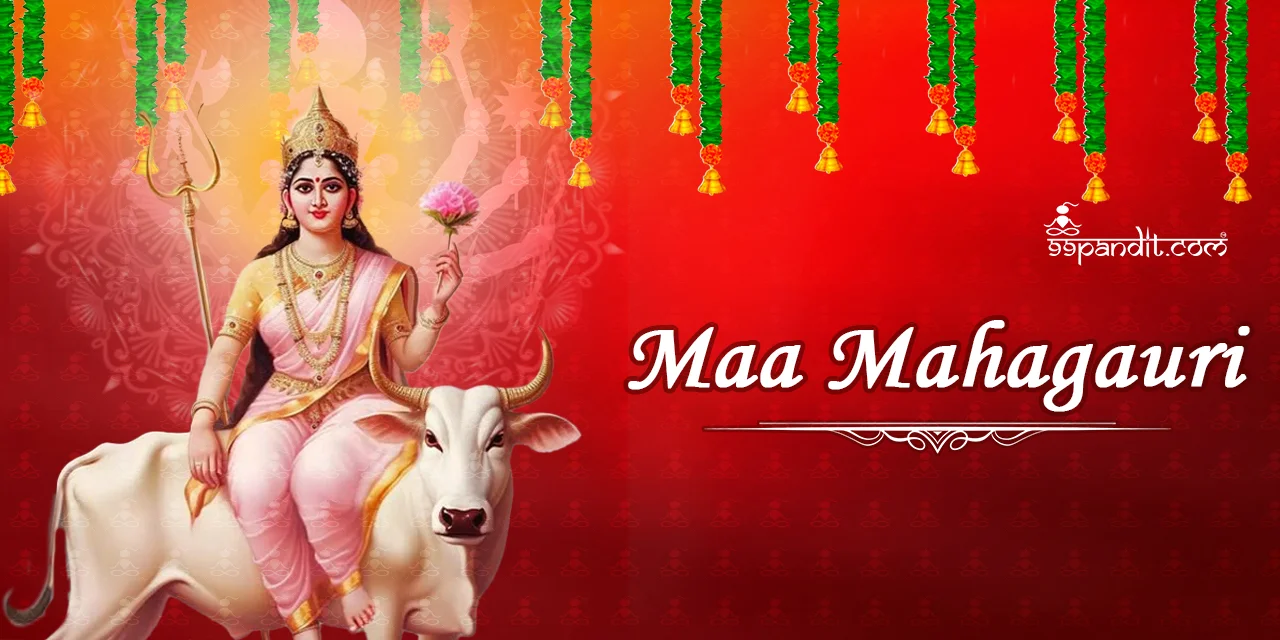
The eighth form of the Goddess Durga is Mahagauri. Gauri means Parvati, and Mahagauri means the most excellent form of Parvati.

Mahagauri is worshipped and meditated upon to get rid of the dark veil of one’s sins and to make the soul pure and clean again. She is the Goddess symbolising the purity of character.

9 Avatars of Goddess Durga

If success is achieved with a tainted character, then it is of no use; only if the character is bright does one get the joy of success.

Mythological Story of Maa Mahagauri

According to the legend, Maa Mahagauri was born in the house of King Himalaya, due to which her name was Parvati.

Still, when Maa Parvati turned eight years old, she started remembering the events of her previous birth clearly.

From this, she came to know that she was the wife of Lord Shiva in her previous birth.

From that time onwards, she accepted Lord Bholenath as her husband and started doing severe penance to get Shiva as her husband.

Mother Parvati did severe penance for years to get Lord Shiva as her husband. Due to doing penance without food and water for years, her body became black.

Seeing her penance, Lord Shiva became pleased, and he purified her with the holy water of Ganga ji, after which Mother Mahagauri became bright and radiant. With this, she became famous by the name of Mahagauri.

9. Maa Siddhidatri

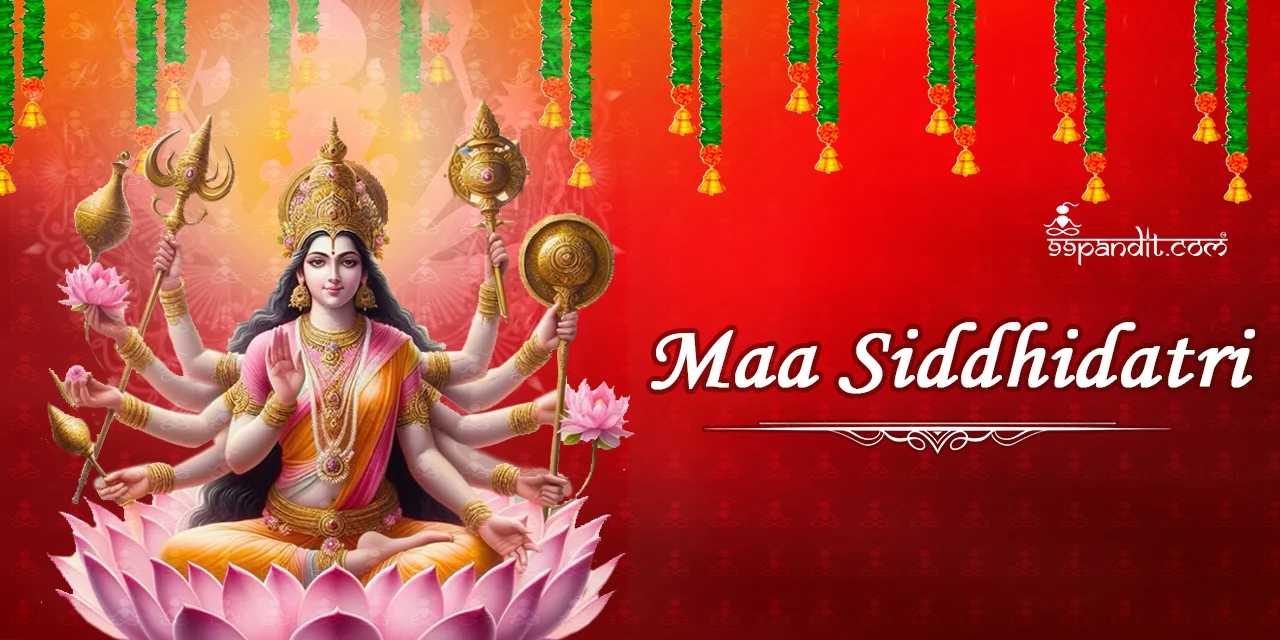
The last and 9th Avatar of Goddess Durga is Maa Siddhidatri. This goddess is the origin of all siddhis.

Devi Purana says that Lord Shiva attained many siddhis from this form of the goddess. The half-goddess in the Ardhanarishwar form of Shiva is Siddhidatri Mata.

9 Avatars of Goddess Durga

This goddess is worshipped for all kinds of success. Siddhi means efficiency. If there is efficiency and skill in work, then success becomes easy.

Mythological Story of Maa Siddhidatri

The ninth form of Maa Durga is that of Maa Siddhidatri. She is considered to be the bestower of all kinds of siddhis.

According to Markandeya Purana, Maa Siddhidatri has eight types of siddhis, namely Anima, Mahima, Garima, Laghima, Prapti, Prakamya, Ishitva, and Vashitva.

According to mythology, Lord Shiva had attained all eight siddhis by performing rigorous penance of Maa Siddhidatri.

It was by the grace of Maa Siddhidatri that half of Lord Shiva’s body became a goddess, and he was called Ardhanarishwar.

This form is a very powerful form among the nine forms of Maa Durga. It is believed that this form of Maa Durga has appeared from the brilliance of all the gods and goddesses.

It is described in the story that when all the gods, troubled by the atrocities of the demon Mahishasura, reached out to Lord Shiva and Lord Vishnu.

Then, a brilliance arose from all the gods present there, and from that brilliance, a divine power called Maa Siddhidatri was created.

Divine Mantras of the 9 Avatars of Goddess Durga

1. Shailputri Stuti Mantra: या देवी सर्वभू‍तेषु मां शैलपुत्री रूपेण संस्थिता। नमस्तस्यै नमस्तस्यै नमस्तस्यै नमो नमः॥

2. Brahmacharini Stuti Mantra: या देवी सर्वभू‍तेषु मां ब्रह्मचारिणी रूपेण संस्थिता। नमस्तस्यै नमस्तस्यै नमस्तस्यै नमो नमः॥

3. Chandraghanta Stuti Mantra: या देवी सर्वभू‍तेषु मां चन्द्रघण्टा रूपेण संस्थिता। नमस्तस्यै नमस्तस्यै नमस्तस्यै नमो नमः॥

4. Kushmanda Stuti Mantra: या देवी सर्वभू‍तेषु मां कूष्माण्डा रूपेण संस्थिता। नमस्तस्यै नमस्तस्यै नमस्तस्यै नमो नमः॥

5.Skandamata Stuti Mantra: या देवी सर्वभू‍तेषु मां स्कन्दमाता रूपेण संस्थिता। नमस्तस्यै नमस्तस्यै नमस्तस्यै नमो नमः॥

6. Katyayani Stuti Mantra: या देवी सर्वभू‍तेषु मां कात्यायनी रूपेण संस्थिता। नमस्तस्यै नमस्तस्यै नमस्तस्यै नमो नमः॥

7. Kaalratri Stuti Mantra: या देवी सर्वभू‍तेषु मां कालरात्रि रूपेण संस्थिता। नमस्तस्यै नमस्तस्यै नमस्तस्यै नमो नमः॥

8. Mahagauri Stuti Mantra: या देवी सर्वभू‍तेषु मां महागौरी रूपेण संस्थिता। नमस्तस्यै नमस्तस्यै नमस्तस्यै नमो नमः॥

9. Siddhidatri Stuti Mantra: या देवी सर्वभू‍तेषु मां सिद्धिदात्री रूपेण संस्थिता। नमस्तस्यै नमस्तस्यै नमस्तस्यै नमो नमः॥

Conclusion

In conclusion, these 9 Avatars of Goddess Durga are so powerful that even chanting their Stuti Mantras can remove the fear. The nine forms of the Goddess have different personalities.

Nine different lessons can be learned from her nine forms, which can be very beneficial in everyone’s life, especially for women.

The nine forms of Maa Durga are the personification of strength, resilience, and power.

Yet they’re not fixed or idealised; they’re living, breathing phases that reflect the multifaceted nature of real life.

In each stage, these forms of Maa Durga remind us that growth is not linear. It’s messy, strong, and beautifully transformative.

I hope you liked reading this article. If you want to perform any Puja with the assistance of a Vedic Pandit, you can easily connect with them through 99Pandit.

With 99Pandit, you will be able to perform Durga Puja, Saraswati Puja, and many more. So, get yourself a verified and excellent Pandit for your Puja needs from 99Pandit.

Kamdhenu Cow Story: The Sacred Cow of Hindu Mythology

In Hindu mythology, out of so many divine beings, you may have heard of the Kamdhenu Cow. She is not any other animal but a divine representation of prosperity, purity, and spiritual grace.

Also called the “mother of cows“, Kamdhenu is believed to fulfil all the wishes and grant positivity and nourishment to his followers.

Kamdhenu Cow

Numerous ancient scriptures refer to her as a heavenly creature who supports life and feeds creation.

Aside from her mythical life, she is also important because she is the guardian of dharma and leads to the right path. So why is the Kamdhenu cow so unique?

Want to know more about the origin and tale of the Kamdhenu cow? Then keep reading the article.

We will take you deeper into the significance of the Kamdhenu cow story, which reminds us of timeless kindness and faith.

Who is the Kamdhenu Cow?

Every one of us knows how important cows are in Hindu culture. Ever wondered why? The main reason behind it is their connection with Go Mata Kamdhenu.

The name Kamdhenu has been derived from two Sanskrit words: “Kam” refers to desires, and “Dhenu” means cow. Combined, they tell the divine to fulfil all the wishes.

She is said to exist in five different forms, including Sunanda, Surabhi, Sumana, Susheela, and Nanda.

Also known as Eleven Rudras, the cow has the power to grant all the boons and symbolizes prosperity, purity, and spirituality.

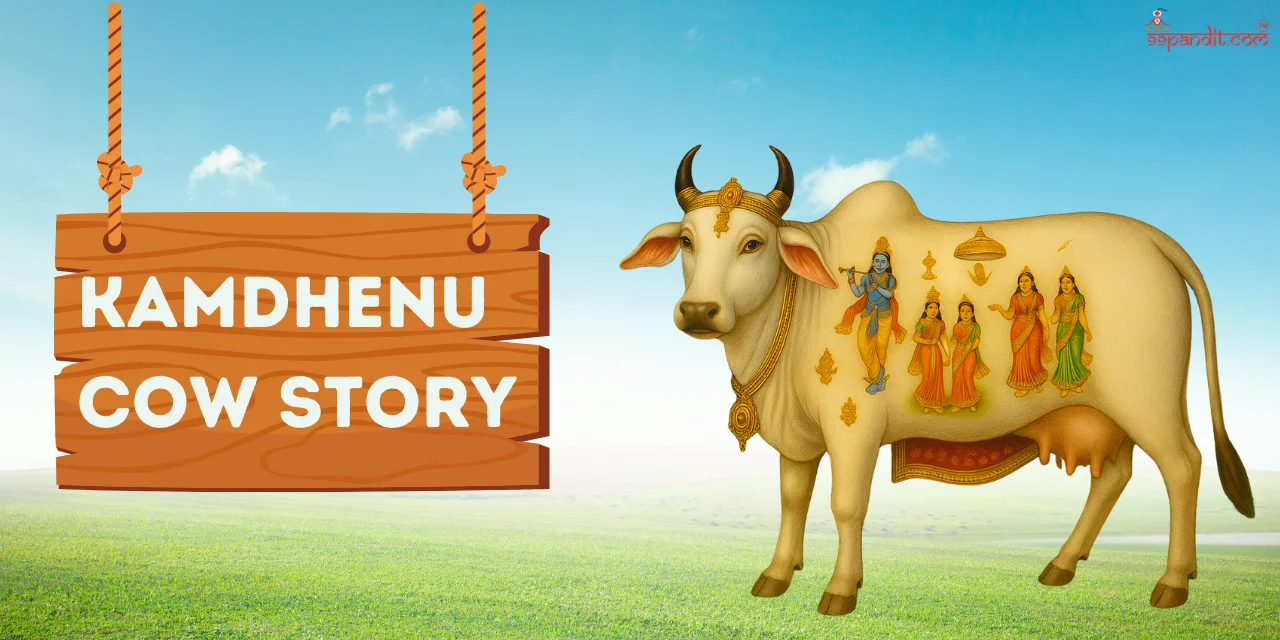
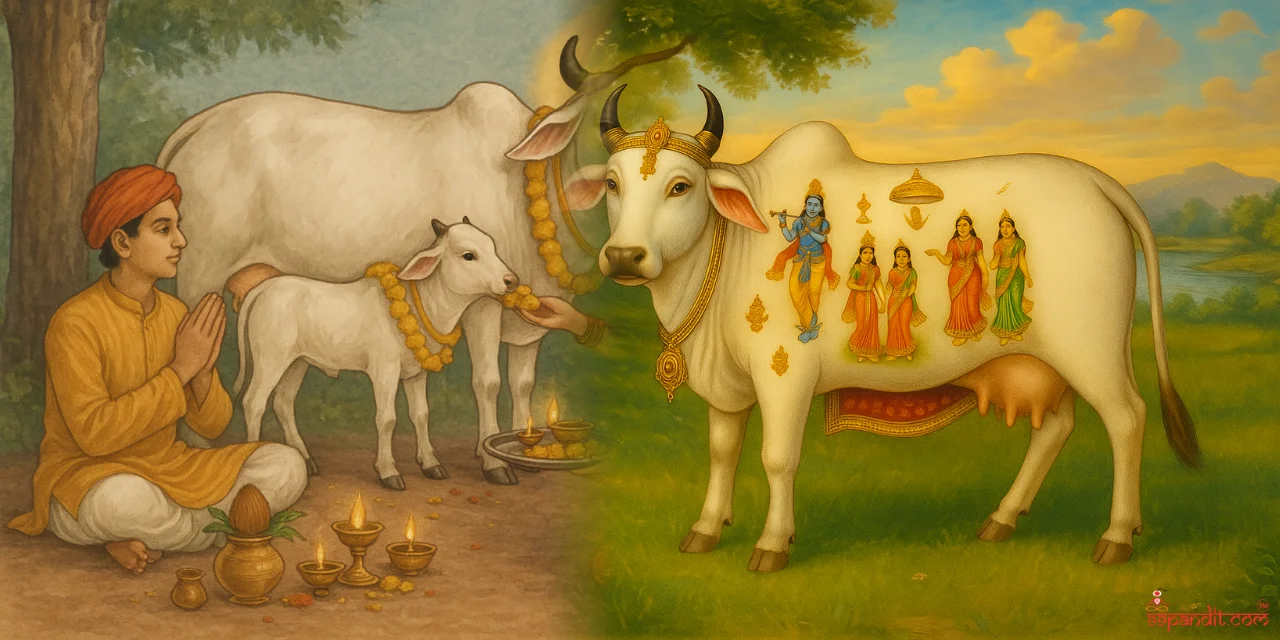
Generally, she is portrayed either as a pure white colour cow with various deities all over her body, or a cow with a woman’s head.

Kamdhenu is believed to be an incarnation of Mother Earth that signifies fertility and purity.

Symbolism and Appearance of Kamdhenu Cow

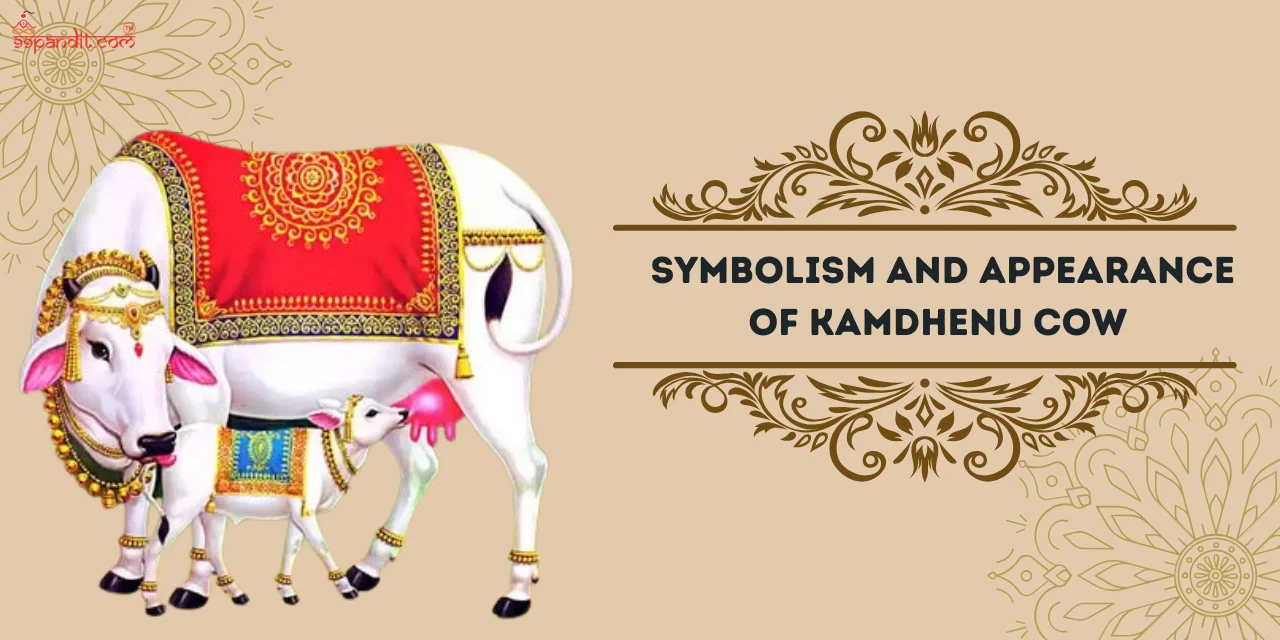
Portrayed as a divine being, Kamdhenu personifies divine favour with her representation as a white cow adorned with detailed jewels, garlands, and a crown.

Kamdhenu Cow

Each part of her body symbolizes a different meaning. Here’s how she is generally represented in ancient mythology:

  • Four Legs: Each represents four Yugas, the foundation of wisdom and knowledge.
  • Horns: Represent three great gods, Lord Brahma, Lord Vishnu, and Lord Shiva.
  • Eyes: Represent Sun and Moon, demonstrating balance and light.
  • Shoulders: Symbolize Agni (Fire) and Vayu (Wind) and confer strength.
  • Whole body: Thought to depict all principal Hindu gods.

The Origin of Kamdhenu Cow

There is no specific mention of Kamdhenu’s origin story. Different scriptures provide different versions of her tale.

Within them, the most common one comes from the churning of the ocean – ‘Samudra Manthan’.

In this tale, the Devas and the Asuras assemble to churn the ocean to get the “Amrit”, the nectar of immortality.

The moment they churn the ocean, various divine beings such as Goddess Lakshmi, Airavat (an elephant), and treasure emerge from it, including Kamdhenu.

She was a holy cow in white, with a woman’s face. From there, she has become a symbol of blessing and abundance.

Another version of the story is found in scripture, like the Harivamsa Purana. In this, Kamdhenu is mentioned as a daughter of Daksha Prajpati, son of Lord Brahma.

She was married to Sage Kashyapa, one of the seven Saptrishis. From there onwards, she is known as the mother of all cows, representing nourishment and kindness.

There is one more story associated with her origin from the Devi Bhagavatam Puranas. Back in those times, Lord Krishna and Goddess Radha felt thirsty.

That’s when Lord Krishna created a cow named “Surabhi,” another name of Kamdhenu, who then offered milk. But later, the vessel fell on the ground and broke.

The milk spilled on the ground and transformed into ‘Kshirasagara’, the ocean of milk. From Kamdhenu, many other cows appeared and were gifted by Krishna to the Gopas.

Stories Behind the Kamdhenu Cow in Hindu Mythology

The existence of Kamdhenu is not just confined to her origin in Hindu mythology. There are a number of stories that are associated with her, which demonstrate her divine power and her contribution towards nourishing and safeguarding dharma.

Kamdhenu Cow

Let’s have a look at some of them:

1. Kamdhenu Cow in Sage Vashistha’s Ashram

Sage Vashistha is one of the revered Saptarishis and the guardian of Kamdhenu. Her sacred presence sees that no sacred practice goes unfinished, as she is a source of limitless resources for yajnas and hospitality.

One day, King Vishwamitra, while wandering near the forest, visited the Ashram of Sage Vasishta.

He was shocked to see the prosperous yet straightforward life lived by the sage and her people. Vasishta welcomes the king and his army. He also offered the food and comfort they required.

Curious about the wealth of Vasistha, King Vishwamitra asked him about this. That’s when he revealed the divine powers of the Kamadhevu cow.

Knowing her value, Vishwamitra asked Sage Vasistha to give her to him, and in return, he offered her a high fortune. But, being wise and humble, Vasishta refused her proposal.

In response, the King tries to take Kamadhenu by force. Seeing all this, she created a fierce celestial weapon from her body to defeat Vishwamitra’s army.

Defeated by the sage and the divine cow, he realized that wealth is nothing in front of spiritual strength. From there, Vishwamitra chose the right path and became one of the greatest sages.

2. Kamdhenu and Sage Jamadagni

Jamadagni is also a sage and the father of Lord Parashurama, the sixth incarnation of Vishnu.

He got the Kamdhenu cow gifted by Lord Indra, and she used to offer endless food and resources to his family and other sages.

Once, the powerful king Kartaviya Arjuna, known for his thousand eyes, visited his ashram. He fed the king and his army without any shortage.

Being impressed by Kamdhenu’s abilities, the King demanded that Sage Jamadagini hand over the cow to him.

When he refused to give her, the king took her calf with him by force, along with his army.

Later, Jamadagini’s son, Parashurama, took revenge on his father, killed Kartarvirya, and vowed to get the earth rid of all cruel rulers.

This story tells the connection of the divine cow with Lord Parashurama in Hindu mythology.

Symbolic Significance of Kamdhenu Cow in Hinduism

Kamdhenu is not just a mythological figure but also a Hindu religious icon. She is the embodiment of affluence, spiritual awakening, and maternal care.

1. Wish-Fulfilling Cow

Kamdhenu can accomplish any wish or desire of those who want her blessings. These attributes, and her being the giver, are also seen in her very name.

People served her with all their hearts, not just for material gain but also to fulfill their religious demands.

2. Mother of All Cows

Since Kamdhenu is the mother of all cows, she embodies all the features of motherhood, i.e., protection and nursing.

She is the mother of cows, which means that cows are valued in Hindu society. Her breast milk is also considered to symbolize plenty and nourishment.

3. Source of Prosperity and Well-Being

It is believed that Khandenu has divine energies and grace. The cow brings the spirit of purity and goodness to the level of blessing the person who worships her.

Her presence is believed to be very auspicious, and her blessings are likened to good health and growth in the spirit.

4. Embodiment of Divinity

Every part of the divine cow is associated with specific deities, symbolizing her sacredness.

As explained earlier, her horns symbolize three prominent gods, and the Moon and Sun symbolize her eyes. She embodies the epitome of the power linking the divine and the earthly world.

5. Connection with Yajana

During a Vedic practice, items such as curd, milk, and ghee are considered holy offerings.

And as all of them come through the cow, making a Kamdhenu a symbol of purity and associated with dharma.

Abodes of Kamadhenu Cow

Different scriptures provide different variants of stories regarding where the Kamadhenu cow used to live:

  • Goloka: Surabhi, also known as Kamdhenu, is the daughter of Daksha and worshiped Lord Brahma for 10,000 years.

Seeing her devotion, Lord Brahma elevated her to be the chief of all the cows in Goloka, the highest heaven where Lord Krishna resides with Goddess Radha.

  • Patala: Patala is the home of Kamdhenu, and it is under the rule of Vasuki, the snake king.

She gave birth to Vasuki and her other brother through her udder. Kamdhenu was the protector of Patala.

  • In Ashram of the Sages: Another home of the Kamdhenu cow is the hermitage of various sages like Jamadagini and Vasishta.

She was their faithful companion who served both spiritual and material needs. Also, the protector of the sages is in danger.
Why Are Cows Sacred In Hindu Culture?

The divine powers of Kamdhenu make all the cows in Hindu culture sacred. It is said that caring for and feeding a cow (Gau Seva) brings an immense amount of spiritual blessings and removes past karma sins.

Milk, curd, and butter are also important items used in daily rituals like homa and yajna, which also come from her alone. Actually, the Kamdhenu cow has meaning in Vastu Shastra too.

Kamdhenu Cow

It is supposed that keeping an idol of hers in the northeastern corner of your house welcomes peace, positivity, and prosperity.

In Hinduism, they are always seen as “wealth-givers” and symbolize the nurturing nature of the earth and tenderness.

Worship Practices of Kamadhenu

Being so revered in Hinduism, the Kamdhenu cow signifies prosperity, purity, and the nurturing love of mothers.

Many devotees worship her to bring in happiness, good health, and wealth in their lives through following the puja and celebration:

1. Govardhan Puja

The puja is generally performed during Diwali and Govardhan Puja. It includes offering fruits and food and chanting a mantra to seek the blessing of the Sacred cow.

2. Gopashtami

Sacred festival in honour of cows and their protectors. At this time, cows are bathed with holy water, garlanded, and prayed to.

It signifies the sacred relationship of the cow with Kamdhenu and the role they play in agriculture.

3. Daily Worship

Many people in India, even today, feed the cow with water, grass, and food in the morning as a sign of respect and devotion.

4. Other Rituals

Being a symbol of fertility and purity, devotees also performed Gau Puja and Gau daan as an act of belief.

Modern-Day Representation of Kamdhenu Cow

The timeless beauty of the Kamdhenu cow still fascinates people, particularly in the shape of contemporary artwork, idols, and interior decor.

These modern arts generally blend practices with innovative design, thus finding popularity among believers and art enthusiasts alike.

Statues and Idols: The Kamdhenu cow’s status is usually achieved through materials such as bronze, marble, wood, and even contemporary composites.

It features elaborate details of her divine form and is accompanied by small figures that represent other deities.

Home Decor: She is also well-liked in Indian homes as a home decor piece. Whether it is a small idol to place on the table or metal statues for the garden, they are believed to create peace, prosperity, and positive vibes in the area.

Auspicious Giving: The Kamdhenu cow idols are also used as gifts at festivals, housewarmings, and any other special celebrations. It is an act of inclination and auspiciousness.

Conclusion

Kamdhenu cow is more than a sacred creature; she is an icon of the Indian way of showing respect to nature and all the living creatures.

Understanding her tales and her position in Hindu mythology makes us familiar with her significance in both religious and functional terms of life.

From being an instrument of Yajana to keeping Sages safe, Kamdhenu reminds us of selflessness and generosity.

Worshippers who pray to her with clean faith and devotion are blessed with wealth, positivity, and sound health. Even in today’s modern world, her idols and pujas keep her timeless blessings alive.

Being the “mother of all cows,” her tale and symbols guide devotees towards righteous and spiritual pathways.

We hope you get all the information that you are looking for, Kamdhenu cow stories, through this article. That’s it from 99Pandit for today!

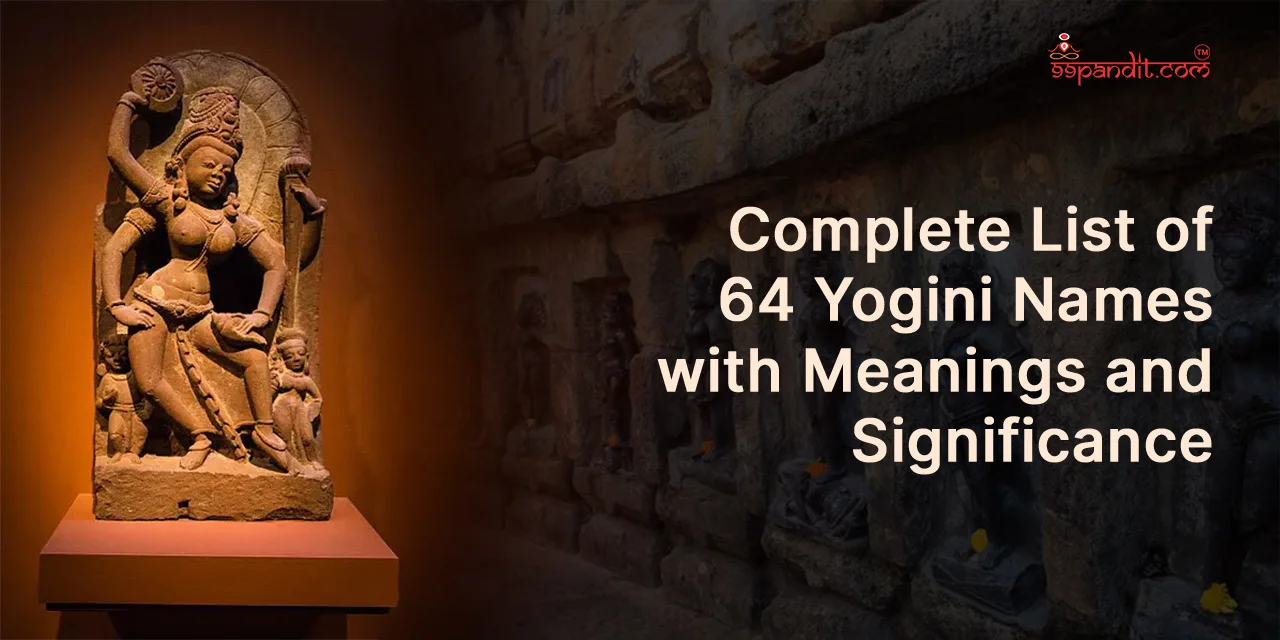
Complete List of 64 Yogini Names with Meanings and Significance

64 Yogini Names are mentioned in the ancient Puranas, which have different stories. They are said to be the incarnation of Adishakti Maa Kali.

Whenever we talk about Maa Kali, we always think about the 64 Yogini names and their importance. These 64 Yoginis have a great significance in our Hindu culture.

It is also said that Maa Kali took these incarnations while fighting with a demon named Ghor.

64 Yogini Names

According to Sanatan Dharma, the 64 Yoginis represent a powerful, mystical group of female deities. Each goddess represents a unique way of divine feminine energy.

Maa Kali has an important place in Tantra Shashtra, and as these 64 Yoginis are associated with Maa Kali, they are also linked with Tantra Shashtra.

In this blog, we will discover the ultimate significance of the 64 Yogini names. With 99Pandit, let’s find out the unknown facts about the Yoginis.

Not only this, 99Pandit is the ultimate platform for booking a Pandit online for any puja performed at your home.

Without further ado, let us get started and know the mystical truth about the 64 Yoginis.

Origin of 64 Yogini

It is believed that the 64 Yoginis originated from Adishakti Maa Kali. Each of these Yoginis has a special characteristic and energy of its own.

As per the Mythological stories, the 64 Yoginis have originated from the main 8 Yoginis.

The main 8 Yoginis are the 8 goddesses who helped Maa Durga in destroying the demons Shumbh, Nushumb, and Raktbeej.

Each Matrika had eight supporting Shaktis. This is the reason why their number becomes 64 by adding all of them.

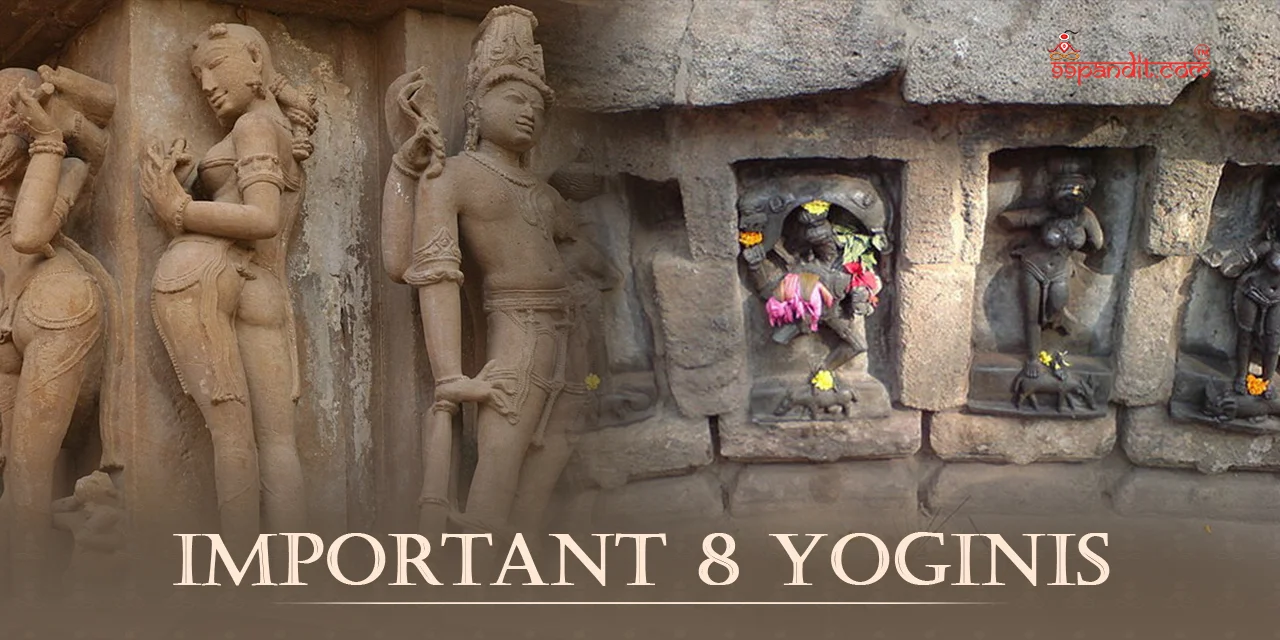
These 8 Yogini Names are: 1. Sur-Sundari Yogini, 2. Manohara Yogini, 3. Kanakavati Yogini, 4. Kameshwari Yogini, 5. Ratti Sundari Yogini, 6. Padmini Yogini, 7. Natini Yogini and 8. Madhumati Yogini.

Important 8 Yoginis

64 Yogini Names

1. Sur Sundari Yogini

Sur Sundari Yogini is the most beautiful goddess among the 8 Yoginis. To please Maa Sur Sundari, her sadhana is done for a month.

Only when pleased, the beautiful Yogini of Sur appears, and you can address her as mother, sister, or wife.

With their siddhi, one gets a kingdom, gold, divine ornaments, and even divine daughters.

2. Manohara Yogini

The attire of this Yogini is strange. She is very beautiful, and fragrance emanates from her body.

She becomes pleased after doing sadhana for a month. With her siddhi, the sadhak receives materialistic goods daily.

3. Kanakavati Yogini

This Yogini is adorned with red clothes and ornaments, and after attaining Siddhi, they come with their attendants and fulfill the desired wish.

4. Kameshwari Yogini

This Yogini is also chanted at night for the entire month. The Goddess, decorated with flowers, becomes pleased and bestows wealth and enjoyment.

5. Rat Sundari Yogini

The Goddess adorned with golden ornaments becomes pleased after a month-long sadhana and grants the desired boons and gives all kinds of wealth, money, and ornaments.

6. Padmini Yogini

The skin colour of this Yogini is dark. This Goddess is adorned with clothes and ornaments, and after a month of sadhana, she becomes pleased and bestows wealth, etc.

7. Natini Yogini

This Yogini can be accomplished by doing sadhna at night under the Ashoka tree. By attaining her happiness, all your wishes can be fulfilled.

8. Madhumati Yogini

This Yogini is very beautiful and adorned with various types of ornaments. After sadhana, they appear before us and grant any object from any world.

By their grace, one gets a whole life and good fortune.‍ Student Health‍One gets the truth. One gets the right to rule.

List of 64 Yogini Names with Meaning

Here is the complete list of 64 Yogini Names with meaning:

  1. Bahurup
  2. Tara
  3. Narmada
  4. Yamuna
  5. Shanti
  6. Varuni
  7. Kshemankari
  8. Aindri
  9. Varahi
  10. Ranveera
  11. Vanarmukhi
  12. Vaishnavi
  13. Kalaratri
  14. Vaidyarupa
  15. Charchika
  16. Betli
  17. Chhinnamastika
  18. Vrishavahana
  19. Jwalakamini
  20. Ghatwar
  21. Karakali
  22. Saraswati
  23. Birupa
  24. Kaveri
  25. Bhaluka
  26. Narasimhi
  27. Birja
  28. Vikatanna
  29. Mahalakshmi
  30. Kaumari
  31. Mahamaya
  32. Rati
  33. Karkari
  34. Sarpshya
  35. Yakshini
  36. Vinayaki
  37. Vindhyavasini
  38. Veer Kumari
  39. Maheshwari
  40. Ambika
  41. Kamini
  42. Ghatabari
  43. Stuti
  44. Kali
  45. Uma
  46. Narayani
  47. Samudra
  48. Brahmini
  49. Jwalamukhi
  50. Agneyi
  51. Aditi
  52. Chandrakanti
  53. Vayuvega
  54. Chamunda
  55. Murti
  56. Ganga
  57. Dhumavati
  58. Gandhara
  59. Sarvamangala
  60. Ajita
  61. Suryaputri
  62. Vayuveena
  63. Aghor
  64. Bhadrakali.

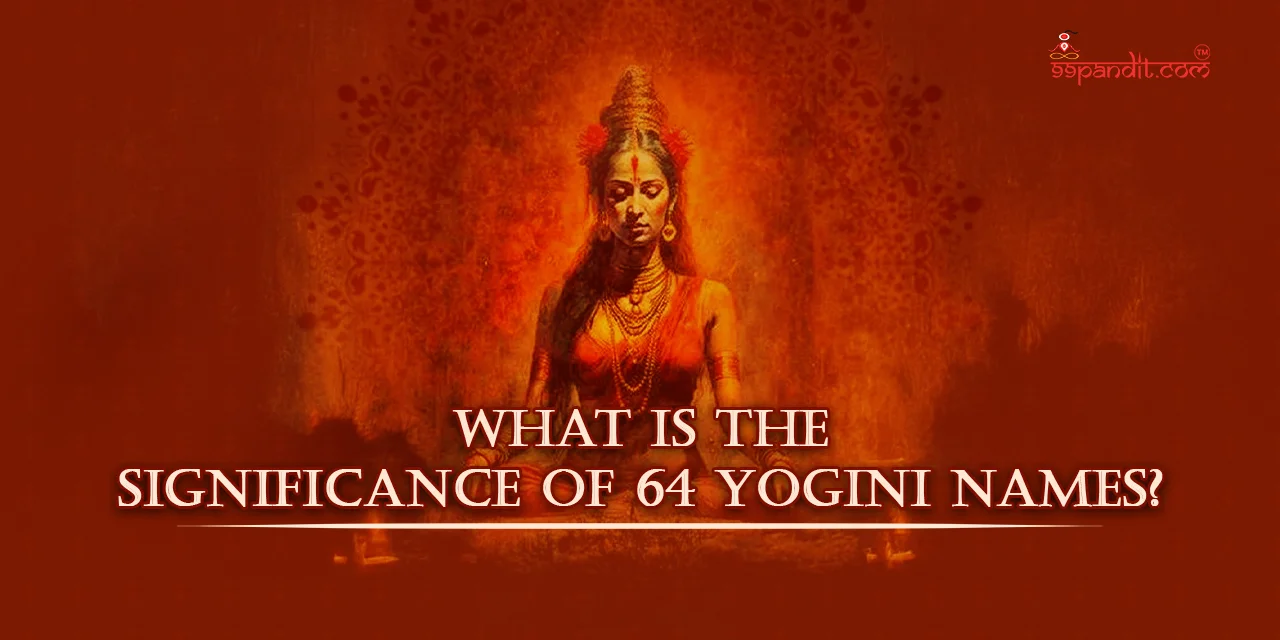
What is the Significance of 64 Yogini Names?

The 64 Yogini Names are considered very auspicious as they have originated from Maa Kali.

The 64 Yoginis rule over different dimensions of the universe, and each Yogini has a specific character. Mainly, they are related or say the common factor is with the 8 Matrikas.

All the 64 Yoginis are different incarnations of Adi Shakti Kali, and according to Devi Mahatmya, these eight goddesses helped Goddess Durga in the war against the demons Shumbh, Nishumbh, and Raktbeej.

64 Yogini Names

Goddess Durga herself created the Matrikas. As told earlier, these 64 Yoginis are the incarnation of Adi Kali and always stay with Goddess Parvati like her Friends.

All the Yoginis participated in every battle fought by Maa Parvati and showed their bravery.

It is believed that the Mahavaidyas and Siddhavidyas also fall under the category of Yoginis. They are also different incarnations of Maa Kali.
The 64 Yoginis are endowed with supernatural powers, and acts of sorcery, magic, hypnotism, etc., are successful only by their grace.

Mantras of 64 Yoginis: 64 Yogini Sadhana and Siddhi Mantras

  1. ॐ ऐं ह्रीं श्रीं श्री काली नित्य सिद्धमाता स्वाहा।
  2. ॐ ऐं ह्रीं श्रीं श्री कपलिनी नागलक्ष्मी स्वाहा।
  3. ॐ ऐं ह्रीं श्रीं श्री कुला देवी स्वर्णदेहा स्वाहा।
  4. ॐ ऐं ह्रीं श्रीं श्री कुरुकुल्ला रसनाथा स्वाहा।
  5. ॐ ऐं ह्रीं श्रीं श्री विरोधिनी विलासिनी स्वाहा।
  6. ॐ ऐं ह्रीं श्रीं श्री विप्रचित्ता रक्तप्रिया स्वाहा।
  7. ॐ ऐं ह्रीं श्रीं श्री उग्र रक्त भोग रूपा स्वाहा।
  8. ॐ ऐं ह्रीं श्रीं श्री उग्रप्रभा शुक्रनाथा स्वाहा।
  9. ॐ ऐं ह्रीं श्रीं श्री दीपा मुक्तिः रक्ता देहा स्वाहा।
  10. ॐ ऐं ह्रीं श्रीं श्री नीला भुक्ति रक्त स्पर्शा स्वाहा।
  11. ॐ ऐं ह्रीं श्रीं श्री घना महा जगदम्बा स्वाहा।
  12. ॐ ऐं ह्रीं श्रीं श्री बलाका काम सेविता स्वाहा।
  13. ॐ ऐं ह्रीं श्रीं श्री मातृ देवी आत्मविद्या स्वाहा।
  14. ॐ ऐं ह्रीं श्रीं श्री मुद्रा पूर्णा रजतकृपा स्वाहा।
  15. ॐ ऐं ह्रीं श्रीं श्री मिता तंत्र कौला दीक्षा स्वाहा।
  16. ॐ ऐं ह्रीं श्रीं श्री महाकाली सिद्धेश्वरी स्वाहा।
  17. ॐ ऐं ह्रीं श्रीं श्री कामेश्वरी सर्वशक्ति स्वाहा।
  18. ॐ ऐं ह्रीं श्रीं श्री भगमालिनी तारिणी स्वाहा।
  19. ॐ ऐं ह्रीं श्रीं श्री नित्यकलींना तंत्रार्पिता स्वाहा।
  20. ॐ ऐं ह्रीं श्रीं श्री भैरुण्ड तत्त्व उत्तमा स्वाहा।
  21. ॐ ऐं ह्रीं श्रीं श्री वह्निवासिनी शासिनि स्वाहा।
  22. ॐ ऐं ह्रीं श्रीं श्री महवज्रेश्वरी रक्त देवी स्वाहा।
  23. ॐ ऐं ह्रीं श्रीं श्री शिवदूती आदि शक्ति स्वाहा।
  24. ॐ ऐं ह्रीं श्रीं श्री त्वरिता ऊर्ध्वरेतादा स्वाहा।
  25. ॐ ऐं ह्रीं श्रीं श्री कुलसुंदरी कामिनी स्वाहा।
  26. ॐ ऐं ह्रीं श्रीं श्री नीलपताका सिद्धिदा स्वाहा।
  27. ॐ ऐं ह्रीं श्रीं श्री नित्य जनन स्वरूपिणी स्वाहा।
  28. ॐ ऐं ह्रीं श्रीं श्री विजया देवी वसुदा स्वाहा।
  29. ॐ ऐं ह्रीं श्रीं श्री सर्वमङ्गला तन्त्रदा स्वाहा।
  30. ॐ ऐं ह्रीं श्रीं श्री ज्वालामालिनी नागिनी स्वाहा।
  31. ॐ ऐं ह्रीं श्रीं श्री चित्रा देवी रक्तपुजा स्वाहा।
  32. ॐ ऐं ह्रीं श्रीं श्री ललिता कन्या शुक्रदा स्वाहा।
  33. ॐ ऐं ह्रीं श्रीं श्री डाकिनी मदसालिनी स्वाहा।
  34. ॐ ऐं ह्रीं श्रीं श्री राकिनी पापराशिनी स्वाहा।
  35. ॐ ऐं ह्रीं श्रीं श्री लाकिनी सर्वतन्त्रेसी स्वाहा।
  36. ॐ ऐं ह्रीं श्रीं श्री काकिनी नागनार्तिकी स्वाहा।
  37. ॐ ऐं ह्रीं श्रीं श्री शाकिनी मित्ररूपिणी स्वाहा।
  38. ॐ ऐं ह्रीं श्रीं श्री हाकिनी मनोहारिणी स्वाहा।
  39. ॐ ऐं ह्रीं श्रीं श्री तारा योग रक्ता पूर्णा स्वाहा।
  40. ॐ ऐं ह्रीं श्रीं श्री षोडशी लतिका देवी स्वाहा।
  41. ॐ ऐं ह्रीं श्रीं श्री भुवनेश्वरी मंत्रिणी स्वाहा।
  42. ॐ ऐं ह्रीं श्रीं श्री छिन्नमस्ता योनिवेगा स्वाहा।
  43. ॐ ऐं ह्रीं श्रीं श्री भैरवी सत्य सुकरिणी स्वाहा।
  44. ॐ ऐं ह्रीं श्रीं श्री धूमावती कुण्डलिनी स्वाहा।
  45. ॐ ऐं ह्रीं श्रीं श्री बगलामुखी गुरु मूर्ति स्वाहा।
  46. ॐ ऐं ह्रीं श्रीं श्री मातंगी कांटा युवती स्वाहा।
  47. ॐ ऐं ह्रीं श्रीं श्री कमला शुक्ल संस्थिता स्वाहा।
  48. ॐ ऐं ह्रीं श्रीं श्री प्रकृति ब्रह्मेन्द्री देवी स्वाहा।
  49. ॐ ऐं ह्रीं श्रीं श्री गायत्री नित्यचित्रिणी स्वाहा।
  50. ॐ ऐं ह्रीं श्रीं श्री मोहिनी माता योगिनी स्वाहा।
  51. ॐ ऐं ह्रीं श्रीं श्री सरस्वती स्वर्गदेवी स्वाहा।
  52. ॐ ऐं ह्रीं श्रीं श्री अन्नपूर्णी शिवसंगी स्वाहा।
  53. ॐ ऐं ह्रीं श्रीं श्री नारसिंही वामदेवी स्वाहा।
  54. ॐ ऐं ह्रीं श्रीं श्री गंगा योनि स्वरूपिणी स्वाहा।
  55. ॐ ऐं ह्रीं श्रीं श्री अपराजिता समाप्तिदा स्वाहा।
  56. ॐ ऐं ह्रीं श्रीं श्री चामुंडा परि अंगनाथा स्वाहा।
  57. ॐ ऐं ह्रीं श्रीं श्री वाराही सत्येकाकिनी स्वाहा।
  58. ॐ ऐं ह्रीं श्रीं श्री कौमारी क्रिया शक्तिनि स्वाहा।
  59. ॐ ऐं ह्रीं श्रीं श्री इन्द्राणी मुक्ति नियन्त्रिणी स्वाहा।
  60. ॐ ऐं ह्रीं श्रीं श्री ब्रह्माणी आनन्दा मूर्ती स्वाहा।
  61. ॐ ऐं ह्रीं श्रीं श्री वैष्णवी सत्य रूपिणी स्वाहा।
  62. ॐ ऐं ह्रीं श्रीं श्री माहेश्वरी पराशक्ति स्वाहा।
  63. ॐ ऐं ह्रीं श्रीं श्री लक्ष्मी मनोरमायोनि स्वाहा।
  64. ॐ ऐं ह्रीं श्रीं श्री दुर्गा सच्चिदानंद स्वाहा।

Mythological Story Related to 64 Yogini Names

There are many mythological stories related to the 64 Yogini Names, and one of them is written in the Kashi Khand of the Skanda Purana.

According to the first half of the Kashi Khand of Skand Purana, Lord Shiva wanted to get the whole world of Kashi from King Devodaash.

But King Devodaash ruled his subjects righteously, and there was no crime in his Kingdom.

On the orders of Lord Shiva, all the gods tried very hard to find flaws in that pure king, but all of them failed.

Thereafter, Lord Shiva sent 64 Yoginis from Madarchal to Kashi to see the fault in the king.

Those Yoginis took various forms and wore different attire, and started doing different tasks.

Those 64 Yoginis could not find any fault with the King even after staying in Kashi for 12 months and continuously trying, but they did not return to Madarchal.

Since then till today, the 64 Yoginis have never left Kashi, although they roam in all three worlds.

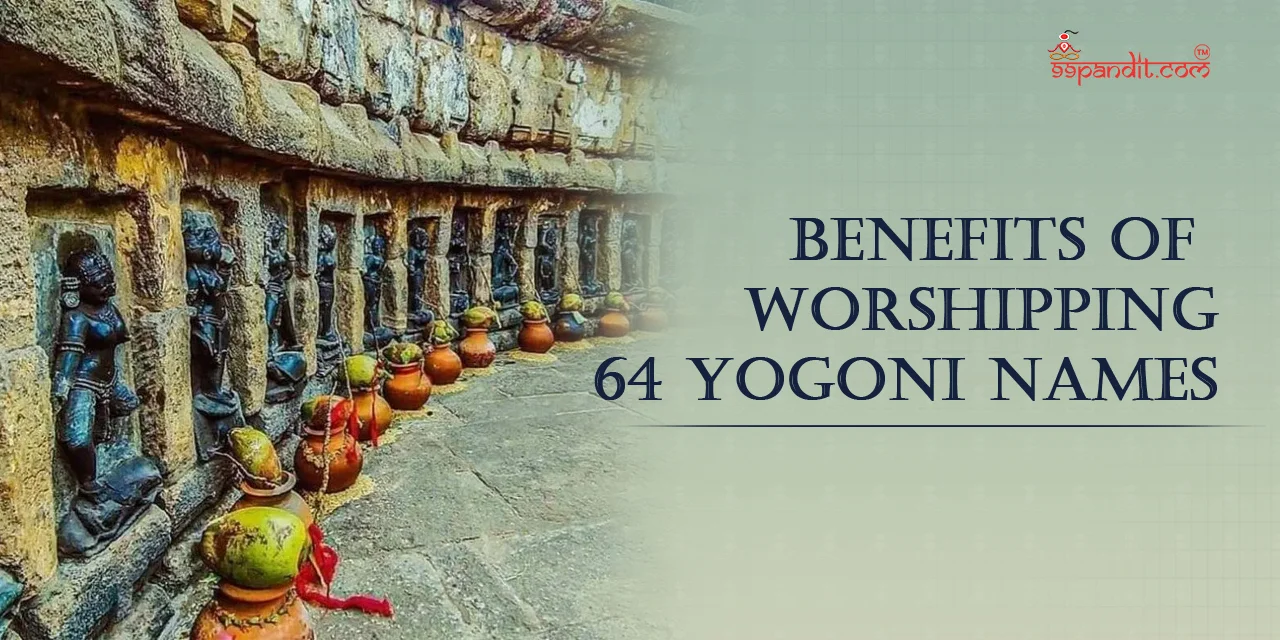
Benefits of Worshipping 64 Yogoni Names

There are several benefits to worshiping the 64 Yoginis. It was described by Skanda Dev. Further on being asked by Vyas Ji, Skanda Dev tells about these Yoginis that if a person chants these 64 Yogini names every day at dawn, noon, and evening, then all the troubles caused by ghosts and evil spirits get eliminated.

Neither Dakini, Shakini, Kushmanda, nor any other demon can trouble the one who recites the 64 Yogini names.

64 Yogini Names

One who serves the Yogini Peethas receives the desired powers, and if one repeats other mantras also before their asanas, he receives powers too.

64 Yoginis are soon pleased by the offering of yajna, puja, prasad, incense, lamp, and she surely fulfills all the desires.

In the month of Ashwayuja, starting from the first lunar day of the Shukla paksha for 9 days, one should worship the Yogis; by doing this, one can achieve whatever one desires.

While doing a pilgrimage to Kashi, one must worship them; otherwise, they can create obstacles in their work.

Conclusion

In conclusion, chanting and remembering the names of 64 Yoginis every day can make your life easier and fulfill your desires. The powerful and mystical worlds of the 64 Yoginis have captivated devotees for centuries.

The 64 Yoginis are rooted deeply in Tantric traditions and represent a powerful and enigmatic group of female deities. Each deity consists of unique aspects of divine feminine energy.

It is believed that the 64 Yoginis mentioned in the Puranas are fierce, independent, and often unconventional, ruling over the realms of nature transformation and spiritual liberation.

There is a slight difference in the names of these 64 Yoginis in different Puranas. Although they have many Peethas in India, the main Peethas are located in Odisha and Morena in Madhya Pradesh.

I hope you liked reading this article. For more such articles, stay connected with 99Pandit. You can even book a verified Pandit for all your Puja needs and get a Pandit at your doorstep.

Story of Krishna and Sudama Friendship: Meaning & Morals

Who does not know the friendship of lord Krishna and Sudama, They were both connected to each other emotionally and mentally.

A beautiful story of both from their childhood was, Sudama was poor, and lord krishna was the king.

When he accepted his rich friend, he got a treatment he never thought of. What did lord krishna do?

Krishna and Sudama

What made his true friend Sudama visit his palace after a long time? Read the blog to know the meaning and morals of their friendship story.

Lord Krishna’s stories are legendary, from his childhood tricks to battlefield wisdom. His idols show multiple facets – wise advisor, dedicated friend, and playful cowherd.

But possibly, one of his sweetest stories could be explained to that of lord krishna and Sudama, an epic story of their friendship and humbleness.

Our Hindu culture regards friendship as a high point, and Lord Krishna initiated his childhood by helping, saving, and being around his mates & friends.

His passion for his friends was a truly supernatural bond, and one such legend is that of Krishna and Sudama.

Explained as an example of friendship, the story of these two friends stood the test of time and fate.

Who was Sudama?

Krishna and Sudama were friends since their childhood. Both of them studied in the same school and learned from the same teacher, hence they became best friends.

They made a promise to each other to be in contact when they completed their schooling. They had to part their ways owing to time.

Years later, when lord krishna left Vrindavan, he became the king of Dwarka and married Rukmini.

On the other hand, Sudama became a pandit and married a girl chosen by his parents. He was in great pain while he was poor and could not support his family.

He was able to work to feed his family despite his ailing body. The days were not in his favor as well.

Sudama’s wife, one day, knowing the seriousness of their situation, asked him to take lord krishna’s help.

Sudama, though, was hesitant to ask his friend for help. He was not that kind of person, even though he did not want to go, he chose to go.

True Friendship Story of Lord Krishna And Sudama

The most well-known story by all of us is their childhood friendship, which teaches us the true meaning of friendship.

As Sudama was poor and did not want to take the help of his friend lord krishna. When he was forced by his wife to visit his friend, who was a king, he chose to seek his help.

The Journey of Sudama to Dwarka

Sudama started his journey to the palace of lord krishna. He carried a small bag with a very small amount of rice as a humble present.

When he reached the gate of the palace, the guards stopped him from entering the palace, seeing his poor condition. They’re not unaware that he is an old friend of Krishna.

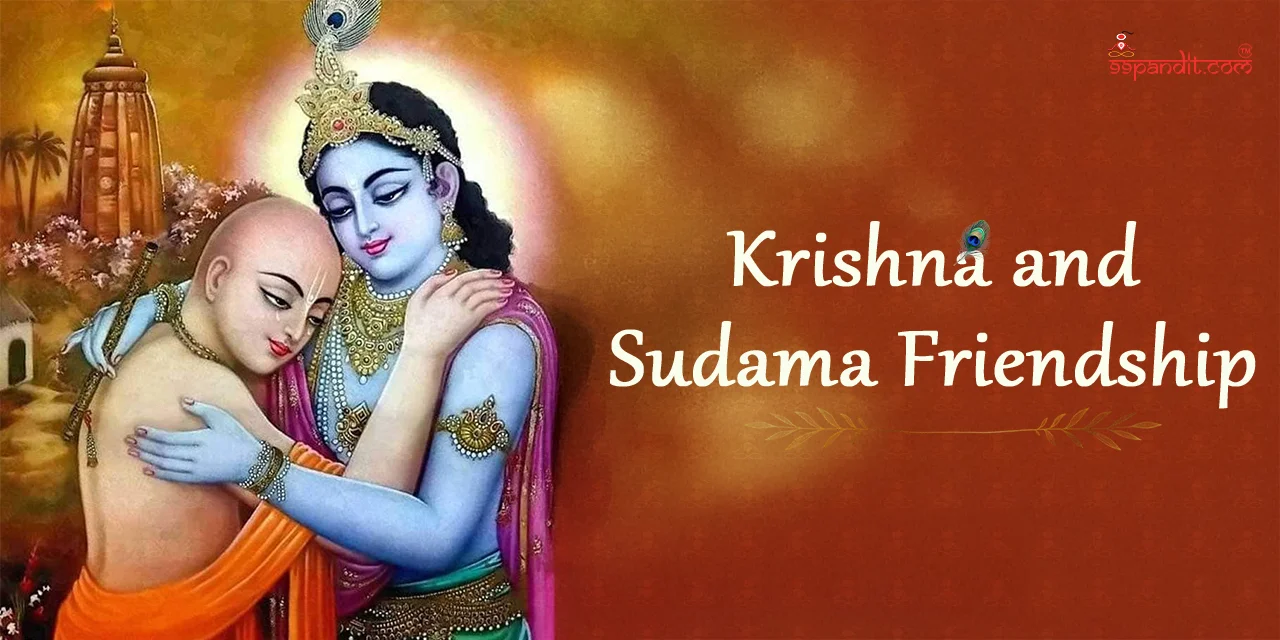
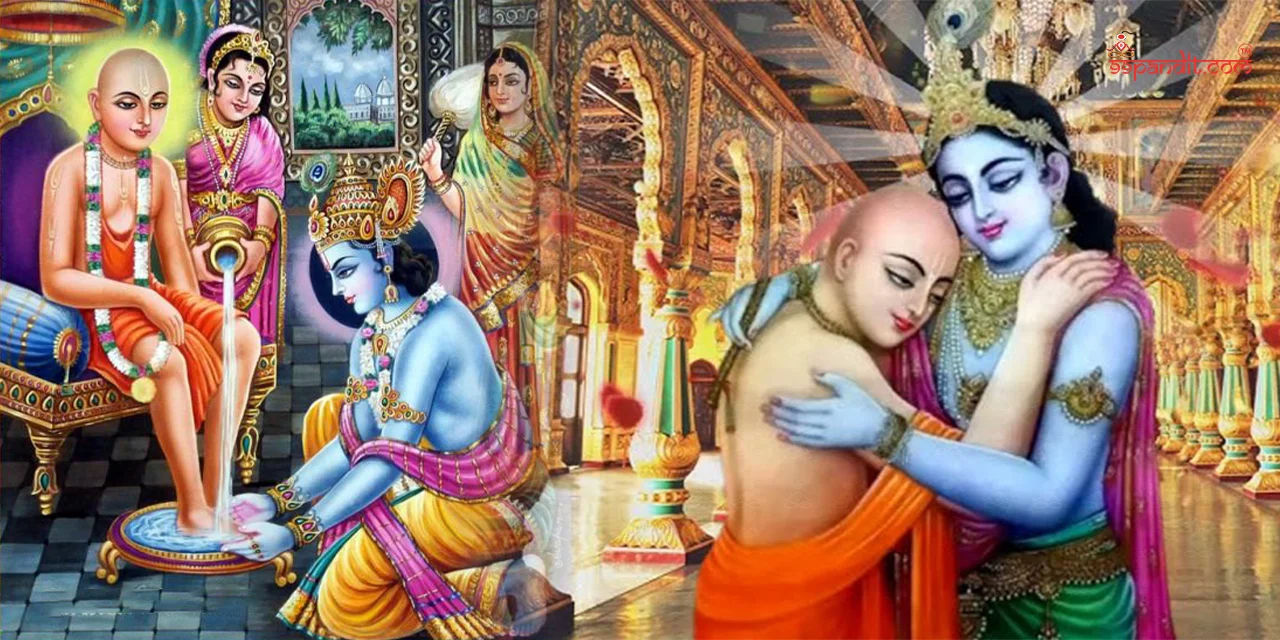
When they informed the king, upon hearing the news, he rushed to Sudama and hugged him. He saw Sudama’s bleeding feet because he traveled barefoot due to his poverty.

After stepping inside the palace, Krishna insisted that Sudama sit on his throne and washed his feet by himself.

Happily, Krishna asked Sudama what he had brought for him as a gift. Then Sudama showed the small rice bag, describing his situation, and he could only offer him.

Aware of Sudama’s conditions, Krishna ate the rice. After having two handfuls, Rukmini (wife of lod krishna), intervened and advised to leave the rice for others.

Divine Promise of Krishna and Sudama

Shree Krishna once asked Sudama in their young age ‘Will you be my friend?’ How convenient that the one who lords himself asks for friendship.

Sudama hesitated to make lord Krishna a friend due to his poverty. He said ‘But my condition is not well, I am a poor brahmin, and you’re a royal; our background does not match, how can we become friends?

Friends are those who always help each other in need, but there’s nothing I can give you.

Krishna and Sudama

Shree Krishna said ‘Just promise me that apart from anything, we will always be friends. I’m just offering you my friendship in return for nothing.

I will never ask you for anything that you can not give me.’ Hearing this, Sudama accepted Krishna’s offer of friendship.

Sudama, when asked, the guards let him inside to satisfy lord krishna as he reached to meet him.

He also said they’re childhood friends. But they refused to admit him due to his poor condition.

Also, they treated him like a madman, but when lord krishna knew about Sudama’s coming, he rushed to welcome his friend barefoot.

They hugged each other, and everyone was shocked after seeing this, as without thinking about social status, Krishna hugged a poor man.

That laid the new foundation on the planet of the word ‘friendship.’ Krishna welcomed his friend, showering love and flowers. He washed his feet to give a godly treatment to Sudama.

Krishna ordered his mates to change the old clothes of Sudama with new royal clothes to make him feel more relaxed.

Sudama was crying after seeing such unexpected royal treatment from his kind friend.

He served food to Sudama and discussed their old days. But Krishna noticed that he was hiding something.

How did Sudama become the lord of two worlds?

When Sudama was hiding something from Krishna, out of curiosity, he asked gently, ‘And I think that bhabhi ji has sent something for me.

I feel it’s some delicious food for me. He requested Sudama to give the gift. Sudama thought the small gift was nothing for the king of Dwarka.

Now, Krishna accepted the rice and fabric gift with kindness and confirmed it was the ideal present in His whole life.

He enjoyed it and later, Kālidāsa stated, Krishna even gave some of the rice to His wife Rukmini (the incarnation of Lakshmi) and ate the rest.

After spending some time together, Sudama thought it was time to go back. Before Krishna left, while remembering their past times, He even forgot to ask why Sudama had come for a visit.

He wondered aloud,” What was the reason for visiting Dwarka (Krishna’s Palace)?” After all his worries had gone, Sudama spoke softly.

He said what was needed to make him happy. He does not exactly know what his boss requires. Sudama left the Palace feeling very devoted to Krishna.

Aftermath of Sudama and Krishna’s Reunion

After coming home, visiting Krishna’s palace, thinking about his future, and how his wife could react that he could not ask for favors from Krishna.

To his surprise, he discovered that his kind hut had been converted into a beautiful palace.

Without any request, lord krishna had fulfilled his wish and bestowed great wealth while he was eating the rice.

Each handful of rice shows the wealth of various realms, indicating Krishna’s wish to make Sudama two worlds. He also wanted to give him blessings in the third world.

Meaning of the Story

The meaning of the story describes a symbol of divine and selfless friendship. It claims that true friendship does not depend on wealth, background, status, or appearance, but rather on the intention of the heart.

Sudama did not visit Krishna for his wealth, he went with a pure heart. Krishna did not help him for the sake of pity, but out of love and respect. Their friendship was unshaken by society, distance, or time.

Moral of the Story

One of the popular Krishna Sudama friendship quotes in English is that friendship does not differentiate between the rich and the needy.

It sees love and compassion. A real friend will come to help you, whatever the situation is.

Krishna and Sudama

All of the motivational Krishna Sudama friendship quotes will describe what real friendship is.

They would know how a genuine friend realizes what their friend is suffering through and will do whatever they can to improve the situation.

1. True Friendship is Unconditional

Real friendship is tied by love and support, and we have witnessed how lord krishna and Sudama were connected with each other, regardless of their social or economic status.

Krishna always treated him with love, dedication, and respect, offering true friendship that goes above and beyond external appearances.

2. Humility is Greater than Pride

Sudama never expected or boasted of anything from his friend. His humility became his greatest power. The story explains that ego has no place in devotion or friendship.

3. Selfless Giving is Divine

Sudama presents a handful of rice, small, but given with pure love. It’s a way that shows what matters is not how much we give, but the intention with which we give it.

4. God Understands the Unspoken

Sudama did not seek help directly from Krishna. Still, Krishna understood his requirements without even telling him – shows that God also hears while praying silently from a pure heart.

5. Devotion is More Valuable Than Wealth

In the eyes of God, devotion matters the most. When Sudama had nothing to give, his kind heart and true devotion made him worthy of divine offerings.

Conclusion

The tales of Krishna and Sudama teach us the true meaning in this selfish world. We should always help our friends regardless of their financial background.

Rather than that, Krishna stopped Sudama and hugged him in front of everyone. It shows the immortal example of friendship.

This is why we always remember now whenever we discuss friendship. Giving Devotion and Bhakti to God does not mean we have to expect anything in return.

Is it possible that God knows better than we do what is good and what is bad for us? We should have faith in God, because everything is decided by Him.

God makes a better plan than any we could think of. Trust me. Despite not asking for anything, Sudama received Money and Wealth from Krishna in his case.

People who live as true believers are always rewarded by God. You may feel that Krishna showed favor to Sudama only because they were Friends in childhood.

That’s not right, though. Because Sudama spent his life on the path of Spirituality and inspired many people to follow religious rules, Krishna granted him good fortune.

Krishna rewarded him for being a good person, and God wished for Arjuna to advance on his spiritual journey with stronger motivation. It was because of the beauty in the promise of their friendship.

Radha Krishna Love Story: The Greatest Love Story of All Time

Radha Krishna Love Story: Whenever we talk about love, the name of Lord Krishna comes first. Lord Krishna is considered a symbol of love and affection.

The name of Shri Krishna, who teaches everyone the lesson of love and affection, is taken only with Radha. Everyone pronounces ‘Radhe Shyam’ while chanting the name of Lord Krishna.

According to the Puranas, Shri Krishna had 16,108 queens. Rukmani and Satyabhama are among his primary queens.

Radha Krishna Love Story

The stories of Shri Krishna’s Raasleela with the Gopis in Gokul in his childhood are still famous.

Even though he had 160108 queens, when the example of love is given, the love of Shri Krishna and Radha is at the top. The love story of Shri Krishna and Radha is heard from generation to generation.

Whenever the love of Radharani and Shri Krishna is mentioned, the question definitely arises: When there was so much love between the two, why did Krishna not marry Radha? Today, with 99Pandit, let us discover the beautiful love story of Radha Krishna.

Who was Radha Rani?

According to the Padma Purana, Radha Rani was the daughter of a Gop named Vrishbhanu.

Some scholars believe that Radha Rani was born in Rawal village near the Yamuna River. Later, her father came and settled in Barsana.

However, some people think that Radha was born in Barsana itself. Radha ji is called Ladli in Barsana.

According to the Brahmavaivart Purana, Radha Rani was four years older than Krishna and was his friend.

There are many other beliefs related to Radha ji. According to the Brahmavaivart Purana, Radha Rani was married to a man named Rayaan, who was the brother of his mother, Yashoda.

That is, Radha was Krishna’s aunt. However, such a mention is not found in other Puranas. Radha Chalisa states that Radha is perhaps the most significant Gopi in Raas (holy dance) with Lord Krishna.

Devi Radha is also called Radhika, Radharani, and Radhe. Krishna’s flute echoes the name Radha, which shows Radha’s superiority.

It is related that when Lord Krishna made all his wives come to see Radha, they proclaimed her the most beautiful and virtuous-hearted woman in the universe. From that time, she stayed by Krishna’s side until the end of the universe.

Radha’s birthday is celebrated as Radha Ashtami throughout the nation, particularly in the northern region, with pure devotion and bliss. Radha Ashtami primarily occurs 15 days after Janmashtami.

The birthday of Radha Rani is the holy eighth day of Bhadrapada (August-September).

Radha Krishna Love Story: The Greatest Love Story of All Time

Radha Krishna’s love story began in their very early childhood. Legends say that young Krishna started playing the flute to entice cows to graze.

Whenever Krishna would play his flute, every being and every object was carried into a Samadhi that was completely chaste and stunning.

Even Gopis would give up whatever activity they were pursuing and dance in their love surrounding Krishna. But a gopi, Radha, had captured him.

The entire universe was pining for Krishna, but he was pining for Radha. They met and fell in love when they were young.

Radha Krishna used to meet and dance in the garden named Nidhivan (Madhuban) in Vrindavan.

Although they used to celebrate all the festivals with their friends and family, Holi is one of those festivals reflecting their true love.

This spot is always remembered as Radha Krishna’s love spot; followers still go to this spot to experience love and devotion.

Krishna is love, affection, knowledge, and intelligence personified, and Radha is the feminine form of all these.

If Krishna is the Sun, Radha is the Sunlight. If Krishna is strong, Radha is the shakti behind.

The pure Radha Krishna love and devotion have made them immortal in our hearts, and the love story has been inscribed with respect for centuries.

Radha and Krishna’s romance embodies the world’s love, so it is well-liked as the most potent and mythological romance in this contemporary era.

Their love is like a blowing wind, which will be fluttering in the air until eternity. The romance of Radha Krishna is a classic love tale that everyone mentions whenever we are discussing love stories.

Another Story

According to Hindu Mythology, Lord Krishna was four years younger than Radha Rani. When Lord Krishna was eight, he met Radha, who was 12.

Shri Krishna fell in love with Radha. Both of them wanted to marry each other. When Radha’s family learned about this, they imprisoned Radha in the house.

They were also against the marriage of Radha and Krishna because Radha was already engaged.

Radha Krishna Love Story

It is said that Shri Krishna insisted on marrying Radha Rani. To this end, Yashoda Mata and Nandbaba took him to Rishi Garg.

Rishi Garg also explained a lot to Kanha. After this, Kanha got a call from Mathura. He left Vrindavan forever and went to Mathura.

He had promised Radha that he would return, but he never returned. Nor has there been any mention of Radha Ji going to Mathura or Dwarka.

How did Radha and Krishna meet?

There is a story that Radha Rani first met Lord Krishna when she was 11 months old. At that time, Shri Krishna was just one day old, and his birthday celebration was being held.

It is said that at that time, Radhaji had come to Nandgaon with her mother, Kirti. At that time, she was in her mother’s lap, and Kanhaiya was in the cradle.

Garg Samhita mentions that after Janmotsav, Kanha met Radhaji for the second time while passing through his father, Nand Baba’s Bhandir forest.

At that time, a divine light appeared in front of Nand Baba—it was Shri Radharani herself. She asked Nand Baba to give Kanhaiya to her.

Then Nand Baba put Kanhaji in Radha Rani’s lap. It is believed that this meeting was not mundane but supernatural.

According to the story, when Nand Baba handed Kanhaiya to Radha ji, Kanha left his child form.

In a short while, he came back to his teenage form. At that time, Brahma ji appeared and got Krishna and Radha married.

According to the story, Radha and Krishna stayed together in the same forest for a few days, and then Radharani again handed over Shri Krishna’s child form to Nand Baba.

It is said that after meeting in the forest, Radha Rani and Lord Krishna met at Sanket. This place is between Nand village and Barsana, Radha ji’s birthplace.

It is a small village. It is believed that the incredible love story of Murlidhar and Radha started at this place.

Let us tell you that every year, from Bhadra Shukla Ashtami to Chaturdashi Tithi, the love of Radha-Krishna is remembered in Sanket village. A festival is organized in their memory.

Why did Radha and Krishna not get Married?

There are many reasons given for Radha and Krishna not getting married. One of the reasons is believed to be the curse of Narada.

According to the Bal Kand of Ramcharit Manas, Narada wanted to attend the Swayamvar of Mata Lakshmi.

Lord Vishnu cheated Narada and gave him the form of a monkey instead of his form, so Narada was ridiculed a lot in the Swayamvar of Mata.

When Narada learned about this, he reached Vaikunth and became very angry with Vishnu. He cursed him and said that he would have to suffer the separation from his wife.

This is why he had to suffer separation from Sita in the Ramchandra avatar, and in the Krishna avatar, he could not marry Devi Radha.

Did Radha refuse to marry?

According to another tale, Goddess Radha refuses to marry Shri Krishna. Radha loved Yashoda’s son Kanha, but when he went to Mathura, Radha Rani did not consider herself suitable for the life of a palace. People wanted Shri Krishna to marry a princess.

Therefore, Radha decided not to marry Shri Krishna. It is also said that Radha realized that Shri Krishna was an incarnation of God and started considering herself a devotee. Radha was immersed in Shri Krishna’s devotion. She could not marry God.

What were Lord Krishna’s Favourite Things?

It is said that Shri Krishna loved two things the most: the flute and Radha Rani. Radha would be drawn to Krishna’s flute tune wherever she was.

When Krishna left Radha and went to Mathura, he gifted his most loved flute to Radha.

Radha also kept this flute safely for many years. Whenever she missed Shri Krishna, she would entertain herself by playing this flute.

Radha Krishna Love Story

Shri Krishna also used to wear a peacock feather in memory of Radha and Vaijayanti garland.

According to mythology, when dancing with Radha in the garden, Shri Krishna got the peacock feather.

He picked up this peacock feather and wore it on his head, and Radha made Shri Krishna wear the Vaijayanti garland before dancing.

These stories show that Radha was incomplete without Lord Krishna, and Krishna is considered incomplete without Radha.

Interesting Facts about Radha Rani

1. Several Names of Radha Rani

Radha, also known as Radhika, Madhavi, Keshavi, Raseshwari, and Radharani, is a popular and revered goddess in Hinduism.

She is considered supreme, especially in the Gaudiya Vaishnavism tradition. She is worshipped as the goddess of divine love, tenderness, compassion, and devotion.

Radha Rani is the eternal wife of Lord Krishna and resides with him in his eternal abode, Dham.

2. Radha, the inner power or shakti of Krishna

She is Lord Krishna’s inner power or shakti (blissful energy). According to scriptures, she was the chief of the milkmaids (Brij Gopis), known for their supreme devotion to Krishna.

She is the epitome of complete surrender (parama bhakti) to Sri Krishna and is revered and worshipped as the epitome of selfless love and service to Krishna.

3. Her love and longing for Lord Krishna

Some also consider her an allegory of the human soul (anatman). Her love and longing for Lord Krishna symbolize the human quest for spiritual evolution and union with the divine.

4. Power of Divine Love

Rasika saints have referred to Her as the Supreme Being, the original form of Yogamaya, and as the Haladini Shakti (Power of Divine Love), Lord Shri Krishna’s main power.

5. She is the Supreme Goddess

She is also called Vrindavaneshwari (Queen of Shri Vrindavan Dham), who appeared as the queen of milkmaids (gwals) and the queen of Vrindavan-Barsana. Radha Ji is the supreme goddess in Vaishnavism.

6. Her ‘Rasa Leela’ dance with Krishna has inspired many

She has inspired many literary works, and her Rasa Leela dance with Krishna has inspired many forms of performing arts.

In Chaitanya Charitamrita (Adi-Lila 4.56), Krishnadas Kaviraja Goswami says – Radha Krishna Ek Atma, Dui Dui Dehadari, Anyaone Vilase Rasasvadan Kori.

This means that Radha and Krishna are one soul who takes the form of two bodies to cherish different expressions of love (Rasa).

7. Radha and Krishna are not the Same

Some consider Goddess Radha to be the female form of Lord Krishna. Radharani’s birthday is celebrated every year as Radhastami.

The books of Harivamsha and Swami Haridas consider Radha the main deity. Here, Radha is not an incarnation of Lakshmi but a form of Krishna himself.

In Devi Bhagavata and Brahma Vaivart Purana, Radha is described as the source of Gopis and the mother of infinite souls.

8. Shri Radha is the Inner Power of Krishna

Narada-Pancharatra states that Radha is Gokulesvari, the perfect embodiment of spontaneous love and the realization of Mahabhav.

Lord Krishna, the Supreme Being of all existence, is the inner power of Shri Radha Krishna, and she worships her most beloved Shri Krishna with all the wealth of her devotion and service.

9. Goddess Durga says about Radha Ji

In Sammoha-Tantra, Goddess Durga says – The name Durga, by which I am known, is Her name.

The qualities for which I am famous are Her qualities. The glory with which I am adorned is Her glory.

She is Maha-Lakshmi. Shri Radha is Shri Krishna’s most beloved lover and her husband’s crest-ornament.

10. Radhika Gopi refers to a permanent form of Radha

The word Radhika is related to Radha, meaning mercy, any gift, but especially the gift of affection, success, and wealth.

The word appears in Vedic literature and the epic. Radhika Gopi refers to a permanent form of Radha.

Conclusion

In conclusion, whenever an example of love is given, the Radha Krishna Love Story is mentioned first, as it symbolizes eternal and divine love.

The love of Radha and Shri Krishna is called the union of the soul and the Supreme Soul.

For centuries, generations after generations have been reading the love story of Radha and Krishna.

The love of Shri Radha Rani was so great that she did not open her eyes until she saw Lord Krishna.

Lord Krishna was 11 and a half months younger than Radha. Radha was born before Krishna, but she kept her eyes closed until she saw Lord Krishna.

Hearing Krishna’s name, Radha opened her eyes for the first time after birth. This love of Goddess Radha has taught the world that love does not need any social bond.

Although Goddess Radha may not have been married to Lord Krishna, their names are taken together even today. Their idols are kept together in temples, and they are worshipped together.

So, this is it for today. If you enjoyed reading this article and want to read such content, please visit the blog section of 99Pandit. 99Pandit is the best platform to book a Pandit online for different rituals at home.

तुलसीदास जयंती 2025: शुभ तिथि, मुहूर्त, परिचय व महत्व

Tulsidas Jayanti 2025: क्या आप जानते है तुलसीदास जी कौन थे? क्या आप जानते है कि 2025 में तुलसीदास जयंती कब है? अगर नही तो इस लेख को पूरा जरुर पढ़े।

हमारा यह भारत देश अनेको विद्वानों की जन्म भूमि है| इस देश में ऐसे महान लोगों ने जन्म लिया है| जिन्होंने समाज के कल्याण के लिए बहुत ही बड़े बड़े कार्य किये है|

आज हम उन्ही में से एक अखंड विद्वान् की जयंती के बार में बात करेंगे| जिन्होंने अपने जीवनकाल में सबसे बड़ी और बहुत महत्वपूर्ण रचनाए की|

तुलसीदास जयंती 2025

हम बात कर रहे है महाकवि तुलसीदास जी के बारे में जो कि भगवान श्री राम के बहुत बड़े भक्त के रूप में जाने जाते थे|

इन्होने अपनी रचनाओं के माध्यम से भगवान राम के जीवन के बारे में लोगों को अवगत करवाया| तुलसीदास जयंती 2025 (Tulsidas Jayanti 2025) हिन्दू धर्म के महान संत तुलसीदास जी के जन्म के रूप में मनाई जाती है|

तुलसीदास जी के द्वारा कई चमत्कारी रचनाए की गई है| भगवान राम जी के जीवन पर आधारित रामचरितमानस की रचना भी महाकवि तुलसीदास जी के द्वारा की गई है|

इतना ही नहीं इसके अलावा भी अनेकों ऐसी रचनाए है जो कलयुग में भी लोगों में प्रचलित है| विकिपीडिया के अनुसार सावन मास के शुक्ल पक्ष में अमावस्या के सातवे दिन तुलसीदास जयंती का यह पावन पर्व मनाया जाता है|

महाकवि तुलसीदास जी के द्वारा कुल 12 पुस्तकों की रचना की गई थी| जिसमे में सबसे प्रसिद्ध पुस्तक श्री रामचरितमानस है| तुलसीदास जी ने इस पुस्तक को अवधी भाषा में लिखा था|

जो उत्तर भारत के लोगों की भाषा है| आगे हम इस आर्टिकल के माध्यम से तुलसीदास जयंती के बारे सम्पूर्ण जानकारी देंगे तो तुलसीदास जयंती 2025 से जुडी सभी जानकारी, शुभ तिथि और मुहूर्त जानने के लिए आर्टिकल पूरा पढ़े|

तुलसीदास जयंती 2025 की शुभ तिथि व मुहूर्त

तुलसीदास जयंती 2025 31 जुलाई 2025
तिथि  सप्तमी
दिन  बृहस्पतिवार
सप्तमी तिथि प्रारम्भ जुलाई 31, 2025 को सुबह 02:41 से
सप्तमी तिथि समाप्त अगस्त 01, 2025 को सुबह 04:58 बजे


संत तुलसीदास जी का जीवन परिचय

महाकवि तुलसीदास जी का जन्म विक्रम संवत 1589 या 1532 ई. में उत्तर प्रदेश राज्य के बांदा जिला के राजपुर नामक स्थान पर हुआ था|

तुलसीदास जी के पिताजी का नाम आत्माराम शुक्ल दुबे तथा उनकी माता का नाम हुलसी था| संत तुलसीदास जी का जन्म ही एक असाधारण बालक के रूप में हुआ था|

ऐसा इस कारण से कहा जा रहा है क्योंकि जब कोई साधारण बच्चा पैदा होता है| तो वह पैदा होते ही रोने लगता है लेकिन जब तुलसीदास जी का जन्म हुआ था| तब में बिल्कुल नहीं रोए थे|

इसके अलावा सबसे चौकाने वाली बात यह थी कि जब तुलसीदास जी का जन्म हुआ था| उस समय उनके मुख में पुरे दांत उपस्थित थे| जो कि कोई साधारण बात नहीं है|

तुलसीदास जी का नाम पहले तुलसीदास जी नहीं था| इससे पहले उन्हें रामबोला के नाम से जाना जाता था| तुलसीदास की एक पत्नी थी|

जिसका नाम रत्नावली था| माना जाता है कि तुलसीदास जी की पत्नी बहुत ही विद्वान् थी| इनका एक पुत्र भी था| जिसका नाम तारक था|

महाकवि तुलसीदास जी को अपनी पत्नी से बहुत ही अधिक स्नेह था| वह अपनी पत्नी से ज्यादा समय तक दूर नहीं रह पाते थे|

एक बार की बात है जब उनकी पत्नी उन्हें बताए बिना ही अपने पिताजी के घर चली गयी थी| जब यह बात तुलसीदास जी को ज्ञात हुई तो वह उनके पास मिलने आधी रात को ही उनके ससुर के घर चले गए|

तुलसीदास जी को कैसे हुए श्री राम के दर्शन

अपने पति की ऐसी हरकत की वजह से रत्नावली को बहुत ही अधिक शर्म महसूस हुई| तब तुलसीदास जी से उनकी पत्नी ने कहा – मेरा शरीर केवल मांस और हड्डियों का पुतला है|

इस गंदे शरीर से प्रेम और लगाव लगाने से अच्छा यदि आप भगवान श्री राम से आधा भी प्रेम करते तो इस माया रूपी भवसागर से बाहर निकल पाते|

अपनी पत्नी से ऐसी बात सुनकर तुलसीदास जी को बहुत अधिक बुरा लगा| रत्नावली की यह बात तीर के भांति उनके दिल पर लगी| इसके पश्चात तुलसीदास जी उनके घर से तुरंत ही चले गए|

इसके पश्चात तुलसीदास जी ने अपना घर त्याग दिया और तपस्वी बन गए| अब उन्होंने चौदह वर्षों में तीर्थ के सभी पवित्र स्थानों का भ्रमण कर लिया|

एक बार जब तुलसीदास जी रोजाना की भांति नित्यकर्म करके वापिस आ रहे थे| तब उन्होंने एक पेड़ की जड़ों में बचा हुआ पानी डाला|

उस पेड़ पर एक आत्मा रहती थी, जो तुलसीदास जी से प्रसन्न हो गयी| उस आत्मा ने तुलसीदास जी कहा कि वह उनकी एक इच्छा पूरी कर सकती है|

तब तुलसीदास जी ने उस आत्मा से कहा कि उन्हें भगवान श्री राम के दर्शन चाहिए| तब आत्मा ने कहा कि हनुमान मंदिर चले जाओ|

वहा प्रतिदिन रामायण पाठ होता है तो हनुमान कोढ़ी के वेश में सबसे पहले पाठ सुनने आते है और सबसे अंत में जाते है| उनकी तलाश करो| इसमें वह आपकी मदद अवश्य करेंगे|

उस आत्मा के कहे अनुसार तुलसीदास हनुमान जी से मिले और हनुमान जी की सहायता से ही तुलसीदास जी भगवान श्री राम के भी दर्शन हो गए|

तुलसीदास जी के द्वारा की गई रचनाएं

हिन्दू संत व महाकवि के नाम से प्रसिद्ध तुलसीदास जी ने अपने जीवन काल में कुल 12 पुस्तकों की रचना की|

जिनमे से सबसे प्रसिद्ध और सर्वाधिक लोगों के द्वारा पसंद की जाने वाली पुस्तक श्री रामचरितमानस है जो भगवान श्री राम की जीवन चरित्र पर आधारित है| श्री रामचरितमानस को उत्तर भारत में बहुत ही श्रद्धा के साथ पूजा जाता है|

तुलसीदास जयंती 2025

1. रामचरितमानस

महाकवि तुलसीदास जी ने इस पुस्तक की रचना की थी और उन्होंने इस पुस्तक को सात खंडों में बांटा था|

  • बाल कांड
  • अयोध्या कांड
  • अरण्य कांड
  • किष्किंधा कांड
  • सुंदर कांड
  • लंका कांड
  • उत्तर कांड

2. हनुमान चालीसा

जब मुगल बादशाह के द्वारा तुलसीदास को कारागार में बंद कर दिया था| उस समय तुलसीदास जी ने हनुमान जी से वंदना करते हुए हनुमान चालीसा की रचना की थी| इसके बाद पुरे मुगल दरबार में बंदरो ने आतंक मचा दिया|

जिससे परेशान होकर बादशाह ने तुलसीदास जी को रिहा कर उनसे क्षमा मांगी| उस समय हनुमान जी ने प्रकट होकर तुलसीदास जी को यह वरदान दिया कि जो भी आपके द्वारा रचित इस हनुमान चालीसा को सौ बार पढ़ेगा|

मै उसके सभी संकट में दूर कर दूंगा| यही कारण है कि कलयुग में भी हनुमान चालीसा लोगों द्वारा पढ़ी जाती है|

3. बजरंग बाण

माना जाता है कि बजरंग बाण पाठ की रचना हनुमान चालीसा के बाद ही हुई थी| बजरंग बाण ने  तुलसीदास जी की बीमारी को दूर करने में सहायता की थी| बजरंग बाण एक ऐसा पाठ है जो तुरंत कार्य करता है लेकिन इस पाठ को तभी पढना चाहिए|

जब आप के जीवन पर कोई भयंकर संकट आ रखा हो| इस बजरंग बाण का पाठ प्रतिदिन नहीं करना चाहिए क्योंकि इसमें पाठ में हम हनुमान जी को भगवान श्री राम की कसम दी जाती है| इस पाठ को बिना किसी कारण से करने पर यह मनुष्य के क्रोध को बढाता है|

4. कृष्ण गीतावली

इस ग्रंथ की रचना तुलसीदास ने 1643 वी ई. के आस – पास की थी| इस पुस्तक के अंदर कवि तुलसीदास जी ने भगवान श्री कृष्ण के बालक रूप से लेकर युवावस्था की क्रीडाओं और लीलाओं का वर्णन किया गया है|

5. गीतावली

तुलसीदास जी द्वारा रचित इस गीतावली पुस्तक में भगवान श्री राम की बचपन की लीलाओं से उनके युवावस्था तक के जीवन का वर्णन किया गया|

इसके संदर्भ में कई लोगों का यह भी मानना है कि गीतावली और कृष्ण गीतावली लगभग एक समान ही है| इसके बारे में कोई एक मत रखना संभव नहीं है|

6. विनय पत्रिका

इस पुस्तक के अंदर तुलसीदास जी ने भगवान श्री राम के प्रति अपने भक्ति – भाव को दिखाते हुए स्वयं को श्री राम के चरणों में समर्पित कर दिया है| यह तुलसीदास जी के द्वारा रचित सबसे सुन्दर रचना है|

यह तुलसीदास जी के द्वारा रचित सबसे प्रमुख रचनाएं है| इसके अलावा भी कई रचनाएँ है जो तुलसीदास जी के द्वारा की गई है| लेकिन यह सारी प्रमुख व प्रसिद्ध रचनाएँ है|

तुलसीदास जयंती कैसे मनाई जाती है?

इस त्यौहार को उतर भारत में बहुत ही उत्साह के साथ मनाया जाता है| तुलसीदास जयंती 2025 को हिन्दू धर्म में पूर्ण श्रद्धा और अध्यात्मिक तरीके से मनाया जाता है| इस दिन हिन्दू धर्म के लोग हनुमान जी और भगवान श्री राम के मंदिर में एकत्रित होते है|

इसके पश्चात बड़े ही उत्साह के साथ तुलसीदास जी की याद में भजन और कीर्तन के साथ रामायण का पाठ किया जाता है|

इस दिन लोग तुलसीदास जी द्वारा रचित श्री रामचरिमानस का भी पाठ करते है| रामचरितमानस के साथ ही मन्दिरों में गीता के उपदेश भी पढ़े जाते है|

तुलसीदास जयंती 2025

तुलसीदास जयंती के दिन देश में कई सारी जगहों पर दोहे और कविताओं की प्रतियोगिताएँ भी रखी जाती है|

जिसमे बहुत सारे लोग भाग लेते है| तथा अपने द्वारा लिखी हुई कविता और दोहों को एक सभा में सुनाते है| तुलसीदास जी के कार्य की प्रसंशा बड़े – बड़े विद्वानों तथा शोधकर्ताओं के द्वारा भी की गई है|

यह भी तुलसीदास के द्वारा लिखी हुई साहित्य कृतिया और भारत देश की संस्कृति में उनके योगदान आश्चर्यचकित है|

आज के दिन यानी तुलसीदास जयंती के दिन लोगों को उनकी आध्यामिकता पुनः याद दिलाने की कोशिश करेंगे|

तुलसीदास जयंती 2025 (Tulsidas Jayanti 2025) के दिन मंदिरों में ब्राह्मणों को भोजन करवाया जाता है|

तुलसीदास जी के जीवन से जुडी कुछ रोचक बातें 

अब हम तुलसीदास जी से जुड़े हुए कुछ तथ्यों पर चर्चा करेंगे –

  • तुलसीदास जी का जन्म विक्रम संवत 1589 या 1532 ई. में उत्तर प्रदेश राज्य के बांदा जिला के राजपुर नामक स्थान पर हुआ था| तुलसीदास जी के पिताजी का नाम आत्माराम शुक्ल दुबे तथा उनकी माता का नाम हुलसी था| जब तुलसीदास जी का जन्म हुआ था| उस समय उनके मुख पुरे दांत उपस्थित थे|
  • जन्म लेते ही तुलसीदास ने सबसे पहले अपने मुख से भगवान श्री राम का नाम लिया| इसी कारण से प्रारम्भ में इनका नाम रामबोला ही रखा गया था|
  • विलसन के अनुसार तुलसीदास जी के गुरु जगन्नाथ थे| भविष्य पुराण के अनुसार राघवानंद ,अंतसाक्ष्य के अनुसार नरहरी और सोरों से प्राप्त हुए सबूतों के अनुसार नरसिंह चौधरी तुलसीदास के गुरु थे|
  • माना जाता है कि तुलसीदास जी का जन्म मूल नक्षत्र में हुआ था| जिस कारण से उनके पैदा होते ही उनकी माँ की मृत्यु हो गयी| इसकी वजह से उन्हें मनहूस समझकर उनके पिता जी ने भी उन्हें घर से निकल दिया| तुलसीदास जी ने अपने बचपन में बहुत कष्ट का सामना किया है|
  • उस गरीब महिला जिसने तुलसीदास जी का पालन – पोषण किया था| उसके मरने के बाद तुलसीदास जी अकेले रह गए| इसके बाद वह भिक्षा मांग कर अपना पेट भरते थे| जिसमे से भी कुछ लोग थे जो उन्हें भिक्षा देते थे|
  • माना जाता है कि माता पार्वती को तुलसीदास पर दया आ गई थी| जिस वजह से वह एक दिन अपना भेष बदल कर उनके पास गई और उन्हें भोजन करवाया|
  • भगवान शंकर और माता पार्वती की कृपा से तुलसीदास का जीवन अच्छे से बीत रहा था| फिर इनको पालक के रूप में गुरु नरहरि मिले|

तुलसीदास जयंती का महत्व

महाकवि तुलसीदास एक कवि होने साथ ही एक हिन्दू संत भी है| जिन्होंने अपनी रचना श्री रामचरितमानस के माध्यम से सम्पूर्ण जगत को भगवान श्री राम के जीवन और चरित्र के बारे में ज्ञान दिया|

तुलसीदास जी भगवान श्री राम के बहुत बड़े भक्त है| हनुमान जी के दर्शन पाने के बाद हनुमान जी ही सहायता से तुलसीदास जी ने भगवान श्री राम के भी दर्शन कर लिये|

इसके अलावा तुलसीदास जी को रामायण के रचियता वाल्मीकि जी का पुर्नजन्म भी माना जाता है| तुलसीदास जयंती 2025 के दिन हिन्दू धर्म के लोग हनुमान जी और भगवान श्री राम के मंदिर में एकत्रित होते है|

इसके पश्चात बड़े ही उत्साह के साथ तुलसीदास जी की याद में भजन और कीर्तन के साथ रामायण के पाठ को गाया जाता है|

हिन्दू पंचांग के अनुसार सावन मास में अमावस्या के सातवें दिन तुलसीदास जयंती का यह पावन पर्व मनाया जाता है|

तुलसीदास ने अपने जीवन का सर्वाधिक समय वाराणसी शहर में गुजरा था| इस वजह से वहा उपस्थित गंगा नदी का प्रसिद्ध तुलसी घाट उन्हीं के नाम से है|

निष्कर्ष 

आज हमने इस आर्टिकल के माध्यम से तुलसीदास जयंती 2025 (Tulsidas Jayanti 2025) के बारे में काफी बातें जानी है|

हमने तुलसीदास जयंती से होने वाले लाभों के बारे में भी जाना| इसके अलावा हमने आपको तुलसीदास जयंती से जुड़ी काफी सारी बातों के बारे में बताया है|

हम उम्मीद करते है कि हमारे द्वारा बताई गई जानकारी से आपको कोई ना कोई मदद मिली होगी| इसके अलावा भी अगर आप किसी और पूजा के बारे में जानकारी लेना चाहते है।

यदि आप तुलसीदास जयंती 2025 के अनुष्ठान या उसके उद्दीपन के लिए पंडित जी की तलाश कर रहे है तो हम आपको आज एक ऐसी वेबसाइट के बारे में बताने जा रहे है|

जिसकी सहायता से आप घर बैठे ही किसी भी जगह से आपकी पूजा के उपयुक्त और अनुभवी पंडित जी को खोज सकते है|

आप हमारी वेबसाइट 99Pandit पर जाकर सभी तरह की पूजा या त्योहारों के बारे में सम्पूर्ण जानकारी ले सकते है।

Unlocking the Power of the Kundalini Chakra: 7 Steps to Activation

Kundalini Chakra: What if I tell you that you have a power within that can transform your life in ways you never imagined?

Suppose that on a busy day, something deep within makes sense, something odd happens by coincidence, or energy surges.

These experiences are not random but might be an activation of the Kundalini Chakra. Generally, they are referred to as “sleeping energy” at the base of your spine.

kundalini-chakra-2

Kundalini is the gateway to spiritual awakening, inner peace, and a higher level of consciousness. 

Nowadays, more people are looking for Kundalini awakening to free themselves from stress, emotional traumas, and find their life purpose. It is not only about spirituality but more about unlocking your full potential and living with energies flowing inside you. 

Let’s tap into these energies through this blog by 99Pandit. We will discuss Kundalini Chakra and also the seven steps of activation. 

What is Kundalini Chakra?

The Kundalini Chakra is a powerful energy in the body that is said to reside at the base of your spine. In Sanskrit, “Kundalini” means coiled.

It depicts that there are energies in your body that are seen as a sleeping snake curled up, lying dormant, and just waiting to get unlocked. 

In the human body, there are 1,72,000 energy channels known as nadis, which are said to be connected through different nerves. Out of 109 centres, seven are considered really important as they balance the flow of energy in your body.

These centre forms of energy enable a person to achieve higher understanding and spiritual strength. 

Moreover, there is a hypothesis that each of the Kundalini chakras signifies various aspects of the body and mind of a person. Although it is a necessity to survive, love, emotion, and creativity are all imperative.

It is believed that this chakra leads to balance and offers both personal and spiritual development upon the passing of Kundalini through this chakra.

7 Chakras and their role within Kundalini Awakening

There are seven crucial chakras lined along the backbone of our body, and it is the centre of energy where life force flows.

The manner in which this energy flows directly impacts how we sense and experience our lives in different aspects, like spiritual, mental, and physical.

Below, we have mentioned seven major Chakras and their role in Kundalini Chakra activation:

1. Root Chakra (Muladhara)

  • Colour: Red 
  • Location: Base of the spine 
  • Element: Earth 

The Root Chakra is a stage where Kundali activation generally starts. It provides grounding and helps a person eliminate insecurity and fear. 

2. Sacral Chakra (Svadhisthana)

  • Colour: Orange 
  • Location: Below the navel 
  • Elements: Water 

When Kundalini arises here, emotional barriers start to get removed, and a healthy relationship is built. 

3. Solar Plexus Chakra (Manipura)

  • Colour: Yellow 
  • Location: Stomach 
  • Elements: Fire 

The Chakra is in the stomach region, and is said to be related to will and self-trust. It gives it direction and focus in life.

4. Heart Chakra (Anahata)

  • Colour: Green 
  • Location: Centre of the chest 
  • Elements: Air 

It helps one to open his/her heart to love and forgiveness. The chakras also offer emotional healing.

kundalini-chakra-2

5. Throat Chakra (Vishuddha)

  • Colour: Blue 
  • Location: Throat 
  • Element: Ether 

Your throat Chakra controls how you communicate and whether you tell the truth. Kundalini, by flowing in these chakras, strengthens your speech and expression.

6. Third Eye Chakra (Ajna)

  • Colour: Purple 
  • Location: Between the eyebrows 
  • Element: Light 

The Ajna chakra has the meanings of innervision, intuition, and wisdom. With the coming of this chakra, Kundalini also brings more sight and knowledge.

7. Crown Chakra (Sahasrara)

  • Colour: Violet 
  • Location: Top of the head 
  • Element: Cosmic energy

It is the final chakra in the Kundalini Chakra. It exposes you to a stronger state of consciousness and spiritual insight.

The Spirituality Behind Kundalini Activation

Kundalini activation is not a stream of energy. It is a long-term process that has been referred to in Hindu scriptures like the Upanishads and Tantras.

In those, it is mentioned that when this dynamic energy is activated, the person becomes more energetic and harmonised towards the divine. 

Another source of ancient yogic text, the Hatha Yoga Pradipika, owes a very few methods to reawaken the chakra Kundalini: pranayama, mudras, bandha, etc.

It also removes blocks, cleansing the soul and providing an entry to higher knowledge.

In contrast to usual spiritual practices, Kundalini awakening connects the most significant level of consciousness.

It is a very strong but holy practice that benefits you in spiritual and personal growth.

It requires commitment, awareness, and supervision from an experienced pandit, spiritual teacher, or guide, however.

Preparing Yourself for Kundalini Activation

It is necessary to prepare yourself both within and out before we tell you how to awaken your Kundalini Chakra. The following are some easy practices that you can pursue: 

  1. Practice Self-Discipline: Doing regular exercise such as meditation, yoga, and deep breathing, particularly in the morning, helps you remain focused and control your heart and mind. 
  2. Remain Mentally Balanced: It is vital to keep your mind calm during the transformation process of Kundalini awakening. 
  3. Heal Emotional Scars: Break the shackles of the past and become emotionally sharp so that you never become overpowered in the process.
  4. Get Advice from a Respected Guru: You are always advised to be taught by an experienced guru or pandit who will guide you to the right path under proper methods.
  5. Simple Practices: Start with learning the simple yoga and pranayama, before shifting towards the advanced Kundalini awakening practices. 
  6. Adopt a healthy lifestyle: One should follow a strict diet, get a good amount of sleep, and do daily exercise for a smoother flow of energy in your body. 
  7. Be Patient and trust the Process: It is not magic; things will take time. That’s why you have trust and process gently and deliberately. 

7 Powerful Steps to Activate the Kundalini Chakra

Awakening the Kundalini Chakra is a spiritual discipline involving reaching out to your inner self and the cosmic energies.

As much as the process is not that simple, with discipline using consistency, it is possible to hasten the Kundalini awakening process.

kundalini-chakra-4

Here’s how you can activate your Kundalini Chakra: 

1. Practice Kundalini Yoga

Kundalini Yoga is a type of yoga that assists an individual in activating energy at the base of your spine.

Through the fusion of meditation, Chanting, breathing, and postures, you are able to activate the chakra and shift the sleeping energy upward.

2. Master Pranayama (Breath Control)

Pranayama is also referred to as a breathing technique. Applying it towards opening your chakra can truly do miracles when it comes to clarity and inner calmness.

You are able to practice exercises such as Nadi Shodhana (alternate nostril breathing) and Kapalbhati (skull shining breath).

3. Mindfulness and Daily Meditation

Mediation is a simple but effective method to awaken the Kundalini energy. Through quieting your mind and concentrating on your inner self, you are able to provide space for the energy.

You are able to try various forms of mediation to assist the process, including:

  • Kundalini meditation is a mix of breathwork, chanting, and manifestation to guide the energy from the base of the spine to the upper chakras. 
  • The meditation also helps you align and balance your seven chakras. 
  • Mindfulness practices also keep a person attentive and make them more aware of any shift of energy in the body. 

4. Chant Powerful Mantras

To activate your Kundalini Chakras, you can also chant mantras such as “Sat Nam” or Om. The vibration generated through these mantras balances the energy and brings clarity to the mind. 

5. Visualise the Energy Rising

Now it’s time for visualisation. You should imagine the flow of energy moving upwards from the base of the spine.

It helps in improving your focus and guides Kundalini through the seven stages of the chakras. 

6. Follow a Balanced Lifestyle

Another step that you must follow to activate your Kundalini Chakra is to have a balanced lifestyle. Eat healthy and sativa food while maintaining positive thinking; all this will help you to awaken your Kundalini chakra. 

7. Cultivate Self-Love and Acceptance

Self-love is the most essential part of this Kundalini awakening journey. That’s why try saying kind words to yourself and eliminate self-doubt from your life.

A positive attitude will help you intensify your bond with your higher self and boost your confidence. 

How to Know If Your Kundalini Chakra Is Awakening: 8 Key Symptoms

Now that you are aware of the steps to awaken your Kundalini Chakra, let’s know how you should get to know when they are getting activated. The experience brings various types of symptoms in your body. 

Here are some common symptoms that you can notice: 

1. Physical symptoms

  • You can encounter intense heat generation in your spine. Generally, warmth or energy will feel like driving upwards through the spine.
  • Vibration or tingling sensation. Many people describe these as light waves moving around the body, and others describe them as more intense vibrations. 
  • You can also feel your body moving spontaneously, acquiring yoga poses and gestures without conscious thought. 
  • Might feel more sensitive to light and sound. Your senses become more keen and help you be aware of your surroundings. 

2. Emotional symptoms

  • Emotions that come and go: Awakening of the Kundalini Chakra can sometimes lift your mood, and sadness can follow in the next movement. Old emotion blockages might come out as part of the process. 
  • Deep feelings of joy, peace, or love: Many people have reported a more profound sense of peace, happiness, and a strong connection as the energy moves around their body. 

3. Spiritual symptoms

  • Improve intuition and psychic capabilities: You can start getting insights, hints, or sometimes even predictive visions as your energy opens up. 
  • Feeling connected: One of the most profound symptoms is feeling highly connected with the universe’s energy. It means the boundaries between the self and the world will be dissolved.

Kundalini Awakening Stages: A Step-by-Step Journey Explained

The process of Kundalini awakening is not something that you can complete in just a snap of the fingers. It is a time-consuming journey for your personal growth, healing, and knowing yourself better. Additionally, the process happens step-by-step and not all at once. 

kundalini-chakra-3

Below, we have mentioned the stages of Kundalini awakening: 

1. The Start: Awakening the Energy

Usually, it begins by feeling a sensation inside your body, i.e., heating, tingling, or buzzing at the base of the spine.

You may become hypersensitive to your surroundings and may have a liking for doing yoga, meditation, and reading a book. It is an indication that your Kundalini energy has begun flowing within you.

2. Flow of Energy: The Journey Begins Up the Spine

When Kundalini energy begins to move up from the bottom of the spine, you may feel heat and vibration in your neck, back, or head.

Your senses become sharper and start spotting emotion more easily.

It is normal to see an improved institution powered by an inner voice. Some of the moments make you excited, while others feel unfamiliar. 

3. Cleansing and Releasing: Emotional Purification

Here, Kundalini energy helps remove your past pain, negative thoughts, and struggles. You may feel mood swings, confusion of feelings, or discomfort.

But do not panic, it’s part of healing. Just attempt to do relaxing and soothing yoga, meditation, and express your heart.

4. Self-Discovery and Emotional Balance

When the different emotions in the past are clear, something within you feels balanced. You start seeing that your old ideas, choices, and the way you live your life are changing.

Moreover, you will love to get connected with new people and be attracted to new hobbies. 

5. Spiritual Clarity: The Illumination Stage

At the fifth stage of the Kundalini awakening journey, your connection with your higher self will become stronger.

You might see your life purpose getting clear and see signs that guide you in your journey. Plus, you can feel more inclined towards learning and growing in spirituality. 

6. Becoming Your True Self: The Embodiment Stage

At the last stage, you will see results in your daily life from the lessons that you have learned. You are bound to be less drawn towards materialistic items and pay more attention to truth and doing what your heart tells you to do. It is about being balanced, patient, and loving even in the difficult days.

7. Merging with the Universe: The Final Stage

In the final stage, you feel more connected with the universe and more connected to people, animals, and others.

Such a connection invites peace, love, and acceptance in your life. Even during the hard times of your life, you will feel calm, which helps you overcome them with strength. 

Benefits of Kundalini Awakening for Mind, Body & Spirit

  1. Clear Mind: Kundalini Chakra awakening helps you stay more alert and present in the situation. It makes your mind clear, which leads to better decision-making. 
  2. Emotional Healing: You will get free from your old emotional blockages. And start feeling less nervous and more forgiving.
  3. Stronger Body Energy: Activating your chakra helps you feel more active and energetic. Many people have reported improved sleeping patterns and greater strength. 
  4. Balanced Emotions: It decreases the mood swings and makes you feel more stable and happier in your life. 
  5. Inner Peace: Kundalini Chakra brings your focus to the centre and brings inner peace. It enables a person to tackle the challenges without trembling. 
  6. Self-Awareness: The person will start knowing their true self. Their choice and the action you take will be more genuine and taken with confidence.

Conclusion

Well done, you have reached the end of the article on how to unlock the power of the Kundalini Chakra. The activation of this chakra tends to revolutionise the body, mind, and soul of a person.

Read our seven steps to awaken your Chakra and walk towards a world of balanced and peaceful life. But keep in mind, you need to have faith in the process, as the process takes time and helps bring you closer to yourself.

We hope you find this article helpful for awakening your Kundalini Chakra. So, modify your hidden power to connect with spirituality and lead to a better life.

By recognising its importance and doing daily practices, you can help cultivate better and form a spiritual connection. You can visit 99Pandit for more such blogs and book a verified pandit for any type of puja.