Bathukamma 2025: Festival Dates, History & Celebrations

Bathukamma 2025 is a unique, vibrant, and eye-catching festival celebrated by the people living in the regions of Telangana and Andhra Pradesh.

Bathukamma is an integral part of the cultural identity of this region. Flowers that only grow in this region celebrate this Festival.

People celebrate Bathukamma during the latter part of the monsoon and just before the onset of the winter season.

Bathukamma 2025

Monsoon rains fill the ponds. Wildflowers bloom all over the region in different hues.

Bathukamma 2025 is an important festival that people in Telangana and some parts of Andhra Pradesh celebrate.

We celebrate this festival to mark the beginning of the ‘Sarad’ season, also known as ‘Sarad rithu’. 

The Bathukamma 2025 festival is celebrated for nine days. Bathukamma 2025 is celebrated in tandem with the Navratri festival.

The Bathukamma festival is usually celebrated in September or October. The Bathukamma 2025 festival is being celebrated in October.

The government has declared the first day of Bathukamma 2025 a public holiday, and Durga Ashthami will mark the last day of Bathukamma 2025. The last day of Bathukamma 2025 falls two days before the festival of Dussehra.

When does Bathukamma fall this year (2025)? 

Bathukamma is a nine-day festival that is celebrated in the regions of Telangana and Andhra Pradesh.

The Bathukamma 2025 festival will be celebrated from September 22, 2025, to September 30, 2025.

It is a popular festival in Telangana, and the first day of Bathukamma 2025 is a public holiday.

Bathukamma 2025: Important Dates

Devotees can find all the important details of Bathukhamma 2025 here:

Day  Date  Name of Festival  Offerings 
Day 1  September 22 Engili Pula Bathukamma 
  • Sesame seeds mixed with rice flour 
  • Coarsely ground wet rice 
Day 2  September 23 Atkula Bathukamma 
  • Flattened and para-boiled rice 
  • Jaggery 
  • Boiled lentils 
Day 3 September 24 Mundapappu Bathukamma 
  • Boiled lentils 
  • Milk 
  • Jaggery 
Day 4  September 25 Nanabiyaam Bathukamma 
  • Jaggery 
  • Milk 
  • Wet Rice 
Day 5  September 26 Atla Bathukamma 
  • Dosa 
  • Wheat pancakes 
Day 6  September 27 Aligina Bathukamma  No food offering 
Day 7  September 28 Vepakeyala Bathukamma  Deep fried rice flour cakes shaped as fruits of neem tree
Day 8  September 29 Vennamuddula Bathukamma 
  • Sesame seeds 
  • Butter / Ghee 
  • Jaggery 
Day 9  September 30 Saddula Bathukamma  Five types of cooked rice 

  • Coconut rice 
  • Tamarind rice 
  • Curd Rice 
  • Sesame rice 
  • Lemon rice 


Bathukamma: An Overview

It is important to mention the types of flowers used to celebrate Bathukamma 2025. Wildflowers are called ‘Poolu’ in the region.

The most abundant varieties of wildflowers found in the region are ‘Gunuka Poolu’ and ‘Tangedu Poolu’.

Chenmati, Banti, and Nandi-Vardhanam are some of the other varieties of wildflowers that grow in the region.

Bathukamma 2025 is an important festival celebrated by Telugu-speaking people in the states of Telangana and Andhra Pradesh.

People make a special arrangement of flowers in the Bathukamma 2025 festival. Flowers are arranged and stacked in a form that resembles the ‘Gopuram’ of a temple.

The stack of flowers is made in specific ways in the Bathukumma 2025 festival. Flowers are arranged in seven layers to form the right kind of stack of flowers which resembles the shape of the ‘gopuram’ of a temple.

Special types of flowers are used to make the flower stack for the Bathukamma 2025 festival.

Both seasonal and medicinal flowers are used to make the flower stack for the Bathukamma 2025 festival. 

Bathukamma 2025 festival is celebrated to honour women. The Bathukamma 2025 festival is mostly celebrated by women.

Women celebrate the Bathukamma 2025 festival wearing their finest attire. They wear jewellery that matches their attire.

Celebrations of Bathukamma 2025 

People traditionally celebrate the Bathukamma 2025 festival. First of all, the festival begins with the cleaning of the courtyard by the women of the house.

People prepare Bathukamma or the stack of flowers in the first five days of the Bathukamma 2025 festival. Bathukamma can be prepared with the help of cow dung. 

Typically, people place five cone-shaped lumps in the courtyard of the house. People use flowers to decorate Bathukamma, which they prepare with the help of cow dung. People use wildflowers to decorate Bathukamma for the Bathukamma 2025 festival.

Bathukamma 2025

During the subsequent days of Bathukamma 2025, people decorate Bathukamma with wildflowers after preparing it with cow dung. Men of the house collect wildflowers for decorating Bathukamma from far and wide.

The Bathukamma contains a symbolic idol of Devi Parvati, also known as Ma Gauri. Artisans shape the symbolic idol of Devi Parvati using turmeric paste in the form of a ball.

The women place this idol inside the Bathukamma. People know this idol as ‘Guramma’.

On the ninth and final day of Bathukamma 2025, people immersed the flowers used to decorate Bathukamma 2025 in the nearby river.

Before immersing the flowers, retrieve the turmeric ball from the Bathukamma. Married women use this to apply on their ‘Mangalsutras’.

People do this to receive the blessings of Devi Parvati for protecting their family and marriage. Women sing melodious songs on the occasion of Bathukamma 2025.

These songs cover the milestones in the lives of these women, their relationships, joys, and sorrows.

As earlier mentioned, people celebrate the Bathukamma 2025 festival for nine days. Every day, people make different offerings to ‘Guramma’, Devi Parvati. People know these offerings as ‘Naivedyam’.

Nine-day Bathukamma Festival

People celebrate each day of the Bathukamma festival with joy. During the Bathukamma festival, people offer different food to Devi Parvati, and each day has a different name.

Day One:

Engili Puvvula Bathukamma

The first day of Batukhamma is called Engili Puvvula Bathukamma. Worshippers pay homage to their ancestors by offering food. We offer rice and sesame seeds.

Day Two:

Atukula Batukhamma

People celebrate Atukula Batukhamma on the second day of Batukhamma 2025. The festival is celebrated on Ashwayuja Padyami.

On this day, worshippers offer Atukula and Naivedyam. They offer flattened rice and jaggery.

Day Three:

Muddapuvvu Batukhamma

On the third day of Batukhamma 2025, people celebrate Muddapuvvu Batukhamma. Muddapuvvu Batukhamma includes four types of flowers: Mudda Chamanthi, Mudda Banthi flowers, Gunaka Puvvu, and Thangedu Puvvu. They offer Maddapappu and rice as Naivedyam. They also offer rice and dal.

Day Four:

Nanabiyyam Batukhamma

Nanabiyyam Batukhamma is celebrated on the fourth day of Batukhamma 2025. People celebrate it on Ashwayuja tritiya. Worshippers offer Nanina Biyyam (soaked rice) and jaggery on this day.

Day Five:

Atla Batukhamma

People celebrate Atla Batukhamma on the fifth day of Batukhamma. Women offer atlu (roti type of food or ‘dosa’) as Naivedyam.

Day Six:

Alaka Batukhamma

On Ashwayuja Panchami, people celebrate Alka Batukhamma. They do not prepare Naivedyam on this day.

People also call this day Lalitha Panchami. People believe that Devi Durga felt hurt on this day.

Day Seven:

Vepakayala Batukhamma

People celebrate Vepakayala Batukhamma on Ashwayuja sashthi. On this day, worshippers offer Sakinala Pindi as Naivedyam which is in the shape of Vepakaya (Neem fruit).

Day Eight:

Venna Muddala Batukhamma

People celebrate Venna Muddala Batukhamma on the eighth day of Batukhamma. On this day, worshippers offer Naivedyam with butter. Offer butterballs, ghee, jaggery, and sesame seeds.

Day Nine:

Saddula Batukhamma

Sadulla Batukhamma celebrates Ashwayuja Ashthami. On this day, we offer five types of rice: curd rice, sesame seed rice, tamarind rice, coconut rice, lemon rice, and one sweet dish called malleda.

History and Origin of Bathukamma Festival

People celebrate Bathukamma 2025, the festival of life, in the regions of Telangana and Andhra Pradesh.

Devotees celebrate the Bathukamma festival to worship Devi Parvati and thank her for the abundance of crops and prosperity generated because of it in the year.

People celebrate the Bathukamma 2025 festival to seek the blessings of Devi Parvati and to ask her to bring a bountiful harvest of crops in the next year.

Historians believe that the festival of Bathukamma originated during the rule of King Dharmangada of the Chola dynasty.

Her wife gave birth to Devi Lakshmi after years of prayers and worship. They named her Bathukamma, which means mother and life.

The word Bathukamma is a combination of two words, namely, ‘Bathu’ and ‘Amma’. ‘Bathu’ means life, and ‘Amma’ means Devi Parvati.

Bathukamma means ‘Mother Goddess come back to life’. Their daughter faced many accidents but survived and thrived to become a healthy young girl. 

Women celebrate this festival. In 2025, people celebrate Bathukamma to honour Devi Gauri for her nine-day battle against Mahishasura. This became the reason for celebrating the nine-day festival of Navratri.

Regardless of the origin of the festival of Bathukamma 2025 or the related history of the festival, Bathukamma 2025 is a time of great festivity and joy for everyone, especially women.

Scholars believe that Goddess Gauri went to sleep after she defeated Mahishasur. She woke up on the tenth day of Bathukamma, also known as Dashmi Day. Devi Parvati, also known as Bathukamma, is believed to love flowers.

The Essence of Bathukamma

Bathukamma festival is the celebration of the relationship between Mother Nature, Water, and Human Beings. Women make a clay form of Devi Durga.

This clay form is called ‘Boddemma‘. Women immerse ‘Boddemma’ in a pond along with Bathukamma. 

This process is very important in the beliefs of the people. Immersing these idol forms helps in magnifying the power of the pond and helps it to retain more water.

Bathukamma 2025

Flowers immersed in the pond purify and clean the water. The pond’s water quality improves.

Bathukamma 2025 has cultural significance. It is a method of preserving the culture of the region.

There are other benefits also. Recently, people have become aware that water resources are depleted.

Immersing idol forms along with flowers is an important part of the Bathukamma festival.

The flowers immersed in the pond help purify the pond and improve the quality of water in the pond.

Thus, Bathukamma is not only a way of preserving the culture it is also a festival of preserving natural resources such as water which are important for the survival of human beings and other life forms.

In this blog post, we have learnt that the Bathukamma celebration starts a week before Saddula Bathukamma, which marks the last day of Bathukamma 2025.

In Telangana and Andhra Pradesh, women celebrate by visiting their maternal homes, breathing in the fresh air of flowers, and admiring the beauty of their maternal homes.

They make rangolis with flowers and play around them. On the last day of Bathukamma 2025, the men of the family explore the wild for ‘Gunuka’ and ‘Tangedi’, which are the two common varieties of wildflowers found in the region.

Rituals of Bathukamma 2025

Women dress up in their best attire in the neighbourhood. They go around the stack of flowers, also known as Bathukamma and celebrate unity, nature, and culture.

On the final day of the celebration of Bathkamma, women carry plates on their heads and move towards a large pond in the area to immerse in the clay form of Devi Parvati and flowers used for making Bathukamma.

Bathukamma 2025 concludes on a happy note as they share ‘Maleeda,’ a dessert made of cornbread and raw sugar, among themselves and their family members.

These women return home singing praises for Bathukamma. The streets echo and resonate with the sounds of cheer.

The first five days of Bathukamma 2025 go in preparation. People celebrate these days by cleaning and whitewashing their houses.

People use cow dung to purify the ambience of the house and welcome Devi Gauri to seek her blessings.

According to the tradition of Bathukamma, the men of the family collect flowers to decorate Bathukamma.

Women of the house decorate the house with rangoli designs made with whitewash or rice flour paste. Women arrange flowers in the shape of a temple’s ‘Gopuram’.

It is called Bathukamma. Florists arrange flowers in concentric rings in a clay pot. They decorate the top of the Bathukamma arrangement with pumpkin flowers and turmeric lumps.

As per the traditions of this festival, on the nine days of the Bathukamma 2025 festival, young unmarried girls dance around Bathukamma singing traditional songs and stories from the past.

During Bathukamma, worshippers prepare a sweet dish called ‘Maleeda’ using jaggery and distribute it among themselves after the puja.

Conclusion

During Baathukamma 2025, organisers will arrange cultural activities such as music, dance, and theatre as part of the traditions. Street plays are an important part of Baathukamma 2025.

Local street dramas known as ‘Jataras’ are an integral part of Bathukamma 2025. It is an important attraction of Baathukamma 2025.

During the celebration of Baathukamma 2025, people also sing special traditional songs. Colours, water, and flowers are an important part of the rituals of Baathukamma 2025.

During the rituals of Baathukamma 2025, women wear traditional sarees and adorn themselves with gold jewellery, and young girls wear ‘Langa Oni,’ which are half sarees.

Married women apply kumkum and turmeric to each other’s faces after immersing Baathukamma in water.


Ayudha Puja 2025: Date, Muhurat, Puja Vidhi & Celebration Guide

Are you able to find the Pandit for Ayudha Puja, or still struggling with finding a skilled Pandit to perform the Ayudha Puja 2025? If yes, then you need to increase your research and choose the right option.

This year, the festival of Ayudha Puja 2025 will be celebrated on 01 October 2025. The right place to find the solution for skilled pandits is now available in the Bangalore location.

Ayudha Puja 2025

99Pandit offers services for vedic puja with verified, experienced, and professional pandits.

The pandit can speak in many languages provided by 99Pandit. There are various pandits available.

The pandits are Gujarati pandit, Hindi pandit, English pandit, Kannada pandit, Telugu pandit, Tamil pandit, and North Indian pandit, etc.

Ayudha Pooja is the worship of tools that we employ in the workplace. On the ninth day of Navaratri, people sacrifice their tools on the altar, worship them, and receive the Lord’s blessings.

On the ninth day of Navratri, Karnataka celebrates the big Ayudha Pooja. Astra Pooja is another name for this ritual.

By keeping them on the altar or allowing them a day of rest from use, this pooja worships all of the items/things or categories of equipment used in daily life.

This pooja is performed following the Shastras and Vidhana and involves calling upon the Lord and chanting mantras.

Key Insights Of Ayudha Puja 2025

  • Ayudha Puja 2025 is performed to worship all of the material realms one uses for daily existence.
  • On this day, we clean and worship all of the tools we use every day.
  • gains interest in everything he does and is the finest in his profession.
  • The primary Samagri required are Avalaki and Bellam (puffed rice) (Jaggery).

Ayudha Puja 2025 Puja Muhurat

Ayudha Puja 2025 Wednesday, 01 Oct 2025
Navami Tithi Begins 30 Sep 2025, 06:06 PM
Navami Tithi Ends 01 Oct 2025, 07:01 PM


What Is Ayudha Puja

An essential component of the Navratri festival is Ayudha Puja (festival of triumph). It also goes by the name Astra Puja.

Its basic meaning is “Worship of Implements.” On the ninth day of the festival of Navratri, this puja is held.

This Puja is conducted to venerate the divine presence found in the equipment we utilize on a daily and professional basis.

On this day, this Puja is notably done in workplaces and factories. All the tools are kept on the altar during the Puja ceremony, and the Lord is invoked while reciting holy mantras.

The entire ceremony is carried out following the right Shastras and Vidhan as outlined in the Vedas. During the Ayudha Puja 2025, the following rituals are performed:

Ganapati Puja, Sankalpa, Kalasha Puja, Lakshmi Puja, Shodashopachara Puja, Ayudha Puja, Mangal, Aarti,  Aashivachanam, Teertha Prasada Viniyoga.

The Ayudha Puja 2025 can be performed on the 9th day of Navaratri. And the places for this puja could be homes, shops, and offices.

Ranging from little gadgets like knives, scissors, and spanners to substantial ones like computers, machines, and vehicles.

As per tradition, all the instruments are cleaned, covered in vermilion and sandalwood paste, and decorated with flowers and plantain leaves.

In addition to worshipping Goddess Saraswati, the deity of education, this ritual also includes keeping student textbooks and workplace accounting books.

This day primarily dedicates itself to the worship of Goddess Saraswati, Parvati, and Lakshmi.

After performing several rituals and worshipping rites, we prepare Prasadam and give it to family members and well-wishers.

Why Should We Perform Ayudha Puja

Ayudha Puja 2025 is conducted for the advancement of any kind of company because the Ayudha represents the Goddess Lakshmi.

In gratitude, people perform Ayudha puja to honour all the weapons they use professionally.

Do’s And Don’ts Of Ayudha Puja

Do’s

  1. For this occasion, everyone should meticulously clean, paint, or polish all vehicles, including bicycles, cars, trucks, and others, and decorate them with flowers.
  2. Do Mangalarathi for the car and break a coconut.
  3. As part of a tradition to drive out evil, people should paint a white pumpkin with vermilion and turmeric and crush it in front of the car.

Don’t’s

  1. Do not disturb instruments on the day of Ayudha Pooja.
  2. Refrain from engaging in any acts of greed because the theme of this Pujan is learning to be content with what we have.

Traditions Of Ayudha Puja

Tools and weapons such as pins, pens, knives, daggers, spanners, bows, and arrows receive cleaning and reverence.

Even business owners sanitize their facilities. People revere their machinery, metal, farm machinery, and cars.

Most often, worshippers place their weapons in front of the Goddess to receive her blessings.

Ayudha Puja 2025

To usher in her triumph over evil, Rama and Durga both murder Ravana. After thirteen years of exile, according to mythological tales, the Pandavas found their weapons hidden in a Shami tree on this day of Vijayadashami.

The monarch of the palace in Mysore organizes a large parade up to Bannimantap, where they honour a Shami tree.

During the Saraswati puja held in south India alongside the Ayudha puja 2025, students and academics clean their books and study materials and present them in front of the deities to seek blessings.

Vidhi Of Ayudha Puja 2025

Devotees perform Ayudha Puja with full devotion and knowledge of Vedic vidhi. The pandit provides the list of the items required for the puja.

You need turmeric, sindoor or kumkum, areca nuts, betel leaves, puffed rice, white pumpkin, lemons, bananas, sugarcane pieces, powdered jaggery, small pieces and a whole coconut, banana leaves, agarbattis, camphor, and also prepare some Naivedyam for the prasad.

The steps to perform for Ayudha puja are as follows:

On Maha Ashtami, the eighth day of Navratri, they cleaned Goddess Durga’s weapons.

Afterwards, on Navami tithi, devotees offer the tools to the Goddess to receive Her blessings.

Place the tools in a platform-like configuration and dress them with flowers. Then make a paste of sandalwood and turmeric.

Using the sandalwood and turmeric paste, apply the tilak to the tools. Place your reading material and study tools in front of the Goddess.

Put a tilak on them as well, then dress them in flowers. Your technology is also venerated today, and you can do the same with it. As you begin the Bhajans, devotees must take care to prevent disturbing things.

Benefits Of Ayudha Puja

Ayudha Puja provides many benefits to the devotees as they perform the puja with the right method.

In India, people observe Ayudha Puja 2025, also known as Astra Puja and Shastra Pooja, as a part of the Dussehra festival on Navami, the ninth day of the Navratri festival.

We celebrate and give thanks on this day for all the tools that make life easier and more meaningful.

People offer Ayudha Pooja to the Lord to obtain his blessings for their careers and company. The guy who performs this pooja succeeds greatly in both his personal and business life.

We may expect the long life and efficient operation of all the products, materials, or equipment we utilize regularly in our professional lives if we worship them.

Aayudha pooja removes all obstacles and barriers connected to career and business goals.

Since people celebrate Goddess Saraswati on this day, kids can offer a book sacrifice and ask the Goddess for her blessings for a successful future.

Ayudha Puja is also referred to as Vahan Puja, during which all the household’s vehicles are decorated and honoured. This makes them safe for usage by removing all associated negative aspects.

Pandit for Ayudha Puja

The pandit for Ayudha puja is an expert who is completely aware of the ancient and Vedic scriptures.

In Hinduism, smart and learned people are responsible for scheduling the Ayudha puja perfectly. 

A pandit for Ayudha puja knows many languages based on the culture from which they come.

Ayudha Puja 2025

The pandit for Ayudha puja officiates the rituals in your native language in which you want to perform the ceremony.

The Ayudha Puja ritual in 2025 connects to the Navratri festival (the festival of triumph). In other words, people also call this puja “Astra puja,” which means worshipping implements.

In the era of digitalization, everyone completely depends on technology, as without having the services online no one wants to go offline.

Hence, finding the right pandit for Ayudha Puja online is also possible. You can book a pandit for Ayudha Puja online through 99Pandit.

Organisers are holding Ayudha Puja 2025 on the 9th day of the Navaratri festival. People celebrate the puja to worship the God present in the equipment we use in daily and professional life.

People perform it in offices and factories where they still worship the tools to this day. The puja takes place to keep the equipment on the altar, invite the lord, and recite sacred mantras.

The priests perform the complete ritual for the Ayudha puja according to ancient scriptures and Vidhan mentioned in the Shastras.

Book a Pandit for Ayudha Puja/ Purohit for Ayudha Puja

99Pandit has brought a simple method for devotees who seek the right pandit. Whether it is for daily puja, auspicious occasions, or formal or cultural events, 99Pandit always helps the devotees with their requirements.

Instead of looking at the pandit for Ayudha puja offline and bargaining the price with them, you can simply book the pandit for Ayudha puja on the portal of 99Pandit.

You just need to provide your basic details, including your name, location, city, state, puja type, and date of puja.

Our team will check the details provided by the customers, and as per their requirements, they will associate with the experienced pandit to perform the service. We will also share the list of required items for the puja with clients.

Cost Of Ayudha Puja

The services provided by 99Pandit are completely effective within your budget. The pandit will perform the puja in a proper Vedic manner.

The cost for puja provided by the 99Pandit starts from the minimum range of Rs. 3000/- and can go to a maximum of Rs. 20,000/-. This price included the pandit Dakshina.

Once the puja is completed, you can pay the amount. There is no need to pay the advance amount for the Ayudha puja. 

So what are you waiting for, hurry up and book the right pandit for Ayudha puja now with 99Pandit.

Final Thoughts

You no longer need to be concerned that your deity will not bless you since you were unable to locate a Pandit for Ayudha Puja 2025.

99Pandit will provide a service accessible to everyone, finding a pandit and doing the puja how you want to has never been easier.

Why then are you still holding out? God’s blessings are accessible with only one click. We have a knowledgeable pandit available to perform the puja at any day or hour you prefer.

Devotees can visit the website or mobile application of 99Pandit to book a Pandit for pujas.

It is easy to book a pandit for pujas, jaaps, and homams on 99Pandit. Devotees enjoy booking Pandit Ji on 99Pandit.


Top 25 Hindu Festivals You Must Know About

Who says India is the land of broken roads, poverty, and illiterate people only? India does not have this only, but it’s a beautiful country with so many Hindu festivals celebrations here to bring joy, togetherness, and prosperity.

Do you celebrate the cute & naughty relationship between brother & sister? We, as Indians, celebrate it as Raksha Bandhan. Have you heard about the festival of light & victory? It’s Diwali, the biggest Hindu festival.

Hindu Festivals

Likewise, there are so many days & festivals celebrated to bring people together, share happiness, and forgive each other. This is what we are going to talk about in our blog.

Whether you’re in India or abroad, you never forget your roots or land. If you’re looking to know the top 25 Hindu festivals, here’s the guide.

However, do not forget these days are marked as public holidays, hence the banks and government offices remain closed.

If you have something important to complete, it is advised to plan in advance to avoid any delays.

Significance of Hindu Festivals

The importance of Hindu festivals lies in their cultural, spiritual, and social aspects, showing the richness and diversity of religious customs.

These festivals are not just the celebration of rituals, but also show our emotions, faith, and belief.

It represents devotion, gratitude, and the cyclical nature of life. This is how Hindu festivals are important for all of us.

1. Spiritual Significance

Hindu festivals are the way to please gods and goddesses like Shiva, Vishnu, Durga, Lakshmi, and Krishna.

It celebrates divine events such as births, victories over evil, and cosmic happenings (Diwali shows the victory and return of lord ram, Janmashtami is the celebration of lord krishna’s birth).

Some people keep fasting on these days, perform specific rituals, and meditate during these auspicious days to boost spiritual discipline and self-awareness.

2. Moral and Ethical Lessons

The history of the festivals usually carries moral messages – the triumph of good over evil, the significance of duty and compromise (Karwa Chauth), and the value of trust and dedication (Chhath Puja). These facts motivate people to lead virtuous and meaningful lives.

3. Social and Cultural Unity

Auspicious events combine families, groups, and communities, strengthening a sense of belonging and unity.

The occasions are for sharing joy, gifts, and collective rituals, reducing the gaps of generational and social cohesion.

4. Seasonal and Agricultural Relevance

A list of Hindu festivals is connected to natural cycles and agricultural activities like Makar Sankranti and Pongal, which mark harvesting. It’s the way to depict nature and reinforce harmony with the environment.

5. Preservation of Heritage

Signing devotional songs, folk dances, rituals, and traditional attire, festivals help keep and pass the cultural customs to the next generation. All festivals show regional art forms, cuisine, and language variation.

6. Psychological and Emotional Well-Being

The moments of joy, reflection, and hope are given by festivals in our daily busy lives. It gives a mental reset, boosts family relations, and provides support to lessen the stress via communal celebration.

How are Hindu Festivals Celebrated in India?

In India, the festivals are a trove of vibrant colours, joyful celebrations, and traditional richness. All festivals hold special significance, giving visitors a wide range of experiences.

Be ready to immerse yourself in a burst of activity, rhythmic music, customary dances, tasty food, and a strong sense of community spirit.

One of the most well-known parts of festivals in India is the sheer energy that fills the environment.

Dancing spiritually in Garba during Navaratri to the awe-inspiring presentation of fireworks during Diwali, each festival gets a unique fervour and happiness.

You can experience the devotion and faith of the worshippers during sacred processions, be fascinated by the beautiful decorations and artistic expressions, and experience the warmth of Indian hospitality as people extend their offerings and present traditional sweets and delicacies.

What to Wear at Festivals in India?

Cherishing the vibrant and colourful attire styles of India would not just make you feel a part of the celebrations but also improve the entire experience.

It’s worth evaluating the climate and weather situations while picking up your festival dress.

Hindu Festivals

Light and comfortable fabrics like cotton or silk are perfect for hot summer festivals, while warmer fabrics like wool or silk are right for celebration during cold months.

Remember to accessorise with statement jewellery, like bangles, earrings, or necklaces, that can give a touch of sparkle to your festive vibes.

List of Top 25 Hindu Festivals

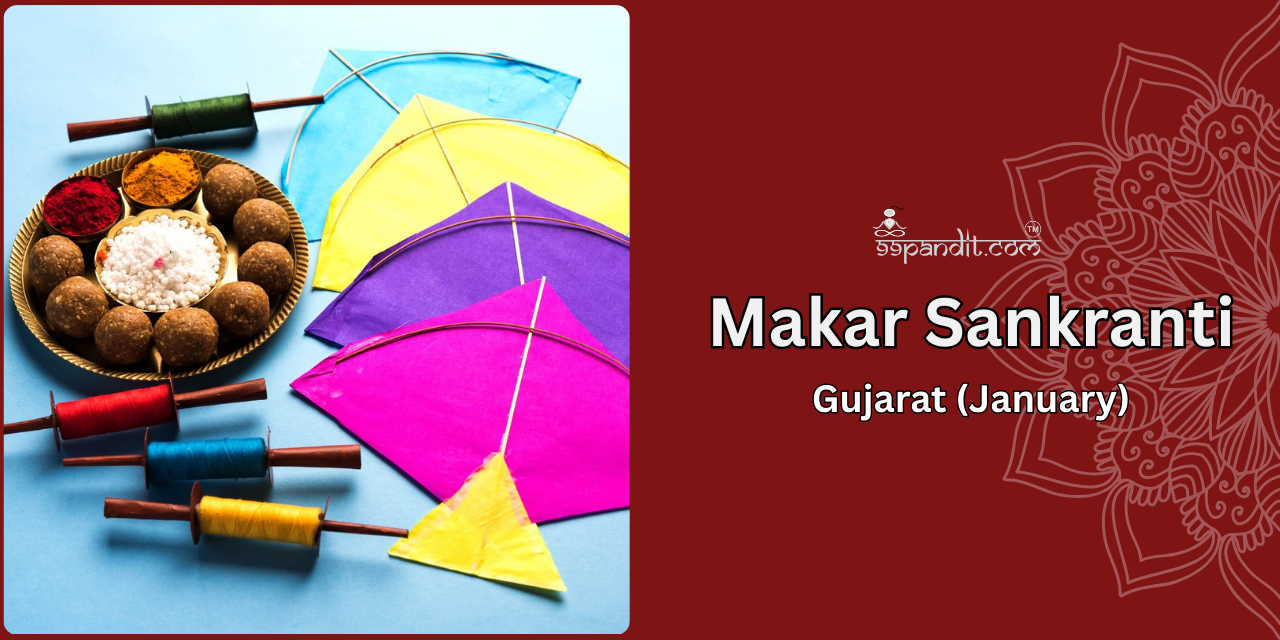
1. Makar Sankranti – Gujarat (January)

Mainly celebrated in Gujarat, the festival of Makar Sankranti is celebrated across India to mark the transformation of the sun into the zodiac sign of Capricorn.

In Gujarat, people fly colourful kites, are involved in kite-flying competitions, eat different traditional foods or sweets like til chikki, ‘undhiyu’, and participate in cultural rituals.

Hindu Festivals

The sky is filled with a lot of kites, which gives a festive vibe, a joyful atmosphere, and is synonymous with the vibrant festival in the country.

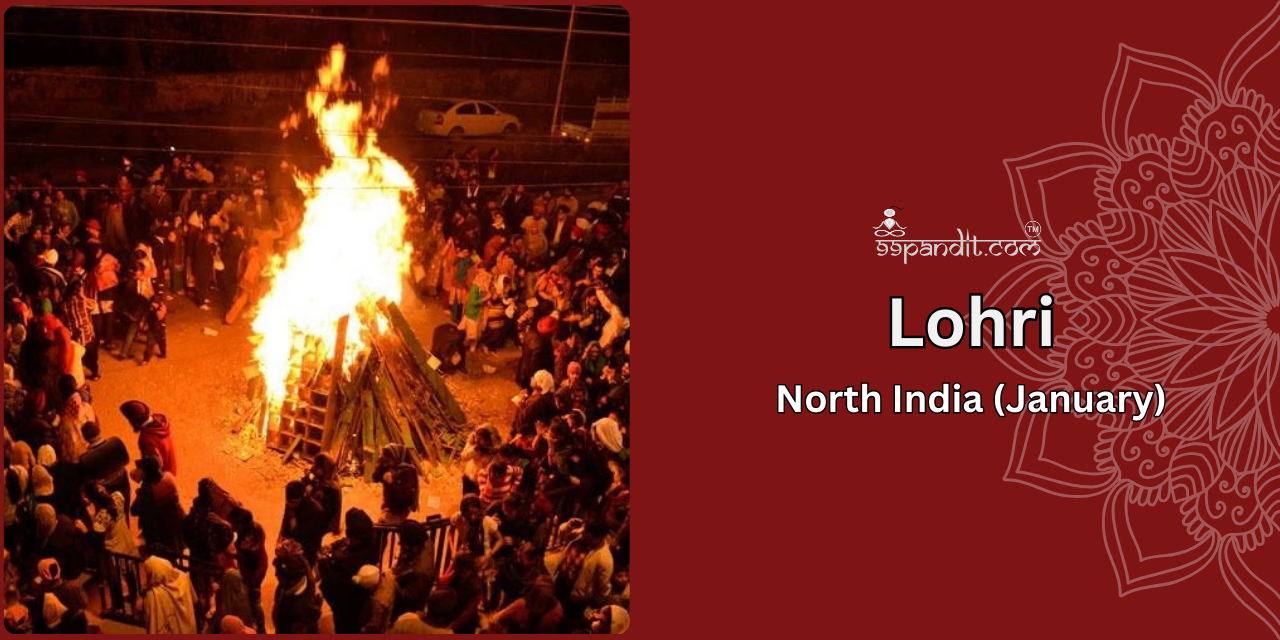
2. Lohri – North India (January)

The festival, which comes one day before Makar Sankranti. Lohri commemorates the harvest primarily in north India, especially in Punjab and parts of Himachal Pradesh and Haryana.

Hindu Festivals

It shows the end of winter and the coming of longer days. A part of this festival is to light bonfires, and people gather together to sing folk songs, dance like bhangra and gidda, or also share delicacies like gajak, rewri, and popcorn.

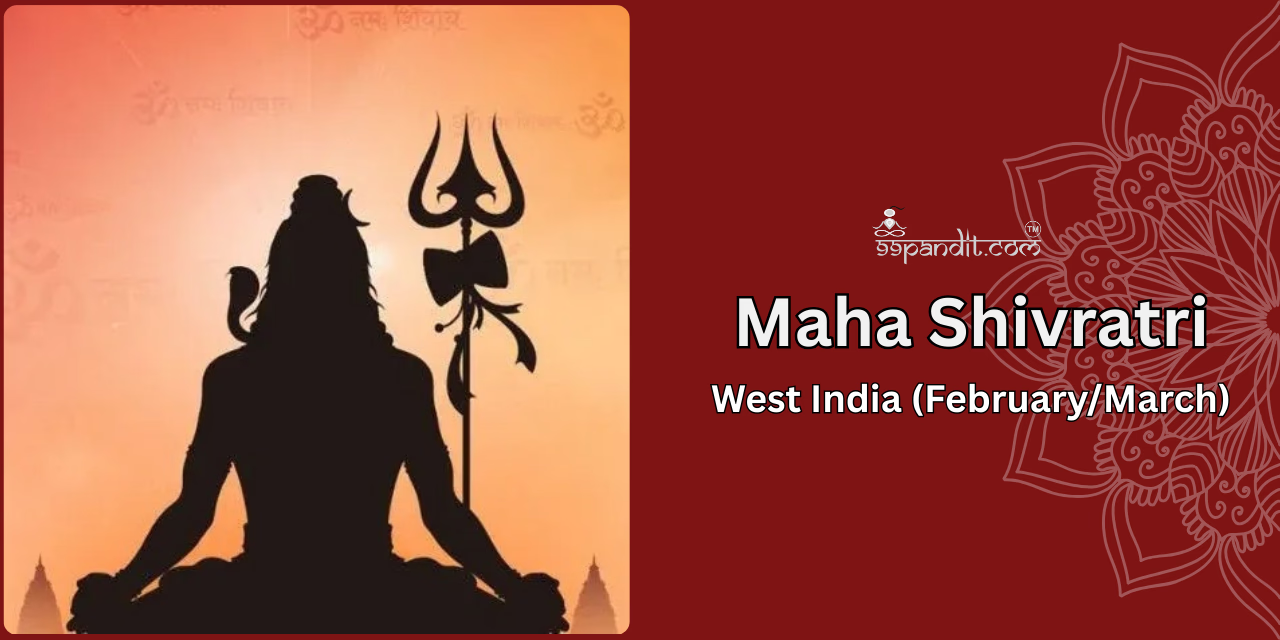
3. Maha Shivratri – West India (February/March)

The Hindu festival, Maha Shivaratri, celebrates the occasion of lord shiva’s marriage to Goddess Parvati and the day he is welcomed to Mount Kailash.

According to the yogic custom, Shiva is known as Adi, the first guruji from whom yoga was founded, and then as a deity.

Hindu Festivals

The festival is the night of silence and stillness that pleases and is inspired by the undisturbed dignity and discretion of the lord.

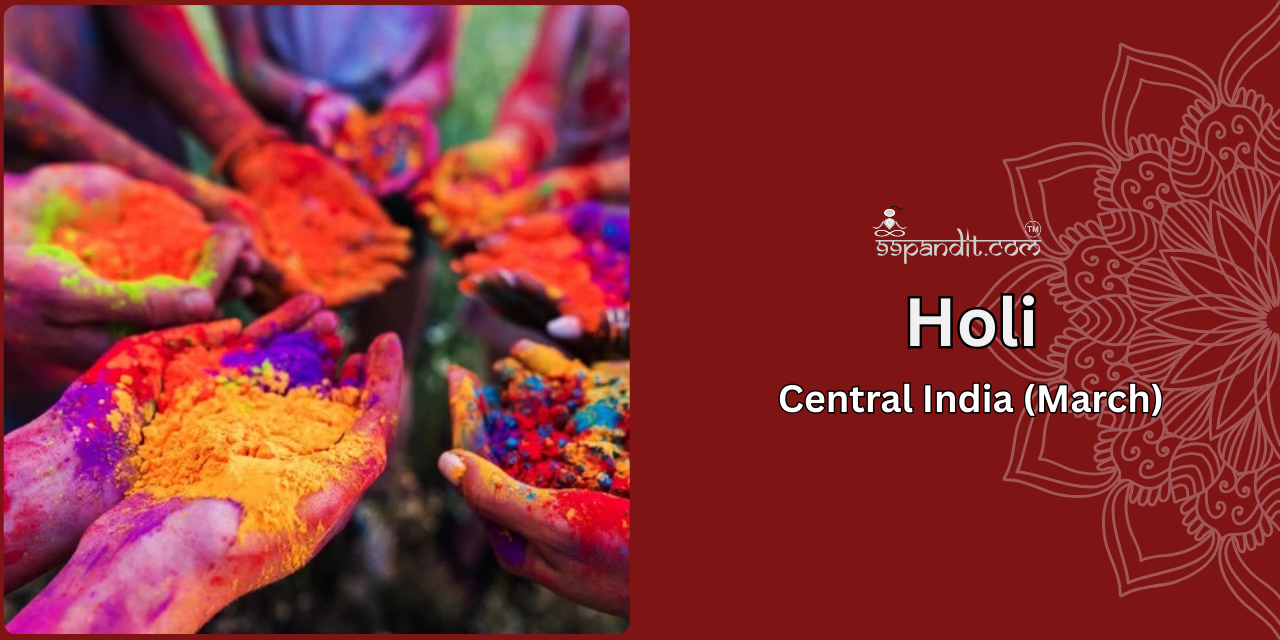
4. Holi – Central India (March)

A most-awaited celebration of India, the festival of love and colours, Holi shows the achievements of good over evil, the eternal divine and pure love seen between Radha and Krishna, and the spring season blossoming.

The festival often falls in Phalguna month (March), and it officially starts the night before the main day, during Holika dahan.

Hindu Festivals

People lit a bonfire to indicate the killing of Holika, the sister of King Haraniyakashayp.

On other days, people just spread colour on each other, make delicious meals, and share gifts.

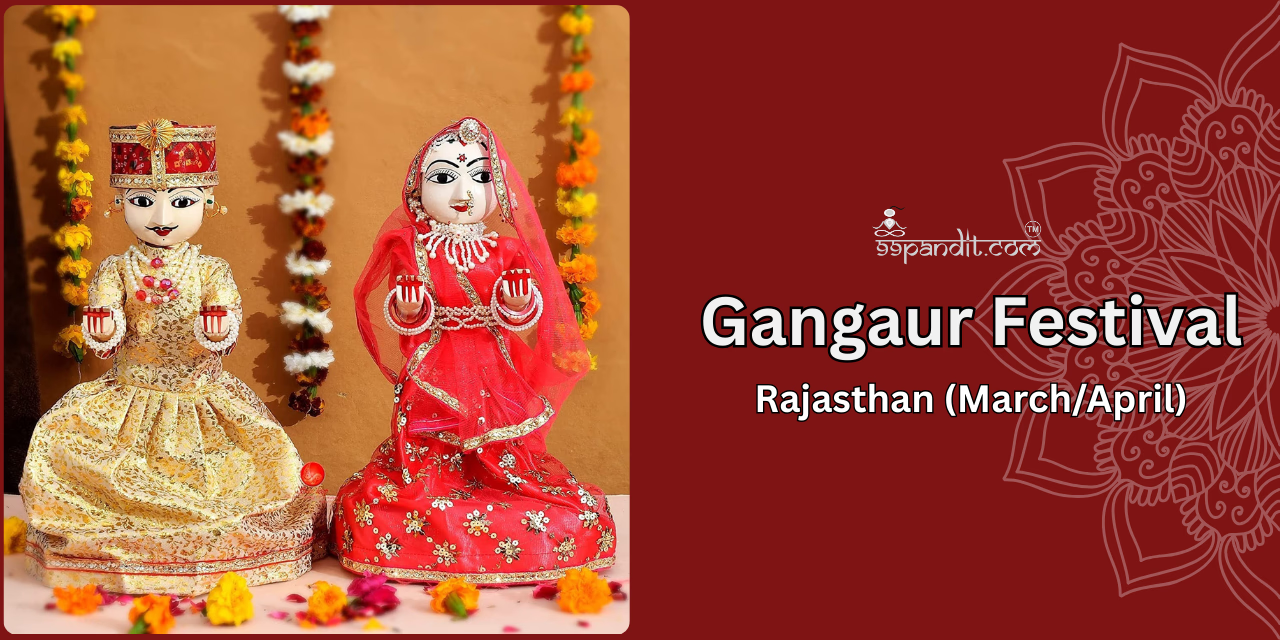
5. Gangaur Festival – Rajasthan(March/April)

A festival to signify the eternal love of lord shiva and Goddess Parvati, mainly celebrated in Rajasthan. It is organised in cities like Jaipur, Udaipur, and Jodhpur and performed just after Holi.

Hindu Festivals

It is pleasing for the lord to seek marital bliss and prosperity, as married women wear colourful attire, bring idols of goddess Gauri, and be a part of lively music, folk dances, and cultural activities.

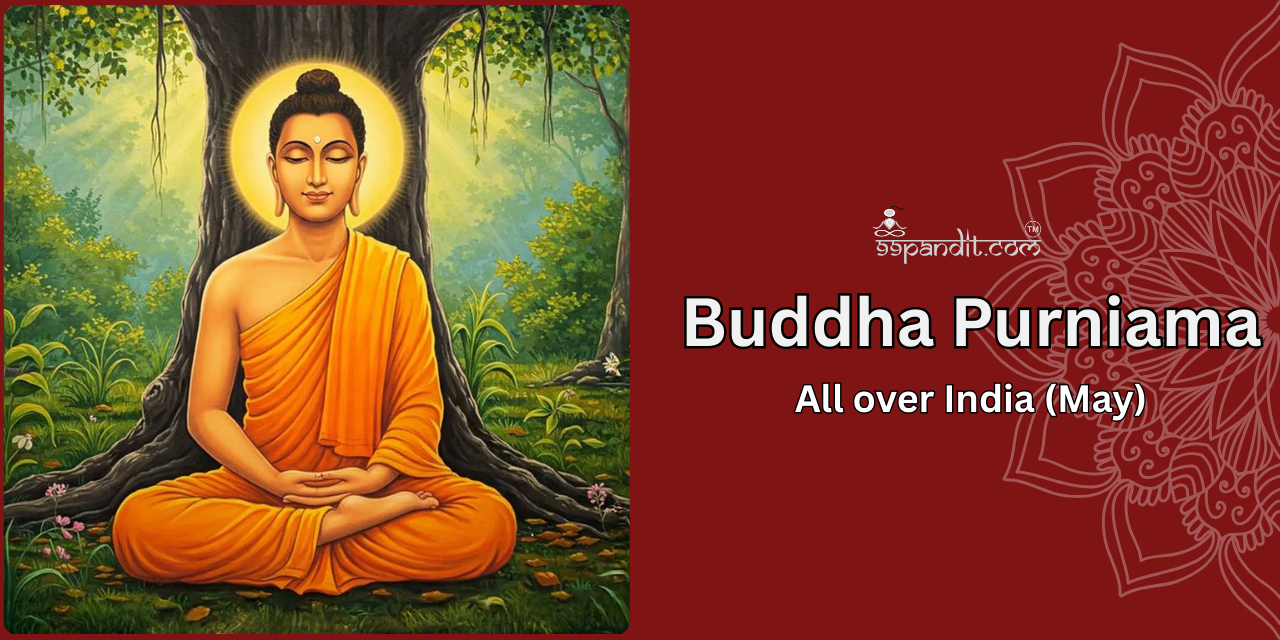
6. Buddha Purnima – All over India (May)

Buddha Purnima is the celebration of the birth anniversary of lord buddha. This is also referred to as Vesak or Buddha Jayanti, which brings enlightenment, the death of Buddha, and the founder of Buddhism.

Followers visit the temples of Buddha, seek blessings, meditate, and are involved in spiritual events.

Hindu Festivals

The day is marked by performing kindness, generosity, and dedication as people aim to emulate the teachings and virtues of lord buddha.

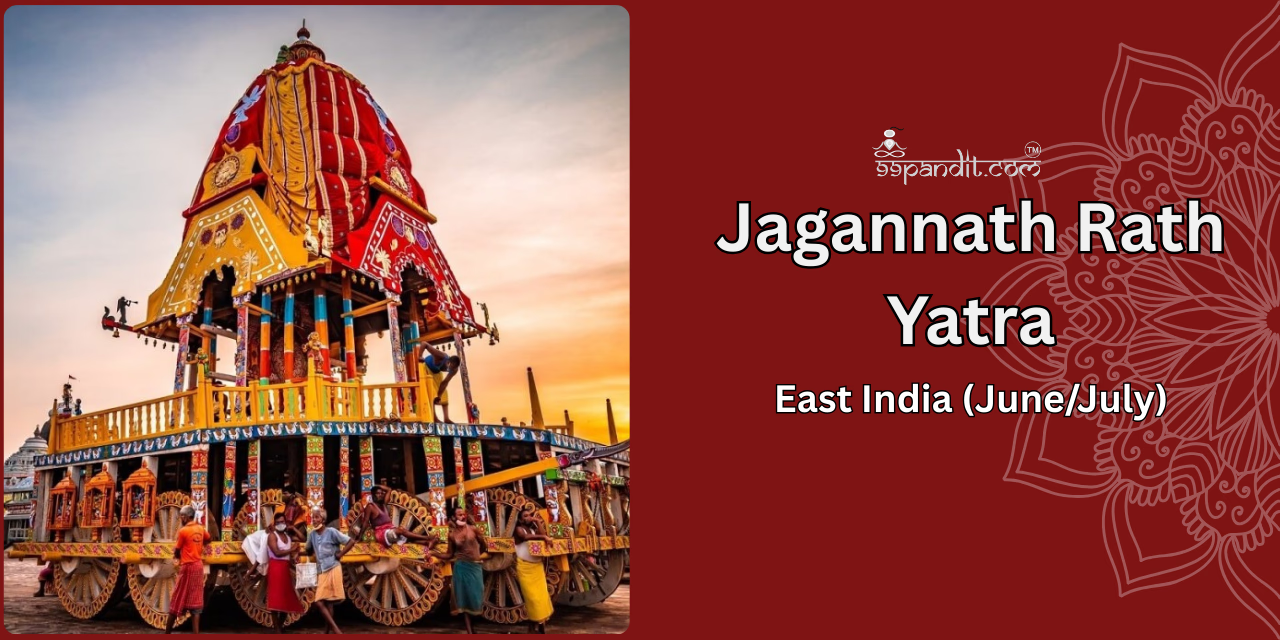
7. Jagannath Rath Yatra – East India (June/July)

Moving to the next, Jagannath Rath Yatra, which is one of the Hindu festivals too. The organisation is held in Puri, Odisha, where a grand chariot festival is held for lord jagannath.

The heartfelt devotees pull the colossal chariots carrying the deity on the streets. This is the only day when god came out of his temple to bless his devotees.

Hindu Festivals

The atmosphere is filled with spiritual enthusiasm, cultural dance, music, and colourful parades.

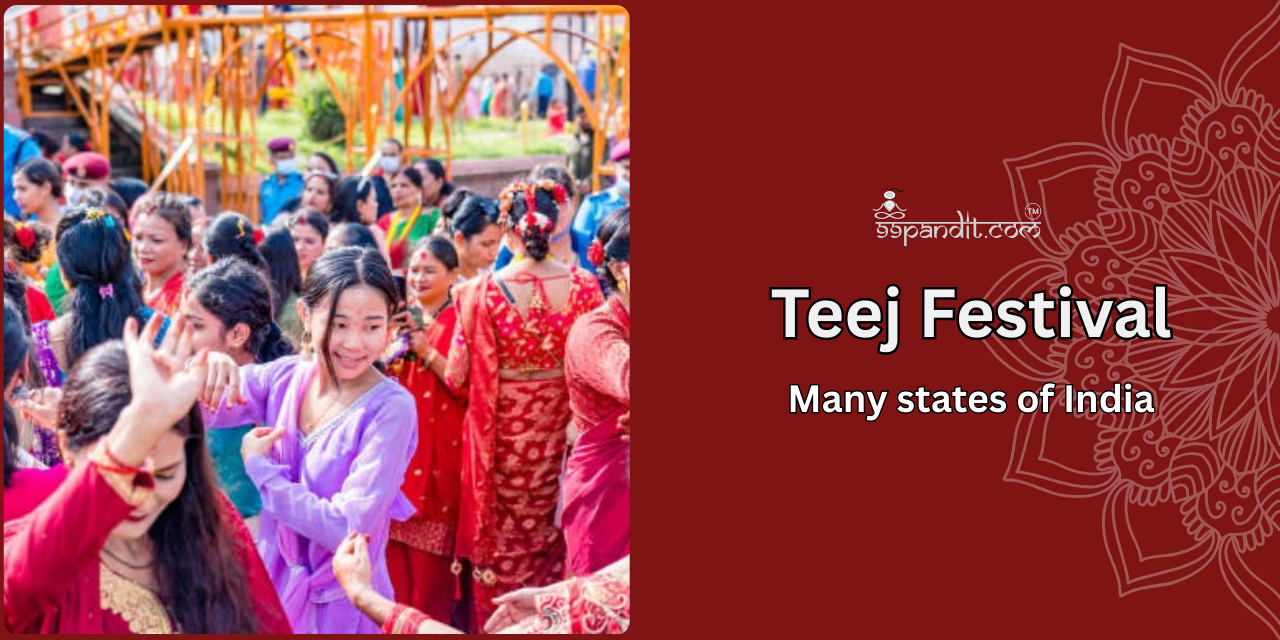
8. Teej Festival – Many states of India, like Rajasthan, Uttar Pradesh, Haryana, Punjab, and parts of Bihar (July/August)

Teej is a significant festival performed mainly by women in different parts of India. The day is dedicated to the Hindu goddess Parvati, as it shows womanhood, marital offerings, and the coming of monsoon weather.

Women keep a long day fasting without eating or drinking for the long life of their husbands. They get ready in beautiful dresses, apply henna, and get involved in folk dances like Ghoomar.

Hindu Festivals

The enjoyment gives a diverse tapestry of celebration in the country, merging devotion, joy, and the spirit of togetherness.

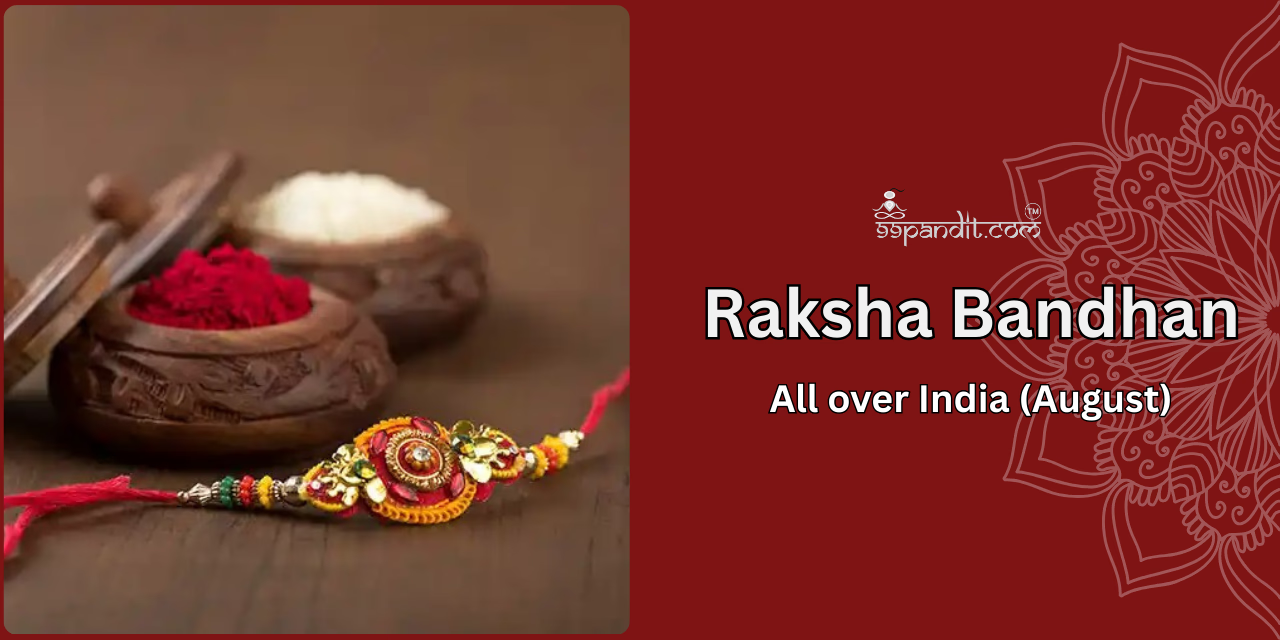
9. Raksha Bandhan – All over India (August)

The celebration of the beautiful bond between brother and sister, a sacred Hindu festival.

Hindu Festivals

On the day, the sister ties a sacred thread, which is called a rakhi, on the wrist of their brother. The ritual expresses love and protection, and a promise from brother to his sister.

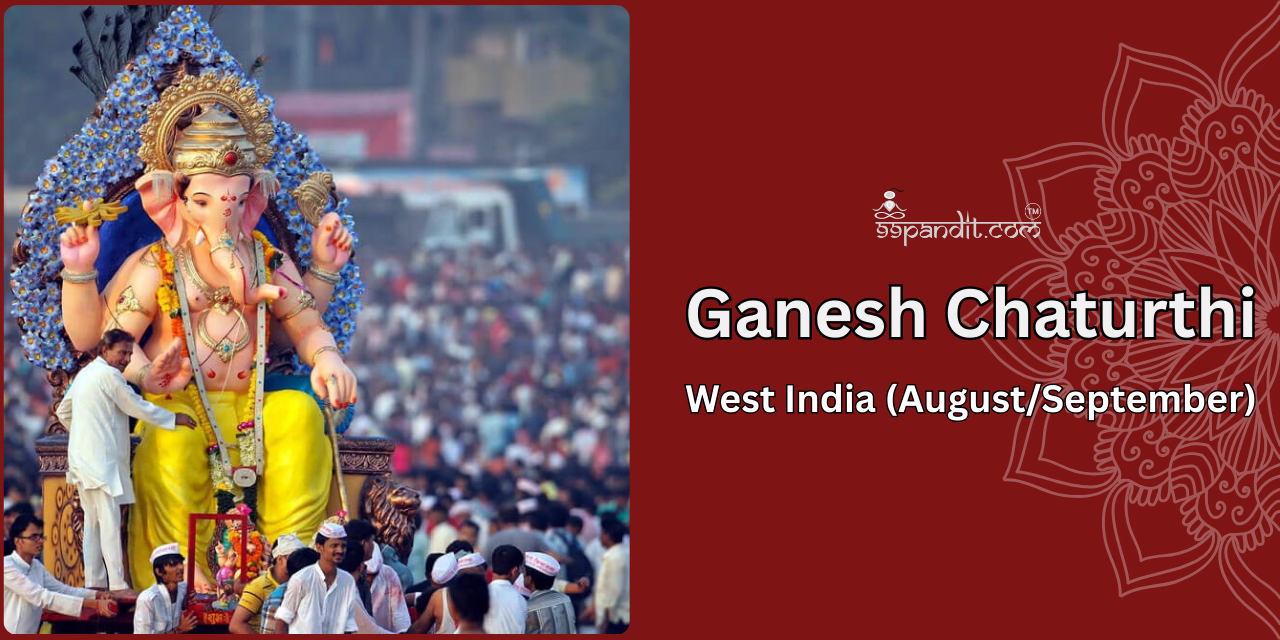
10. Ganesh Chaturthi – West India (August/September)

One of the most awaited festivals of lord Ganesha, Ganesh Chaturthi, is celebrated especially in Maharashtra.

Hindu Festivals

This is performed with great devotion in other parts of Western India. It includes the setup of Ganesha idols, long parades, devotional activities, and immersion of the idols in water.
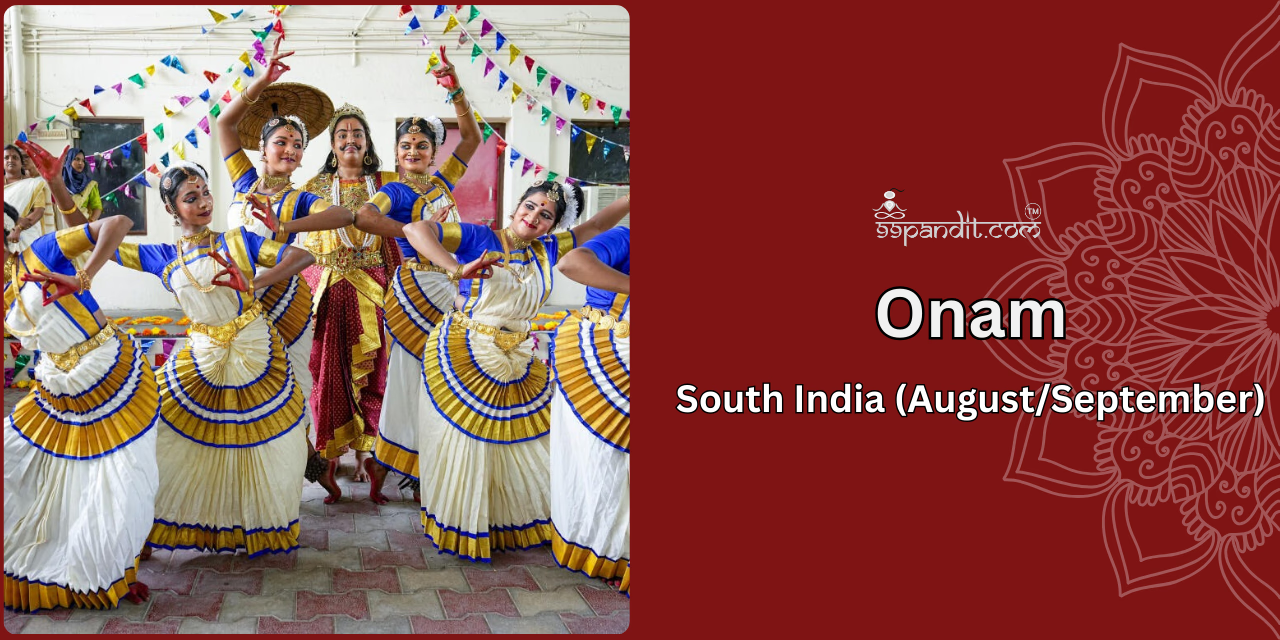
11. Onam – South India (August/September)

Onam, the Hindu festival, takes place in Kerala, a ten-day spectacle filled with different cultural activities. It commemorates the homecoming of the mythical king Mahabali.

Hindu Festivals

Followers decorate their houses with floral carpets called Pookalam, dive into sumptuous feasts, and are involved in snake boat races called Vallamkali, and also the cultural dance form like Kaikottikali. If you’re in India, do not miss visiting the south during the monsoon season.

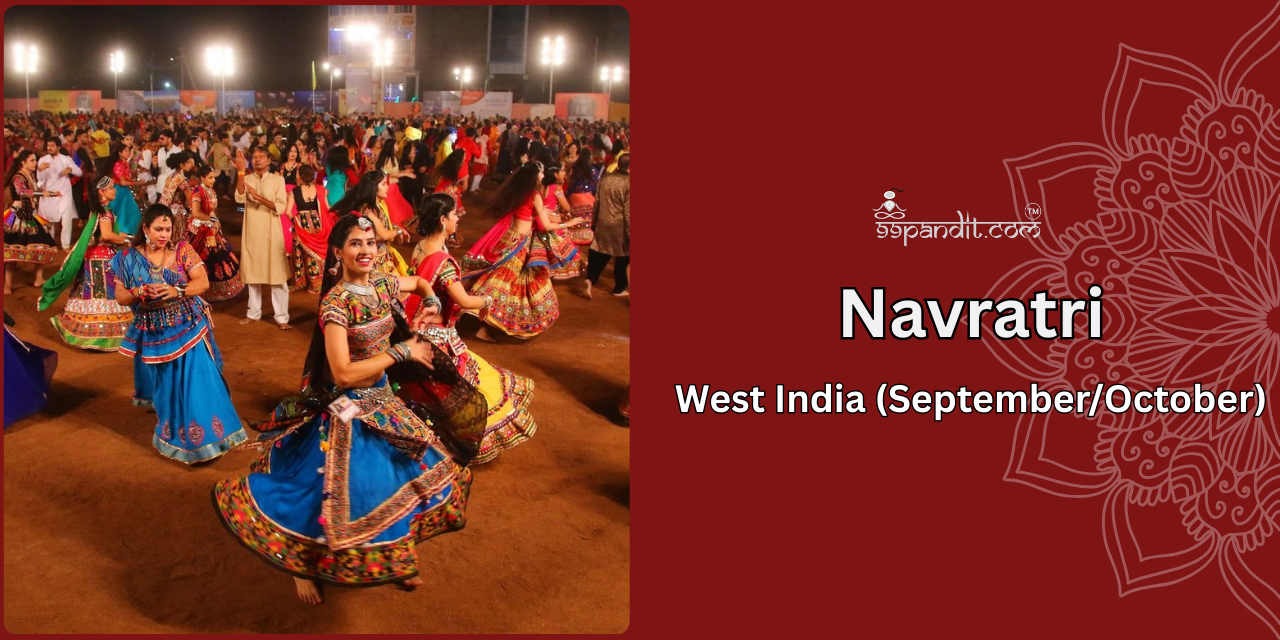
12. Navratri – West India (September/October)

Navratri, what do you understand by this term? This is the nine-day celebration of nine forms of Goddess Durga, dedicated each day.

The Hindu festival is conducted with immense joy in Gujarat and other parts of western India, and falls in September and October, just after Pitru Paksha.

Hindu Festivals

The festival is a sign of Goddess Durga’s victory over the demon named Mahishasura.

People from different castes perform energetic garba and dandiya ras dances by dressing up in bright attire.

The rhythmic beats and vibrant environment make an electrifying vibe, grabbing participants and viewers alike.

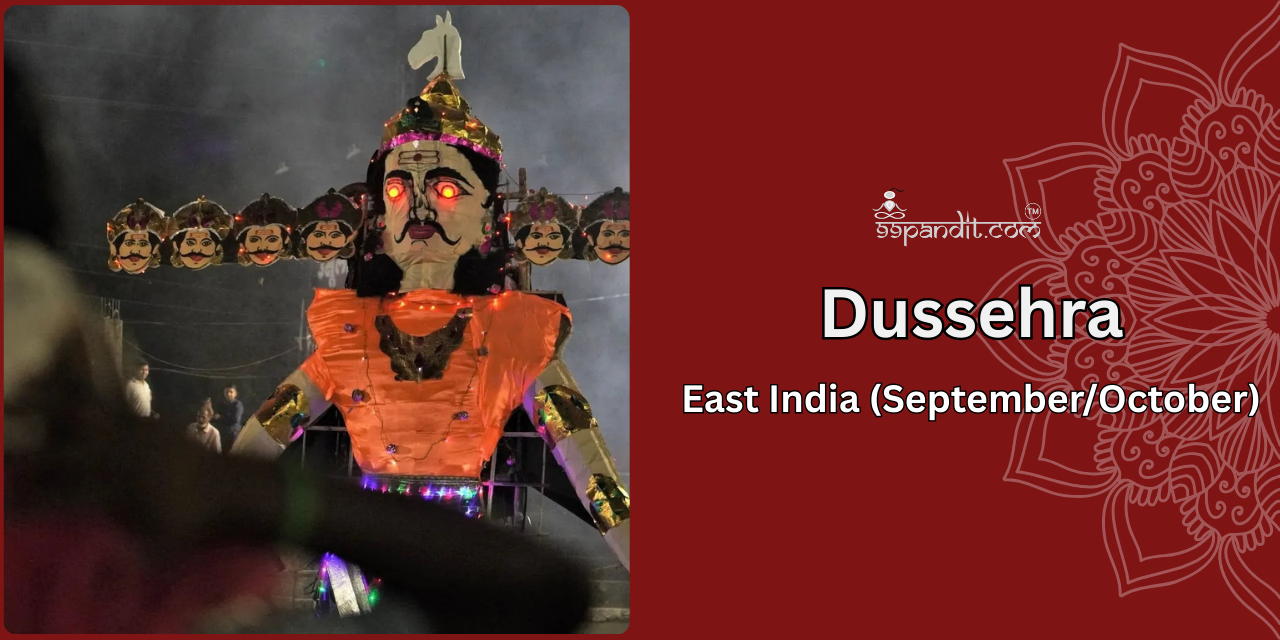
13. Dussehra – East India (September/October)

Performed at the end of Navaratri every year, called as Vijayadashmi, the prominent Hindu festival is conducted on the 10th day of the Ashwin month.

Dussehra is honoured for many reasons, and the entire Indian subcontinent, where people offer many names to their beliefs.

Hindu Festivals

For instance, in northern India, the festival indicates the end of Durga Puja, in other places of the country, it’s termed as Dussehra while celebrating by scheduling Ramlila performance and all.

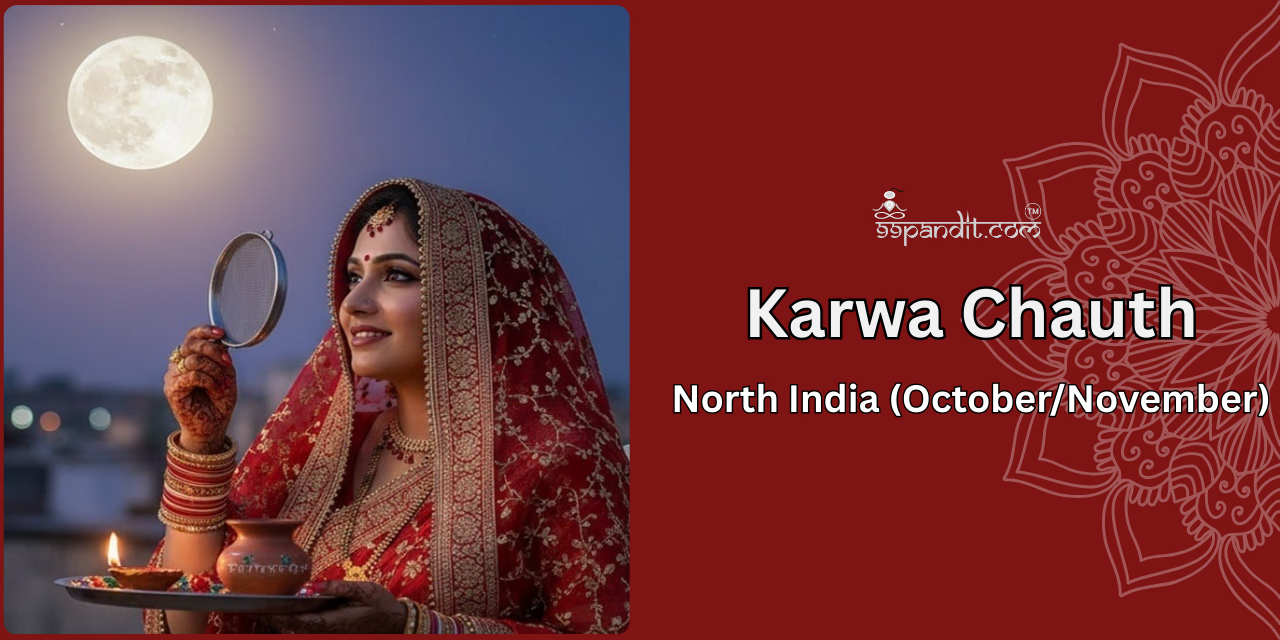
14. Karva Chauth – North India (October/November)

The festival of keeping fast for the husband’s long life, Karwa Chauth, is observed by both married and unmarried women.

This is mainly celebrated in North India, especially in states like Punjab, Rajasthan, and Uttar Pradesh.

Hindu Festivals

Married women keep a day-long fast from sunrise to moonrise for the prosperity or well-being of their husbands. After seeing the moon, they break their fast and offer prayers.

This Hindu festival is a celebration of love, dedication, and the unforgettable bond between couples, giving a diverse array of festivals in India.

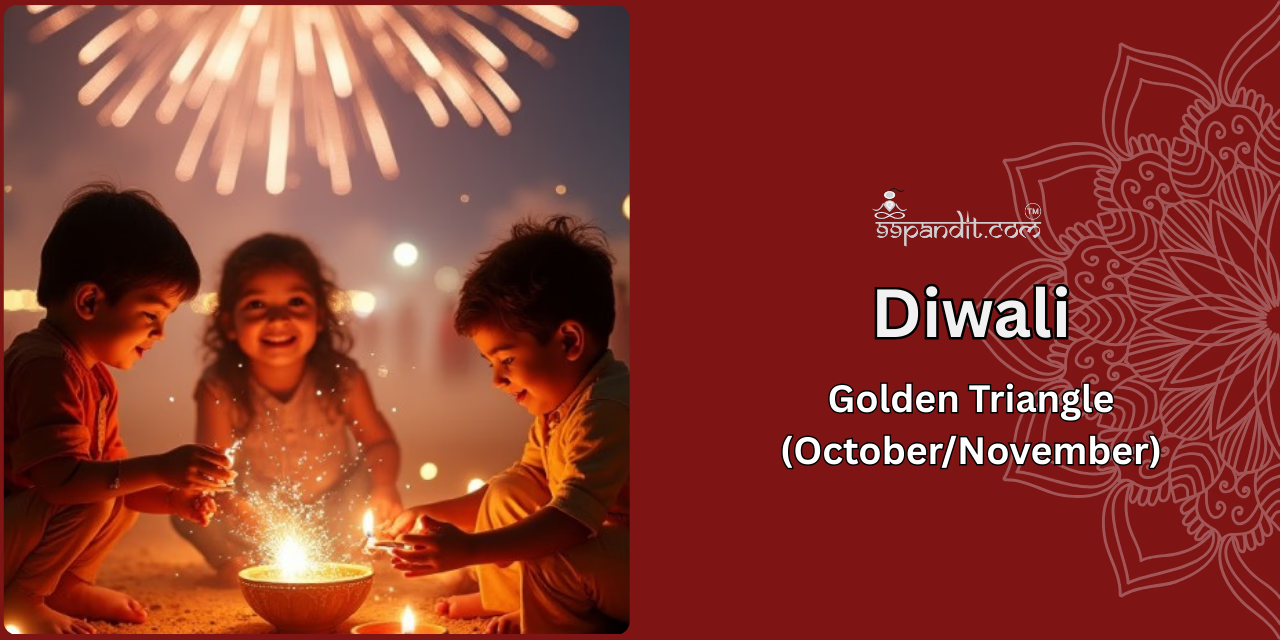
15. Diwali – Golden Triangle (October/November)

Diwali – the festival of lights; the biggest festival of India. The celebration of the festival starts 5 days before the beginning of Dhanteras. It’s celebrated as per the Hindu lunisolar months of Ashwin and Kartik.

The symbolism of the win of light over darkness, good over bad, and knowledge over ignorance. Goddess Lakshmi, lord kubera, and lord Ganesha are the main deities of this festival.

Hindu Festivals

The festival started to celebrate when lord ram returned to his kingdom, Ayodhya, after fighting with Ravana and completing the exile of 14 years.

The celebration includes lighting oil lamps, a bonfire, exchanging gifts, and enjoying traditional dishes and sweets. It is one of the oldest festivals that should not be missed.

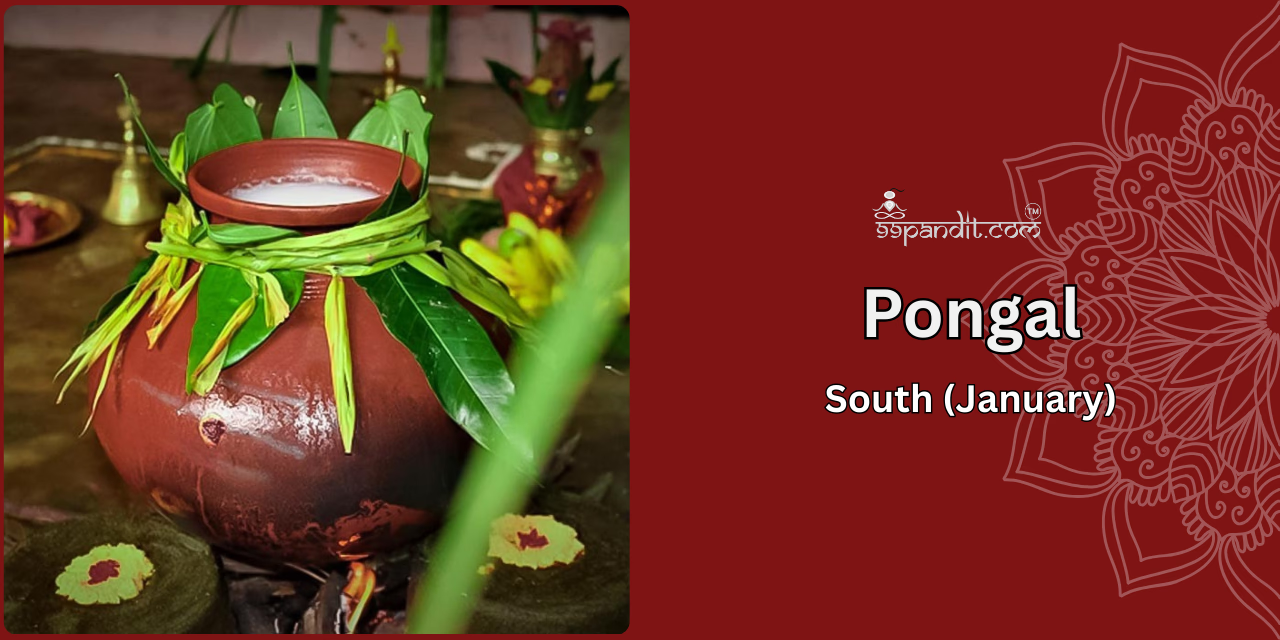
16. Pongal – South (January)

A much-awaited festival and one of the huge celebrations in Tamil Nadu, Pongal is celebrated as the Hindu harvest festival.

Even celebrated in Sri Lanka, it starts off by the end of the start of the Tai month as per the Tamil solar calendar, which often comes during the winter month of January.

Hindu Festivals

The ritual is dedicated to the sun god or Surya Dev, the custom corresponds with the north indian festival of Makar Sankranti.

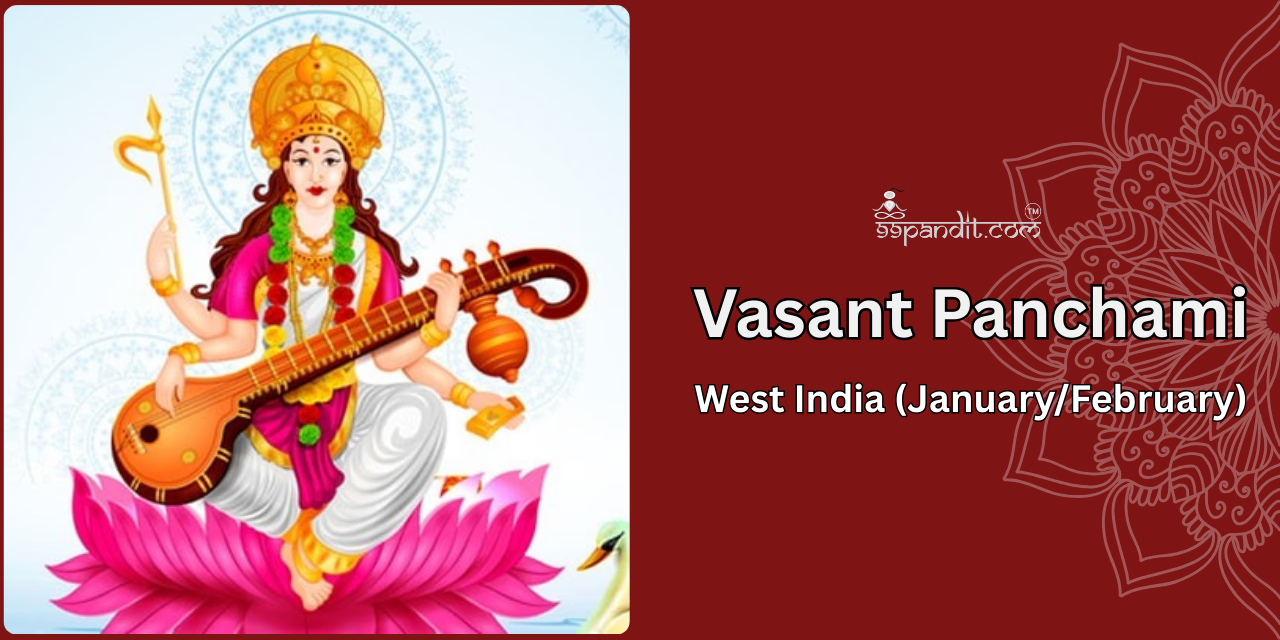
17. Vasant Panchami – West India (January/February)

Referred to as Basant Panchami, an auspicious day that marks the arrival of spring. The ritual is dedicated to Goddess Saraswati, who is the deity of wisdom, music, arts, and knowledge.

Followers pray to her to bestow blessings for creativity and intellect by performing rituals.

Hindu Festivals

The celebration is also performed by many cultural events, consisting of music and dance performances.

People wear yellow clothes and worship their books and musical instruments to get the goddess’s blessings.

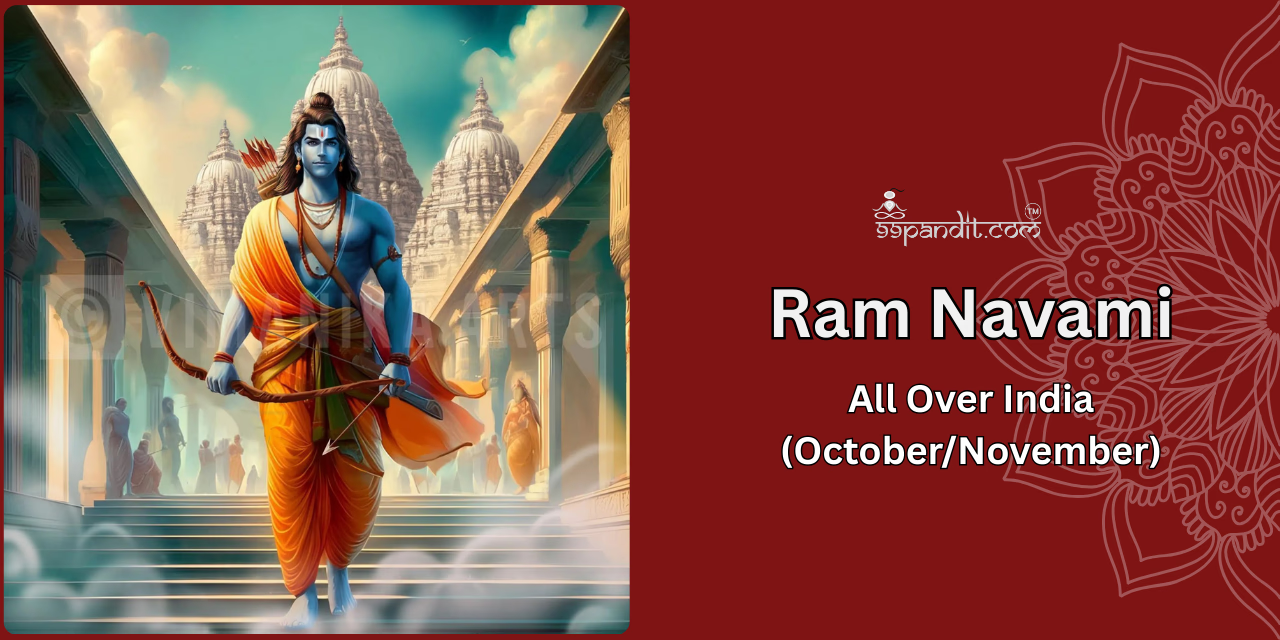
18. Ram Navami – All Over India (October/November)

Ram Navami is the birth of lord rama, who was the 7th incarnation of lord vishnu. Followers are a part of this ritual by keeping fast, offering prayers, and performing pujas at temples devoted to the lord.

An important custom during the festival is chanting the Ramayan, the epic scripture that tells the life and divine journey of Ram.

Hindu Festivals

For different regions, large parades take place, consisting of idols and images of lord ram, Goddess Sita, and Hanuman.

The vibrant parade presents devotional music and rituals, giving the spiritual essence of Ram Navami.

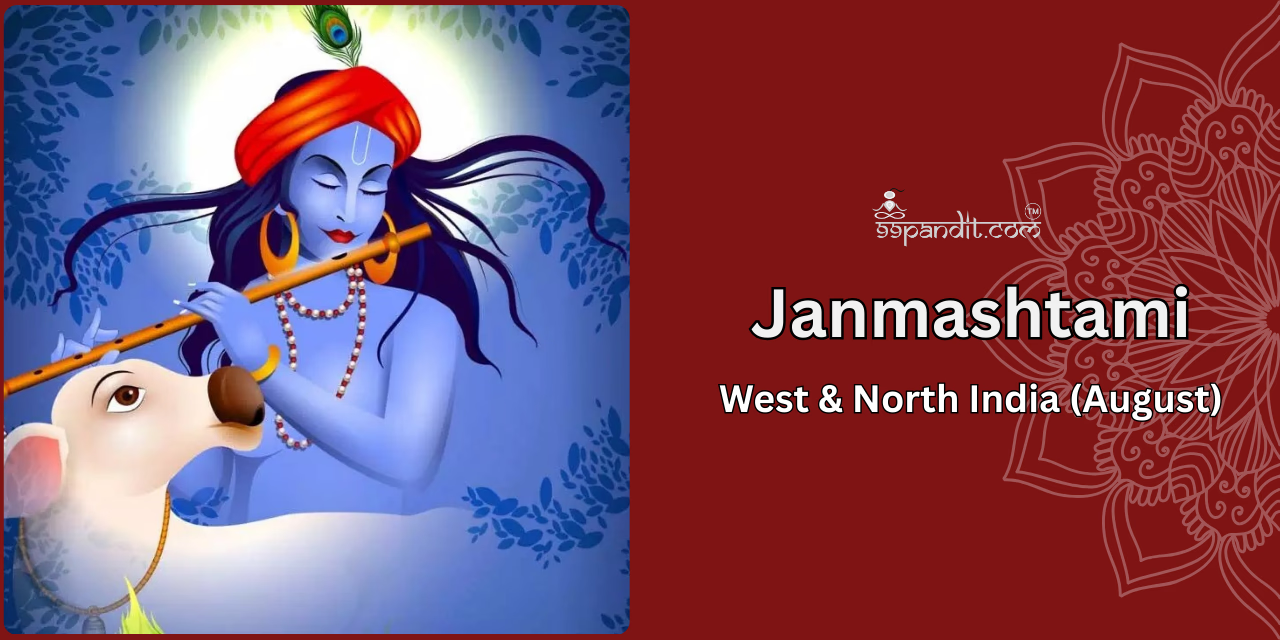
19. Janmashtami – West & North India (August)

The most significant festival of celebrating lord krishna birth, Janmashtami, is observed on Ashtami, the eighth day of Krishna Paksha (waning moon phase) in the Shravan month.

Lord Krishna is believed to be the 8th incarnation of lord Vishnu. Worshippers conduct the day by fasting, reciting devotional prayers, and engaging in spiritual and cultural activities.

Hindu Festivals

One of the most well-known events is Dahi Handi, where a group of boys make human pyramids to break the pot filled with curd or butter.

It shows lord krishna’s playful nature, as he was popular for stealing butter to eat in his childhood.

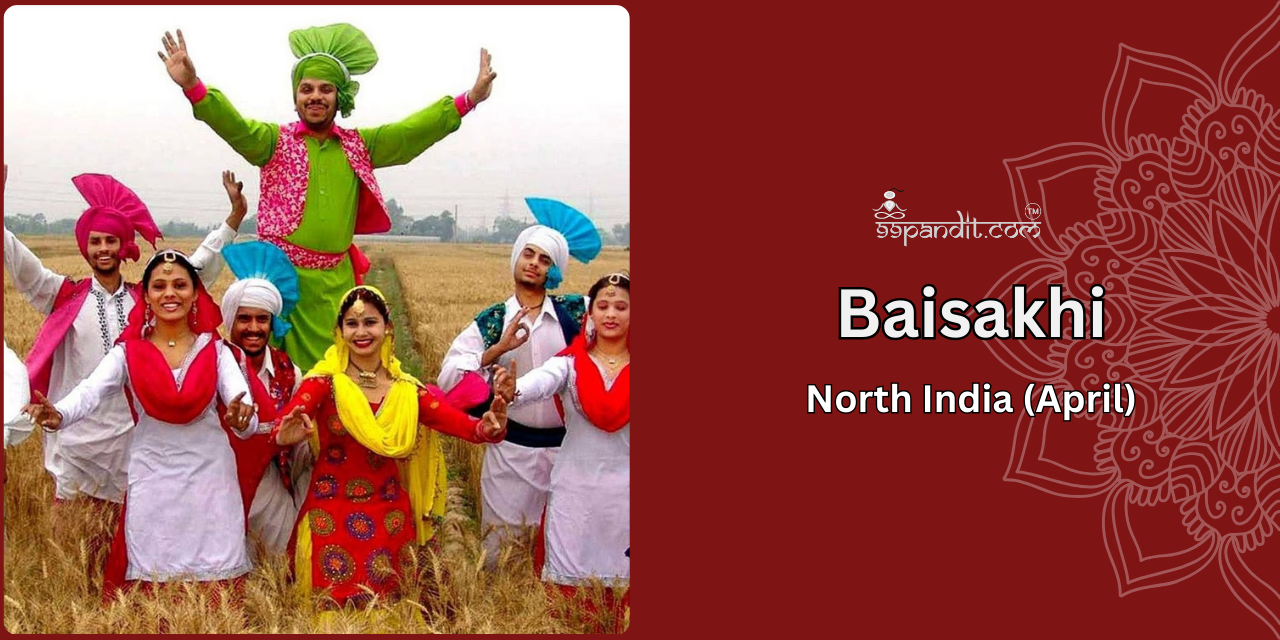
20. Baisakhi – North India (April)

Baisakhi is the beginning of the first day of the Vaisakh month, which falls in April. This is the spring harvest festival, which is connected mainly to the northern regions.

Hindu Festivals

Other Indian traditions and diasporas also honour the festival in their own ritual. Mostly celebrated by Sikh society, during the festival, they schedule kirtans, visit gurudwaras, and share festive foods.

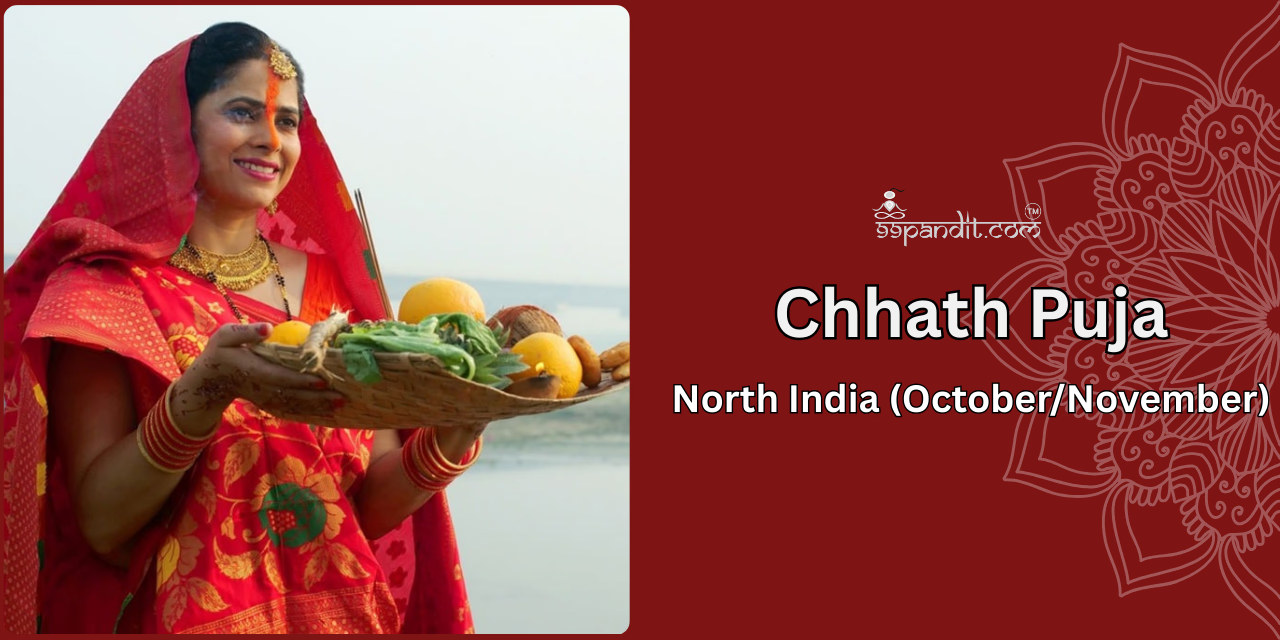
21. Chhath Puja – North India (October/November)

The ancient festival of Chhath Puja is mostly celebrated in Bihar, Jharkhand, Nepal, West Bengal, and Uttar Pradesh.

The ritual is devoted to lord sun or Surya Dev, a practice of offering gratitude and thanksgiving to the deity for blessing a bountiful life on earth.

Hindu Festivals

This is the 6-day ritual after Diwali, and even environmentalists have claimed that this puja is one of the most eco-friendly spiritual traditions in the world.

The rituals consist of bathing, abstaining from drinking water, fasting, standing in water, presenting prayer, and so on.

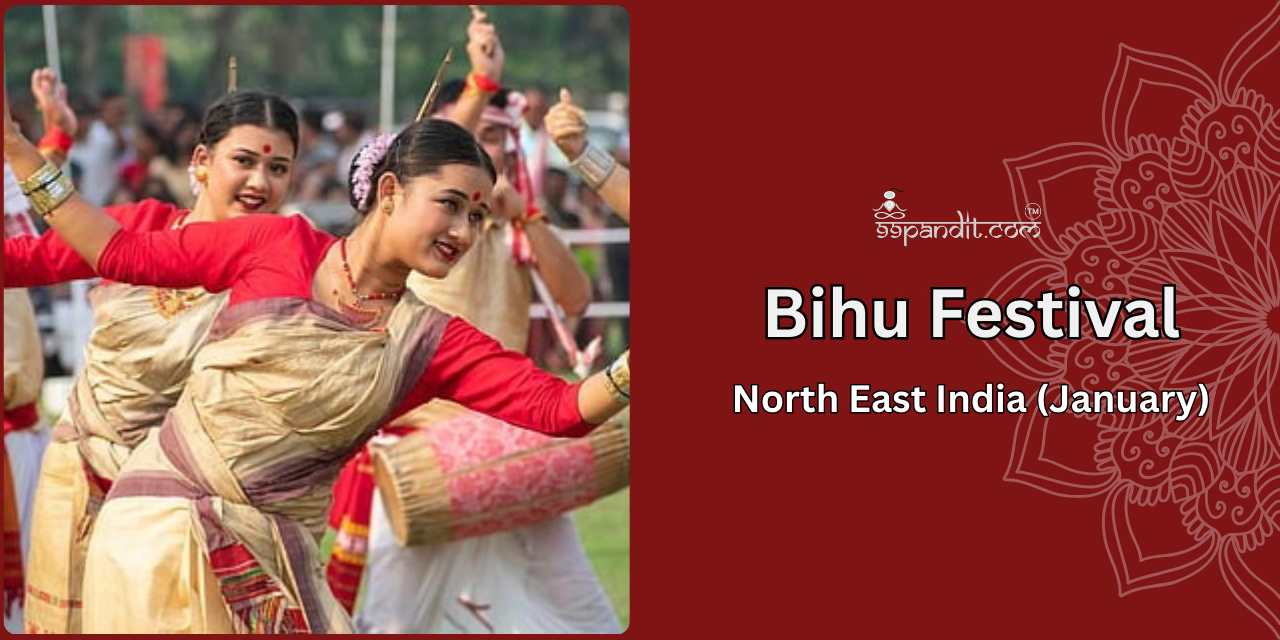
22. Bihu – North East India (January)

One of the most notable holidays in the subcontinent is the Bihu festival of north-east India, and it is mainly celebrated by people of the locality, the Assamese.

Bihu, consisting of the 3 grand Assamese festivals of Rongali, Kongali, and Bhogali, is a celebrated festival that is mainly held in January, which happens to be the peak winter month of the year.

Hindu Festivals

All elements of the rituals and the celebrations bear the impact of Southeast Asia and Sino-Tibetan cultures.

Typically, when people talk about Bihu, they really mean Assamese Dance, but it is much more than that.

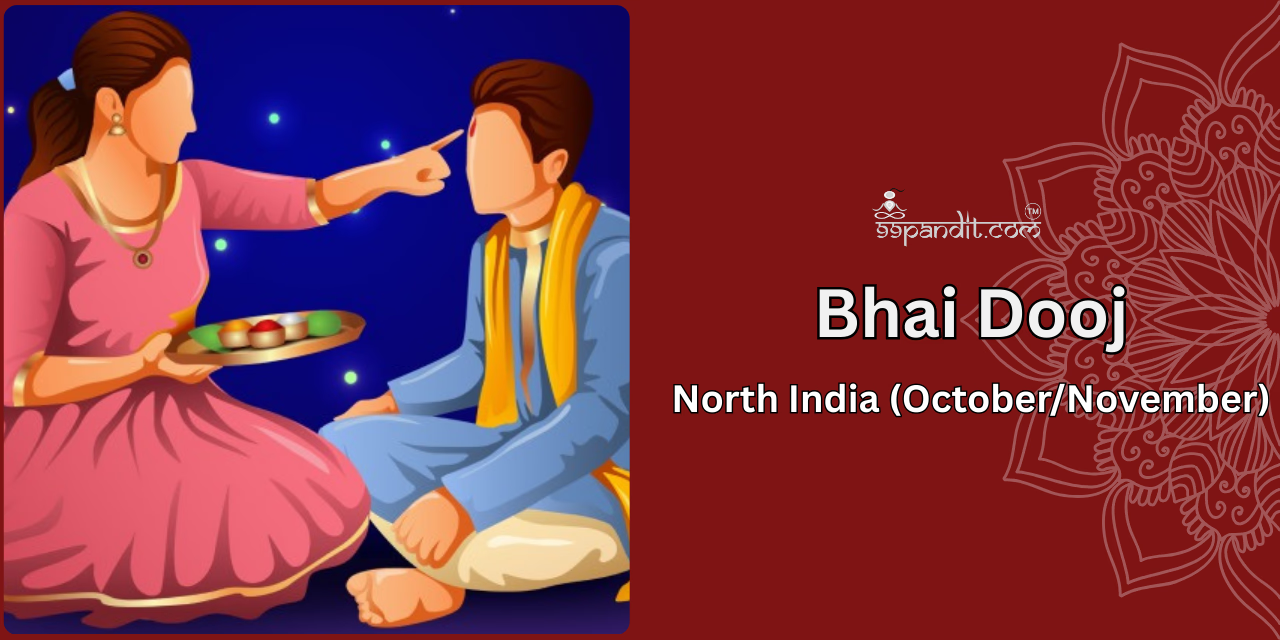
23. Bhai Dooj – North India (October/November)

The last and fifth day during Diwali is the day that Hindus observe Bhai Dooj or Bhai Phota in certain regions.

It is customary to fall during the second day of the brilliant fortnight (Shukla Paksha) of the Hindu month of October or November, Kartika. Bhai Dooj is celebrated to the brother-sister bond.

Hindu Festivals

This day is special because sisters perform a special ritual where they apply a tilak (vermilion mark) on the forehead of their brother, wave light in an aarti (light wave), and also pray for their well-being.

Brothers, in turn, give their sisters gifts and promise to care for and protect them. Siblings’ affection, devotion, and the binding of siblings are features of the celebration.

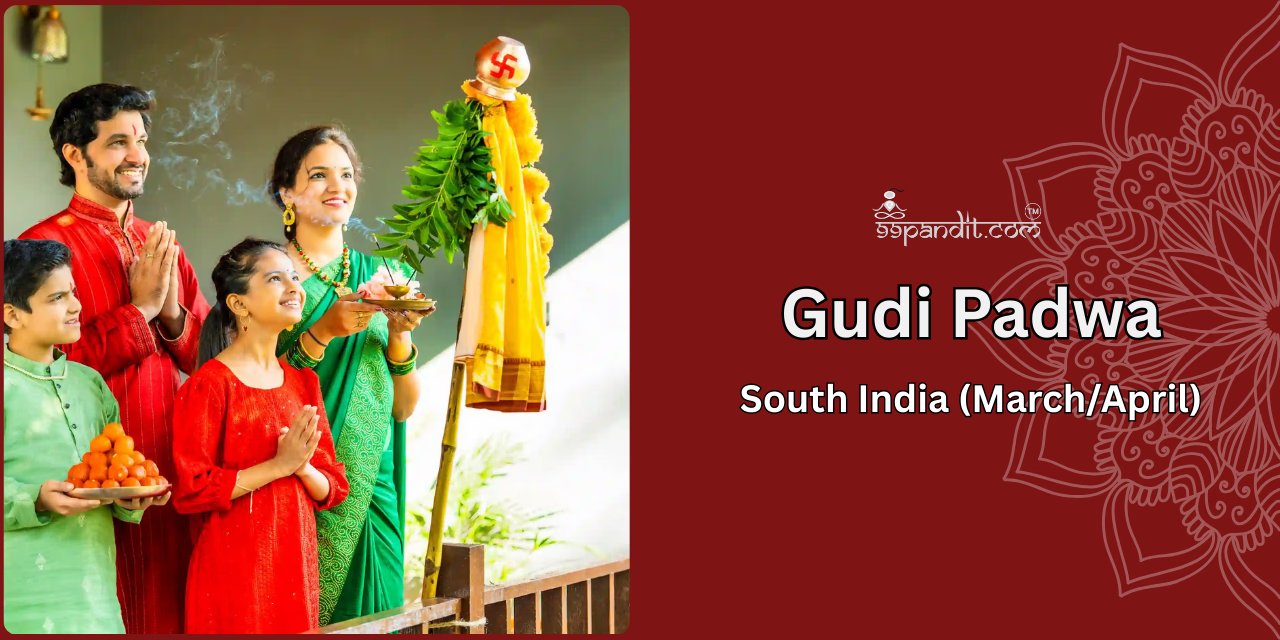
24. Gudi Padwa – South India (March/April)

Ugadi is accepted as the new year in the Deccan region of India and especially in the states of Andhra Pradesh, Telangana, and Karnataka.

It is because of this day, the Chaitra month, normally starting in March or April, that it is celebrated as the start of the month.

Ugadi is the official rebirth of the new year on the lunar calendar. It is a time of changes, New Year’s resolutions, and giving up bad habits.

Hindu Festivals

The festival is most commonly followed in the Konkan area of the Indian state of Maharashtra.

It normally falls around the first day of Chaitra month, which is during either March or April. Gudi Padwa is also the time of cleaning the houses and decorating in a similar way to Ugadi.

Flowers and colours are adopted through rangoli (colour floor patterns) in people, and this creates a happy atmosphere.

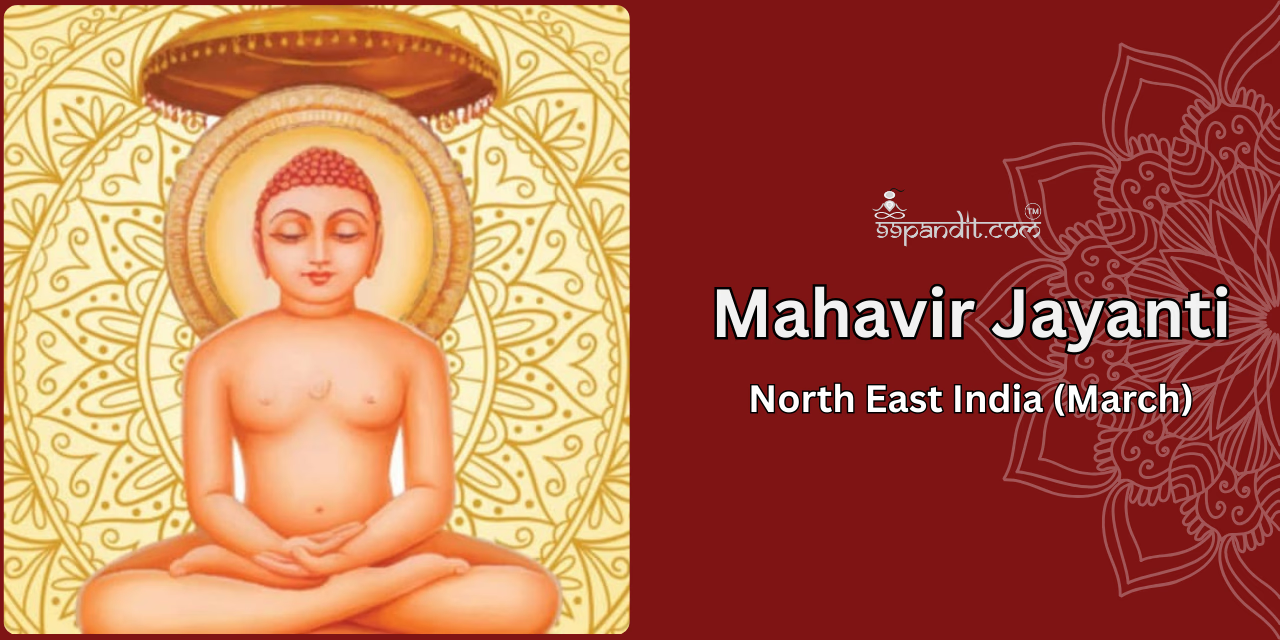
25. Mahavir Jayanti – North East India (March)

Mahavir Jayanti is celebrated by the Jain community that is found in the subcontinent, and basically, it is the birth anniversary of the founder of Jainism.

Well-known in the annals of the Jain community as one of the most inauspicious festivals, people unite to celebrate peace, harmony, and spread the teachings of Mahavir, the 24th Jain Tirthankar.

Hindu Festivals

According to the sanctified Jain books and scriptures, Mahavir was born on the 13th day of the bright half-moon under the Chaitra month.

The festivals involve the procession of the idol of Lord Mahavir on a beautiful chariot known as Rath Yatra.

The idol is provided with a ceremonial Abhishekam, and on the day, a wide range of Jain people take part in the process of giving and charity.

Book a Puja On These Auspicious Days with 99Pandit

Hindu festivals are not only the celebration of days – they’re an auspicious welcome of divine energy, making it a perfect time to schedule important pujas and rituals.

Whether you’re looking to seek deity blessings for prosperity, health, career, and peace at home, perform the special puja on these days by booking a pandit from 99Pandit to improve its religious benefits.

Book a certified and experienced pandit with 99Pandit to schedule a puja has never been easier.

Whether it’s a Diwali puja, Durga puja, Ganesh Chaturti puja, or Navaratri saptashati path, you can easily arrange everything with only a few clicks.

Also, get complete puja samagri from shop.99pandit and customize rituals based on your tradition.

Why Choose 99Pandit?

  • Verified and qualified pandits in multiple regions.
  • Transparent pricing with personalized packages.
  • Easy online booking and support.
  • Samagri included (optional).
  • Language and tradition-specific rituals (North Indian, South Indian, Bengali, Marathi, etc.).

Popular Auspicious Days to Book a Puja:

  • Diwali (Lakshmi Puja) – For wealth and prosperity.
  • Navratri (Durga Puja / Kalash Sthapana) – For security and spiritual growth.
  • Ganesh Chaturthi – For removing obstacles.
  • Raksha Bandhan / Bhai Dooj – For sibling bonding and family harmony.
  • Makar Sankranti / Pongal – For abundance and good luck.
  • Janmashtami / Ram Navami – For devotion and fulfilment.
  • Maha Shivaratri – For spiritual awakening and peace.
  • Griha Pravesh / Vastu Puja – Ideal during festival days for starting new beginnings.

Conclusion

Isn’t India a happening land where every emotion meets and celebrates in joy? From Makar Sankranti to Durga Puja, all festivals retain cultural and religious significance.

The list of top 25 Hindu festivals gives a glimpse into the bright celebrations that take place in India.

The rituals are not just marking beginnings but also boost family and community bonds. Participating in the festivals lets the travellers dive into the bright colours, sounds, and flavours of India.

It gives an unforgettable experience and a strong understanding of its various cultural heritage. Why miss these divine festivals, beautiful sightseeing, and light up your boring life?

Navratri Durga Ashtami 2025: नवरात्रि में दुर्गा अष्टमी का महत्व

नवरात्रि के इस पावन त्यौहार में दुर्गा अष्टमी 2025 [Durga Ashtami 2025] की पूजा तथा व्रत का बहुत ही बड़ा महत्व बताया गया है| इस वर्ष 2025 में शारदीय नवरात्रि का त्यौहार 22 सितम्बर से प्रारंभ होकर 02 अक्टूबर तक समाप्त हो जाएगी तथा इसके अगले दिन दशहरा का त्योहार मनाया जाता है|

जिस दिन भगवान श्री राम ने रावण का वध करके असत्य पर सत्य की विजय प्राप्त की थी| इस पावन नवरात्रि के त्यौहार के मध्य में आने वाली अष्टमी तिथि को महाष्टमी के नाम से भी जाना जाता है|

दुर्गा अष्टमी 2025

महाष्टमी या दुर्गा अष्टमी का त्यौहार देवी दुर्गा माँ को प्रसन्न करने के लिए किया जाता है| दुर्गा अष्टमी के दिन सभी महिलाएं उपवास रखती है तथा दुर्गा माता की पूजा करती है|

दुर्गा अष्टमी का यह दिन दुर्गा माता की आठवीं शक्ति महागौरी को अर्पित किया गया है| इस कारण शारदीय नवरात्रि 2025 की अष्टमी तिथि को देवी महागौरी का पूजन किया जाता है|

मान्यता है कि देवी दुर्गा महाष्टमी तिथि पर ही असुरों का संहार करने के लिए प्रकट हुई थी| इसके अलावा दुर्गा अष्टमी के दिन कन्या पूजन भी किया जाता है|

तो आइये आपको इस लेख के माध्यम से बताते है कि दुर्गा अष्टमी 2025 की तिथि का हिन्दू धर्म में इतना महत्व क्यों है|

लेकिन इससे पहले यदि आप ऑनलाइन माध्यम से किसी भी पूजा जैसे नवरात्रि पूजा [Navratri Puja], दुर्गा अष्टमी पूजा, या गृह प्रवेश पूजा [Griha Pravesh Puja] के लिए पंडित जी को बुक करना चाहते है तो आप हमारी वेबसाइट 99Pandit तथा हमारे ऐप 99Pandit For Pandit की सहायता से ऑनलाइन पंडित  बहुत आसानी से बुक कर सकते है|

यहाँ बुकिंग प्रक्रिया बहुत ही आसान है| बस आपको “Book a Pandit” विकल्प का चुनाव करना होगा और अपनी सामान्य जानकारी जैसे कि अपना नाम, मेल, पूजा स्थान, समय,और पूजा का चयन के माध्यम से आप अपना पंडित बुक कर सकेंगे|

दुर्गा अष्टमी 2025 की शुभ तिथि व मुहूर्त

महाष्टमी 2025 / दुर्गा अष्टमी 2025 तिथि:

इस वर्ष शारदीय नवरात्रि में दुर्गा अष्टमी 2025 की तिथि 30 सितम्बर 2025 मंगलवार के दिन रहेगी| 

अष्टमी तिथि आरंभ : 29 सितम्बर 2025 को 04:31 PM से
अष्टमी तिथि समाप्त : 30 सितम्बर 2025 को 06:06 PM तक

क्यों मनाया जाता है दुर्गा अष्टमी का पावन त्यौहार

हिन्दू धर्म की पौराणिक कथाओं के अनुसार माना जाता है कि इस दिन माता चंड-मुंड ने राक्षस का संहार किया था|

इस कारण से इस दुर्गा अष्टमी का महत्व और अधिक बढ़ जाता है| इस तिथि को हथियारों की पूजा की जाती है|

इस वजह से इस तिथि को वीर अष्टमी के नाम से भी जाना जाता है| महाष्टमी के त्यौहार को दुर्गा अष्टमी के नाम से भी जाना जाता है|

दुर्गा अष्टमी की तिथि नवरात्रि पूजा के महत्वपूर्ण दिनों में से एक मानी जाती है| इस दिन माँ दुर्गा के रूप महागौरी की पूजा की जाती है|

माँ गौरी भगवान शिव की पत्नी तथा भगवान गणेश जी की माता है| सबसे पहले भगवान श्री राम ने समुन्द्र के किनारे नौ दिनों तक माँ दुर्गा की पूजा की थी|

इसके पश्चात ही उन्होंने युद्ध के लिए लंका की ओर प्रस्थान किया था| जिसके पश्चात उन्होंने रावण के खिलाफ युद्ध किया तथा उस पर विजय प्राप्त कर ली|

इस कारण से नवरात्रि पूर्ण होने अगले दिन यानि दशमी तिथि को दशहरा मनाया जाता है| माना जाता है कि दुर्गा माँ नवरात्रि के समय कैलाश पर्वत को छोड़कर धरती पर आकर रहती है|

दुर्गा अष्टमी वह दिन है जब जब नवरात्रि का त्यौहार अंतिम चरण पर होता है| इस दिन हिन्दू धर्म में माता रानी के भक्तों के द्वारा छोटी कन्याओं को भोजन करवाया जाता है|

हिन्दू धर्म में दुर्गा अष्टमी तिथि का बहुत ही विशिष्ट महत्व बताया गया है| नवरात्रि की इस दुर्गा अष्टमी तिथि के दिन माता भवानी का जन्म हुआ था| माता भवानी एक बहुत ही महानतम शक्ति है|

इस वजह से दुर्गा अष्टमी की तिथि को महाष्टमी के नाम से भी जाना जाता है| दुर्गा अष्टमी के दिन महिलाएं कन्याओं का पूजन करके अपना उपवास खोलती है|

दुर्गा अष्टमी के शुभ अवसर पर माँ दुर्गा के 108 नाम व उनका अर्थ

  1. सती– अग्नि में जल कर भी जीवित होने वाली 
  2. साध्वी– आशावादी 
  3. भवप्रीता– भगवान शिव पर प्रीति रखने वाली 
  4. भवानी– ब्रह्मांड में निवास करने वाली 
  5. भवमोचनी– सांसारिक बंधनों से मुक्त करने वाली 
  6. आर्या– देवी 
  7. दुर्गा– अपराजेय 
  8. जया– विजयी 
  9. आद्य– शुरुआत की वास्तविकता
  10. त्रिनेत्र– तीन आंखों वाली
  11. शूलधारिणी– शूल धारण करने वाली 
  12. पिनाकधारिणी– शिव का त्रिशूल धारण करने वाली 
  13. चित्रा– सुरम्य, सुंदर 
  14. चण्डघण्टा– प्रचण्ड स्वर से घण्टा नाद करने वाली, घंटे की आवाज निकालने वाली 
  15. सुधा– अमृत की देवी 
  16. मन– मनन-शक्ति 
  17. बुद्धि– सर्वज्ञाता 
  18. अहंकारा– अभिमान करने वाली
  19. चित्तरूपा– वह जो सोच की अवस्था में है 
  20. चिता– मृत्युशय्या 
  21. चिति– चेतना 
  22. सर्वमन्त्रमयी– सभी मंत्रों का ज्ञान रखने वाली 
  23. सत्ता– सत-स्वरूपा, जो सब से ऊपर है 
  24. सत्यानंद स्वरूपिणी– अनंत आनंद का रूप 
  25. अनन्ता– जिनके स्वरूप का कहीं अंत नहीं 
  26. भाविनी– सबको उत्पन्न करने वाली, खूबसूरत औरत 
  27. भाव्या– भावना एवं ध्यान करने योग्य
  28. भव्या– कल्याणरूपा, भव्यता के साथ 
  29. अभव्या– जिससे बढ़कर भव्य कुछ नहीं 
  30. सदागति– हमेशा गति में, मोक्ष दान 
  31. शाम्भवी– शिवप्रिया, शंभू की पत्नी 
  32. देवमाता– देवगण की माता 
  33. चिन्ता– चिन्ता 
  34. रत्नप्रिया– गहने से प्यार करने वाली 
  35. सर्वविद्या– ज्ञान का निवास 
  36. दक्षकन्या– दक्ष की बेटी
  37. दक्षयज्ञविनाशिनी– दक्ष के यज्ञ को रोकने वाली 
  38. अपर्णा– तपस्या के समय पत्ते को भी न खाने वाली 
  39. अनेकवर्णा– अनेक रंगों वाली 
  40. पाटला– लाल रंग वाली 
  41. पाटलावती– गुलाब के फूल 
  42. पट्टाम्बरपरीधाना– रेशमी वस्त्र पहनने वाली 
  43. कलामंजीरारंजिनी– पायल को धारण करके प्रसन्न रहने वाली 
  44. अमेय– जिसकी कोई सीमा नहीं 
  45. विक्रमा– असीम पराक्रमी
  46. क्रूरा– दैत्यों के प्रति कठोर 
  47. सुन्दरी– सुंदर रूप वाली 
  48. सुरसुन्दरी– अत्यंत सुंदर 
  49. वनदुर्गा– जंगलों की देवी 
  50. मातंगी– मतंगा की देवी 
  51. मातंगमुनिपूजिता– बाबा मतंगा द्वारा पूजनीय 
  52. ब्राह्मी– भगवान ब्रह्मा की शक्ति 
  53. माहेश्वरी– प्रभु शिव की शक्ति 
  54. इंद्री– इंद्र की शक्ति
  55. कौमारी– किशोरी 
  56. वैष्णवी– अजेय 
  57. चामुण्डा– चंड और मुंड का नाश करने वाली 
  58. वाराही– वराह पर सवार होने वाली 
  59. लक्ष्मी– सौभाग्य की देवी 
  60. पुरुषाकृति– वह जो पुरुष धारण कर ले 
  61. विमिलौत्त्कार्शिनी– आनन्द प्रदान करने वाली 
  62. ज्ञाना– ज्ञान से भरी हुई 
  63. क्रिया– हर कार्य में होने वाली
  64. नित्या– अनन्त 
  65. बुद्धिदा– ज्ञान देने वाली 
  66. बहुला– विभिन्न रूपों वाली 
  67. बहुलप्रेमा– सर्व प्रिय 
  68. सर्ववाहनवाहना– सभी वाहन पर विराजमान होने वाली 
  69. निशुम्भशुम्भहननी– शुम्भ, निशुम्भ का वध करने वाली 
  70. महिषासुरमर्दिनि– महिषासुर का वध करने वाली 
  71. मसुकैटभहंत्री– मधु व कैटभ का नाश करने वाली 
  72. चण्डमुण्ड विनाशिनि– चंड और मुंड का नाश करने वाली
  73. सर्वासुरविनाशा– सभी राक्षसों का नाश करने वाली 
  74. सर्वदानवघातिनी– संहार के लिए शक्ति रखने वाली 
  75. सर्वशास्त्रमयी– सभी सिद्धांतों में निपुण 
  76. सत्या– सच्चाई 
  77. सर्वास्त्रधारिणी– सभी हथियारों धारण करने वाली 
  78. अनेकशस्त्रहस्ता– कई हथियार धारण करने वाली 
  79. अनेकास्त्रधारिणी– अनेक हथियारों को धारण करने वाली 
  80. कुमारी– सुंदर किशोरी 
  81. एककन्या– कन्या
  82. कैशोरी– जवान लड़की 
  83. युवती– नारी 
  84. यति– तपस्वी 
  85. अप्रौढा– जो कभी पुराना ना हो
  86. प्रौढा– जो पुराना है 
  87. वृद्धमाता– शिथिल 
  88. बलप्रदा– शक्ति देने वाली 
  89. महोदरी– ब्रह्मांड को संभालने वाली 
  90. मुक्तकेशी– खुले बाल वाली
  91. घोररूपा– एक भयंकर दृष्टिकोण वाली
  92. महाबला– अपार शक्ति वाली 
  93. अग्निज्वाला– मार्मिक आग की तरह 
  94. रौद्रमुखी– विध्वंसक रुद्र की तरह भयंकर चेहरा 
  95. कालरात्रि– काले रंग वाली 
  96. तपस्विनी– तपस्या में लगे हुए 
  97. नारायणी– भगवान नारायण की विनाशकारी रूप 
  98. भद्रकाली– काली का भयंकर रूप
  99. विष्णुमाया– भगवान विष्णु का जादू
  100. जलोदरी– ब्रह्मांड में निवास करने वाली
  101. शिवदूती– भगवान शिव की राजदूत
  102. करली– हिंसक
  103. अनन्ता– विनाश रहित 
  104. परमेश्वरी– प्रथम देवी
  105. कात्यायनी– ऋषि कात्यायन द्वारा पूजनीय
  106. सावित्री– सूर्य की बेटी 
  107. प्रत्यक्षा– वास्तविक
  108. ब्रह्मवादिनी– वर्तमान में हर जगह वास करने वाली

पूजा सामग्री – Durga Ashtami Puja Samagri

  • लाल वस्त्र
  • मौली
  • लाल चुनरी
  • तेल/घी
  • दीपक
  • श्रृंगार का सामान
  • धूप
  • नारियल
  • साफ़ चावल
  • कुमकुम
  • फूल
  • पान
  • सुपारी
  • देवी मां की प्रतिमा
  • लौंग
  • इलायची
  • बताशे / मिश्री
  • कलावा
  • फल – मिठाई
  • कपूर

दुर्गा अष्टमी की पूजा विधि – Durga Ashtami Puja Vidhi

  • दुर्गा अष्टमी के दिन माता महागौरी की पूजा करनी चाहिए|
  • इस दिन आपको सुबह जल्दी उठकर स्नान आदि करके अपने आप को पवित्र कर ले|
  • इसके बाद में आपको माता महागौरी की प्रतिमा तथा तस्वीर को स्थापित कर ले|
  • अब आपको एक चौकी पर लाल कपडा लेकर उस महागौरी यंत्र की स्थापना करनी चाहिए|
  • इसके बाद में आप महागौरी की प्रतिमा के सामने दीपक जलाएं तथा पुष्प अर्पित करें|
  • अब आपको माता दुर्गा की आरती तथा साथ ही उनके मंत्र का उच्चारण करना चाहिए|
  • इसके बाद आपको दुर्गा माता के आठवे रूप महागौरी को पंचामृत का प्रसाद चढ़ाया जाता है|
  • इसके अलावा उन्हें पान, सुपारी, पांच फल, किशमिश, लौंग तथा इलायची भी अर्पित करना चाहिए|
  • इस दिन नारियल का भोग लगाना बहुत शुभ माना जाता है| आप नारियल के साथ आप मिठाई भी अर्पित कर सकते है|
  • माना जाता है कि अगर आप कन्या पूजन करते है तो आपके घर में सुख समृद्धि आती है| इसलिए आपको इस दिन 2 साल से 10 साल की कन्याओं को भोजन कराना चाहिए तथा इसके पश्चात उन्हें दक्षिणा भी प्रदान करनी चाहिए|

दुर्गा अष्टमी का महत्व – Importance Of Durga Ashtami

इस तिथि के दिन कुछ माता दुर्गा के भक्त कन्याओं को भोजन करवाते है तथा उनकी पूजा करते है| माना जाता है कि इस 2 साल से 10 साल तक बच्चियों को भोजन कराने तथा उनकी पूजा करने से आपको देवी माता की कृपा प्राप्त होती है|

इस शारदीय नवरात्रि में दुर्गा अष्टमी 2025 की तिथि को सबसे महत्वपूर्ण माना जाता है| इस दिन माँ दुर्गा के रूप महागौरी की पूजा की जा सकती है|

हिन्दू धर्म के अनुसार माना जाता है कि महागौरी का रूप घर में धन तथा एक बेहतरीन जीवनशैली लाता है| दुर्गा अष्टमी के दिन कई महिलाएं उपवास रखती है|

दुर्गा अष्टमी 2024

कुछ लोग जो पुरे नौ दिन का उपवास नहीं रखते है| उन्हें अष्टमी तिथि का व्रत निश्चित रूप से रखना चाहिए| माना जाता है कि दुर्गा अष्टमी का व्रत लोगो के भाग्य में एक बहुत ही बड़ा बदलाव लाता है|

कुछ लोग अपनी सभी प्रकार की चिंताओं को दूर करने के लिए दुर्गा अष्टमी की तिथि का उपवास रखते तथा देवी दुर्गा की पूजा करते है| दुर्गा अष्टमी का त्यौहार घर तथा माता के पंडालो के लिए बहुत ही महत्वपूर्ण त्यौहार माना जाता है|

निष्कर्ष – Conclusion

किसी भी तरह की पूजा करने के लिए हमें बहुत सारी तैयारियां करनी होती है| गावों में पूजा आसानी से हो जाती है लेकिन शहरों में लोगों के पास समय की कमी होती है|

जिस वजह से वह लोग पूजा नहीं करवा पाते है तो उनकी इस समस्या का समाधान हम लेकर आये है 99Pandit के साथ|

यह सबसे बेहतरीन प्लेटफार्म है जिससे आप किसी पूजा के लिए ऑनलाइन पंडित जी को बुक कर सकते है| इसके अलावा वर्तमान में ऐसे बहुत से लोग जिन्हें अपने ग्रंथो के बारे में कुछ भी नहीं पता है|

हालांकि, किसी भी समय भगवान की पूजा करना आपको कठिनाइयों, समस्याओं, तनाव और नकारात्मक ऊर्जाओं से हमें बचाता है। जैसा कि आज आपने इस लेख के माध्यम से दुर्गा अष्टमी 2025 के महत्व तथा पूजा की विधि के बारे में जाना|

इसके अलावा भी अगर आप किसी अन्य पूजा जैसे सुंदरकांड पाठ [Sunderkand Path] तथा अखंड रामायण [Akhand Ramayana] के बारे में जानकारी लेना चाहते है। तो आप हमारी वेबसाइट पर जाकर सभी तरह की पूजा या त्योहारों के बारे में सम्पूर्ण ज्ञान ले सकते है। 

यदि आप ऑनलाइन किसी भी पूजा जैसे नवरात्रि (Navratri Puja), रुद्राभिषेक पूजा (Rudrabhishek Puja), दुर्गा पूजा [Durga Puja] के लिए आप हमारी वेबसाइट 99Pandit की सहायता से ऑनलाइन पंडित  बहुत आसानी से बुक कर सकते है| यहाँ बुकिंग प्रक्रिया बहुत ही आसान है|

Book Online Pandit for Navratri Puja in Noida: Easy Pandit Booking

Pandit for Navratri Puja in Noida: Navratri is celebrated with great enthusiasm in different parts of India. According to religious scriptures, Navratri symbolizes the victory of good over evil.

Maa Shakti defeated the demon Mahishasura, and from that time, this day has been celebrated as Navratri.

Navratri Puja in Noida

Festivals have special significance in Sanatan Dharma. The festival of Navratri is also one of the special occasions.

During this festival, nine forms of Maa Durga/ Shakti are worshiped for nine days. The holy festival of Navratri comes four times a year.

Apart from Chaitra and Shardiya Navratri, two Gupt Navratris come. However, Shardiya Navratri is of the greatest importance.

According to the Panchang, Shardiya Navratri Puja in Noida is celebrated every year on the Pratipada date of Shukla Paksha in the Ashwin month. On the tenth day of Navratri, people celebrate Dussehra.

What is Navratri Puja?

In Hinduism, the festival of Shardiya Navratri is celebrated with great pomp. The idol of Maa Durga is installed in homes and temples, and nine forms of Maa Durga are worshiped for 9 days.

It is celebrated as a festival for 9 days. These 9 days are dedicated to 9 goddesses who are considered different forms of Maa Shakti.

Shardiya Navratri starts on the Pratipada date of Shukla Paksha in the Ashwin month and continues till Navami Tithi.

Devotees worship the Mother for nine days, keep fast, and worship Kanya on the ninth day. The autumn season starts at this time, hence, it is called Shardiya Navratri.

Navratri festival comes four times a year. Apart from Chaitra (Vasanti Navratri) and Shardiya Navratri (Ashwin Navratri), two Gupt Navratri (Magh/Ashadha Navratri) also come. However, Shardiya Navratri is the most important among them.

History of Navratri Puja

There are many stories associated with the celebration of the holy festival of Navratri, which is associated with the worship of the nine forms of Goddess Durga.

According to a popular mythological story, the demon Mahishasura had received the boon of immortality from Lord Brahma. His death could not happen at the hands of any human, demon, or god.

His death was certain only at the hands of a woman. After getting this boon, Mahishasura started harassing humans and gods.

Navratri Puja in Noida

Troubled by the atrocities of Mahishasura, all the gods approached the Tridev. Then Brahma, Vishnu, and Mahesh, the three gods, invoked Adishakti.

Then, to end Mahishasura, Maa Durga was born from the bright light of the Tridev. She was called Mahishasura Mardini.

After getting the weapons and weapons’ powers from the gods, Maa Durga challenged Mahishasura to a fight.

The war between Mahishasura and Goddess Durga lasted for nine days, and on the tenth day, Maa Durga killed Mahishasura. Therefore, people celebrate the festival of Navratri for nine days.

They say that during the war, all the gods performed puja and rituals every day for nine days, giving strength to the Goddess to defeat Mahishasura. People believe that the celebration of the Navratri festival began from that time.

The history of Navratri is connected to Lord Shri Ram.

According to another story, the story of celebrating Navratri for nine days is connected to Shri Ram.

According to this, when Ravana kidnapped Mother Sita, then to win the battle against Ravana and to free Mother Sita, Lord Rama performed the worship of Maa Durga for nine days, and on the tenth day, Goddess Durga appeared and blessed Lord Ram to win the war.

Lord Shri Ram killed Ravana on the tenth day. After this, the tradition of celebrating Navratri starts, and on the tenth day, Ravana’s effigy is burnt.

Significance of Navratri Puja

Navratri Puja is observed for nine days. During Navratri, devotees worship nine forms of Goddess Durga, known as Navdurga: Shailputri, Brahmacharini, Chandraghanta, Kushmanda, Skandamata, Katyayani, Kalaratri, Mahagauri, and Siddhidatri. Here is a detailed explanation of each goddess:

Navratri Day 1: Maa Shailputri

Another name for the Himalayas is Shailendra or Shail. Shail means mountain or rock. Goddess Durga was born in Himalaya’s house as Parvati.

Her mother’s name was Maina. That is why the first name of the goddess was Shailputri i.e. daughter of Himalaya.

Mother Shailputri is worshipped for wealth, employment, and good health. Shailputri teaches that for success in life, first of all, intentions should be strong and steadfast like a rock.

Navratri Day 2: Maa Brahmacharini

Brahmacharini means one who follows the conduct prescribed by Brahma. One who helps one attain Brahma.

One who always lives with discipline. For success in life, it is very important to follow principles and rules. Without this, no destination can be reached.

Discipline is most important. Brahmacharini is worshipped to attain supernatural powers. Many Siddhis are attained by worshipping her.

Navratri Day 3: Maa Chandraghanta

This is the third form of the Goddess, who has a bell-shaped moon on her forehead; hence, her name is Chandraghanta.

This Goddess is regarded as the Goddess of satisfaction. True peace and success in life cannot be experienced without a sense of satisfaction in the mind.

Anyone who is looking for self-welfare and peace should worship Maa Chandraghanta.

Navratri Day 4: Maa Kushmanda

Kushmanda is the fourth form of the Goddess. According to the scriptures, the universe was created by the gentle smile of this Goddess.

This is why she was named Kushmanda. This Goddess removes fear. Fear is the biggest obstacle in the path to success.

One who wants to live a happy life free from all kinds of fears should worship Goddess Kushmanda.

Navratri Day 5: Skanda Mata

Kartikeya is the first son of Lord Shiva and Parvati; one of his names is Skanda. Being the mother of Kartikeya, i.e. Skanda, the fifth form of the Goddess is named Skanda Mata.

Apart from that, she is also the giver of power. For success, it is necessary to have both the ability to accumulate power and the ability to create. This form of the Mother teaches and provides this.

Navratri Day 6: Maa Katyayani

Katyayani is the daughter of the sage Katyayana. Sage Katyayana performed intense penance for Goddess Durga, and when she pleased him, he requested the boon that she be born as his daughter.

Katyayani was named by him because she was born to him. People worship her as the goddess of health. They cannot attain success with a sick and weak body.

The body needs to be healthy to reach the destination. Those who want freedom from disease, grief, and suffering should please Goddess Katyayani.

Navratri Day 7: Maa Kaalratri

Kaal means time, and Raatri means night. Mother Kaalratri grants all the siddhis obtained through nighttime sadhana.

People worship this goddess for supernatural powers, tantra siddhi, and mantra siddhi.

This form teaches that for success, forget the difference between day and night. Only those who continuously strive to move forward without stopping or getting tired can reach the peak of success.

Navratri Day 8: Maa Mahagauri

The eighth form of the Goddess is Mahagauri. Gauri means Parvati, and Mahagauri means the most excellent form of Parvati.

People worship and meditate upon Mahagauri to rid themselves of the dark veil of sins and purify their souls.

She symbolizes purity of character, teaching that success achieved with a tainted character is of no value, and only with a bright character can one truly enjoy the joy of success.

Navratri Day 9: Siddhidatri Mata

This goddess is the origin of all Siddhis. Devi Purana says that Lord Shiva attained many Siddhis from this form of the goddess.

The half-goddess in the Ardhanarishwar form of Shiva is Siddhidatri Mata. This goddess is worshipped for all kinds of success.

Siddhi means efficiency; if there is efficiency and skill in work, then success becomes easy.

Shubh Muhurat of Navratri Puja in Noida

According to the Hindu calendar, the Pratipada date of Shukla Paksha in the Ashwin month marks the start of the Shardiya Navratri festival every year, and people celebrate Dussehra on the tenth day of Shardiya Navratri.

This year, Shardiya Navratri will begin on September 22, 2025, and end on October 2, 2025. Similarly, Chaitra Navratri will start on March 30, 2025, and end on April 7, 2025.

Navratri Puja in Noida

According to the Hindu calendar, the Pratipada date of Shukla Paksha of the Ashwin month starts at 01:23 AM on Sep 22, 2025, and will last till 02:55 AM on Sep 23, 2025.

Navratri Puja Material

Devotees can use the list provided by Pandit for Navratri Puja booked from 99Pandit to procure authentic Samagri for Navratri Puja.

The list of authentic puja materials that devotees can use for Navratri Puja is as follows:

  • Idol or Photo of the goddess
  • Red Cloth
  • Make-up items
  • A pot filled with Water
  • Paan
  • Cardamom
  • Supari
  • Diyas
  • Clay Pot
  • Havan Samagri
  • Ghee
  • Kalash
  • Vermillion
  • Incense Stick
  • Moli
  • Ganga Jal
  • Soil
  • Flowers
  • Dhoop
  • Scent
  • Diya
  • Coins
  • Supari
  • Cloves
  • Roli
  • Haldi
  • Rice
  • Coconut
  • Sweets

Kalash Sthapana during Navratri Puja in Noida

  • After waking up in the morning, first take a bath in Brahma Muhurta and wear snake clothes.
  • After cleaning the house, put a garland of mango leaves on the main door frame.
  • Clean the puja room and purify it with Ganga water.
  • Now, place the stand and install the idol of the Mother Goddess.
  • Then, install the Kalash in the north and northeast directions.
  • Sow barley seeds for Kalash Sthapana. Then, put water and Gangajal in a copper urn in the Kalash.
  • Tie Kalava and mango leaves on the Kalash.
  • Now put grass, whole rice, and betelnut in the Kalash.
  • Tie a chunari and Mauli on the Kalash, and place a coconut on it. 
  • Now, worship Goddess Durga as per the rituals.
  • Recite the Durga Saptashati Path.
  • Finally, perform the aarti of Maa Durga and distribute prasad.

Benefits of Navratri Puja

People consider the nine nights of Navratri to be very special. They say a person can attain nine supernatural powers by fasting, worshipping, chanting mantras, observing self-control, following rules, performing yagna, and practising tantra, tratak, and yoga.

According to the Puranas, the night removes many types of obstacles. Night time is peaceful; connecting with God during this time is more effective than during the day.

Worshiping Goddess Durga during the night brings physical, mental, and spiritual happiness to the body, mind, and soul.

Pandit for Navratri Puja in Noida

Imagine finding a Pandit for Navratri Puja in Noida or near your locality, It seems difficult, but what if I told you it is possible?

With 99Pandit, you can find and book an authentic and reliable Pandit and Purohit easily without any hassle. Celebrating Navratri Puja becomes easy with a recognized pandit.

Navratri Puja in Noida

Noida is the most crowded city in India’s Uttar Pradesh state. If you too are looking for a genuine and experienced Pandit for Navratri Puja in Noida, 99Pandit offers a wide range of puja and Pandit-related services.

99Pandit suggests the most suitable and educated priests, pandits, pujaris, gurujis, Acharya Brahmins, and Shastri for all Hindu rituals.

For Example Griha Parvesh Puja, Durga Puja, Ganesh Puja, Gayatri Jap, Maha Mutrujay, Mundan Sanskar, Name Karan, Navgrah Jap, Griha Shanti, Grah Dosh Nivaran, Hawan, Satyanarayan Katha, Sudhi, Marriage Puja, Vasant Panchami Puja, or any other for your office, business, home, shop, workplace, etc.

Conclusion

Navaratri Puja in Noida is an important festival among Hindus. People celebrate it in the glory of the goddess Durga, a part of Adi Parashakti, the ultimate goddess.

It lasts over nine nights, first in the month of Chaitra, and similarly in the month of Ashwin.

People say that by fasting, worshipping, and chanting mantras during Navratri, one can attain nine supernatural powers.

People celebrate the festival of Shardiya Navratri from Pratipada Tithi to Navami of Shukla Paksha in the Ashwin month.

Devotees believe the nine days of Navratri are the best for worshipping Maa Shakti. This festival gives people an opportunity to awaken spiritually and receive the blessings of Goddess Durga.

Apart from Chaitra (Vasanti Navratri) and Shardiya Navratri (Ashwin Navratri), two Gupt Navratri (Magh/Ashadha Navratri) also come. However, Shardiya Navratri is the most important among them.

This Navratri season, book a genuine Pandit from 99Pandit and take the benefits of Puja service without putting much effort.

Just visit our website, Book a Pandit, and then just sit back and relax. Our talented Pandit will provide the best puja service at home.

Anant Chaturdashi 2025: Date, Time, Importance & Significance

Anant Chaturdashi 2025 is a major Hindu festival that is associated with the worship of Lord Vishnu in his infinite reincarnation (anant) form.

In the Hindu calendar, Chaturdashi trumps all, the 14th day after the new moon in Bhadrapada.

On this day, the primary activity is worship, honouring Lord Vishnu through prayers for peace, love, prosperity, as well as eliminating negativity.

Anant Chaturdashi 2025

While many people celebrate Anant Chaturdashi primarily for the worship of Vishnu, it is of greater spiritual significance.

In addition to the celebration of so many fasting devotees performing Anant Puja at home. As part of the ceremony, a sacred thread, called Anant Sutra, is tied onto the arm.

Anant Sutra is made of cotton or silk and consists of 14 knots. The thread is believed to keep the wearer out of trouble and deliver good fortune to the individual and their family.

Devotees prepare Bhog Prasad while reciting prayers & Vishnu mantras. Anant Chaturdashi is an amazing reminder of the power of faith in the divine source.

With our devotion and blessings of Vishnu, anything is possible; we can achieve success.

Date & Auspicious Time of Anant Chaturdashi 2025

Anant Chaturdashi falls on Saturday, September 6, 2025.
Chaturdashi Tithi Begins: 3:12 AM on Sept 6, 2025
Tithi Ends: 1:41 AM on Sept 7, 2025
Puja Muhurat: Approximately 06:02 AM to 01:41 AM (early next morning) – 19 hours

Important Things to Remember

1. Puja should be done within the Chaturdashi Tithi: ideally between 6 AM and the end time (1:41 AM next day).
2. Tie the Anant Sutra directly after puja: men on the right arm, women on the left, with 14 knots.
3. Offerings to Vishnu: flowers, incense sticks, diyas (short functioning lamps), a kalash (a vessel for holy water), and satvik food like puris, kheer, and fruits.
4. Fasting & Food: Some people do a fast on this holiday (or day), while others eat light vegetarian meals. Just don’t eat onions or garlic with heavier foods.
5. Perform Visarjan of Ganesh: Many immerse the Ganesha idol within the muhurat times with joyous chants.
6. Sacred thread usage: Keep the Anant Sutra on for 14 days— it symbolizes protection and faith.
7. Purity matters: Clean the home and your mind. Approach the puja with devotion and positivity.

What is Anant Chaturdashi?

Anant Chaturdashi 2025 is a Hindu Festival of creation, yet also an emotional festival. It falls under the 14th (Chaturdashi) lunar day of the waxing moon of the month of Bhadrapada, which normally happens around a lunar calendar in August or September.

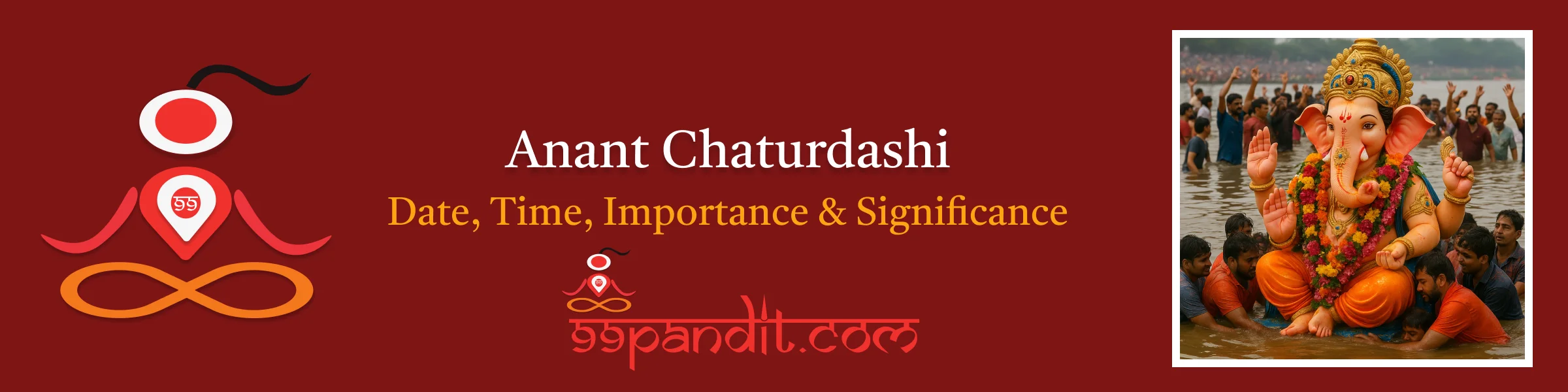
This day is primarily devoted to Lord Vishnu in an Anant (eternal/infinite) form. Anant Chaturdashi and Ganesh Chaturthi celebrations are intrinsically tied together, as many people see Anant Chaturdashi as the last day of the Ganesh Chaturthi celebrations.

After worshipping a Ganesh idol for ten days, on Anant Chaturdashi, devotees take part in Ganesh Visarjan, which means they immerse the Ganesh idol in a water body, like the sea.

They believe that Ganesha will come back next year and is not gone forever, just like how he leaves our homes during the Ganesh procession.

Along with Ganesh Visarjan, many families also perform Anant puja on Anant Chaturdashi 2025.

This involves tying a holy thread called Anant Sutra, which has 14 knots. This thread is believed to bring protection, peace, and good fortune.

Each knot in the Anant Sutra represents one of the important aspects of the festival, such as protection from evil, also recognizing the supreme and eternal nature represented by Lord Vishnu.

So, Anant Chaturdashi is definitely more than just a festival; it is a unique combination of devotion and tradition with emotion, where people consider or remember with blessings both Lord Vishnu and Lord Ganesha.

Mythological Story of Anant Chaturdashi

The story of Anant Chaturdashi is closely connected to Lord Vishnu and a courageous woman named Sushila, and her unwavering faith.

A man named Sumant, who was known for his gentleness, had a daughter named Sushila in the past.

Following the death of his wife, he wed Karkash, an uncommitted and insolent woman.

Anant Chaturdashi 2025

During her childhood, Sushila wed a knowledgeable spiritual leader named Kaudinya Rishi. During their journey, the couple made a stop by the pond one day.

A special ceremony was being performed by Sushila there, with some women in attendance.

She inquired about the Anant Vrat, which was a ritual that honoured Lord Vishnu’s infinite form.

Supposedly, it offers tranquility and economic stability as well as protection from difficulties”.

As part of the puja, Sushila tied a sacred thread with 14 knots around her arm, known as the Anant Sutra.

After spotting the thread, Kaudinya believed it was of no use. He became extremely upset and subsequently removed it before tossing it into the flames.’

They experienced a complete breakdown in their lives, losing everything from wealth to joy.

After recognizing his mistake, Kaudinya abandoned everything and searched for Lord Anant. He then left.

He sought forgiveness and received divine counsel after experiencing numerous hardships. Kaudinya affirmed that the vrat would be observed every year.

Those who have faith in the Anant Puja ceremony will be present on that day and attire themselves with sacred threads to connect with divine protection, good fortune, and the eternal blessing of Lord Vishnu.

Jain Religious observance of Anant Chaturdashi

The day of Anant Chaturdashi is a day of great spiritual significance in Jainism. This is the last and most important day of the 10-day Paryushan jubilee of the Shvetambara side.

During Anant Chaturdashi, the Jain community engages in tone -sanctification, remission, and upliftment of the soul.

The most important ritual that Jains observe on Anant Chaturdashi is called “Samvatsari Pratikraman“, which is an elaborate confession and penitence of all sins committed deliberately or intentionally within the last year.

The interpreters seek remission from all living beings through the words of “Micchami Dukkadam“, which means “I ask for remission if I have hurt you deliberately or intentionally.”

The day is also intended for letting go of wrathfulness, pride, and attachments, along with a clean, fresh launch of the heart.

Many Jains engage in fasting and silence that day as well as community prayer and/or lecture.

Unlike Hindu tradition, there is no Ganesh Visarjan in the Jain observance. For Jains, the notion of Anant Chaturdashi lies more in sapience, remission, and peace from within.

A day to connect back with oneself to start walking earnestly on the path of non-violence (Ahimsa), verity, and compassion.

Significance of Anant Chaturdashi 2025

Anant Chaturdashi is a day when a simple truth stands out. There is nothing permanent in life except the divine.

The thread tied during the Anant Puja is not just a ritual. It is a symbol. Fourteen knots tied with devotion are our relationship to time, faith, and the divine, which exists in everything we do in all aspects of life.

Anant Chaturdashi 2025

You tie it on your arm, but it is the heart that possesses the power. Whether you are sending Bappa off with love and dhol, or sitting in quiet reverie in prayer for Lord Vishnu, it is the same: Carefully released in love, held on to in faith.

Jains see it as an even more powerful time for Michhami Dukkadam, a time for real forgiveness, not just forgiveness of others but oneself, too.

Anant Chaturdashi shows us that life is a cycle of joy, pain, hope, and healing — through all of this, only the eternal remains. The presence of “Lord Vishnu” is what holds everything together.

Vrat Vidhi & Rituals

The Anant Chaturdashi vrat is a form of worship dedicated to Lord Vishnu in his Anant (infinite) form. Below are directions to conduct the puja and associated rites.

1. Morning Preparations:

  • Get up early, take a bath, and clean the designated area for puja.
  • Place a wooden chowki (platform) and cover it with a clean red or yellow cloth.
  • Set an idol or photo of Lord Vishnu on the chowki.

2. Puja Samagri:

  • Kalash is filled with water
  • Roli, Rice, Yellow Flower, Sandalwood paste
  • 14 durva (grass) or 14 flowers
  • 14 puris and 14 sweets (like kheer or laddoos)
  • One sacred thread – Anant Sutra. The Anant Sutra should be cotton or silk, made with turmeric and kumkum, with 14 knots.

3. Puja Vidhi:

  • Light a diya and incense sticks.
  • Offer flowers, sweets, water, and prayers to Lord Vishnu.
  • Read or listen to the Anant Chaturdashi katha (story).
  • Tie the Anant Sutra on the right arm for Men, left arm for women, whilst making any wish or prayer.

4. Fasting:

  • Some devotees do complete fasting, while others eat only satvik food (no onion or garlic, whole vegetarian).
  • Normally, this sacred thread is kept on for 14 days, showing they are protected and connected to the divine.
  • This vrat is simply full of devotion, simple, pure intention.

Benefits of Anant Chaturdashi

Observing Anant Chaturdashi Vrat in its purity with full faith and devotion is thought to unlock spiritual elevation and material prosperity.

Vrat, or vow as some might call it, goes beyond a mere ceremony; it helps you stay aligned with what is eternal and divine, despite life’s uncertainties.

Anant Chaturdashi 2025

By letting go and submitting to Lord Vishnu’s infinite form and power, the devotee experiences peace, protection, and prosperity.

Below are a few of the spiritual and material benefits of Anant Chaturdashi Vrat:

Spiritual Benefits

  • Cleanses and clears negative karma and sins of past lives.
  • Gives mental peace and clarity, inner strength.
  • Strengthens faith and discipline, self-control.
  • Increases devotion and spiritual connection to Lord Vishnu.
  • Promotes forgiveness, patience, and releasing the ego.

Material Benefits

  • Protective barrier against sudden financial loss and other misfortunes.
  • Brings stability to personal and professional life.
  • Health, emotional healing, and well-being.
  • Fixing family disputes or divisions.
  • Gift of success towards long-term goals and endeavors.
  • Many people say that when one ties the Anant Sutra with true devotion, it becomes a 14-day shield of protection and prosperity, and in some cases, it offers lifelong protection.

Conclusion

Anant Chaturdashi 2025 is not simply a day of worship rituals; it brings to mind that everything in life comes and goes, yet the divine is ever-present.

It connects us to the Anant form of Lord Vishnu as well as the emotional goodbye of Ganesh Visarjan, with the experience and lessons, and memories we learn to embrace in faith with love.

Whether you did the traditional activities or prayed silently, or in an individualistic way, Anant Chaturdashi is a reflection, forgiveness, renewal, and starting again where we have peace in our hearts and faith to open the door going forward for our own best interest.

Kharchi Puja 2026: Significance, History & Rituals of the Festival

Kharchi Puja is a century-old traditional festival of Tripura that is celebrated with great enthusiasm and faith.

It is performed annually on the eighth day of the new moon in July. In 2026, the Kharchi puja will fall on July 21.

Being a local festival of Tripura, the puja includes the worship of Chaturdasa Devata and extends for a week. It is mainly celebrated in the Chaturdasaha Devata Temple, Agartala.

Kharchi Puja

The puja indicates cleansing, regeneration, elimination of sins in the past, and welcoming a novel spiritual power.

The festival includes significant rituals, communal feasts, traditional music, and people’s strong faith.

It represents a unique combination of Hindu beliefs and tribal practices, thus being a very exceptional celebration.

With 99Pandit, let’s gain more insight into Kharchi Puja 2026. We will discuss its significance, history, major deity, and the rituals done during the festival.

Date & Duration of Kharchi Puja 2026

Karachi Puja Date in 2026: The next year, the Kharchi Puja will be held on July 21.

Duration of the festival: The time period of the puja is seven days, during which different rituals are done, like offering and sacred baths.

How the festival date is decided: From older days, the Kharchi puja is observed on the eighth day (Ashtami) on the Shukla Paksha in the month of Ashad as per the Hindu calendar.

Understanding the Kharchi Puja Festival

Kharchi Puja is a popular type of puja in Tripura that is a combination of both Hindu and Tripura culture.

The word “Kharchi” has been taken from “Khar”, which refers to sins, and “chi”, which means cleaning.

When put together, the word refers to the cleaning of our sins. Basically, the puja is done to worship Mother Earth and the fourteen deities. They are regarded as the guardians of Tripura and its people.

It is a seven-day-long ritual that includes bathing of deities, purifying the post-menstrual period of Mother Earth’s menstruation, and offering prayers.

On the main festive day, the fourteen deities are taken to the river “Saidra” by members of Chantai. The gods are bathed with holy water and then return to the Chaturdasa Devata temple.

The thing that makes it a more beautiful and popular festival is the way it beautifully blends tribal community tradition with Hindu practices.

Kharchi Puja represents purification, peace, and the bond between devotees and the divine power.

The Chaturdasha Devata – The Fourteen Deities

Deity Name 

Brahmanic Equivalent Role 
Hara Shiva

The destroyer and protector

Uma

Durga Goddess of Strength
Hari Vishnu

Preserver of the Universe

Ma

Lakshmi Goddess of wealth
Bani Saraswati

Goddess of knowledge

Kumara

Kartikeya God of War
Ganapa Ganesh

God of wisdom

Biddhi

Brahma The Protector
Kha Prithvi

Mother of Earth

Abdhi

Samudra God of Ocean
Ganga Ganga

The river Ganges

Sekhi

Agni God of fire
Kama Kamdeva

God of love

Himadri

Himavat

Himalayan Mountain


Significance of Kharchi Puja 2026

For people of Tripura, Kharchi Puja is an essential festival in both cultural and
spiritual terms.

Let’s light some candles to reveal its meaning and the virtues that it encompasses:

Significance of Kharchi Puja

1. Purification & Regeneration

At its essence, Kharchi Puja revolves around purification. For this reason, the bathing of Chaturdasha Devata is regarded as the elimination of past faults, impurities, and rebirth of nature and human life. It establishes harmony, equilibrium, and reinforces the community.

2. Honouring the Chaturdasha Devata

Chaturdasha Devata, the fourteen prime deities of puja, are said to be guardians of the people and land of Tripura.

Conducting prayers and offerings to them during puja gives devotees celestial grace, prosperity, and protection against evil energy.

3. Blend of Tribal and Hindu Traditions

Kharchi puja is different due to the way it combines the tribal traditions with Hindu ceremonies.

Such puja show the cultural diversity of Tripura and show how a single festival unites the different customs.

4. Community Celebration and Togetherness

Kharchi puja is not only an event but also a festival that brings different communities together.

All people, including locals and neighbours, gather together so that they can celebrate fairs, prayers, and food. The festival unites people closer and strengthens their relationships.

5. Preserve Cultural Identity

It is a celebration with a touch of Tripura’s culture. Their age-old traditions carried through the Kharchi Puja provide deeper meaning about their customs and preserve the roots of their culture by passing it from generation to generation.

History & Origin of Kharchi Puja

Kharchi Puja is deeply rooted in the tribal traditions of the Tripura people. As the word Kharchi itself is associated with cleansings, the puja is performed after the Ama Pechi.

It is a fifteen-day period, when Mother Earth is said to menstruate. Activities such as ploughing and digging are not permitted at this time as the earth becomes unclean during this period.

History of Kharchi Puja

That’s why Kharchi Puja in Tripura is done to clean the Earth and worship the main deities. The fourteen gods also remain locked within a room for the whole year.

They only come out for devotees during the seven days of this puja. On the first day of the puja, they are taken to the river “Saidra” and bathed in the holy water.

After coming back to the temple, they are worshipped by the royal priest and taken to a separate room covered with a net.

Later on the seventh day, devotees can worship and offer sacrifices such as chickens and goats.

With passing time, the festival became more popular under the patronage of Tripura’s royal family, particularly with the construction of Chaturdasha Temple in 1761.

After the tribal festival, both tribal priests (Chantai) and Hindu Brahmins conduct the rituals together.

Chaturdasha Devta Temple – The Sacred Home of Fourteen Gods

The Chaturdash Devta Temple plays a great role in the Kharchi Puja. It is a Hindu temple located in Agartala and built in 1761 by King Krishna Manikya. Inside the temple, there are fourteen deities, also collectively called Chaturdasha Devta.

These deities are ceremoniously worshipped during the Kharchi Puja festival and are commonly known as Chaudah Devata Mandir.

The main attraction of the temple is its fourteen major deities and the celebration held during the Kharchi Puja.

It was the age-old tradition started by the King of Tripura and is still carried forward by the people of Tripura.

Thousands of devotees visit this temple every year to be part of the Kharchi festive celebration.

It is one of the popular temples where thousands of devotees visit annually to celebrate the Kharchi festival.

Rituals and Traditions of Kharchi Puja

Being a seven-day festival, the Kharchi Puja includes various rituals and traditions. Below we have mentioned some of them:

1. Bathing of the Deities

The ceremonial bath of the fourteen gods is the main ritual of the whole puja. Being done on the first day, the idols of god are taken from the inner sanctum to the river and are cleaned. This act represents purification and removal of sins.

Rituals and Traditions of Kharchi Puja

2. Offering and Animal Sacrifices

After the deities are brought back to the temple, the tribal rituals are done by the royal priest of Tripura.

As part of customs, sacrifice is also done of animals such as he-goats, pigeons, and chickens.

Other than that, offerings like fruits, flowers, and sweets are also offered by devotees to seek their blessings.

3. Devotional Songs and Folk Performances

Other than offering and prayers, the puja also includes Tripura community traditional dances, folk music, and devotional songs.

People dress up in different attire and share mythological stories related to the temple and festival.

4. Community Gathering and Feasting

People from all religions and castes become a part of the Kharchi festival. They often prepare community events and offer various types of food to all the visitors. That’s how the temple makes tribal cultural identity more popular.

The Role of the Royal Family In Kharchi Puja

The royal family of Tripura, historically known as the Manikya dynasty, has played a central role in the festival of Khrachi Puja. Its rituals, which priests follow, are assigned by the royal households.

Even after Tripura got into the list of the Indian Union in 1949 and with the decline of the monarchy, the existence of the royal family remains important.

You will often see the members of the royal family inaugurating the ceremonies and attending the main rituals and events of Khrachi Puja.

Things To Keep In Mind for Kharchi Puja 2026

Planning to attend the Kharchi Puja 2026? Here are some travel tips that you can consider:

  • Dress up in modest clothes such as a Kurti or a dhoti as a way of respect.
  • Do not touch the idols of temples without permission.
  • Remove your shoes outside, performing and taking part in prayers.
  • Make a prior booking in Agartala, as the crowd is huge during the festival.
  • Be humble and respect all the local customs, especially at the time of ritual.
  • Avoid taking photos as they are restricted in certain areas.
  • Take part in their cultural events and fairs to truly experience their heritage.
  • You can even explore the nearby areas like the Ujjayanta Palace and Neermahal in Tripura.
  • Plan your visit in July as the Kharchi Puja is observed during that period only.

Conclusion

Kharchi Puja is not just a carried forward tradition but a festival displaying a blend of two different customs and Tripura’s tradition.

From holy baths to fourteen deities to cleaning Mother Earth after Ama Pechi, the festival holds various rituals that make it really unique from others.

In a world where customs are usually lost, the Khrachi Puja tells us how cultural practices are kept and celebrated. Kharchi Puja will be conducted again on July 21 in 2026.

The doors of the Chautardasha Devata temple will be opened again for devotees and will become a part of their celebration. It represents the purification of Mother Earth and humans’ past sins.

Therefore, the puja is not only to honour the fourteen deities but also to Mother Earth. For more such informative blogs, you can visit our site 99Pandit.

Narak Chaturdashi 2025: Date, Timings & Significance

The festival of Narak Chaturdashi 2025 is celebrated a day before Diwali; this festival is celebrated every year on the Chaturdashi date of Krishna Paksha of Kartik month. This day is also known as Chhoti Diwali, Kali Chaudas, and Roop Chaudas.

On this day, the god of death, Yamraj is also worshipped, and a lamp in the name of Yam is also lit in the south direction. On this day, Krishna Puja and Kali Puja are also done along with Yam Puja.

Narak Chaturdashi 2025

This year, Narak Chaturdashi or Chhoti Diwali is celebrated on Monday, 20 October 2025. It is believed that on the day of Narak Chaturdashi, Lord Krishna freed about 16 thousand women by killing the demon named Narakasura.

Therefore, this day is celebrated by lighting lamps. Along with this, people light lamps for Lord Yama and pray for the well-being of the family.

Let’s know why the festival of Narak Chaturdashi is celebrated and what is its mythological story.

Shubh Muhurat of Narak Chaturdashi Puja

  • Narak Chaturdashi 2025 will be celebrated on October 20.
  • The auspicious time of taking Abhyanga Snan starts from 05:16 AM to 06:27 AM.
  • The duration of Abhyanga Snan is 1 hour and 11 minutes.
  • The Kartik Chaturdashi Tithi will start on October 19 at 01:51 PM.
  • The Kartik Chaturdashi Tithi will end on October 20 at 03:44 PM.

What is Narak Chaturdashi?

Narak Chaturdashi, celebrated just a day before the festival of Diwali, is also called Chhoti Diwali, Roop Chaudas, and Kali Chaturdashi.

It is believed that a person who worships Kartik Krishna Chaturdashi according to the rituals gets freedom from all sins.

On this day, in the evening, there is a tradition of donating lamps, which is done for Yamraj. It is a very important festival from the point of view of its importance.

It is called Choti Diwali because the darkness of the night is driven away from the light beam by the light of a lamp at night a day before Diwali, just like on the night of Diwali.

Are you willing to perform Narak Chaturdashi Puja in your home, but don’t know how to do it? Then, 99Pandit is the only thing you need to know.

99Pandit provides you with a genuine and experienced Pandit for your Narak Chaturdasahi Puja 2025 and other religious needs.

Importance of Narak Chaturdashi 2025

On this auspicious day, people worship Goddess Kali to remove the influence of negative powers or evil spirits from their lives.

By worshipping Maa Kali on Narak Chaturdashi, you can get rid of ghosts, evil spirits, and negative powers from your house.

By performing puja at home, you can remove the presence of negative forces in your life. Many Hindus take Abhyanga baths on this day to purify themselves from their sins.

It is said that those who take Abhyanga baths on this day are saved from going to hell. Naraka Chaturdashi honours the victory of Satyabhama over Lord Krishna and the demon Narakasura.

Significance of Narak Chaturdashi 2025

People worship Goddess Kali on this auspicious day to remove negative forces or the impact of evil souls from their lives.

Worshipping Maa Kali on Narak Chaturdashi can help you get rid of ghosts, evil spirits, and negative forces from your home.

Narak Chaturthi 2024

By conducting a Puja at home, you can remove the existence of negative energy and evil forces in your life. Many Hindus perform Abhyanga Snan on this day to purify themselves of their sins.

People who do not perform Abhyanga Snan on this day are said to go to Narak (hell). Narak Chaturdashi honours Lord Krishna and Satyabhama’s victory over the demon Narakasura.

Mythologies related to Narak Chaturdashi

There are several mythological stories related to Narak Chaturdashi; the main 4 stories are listed below:

1st Story

According to mythology, Lord Krishna lived in Dwarka with his wives. One day Devraj Indra came to Lord Krishna and said that O Krishna, the gods are crying for help due to the atrocities of demon king Bhoumasur. Bhoumasur is also called Narakasura.

The cruel Bhoumasur has snatched Varun’s umbrella, Aditi’s earrings, and the gem from the gods, and he has become the king of the three worlds.

Bhaumaasura has also kidnapped the daughters of many kings and common people of the Earth and has imprisoned them; please save these three worlds from that cruel demon.

After listening to Devraj Indra, Lord Krishna, along with his wife Satyabhama, rode on Garuda and reached Pragjyotashpur, where the cruel Bhoumasur lived.

Lord Krishna first killed a demon named Mur along with his 6 sons with the help of his wife.

On hearing the news of the killing of the demon Mur, Bhoumasur left for the war with his army. Bhoumasur was cursed that he would be killed by a woman.

Therefore, Lord Krishna made his wife Satyabhama the charioteer and, at the end of the war, with the help of Satyabhama, killed Bhoumasur.

After this, Bhoumasur’s son Bhagdatta was given the boon of protection and made him the king of Pragjyotish.

The day Lord Krishna killed Bhoumasura was the Chaturdashi Tithi of the Krishna Paksha of Kartik month, hence this date is known as Narak Chaturdashi.

On this day, Lord Krishna not only killed Narakasura but also freed about 16 thousand women from his captivity.

Due to this happiness, lamps were lit on that day, and Deepdaan was also done all around.

2nd Story

Another popular legend associated with the Kali Chaudas/ Narak Chaturdashi mythology reveals that the Goddess Kali vanquished the powerful and evil asura Raktabija and this day, she drank his blood.

The demon Raktabija with Shumbha and Nishumbha, fought with Goddess Parvati and Goddess Kali.

Raktabija received a boon stating that if a drop of his blood fell on the ground, it would create a clone or duplicate of him.

She used to be visible in her all-powerful and dreadful form at the time of an attack, and when Goddess Kali saw this, she revealed herself in the most ferocious-looking way possible.

In her turn, Goddess Kali, the destroyer, opened her mouth wide and consumed all clones of Raktabija; further, she killed the basic Raktabija and sucked his blood. The story tells that this triumph took place only on the day of Kali Chaudas.

3rd Story

On this day, devotees propitiate Lord Hanuman to avoid becoming prey to an untimely death.

A Narak Chaturdashi Story is that Lord Hanuman, who used to be as small as a child, once swallowed the Sun that he thought was a fruit, and thus, the world turned dark.

On the day of Narak Chaturdashi, all the Gods attempted to convince little Hanuman to release the Sun from His mouth, but to no avail.

Unable to find any other means, Lord Indra decided to strike Lord Hanuman in the mouth with his Vajira.

This action released the Sun from Lord Hanuman’s mouth and restored light to the world.

4th Story

On Dhantrayodashi and Narak Chaturdashi, some people worship Yama/Yamraj/Yam dev. Yamraj is the god of death as per Hindu mythology.

Worshipping Him on this day protects one from sudden death and ensures salvation from going to hell (Narak).

During puja, people light 13 wheat flour oil lamps outside the house and turn their faces towards the South.

Narak Chaturdashi Puja Vidhi

  • Worship Lord Krishna in the evening and light an oil lamp at the main entrance of the house.
  • Donating on this day is also auspicious.
  • Worship Lord Krishna.
  • Light a lamp in the name of Yamraj also.
  • By worshipping Yamraj on this day, the fear of untimely death goes away.

Narak Chaturdashi 2025 Rituals

1. Abhyanga Snan

The main ritual performed during Narak Chaturdashi day is taking a bath at the break of dawn.

Devotees wake up in the morning before the sun rises and scrub their bodies with an ‘Ubtan’ before they bathe.

Narak Chaturdashi 2025

These include oil, herbs, flowers, and some other important components which go into the preparation of this scrub. The ritualists perform Abhyanga Snan.

2. Wear New clothes

After taking a bath, one should wear new clothes. Many taboos are linked to this ceremony, including the belief that missing it will send someone to hell.

3. Apply Kajal

By using kajal, an individual can protect themselves from the ‘Kali Nazar,’ meaning the Evil Eye.

4. Lit Diyas

Even as in the case of Diwali, on Naraka Chaturdashi individuals illuminate their houses by using Diyas and lamps.

All the members of the family wake up early in the morning to pay their respects to the Goddess Lakshmi.

5. Bursting Crackers

Families offer different types of items and many kinds of prayers to the Goddess to receive Her blessings after the puja. Then, the children of the family members and other relatives burst into crackers.

6. Prepare Prashad

Devotees worship the deity of Lord Hanuman with special puja on this day. People customarily offer flowers, oil, and sandalwood to the Lord.

Devotees use rice flakes, sesame seeds, jaggery, coconut, etc., to prepare a special offering or ‘Prasad’ for the Lord.

People prepare some of the specialities associated with this day using pounded rice. These dishes require freshly harvested rice in their preparation.

Urban and rural areas of the western part of India are more geared towards this tradition.

7. Pay a Visit to Kul Devi

People also pay visits to their native places’ family temples, especially Kula Devi, the goddess mother. On this day, people in some parts of India also offer food to their dead ancestors.

Book Pandit for Narak Chaturdashi Puja 2025

Finding an authentic and experienced Pandit is not everyone’s cup of tea. But what if I tell you that you can find a desired Pandit with just a click? Yes, it is possible to find a Pandit as per one’s need.

Have you heard about 99Pandit? 99Pandit is a website that exclusively works for people like you who want Pandits to perform pujas, Griha Shanti Path, Ganesh Chaturthi Puja, Narak Chaturdashi Puja, Homams, and many more.

There are several ways of finding Pandits, and 99Pandit is the best one. You can easily find Pandits here for any ritual in your language, whether it is Tamil, Telugu, Marathi, or Hindi.

To book a Pandit from 99Pandit, follow these steps to book Pandit:

  • Visit our 99Pandit website.
  • Choose the puja you want to perform in your home.
  • Click on ‘Book a Pandit’.
  • Get puja booking confirmation on your mobile.
  • Accept a call from Pandit Ji within 30 minutes.

We will inform you about the details of Pandit Ji and Puja through mail or SMS. After the booking, 99Pandit will take accountability for managing all the processes.

Sit back and relax to experience hassle-free pujas and receive the blessings of the deities. Contact us by dialing: 8005663275 or get in touch with us on WhatsApp.

Conclusion

Narak Chaturdashi 2025 holds great significance in the Sanatan Dharma and among the Hindus. Devotees celebrate this day as Chhoti Diwali.

People also know Narak Chaturdashi as Kali Chaudas and Roop Chaudas, aside from Chhoti Diwali. People celebrate Narak Chaturdashi to commemorate the victory of good over evil.

As per beliefs, Goddess Kali defeated the demon Raktbeeja, and Lord Krishna killed the demon Narakasura.

These mythologies inspire us to always try to do better deeds without expecting anything.

Like Goddess Kali defeated the demon Raktbeeja, we should also defeat the demon inside us who tries to do evil to others.

People should perform Narak Chaturdashi Puja 2025 as per vidhi and rituals to avoid negative energies and evil.

99Pandit will help you in such puja with educated Pandits, they will help you by performing Narak Chaturdashi Puja according to Mantras and vidhi. Don’t wait. Just book your Pandit from 99Pandit today.

Teja Dashmi 2025: Date, History & Significance

Teja Dashmi 2025 is a traditional day in the Indian state of Rajasthan on the 10th day of Bhadrapada, the Hindu month occurring in August or September in the Gregorian calendar.

It is also recognized as a holiday for the youth entirely dedicated to Veer Teja, considered a targeted incarnation of Lord Shiva, who is highly recognized as one of the three principal Hindu deities, along with Brahma and Vishnu. In 2025, Teja Dashmi 2025 will be celebrated on Tuesday, 02 September 2025.

In the mid-13th century, the village of Karnal, situated in The State of Rajasthan, was Veer Teja’s birthplace. Dayaluya Jats were considered as his parents.

Teja Dashi 2025

Only a few details regarding Teja’s life and history are provided. After his brutal death in a war while saving a herd of cows from Mer raiders.

Apart from succumbing to his wounds, Tejaji permitted the snake to bite his tongue, the only corner of his body that was not hurt.

In the back, the snake said that no other creature who sought Tejaj ‘s blessings would die through a snake bite.

Significance of Teja Dashmi 2025

Teja Dashmi 2025 is celebrated as a festival in Hinduism dedicated to loving the folk deity of the Rajasthan State. He was recognized as King Bakshaj’s son in the Rajasthan State region.

Veer Tejaji is encountered as one of the incarnations of Lord Shiva. The death ceremony is celebrated as Teja Dashmi on Bhadra Prasad Dashami every year.

On this particular day, everybody visits the temples and prays for his peace of soul. A large group of people devotes raw milk and milky coconut packs to the holy temples with added churma in the packets.

How Devotees will Celebrate Teja Dashmi 2025 and Where?

Teja Dashmi 2025 occurs with fanfare in several parts of Rajasthan State, Haryana, Uttar Pradesh, and Madhya Pradesh.

Tejaji has a teaching of cure and protection to people from all kinds of snake bites and all snake venoms.

Devotees visit several shrines where the deity is located and present churma, raw milk, and milky coconuts to them, seek their blessings, and pray for their good fortune.

They also hold a tradition or ritual of bringing colourful umbrellas to provide to the deity.

Several destinations and their period are listed below, briefly explaining the details for better readers’ knowledge.

1. Malwa

The people of Malwa City are well known for their extreme celebration of the Teja Dashmi 2025 festival.

They celebrate numerous fairs in different shrines dedicated to the Tejaji deity. Devotees gather large numbers to worship and fetch blessings for a healthy and prosperous life.

Malwa has the oldest and finest temple to celebrate Teja Dashmi 2025, named Tejaji Temple, where a large group of people come together and pray obeisance.

Teja Dashi 2025

2.  Ujjain

This city is well-known for its beautiful celebration of Teja Dashmi 2025. Various devotees visit the Lord Teja temples to celebrate the occasion.

Devotees also offer bright-coloured umbrellas and bring out the procession through dancing and singing the chats on drum beats.

3. Jaipur

Jaipur conducts many fairs in all the temples and holy places in the rural city and Pink City.

Various communities pray in temples and fetch blessings for a healthy and peaceful life.

People whose snakes have been beaten also visit the temple and get cured of the snake’s venom.

4. Ajmer

Ajmer has numerous events and locations that celebrate the festival. Many temples are recognized as Tejaji’s temples and provide fairs to organize temple fairs and donations.

History of Teja Dashmi 2025

On Teja Dashmi 2025, devotees across the country pray to Veer Teja. Devotees recognise him as the famous folk deity of Rajasthan state.

History predicts his death occurred while he was protecting a group of castles from the hunters.

His tongue was the only part not injured, as it was destroyed while saving the herd of castles.

The snake showered his blessings on Veer Teja and benedict him with a blessing that anyone who worships him will never die from a snake bite in their entire life.

All his devotees believe that if they pray to Veer Teja well, he will always bless them. Hence, devotees celebrate the festival of Teja Dashmi with many prayers and fairs.

Teja Dashmi 2025: Legends Associated With The Festival

Teja Ji Maharaj is recognised as a nobleman. Maharaj considers the day as his greatness and practices it to highlight his teachings and words.

According to the Gregorian period, he was chaotic in the year 1074 to Tahar Ji, a recognized Jat, and his beloved wife Ramkumari on the occasion of Chaturdashi Tithi occurring in the month of Magha, Shukla, and Paksha.

He was chaotic after his guardians practised amends to delight Lord Shiva and his beloved wife, Goddess Parvati. However, his parents were completely aware of his short life and divine qualities.

Teja Dashmi

It can be difficult for the devotees to perform pujas and rituals as per authentic Vidhi.

They find it difficult to find the right pandit for performing pujas, Jaaps, and Homams. Not anymore.

With the help of 99Pandit, it is easy for devotees to book pandit for pujas such as Birthday Puja, Office Opening Pujaand Bhoomi Puja.

Main clause:

According to one of the closest legends of Teja Ji, some thieves had once robbed cattle from his sister’ martial shelter, and with no delay, he went there with his friends to save the cows.

This is also one of the warm practices of his tales of history. People there believed that Teja ji Maharaj wanted to rescue a herd of cows which vanished after some time by a group.

Final clause:

Through marching towards the robber’s dwellings, he came to the far side of a snake that held a desire to bite him.

Still, Teja Ji Maharaj appealed to the snake to let him march forward to save the herd of cows stuck inside due to robbery after saying to come back and allow him to give a dreadful bite.

The snake convinced him and allowed him to move and come soon. Teja Jii Maharaj fought bravely and sustained injuries.

Ultimately, after rescuing the herd of cows, he went back to the snake; rather than running back, he chose to take a bite from the snake as he gave him his words. He galvanized the viper with his honesty and words.

However, the snake was suspiciously finding a place to bite him as he was bleeding from every side.

Therefore, Teja Ji questioned Teja Ji Maharaj to bite him on his tongue as it was the only part not bleeding.

However, just before a few seconds of biting him, the snake turns himself into the god of snakes, also pronounced as “Nag Devta,” and blurts out his true identity.

He blessed Teja ji; anyone who worships him will never die from a snake bite or come under any kind of “Shaarp dosh.”

Therefore, people mostly watch devotees praying to Teja Jii and binding threads to protect themselves from any snake bite.

When Devotees Celebrate Teja Dashmi?

Devotees will celebrate Teja Dashmi 2025 on the birthday anniversary of Tejaji, which invades on the same day as Bhadrapad Shukla Dashmi or the 10th day of Shukla paksha, according to the regular calendar of the Hindu religion.

Furthermore, people celebrate Teja Dashmi 2025 with even more joy and happiness every year.

Last year, in 2024, the date was 13th September on which devotees celebrated Teja Dashmi.

Teja Dashmi 2025

In many rural parts of Rajasthan State, as well as in many parts of Madhya Pradesh, Uttar Pradesh, and Haryana, people consider Teja Dashmi 2025 as the celebration of Veer Teja, a folk deity.

On this magnificent day known as Teja Dashmi, people celebrate Veer Teja, acknowledging him as one of the brilliant incarnations and personalities of Lord Shiva.

Devotees visit nearby temples and holy places on this day to offer prayers and chants.

Conclusion

Teja Dashmi 2025 is an exceptional day for the devotees of Lord Shiva and Snakes. This day brings belief and trust to the devotees and a motive that they are still kind and helping people.

People who are afraid of snakes or have any issues with snakes come and witness the prayers of Teja Ji Maharaj temple and their holy places.

People from different states also visit temples in Rajasthan to worship in the TejaJi Maharaj temples. Many people believe that a few temples are the most sacred places for praying.

Teja Ji Maharaj was a man of his word, and that sparked the devotees of his kindness, risk-taking qualities, and strong points for animals.

Lord Shiva and the Naag Devta highly bless him for his king dongs and presence of mind.

His parents knew he had a short life with divine powers and abilities, making him way more different from ordinary people.

Worshipping him will never lead his devotee to die from a snake bite or any venom produced by snakes.

After bleeding from every piece of his body, he returned to the snake because of his words, which made him more truthful and trustworthy for the snake, which further changed into a Naag devta.